● AI Bottleneck Shift After HBM
The Order of AI Bottlenecks After HBM: Next After GPUs Are Memory, Power, Cooling, Optical Communication, and Data
When looking at AI semiconductor investments, it is now too late to stop at “Nvidia is good” or “HBM is taking off.”
What really matters is seeing in what order the bottlenecks in the AI industry move.
In this article, I will organize in one place the flow from GPUs to HBM and DRAM, NAND flash, data center power, cooling, optical communication, industrial data, and AI agents.
In particular, the core point often missed in other news or on YouTube is that “the next phase after HBM is not simply power and cooling, but ultimately competition to secure internal corporate data and physical data.”
This flow can be a very important reference point when looking at global economic outlooks, semiconductor cycles, data center investment, stock investment strategies, and the AI infrastructure market.
1. Core Investment Perspective: A Method of Going First and Waiting at the Bottleneck
The core of the investment approach described by tech writer Kim Ji-hyun is not short-term trading.
It is a way of believing where technology is headed and watching whether that technology is actually connected to corporate earnings, taking a long-term view of at least about 18 months to 3 years.
The important word here is bottleneck.
A bottleneck refers to the key resource or technology that becomes most scarce when an industry tries to grow.
If you want to make AI models larger but GPUs are insufficient, then GPUs are the bottleneck.
If you secure GPUs but lack high-performance memory, then HBM is the bottleneck.
If you have HBM but there is not enough electricity in the data center, then power is the bottleneck.
If you have power but cannot cool the heat, then cooling is the bottleneck.
If you solve cooling but lack sufficient high-quality data for training, then data is the bottleneck.
In the end, investors should look first at “what will be scarce next,” rather than “what the market is excited about now.”
2. The First Layer to Separate in Technology Investment
The technology industry should not be viewed as one lump.
It must be broken down by layer.
-
Core technology layer: This is the area that creates the core technologies themselves, such as AI models, semiconductor design, network technology, and data processing technology.
-
Product layer: This is the area implemented as actual products, such as GPUs, HBM, servers, smartphones, robots, and sensors.
-
Service layer: This is the service area used directly by consumers, such as ChatGPT, Claude, search, commerce, and financial apps.
-
Solution layer: This is the area that supports other companies’ businesses, such as cloud, databases, advertising solutions, AI platforms, and security solutions.
Looking back at the early internet era, Google and Naver did not make money from the very beginning.
First, computer manufacturers, CPU companies, operating system companies, and browser companies built the foundation.
Then search portals and internet service companies grew.
After that, advertising solutions, ad agencies, and data analytics companies followed.
The AI era is the same.
At first, GPUs were the protagonist, then HBM, and later the investment points shift to power, cooling, networks, data, and agents.
3. AI Bottleneck Stage 1: GPUs Were the First Bottleneck
AI model companies need enormous computing resources to build better models.
As companies like OpenAI, Anthropic, Google, and Meta build larger models, GPU demand has exploded.
So the first bottleneck was GPUs.
This is also why Nvidia has taken an overwhelming position in the AI semiconductor market.
But industries do not stay in one place for long.
When GPU supply increases, substitute chip development progresses, and big tech starts making its own AI chips, the bottleneck moves to the next stage.
The bottleneck after GPUs is high-performance memory that supplies data quickly right next to the GPU.
4. AI Bottleneck Stage 2: HBM and DRAM Became Important at the Same Time
No matter how good the GPU is, performance will not be fully realized if data cannot move in and out quickly.
That is why HBM attached next to the GPU has become important.
HBM is high-bandwidth memory that can process data much faster than ordinary DRAM.
Whereas in the past one GPU had four HBM stacks attached, the trend now is moving toward eight or more.
Also, the key of HBM is not simply expanding sideways, but stacking upward.
Companies that do this well will secure a strong position in the AI semiconductor supply chain.
SK hynix, Samsung Electronics, and Micron are 대표적으로 mentioned.
The important point here is that not only HBM improves, but ordinary DRAM prices are also affected.
As memory companies increase HBM production, existing DRAM production capacity can shrink.
But DRAM demand keeps increasing because of smartphones, laptops, servers, automobiles, and on-device AI demand.
When supply is constrained and demand rises, prices go up.
This is an important reason why memory companies are drawing attention again in the recent semiconductor cycle.
5. On-Device AI Raises DRAM Demand Again
In the future, the core function of smartphones is likely to be on-device AI.
On-device AI is a method of processing AI computations directly inside the device without sending data to the cloud.
In that case, smartphones will also need faster and larger memory.
As AI-enhanced iPhones, Galaxies, laptops, and tablets increase, demand for mobile DRAM such as LPDDR will inevitably grow as well.
In other words, AI infrastructure demand is not created only inside data centers.
It also creates a structure in which memory demand grows inside personal devices.
This part is quite important when setting a stock investment strategy.
Many people look only at HBM, but in reality, DRAM and mobile memory must also be considered together.
6. Surprisingly Important Next Bottleneck: NAND Flash and SSDs
Many people think of AI memory as only HBM and DRAM.
But in reality, NAND flash and SSDs are also becoming important.
RAM is volatile memory.
When power is turned off, data disappears.
As the context and data AI must process become larger and larger, not all data can be kept only in RAM.
Eventually, demand for SSDs and NAND flash, which are long-term storage spaces, increases.
As AI models, agents, video data, corporate documents, log data, and sensor data explode, storage device prices are also affected.
In fact, the sense that hard drives and SSDs have become more expensive than before is growing as well.
This is a relatively less covered topic in other news, but it is a very important hidden bottleneck in AI data center investment.
7. AI Bottleneck Stage 3: Power Is an Unavoidable Huge Wall
Even if GPUs and memory are secured sufficiently, it is useless if there is no electricity to run the data center.
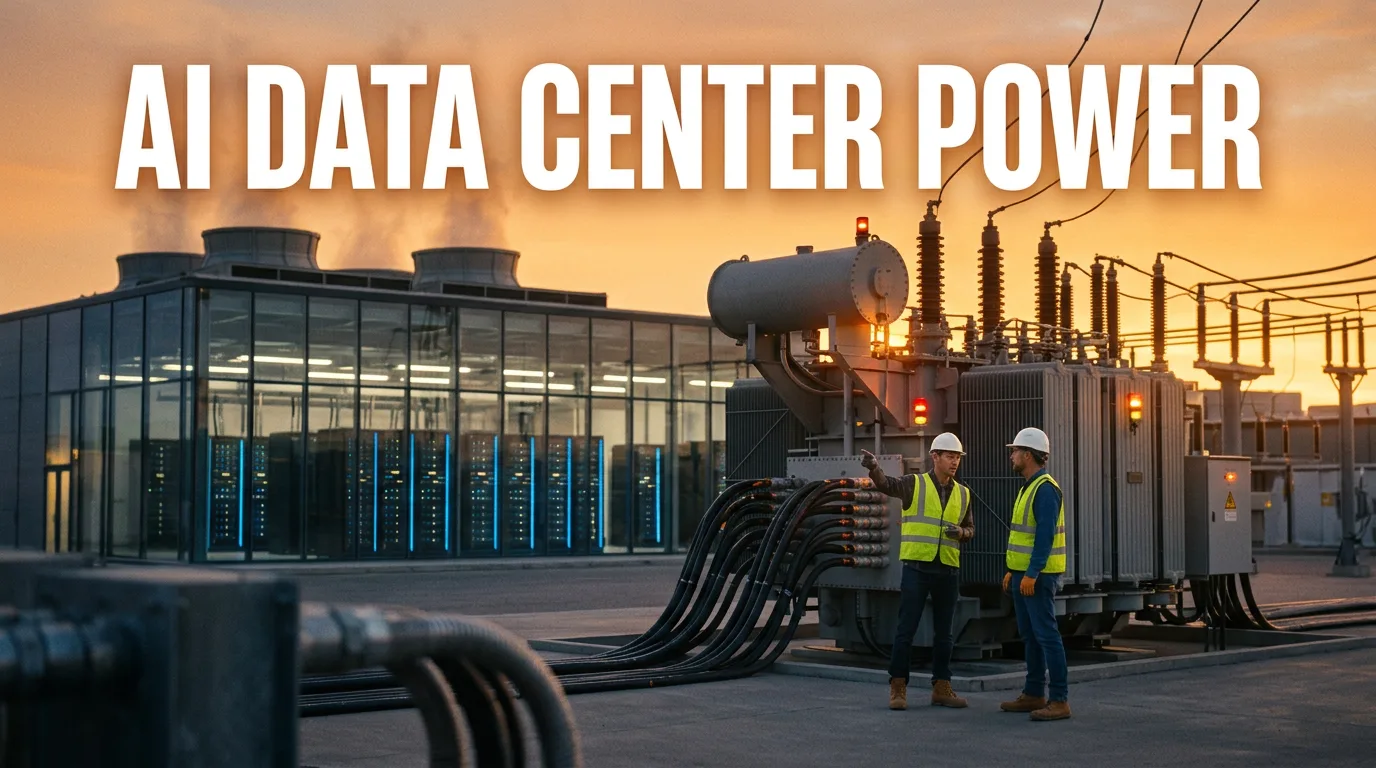
AI data centers consume far more power than conventional internet data centers.
A 1GW-class data center essentially means power demand on the scale of a huge power plant.
If plans for 10GW or 20GW-scale data centers become reality, existing power grids alone will not be able to handle them.
That is why securing power for data centers becomes a core bottleneck in the AI industry.
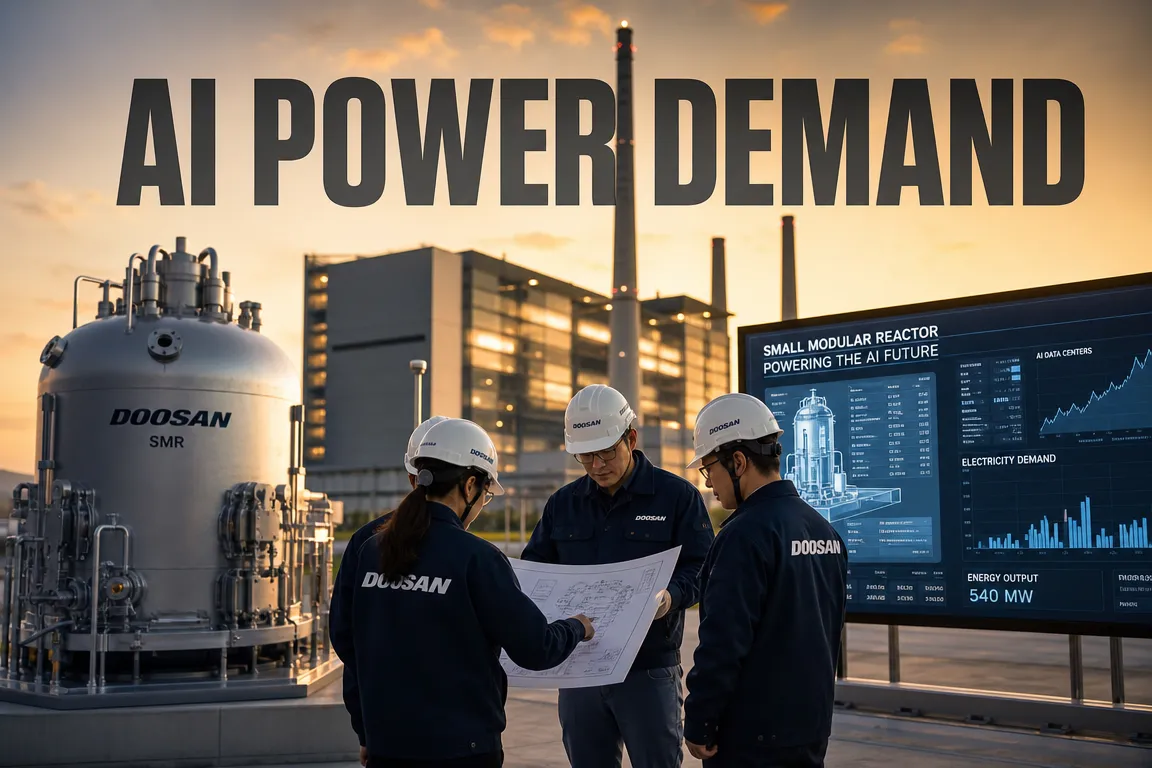
This includes nuclear power, SMRs, renewable energy, fuel cells, thermal power, transmission and distribution networks, power storage devices, and power management solutions.
In global economic outlooks as well, investment in power infrastructure is likely to become an important theme.
AI may look like a software industry, but in reality it is strongly connected to the energy industry.
It is also connected to interest rate forecasts.
Because data centers and power infrastructure are industries that require massive capital investment, high interest rates can affect the pace of investment and corporate valuations.
8. AI Bottleneck Stage 4: Without Cooling, the Data Center Stops
Once power is solved, the next issue is heat.
As GPUs, HBM, and servers become more high-performance, more heat is generated.
If the heat is not properly removed, equipment performance declines and the risk of failure increases.
That is why cooling technology rises as the next bottleneck.
-
Air cooling: A method that cools heat with fans and air.
-
Water cooling: A method that cools heat by connecting liquid cooling pipes close to the chip.
-
Immersion cooling: A method that cools heat by immersing servers or equipment in a special cooling liquid.
Air cooling has a simple structure, but it consumes a lot of power.
As AI server density increases, water cooling and immersion cooling are likely to become more important.
Here, not only cooling equipment companies, but also refrigerants, pipes, valves, pumps, heat exchangers, and materials companies should be watched.
It is not simply that “cooling stocks are taking off,” but rather where in the cooling value chain actual revenue connects.
9. AI Bottleneck Stage 5: Shifting from Copper Wires to Optical Communication
Inside data centers, enormous amounts of data move between servers and servers, racks and racks, and chips and chips.
Currently, many sections still use copper-wire-based connections.
But because copper wires use electrical signals, they generate heat and also cause power loss.
As AI data centers grow, this problem becomes more serious.
So internal data center networks are also likely to move toward optical communication.
Optical communication is faster, consumes less power, and can reduce heat generation.
In this trend, optical modules, optical cables, CPO, silicon photonics, and optical device companies can draw attention.
For example, overseas companies like Lumentum are often mentioned.
The reason this point matters is that optical communication is not only about solving network speed.
It can simultaneously ease power, heat, and speed issues.
In other words, optical communication is a key bottleneck-solving technology that takes data center efficiency to the next level.
10. AI Bottleneck Stage 6: Ultimately, Data Becomes the Most Valuable Asset
Once infrastructure bottlenecks are somewhat resolved, the next bottleneck is data.
Current large AI models have advanced by training on massive amounts of data publicly available on the internet.
However, public data is already being exhausted to a significant degree.
In addition, copyright issues are becoming larger.
This is why media companies, publishers, and content companies are negotiating data usage fees with AI companies.
In the future, high-quality internal corporate data is likely to become more important than data publicly available on the internet.
In particular, industry-specific data such as bio, manufacturing, shipbuilding, automobiles, robotics, logistics, healthcare, and finance can become key.
This data is not on the internet.
It is often on internal company servers or has not even been digitized yet.
For example, a factory worker’s hand movements, a shipyard’s workflow, a robot’s actual movements, and judgment data from medical sites do not become data unless they are collected by cameras and sensors.
In the future, companies that measure, store, organize, and make such physical data usable for AI training may become important.
This is the most important point that other news or YouTube channels talk about relatively less.
11. The Most Important Hidden Core Point: The Success or Failure of AI Agents Depends on Data Readiness
These days, many companies are trying to introduce AI agents.
But if you think, “If we just attach an agent, it will work on its own,” failure is likely.
For an AI agent to actually do work, it must be able to access internal corporate data.
Documents must be organized, databases must be connected, permissions must exist, and the latest information must be reflected.
Passing a POC does not mean it can immediately be applied to real work.
Even if it works well in a test environment, in a real corporate environment data is scattered, security issues exist, and system integration is complex.
That is why the core of the AI agent era is not the model itself, but the connection between data infrastructure and business systems.
Here, cloud, data warehouses, vector databases, RAG, MCP, orchestration, security solutions, and workflow automation companies become important.
After data centers come cloud, after cloud comes model operations, and after that come AI agents that attach to corporate work.
12. If You Summarize the Order of Bottlenecks in the AI Industry in One Line
The bottlenecks in the AI industry are moving in the following order.
-
GPU: A shortage of computing resources for AI model training and inference.
-
HBM: A shortage of high-bandwidth memory to support GPU performance.
-
DRAM: As HBM production expands and on-device AI spreads, general memory supply and demand also tighten.
-
NAND flash·SSD: As demand for storing AI data and context increases, storage devices become important.
-
Power: Securing energy to run large data centers becomes a core issue.
-
Cooling: Technology to control heat from high-performance servers is essential.
-
Optical communication: Technology that makes internal data center connections faster and more efficient.
-
Data: After public data, high-quality industry-specific data becomes a key asset.
-
AI agents: The stage that creates real productivity by connecting internal corporate data and business systems.
13. Within the Same Sector, Which Companies Should Be Selected?
Even if you understand which bottleneck is important, not every company in that sector is good.
Just because the power sector is important does not mean you can buy any power-related company.
Just because cooling is important does not mean every cooling company will grow.
Among companies solving the same bottleneck, you should choose those with actual technology and earnings.
The criteria to check are as follows.
-
Revenue share: You need to see how important the business related to that bottleneck is in actual revenue.
-
Customers: You must confirm whether the company actually supplies major customers such as big tech, data centers, semiconductor firms, or automakers.
-
Technology investment: You should look at R&D spending, patents, new facility investment, and product roadmaps.
-
Partnerships: Check which companies it is collaborating with and where it sits in the supply chain.
-
Earnings trend: See whether revenue, operating profit, order backlog, and margin rate are actually improving.
-
Management: CEO leadership and organizational culture are also important in long-term investing.
-
Valuation: Even a good company can have limited returns if it is already too expensive.
The core point is not, “Should I buy this company’s stock?”
You should ask, “Is this company actually solving the next bottleneck I am watching?”
14. How to Analyze Companies Using AI
These days, AI can be actively used for company analysis.
However, you should not ask AI whether to buy or sell.
Instead, use it as a research tool.
For example, you can ask questions like these.
-
Organize this company’s revenue structure over the past three years by business division.
-
Find out how this company is related to AI data center power infrastructure.
-
Summarize this company’s new orders, partnerships, and investment announcements over the past year.
-
Compare this company’s competitors and technological differentiators.
-
Check patent, R&D spending, and capital expenditure trends.
AI is not a tool that replaces investment judgment, but a tool that shortens research time.
The final judgment must be made yourself by looking at the numbers, industry trends, and the company’s execution capability.
15. Historical Examples of Bottleneck Shifts: The Internet and Smartphones
This flow has repeated in the past as well.
In the internet era, PCs, CPUs, operating systems, and browsers were important first.
Then search and portals grew.
After that, advertising solutions, commerce, and content companies grew.
The smartphone era was no different.
At first, device manufacturers like Apple and Samsung Electronics drew attention.
Then Google Android and the Apple App Store took over the ecosystem.
Later, telecom companies benefited from increased data usage.
Then vertical apps such as delivery, commerce, finance, secondhand trading, and mobility grew.
Finally, cloud infrastructure for running all these apps became important.
The AI era is moving in a similar way.
At first, AI semiconductors are the protagonist, and then the expansion continues into data centers, cloud, model operations, AI agents, and industry-specific applications.
16. The AI Investment Map to Watch Going Forward
The market is still reacting strongly to AI semiconductors and memory.
But in the medium to long term, the following areas should also be watched together.
-
Memory: HBM, DRAM, LPDDR, NAND flash, and SSDs.
-
Power infrastructure: Power generation, transmission and distribution, electrical equipment, transformers, ESS, and power management solutions.
-
Cooling: Water cooling, immersion cooling, refrigerants, thermal management materials, pumps, and valves.
-
Optical communication: Optical modules, optical cables, CPO, and silicon photonics.
-
Data infrastructure: Data warehouses, vector DBs, data governance, security, and RAG.
-
Industrial data: Private data in bio, manufacturing, shipbuilding, robotics, logistics, and healthcare.
-
AI agents: Workflow automation, orchestration, MCP, and enterprise AI platforms.
Among these, the area that should be viewed with the longest time horizon is data.
Power and cooling are physically necessary infrastructure, so they are relatively easy to understand.
But data differs in quality and accessibility from company to company, and the process of organizing it so it can be used for actual AI training and workflow automation is difficult.
That is why the barrier to entry may actually be higher.
17. Risks to Be Careful About When Investing
Even if the direction of the AI industry is good, not every stock will keep rising.
Stock prices move by consuming not only earnings but also people’s expectations and desires.
Even good companies can swing sharply in the short term.
In particular, the following risks must be watched.
-
Valuation burden: Future growth potential may already be excessively reflected in the stock price.
-
Oversupply: If too much investment flows into a specific component, oversupply can arrive a few years later.
-
Interest rates and exchange rates: Industries requiring large-scale facility investment are sensitive to interest rates and exchange rates.
-
Regulation: AI data, copyright, privacy, and semiconductor export controls are variables.
-
Technology transition: If new chip or model approaches appear, the existing beneficiary structure can change.
-
Data center delays: Projects can be delayed by power permits, local resident opposition, and environmental regulations.
That is why the ability to wait is as important as finding bottlenecks.
In the short term, volatility is large, but you need to look at the structural direction of the industry and view it over the long term.
18. Core Points Rarely Mentioned in Other News or on YouTube
First, increased HBM demand can simultaneously create a shortage of DRAM.
If production focuses on HBM, general DRAM supply can decrease, and with on-device AI demand overlapping, DRAM prices may strengthen.
Second, NAND flash and SSDs should not be excluded from AI benefits.
As the data and context AI handles grow larger, storage device demand structurally increases.
Third, optical communication is not only about speed.
Optical communication is a key technology that simultaneously solves power, heat, and speed issues in data centers.
Fourth, the final bottleneck is data.
As public internet data approaches its limit, industry-specific private data becomes the most important asset.
Fifth, the success of AI agents depends more on organizing corporate data than on the model itself.
Companies whose data is not organized will find real-world deployment difficult no matter how good the AI agent is.
< Summary >
The bottlenecks in the AI industry are moving from GPUs to HBM, DRAM, NAND flash, power, cooling, optical communication, data, and AI agents.
The core of investing is not following the themes that are hot right now, but identifying the next bottleneck that will become scarce and waiting for it.
After HBM, data center power and cooling become important, and then optical communication and industrial data are likely to emerge as the key focus.
In particular, as public data approaches its limit, the value of private industry-specific data in fields like bio, manufacturing, shipbuilding, robotics, and healthcare may rise.
In the AI agent era, organizing internal corporate data and connecting business systems becomes the real competitive edge, more than model performance.
From a stock investment perspective, you should not look only at the sector; you should also check revenue share, customers, technology investment, patents, partnerships, and whether earnings are improving.
[Related Articles…]
*Source: [ 티타임즈TV ]
– 병목에 가서 기다려라! HBM 이후 병목의 순서는? (김지현 테크라이터)