● Overheated Expectations, ASML Shock, KOSPI Slips
Kospi Falls Late in the Session as Expectations, Not ASML Results, Drive the Move
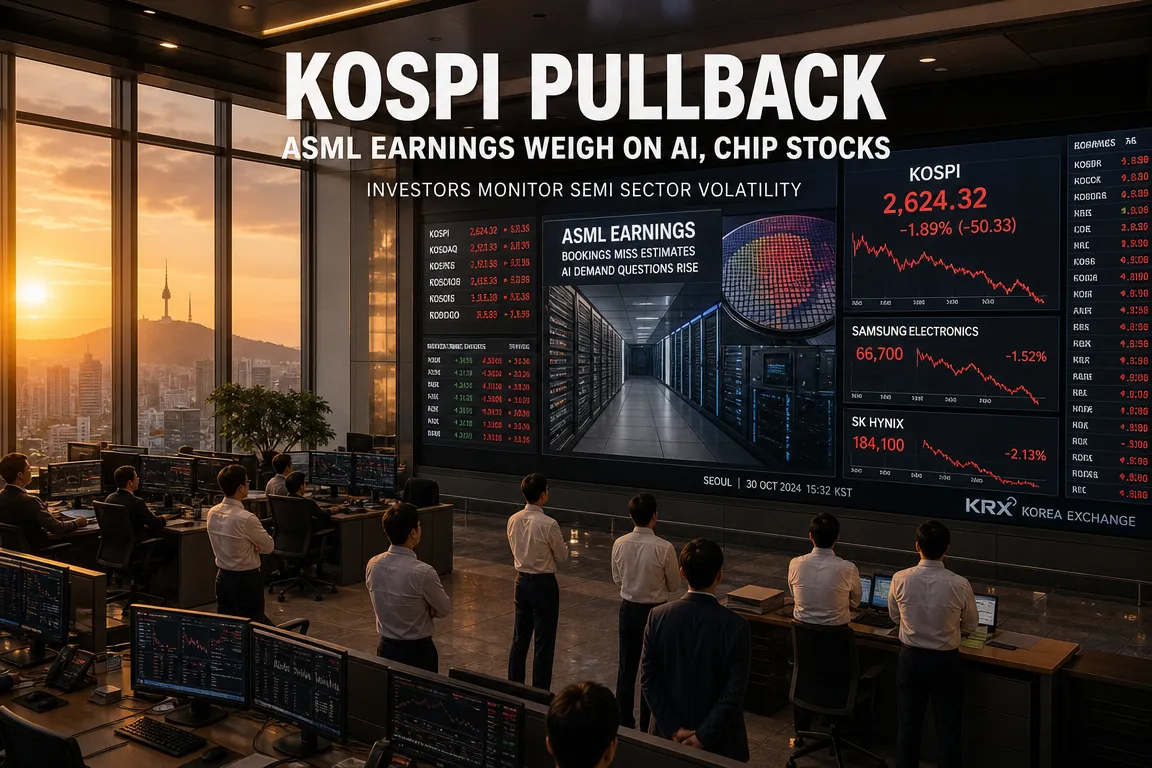
The Kospi rose more than 2% in early trading today, briefly recovering much of the prior day’s decline.
However, sentiment weakened sharply near the close.
The immediate trigger was ASML’s after-hours share price decline.
ASML is a key company in the global semiconductor equipment market and effectively holds a monopoly in EUV lithography equipment, which is essential for advanced chip production.
As a result, ASML earnings are viewed not simply as a company-specific event, but as a leading indicator for the semiconductor cycle, AI chip demand, SK Hynix shares, Samsung Electronics investor sentiment, and the direction of the Kospi.
In this earnings release, however, the results were not weak.
Revenue guidance came in above market expectations, and management said demand in 2027 and 2028 could materially exceed supply, while also indicating potential capacity expansion.
The issue is that the market has entered a phase where good news alone is no longer sufficient.
Global equities are now focused not on whether earnings are strong, but on whether they are strong enough to justify already elevated valuations.
1. Today’s Kospi Action: Early Strength Reversed Into Late Decline
The Kospi opened firmly today.
Given the scale of the prior day’s losses, a technical rebound was expected, and the index at one point rose more than 2% during the session.
From an investor’s perspective, this was a normal recovery from an oversold move.
However, gains faded in the second half of the session, and the index eventually closed lower.
The most direct catalyst was ASML’s after-hours weakness.
As ASML fell roughly 3% in after-hours trading, sentiment across Korean semiconductor shares and the broader Kospi deteriorated.
Korea’s market has a high weighting in semiconductors.
When Samsung Electronics and SK Hynix weaken, the overall index tends to follow.
As a result, even a modest move in ASML can have a disproportionate impact on the Korean market.
2. Were ASML Results Weak? On the Numbers, They Were Not
There were three main takeaways from ASML’s earnings release.
- Revenue guidance was raised above market expectations.
- Management said semiconductor equipment demand in 2027 and 2028 could significantly exceed supply.
- The company said it is reviewing capacity expansion to meet demand.
In most markets, such guidance would be treated as constructive.
For ASML, stronger demand relative to supply supports pricing power and long-term growth visibility.
AI data centers, high-performance GPUs, HBM memory, and advanced foundry investment all translate into demand for ASML equipment.
In other words, the announcement did not signal a deterioration in semiconductor demand.
It instead pointed to the possibility of a sustained AI investment cycle.
Even so, the stock declined because expectations had become too elevated.
3. The Real Source of Disappointment: The Market Now Requires More Than “Good”
The market has already priced in a substantial portion of the AI semiconductor growth story.
Nvidia, TSMC, ASML, SK Hynix, and Samsung Electronics have all attracted strong interest on expectations of continued AI-related capital spending.
At this stage, even strong earnings may not be enough to lift share prices.
Investors now want results that are not just positive, but materially above consensus.
ASML’s latest announcement was clearly constructive, but it did not fully exceed expectations to a degree that would support a stronger share price reaction.
Short-term investors are particularly focused not on 2027 or 2028 demand, but on order growth in 2025 and 2026.
Even when the medium-term outlook remains favorable, stocks can still face profit-taking if they have already risen sharply.
ASML’s after-hours decline should be understood in that context.
4. Why ASML’s Decline Pressured the Kospi
ASML is the leading name in semiconductor equipment.
Because it supplies the EUV tools required for cutting-edge chip production, it is viewed as a barometer for the global semiconductor investment cycle.
When ASML weakens, the market quickly asks whether:
- AI semiconductor investment is slowing
- equipment orders are softer than expected
- memory and foundry investment has been overvalued
- SK Hynix and Samsung Electronics may face short-term pressure
On the face of it, this earnings release does not support a view that semiconductor demand is weakening.
However, markets react to expectations and positioning faster than to fundamentals alone.
In late trading, foreign futures positioning, program trading, ETF rebalancing, and institutional profit-taking can amplify the move.
Accordingly, ASML’s after-hours decline likely became a broader source of selling pressure on the Kospi.
5. Impact on SK Hynix and Samsung Electronics
SK Hynix is the stock investors are watching most closely in this context.
It has built a strong position in the HBM market and is widely viewed as a key beneficiary of AI semiconductor demand.
As a result, it tends to rise sharply when AI optimism improves and to react quickly when expectations soften.
ASML’s decline weighed on SK Hynix sentiment for that reason.
Importantly, however, ASML’s remarks did not indicate weaker HBM demand.
In fact, the comment that semiconductor equipment demand could exceed supply in 2027 and 2028 suggests that the AI semiconductor investment cycle may remain intact for longer.
The same applies to Samsung Electronics.
For Samsung, the key variables remain the recovery in memory pricing, improvements in HBM competitiveness, and the timing of renewed foundry investment.
ASML-related developments may pressure sentiment in the short term, but the medium-term direction of Samsung Electronics and SK Hynix will continue to depend on HBM capacity, DRAM pricing, AI server investment, and customer order trends.
6. The Key Point Often Missed: This Is Valuation Fatigue, Not an Industry Downturn
Reading today’s late-session Kospi decline simply as a reaction to ASML weakness misses the main point.
The critical issue is not whether the semiconductor cycle has turned down.
The issue is that the market has already embedded very high expectations into share prices.
When ASML reports strong earnings but the stock still declines, it means investors are now judging not only the direction of earnings, but also their magnitude.
In other words, “growth” alone is no longer enough.
The market now requires evidence that growth is materially stronger than previously expected.
This is the most important shift in the current global equity backdrop.
The AI investment cycle remains intact, but valuations have already moved well ahead of fundamentals in many related stocks.
As a result, future performance may increasingly diverge between companies with clear earnings visibility and those whose share prices were driven mainly by expectations.
7. Key Variables for Investors to Monitor
① ASML Order Trends
The most important metric for ASML is new orders, not just revenue.
For semiconductor equipment companies, future order flow often matters more than current sales.
Strong new orders suggest customers are likely to expand capex.
If guidance improves but orders are weaker than expected, the market may still react negatively.
② Semiconductor Investment Pace in 2025~2026
ASML noted that demand in 2027 and 2028 could be strong.
However, equity markets usually remain more sensitive to the next quarter and next year than to results several years out.
Investors should therefore continue to monitor the pace of capex growth in 2025 and 2026.
③ Sustainability of SK Hynix HBM Demand
HBM is central to SK Hynix’s investment case.
The key question is whether orders from major AI semiconductor customers, including Nvidia, remain strong.
HBM pricing, supply agreements, and capacity expansion will directly affect the stock.
④ Samsung Electronics’ HBM Competitiveness
For Samsung Electronics, memory market recovery alone may not be sufficient.
The market wants evidence that the company is regaining competitiveness in HBM.
HBM qualification progress, customer expansion, and a higher mix of premium memory products remain important indicators.
⑤ Foreign Flows into the Kospi
The Kospi is highly sensitive to foreign capital flows.
When foreign investors continue buying large-cap semiconductor stocks, the index can rebound sharply.
Conversely, when foreign investors reduce both futures and cash positions, the index can weaken quickly late in the session.
8. The Move Does Not Justify Excessive Concern, but Expectations Need to Be Reset
Today’s Kospi decline reflects a near-term adjustment in expectations rather than a structural deterioration in the semiconductor cycle.
ASML’s comments were still broadly consistent with solid long-term demand.
That said, because the AI semiconductor story has already been heavily priced in, even modest disappointments may lead to elevated volatility.
Investors do not need to avoid the semiconductor sector altogether.
However, the simple view that AI stocks will rise just because they are AI stocks is becoming less reliable.
Investors now need to evaluate earnings, orders, customers, margins, and valuation together.
Given the Kospi’s heavy exposure to semiconductors, ASML results and global semiconductor equipment trends are likely to remain important leading indicators.
9. In One Sentence
Today’s late-session decline in the Kospi was driven not by weak ASML earnings, but by a market that has already priced in very high expectations and now demands more than good news.
The AI semiconductor cycle remains intact, but share prices are increasingly reacting to actual numbers and upside versus consensus rather than to the growth narrative alone.
< Summary >
The Kospi rose more than 2% in early trading but reversed into late-session weakness.
The direct trigger was ASML’s after-hours share price decline.
ASML raised revenue guidance above expectations and said demand in 2027~2028 could exceed supply.
However, the market has already priced in much of the AI semiconductor growth story.
The main issue behind the decline is valuation fatigue and elevated expectations, not a deterioration in semiconductor fundamentals.
Going forward, ASML order flow, SK Hynix HBM demand, Samsung Electronics’ HBM competitiveness, and foreign investor flows will remain key drivers of the Kospi.
[Related Articles…]
- AI Semiconductor Cycle and Global Equity Outlook
- Kospi Market Outlook and Semiconductor Investment Strategy
*Source: [ 내일은 투자왕 – 김단테 ]
– 코스피 장막판에 다시 떨어진 이유 #코스피 #ASML #하이닉스
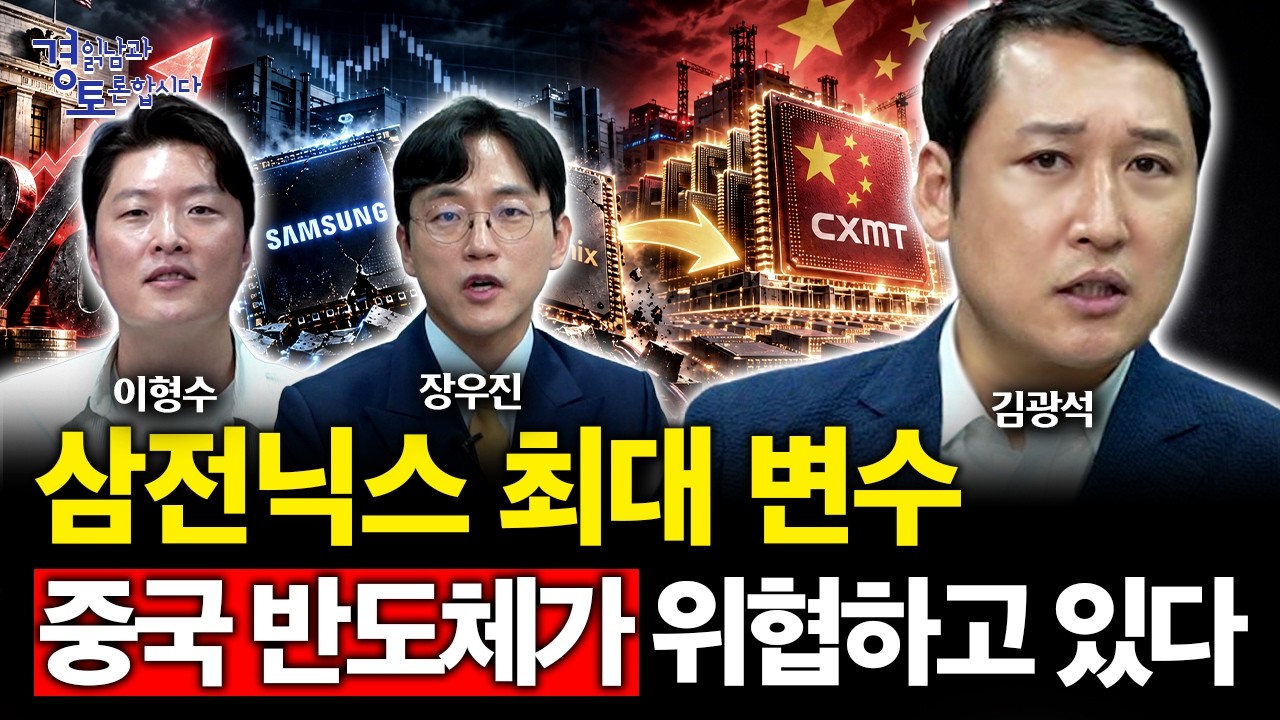
● Samsung-SK Hynix Shock, China Chip Surge, AI Cash Crunch
Key Variables for Samsung Electronics and SK Hynix: Interest Rates, China’s Semiconductor Catch-Up, and the AI Data Center Investment Cycle Reshaping the Memory Market
The key issue in the current semiconductor market is not simply whether HBM demand remains strong.
The more important variables are sovereign bond yields, AI data center investment, CXMT’s market share expansion in China, U.S.-China semiconductor self-sufficiency, and the platformization of memory semiconductors.
In assessing Samsung Electronics and SK Hynix, many investors focus on earnings and HBM alone, but the larger issue in this discussion was whether AI infrastructure investment can continue to be funded.
In simple terms, even if AI semiconductor demand remains solid, the cycle can weaken if capital becomes more expensive and data center construction slows.
In addition, the rapid expansion of China’s memory vendor CXMT is a material risk from the perspective of Korea’s economic outlook.
1. The single largest variable for Samsung Electronics and SK Hynix is ultimately interest rates
The first variable identified as having the greatest impact on Samsung Electronics and SK Hynix was interest rates.
Semiconductors are a cyclical industry, but in the current AI cycle, funding costs have become more important than the broader economic cycle.
This is because AI infrastructure investment is on a scale far larger than previous semiconductor investment cycles.
-
The five major U.S. hyperscalers were identified as Amazon, Microsoft, Google, Meta, and Oracle.
-
Their AI infrastructure-related CAPEX for this year was estimated at approximately $800 billion.
-
That is close to KRW 1,000 trillion.
-
Next year, projections range from a conservative $1.2 trillion to an optimistic $1.4 trillion.
-
This scale was described as exceeding the U.S. defense budget.
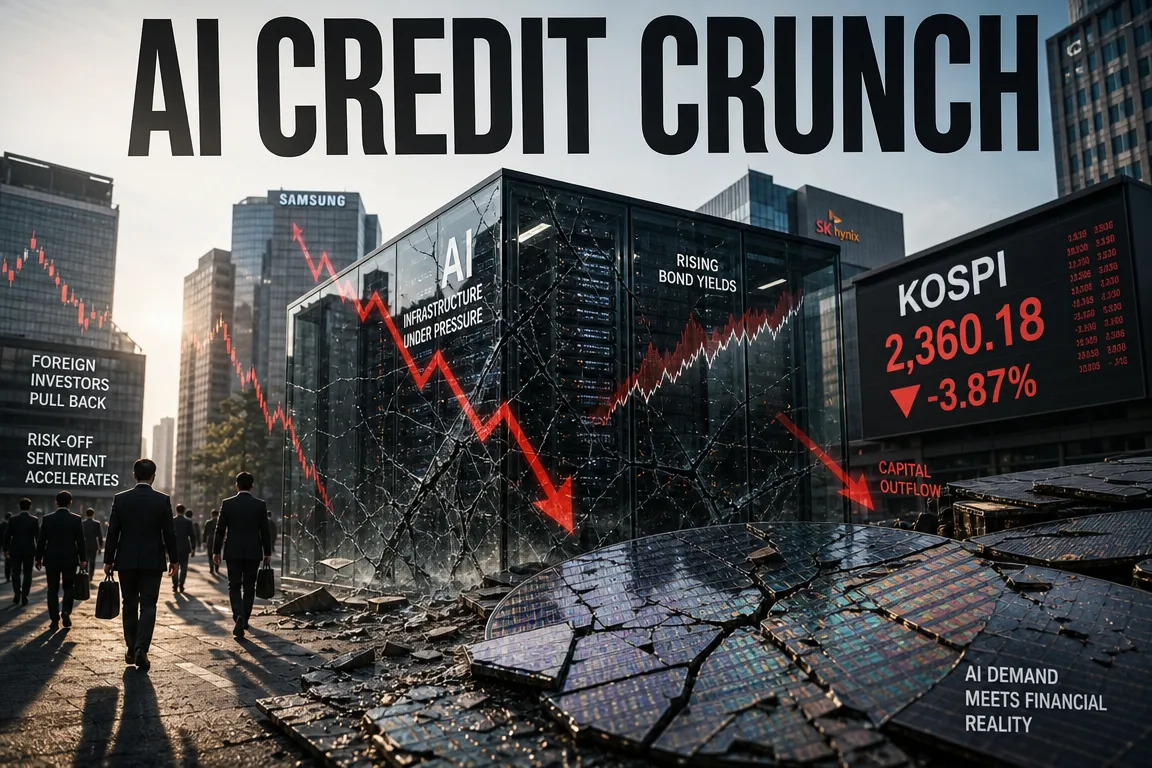
The issue is that much of this data center investment depends on capital markets, corporate bond issuance, and external financing.
If U.S. Treasury yields remain near 5%, corporate funding costs rise materially.
In other words, even if companies want to continue AI infrastructure investment, the cost of raising capital becomes too high.
2. The real background behind AI investment slowdown concerns may be funding pressure rather than safety concerns
An important point in the discussion was the interpretation of why some AI industry leaders argue for slowing the pace of AI development.
On the surface, the argument is framed in terms of risks to humanity, but in practice it may reflect the burden of financing under a high-rate environment.
The analogy used was clear.
If six people are hanging from a pull-up bar and one starts losing strength first, that person has an incentive to say, “Let’s stop here.”
But the person who still has strength left asks why the effort should be slowed.
From this perspective, calls to slow AI development may reflect differences in financial resilience across companies.
For Nvidia, there is no incentive to slow investment because a pause would reduce GPU and AI semiconductor sales.
By contrast, AI startups and some cloud companies facing financing pressure may prefer a slower pace.
Ultimately, a high-rate environment is likely to create clear winners and losers within the AI sector.
3. When rates rise, the first pressure point may be the lower layers of the ecosystem, not the semiconductor leaders
Risks from high rates are not limited to major semiconductor companies such as Samsung Electronics and SK Hynix.
The more vulnerable entities may be cloud subcontractors, data center component suppliers, and smaller companies tied to AI infrastructure projects.
The discussion compared this to Korea’s project financing issues in real estate.
When rates rose sharply in 2022 and 2023, problems in project financing surfaced and construction companies with weak balance sheets were strained.
AI infrastructure investment can behave similarly.
When funding is available, many participants appear to be growth companies, but when rates stay high and financing tightens, the weakest links are affected first.
Nvidia and other top-tier companies are more likely to withstand such pressure.
However, companies below Nvidia in the ecosystem, which depend on continued investment and demand, could face significant downside if investment delays materialize.
4. Investment delays are driven not only by rates, but also by power, water, and permitting bottlenecks
AI data center investment can be delayed for reasons beyond interest rates.
Power shortages, water constraints, local opposition, and permitting delays are also major variables.
-
AI data centers require very large amounts of electricity.
-
Water usage also rises due to server cooling requirements.
-
Local residents may oppose new facilities if electricity and water are already constrained.
-
This NIMBY effect can slow approvals and permitting.
-
As a result, the expected scale of data center investment may be reduced in practice.
This is important because a significant portion of the semiconductor demand outlook assumes continued expansion in AI data centers.
If investment is delayed, demand projections for HBM, DDR, NAND, and server memory may need to be revised.
Semiconductors are therefore no longer a sector that can be analyzed solely at the chip level; power infrastructure, energy policy, and local permitting now matter as well.
5. Market share decline at Samsung Electronics and SK Hynix is the number investors will watch most closely
The most notable figures in the discussion were changes in the combined memory market share of Samsung Electronics and SK Hynix.
The following trend was presented:
-
In Q1 2024, the combined share of Samsung Electronics and SK Hynix was cited at around 75%.
-
In 2025, it was said to have fallen to around 70%.
-
By Q2 this year, it was described as having declined further to around 63%.
-
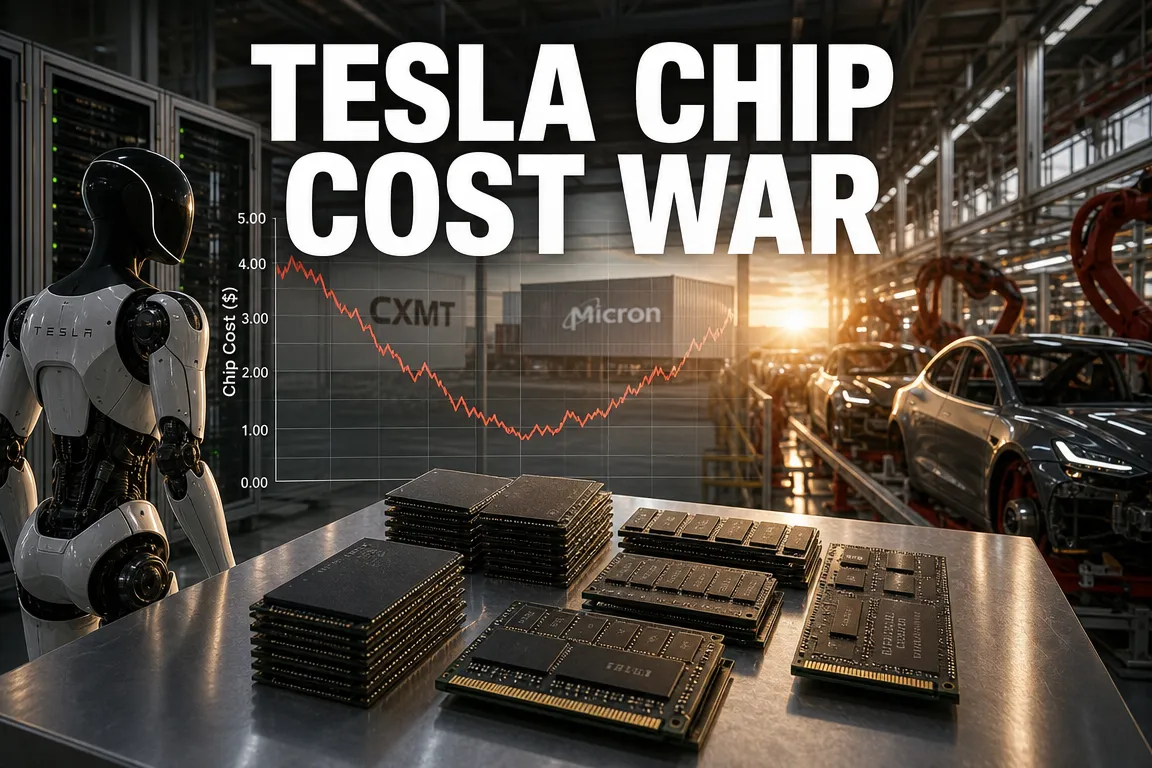
By contrast, CXMT’s share in China was described as rising from 0% to 2%, 6%, and more recently to around 12%.
The reason this matters is not simply that China is producing more semiconductors.
Markets are more sensitive to future market share than to current earnings strength.
Given Korea’s prior experience with China’s catch-up in shipbuilding, steel, displays, and parts of the battery sector, investors may be pricing in a similar risk for semiconductors.
6. CXMT’s rise is a risk, but the semiconductor case differs from displays and batteries
Views on China’s semiconductor advance were mixed.
It is clearly a medium- to long-term risk.
However, another view was that it may be more difficult than in displays, EVs, or batteries for China to win share quickly based only on price competitiveness.
The main reason is the difference between B2B and B2C markets.
Whether major U.S. hyperscalers can easily use Chinese memory semiconductors in AI infrastructure and data centers is a separate issue.
-
Performance may not be sufficient.
-
Even if performance is adequate, security concerns may arise.
-
As with Huawei, concerns over spyware or data leakage can become political issues.
-
U.S. policymakers are unlikely to allow broad use of Chinese semiconductors without resistance.
As a result, China’s penetration into core B2B infrastructure markets such as AI data centers may remain limited.
In addition, because both Democratic and Republican administrations view China as a strategic competitor, restrictions on advanced semiconductor equipment and materials are likely to remain in place.
This may give Korean semiconductor companies time to preserve their technology lead.
7. Even so, complacency would be a mistake: the next front is on-device AI and robotics
Although there was a view that China’s semiconductor rise should not be overstated in the near term, there was also a strong view that complacency would be a mistake.
The key issue is that the next AI phase will not end with data centers.
At present, the core market is AI infrastructure and HBM for servers.
Over time, AI is likely to expand into smartphones, PCs, vehicles, robots, and home appliances through edge devices.
This is the era of on-device AI and physical AI.
China is particularly strong in robotics.
If Chinese firms mass-produce low-cost robots for global markets, the memory semiconductors embedded in those systems could be absorbed by Chinese suppliers.
That would allow Chinese memory vendors to build capabilities while offsetting weakness in other demand areas through the robotics ecosystem.
Just as Korea’s memory industry once grew on the back of low-cost consumer electronics demand, China could build a semiconductor ecosystem through robotics and on-device AI.
Accordingly, it would be premature to assume there is no risk simply because Chinese semiconductors cannot yet enter U.S. data centers.
8. If both the U.S. and China pursue semiconductor self-sufficiency, where will Korea sell?
The most important question from the perspective of Korea’s economic outlook was this:
China is seeking to produce its own semiconductors, and the U.S. is also expanding domestic production around Micron and other suppliers.
Where, then, will Korea sell semiconductors in the future?
Korea has historically exported large volumes of semiconductors to both the U.S. and China.
But if the U.S. strengthens its supply chain for security reasons and China pursues self-sufficiency to reduce exposure to sanctions, Korea’s export structure will face pressure.
If these two trends occur simultaneously, the impact on Korea’s trade balance could be material.
Semiconductors account for a very large share of Korea’s total exports.
The discussion noted that semiconductors represent around 40% of Korea’s exports.
If semiconductor prices weaken, the effect would not be limited to Samsung Electronics and SK Hynix; Korea’s macroeconomy could also be affected.
Demand is expected to increase, and there is little disagreement on that point.
However, if supply grows faster than demand or moves closer to balance, price correction is difficult to avoid.
Because memory semiconductors are a highly cyclical industry, rising demand does not always translate directly into rising prices.
9. The underappreciated point: semiconductors must evolve from a commodity into a platform
The most important but less discussed issue in the discussion was the platformization of memory semiconductors.
In the past, memory semiconductors were largely a volume and cost game.
Going forward, simple commodity products may be less competitive against China’s scale advantage.
Higher-value memory is likely to become increasingly customized, similar to foundry models.
In AI infrastructure, HBM optimized for Nvidia GPUs is required.
For server CPUs, memory and SoC combinations aligned with system architecture become more important.
For robotics and on-device AI, LPDDR, NAND flash, and low-latency design between processors may be critical.
In practice, memory companies must be able to say not only “we sell good DRAM,” but also “let us co-design and optimize the platform with you.”
They need to work closely with AI developers, robotics manufacturers, and cloud companies.
That makes it harder for customers to switch suppliers easily.
This is the essence of lock-in.
10. Nvidia’s direction: vertical integration in hardware and expansion of the software ecosystem
The discussion also highlighted Nvidia’s strategic approach.
Nvidia began as a GPU and AI accelerator company.
Today, it is expanding toward bundled CPU-GPU systems, server racks, and turnkey data center solutions, including cooling.
It is vertically integrating hardware.
At the same time, it is expanding horizontally through the CUDA ecosystem.
It is also binding developers and enterprises into its platform through Omniverse for simulation, Isaac for robotics development, and broader synthetic data and model development tools.
Memory companies cannot replicate Nvidia’s strategy in full.
However, they need at least to co-design how customers use memory, help define standards, and build long-term partnerships.
That is why Samsung Electronics and SK Hynix must evolve from manufacturers into core platform companies within the AI semiconductor ecosystem.
11. Key checkpoints for investors
-
First, the trend in U.S. Treasury yields.
-
Persistently high rates increase the cost of AI data center investment and corporate bond issuance.
-
Second, actual CAPEX execution by hyperscalers.
-
What matters is realized spending, not announced plans.
-
Third, power infrastructure and data center permitting.
-
Grid capacity, water availability, and local opposition can become bottlenecks.
-
Fourth, changes in CXMT’s market share.
-
Even if Korean companies remain profitable, share losses may be viewed negatively by the market.
-
Fifth, Samsung Electronics’ and SK Hynix’s customized memory strategy.
-
Competitiveness after HBM will depend on how deeply they are embedded with customers.
12. What the Korean semiconductor industry needs
The Korean semiconductor industry is clearly benefiting from the current cycle.
AI semiconductor demand, HBM supply tightness, and global data center expansion are all supportive for Samsung Electronics and SK Hynix.
However, it would be risky to assume this opportunity will continue indefinitely.
China is competing through lower cost and scale.
The U.S. is expanding domestic production for security and supply chain reasons.
AI companies are facing financing pressure in a high-rate environment.
Data centers are running into power and permitting constraints.
Korean companies therefore need to move beyond capacity expansion toward customized high-value memory, AI infrastructure optimization, semiconductors for robotics and on-device AI, and platform-based collaboration models.
The current cycle is about selling more and earning more, but the next cycle is likely to be decided by how deeply each company is embedded in the customer ecosystem.
< Summary >
The key variables for Samsung Electronics and SK Hynix are not only HBM demand, but also U.S. Treasury yields and the sustainability of AI data center investment.
CAPEX by major U.S. hyperscalers has reached a scale that exceeds the U.S. defense budget, while higher rates are increasing financing pressure.
Power shortages, water constraints, NIMBY sentiment, and permitting delays may also slow data center investment.
China’s CXMT is rapidly expanding its memory market share, and declining combined share at Samsung Electronics and SK Hynix is a material risk.
That said, Chinese semiconductor penetration into U.S. data centers may remain constrained by security and political considerations.
The longer-term battleground is on-device AI, robotics, and physical AI, and Korean memory companies will need to evolve beyond manufacturing toward platform-based customized semiconductor businesses.
[Related Articles…]
- AI Semiconductor Cycle and Memory Market Outlook
- How Interest Rates Shape Global Markets and Technology Stocks
*Source: [ 경제 읽어주는 남자(김광석TV) ]
– 삼전닉스 최대 변수는 금리…중국 추격까지, 반도체 판이 바뀐다 | 경읽남과 토론합시다 | 3자토론 이형수x장우진x김광석 [2편]