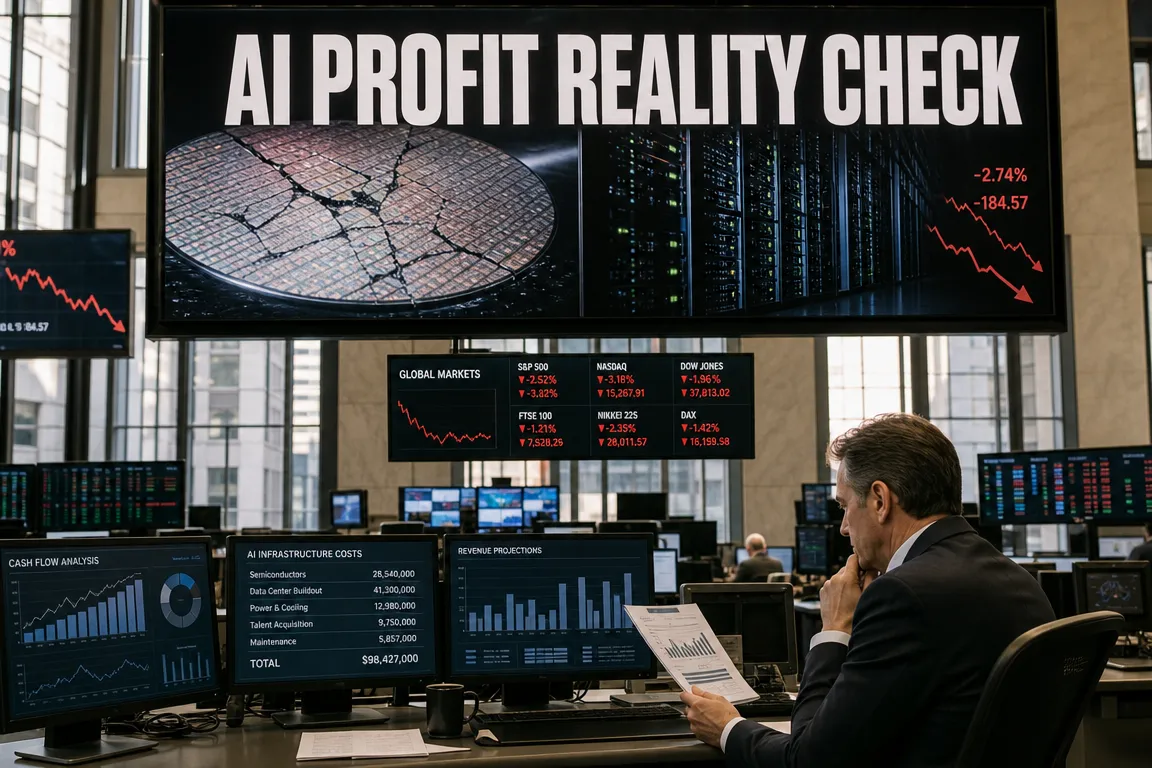
● Tesla SpaceX Shock, Shanghai Risk, AI Crash
Shanghai Was the Critical Variable in a Potential Tesla-SpaceX Merger: The Meaning of the 2.97-Share Ratio and AI Investment Risks
Tesla held above $399, while assets described as SpaceX-related fell more than 6%, according to the source analysis.
The central issue extends beyond short-term price movements.
Investors should assess the potential Tesla-SpaceX merger, China’s approval authority related to the Shanghai factory, market skepticism toward AI investment, the expansion of robotaxi operations, and the practical value of the 2.97 shares that Tesla shareholders could theoretically receive.
However, several claims in the source require independent verification, including SpaceX’s listing status and share price, a potential Tesla-SpaceX merger, and the reported scale of the Binance security breach.
The analysis below therefore distinguishes confirmed information from scenarios presented in the source.
Key Developments at a Glance
| Category | Information Presented in the Source | Key Point for Investors |
|---|---|---|
| Tesla | Closed down 0.87% at $399.81 | Determine whether the stock materially outperformed during the broader technology-sector decline |
| SpaceX-Related Price | Declined 6.37% to $134.77 | Verify the official listing status, trading structure, and price source |
| Exchange Ratio | Approximately 2.97 shares per Tesla share | This is a simple price comparison, not an actual merger exchange ratio |
| Nasdaq | Declined 2.86% in one session | Concerns over AI capital expenditure and the pace of monetization |
| Shanghai Factory | Accounts for approximately 52% of Tesla production | Chinese merger review and supply-chain risks |
| Robotaxi | Operating hours extended to 20 hours per day | Vehicle count, remote-support staffing, and actual revenue require verification |
The Market Decline Reflected Doubts About When AI Will Generate Returns
According to the source, the Nasdaq fell 2.86%, the S&P 500 declined 1.82%, and the Dow Jones Industrial Average dropped 1.09%.
The source also cited estimates that the Nasdaq 100 could lose more than $2 trillion in market capitalization over one month.
A central factor behind the correction was the substantial capital being allocated to AI data centers, semiconductors, and power infrastructure.
The market is no longer focused solely on AI revenue growth.
Investors are increasingly evaluating when AI investment will translate into operating profit and cash flow.
- Investors should determine whether AI capital expenditure is generating measurable revenue growth.
- Depreciation and electricity costs should be assessed for their impact on operating margins.
- The proportion of investment funded through bonds and loans rather than internal cash flow is increasingly important.
- Persistently high interest rates could reduce expected returns on AI infrastructure.
The source also reported that Microsoft was considering a large investment-grade bond issuance and cited forecasts that future AI capital expenditure could exceed $1 trillion.
The market’s focus is shifting from whether AI is expanding to whether it can generate cash flow above capital and interest costs.
What Simultaneous Declines in Equities and Gold Could Indicate
The source stated that gold fell more than 3.6% in one session to approximately $3,884 per ounce.
If gold declined alongside equities, investors may have been liquidating more than risk assets.
Profitable gold positions may have been sold to meet margin calls, raise cash, and reduce leverage.
Such a simultaneous decline could indicate broader liquidity concerns rather than a correction limited to technology stocks.
If the U.S. 10-year Treasury yield is near 4.93% and crude oil is approximately $103 per barrel, companies face both elevated financing costs and inflationary pressure.
This environment would create additional pressure on the global economic outlook and corporate valuations.
The Market Signal Behind Apple Overtaking Nvidia
The source estimated Apple’s market capitalization at approximately $5.03 trillion and Nvidia’s at approximately $4.93 trillion.
These figures should be verified against official market data for the relevant trading session.
The more significant issue is the direction of market valuation.
Companies with relatively limited capital-expenditure requirements may be viewed as more defensive than businesses making substantial AI infrastructure investments.
Apple has generally relied on its device ecosystem and external infrastructure rather than building AI infrastructure entirely in-house at comparable scale.
If markets prioritize cash flow and capital efficiency over growth, Apple’s business model could receive a relative valuation advantage.
Why Tesla Shares Were Relatively Resilient
Tesla is also investing heavily in autonomous driving, robotics, and AI training infrastructure.
However, on the trading day cited in the source, Tesla declined considerably less than the Nasdaq.
First, Tesla is not solely an AI infrastructure company; it generates revenue from vehicle sales and energy storage.
Second, long-term expectations for robotaxis, FSD, and Optimus are reflected in its valuation alongside the automotive business.
Third, Tesla’s investment thesis has increasingly shifted from electric-vehicle deliveries toward the potential expansion of its autonomous-driving platform.
Relative price resilience does not necessarily indicate lower business risk.
Tesla’s valuation reflects substantial expectations for future technologies, leaving the stock exposed to renewed volatility.
Why 20-Hour Robotaxi Operations Matter
According to the source, Tesla’s robotaxi service extended operating hours from 6:00 a.m. to 2:00 a.m. the following day.
A 20-hour operating schedule leaves four hours before continuous 24-hour service.
Longer operating hours increase the time during which each vehicle can generate revenue.
Demand after 11:00 p.m. may also benefit from events, social activity, and airport transportation, potentially making the extension more significant than a simple increase in operating time.
- The source reported the addition of a feature that dims the display.
- A rest mode that minimizes autonomous-driving visualizations was introduced.
- The source also claimed that Grok had been integrated into Model Y robotaxis.
- A feature allowing users to share travel routes with contacts was also reportedly added.
Operating hours alone are insufficient to assess robotaxi economics.
Investors also need data on paid rides, revenue per vehicle, empty-mile rates, accident rates, insurance expenses, remote-support staffing, charging costs, and maintenance expenses.
If the fleet consists of approximately 1,000 vehicles, its near-term impact on Tesla’s consolidated results would remain limited.
For autonomous driving to materially affect Tesla’s valuation, both fleet size and the number of paid-service regions must expand.
Is Cybercab Fully Driverless?
A Forbes column cited in the source questioned whether Cybercab would operate without meaningful human supervision.
If remote-support personnel intervene continuously or frequently for each vehicle, the cost structure of the robotaxi business would change materially.
The existence of remote-support personnel is not the primary issue.
The key metric is the number of vehicles that each employee can supervise.
If one employee must continuously monitor one vehicle, the model would resemble replacing an in-vehicle taxi driver with a remote operator.
If one employee can support dozens or hundreds of vehicles only during exceptional events, the system could achieve meaningful operating efficiency.
Competitors, including Waymo, also use remote-support systems, so remote assistance alone should not be interpreted as evidence of autonomous-driving failure.
Accurate comparisons require disclosure of remote-intervention frequency and labor costs per vehicle.
Australian FSD Expansion and Safety Claims
According to the source, Tesla stated that supervised FSD had accumulated more than 160 million kilometers of driving in Australia and New Zealand.
Tesla also reportedly presented internal data indicating a 40% reduction in collisions and a 90% reduction in hard-braking events when FSD was used.
The source stated that Tesla asked Australia to permit public-road autonomous-driving trials in 2027 and to advance the implementation of relevant safety legislation from the expected 2029 timeline to 2027.
Because these figures were submitted by Tesla, independent verification is important.
Differences in geography, road type, weather, and driver behavior can create selection bias in simple accident-rate comparisons.
Regulators are likely to focus on serious accidents per million kilometers, driver-intervention rates, and system liability rather than total accident counts alone.
Would a 2.97-Share Ratio Benefit Tesla Shareholders?
Based on the closing prices presented in the source, one Tesla share was worth approximately 2.97 times the stated SpaceX-related price.
This could create the impression that a Tesla shareholder might receive approximately three shares following a merger.
However, this calculation has no legal connection to an actual merger exchange ratio.
A merger exchange ratio is not determined solely by the two companies’ share prices.
- The enterprise values and net debt of both companies must be considered.
- Privately held equity and preferred-share rights must be evaluated.
- Merger and control premiums may be included.
- The voting rights of Elon Musk and related parties must be assessed.
- A Tesla special committee and an independent fairness opinion could be required.
- Litigation risk and shareholder approval must also be considered.
The 2.97 figure is therefore a relative market-price indicator, not the number of shares investors would receive.
In addition, the ratio reportedly increased because the price of the other asset declined, not because Tesla shares appreciated materially.
A higher ratio does not automatically increase the economic benefit to Tesla shareholders.
Why a Decline in the Other Company’s Price Is Not Necessarily Positive
If a merger proceeded, Tesla shareholders would assume both the growth prospects and the risks of the other company.
If the customer concentration and lock-up expiration risks identified in the source are accurate, those issues would remain after a merger.
If one customer accounts for 34.5% of total revenue, a contract reduction or termination could have a material financial impact.
An increase in tradable shares following lock-up expirations could also create near-term selling pressure.
Receiving more shares at a lower price would also expose investors to the associated business risks and the possibility of further price declines.
Bank of America Reportedly Identified Shanghai as the Largest Variable
The Bank of America report cited in the source reportedly argued that China could represent the largest regulatory risk in a Tesla-SpaceX combination.
A merger could place Tesla’s Shanghai factory within a corporate group engaged in U.S. government and defense-related activities.
Chinese authorities could view the transaction as a national-security, data, and supply-chain matter rather than a standard automotive merger.
The Shanghai factory is more than an overseas production site for Tesla.
According to the source, approximately 851,000 of Tesla’s 1.63 million annual vehicle sales were produced in Shanghai.
This would represent approximately 52% of total production from a single facility.
The Shanghai factory supplies both the Chinese domestic market and export markets across Europe and Asia.
If more than 95% of components are sourced locally in China, the facility constitutes a central part of Tesla’s supply chain.
Why a Merger Between U.S. Companies Could Require Chinese Approval
Merger review is not determined solely by the location of corporate headquarters.
A combination involving companies that generate revenue above specified thresholds in China may be subject to review by Chinese competition authorities.
Even if revenue thresholds are not met, authorities could request a separate review based on competition or national-security concerns.
According to the source, Tesla generated approximately 22% of its revenue in China.
This level of exposure could provide a practical basis for Chinese participation in the merger-review process.
China could effectively prevent a transaction by delaying approval rather than formally rejecting it.
Why the Intel-Tower Semiconductor Case Matters
In 2022, Intel announced an agreement to acquire Israeli semiconductor company Tower Semiconductor for approximately $5.4 billion.
Intel abandoned the transaction in 2023 after failing to secure Chinese regulatory approval before the deadline.
Under the termination agreement, Intel paid Tower Semiconductor approximately $353 million.
The case demonstrated that delayed regulatory review, without a formal rejection, can prevent a global acquisition from closing.
If a Tesla-related merger were pursued, a similar delay could extend the transaction timeline.
During that period, market-price changes could continue to alter the expected exchange ratio and relative valuations.
Advantages and Risks of Separating the Shanghai Business
Separating Tesla’s Chinese operations into an independent entity could be considered as a way to reduce or avoid regulatory obstacles.
If Elon Musk has previously denied related reports, this scenario should not be treated as a confirmed plan.
The scenario continues to receive attention because of the Shanghai factory’s production scale and China’s contribution to Tesla’s revenue.
A separation could reduce regulatory exposure.
However, Tesla shareholders could be left with a company that excludes approximately half of its production capacity, a critical supply chain, and exposure to China’s growth market.
If Tesla were required to separate one of its most important production assets to complete a merger, the transaction’s economic rationale could weaken materially.
Critical Issues Often Overlooked
First, 2.97 is a simple price comparison, not a merger exchange ratio.
It should not be interpreted as the confirmed number of shares Tesla investors would receive.
Second, the principal risk may be delayed approval rather than formal rejection.
If Chinese authorities postpone a decision, the companies would continue to incur transaction costs without being able to integrate their operations.
Third, separating the Shanghai factory could reduce regulatory obstacles while fundamentally changing Tesla’s valuation structure.
The impact would extend beyond production volume to the component supply chain, export infrastructure, and access to Chinese consumers.
Fourth, robotaxi economics depend more on remote-support requirements and profitability per vehicle than on operating hours.
Even with 20-hour operations, high human-intervention costs could limit platform margins.
Fifth, competition in AI investment is also becoming a competition in debt financing.
As companies issue bonds to fund AI data centers, investors must evaluate interest expense and credit ratings alongside revenue growth.
Claims Requiring Independent Verification
The source includes several assertions that could affect investment decisions but require confirmation through official documentation.
- The assumption that SpaceX is publicly traded and the stated market price.
- The claim that Tesla and SpaceX are officially considering a merger.
- The exact language and publication dates of the cited Bank of America and JPMorgan reports.
- The number of registered robotaxis and operational Cybercab vehicles.
- The size and purpose of Microsoft’s bond issuance.
- The claim that $6.3 billion was removed from Binance and withdrawals were suspended.
- The allegation that a North Korea-linked hacking group was responsible.
- The stated market capitalizations of Apple and Nvidia.
In particular, the SpaceX-related price and proposed merger ratio should be treated as hypothetical until supported by SEC filings, official company announcements, or recognized exchange data.
Checklist for Tesla Investors
- Confirm whether Tesla or SpaceX officially announces that a merger is under consideration.
- Monitor whether a merger registration statement and proxy materials are filed with the U.S. SEC.
- Determine whether Tesla’s board establishes an independent special committee.
- Assess whether the transaction would require review by China’s State Administration for Market Regulation.
- Monitor changes to the ownership structure of the Shanghai factory and Tesla’s Chinese subsidiaries.
- Verify whether the number of paid robotaxi service areas and operational vehicles is increasing.
- Assess whether FSD accident rates and remote-intervention rates receive independent verification.
- Determine whether AI capital expenditure is weakening Tesla’s free cash flow.
< Summary >
Tesla held above $399 and outperformed the broader technology sector during the cited market decline.
The 2.97 figure presented in the source is a simple comparison between Tesla’s share price and a stated SpaceX-related price. It is not an actual merger exchange ratio.
If a merger were pursued, the Shanghai factory, which reportedly accounts for approximately half of Tesla’s production, and China’s merger-review process could become central variables.
China could obstruct the transaction by delaying its review without issuing a formal rejection.
Robotaxi economics depend more on revenue per vehicle, remote-support costs, and accident rates than on a 20-hour operating schedule.
As AI investment expands, investors should evaluate debt, interest expense, and cash flow alongside growth.
Most importantly, claims concerning a SpaceX share price and a potential merger require confirmation through official regulatory filings and company disclosures.
[Related Articles…]
*Source: [ 오늘의 테슬라 뉴스 ]
– 뱅크오브아메리카가 꼽은 한 도시, 상하이 — 스페이스X -6%에 비율은 2.97주까��, $399 테슬라 주주는?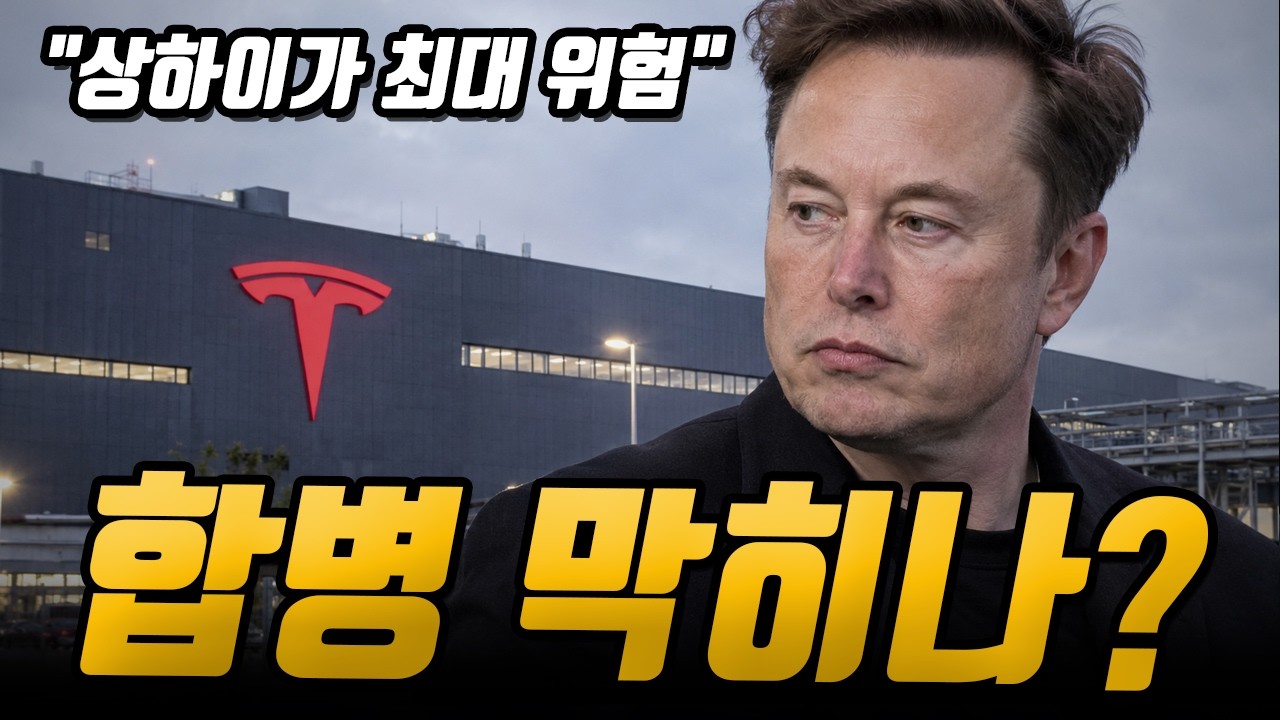
● 2027, Bond-Rate Shock, AI Cash-Drain, Liquidity Divergence
2027 Economic Outlook: U.S. Treasury Yields and the Reverse Flow of AI Capital Matter More Than Rate Cuts
The central market issue for 2027 is not simply when interest rates will decline.
Investors must assess the structural factors keeping U.S. Treasury yields elevated, the fiscal dominance created by simultaneous fiscal expansion and monetary tightening, and the concentration of capital in AI semiconductors.
Rate-cut expectations and expansionary fiscal policy could generate abundant liquidity in 2027. However, the result may differ from a conventional bull market in which most equities and assets rise together.
Governments and major technology companies are issuing debt simultaneously. Companies with limited financing capacity may face greater pressure, while capital increasingly concentrates in businesses that can demonstrate measurable AI-related earnings.
The following analysis examines the 2027 outlook through U.S. Treasury yields, inflation, fiscal dominance, rate cuts, and the AI value chain.
Forecasts for 2026 interest rates, growth, and geopolitical developments are scenario-based. Investors should verify them against current IMF, OECD, Federal Reserve, and central bank data before making investment decisions.
1. Key Global Economic Themes for 2027
- Sovereign bonds: Rising government debt and Treasury issuance, particularly in the United States, may prevent long-term yields from declining rapidly.
- Monetary policy: Following the expected completion of additional tightening in 2026, expectations for rate cuts could strengthen in 2027.
- Fiscal policy: Central banks are maintaining restrictive policies to control inflation, while governments are expanding fiscal support to address economic and geopolitical shocks.
- Inflation: Middle East geopolitical risk and crude oil prices remain major variables.
- AI investment: Despite elevated bond yields, AI semiconductor and data center companies continue to attract capital through strong earnings growth.
- South Korean economy: Semiconductor exports may support headline growth, while non-semiconductor industries and households experience substantially weaker conditions.
- Market structure: Crowding out and widening corporate divergence may represent more immediate risks than a broad financial crisis.
2. Six Reasons U.S. Treasury Yields May Remain Elevated
1. Middle East Tensions and Crude Oil Prices
An escalation of conflict in the Middle East would increase concerns about disruptions to oil production and transportation.
Problems affecting the Strait of Hormuz or major production facilities could raise oil prices through a risk premium even before physical supply declines.
Higher oil prices increase transportation, electricity, fertilizer, and food costs. Rising inflation expectations then lead bond investors to demand higher yields, reducing Treasury prices.
The scenario assumes geopolitical tensions could peak in March and September 2026 before partially easing. This would imply slower escalation rather than a definitive end to conflict.
2. A Second Inflation Wave and Monetary Tightening
A renewed increase in prices following the post-2022 disinflation trend would constitute a second inflation wave, potentially driven by a Middle East energy shock.
Persistent oil-driven inflation could delay planned rate cuts or lead central banks to consider additional tightening.
Expectations that policy rates will remain elevated for longer would place upward pressure on both short- and long-term yields.
Conversely, faster-than-expected disinflation and cautious central bank guidance could temporarily lower Treasury yields.
The 2027 bond market may therefore remain highly sensitive to consumer prices, wages, oil prices, and central bank communications.
3. Fiscal Expansion and Increased Treasury Supply
Governments must issue additional debt to finance economic support, defense spending, energy subsidies, and social programs.
When Treasury supply grows faster than demand, bond prices decline and yields rise.
The central issue is that fiscal expansion is continuing while monetary policy remains restrictive.
Monetary policy is reducing demand and liquidity, while fiscal policy is moving in the opposite direction.
As a result, long-term Treasury yields may not decline significantly even after policy-rate increases end.
4. China’s Reduced Holdings of U.S. Treasuries
China has reduced its allocation to U.S. Treasuries as part of reserve diversification and geopolitical risk management.
This decline in demand from a major foreign public-sector holder is occurring while U.S. Treasury issuance continues to increase.
When supply rises as the buyer base weakens, investors generally demand higher yields.
China’s reduced holdings are not the sole cause of higher Treasury yields, but they may weaken the market’s structural demand base over time.
5. Large-Scale Bond Issuance by Major Technology Companies
Hyperscalers such as Microsoft, Amazon, and Alphabet are undertaking substantial capital expenditure on AI data centers and cloud infrastructure.
Corporate bond issuance may increase if free cash flow becomes insufficient to fund these investments.
Some investors view highly rated global technology bonds as alternatives to U.S. Treasuries.
If substantial volumes of high-grade corporate bonds offer higher yields at similar maturities, Treasuries may also need to provide higher yields to attract capital.
Simultaneous large-scale borrowing by the U.S. government and major technology companies could become a defining feature of the 2027 capital market.
6. A Shift Toward Private Treasury Ownership
Central banks and foreign public institutions were historically the principal holders of U.S. Treasuries.
Private financial institutions, funds, and individual investors now account for a larger share of the market.
Central banks may hold Treasuries for policy purposes, while private investors trade more actively based on yield and risk.
Private investors are also more likely to demand additional compensation for fiscal deficits and inflation risk.
This ownership shift could increase both the average level and short-term volatility of Treasury yields.
3. Crowding Out Is a More Immediate Risk Than a U.S. Debt Crisis
Rapid growth in U.S. federal debt increases interest expenses.
If the government issues new debt to service existing obligations, debt and interest costs can reinforce each other.
However, an imminent U.S. default should not be treated as the base case.
The United States issues debt in its own currency and benefits from the world’s largest capital market and a substantial tax base.
More immediate risks include debt-ceiling disruptions, federal government shutdowns, sovereign credit-rating downgrades, and sharp increases in long-term yields.
A more significant structural concern is the crowding-out effect.
Large-scale government issuance can redirect market capital toward relatively secure Treasury securities.
Private companies must then offer higher yields than the government to issue corporate debt.
Highly profitable technology companies may be able to absorb these costs, while manufacturers and smaller companies reduce investment.
Fiscal spending may therefore increase even as private capital expenditure and employment weaken.
In 2027, corporate financing conditions and credit spreads may be more informative than the probability of a formal U.S. debt crisis.
4. The New Liquidity Environment Created by Fiscal Dominance
Historically, monetary and fiscal policies generally moved in the same direction.
During recessions, central banks cut rates while governments increased spending. During inflationary periods, central banks raised rates while governments restrained expenditure.
The 2026-2027 environment may be different.
Central banks are maintaining restrictive policies to contain inflation, while governments continue spending to offset economic and geopolitical shocks.
This rising influence of fiscal expansion relative to monetary tightening can be interpreted as fiscal dominance.
Government spending continues to inject liquidity even when policy rates remain high, preventing all asset classes from behaving as they typically would during monetary tightening.
However, this liquidity is likely to concentrate in industries directly linked to government policy and AI investment rather than spreading evenly across the economy.
5. Why the Nasdaq Can Rise Despite High Treasury Yields
When U.S. Treasuries offer yields near 5%, investors typically reduce exposure to risk assets.
Higher discount rates also reduce the present value of future earnings, creating headwinds for growth equities.
Nevertheless, the Nasdaq and selected AI companies can outperform when earnings growth exceeds the impact of higher financing and discount rates.
Revenue growth at companies such as Micron, Nvidia, Alphabet, Apple, Microsoft, and Amazon illustrates this dynamic.
With global economic growth near 3%, companies in the AI value chain that generate sustained double-digit growth can attract a disproportionate share of capital.
This represents the reverse flow of capital created by AI.
However, not all Nasdaq companies possess comparable competitive advantages.
Investors must distinguish companies converting AI demand into revenue and cash flow from those relying primarily on AI-related positioning.
In a high-yield environment, revenue growth, operating margins, free cash flow, and leverage are more important than thematic expectations.
6. How AI Semiconductors Could Divide the Global Economy
Global growth in 2026-2027 may diverge significantly according to participation in the AI value chain.
The United States leads in AI semiconductor design and cloud platforms.
South Korea plays a central role in high-bandwidth memory and memory semiconductors.
Taiwan leads in advanced foundry manufacturing, Japan in materials and components, and the Netherlands in semiconductor equipment.
China is expanding investment in its domestic AI ecosystem, electric vehicles, robotics, and physical AI.
These economies may benefit from exports of AI servers, semiconductors, manufacturing equipment, and power infrastructure.
Countries with limited exposure to the AI value chain may experience mainly the negative effects of high oil prices and elevated interest rates.
Within individual economies, semiconductor and power infrastructure companies may grow while domestic businesses and low-margin industries remain under pressure.
This divergence explains why stronger national GDP growth may not produce a broadly perceived recovery among households.
7. Why South Korean GDP Growth May Diverge from Household Conditions
OECD projections indicate that semiconductor exports could create stronger growth opportunities for South Korea.
Specific estimates, including a 3.7% growth rate, may vary by forecast date and methodology and should be verified against current OECD data.
Stronger headline growth would not necessarily produce equivalent improvements in employment and consumption.
Higher semiconductor production and exports may concentrate compensation and investment benefits among selected companies and regions.
Meanwhile, small businesses, construction, domestic services, and smaller manufacturers may continue to face high interest rates and rising costs.
The critical issue for South Korea in 2027 is whether the export recovery expands into employment, household income, and consumption.
8. When Could the Second Inflation Wave Subside?
A Middle East supply shock in 2026 could raise crude oil prices and inflation.
It is important to distinguish the price level from the inflation rate.
The price level represents the absolute cost of goods and services, while the inflation rate measures the year-over-year change.
For example, if crude oil trades at $100 per barrel in both 2026 and 2027, household costs remain high, but year-over-year oil inflation falls to 0%.
If oil declines to $70 in 2027, the price level may remain elevated relative to earlier periods, but the annual rate of change becomes negative.
Inflation can therefore decline rapidly because of base effects.
However, damaged production and storage infrastructure could prevent oil prices from returning quickly to pre-conflict levels.
If reduced supply rather than stronger demand drives the price increase, stabilization will depend primarily on de-escalation and supply normalization.
Under those conditions, inflation and Treasury yields could moderate together in 2027.
9. The Potential Timing of 2027 Rate Cuts from an OECD Perspective
The scenario assumes global inflation peaks in the fourth quarter of 2026 and declines more rapidly during the first and second quarters of 2027.
Because financial markets move ahead of formal policy decisions, rate-cut expectations could begin to be priced in during the first quarter of 2027.
- United States: Additional tightening could be followed by a holding period, with subsequent easing dependent on inflation data.
- United Kingdom: Policy may shift toward a prolonged pause, with potential easing considered around mid-2027.
- Eurozone: A limited number of additional increases could conclude the tightening cycle.
- Japan: Unlike other major economies, policy normalization and movement toward a neutral rate could support further increases.
- Emerging markets: Brazil, India, South Africa, and other economies may gain greater scope for cuts if inflation stabilizes.
The timing of rate cuts will remain sensitive to oil prices, wages, service inflation, and exchange rates.
Even if inflation declines, continued government issuance could prevent long-term yields from falling in line with policy rates.
Policy rates and 10-year Treasury yields could move in different directions during 2027.
10. Will All Assets Rise When Rate Cuts Begin?
If fiscal expansion continues as central banks begin cutting rates, the resulting conditions could support a liquidity-driven market.
However, continued Treasury issuance and weak private credit creation may prevent liquidity from spreading across all industries.
The first potential beneficiaries are growth equities with high sensitivity to declining long-term yields.
The second group includes industries supported by sustained capital expenditure, such as AI data centers, power grids, cooling systems, transformers, and semiconductor equipment.
The third group includes high-quality companies that were heavily discounted during the high-rate period but retain manageable leverage.
Companies with weak operating cash flow and high dependence on borrowing could remain under pressure even after policy rates decline.
If corporate credit spreads remain elevated, central bank cuts may not translate into lower effective financing costs for these businesses.
11. Critical Issues Often Overlooked in Market Coverage
Treasury Supply May Matter More Than the Policy Rate
Markets often focus on the number of expected rate cuts, but government issuance and investor demand are central determinants of long-term yields.
Even if policy rates decline, rising fiscal deficits and Treasury supply could keep 10-year and 30-year yields elevated.
The AI Boom Extends Beyond Equity Markets
AI investment increases semiconductor demand while also raising corporate borrowing and electricity consumption.
AI is therefore a broad capital expenditure cycle affecting equities, bonds, power grids, commodities, and public finances.
The U.S. Debt Problem May First Appear Through Weaker Private Investment
Before any extreme default scenario, high borrowing costs may cause companies to cancel factory construction and research and development projects.
This crowding-out effect can gradually weaken growth and productivity without producing an immediate financial crisis.
Stable Financial Markets Can Coexist with a Weakening Real Economy
Equity indices may reach record highs while financing conditions deteriorate for smaller companies and non-AI industries.
Nasdaq strength should not be interpreted as evidence of broad economic health.
2027 May Be a Market of Selection Rather Than Broad Appreciation
When high interest rates coexist with substantial fiscal liquidity, capital tends to concentrate in a limited number of companies with demonstrated earnings.
Investors should evaluate revenue growth, capital expenditure requirements, bond issuance, free cash flow, and balance-sheet capacity.
12. Key Indicators for Assessing the 2027 Market
- U.S. 10-year and 30-year Treasury yields: Indicators of long-term financing costs and growth-equity discount rates.
- U.S. Treasury financing plans: Measures of quarterly supply pressure and potential long-term yield direction.
- Crude oil prices and the Strait of Hormuz: Key variables for a second inflation wave and the interest-rate path.
- Core consumer and service inflation: Measures of underlying price pressure excluding temporary energy shocks.
- Corporate credit spreads: Indicators of whether government borrowing is displacing private financing.
- AI-related capital expenditure by major technology companies: Evidence of whether the AI investment cycle remains intact.
- Free cash flow at AI companies: An indicator of whether investment is internally funded or increasingly debt-dependent.
- South Korean semiconductor exports and domestic consumption: Measures of whether export growth is spreading across the domestic economy.
- Power infrastructure orders: Evidence that data center investment is translating into grid and industrial equipment demand.
13. Market Implications Under Three 2027 Scenarios
Optimistic Scenario
Middle East tensions ease, crude oil prices decline, and inflation moderates rapidly.
Central banks begin cutting rates after the first half of 2027, while long-term Treasury yields also stabilize.
Continued AI investment and semiconductor exports could broaden market gains from growth equities to industrial and domestic-demand sectors.
Base Scenario
Inflation moderates, but continued government issuance causes long-term yields to decline only gradually.
Rate-cut expectations strengthen, while market liquidity remains concentrated in AI, semiconductors, power infrastructure, and financially strong companies.
Equity indices may rise, but performance dispersion across individual companies remains substantial.
Risk Scenario
An escalation in the Middle East and disruptions to oil supply cause crude prices to rise sharply.
Inflation accelerates, rate cuts are delayed, and Treasury yields increase further.
Higher government interest costs and corporate borrowing expenses lead to increased defaults among lower-quality issuers and greater financial-market volatility.
< Summary >
The central issue for the 2027 economic outlook is not rate cuts alone, but how long U.S. Treasury yields remain elevated.
Geopolitical risk, inflation, fiscal expansion, China’s reduced Treasury holdings, major technology companies’ bond issuance, and the growing role of private investors are placing upward pressure on long-term yields.
The U.S. debt problem is more likely to emerge first through crowding out and weaker private investment than through an immediate default.
Disinflation could strengthen expectations for rate cuts in 2027, but heavy Treasury supply may limit the decline in long-term yields.
AI semiconductors and power infrastructure may continue attracting capital through measurable earnings, while non-AI industries and domestic economies remain exposed to high financing costs.
Overall, 2027 is more likely to be a selective market in which earnings, cash flow, and financing capacity determine performance than a broad-based advance across all assets.
[Related Articles…]
*Source: [ 경제 읽어주는 남자(김광석TV) ]
– 2027년 돈의 흐름이 바뀐다…금리 인하 전에 봐야 할 시장 변화 | 경읽남 모아보기 | 국채금리