● AI Infrastructure Supply Crunch Rally
AI Infrastructure Turning Point: From Now On, Just Watch CoreWeave, Nvidia Earnings, and Anthropic IPO
The core point of this market rebound is not simply that “AI stocks went up.”
What really matters is that CoreWeave’s earnings and remarks confirmed the signal that AI infrastructure demand has not weakened; rather, supply shortages are intensifying.
In particular, if you connect rising GPU rental prices, revaluation of older GPUs, the effect of 2027~2028 contract renewals, lower financing costs, and the possible success of the Anthropic IPO, the market is once again starting to price in the AI infrastructure investment cycle.
That said, Nvidia’s China export restrictions, uncertainty over the interest-rate outlook, and GPU depreciation risks are still variables that could hold the market back.
So from now on, without overcomplicating things, you just need to check the AI semiconductor and data center investment flow around Nvidia earnings and Anthropic IPO.
1. Today’s U.S. Market: The Day Semiconductors Came Back to Life
Today’s U.S. market saw a sharp shift in sentiment as AI infrastructure-related stocks rebounded strongly.
The Nasdaq rose about 1.7%, and the Philadelphia Semiconductor Index surged about 6.1%.
The standout feature was that semiconductor stocks and AI data center-related stocks, which had recently suffered a big correction, rebounded at the same time.
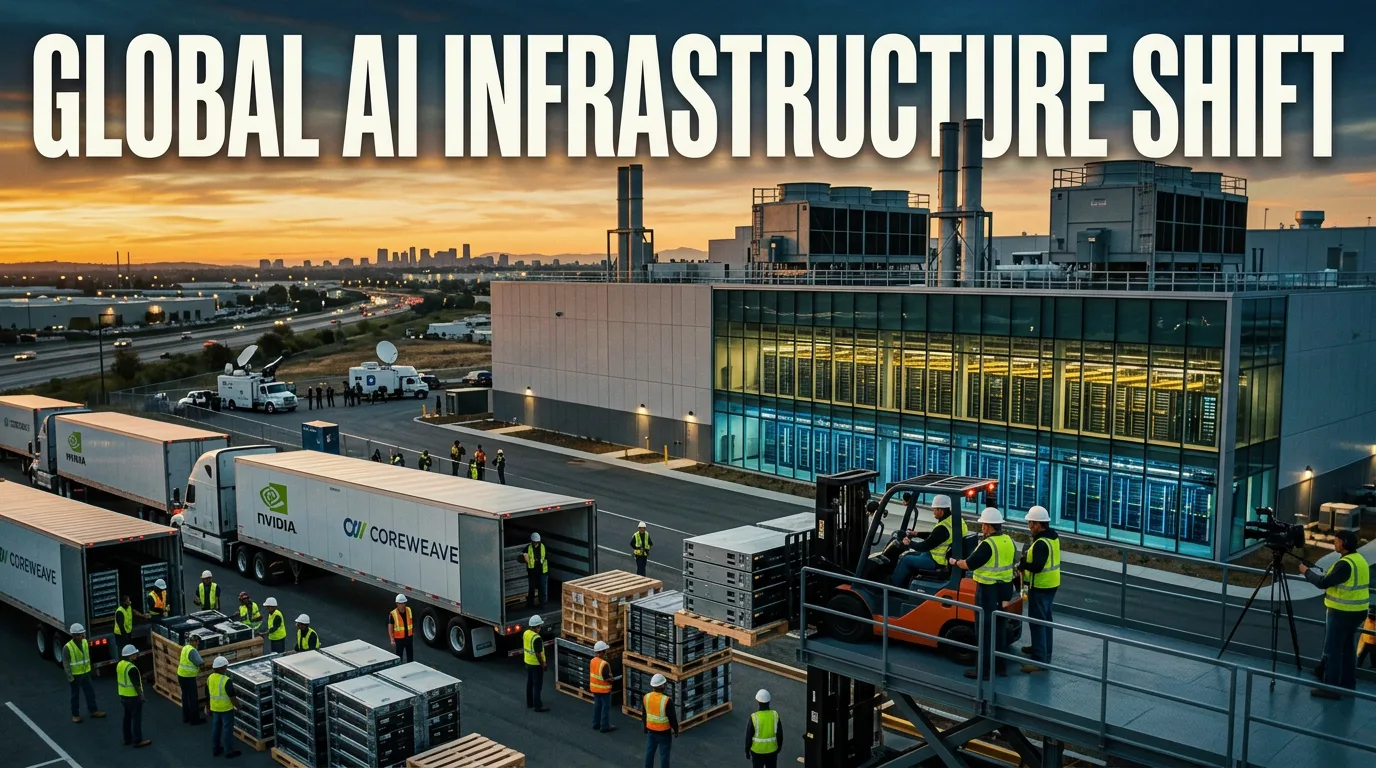
At the center of the market rebound was CoreWeave.
CoreWeave pushed back hard against fears of slowing AI infrastructure demand by saying it has demand nearly 10 times its current supply capacity.
After that remark, CoreWeave shares jumped about 26%, and neo-cloud companies such as Nebius also moved strongly higher.
2. Why CoreWeave Led the Market Higher: GPU Demand Is Still Extremely Strong
The most important point in this CoreWeave issue is GPU pricing.
Until recently, the market had been full of concerns such as “Has AI data center investment become too overheated?” and “Won’t GPUs lose value quickly because depreciation is so fast?”
In particular, investors like Michael Burry have strongly pointed to the decline in value of older GPUs and the burden of depreciation.
But CoreWeave’s comments overturned much of that concern.
3. The Really Important Signal Is That Even Older GPU Rental Prices Are Rising
The most notable part of CoreWeave’s report is that rental prices for older GPUs, more than five years old, have risen 30% to 50% over the past three months.
This is not just a price increase.
It means companies are lining up to use older GPUs because newer ones are in short supply.
In other words, AI demand is not limited to top-tier training chips; it is spreading into inference, fine-tuning, smaller model operations, and enterprise AI services as well.
In a market where even older GPUs are rising in price, depreciation concerns are somewhat eased.
On paper, GPU value declines over time, but in the actual market, rental revenue can be maintained or even increase.
This is the most important change behind the current rebound in AI infrastructure.
4. 2027~2028 Contract Renewal Effect: CoreWeave’s Real Leverage
CoreWeave’s second key point is the renewal timing of existing GPU rental contracts.
The initial contract volume enters renewal windows in 2027 and 2028.
This structure is similar to real estate leasing.
At first, you buy a building with borrowed money and collect rent, but over time, once much of the principal and interest are repaid, a larger share of the rent remains as net profit.
CoreWeave is similar.
Once the principal and interest burden on the roughly 300,000 GPUs it initially secured is largely eased around 2027~2028, revenue from renewal contracts could act as major earnings leverage.
If rental rates are then renewed at nearly double the previous level, the operating leverage could be much stronger than the market expects.
This is why investors have started to view CoreWeave not simply as a “GPU rental company,” but as an AI infrastructure cash-flow business.
5. Easing Financing Concerns: Customer Prepayments and Lower Interest Costs
The third concern about CoreWeave was financing.
An AI data center business requires massive upfront investment in GPUs, power, cooling, real estate, and network equipment.
So the market worried: “If this company has to keep borrowing money, can it survive with high interest rates?”
But the message this time was quite positive.
It was emphasized that AI company customers such as Anthropic are paying a substantial portion of contract amounts in advance.
Based on the original report, it was also mentioned that nearly 10 trillion won has already been secured in advance payments.
If customers pay upfront, CoreWeave can reduce its reliance on external borrowing.
It was also said that whereas funding costs used to be as high as 15%, they could now fall to around 7%.
This is very important for the valuation of AI infrastructure companies.
Lower financing costs can significantly improve net income and cash flow even if revenue stays the same.
6. Texas Data Center Issue Resolved: Supply Expansion Is Also Underway
One recent concern surrounding CoreWeave was a permitting issue for its Texas data center.
No matter how much demand exists, a data center cannot expand supply if power, land, cooling, or construction permits are blocked.
In this commentary, it was noted that the Texas data center permitting issue has been largely resolved and construction is underway.
In AI infrastructure investment, expanding data centers is as important as securing GPUs.
That is because even if you have GPUs, if you lack the power and space to install them, they cannot translate into revenue.
Accordingly, this issue is interpreted as a positive signal not only for CoreWeave but for the entire AI data center value chain.
7. Why Wall Street Is Looking at Neo-Clouds Again
This rebound is not just about CoreWeave as a single stock.
On Wall Street, companies like CoreWeave and Nebius are being viewed more positively again.
Neo-clouds refer to GPU cloud providers specialized in AI compute demand, unlike traditional big-tech cloud firms.
For AI model developers, renting GPUs as needed can be faster and more flexible than building their own data centers.
That is why Anthropic, the OpenAI ecosystem, various AI startups, and enterprise AI companies are creating demand for neo-clouds.
Citi was also mentioned as having a positive view on other neo-cloud companies.
Ultimately, the market is changing the question from “Has AI demand faded?” to “Is AI infrastructure supply severely insufficient?”
8. Why You Still Need to Be Careful with Nebius
Nebius also rebounded strongly, with its stock rising about 15% to 17%.
But it is risky to approach it based only on one day’s gain.
The original piece pointed out that Nebius is still in a strong downtrend and may face a tougher year ahead.
The biggest burden is interest expense and depreciation.
It was mentioned that, combined, interest expense and depreciation amount to about 13 times operating profit.
Investors usually fear interest expense more, but in AI infrastructure companies, depreciation may be the bigger risk.
When you buy GPUs in large quantities, accounting rules require their value to be reduced over about five years.
For example, an asset valued at 5 in the first year may fall to 4 the next year, then to 3.
If accounting expenses become large in this process, earnings on the income statement can come under pressure even if actual cash flow is not bad.
So you should not look only at revenue growth when investing in neo-clouds.
You need to look at depreciation, debt maturity, customer prepayments, and GPU renewal pricing together.
9. The Core Point Others Often Miss: GPU Depreciation May Be an Option, Not Just a Cost
The most important but often overlooked part of this issue is how depreciation is interpreted.
In general, GPUs are assets that become outdated over time and lose value.
That is why the market sees depreciation expenses at AI infrastructure companies as a major risk.
But the story changes in a market where rental prices for older GPUs are rising.
On paper, asset value declines, but in the actual rental market, even older GPUs can attract demand and generate revenue.
In other words, book depreciation proceeds, but cash flow can remain stable or improve.
If this structure is confirmed, the valuation of AI infrastructure companies could change completely.
In particular, if GPUs whose principal and interest have already been repaid earn higher rental fees in the renewal period, that acts as leverage very close to net profit.
That is the real reason CoreWeave lifted the entire market.
10. Interest-Rate Outlook: The Biggest Macro Variable That Could Weigh on the AI Rally
AI infrastructure-related stocks rebounded strongly, but for the broader U.S. market, the interest-rate outlook remains a burden.
The original piece mentioned that Federal Reserve official Goolsbee said something to the effect of feeling uneasy whenever he hears the word “transitory.”
The concern is that service inflation continues to rise and may not be caused only by oil or temporary factors.
It was also interpreted that comments from Fed officials after Governor Waller’s remarks have increased market anxiety.
Based on the original report, the market was said to be pricing in an 88% chance of a 0.25 percentage point hike in December and a 12% chance of a 0.50 percentage point big step.
The key point is that uncertainty around policy rates has not yet ended.
AI semiconductors and data center companies have strong long-term growth potential, but if the discount rate rises, high-growth stock valuations can come under pressure.
So in AI infrastructure investing, you must always watch the interest-rate outlook alongside demand.
11. Oil and Geopolitical Risk: The Hidden Inflation Variable
The original report said WTI crude recently fell sharply and is hovering around 83 dollars per barrel.
If oil prices fall, inflation pressure may ease.
But if geopolitical conflict does not end, it is hard to assume oil stability will last long.
If war and supply-chain risks continue, energy prices can rebound at any time.
Ultimately, oil is a variable that affects the Fed’s rate decisions, U.S. stock market sentiment, and AI growth stock valuations all at once.
12. Nvidia Issue: China’s H200 Export Restrictions Are Weighing Again
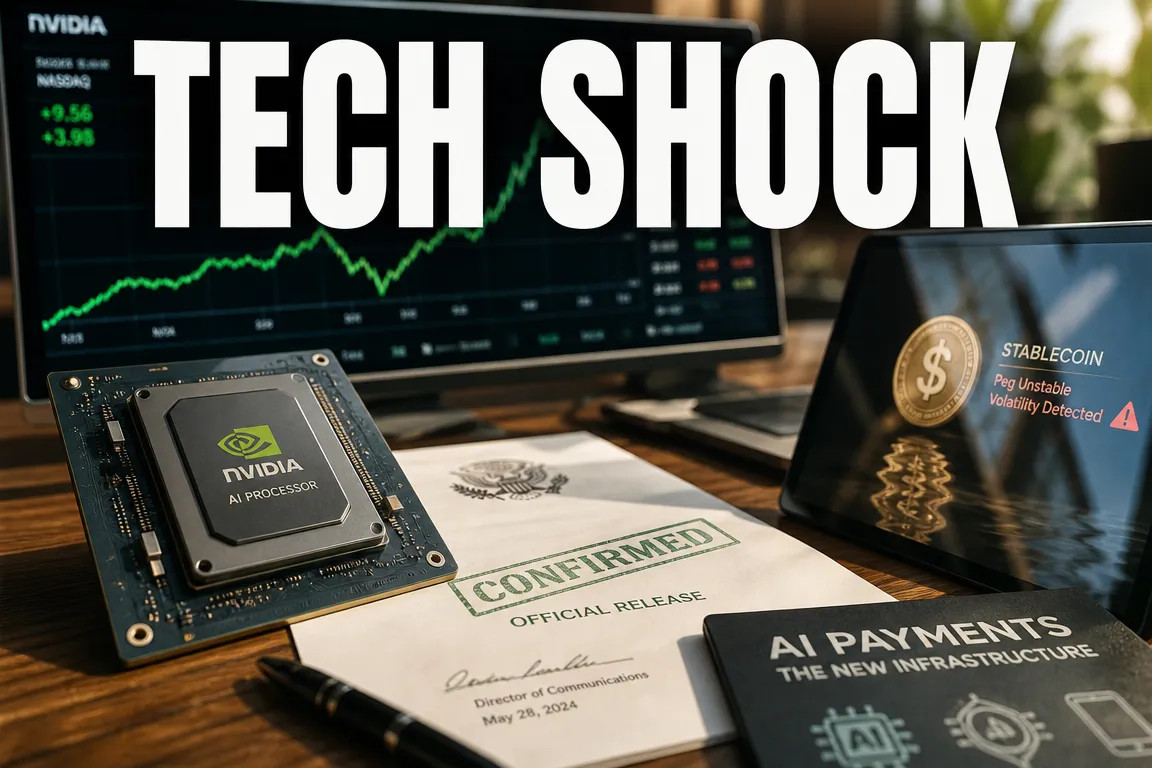
Nvidia sits at the center of the AI semiconductor market, but recently China export restrictions have been weighing on its stock.
The original report mentioned that Baird lowered its Nvidia target price from 500 dollars to 200 dollars.
The reason was the judgment that the likelihood of a ban on H200 chip exports to China had increased.
As U.S. congressional hearings reopen, concerns have grown over how to handle sales to China and inventory.
Based on the original report, potential losses of about 5 billion dollars, or more than 600 billion won, were mentioned.
That said, if the current stock price is around 170 dollars, a 200-dollar target price still implies upside.
Also, since the Wall Street average target price was mentioned at around 350 dollars, it is not as if the market as a whole is negative on Nvidia.
13. Nvidia Valuation: Is This a Historically Cheap Zone?
Nvidia shares recently even broke below prior lows, unsettling investors.
But on valuation alone, this is an interesting range.
The original report said Nvidia’s forward P/E had fallen to around 11.7 times, and some estimates even place it at 9.8 times.
If those figures are correct, this is a very low valuation range in Nvidia’s history.
From a fundamental investor’s perspective, this could be an attractive price level.
Of course, the China regulation risk still needs to be monitored.
But if the impact of China-related sales is limited relative to the overall contract scale and AI data center demand, the market’s excessive concern could become an opportunity.
There are even views that go so far as to mention “CEO replacement” regarding Jensen Huang, but given his symbolic importance and strategic role at Nvidia, that seems unlikely in reality.
In fact, if CEO risk were truly to arise, it could itself become an even bigger shock.
14. Semiconductor Sector: Memory Stocks Also Rebounded Technically
Memory semiconductor stocks also rebounded strongly today.
Micron and SanDisk rose, and SanDisk in particular rebounded about 15%.
However, given the recent scale of the decline, this may still be more of a technical rebound than a full trend reversal.
Memory semiconductors are directly connected to AI server demand.
That is because AI servers do not run on GPUs alone; they also need HBM, DRAM, SSDs, and network equipment.
So if the AI infrastructure cycle revives, memory semiconductors could regain attention too.
15. Samsung Electronics and SK Hynix: Undervaluation Logic and Long-Term Oversupply Concerns
Goldman Sachs was mentioned as having issued a buy recommendation on Samsung Electronics and SK Hynix, saying they are trading below book value.
This can be interpreted to mean that Korean semiconductor stocks are relatively undervalued within the global AI semiconductor investment trend.
On the other hand, Morgan Stanley’s Shawn Kim raised a long-term concern that DRAM and HBM could enter oversupply around 2033 and that operating margins could fall from the current 80% level to 40%.
Shawn Kim has consistently taken a conservative view on Korean semiconductors and is sometimes called the “Grim Reaper of Korean Semiconductors.”
But what is interesting is that even he seems to acknowledge that current prices are cheap.
Honestly, predicting the HBM market structure accurately all the way out to 2033 is nearly impossible.
That is because AI model architectures, memory bandwidth requirements, packaging technology, and customer in-house production decisions can all change.
So the key thing to watch right now is not “oversupply in 10 years,” but whether current AI server demand, HBM prices, and customer orders are being maintained.
16. Comparing the Strength of the AI Semiconductor Rebound: Nvidia Was Surprisingly Weak
AI semiconductor stocks as a whole rebounded today.
But Nvidia’s rebound was relatively underwhelming.
Based on the original report, Nvidia rose about 3%, while Marvell gained 10%, AMD 8%, and ARM 12%.
This difference suggests that the market is pricing in China regulatory risk and pre-earnings uncertainty more heavily for Nvidia than for others.
Conversely, if Nvidia’s earnings confirm demand, margins, China impact, and next-generation GPU roadmap positively, the stock’s rebound momentum could strengthen again.
17. AI Server and Data Center Stocks Also Rebounded Together
AI server and data center-related stocks also rebounded together today.
Five9 rose about 23%, Nebius about 17%, and Iradimed about 6%, according to the report.
Optical communication stocks also showed some recovery after their recent sharp drop.
An AI data center is not an industry that needs only GPUs.
It also involves server racks, power equipment, cooling systems, optical communications, network switches, storage, and security software.
So confirmation of demand from CoreWeave could have a positive impact on the entire data center ecosystem.
However, compared with prices from a month ago, many stocks still have not recovered enough.
Whether this rebound is a trend reversal or just a short-term oversold bounce should be judged by the next events.
18. From Here On, Just Watch Two Things: Nvidia Earnings and Anthropic IPO
There are two most important events in the AI infrastructure market going forward.
The first is Nvidia’s earnings report.
The original report said it is on the 17th.
In Nvidia’s earnings, you need to check data center revenue, H200 and next-generation GPU demand, the impact of China regulations, whether customer orders continue, and the margin outlook.
In particular, what matters is whether the “AI demand slowdown” the market fears is actually happening, or whether revenue recognition is simply delayed because of supply shortages.
The second is the Anthropic IPO.
The original report said it is on the 19th, and mentioned that subscription demand was much stronger than expected.
If the Anthropic IPO is a success, it will signal that capital market confidence in AI model companies is alive and well.
That in turn increases the stability of customers for AI infrastructure companies like CoreWeave and raises the likelihood of prepayment contracts.
In other words, the Anthropic IPO is not just a startup listing event; it is an event that confirms the credibility of AI infrastructure demand.
19. Core Checklist for Investors
First, you need to see whether GPU rental prices keep rising.
In particular, if even older GPU rental prices rise along with newer ones, it means AI compute demand is spreading very broadly.
Second, you need to check CoreWeave’s renewal pricing.
If rental fees actually rise in the 2027~2028 contract renewal period, earnings leverage could be stronger than the market expects.
Third, you need to look at the customer prepayment structure.
The more AI companies pay in advance, the less financing pressure AI infrastructure firms face.
Fourth, you need to separate depreciation from cash flow.
Companies that look unprofitable on paper but have strong actual cash flow are completely different from companies whose revenue grows but whose debt burden also increases.
Fifth, you need to check the impact of China restrictions in Nvidia’s earnings.
How much the H200 export restrictions affect near-term results could determine sentiment toward AI semiconductors.
Sixth, you need to keep tracking the interest-rate outlook.
High-growth tech stocks and AI infrastructure companies react sensitively to changes in rates.
20. Conclusion: The AI Infrastructure Cycle Is Not Over; Its Structure Is Changing
This CoreWeave-driven rebound is hard to dismiss as just a thematic stock bounce.
That is because important structural changes in the AI infrastructure market have been confirmed: supply shortages, rising GPU rental prices, customer prepayments, and renewal leverage.
Of course, not every stock is safe.
Companies like Nebius, which carry heavy depreciation and interest expense burdens, still need caution.
Nvidia also has to get past China regulations and earnings uncertainty.
But in the bigger picture, the key question for AI data center and semiconductor stocks is shifting from “Has demand disappeared?” to “Can supply keep up with demand?”
As long as this change continues to be confirmed, AI infrastructure-related stocks are likely to become a central market theme again.
< Summary >
CoreWeave revived AI infrastructure sentiment by saying demand is nearly 10 times its current supply capacity.
Older GPU rental prices also rose 30% to 50% in just three months, easing depreciation concerns somewhat.
At the 2027~2028 GPU renewal point, principal and interest burdens could fall while rental fees rise, increasing earnings leverage.
Customer prepayments and lower financing costs are factors reducing CoreWeave’s financial worries.
By contrast, neo-cloud companies like Nebius must carefully monitor interest expense and depreciation burdens.
For Nvidia, China’s H200 export restrictions and the earnings report are the key variables.
Samsung Electronics and SK Hynix are attracting undervaluation arguments at current prices despite long-term oversupply concerns.
The two most important upcoming events are Nvidia’s earnings report and the Anthropic IPO.
The AI infrastructure cycle is not over; it has entered a phase of revaluation centered on supply shortages and cash flow.
[Related Articles…]
- Key Variables to Watch in the AI Infrastructure Investment Cycle
- Nvidia Earnings and Semiconductor Stock Valuation Check
*Source: [ 월텍남 – 월스트리트 테크남 ]
– “AI인프라 변곡점” … 앞으로 2개만 보면 됩니다.