● Musk AI Data Center Power Race
Musk’s AI Data Center Strategy: The Real Reason SpaceX and Tesla Are Outpacing Big Tech
The core point this time is not simply that “Musk is bragging again.”
The most important point is that the decisive battleground in AI data center competition is now shifting from securing Nvidia GPUs to power infrastructure, batteries, self-generation, and cloud computing profitability.
In particular, when you connect SpaceX’s Colossus 2, Tesla Megapack, Nvidia H100 and GB200, Anthropic leasing contracts, and the 2027 10GW expansion plan, Musk’s direction becomes quite clear.
In the AI infrastructure market, the companies that will make money are increasingly likely to be not those that simply build models well, but those that can secure electricity quickly and put GPUs to work immediately.
1. The landscape of AI data center competition is changing
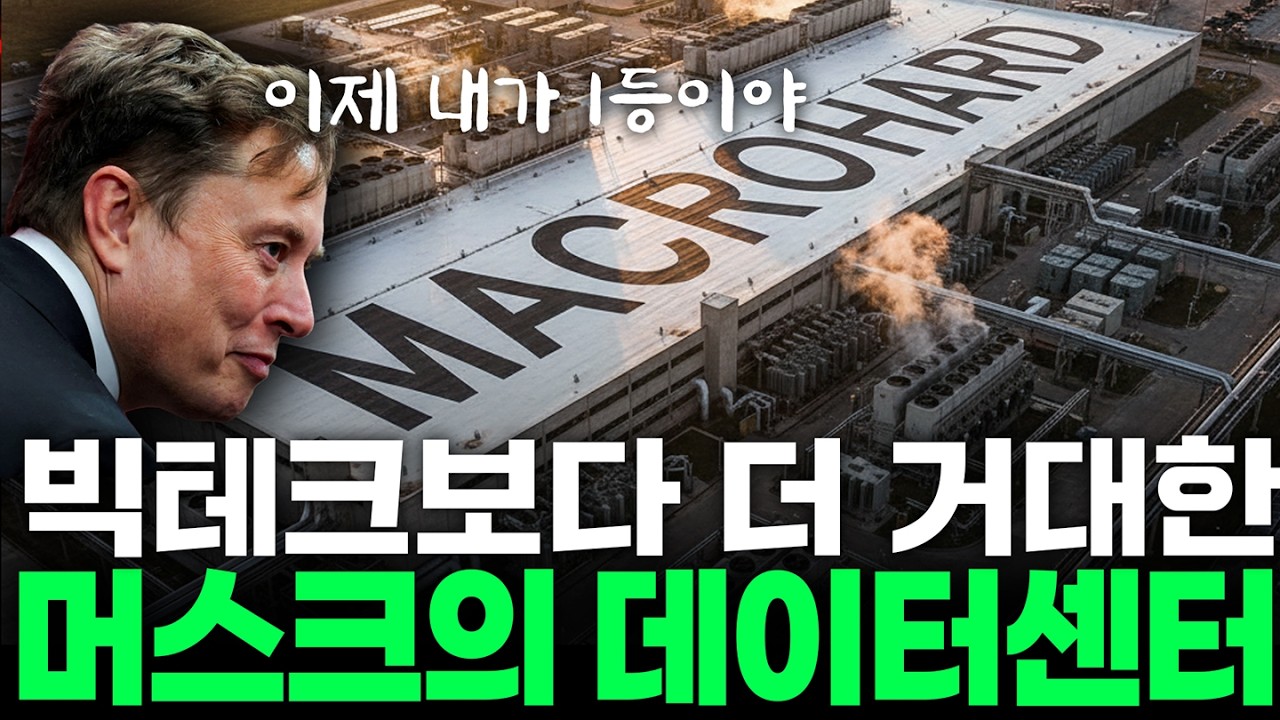
Based on the provided material, the world’s most powerful single AI data center is referred to as Musk’s camp’s Colossus 2.
The facility’s computing power is described as equivalent to roughly 1.39 million units in terms of Nvidia H100s.
The important point here is not simply the number of GPUs.
An AI data center is no longer a business that ends with buying a lot of semiconductors.
Money is made only when power supply, cooling, battery storage, server rack installation, and customer leasing contracts all operate together.
- Core asset: More important than GPUs is the data center that has secured electricity.
- Competitive landscape: Even Big Tech companies like Google, Amazon, and Microsoft cannot easily avoid grid connection delays.
- Musk’s strategy: Instead of waiting, he operates first using self-generation and Tesla Megapack.
2. SpaceX is being transformed from a rocket company into an AI infrastructure company
The material explains that SpaceX is rapidly expanding around xAI-related infrastructure and AI data centers.
If this trend is accurate, SpaceX can no longer be viewed as merely a rocket launch company.
It is closer to a vertically integrated AI infrastructure company that links satellites, rockets, communications, AI data centers, power storage systems, and even in-house chip development.
In particular, the fact that AI companies such as Anthropic lease large GPU clusters is very important.
AI model developers need massive compute, but building their own data centers is constrained above all by time and power access.
If SpaceX can already provide an AI data center that is ready to run, customers have a strong reason to use it even if it is expensive.
- AI company problem: They can build models, but lack GPUs and power.
- SpaceX opportunity: It provides cloud computing infrastructure that can be activated quickly.
- Revenue structure: Long-term leasing of GPU compute resources to AI companies.
3. The reason Musk is faster than Big Tech is electricity
Many people view AI data center competition only as a race to secure GPUs.
But the real bottleneck is power infrastructure.
In the United States, as demand for large data centers surges, wait times for grid connections are getting longer.
There are more and more cases where facilities are built but cannot operate because electricity has not been connected.
Musk’s camp approaches this problem differently.
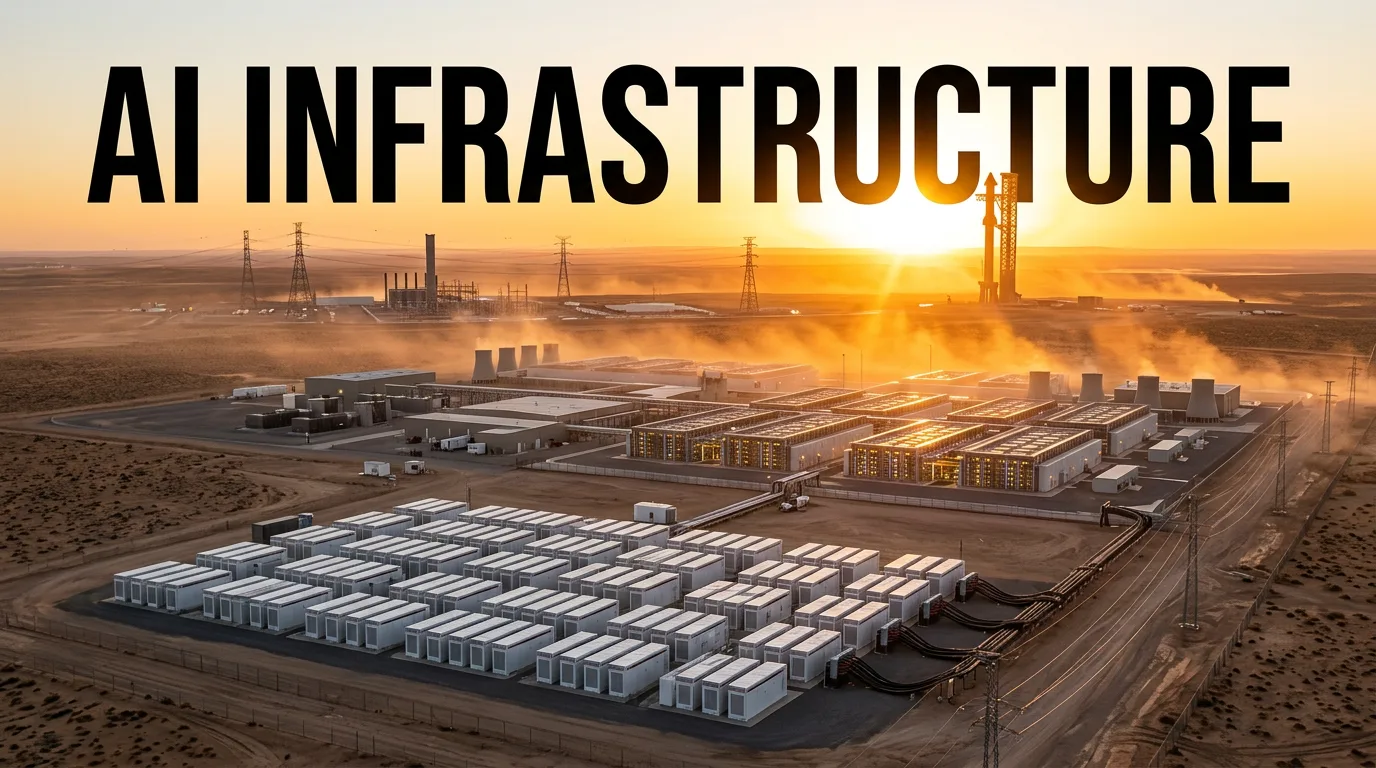
Instead of waiting for grid connection, it uses mobile gas turbines and Tesla Megapack to supply electricity first.
This strategy is similar to a restaurant in a new commercial district bringing in its own generator and starting business before the others wait for electrical work.
In the end, the shop that opens first is the one that attracts customers.
- Mobile gas turbines: Equipment installed where needed to generate power quickly.
- Tesla Megapack: Large-scale energy storage that improves data center power stability.
- Effect: It bypasses grid connection delays and allows GPUs to be activated sooner.
4. What the 2027 10GW expansion plan means
According to the material, Musk mentioned a plan to build an additional 10GW scale of AI data center capacity by 2027 alone.
This is an extremely aggressive scale even compared with existing large data center projects.
From a conventional perspective, it may seem excessive, but if AI demand continues to grow, this strategy has a strong first-mover advantage.
For AI data centers, securing customers immediately after completion is crucial.
If GPU leasing rates are rising, the company that builds first can sign long-term contracts at higher prices.
In this structure, speed is revenue.
| Category | Meaning |
|---|---|
| 1GW data center | A massive unit of AI computing infrastructure |
| 10GW expansion | Aggressive expansion aimed at capturing the AI cloud market |
| Rising GPU rental fees | A signal that demand for AI compute exceeds supply |
| Independent power sourcing | A core competitive advantage that differentiates it from Big Tech |
5. Is an AI data center really a profitable business?
The material explains that building a 1GW-scale AI data center requires about $5 billion.
At the same time, it also presents an analysis that leasing 1GW could generate about $5 billion in annual revenue.
By simple calculation, that means the investment could be recovered within a year.
Of course, operating costs, electricity costs, depreciation, maintenance, and financing costs are not included here, so actual net profit margins could be lower.
Still, the important point is that AI data centers can create cash flow at a completely different speed from traditional real estate leasing businesses.
If GPU rental prices keep rising, profitability could become even stronger.
- Construction cost: Mentioned at roughly $5 billion per 1GW.
- Annual revenue: Roughly $5 billion is presented as possible for 1GW leasing.
- Key variables: GPU rental rates, electricity costs, customer contract duration, and utilization rate.
- Economic meaning: A representative case of artificial intelligence investment being converted into actual cash flow.
6. Why Tesla is also drawing attention
As SpaceX expands AI data centers rapidly, Tesla’s role also grows.
The reason is simple.
Large AI data centers require stable power supply and storage systems, and Tesla has Megapack, a large-scale battery solution.
The material says that SpaceX has purchased Tesla Megapack on a large scale, and that additional purchases may follow.
As AI data centers increase, revenue opportunities for Tesla’s Energy division could also grow.
From this perspective, Tesla may be reevaluated as an AI power infrastructure company beyond being an EV company.
- Tesla Energy: Contributes to power stability for AI data centers through Megapack.
- SpaceX: Aims for revenue from data center operations and AI cloud leasing.
- xAI and AI models: Can absorb both its own AI services and external customer demand.
- Long-term scenario: The possibility of business integration between Tesla and SpaceX could continue to draw attention.
7. The most important point that is not often stated elsewhere
The essence of this issue is not “who bought the most GPUs.”
The real core point is that the bottleneck of the AI era is shifting from the semiconductor supply chain to the power supply chain.
Big Tech has money, but it cannot freely accelerate grid connections and permitting speed.
By contrast, Musk’s camp pushes self-generation, batteries, site acquisition, rapid construction, and customer contracts as one package.
If this structure works, SpaceX and Tesla become not just individual companies, but the AI infrastructure ecosystem itself.
Another important point is customer lock-in.
Once an AI company starts model training and operations at a specific data center, data migration and infrastructure switching costs become large.
In other words, the data center that starts first is more likely to secure long-term customers.
- Hidden core point 1: The real bottleneck in AI data center competition is electricity.
- Hidden core point 2: Tesla Megapack is not just a battery; it is an AI infrastructure expansion device.
- Hidden core point 3: SpaceX is changing from a rocket company into an AI cloud infrastructure company.
- Hidden core point 4: Once customers are in, they are difficult to dislodge because of long-term contracts and data migration costs.
- Hidden core point 5: From the perspective of the global economic outlook, the AI investment cycle could lift the power, semiconductor, cloud, and battery industries at the same time.
8. Risks to watch going forward
That said, it is important not to assume that every plan will be realized exactly as intended.
Musk’s business style is highly aggressive and fast-moving, but schedule delays can occur often.
In particular, AI data centers are affected by power regulations, environmental issues, local community opposition, cooling water access, and GPU supply problems.
- Power regulation: As self-generation expands, local regulation and environmental issues may grow.
- GPU supply: Latest AI chips like Nvidia GB200 must be secured in sufficient quantities.
- Demand durability: AI companies must be able to continue absorbing high leasing rates.
- Financial burden: A 10GW-scale expansion requires enormous capital raising.
- Technological change: If more efficient AI chips or models emerge, existing infrastructure profitability may change.
9. Industry changes to view from an investment perspective
This trend is not just a story about SpaceX or Tesla.
AI data center expansion is likely to affect multiple industries at once.
- Semiconductors: Demand for high-performance AI chips like Nvidia H100 and GB200 remains important.
- Power: Demand for gas turbines, transmission networks, power plants, and power management solutions could increase.
- Batteries: The market for large-scale energy storage systems like Tesla Megapack could grow.
- Cloud computing: The existing cloud market could be reorganized into AI-specific cloud services.
- Real estate and infrastructure: Data center sites in areas with good access to power could become strategic assets.
In the end, AI infrastructure competition is not just a battle among software companies.
It is an integrated industrial competition combining electricity, semiconductors, batteries, cloud, and physical construction capabilities.
< Summary >
The most important point in Musk’s AI data center strategy is electricity, not GPUs.
SpaceX is rapidly expanding AI data centers around Colossus 2, and by using Tesla Megapack and mobile power generation equipment, it is bypassing grid wait times.
As analysis emerges that a 1GW data center can generate massive revenue, the AI infrastructure business is rising as a core source of profit in the cloud computing market.
Tesla has the potential to be reevaluated beyond an EV company as an AI power infrastructure company.
Going forward, the winner in AI data center competition is likely to be not the company with the most semiconductors, but the company that secures electricity the fastest and operates it most reliably.
[Related Articles…]
- AI Data Center Investment Cycle and the Global Economic Outlook
- How Power Infrastructure Is Reshaping the Semiconductor and Cloud Markets
*Source: [ 월텍남 – 월스트리트 테크남 ]
– 진짜 화가 잔뜩난 머스크의 다음 계획 ㄷㄷ..