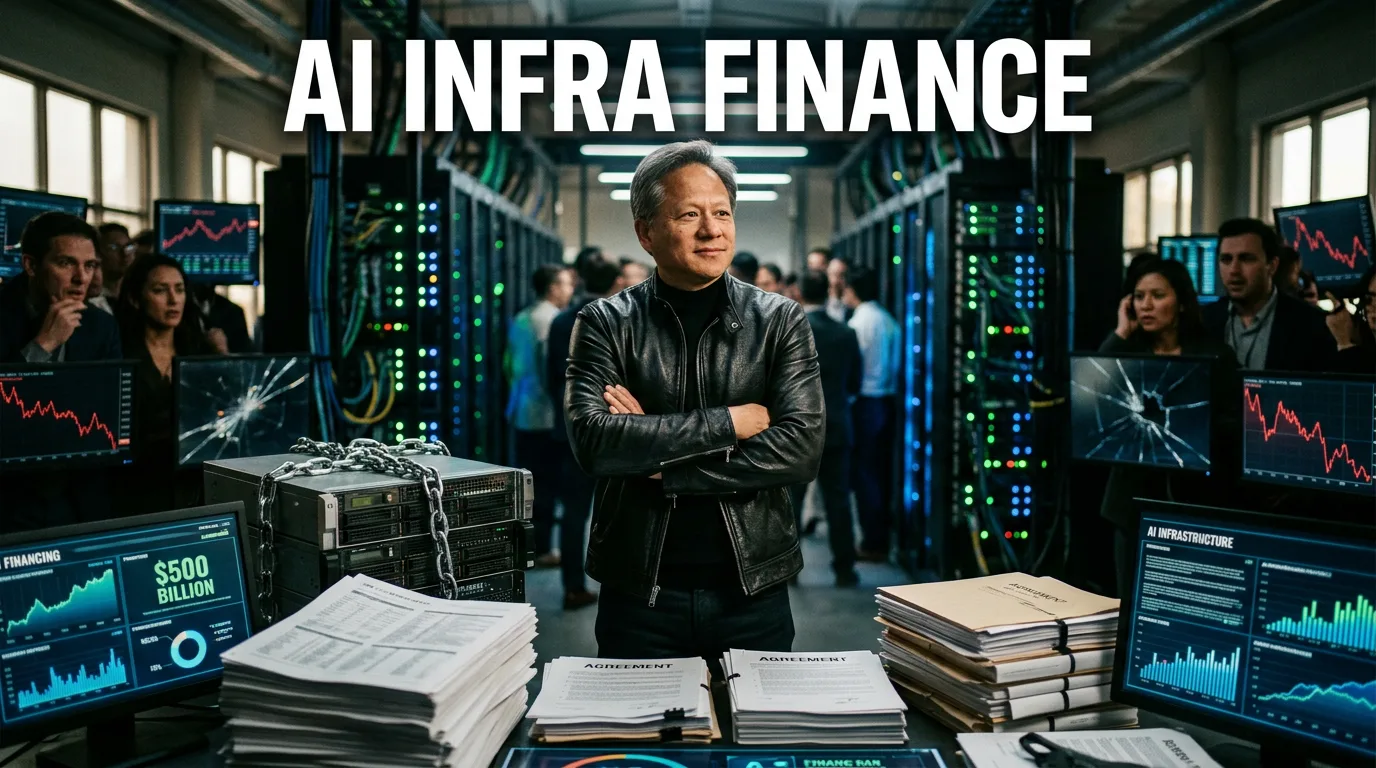
● AI Cybersecurity Boom, Margin Shock
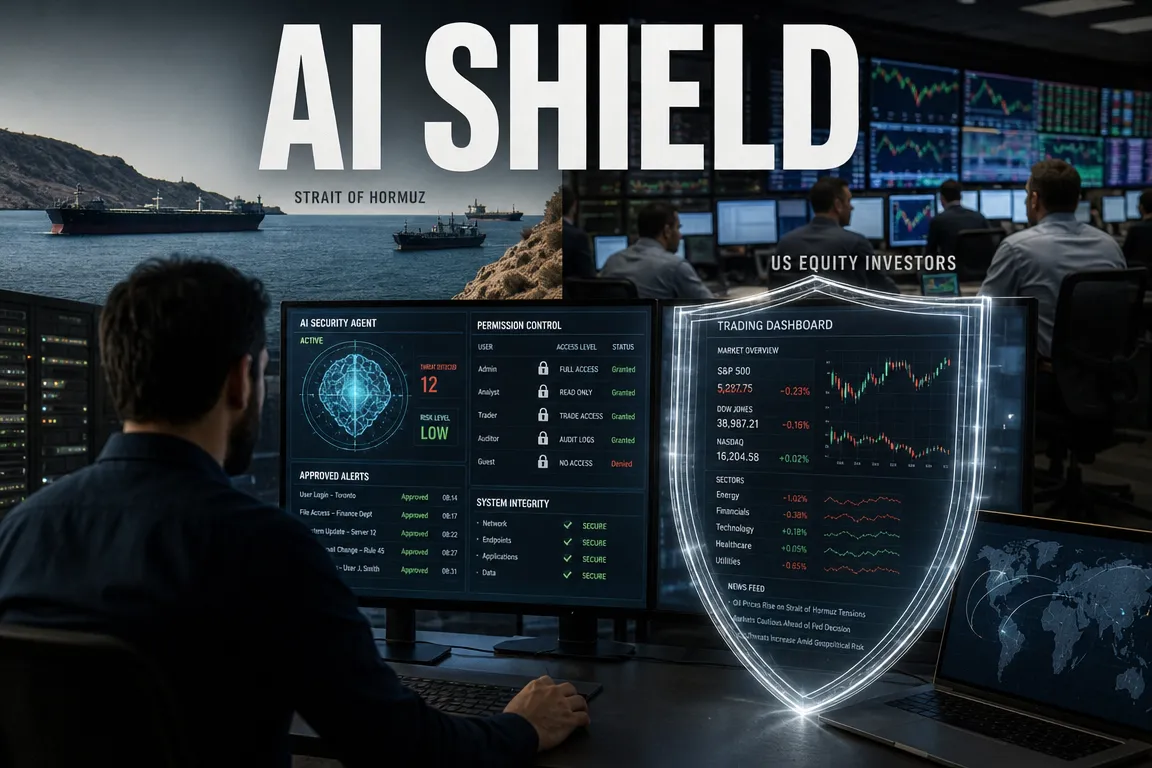
Can AI Be Trusted with Security? How AI Agents Are Reshaping Cybersecurity and U.S. Equity Investment Priorities
The central issue in AI security is not intelligence alone, but the scope of authority granted to the system.
For enterprises, responding without disrupting services is as important as detecting attacks quickly. For investors, the computing costs associated with AI revenue growth are increasingly material.
Three developments warrant particular attention.
- Security operations: As AI assumes vulnerability discovery, investigation, and remediation tasks, human responsibilities are shifting toward approval and oversight.
- Industry competition: Vulnerability discovery and operational protection may exhibit different profitability dynamics.
- Investment assessment: Higher AI usage does not necessarily translate into higher earnings. Incremental monetization must be assessed alongside infrastructure costs.
1. Lower Attack Costs Increase the Importance of Preventive Defense
AI agents are evolving beyond answering questions to retrieving data, analyzing code, and executing authorized tools.
Attackers can use these capabilities as well.
Faster, less expensive vulnerability discovery enables attackers to assess more targets within the same time and budget.
However, discovering a vulnerability is not equivalent to successfully compromising a system.
Exploitation requires additional work to account for the target environment, access conditions, and defensive controls.
Rather than assuming AI can easily compromise any system, the more accurate assessment is that automation of some attack preparation tasks reduces defenders’ response window.
- Traditional response: Security personnel investigate and respond after an alert is triggered.
- Evolving response: Organizations continuously assess assets and accounts, prioritizing vulnerabilities most likely to be exploited.
- Enterprise priorities: Identify internet-facing servers, excessive administrative privileges, and devices with overdue updates.
For organizations where service continuity is critical, particularly financial institutions, the actual risk exposure of core business operations is more meaningful than vulnerability counts alone.
2. AI Security Functions Span Discovery, Assessment, and Remediation
AI-enabled cybersecurity is best understood as a connected workflow of specialized agents rather than a single model performing every task.
Security AI platforms such as Microsoft Security Copilot aim to reduce repetitive investigation and analysis, allowing personnel to focus on material risks.
- Red-team perspective — identifying weaknesses: Assess systems from an attacker’s perspective and explore potential intrusion paths.
- Blue-team perspective — assessing threats: Analyze suspicious logins and program execution records to determine whether they indicate genuine threats.
- Green-team perspective — improving security posture: Correct vulnerable configurations and code or recommend remediation measures.
These categories illustrate AI security workflows rather than the official architecture of any specific product.
The objective is to connect discovery with risk assessment and remediation, rather than merely generate reports.
However, an integrated workflow does not justify automatic execution of every action.
3. Restricted Authority Is Fundamental to Safer Security AI
Security AI can make incorrect judgments or be influenced by malicious instructions embedded in untrusted documents and logs.
If AI interprets attacker-controlled text as a legitimate instruction, an investigative tool could take inappropriate action.
Improving model accuracy alone is therefore insufficient.
Operating controls must limit the consequences of errors.
- Least privilege: Give investigative AI only the log access it requires. Separate permissions for account deletion and server modification.
- Execution isolation: Analyze suspicious code and files in environments isolated from production networks.
- Approval for critical actions: Require human approval for production server patches, firewall policy changes, and large-scale account blocking.
- Audit trails: Maintain traceability of information reviewed, actions proposed, and the individuals who approved execution.
- Recovery mechanisms: Establish backups and rollback procedures to reverse incorrect changes.
This extends cloud security’s zero-trust principles to AI agents.
AI should receive only the access required for its assigned responsibilities, not unrestricted administrative privileges.
4. Immediate Patching Is Not Always the Safest Operational Choice
Immediate updates may appear to be the appropriate response to a newly identified vulnerability.
However, unvalidated patches can disrupt payment servers and other business-critical systems.
Organizations must therefore manage both exploitation risk and operational disruption risk.
- Standard employee PCs: Prioritize prompt updates where compatibility risks are limited.
- Critical production servers: Validate patches in test environments and establish maintenance schedules and recovery plans.
- Systems awaiting patches: Reduce attack paths through access restrictions, firewall rules, and intrusion prevention policies.
Virtual patching is one form of temporary protection.
It uses security controls or policies to block attacks targeting a vulnerability without modifying the underlying code.
It is not a comprehensive defense and should be viewed as a means of buying time, not a substitute for validated permanent remediation.
Similarly, a major service outage should not automatically be attributed to a cyberattack or AI error.
Software defects, network failures, and operational changes require separate root-cause investigation.
5. Competitive Dynamics Differ Between Discovery and Protection
As generative AI improves at code analysis and remediation recommendations, basic vulnerability detection may face increasing price competition.
If general-purpose AI platforms and development tools offer comparable capabilities, customers may reassess spending on standalone security products.
Executing responses within enterprise environments, however, requires a broader set of capabilities.
- Detection competitiveness: Analytical accuracy, fewer false positives, and integration into development workflows.
- Operational protection competitiveness: Visibility across endpoints, identities, and networks, combined with effective blocking capabilities.
- Enterprise purchasing criteria: Compatibility with existing systems, response records, regulatory requirements, and service reliability.
AI that identifies problems and a security platform that resolves them safely are distinct offerings.
This does not imply that all detection-focused vendors will be disadvantaged.
Companies with proprietary security data, highly reliable validation, and deeply embedded development workflows may retain differentiation.
6. U.S. Equity Investors Should Assess Incremental Profit, Not Just AI Revenue
Equating AI usage growth with improved profitability can obscure important cost considerations.
More extensive AI investigation and response activity may generate additional revenue, but also increases model inference and data processing costs.
AI economic contribution = incremental revenue + internal efficiency gains − inference, data, and operating costs
When evaluating Microsoft, Palo Alto Networks, and CrowdStrike, investors should prioritize changes in customer spending and cost structures over product announcements.
Pricing models and product bundles differ across vendors, making current contract terms and financial disclosures essential to comparisons.
- Paid adoption: Determine whether paying customers are increasing, rather than focusing solely on trials.
- Revenue per customer: Assess upgrades to higher-priced tiers and purchases of additional usage.
- Gross margin: Monitor whether computing costs are rising disproportionately to AI revenue.
- Free cash flow: Evaluate cash generation after server, GPU, and data center investment.
- Valuation: Assess how much anticipated growth is already reflected in the share price.
The cybersecurity investment case depends on more than expectations of rising AI demand.
The critical question is whether that demand can be converted into recurring revenue and sustainable cash flow.
7. Three Less Visible Operating Costs
Operating costs often receive less attention than product performance and threat detection speed.
① Usage-based AI pricing can create budget uncertainty for customers.
Security incidents can cause sharp increases in log volumes and analytical workloads.
Under usage-based contracts, costs may rise precisely when an organization is under pressure. Budget alerts, spending caps, and exception policies for critical investigations should be designed together.
② Poorly designed human approval can become a procedural formality.
Excessive approval requests can lead personnel to authorize actions without adequate review.
Automate low-risk, repetitive tasks within defined limits and concentrate human review on changes with potentially significant consequences.
③ Platform consolidation improves efficiency but increases concentration risk.
A unified detection and response platform simplifies workflow integration.
However, outages or permission errors may affect multiple systems simultaneously, making independent log storage and emergency access procedures necessary.
Enterprises are purchasing more than AI’s ability to generate answers.
They are purchasing the operational ability to reduce risk at a predictable cost while retaining control when problems occur.
8. Immediate Priorities for Enterprises and Individuals
- Enterprise security teams: Maintain an inventory of AI agent accounts, access scopes, and change permissions, and establish clear sensitive-data classification standards.
- Management: Track critical vulnerability exposure duration, response times, and business losses from false positives rather than alert-processing volumes alone.
- Investors: Distinguish AI feature announcements from actual paid adoption, and assess gross margins alongside cash flow.
- Individual users: Enable passkeys or multifactor authentication, apply security updates, and review account recovery options.
AI can be entrusted with security responsibilities under appropriate controls.
Delegating tasks to AI does not transfer ultimate accountability.
< Summary >
- AI accelerates both attack preparation and defensive analysis, increasing the importance of prevention.
- Security AI requires least privilege, execution isolation, approval for critical actions, and recovery procedures.
- Safe remediation and service continuity are more complex challenges than vulnerability discovery alone.
- Cybersecurity investment assessments must consider incremental AI revenue, computing costs, and cash flow together.
- Competitive advantage depends on control over permissions, costs, and operational risks as well as AI performance.
[Related Articles…]
*Source: [ Maeil Business Newspaper ]
– AI에게 보안을 맡겨도 될까
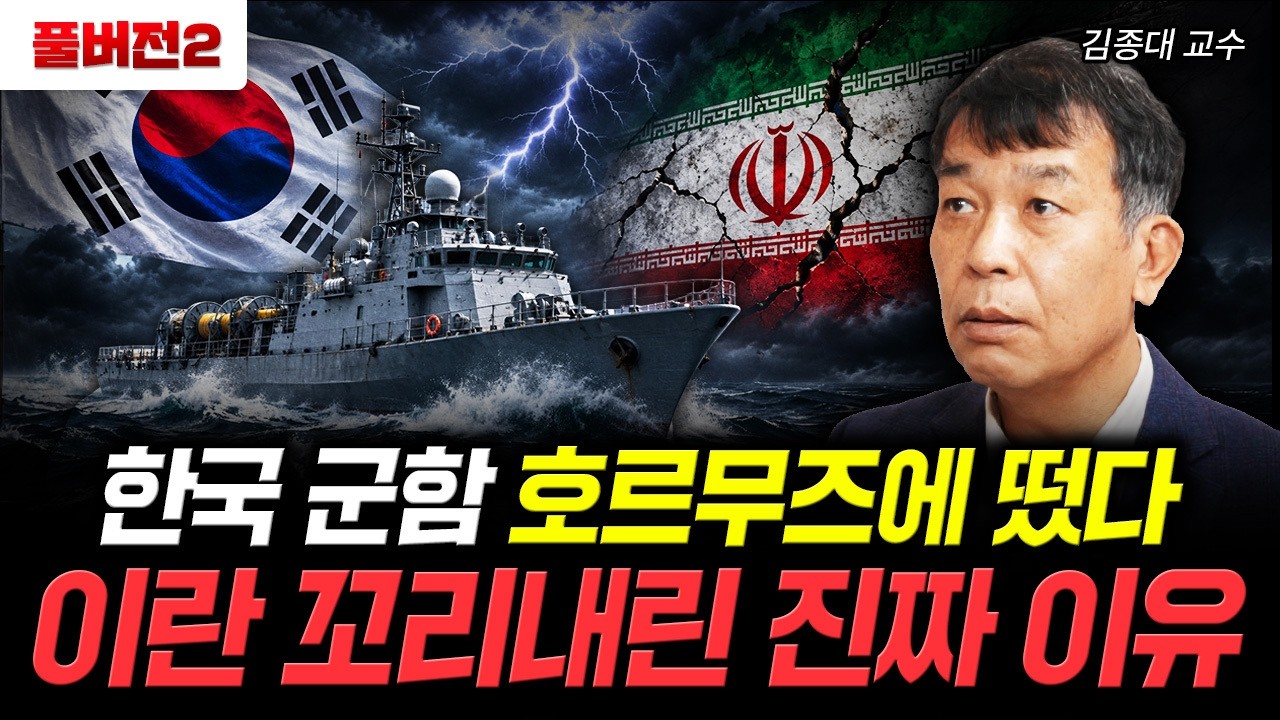
● Hormuz Crisis – Korea Economy Shock
Strait of Hormuz Tensions: Implications for South Korea’s Economy, Naval Cooperation, and Peninsula Security
The key issues for South Korea are international oil prices, maritime logistics costs, and the scope of military operations—not naval movements alone.
This report examines the Cheonghae Unit’s operational capabilities and limitations, the rationale for U.S. cooperation with South Korea, and the channels through which Middle East instability affects the Korean economy and regional security.
1. Key Distinction: The Cheonghae Unit Is Not a Minesweeping Force
The Cheonghae Unit’s presence in the region does not establish that mine-countermeasure forces have been deployed.
- Cheonghae Unit: Typically organized around a destroyer, with missions including vessel escort, counter-piracy operations, and protection of South Korean nationals.
- Minesweepers: Specialized vessels designed to detect, identify, and neutralize naval mines.
- Capability differences: A destroyer’s surveillance and escort capabilities do not imply equivalent capacity for specialized mine clearance.
Mine countermeasures require dedicated detection equipment, unmanned underwater systems, trained personnel, and seabed information.
Assessing South Korea’s contribution therefore requires identifying the vessels deployed, their equipment, and their authorized missions.
Claims that the U.S. military lacks mine-clearance capabilities require correction.
The United States maintains mine-countermeasure forces and systems. Whether sufficient assets can be deployed rapidly to a particular theater is a separate question.
A need for allied support should not be equated with a complete absence of domestic capability.
2. Why the Strait of Hormuz Matters: Military Tensions Translate into Energy Costs
The Strait of Hormuz is a critical transit route for crude oil and liquefied natural gas exported from the Persian Gulf.
Higher transit risks can affect energy prices and shipping costs before physical supply disruptions occur.
- International oil prices: The possibility of supply interruptions can generate a risk premium.
- Marine insurance: Elevated conflict risks can increase insurance premiums and related operating costs.
- Logistics schedules: Vessel delays and navigation restrictions can disrupt oil and gas deliveries and complicate inventory management.
Disruption in the Strait of Hormuz cannot be treated as a conventional shipping-route diversion.
Vessels departing from within the Persian Gulf must pass through the strait; alternative sea routes alone cannot resolve the problem.
Overland pipelines and alternative export routes exist, but their ability to replace all affected volumes immediately should not be assumed.
3. Economic Transmission to South Korea: Oil Prices, Exchange Rates, and Inflation
South Korea’s dependence on imported energy makes it sensitive to maritime transport disruptions in the Middle East.
For the global economic outlook, the duration of transport disruptions matters alongside the scale of military conflict.
① Energy Import Costs and Corporate Profitability
Higher crude oil and natural gas import costs can increase manufacturing and transportation expenses.
Energy-sensitive industries, including aviation and petrochemicals, are particularly exposed. Actual earnings effects depend on pricing power, contract structures, and currency hedging.
Higher oil prices do not necessarily benefit refiners; refining margins and demand conditions also matter.
② USD/KRW Exchange Rate and Import Prices
Geopolitical risk can increase demand for safe-haven assets and place downward pressure on the Korean won.
Simultaneous increases in oil prices and the USD/KRW exchange rate can amplify the won-denominated cost of dollar-priced energy imports.
Exchange-rate movements also depend on U.S. interest rates, broader dollar trends, and South Korea’s export performance.
③ Inflation and Monetary Policy
Persistent energy-price increases can affect consumer inflation and corporate pricing decisions.
Slower growth combined with rising cost pressures would complicate monetary policy decisions.
Middle East tensions alone do not establish that interest rates will rise or that cuts will be delayed. The persistence of the shock and inflation expectations remain critical.
4. Why the United States Values South Korean Support: Maritime Capabilities Beyond Warships
U.S.–South Korean naval cooperation extends beyond individual vessel deployments.
Sustained maritime operations require maintenance, replenishment, transportation, and intelligence sharing alongside combat capabilities.
- Shipbuilding and maintenance: South Korea’s shipbuilding industry and naval maintenance, repair, and overhaul capabilities can support bilateral cooperation.
- Protection of sea lanes: Secure energy and merchandise flows are a direct economic interest for both countries.
- Operational burden-sharing: Distributing surveillance, escort, and logistics responsibilities can reduce pressure on individual participants.
Industrial competitiveness does not automatically qualify South Korean companies to undertake every U.S. Navy maintenance contract.
Execution depends on security requirements, contractual terms, applicable laws, facility certification, and maintenance capacity.
For defense-sector investors, signed contracts, work scope, and revenue-recognition timing are more relevant than expectations of cooperation alone.
5. Does Operating in the Gulf of Oman Imply Safety, While Entering Hormuz Constitutes Participation in War?
Geographic location alone does not determine participation in an armed conflict.
Operations in the Gulf of Oman can carry attack risks depending on their nature. Conversely, transit through a particular area does not automatically constitute participation in war.
Assessments of South Korean military operations should consider the following factors.
- Mission objectives: Distinguish commercial-vessel protection, civilian evacuation, mine clearance, and support for offensive operations.
- Rules of engagement: The conditions governing the use of force affect operational risks and responsibilities.
- Command structure: Independent command arrangements and relationships with multinational operations are material considerations.
- Legal authority: Review international law, domestic procedures, and the scope of deployment authorization.
The central question is what forces are authorized to do, rather than how far they have deployed.
6. Middle East Instability and Korean Peninsula Security: Escalation Is Not Automatic
Heightened Middle East tensions do not, by themselves, establish an immediate increase in the likelihood of war on the Korean Peninsula.
Changes in U.S. military resource allocation and allied responsibilities nevertheless warrant monitoring.
- Force allocation: Demand for naval forces, air-defense systems, and intelligence assets can rise simultaneously across multiple regions.
- Logistical sustainability: Prolonged instability increases the importance of ammunition inventories, maintenance schedules, and supply capacity.
- Alliance coordination: Any expansion of South Korea’s overseas missions should be assessed alongside requirements for maintaining peninsula defense readiness.
Statements and developments involving U.S. Forces Korea require verification against original remarks, official announcements, and actual force changes.
Defense authorities’ statements and verifiable deployment changes provide a stronger analytical basis than sensational claims.
7. Additional Considerations: Track Actual Costs Rather Than Headline Intensity
First, economic disruption does not require a complete blockade.
Higher insurance premiums, vessel delays, and navigation restrictions can increase supply-chain costs.
Analysis should consider both whether the strait remains open and the cost of transiting it.
Second, de-escalation and logistics normalization may not occur simultaneously.
If a mine threat is confirmed, detection, clearance, and verification of navigational safety may take time after a political agreement.
Improved diplomatic conditions should not be assumed to produce an immediate normalization of logistics costs.
Third, military contributions and industrial benefits require separate assessments.
A larger South Korean role may generate operational costs and security burdens before any commercial benefits emerge. Corporate revenue depends on separate contracts and execution timelines.
Fourth, attributing an Iranian withdrawal to a single South Korean warship would require supporting evidence.
Such a causal assessment would need to examine policy changes, military actions, diplomatic negotiations, and official statements from the parties involved.
8. Indicators to Monitor: Connecting Security Developments with Economic Data
- Official security announcements: Verify deployed vessels, assigned missions, operating areas, and statements concerning engagements.
- Transit conditions: Monitor navigational warnings, major shipping companies’ operating notices, and vessel queues.
- Energy markets: Focus on the persistence of price increases and evidence of supply disruption rather than daily volatility.
- Transportation costs: Track tanker freight rates and war-risk insurance premiums.
- Domestic transmission: Monitor USD/KRW, import prices, corporate input costs, and companies’ ability to pass through higher expenses.
For South Korea’s economy, the priority is identifying when geopolitical risk becomes measurable cost pressure or supply disruption, rather than predicting conflict.
< Summary >
- The Cheonghae Unit’s destroyers and specialized minesweepers serve different functions; actual deployed capabilities must be verified.
- The supplied material does not substantiate claims of Iranian mine deployment or a withdrawal caused by South Korean warships.
- Hormuz tensions can affect South Korean inflation and corporate costs through oil prices, insurance premiums, and exchange rates.
- South Korea’s shipbuilding and maintenance capabilities support cooperation, but commercial benefits require verification through actual contracts.
- Overseas operational risks depend on mission scope, rules of engagement, and command arrangements—not location alone.
- Investment and management decisions should prioritize transit conditions and measurable costs over headline intensity.
[Related Articles…]
*Source: [ 달란트투자 ]
– 한국 군함 호르무즈에 떴다. 이란 꼬리내린 진짜 이유|김종대 교수 풀버전2