● Nvidia AI Bubble Warning
NVIDIA and Jensen Huang: Key Considerations for AI Investment and KOSPI Semiconductor Stocks
Rising expectations for NVIDIA warrant scrutiny of three factors.
Investors should verify management-related news, assess whether AI investment generates cash flow, and determine whether the drivers of U.S. semiconductor gains also apply to Samsung Electronics and SK hynix.
Distinguishing capital flows within the AI industry from the channels that generate earnings for Korean semiconductor companies helps clarify opportunities and risks obscured by sharp share-price gains.
1. Facts to Verify: Reports of Jensen Huang’s Return as CEO and Sharp Market Gains
The information provided does not establish Jensen Huang’s departure or return as CEO, investigations by U.S. authorities, or sharp share-price gains on a specific trading day.
Huang is NVIDIA’s co-founder and long-serving CEO. Any reference to his return requires prior confirmation of a departure or suspension of duties.
This report does not rely on real-time filings or market data and does not present unverified events as confirmed current news.
- Management changes: Verify through NVIDIA’s official announcements and U.S. Securities and Exchange Commission filings.
- Department of Justice or SEC investigations: Do not infer corporate or individual misconduct without confirming the subject, scope, and procedural status of an investigation.
- Nasdaq gains of 6.5% and NVIDIA gains of 31%: Without trading dates, comparison periods, and clarification of regular-session versus after-hours trading, neither the returns nor their drivers can be assessed reliably.
- A 19% gain in a U.S. memory stock: Confirm the company and trading date before evaluating company-specific catalysts, including earnings announcements.
The relevant focus is therefore the financial connections between NVIDIA and AI infrastructure investment, rather than optimism premised on an unverified executive return.
2. NVIDIA’s Significance: Influence Beyond GPU Sales
NVIDIA’s competitive position extends beyond GPU performance.
Its development tools, software ecosystem, networking products, and server systems influence how customers build large-scale AI infrastructure.
- Cloud providers: Invest in data centers and computing equipment based on expected AI service demand.
- AI model developers: Purchase or lease computing resources for model training and inference.
- Data center operators: Secure facilities and equipment through long-term customer contracts and financing.
- Semiconductor supply chain: Higher GPU demand affects demand for HBM, advanced packaging, and networking equipment.
NVIDIA’s product roadmap and customer investment plans are therefore important indicators of the AI semiconductor market outlook.
However, investments in specific AI companies or guarantees of data center operators’ debt require verification of the underlying agreements.
Equity investments, equipment purchase commitments, loans, and debt guarantees are distinct transactions. Treating them as interchangeable forms of financial support can distort risk assessments.
3. Key Risks: Expanding AI Investment Can Coincide With Weaker Cash Flow
Growth in AI infrastructure investment does not imply profitability for every participant.
GPU suppliers can recognize revenue from equipment sales, while buyers must generate sufficient service revenue over subsequent years.
① Circular financing: End-customer spending is critical
When a funded company uses the proceeds to purchase its investor’s products or services, investment growth and revenue growth can occur simultaneously.
Such transactions do not inherently indicate misconduct.
However, if growth depends more on internal funding flows than payments from external customers, a slowdown in new financing can quickly weaken expansion.
② Interest costs: Equipment performance and business profitability are separate considerations
Highly leveraged data center operators are sensitive to interest expenses and refinancing terms.
Expectations of policy rate cuts do not ensure equivalent reductions in borrowing costs for lower-credit-quality operators.
③ Power and permitting: GPU availability does not ensure immediate operation
Delays in grid connections, cooling infrastructure, and site permits can postpone data center operations.
Equipment payments and financing costs may accrue before service revenue begins.
④ Technological change: High utilization alone is insufficient
Profitability can deteriorate even at high utilization if computing service prices decline faster than costs.
Assessing data center investment therefore requires analysis of computing prices, electricity costs, depreciation, and interest expenses alongside utilization.
4. Why Gains in U.S. Memory Stocks Do Not Translate Directly to Samsung Electronics and SK hynix
Companies in the same semiconductor industry need not deliver identical share-price returns.
Share prices often respond more strongly to changes relative to prior expectations than to industry conditions alone.
- Earnings expectations: A company-specific outlook that materially exceeds consensus can drive a sharp gain in that stock alone.
- Product mix: Exposure to HBM, conventional DRAM, and NAND determines how AI demand translates into earnings.
- Customer qualification and delivery schedules: Available capacity does not ensure immediate earnings contributions if qualification or shipments are delayed.
- Business structure: Samsung Electronics’ valuation also reflects smartphones, home appliances, foundry operations, and other businesses.
- Prior share-price performance: Positive developments may produce limited upside when already reflected in valuations.
- Exchange rates and fund flows: The won-dollar exchange rate, foreign investment flows, and index weights also influence Korean equities.
The Samsung Electronics share-price outlook requires consideration of earnings trends across its businesses, alongside HBM competitiveness.
The SK hynix earnings outlook depends on HBM demand and supply competitiveness, conventional memory prices, capital expenditure, and the sustainability of profitability.
Similarly, the KOSPI outlook should be assessed through actual revisions to domestic corporate earnings estimates rather than a direct extrapolation of U.S. technology stock gains.
5. Beyond Share-Price Rallies: Who Bears the Risk?
A central question in the AI investment cycle is: Who ultimately pays, and who absorbs losses if demand falls short?
Companies within the same AI ecosystem differ in the timing of cash receipts and the duration of their risk exposure.
First, compare revenue growth with cash collection.
If accounts receivable rise faster than revenue, payment terms and collectability warrant scrutiny.
Receivables growth alone does not establish a problem; business expansion and contractual terms must also be considered.
Second, contract terms matter more than headline value.
Large contracts may provide less earnings stability than expected if customers retain termination rights or suppliers assume substantial obligations.
Key factors include minimum purchase commitments, advance payments, price-adjustment provisions, and counterparty financial strength.
Third, profit allocation across the supply chain is the key catalyst for Korean semiconductor stocks.
Growth in total AI investment does not imply proportional earnings growth for Korean memory manufacturers.
HBM shipment volumes, selling prices, manufacturing yields, and capital efficiency must collectively support higher earnings per share.
Fourth, distinguish relief rallies from earnings-driven rallies.
A rally driven by easing concerns differs from one supported by higher expected earnings.
After a price increase, investors should check whether earnings guidance, operating cash flow, and actual customer orders continue to improve.
6. Pre-Investment Checklist
- Event verification: Are management changes and investigations supported by official announcements?
- Market-data verification: Are the dates and reference prices underlying reported gains clear?
- Demand verification: Are investment announcements translating into orders and revenue?
- Cash-flow verification: Is operating cash flow improving alongside revenue?
- Debt assessment: Can the company meet debt maturities and interest obligations?
- Korean earnings exposure: Are earnings forecasts for Samsung Electronics and SK hynix actually being revised upward?
The central issue is not the scale of U.S. share-price gains, but whether their underlying drivers also support the earnings and cash flow of the company under consideration.
< Summary >
- The information provided does not verify Jensen Huang’s return as CEO, regulatory investigations, or the cited market gains.
- AI investment growth and improvements in operator profitability must be assessed separately.
- Key risks include dependence on financing, interest costs, power availability, and equipment’s economic useful life.
- U.S. and Korean memory stocks can deliver different returns because of differences in product mix, expectations, and fund flows.
- Investment analysis should prioritize end-customer demand, cash collection, and actual earnings growth at Korean companies.
[Related Articles…]
*Source: [ 내일은 투자왕 – 김단테 ]
– 젠슨황 CEO 복귀! 리스크도 있다?! #젠슨황 #엔비디아 #코스피
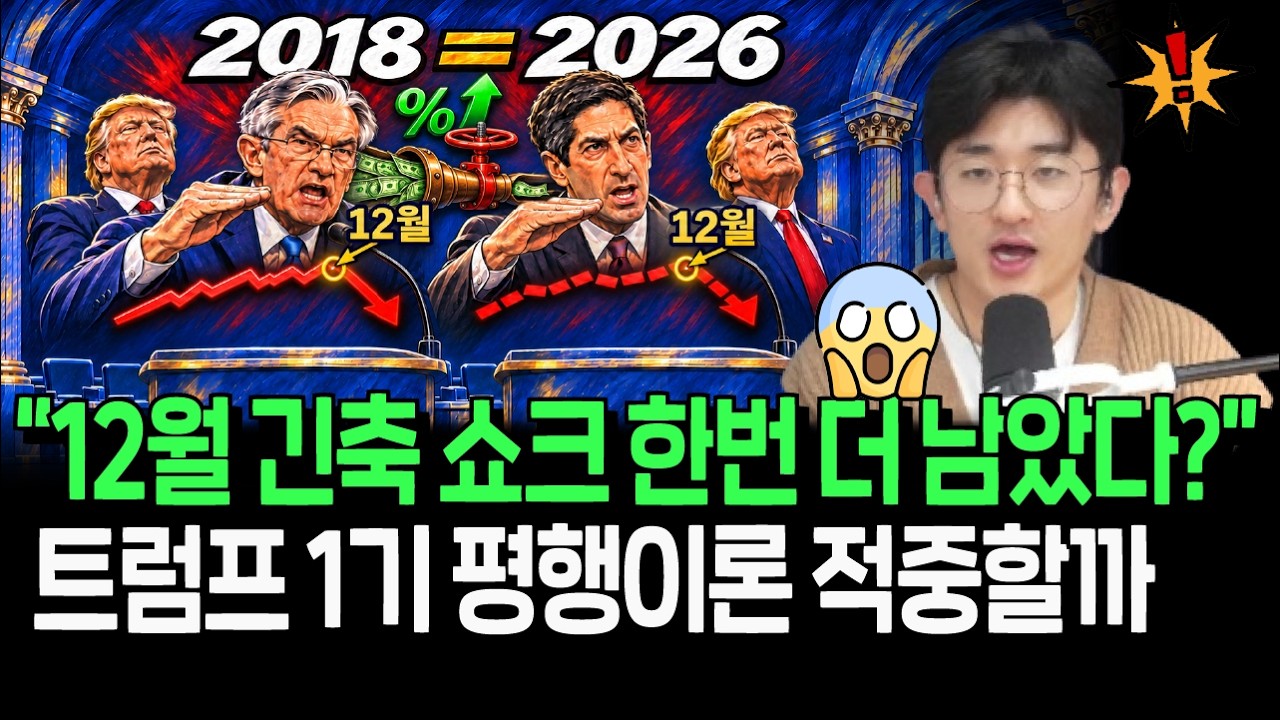
● Trump Shock, AI Chip Crash, Market Bottom
Can Trump’s Remarks Determine the Bottom in U.S. Equities? AI Semiconductor Investment Signals from the 2018 Sell-Off
Presidential remarks can trigger an equity rebound, but interest rates and corporate earnings determine its sustainability.
Three factors warrant attention.
The conditions behind the 2018 sell-off and recovery, how to distinguish different forms of slowing AI data center investment, and market-bottom indicators that matter more than political statements.
A central distinction is between a stock appearing inexpensive after a steep decline and being undervalued relative to its cash-generating capacity.
1. Core Assessment: Three Fundamental Changes Matter More Than Trump’s Remarks
Presidential statements matter for U.S. equities because they can rapidly alter policy uncertainty.
Announcements concerning renewed tariff negotiations, relaxed export controls, or investment incentives can reduce the risk premium investors demand.
However, encouraging equity purchases is not equivalent to implementing policies that improve corporate earnings prospects.
- Monetary policy: Assess whether concerns over further tightening are easing and market expectations for interest rates are stabilizing.
- Trade and industrial policy: Monitor whether uncertainty surrounding the revenue impact of U.S.-China tensions and semiconductor export controls is declining.
- Corporate earnings: Verify whether expanding AI investment is translating into revenue and cash flow.
Supportive political messaging can generate a short-term rebound, but sustained gains require support from interest rates and earnings.
2. Reviewing the 2018 Sell-Off: What Drove the Decline and the Recovery?
The late-2018 decline reflected a combination of monetary tightening, trade tensions, and concerns over slowing growth rather than a single event.
① Federal Reserve Tightening Did Not Begin Abruptly After the Midterm Elections
The Federal Reserve raised its policy rate four times in 2018 while reducing its balance sheet.
The December rate increase coincided with concerns over slowing growth, raising fears that monetary policy had become excessively restrictive.
Describing the episode as an abrupt shift toward tightening after the elections misrepresents the policy trajectory.
The 2018 midterm elections also produced a divided Congress: Democrats regained the House, while Republicans retained their Senate majority.
② U.S.-China Tensions Disrupted Both Revenue Prospects and Supply Chains
Trade disputes and technology-related national security tensions increased uncertainty across global manufacturing, including semiconductors.
Companies had to reassess Chinese sales, component sourcing, production locations, and customer investment plans.
However, neither Huawei-related events in late 2018 nor the actions of individual politicians can be established as the sole cause of the broader market decline.
③ Markets Rebounded After Trump’s Remarks, but the Remarks Alone Did Not Reverse the Trend
U.S. equities fell sharply on December 24, 2018. On December 25, President Trump described U.S. stocks as a buying opportunity.
The market rebounded sharply on December 26.
However, the sequence of the remarks and the rebound does not establish that the president caused the market bottom.
On January 4, 2019, Federal Reserve Chair Jerome Powell emphasized patience and flexibility in monetary policy. Subsequent expectations for progress in trade negotiations also supported the recovery.
The relevant lesson is not a recurring calendar pattern, but the simultaneous easing of policy uncertainty and concerns over monetary tightening.
3. Comparing 2018 with the AI Investment Cycle: Similar Structures, Different Risks
Comparing the economic drivers of equity prices is more useful than overlaying historical and current price charts.
| Comparison | Key Variables in 2018 | Variables to Monitor in the AI Investment Cycle |
|---|---|---|
| Monetary policy | Rate increases and balance sheet reduction | Real interest rates, financial conditions, and funding costs |
| Technology competition | U.S.-China tensions over telecommunications equipment and semiconductors | Advanced AI chips, data centers, and restrictions on technology access |
| Investment cycle | Expectations and concerns regarding sustained cloud growth | The pace of AI capital expenditure growth and monetization prospects |
| Company-specific risks | Cyclical exposure, slowing demand, and inventory pressure | Customer concentration, export licenses, power availability, and investment payback periods |
| Conditions for recovery | Easing tightening concerns and expectations for trade negotiations | Policy stability and improving earnings and cash flow forecasts |
Slowing cloud investment alone does not fully explain Nvidia’s 2018 decline.
The collapse in cryptocurrency mining demand and excess gaming GPU channel inventory were also significant factors.
The same analytical discipline applies to AI semiconductors.
Rather than focusing solely on falling share prices, distinguish among order cancellations, inventory accumulation, and changes in customer investment plans.
4. AI Data Center Investment: Slower Growth Is Not a Demand Collapse
① Investment Can Increase Even as Its Growth Rate Declines
An increase in capital expenditure from 100 to 160 represents 60% growth.
A subsequent increase from 160 to 200 raises total investment but reduces the growth rate to 25%.
The industry is still expanding, yet stocks valued on expectations of rapid growth can decline.
Accordingly, an attractive industry outlook does not necessarily justify prevailing equity valuations.
② Actual Utilization and Cash Generation Become More Important Than Orders
Purchasing GPUs does not immediately generate revenue for an AI data center.
Power connections, cooling systems, network infrastructure, and customer acquisition must also be in place.
- Capital expenditure plans: Determine whether spending commitments remain intact or implementation is being delayed.
- Utilization: Assess whether installed servers are serving actual paying demand.
- Monetization: Evaluate whether AI service revenue is growing sufficiently to cover electricity and operating costs.
- Free cash flow: Examine the cash remaining after capital expenditure.
③ Interest Rate Exposure Varies Across the AI Industry
Large platform companies funding investment internally face different interest rate risks from debt-dependent data center operators.
Highly leveraged companies may face both rising interest expense and tighter financing constraints.
For U.S. equity investors, cash balances, debt maturities, and customer contract structures are more informative than the AI-related label alone.
5. Federal Reserve Policy: Can Falling Equity Prices Eliminate the Need for Rate Increases?
Declining equity prices can reduce household wealth, weaken consumer confidence, and raise corporate financing costs.
Through these channels, financial markets can produce effects similar to monetary tightening.
However, equating an equity decline with two or three rate increases requires a specific model and explicit assumptions.
The Federal Reserve considers several indicators alongside equity prices.
- Inflation: Whether core and services inflation continue to moderate.
- Employment: Unemployment, job creation, and wage growth as indicators of labor market pressure.
- Credit markets: Deterioration in corporate credit spreads and lending conditions.
- Inflation expectations: Expectations for future price increases across the economy.
Falling market interest rates are not always positive for equities.
Lower rates driven by improving inflation expectations can support stocks. If rates fall because of severe recession concerns, declining corporate earnings may outweigh that benefit.
Movements in the dollar, gold, and Bitcoin can provide context, but their distinct price drivers prevent them from serving as a single, unified liquidity indicator.
6. U.S.-China Semiconductor Restrictions: Legal Provisions and Implementation Terms Matter More Than Political Statements
Technology competition matters for the global outlook because restrictions directly affect companies’ addressable markets.
However, forceful rhetoric, legislative proposals, enacted legislation, and implementation are separate stages.
- Product coverage: Determine whether restrictions apply only to advanced AI accelerators or also extend to related equipment and services.
- Geographic coverage: Assess whether controls cover direct exports, third-country transactions, or overseas data centers.
- Effective dates: Check for immediate implementation, transition periods, and exemptions for existing contracts.
- Earnings impact: Estimate the affected revenue share and the potential to redirect sales to other markets.
Rumors of management changes or claims that particular individuals are directing restrictions behind the scenes should not underpin investment decisions without official confirmation and credible evidence.
Rumors can move markets, but valuation requires verified restrictions and an assessment of their revenue impact.
7. Four Investment Considerations More Important Than Predicting the Bottom
The following factors may receive less attention than headlines but directly affect investment decisions.
① Restrictions May Redirect AI Investment Across Regions and Operators Rather Than Eliminate It
Restrictions on sales to a particular country may hurt some companies while encouraging data center investment elsewhere.
However, demand in other regions may not replace lost sales at the same pace or profitability.
The more useful question is not whether the AI industry will cease growing, but where investment budgets are shifting and which companies will capture the returns.
② Expanding AI Investment Can Pressure Near-Term Margins
Higher investment in data centers and servers increases depreciation expense over time.
Even if AI revenue rises, operating margins can decline when depreciation and operating costs grow faster.
Investors should therefore assess incremental earnings relative to additional investment, not AI revenue growth alone.
③ Presidential Silence Does Not Establish an Intention to Allow Market Declines
A president’s lack of comment on equities does not establish an intention to drive prices lower or achieve a particular political outcome.
Observable actions, including tariff adjustments, regulatory implementation documents, investment support, and negotiation schedules, are more useful than speculation about political motives.
④ A Single-Digit Fear Indicator Requires Identification of the Index
The VIX and the Fear & Greed Index are different measures.
The VIX measures expected volatility implied by S&P 500 options and generally rises as market anxiety increases.
Interpreting a single-digit VIX reading as extreme fear can therefore reverse the indicator’s meaning.
By contrast, readings near 0 on the Fear & Greed Index indicate extreme fear.
No extreme reading, by itself, confirms a market bottom.
8. Practical Checklist: Distinguishing Initial Rebound Signals from Evidence of Sustainability
| Area | Signals Supporting an Initial Rebound | Evidence Supporting Sustainability |
|---|---|---|
| Policy | Statements on renewed negotiations or relaxed restrictions | Official documentation, implementation schedules, and confirmed scope |
| Interest rates | Easing concerns over further tightening | Concurrent evidence of inflation and credit market stability |
| AI investment | Major customers maintaining investment plans | Improving utilization, paying demand, and cash flow |
| Corporate earnings | A slower pace of downward forecast revisions | Stabilizing or upwardly revised earnings forecasts |
| Market performance | A rebound led by large technology companies | Gains broadening across sectors and stabilizing credit spreads |
Long-term investors can consider phased allocations after defining liquidity needs and loss tolerance, rather than attempting to identify the precise market bottom.
Short-term investors should assess whether a statement-driven rally is followed by substantive policy changes and earnings improvement.
A decline of 20% or 50% from a previous peak does not, by itself, establish undervaluation.
If expected future earnings have also fallen substantially, a stock may remain expensive despite its lower price.
< Summary >
- The late-2018 recovery reflected easing concerns over monetary tightening and changing policy expectations, not Trump’s remarks alone.
- Slower AI investment growth differs from a decline in investment levels; monetization and cash flow require separate assessment.
- Interest rate expectations, credit conditions, and corporate earnings forecasts matter more than political messaging when assessing a potential market bottom.
- Semiconductor restrictions should be analyzed through their actual product coverage, geographic scope, and implementation terms.
- Distinguish the VIX from the Fear & Greed Index, and do not infer a buying opportunity from the size of a price decline alone.
[Related Articles…]
*Source: [ 소수몽키 ]
– 결국 증시 바닥은 트럼프의 입에서 나온다? 트럼프 1기 평행이론 적중할까