● Meta AI Shockwave, Space Data Centers, AI Agents Surge
Meta’s Third AI Inflection Point, Space Data Centers, and AI Agents: Key U.S. Equity Beneficiaries the Market Is Repricing
The core of this trend is not simply that “AI is positive.”
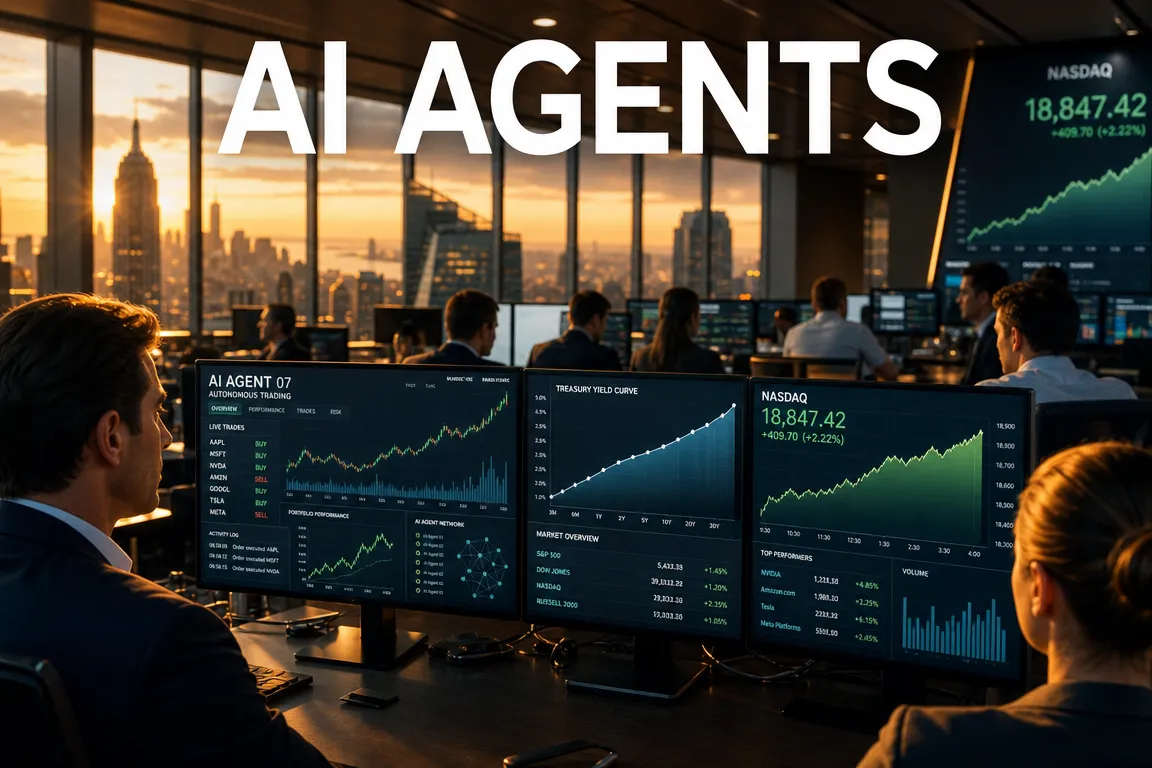
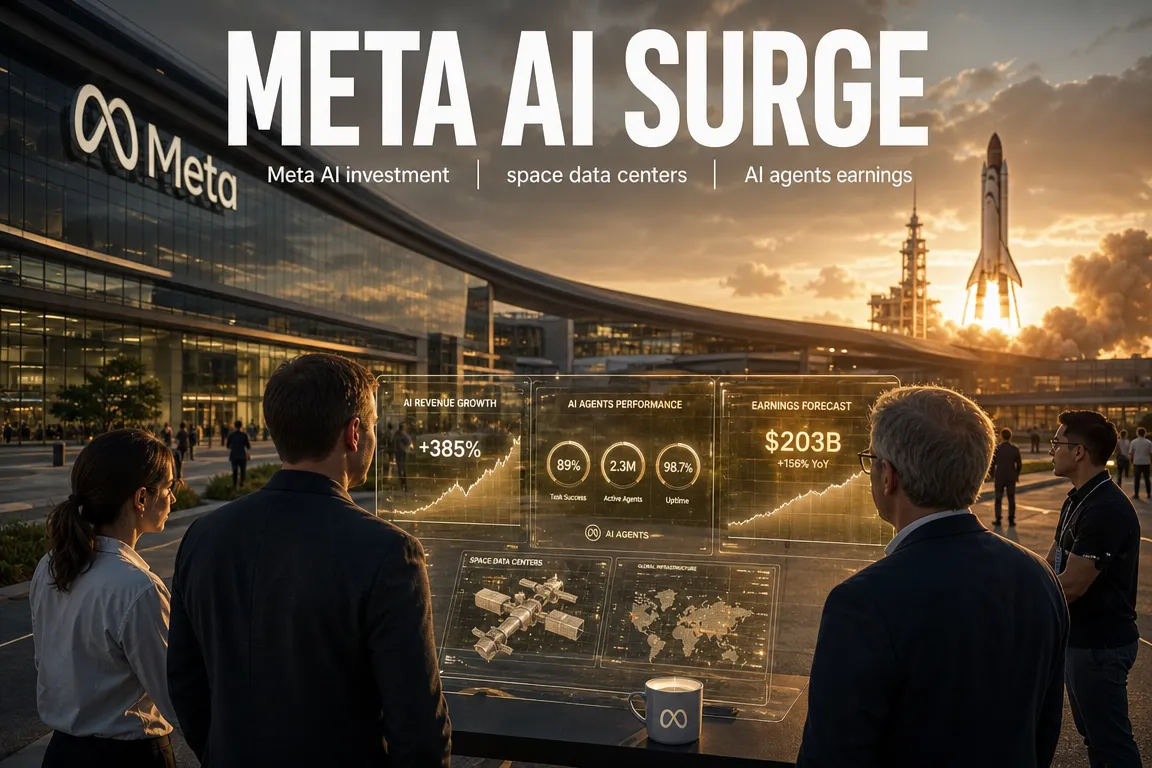
After Meta signaled another large-scale AI investment plan, the market is revaluing AI semiconductors, data center infrastructure, power grids, cloud services, space data centers, and AI agent-related stocks at once.
At the same time, Wall Street is increasingly arguing that investors could miss the AI investment cycle and the productivity reset if they focus only on high interest rates.
This article summarizes what Meta’s third AI inflection point means, why companies are exploring data centers in space, which types of stocks may require caution in the AI agent era, and which global macro factors may matter more than the interest rate outlook.
1. Meta’s Third AI Inflection Point: Why the Market Is Repricing the AI Investment Cycle
Meta’s AI spending is being viewed not as a simple cost increase, but as a signal that will shape the next revenue model for large-cap technology companies.
In the past, the market often viewed big tech AI spending as excessive capital allocation.
That view has shifted.
The gap between companies that can invest in AI infrastructure and those that cannot is widening, and that gap may translate into future competitiveness in advertising, commerce, content, workflow automation, and personal assistant services.
- First AI inflection point: The period in which generative AI became mainstream following the launch of ChatGPT.
- Second AI inflection point: The period of rapid investment in AI semiconductors and cloud infrastructure, led by NVIDIA.
- Third AI inflection point: The stage in which AI is linked to actual revenue generation through services, advertising, commerce, agents, and operational automation.
Meta is increasingly positioning AI not as a chatbot, but as a layer across Facebook, Instagram, WhatsApp, Reels, ad targeting, recommendation algorithms, and creator tools.
This indicates that AI is moving beyond experimentation and into a phase that can materially affect revenue and margins.
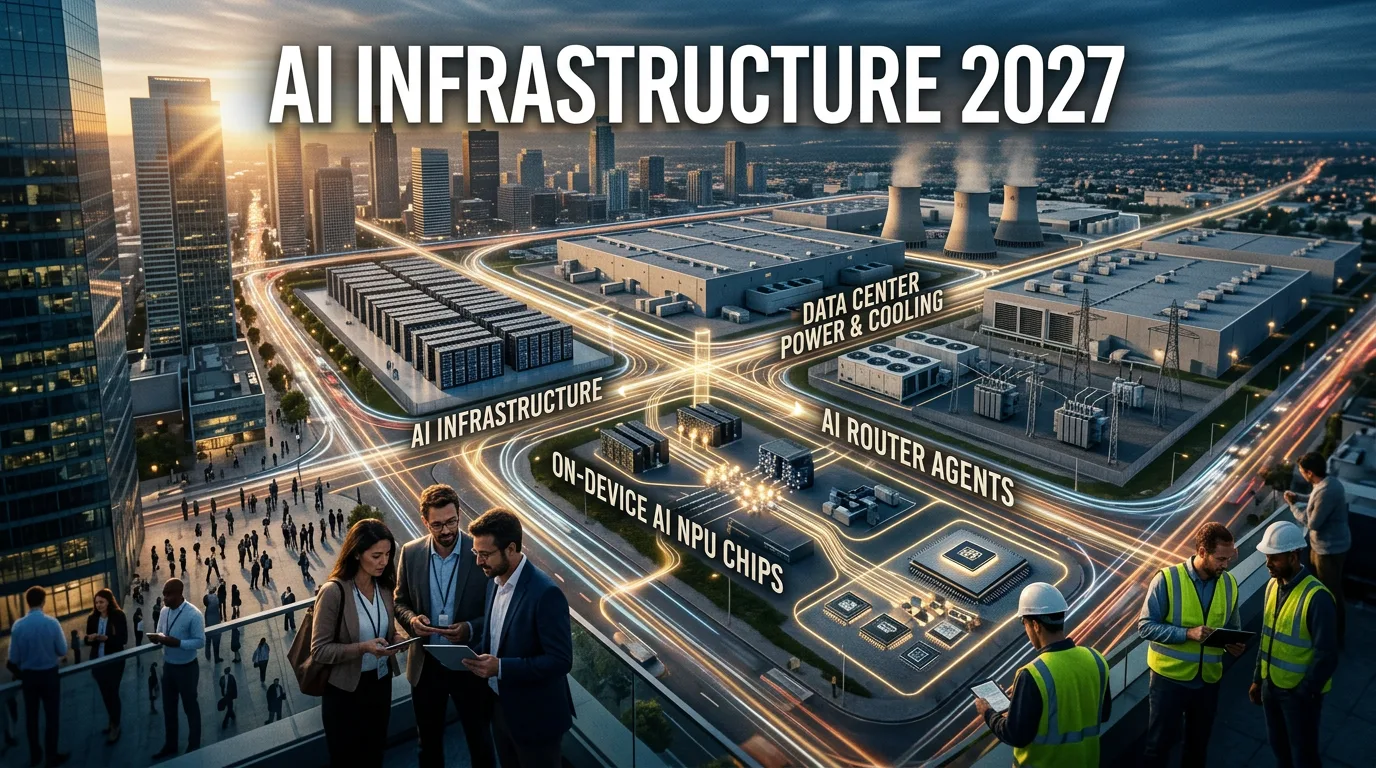
2. Direct Beneficiaries of Meta’s AI Investment Expansion: Semiconductors, Networks, Power, and Cooling
In the AI investment cycle, capital continues to flow first into infrastructure.
As AI services become more advanced, they require more GPUs, high-bandwidth memory, networking equipment, power systems, and cooling solutions.
Accordingly, Meta’s AI investment is not only a company-specific development; it is also prompting investors to reassess the broader U.S. data center infrastructure value chain.
① AI Semiconductors: Still at the Center of the Cycle
- NVIDIA: A core company in the AI GPU ecosystem, remaining central to both training and inference demand.
- AMD: Attracting attention as an alternative as large tech firms seek to reduce dependence on NVIDIA.
- Broadcom: Strong in custom AI semiconductors and networking chips.
- TSMC: A key foundry for advanced AI chip production.
- Micron, SK hynix, Samsung Electronics: Potential direct beneficiaries of rising demand for HBM and other high-performance memory products.
A key change in AI semiconductors is that demand is no longer limited to training GPUs; inference demand is also increasing.
If AI agents become widely adopted, each user command may require continuous model execution, which could sharply increase inference costs.
This may become the second growth engine for the AI semiconductor market.
② Data Center Power and Cooling: The Real Bottleneck Beyond the Headlines
- Vertiv: Frequently cited as a beneficiary in data center power management and cooling solutions.
- Eaton: Linked to rising demand for power distribution and power management equipment.
- Schneider Electric: Strong in global data center power efficiency and automation solutions.
- GE Vernova: Relevant to power grids, generation equipment, and power infrastructure expansion.
- Quanta Services: Potential beneficiary of transmission network and power infrastructure construction.
Many investors focus primarily on AI semiconductors, but the true bottleneck is often power and cooling.
Buying GPUs is possible if capital is available, but securing power supply contracts, substations, cooling systems, and land takes much longer.
As a result, as the AI investment cycle matures, power grids and data center infrastructure may become the next leading themes after semiconductors.
3. Building the First Data Center in Space: Why the Idea Is Emerging
Space data centers remain at an early stage, but they represent an extreme attempt to address the power constraints of the AI era.
Terrestrial data centers continue to face constraints related to power, cooling, land, environmental regulation, and transmission capacity.
By contrast, space offers access to solar power, different cooling design possibilities, and relief from certain terrestrial grid limitations.
However, the technical challenges remain substantial.
Launch costs, maintenance, radiation exposure, latency, satellite lifespan, space debris, and security issues all need to be resolved.
If AI computing demand continues to grow at the current pace, space data centers may evolve from a speculative concept into a long-term infrastructure experiment.
Potential Beneficiary Areas Related to Space Data Centers
- Launch vehicles: Low-cost launch capability is essential for placing data center modules into orbit.
- Satellite manufacturing: Computing systems must be designed to operate reliably in space environments.
- Optical communications: Large-scale data transfer between space and Earth is required.
- Radiation-hardened semiconductors: Chips that can operate reliably in space conditions become increasingly important.
- Solar panels: High-efficiency solar technologies are critical for space-based power supply.
- Ground station infrastructure: Communication hubs are needed to connect space data centers with terrestrial cloud systems.
Companies Worth Monitoring in the Space Data Center Theme
- Rocket Lab: A company with both small launch vehicle and space systems businesses.
- SpaceX: A private company, but a key player in low-cost launch and the satellite internet ecosystem.
- Redwire: Often mentioned in connection with space infrastructure and satellite components.
- Lockheed Martin, Northrop Grumman: Large companies with defense and space systems capabilities.
- Iridium, Viasat: Companies connected to satellite communications infrastructure.
That said, the space data center theme still lacks clear earnings visibility.
From a short-term investing perspective, attention should remain on actual orders, technical validation, launch contracts, and communications infrastructure access rather than on expectation-driven rallies.
4. The Launch of the AI Agent Era: The Real Shift Is Workflow Automation, Not Chatbots
An AI agent is a system that receives user instructions, creates a plan, and executes tasks across multiple applications.
For example, instead of simply drafting an email, it may be asked to prepare materials for a client meeting this week, update the CRM, send follow-up emails, and schedule the next meeting.
As AI agents become more widespread, software monetization models may change.
Instead of a seat-based model in which people purchase software licenses, usage-based pricing, task-based pricing, and outcome-based pricing may expand as AI performs work on behalf of employees.
Potential Beneficiaries in the AI Agent Era
- Microsoft: Well positioned through Office, Teams, Azure, and Copilot for enterprise AI agent adoption.
- Google: Continuing to compete in AI agents through Workspace, Search, Cloud, and the Gemini ecosystem.
- Amazon: A strong position in AWS-based AI services and enterprise cloud infrastructure.
- ServiceNow: Strong potential for AI-driven enterprise workflow automation.
- Palantir: Connected to decision automation demand based on enterprise and government data.
- CrowdStrike, Palo Alto Networks: Security and access control become more important as AI agents proliferate.
The key issue in the AI agent era is not only which company has the better model.
Access to proprietary enterprise data, integration with workflow systems, security controls, audit logs, and user trust are increasingly important.
Accordingly, cloud, cybersecurity, and data platform companies may benefit alongside AI agent adoption.
5. Stock Types That May Require Caution in the AI Agent Era
Not all technology stocks benefit equally from AI adoption.
In fact, some existing business models may face pressure as AI agents become more common.
① Outsourcing Companies Focused on Repetitive Work
Call centers, customer support providers, document-processing firms, and businesses that outsource repetitive administrative work may face direct substitution pressure from AI agents.
Companies whose value proposition is mainly labor-cost reduction may find that customers reassess their cost structures as AI adoption increases.
② Seat-Based SaaS Companies
Many software companies have historically grown revenue as the number of employees using the software increased.
However, if AI agents perform tasks in place of employees, companies may need fewer software seats.
In that case, SaaS companies dependent on simple seat-based pricing may face slower growth.
③ AI Wrappers With Limited Data Differentiation
Many firms now present AI-enhanced offerings, but without proprietary data or strong customer lock-in, those advantages may not last.
AI features are being standardized quickly, pricing is declining, and large platforms may bundle similar capabilities for free or at low cost.
④ Content Companies Dependent on Search Traffic
As AI search and summarization become more common, users may obtain answers without visiting websites directly.
Content companies that rely on search-driven advertising revenue should assess traffic concentration risk.
⑤ Education, Translation, and Basic Coding Tools With High Substitution Risk
Basic tutoring, translation, simple code generation, and document summarization are among the areas where AI is penetrating most quickly.
Companies in these segments should be evaluated for brand strength, community, data, certification, and B2B contract protection.
6. Is Focusing on High Rates Missing the Opportunity? What Market Strategists Are Watching
Interest-rate expectations remain important, but they are no longer sufficient on their own to drive investment decisions.
High rates can weigh on valuations.
However, if the U.S. economy remains strong and corporate earnings hold up, equities may continue to rise longer than expected.
The more important question on Wall Street is not when rates decline, but whether AI investment translates into productivity gains and higher profits.
Three Variables More Important Than Rates
- Corporate earnings: Whether large-cap technology companies and selected industrial firms can continue to grow despite higher rates.
- AI capital expenditure: Whether cloud, semiconductor, and power grid investments translate into actual revenue.
- Market breadth: Whether gains remain concentrated in a few AI leaders or spread into industrials, power, healthcare, and financials.
For U.S. equity investors, waiting only for rate cuts could mean missing the ongoing AI infrastructure cycle.
At the same time, buying any stock simply because it mentions AI introduces significant valuation risk.
The key question is whether a company is positioned to generate actual earnings from the AI investment cycle.
7. The Most Important Point Not Emphasized Enough in Other Coverage: The Bottleneck Is Physical Infrastructure, Not the Model
Much of the coverage focuses on which company has the best AI model.
From an investment perspective, however, the more important issue is the physical infrastructure required to run AI.
Although AI appears to be a digital service, it depends on electricity, cooling, semiconductors, copper, transformers, transmission lines, land, data center operations, and specialized labor.
In other words, the AI revolution is both a software shift and a large-scale industrial infrastructure cycle.
Key Checklist for Investors
- Power availability: Whether data centers can secure stable electricity supply.
- Cooling technology: Liquid cooling and thermal management become more important as GPU density rises.
- Network speed: Demand for networking equipment rises as GPUs exchange data more rapidly.
- Memory bottlenecks: HBM shortages can affect AI chip shipment capacity.
- Regulation and energy policy: Data center power consumption creates exposure to local regulation and utility pricing.
- AI monetization speed: Whether large tech firms can recover infrastructure spending through revenue and earnings.
From this perspective, AI investment is not a short-term theme. It is a long-term structural shift that connects semiconductors, power, industrials, cloud, security, and space infrastructure.
8. Investment Strategy: This Is No Longer Only About AI Leaders
The AI market has likely moved beyond the first phase of leader concentration and into a second phase of infrastructure expansion.
NVIDIA and other leading AI semiconductor companies remain important, but they are not the only source of opportunity.
Companies that build data centers, supply power, connect networks, manage security, and extend infrastructure into space may also benefit.
A Useful Portfolio Framework
- Core growth axis: AI semiconductors, cloud, and large-cap technology platforms.
- Infrastructure expansion axis: Power grids, cooling, data center equipment, and networking.
- Application services axis: AI agents, cybersecurity, and enterprise software.
- Long-duration optionality axis: Space data centers, satellite communications, and launch vehicles.
- Defensive review axis: Businesses exposed to substitution risk from AI.
In the near term, interest rates and valuation compression may continue to create volatility.
Over the medium to long term, however, AI capital spending and productivity gains may become central variables for the global economic outlook.
Ultimately, the right investment framework is not whether a company uses the term AI, but whether AI adoption improves revenue, margins, and competitive barriers in a measurable way.
< Summary >
Meta’s third AI inflection point suggests that AI is moving beyond a technology demonstration phase into monetization through advertising, commerce, and workflow automation.
AI semiconductors, data center infrastructure, power grids, cooling, and networking equipment are emerging as major beneficiaries.
Space data centers remain an early-stage theme, but they can be viewed as a long-term infrastructure experiment aimed at addressing the power and cooling constraints of the AI era.
In the AI agent era, cloud, cybersecurity, and data platform companies may benefit, while repetitive-work providers and seat-based SaaS businesses may face pressure.
Investors should be careful not to focus only on interest rates and miss the broader AI capital expenditure and productivity cycle.
Future AI investing will require a view of the full value chain, including power, semiconductors, cooling, data centers, and security, rather than only model competition.
[Related Articles…]
- AI Investment Cycle and Structural Industry Change
- Data Center Infrastructure and Power Beneficiaries Outlook
*Source: [ 소수몽키 ]
– 메타발 3차 AI 변곡점의 수혜주들/우주에 첫 데이터센터 띄운다, 수혜주는?/AI에이전트 개막, 이런 주식 조심하라?/고금리 걱정하면 기회 놓친다? 월가 고수의 전망
● John Lee’s Shocking Investing Truth, Time Over Timing, Retirement Over Riches, ,
Core Takeaways from CEO John Lee’s Investment Approach: Time, Financial Education, Retirement Pensions, and Innovative Companies Matter More Than Market Forecasting
The central message is not simply to invest for the long term.
John Lee’s remarks address why Korea must move away from a real-estate-centered economic structure, why attempts to time the market often reduce long-term wealth, and why retirement pensions and financial education are critical infrastructure for national competitiveness.
The discussion centers on five key points.
- Stock investing is not about predicting prices, but about holding ownership in businesses over time.
- Korea’s concentration in real estate is limiting the formation of innovative companies.
- Principal-guaranteed retirement products may appear safe but can be among the riskiest options over the long term.
- Mandatory or quasi-mandatory long-term investment systems such as 401(k)s helped build the U.S. middle class.
- In the AI era, the key issue is not market indices, but ensuring capital flows into innovative companies.
In effect, the message extends beyond individual investing to Korea’s capital markets, retirement preparation, financial literacy, real estate risk, and AI-related innovation.
1. The real meaning of “markets are not for prediction”
John Lee first pointed to how Korean investors approach the stock market.
Many individual investors treat stock investing as a matter of when to buy and sell.
He argues that this framework is fundamentally flawed.
If markets could be predicted, everyone would already be wealthy.
Once investors believe they must forecast U.S. rates, exchange rates, Fed comments, recession risks, chart signals, target prices, and stop-loss levels, investing becomes excessively complex.
At that point, money is no longer working; the investor is instead monitoring the market like a full-time job.
His view of stock investing is straightforward.
Buying stock means owning part of a company and allowing that business to compound over time.
Owning shares in companies such as Samsung Electronics, Naver, Hyundai Motor, or global AI firms means allocating capital to their productivity and innovation.
Investors do not manufacture semiconductors, build electric vehicles, or operate cloud infrastructure themselves.
The company works, and capital works alongside it.
Stock investing is therefore a time-based strategy, not a short-term return game.
2. Why Korean investors remain vulnerable: the lack of financial education
John Lee identifies financial illiteracy as one of Korea’s core problems.
Schools do not teach how money is earned, invested, and converted into assets.
In many cases, discussing money has historically been seen as materialistic.
Of course, money is not everything.
However, insufficient money affects relationships, marriage, childbirth, retirement, health, and career decisions.
He describes this as the cost of financial illiteracy.
Korea has global strengths in K-pop, culture, semiconductors, batteries, shipbuilding, and defense.
But it still lags in financial sophistication.
As financial education remains weak, capital tends to flow into familiar assets.
The most prominent destination is real estate.
3. Structural risks created by a real-estate-centered economy
One of the strongest themes in the discussion is Korea’s concentration in real estate.
Household assets in Korea are heavily weighted toward property.
Many households keep most of their wealth in one home, one commercial property, or one parcel of land.
This is risky for individuals and inefficient for the economy.
Lee argues that when capital flows only into real estate, there is less need for innovative companies.
Banks can lend against collateral.
Property owners can collect rent.
But if that capital does not flow into startups, AI companies, biotech firms, semiconductor equipment firms, or software companies, new growth engines weaken.
The U.S. capital market is stronger because it channels money toward innovation.
Companies such as Google, Apple, Meta, Nvidia, and Tesla grew not only because of founder capability, but because capital markets funded risky ideas.
By contrast, Korea remains heavily collateral-based in lending.
Without collateral, it is difficult to borrow, and difficult to raise capital using technology and ideas alone.
In such a system, real estate owners gain an advantage over innovative firms.
Excessive concentration in property increases household retirement risk and reduces national growth potential.
4. “You must buy a house” is also an investment bias
Lee does not argue that buying a home is inherently wrong.
The key issue is that allocating all assets to a single property is risky.
In Korea, renting is often seen as wasting money.
By contrast, buying a home is widely viewed as stable and certain to appreciate.
That is also an investment bias.
Whether renting or owning is preferable depends on interest rates, home prices, income, investment returns, demographics, leverage, and lifestyle plans.
However, emotional judgment often outweighs financial analysis.
Beliefs such as “you need a home to get married,” “if you do not buy now, you never will,” and “real estate always rises” remain powerful.
Lee cites Japan as an example, noting that when population decline combines with falling property prices, debt can remain while asset values fall.
Commercial vacancy in regional cities is already a reality.
A property bought for 10 billion won does not necessarily retain that value indefinitely.
When tenants disappear, population declines, and consumption weakens, cash flow deteriorates rapidly.
For retirees, the risk is greater.
Having assets but no cash flow can create a retirement gap.
5. The core of retirement pensions: preserving purchasing power, not principal
One of the most practical topics in the discussion was retirement pensions.
In Korea, many retirement pension and pension savings assets are kept in principal-guaranteed products.
Many investors regard principal protection as safety.
Lee rejects that view.
Keeping money in principal-guaranteed products for 20 years may be risky rather than safe.
The reason is that the value of money declines over time.
One billion won today does not have the same purchasing power as one billion won 10 years ago.
Monthly income of 3 million won also means something different than it did 20 years ago.
Inflation reduces purchasing power.
This is why he argues that principal-guaranteed safety assets may be the most dangerous type of asset over the long term.
The goal of a retirement pension is not to preserve the account balance.
The goal is to grow assets enough to cover living expenses in retirement.
6. Why equity exposure should be higher when retirement is more than 20 years away
Lee emphasizes that investors with more than 20 years before retirement should hold a high allocation to equities.
The reason is that short-term volatility becomes less relevant over long horizons.
If the money will be needed in six months, stock volatility is a real risk.
But if it will be needed in 20 years, today’s fluctuations may matter little.
By contrast, leaving capital in cash or deposits for too long can be a larger risk.
Lee cites the U.S. 401(k) system as a key example.
In the U.S., employers often match employee retirement contributions.
For example, if an employee contributes 1 million won per month, the company may add 300,000 won or 500,000 won.
This capital is difficult to withdraw in the short term and is invested in the stock market over time.
As a result, the U.S. middle class accumulated wealth not only through wages, but through long-term capital market participation.
Lee argues that Korea needs a similar structure.
Government, companies, and individuals must work together to encourage long-term investing.
7. Why systematic ETF investing is practical
Lee says ETFs can be a reasonable alternative for ordinary investors who do not understand individual stocks well.
In retirement pension funds, IRPs, and defined-contribution plans, investors can also benefit from tax advantages and long-term compounding.
The key is not to focus on short-term performance even when using ETFs.
Many investors say they made 20% after following his advice, but he views this as unfortunate if it leads to short-term trading.
The core of systematic investing is continuing regardless of weather, sentiment, or market conditions.
This means setting aside 10% or 15% of monthly income and investing consistently.
It does not mean stopping when prices fall or adding only when they rise.
Waiting for a crash is also a form of market timing.
Many investors say they will buy after a collapse, but when the collapse comes, they often hesitate for fear of further declines.
That is why the system matters.
Automatic transfers, pension accounts, retirement accounts, and long-term ETF investing reduce emotional decision-making.
8. “Buy in fear” is less important than not waiting for fear
Many investors like the phrase “buy in fear.”
Lee argues that this idea can be misleading if interpreted incorrectly.
Waiting in cash until fear appears is still an attempt to time the market.
Believing one will buy during a U.S. debt crisis, a financial crisis, or a 50% decline is often a form of overconfidence.
No one knows when such events will occur, how far markets will fall, or whether they will be able to buy at that time.
His version of long-term investing is not about waiting for fear.
It is about remaining invested regardless of whether fear arrives.
U.S. markets have gone through the Great Depression, Black Monday, the dot-com bubble, the global financial crisis, and the COVID-19 collapse.
Those who built wealth over the long term were not those who predicted each crisis, but those who stayed invested.
9. The purpose of investing is retirement preparation, not short-term gains
Lee repeatedly returns to the purpose of investing.
Investing is not a game designed to generate 30% in three months.
Its most important purpose is retirement preparation.
A person in their 30s should prepare for life after age 60.
A person in their 40s should prepare for the period when labor income begins to decline.
A person in their 50s should reduce unnecessary delay and review their asset structure.
If a retiree needs 3 million won per month in cash flow, this is difficult to secure through deposits alone.
National pension, retirement pension, private pension, pension savings funds, IRPs, dividend assets, and ETFs should be combined in a structured plan.
Asset allocation should reflect age.
Investors in their 20s and 30s can maintain a high share of equity because they have time.
Equities remain important in the 40s.
After the 50s, volatility should be managed more carefully, but moving too heavily into principal-guaranteed products may create a purchasing-power problem.
The key is asset allocation aligned with retirement timing, cash flow needs, risk tolerance, and investment horizon.
10. A society that mistakes education spending for investment
Lee also raises concerns about private education spending.
Korean parents spend heavily on tutoring and private schooling for their children’s future.
He argues that this should be reconsidered as investment.
Private education is based on the belief that children will enter a good university, obtain a good job, and lead a stable life.
But this structure can still leave them dependent on labor income for life.
It teaches children to work longer and harder, rather than teaching money to work for them.
Lee refers to Jewish education as an example.
In his view, Jewish education teaches children not only to study hard and enter good jobs, but also to understand money, invest, build businesses, and pursue paths others avoid.
He argues that this is one reason Jews, while a small share of the U.S. population, have had major influence in finance and wealth creation.
Financial education is therefore not just a method of making money.
It expands personal choice.
It allows children to see options beyond the conventional path of elite universities, civil service, or large corporations.
11. Why entrepreneurship and financial modernization are linked
Lee believes Korea must combine financial education with entrepreneurship to improve long-term growth.
A healthy capital market helps create good companies, which go public and reward long-term investors.
That capital then flows into new businesses, creating a virtuous cycle.
But if talent is concentrated in exam competition and capital is concentrated in real estate, innovation weakens.
This issue is especially important in the AI era.
Artificial intelligence, semiconductors, cloud computing, robotics, biotech, and energy infrastructure require large amounts of capital.
Bank loans alone are not enough.
Risk capital, pension assets, long-term investor capital, and institutional capital must flow into innovative firms.
The U.S. leads in AI not only because of technology, but because of the power of its capital markets.
Companies such as Nvidia have been able to grow because markets supplied capital to support innovation over time.
Korea has strong potential in semiconductors, batteries, platforms, content, defense, and biotech.
However, that potential will remain limited unless capital flows into innovation.
12. The most important point often missed in media coverage
The most important but often overlooked point in this discussion is the “structure of capital flow,” not just individual investment habits.
Most content focuses on which ETF to buy, which stock will rise, when rates will fall, or where the KOSPI will trade.
Lee’s message operates one level above that.
If Korea is to become a true financial leader, it is not enough for individuals to buy stocks.
Retirement systems, tax incentives, employer matching, financial education, asset management, and entrepreneurship culture must all evolve together.
Korea’s problem is not only that retail investors trade frequently.
It is also that the environment encourages short-term behavior.
Retirement money is locked in principal-guaranteed products, banks focus on collateral-based lending, parents spend heavily on education, young people are discouraged by housing prices, and media coverage focuses on target prices and stop-loss levels.
In that environment, long-term investing is difficult to normalize.
The real issue is not telling individuals to invest for the long term, but building a system that makes long-term investing the default.
The power of the U.S. 401(k) system is not that people are inherently smarter.
The system itself turns people into long-term investors.
Korea needs a similar combination of retirement pensions, pension savings, IRPs, defined-contribution plans, employer matching, and financial education to channel long-term capital into equities and innovative companies.
13. Investment perspective in the AI era: focus on innovative companies, not markets
In the later part of the discussion, Kim Kwang-seok referred to the debasement effect, meaning that currency value declines while asset prices rise over time.
His point was that holding only cash is not a viable long-term strategy.
Lee added another layer.
The real reason equities matter is not only inflation protection, but innovation.
Bonds can provide some protection against inflation.
But equities allow investors to participate in corporate innovation.
AI semiconductors, data centers, cloud infrastructure, robotics, autonomous vehicles, drug development, and energy transition are not sectors that simply rise with inflation.
They reshape productivity, industry structure, and market creation.
Long-term investors therefore do not merely try to forecast indices; they participate in the value created by innovation.
Owning a single company can be risky, which is why ETFs and diversified portfolios can be practical tools.
The focus should be on long-term business growth and innovation, not daily market moves.
14. Lee’s long-term view on the Korean stock market
Lee is constructive on the Korean stock market over the long run.
He referred to the period when Korea’s market capitalization was roughly 4 trillion won and noted that it has since expanded more than 1,000-fold.
The key issue is not short-term index forecasts.
Whether the KOSPI reaches 6,000 or 7,000 is less important than whether Korea’s capital market becomes healthier.
If new companies continue to list, retirement capital enters the market over time, and investors focus on ownership rather than trading, the quality of the market can improve.
Korea has manufacturing strength, technological capability, educational depth, cultural influence, and global brand power.
Its weakness lies in financial infrastructure.
If financial education, investment culture, pension systems, and market trust improve, Korea can move toward becoming a financial powerhouse.
15. Checklist for individual investors to review today
- Check whether real estate represents too large a share of your assets.
- Review whether retirement pension and pension savings assets are concentrated only in principal-guaranteed products.
- Build a system that automatically invests a fixed portion of monthly income for the long term.
- Set investment goals based on post-retirement cash flow rather than short-term returns.
- Use ETFs for diversification if individual stock analysis is limited.
- Focus on consistent investing rather than waiting for market timing opportunities.
- Teach children financial literacy and entrepreneurship, not only academic achievement.
- View cash not only as a safe asset, but also in terms of inflation and lost purchasing power.
16. Conclusion: Wealth-building is simple in principle, but difficult in practice
John Lee’s investment philosophy is simple.
Start early, invest for a long time, contribute consistently, participate in innovative companies, and build assets for retirement.
Implementation is difficult.
When markets fall, investors become uneasy. When others make money, they feel pressure. When news highlights risk, they want to stop.
That is why investment philosophy and financial education matter.
Investing is not about reacting to daily news; it is about building future cash flow.
To move away from a lifetime of working for money, capital must eventually work for the investor.
The starting point is not market prediction.
It is the habit of investing time.
< Summary >
John Lee’s core message is that investors should not try to forecast the market, but should invest time instead.
Stock investing is not short-term trading; it is long-term ownership in businesses.
Korea’s real-estate concentration and financial illiteracy are limiting the flow of capital into innovative companies.
Principal-guaranteed retirement products may appear safe, but inflation can erode purchasing power over time.
Long-term investment systems such as the U.S. 401(k), along with employer matching, are needed.
Individuals should invest a fixed share of monthly income into retirement accounts and ETFs, and manage portfolios based on post-retirement cash flow rather than short-term returns.
In the AI era, the more important issue is long-term participation in innovative companies than market timing.
[Related Articles…]
- How to Start Long-Term Asset Allocation Through Retirement Planning
- Why AI Innovation Companies Are Reshaping Global Equity Markets
*Source: [ 경제 읽어주는 남자(김광석TV) ]
– [풀버전] “시장은 예측하는 게 아닙니다” 존리가 말하는 진짜 주식 투자법 | 경읽남과 토론합시다 | 존리 대표님