● Musk-Tease, Tesla, SpaceX, 10T, Shakeup
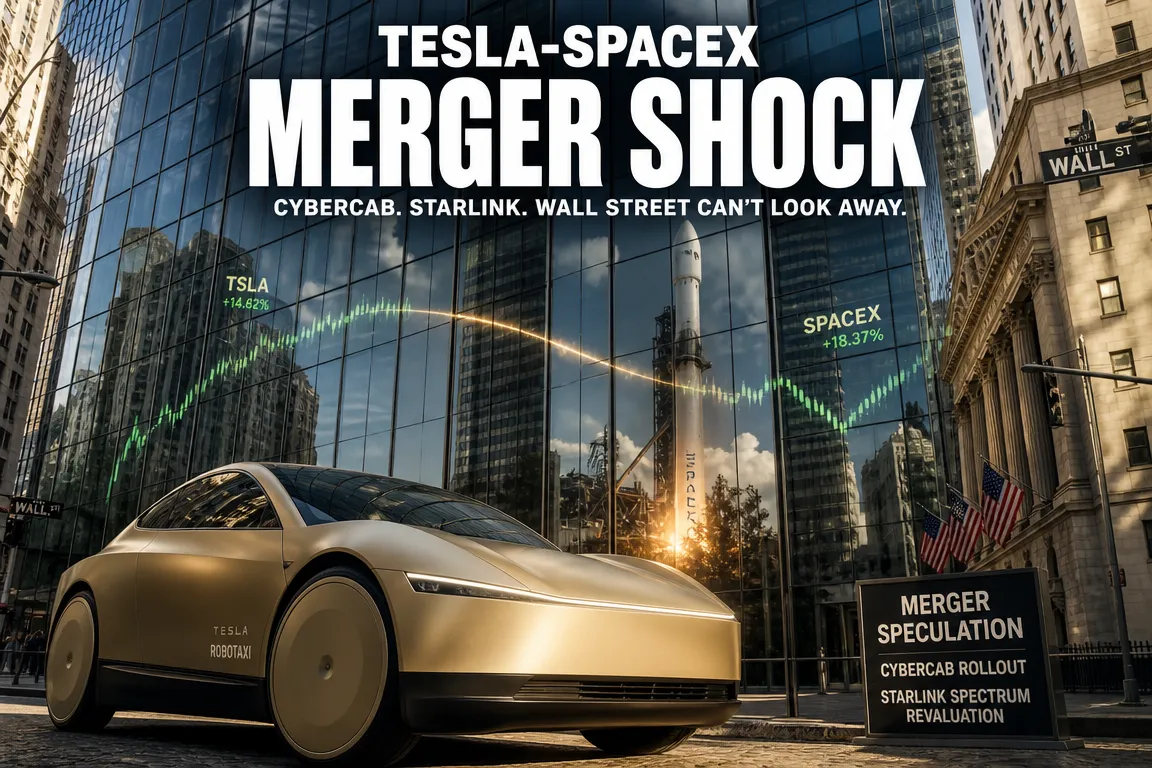
Key Takeaway for Tesla Shareholders at $382: Why Musk’s “Interesting” Comment Escalated Into a $10 Trillion Merger Scenario
The core issue is not simply that Elon Musk posted a comment on X.
What matters is that the path to a future merger, shareholder ownership ratios, Musk’s control, and the competitive landscape across AI robots, robotaxis, and satellite communications could all shift depending on whether Tesla or SpaceX reaches a $10 trillion valuation first.
At Tesla’s current share price of $382, the remaining upside required to reach a $10 trillion market capitalization, why SpaceX appears better positioned, and why Cybercab and Starlink spectrum developments belong in the same framework all need to be considered together.
Based on the source material, this is a multi-factor issue linking the U.S. equity market, crude oil, interest-rate expectations, Tesla stock, and AI investment trends.
1. U.S. Equity Market: Technology Stocks Rebound Despite Weak Consumer Sentiment
U.S. equities rebounded after the prior session’s decline.
The Nasdaq rose 0.64%, the S&P 500 gained 0.9%, and the Dow Jones Industrial Average advanced 0.83%.
Tesla closed down 2.05% at $382.7 in the source material.
SpaceX-related pricing was cited at $162.6, down 1.26%.
However, market conditions remain far from stable.
The University of Michigan preliminary consumer sentiment index for October came in at 46.3, below both the prior 48.1 and the expected 47.6.
This marked the lowest level in five months and renewed concern about slower U.S. consumer activity.
The source also noted a particularly sharp deterioration in perceived conditions among lower-income households and investors with smaller portfolios.
This is important for the broader economic outlook.
Weak consumer sentiment can affect corporate earnings, employment, consumer demand, and automobile purchases in sequence.
2. Inflation Variable: Rising Fuel Costs Are Pressuring Markets Again
The most important macro variable in the source is crude oil.
Consumers now expect 1-year inflation to rise 4.7%, up from 3.4%, indicating that inflation expectations are moving higher again.
The main driver is fuel prices.
According to the source, the U.S. average gasoline price rose from $2.98 per gallon before the conflict to $4.37 currently.
In simplified local terms, this resembles a monthly fuel bill rising from roughly 200,000 won to nearly 300,000 won.
Higher energy prices directly pressure household spending.
They also create immediate earnings pressure for companies with high fuel exposure, such as airlines.
The source noted that Delta Air Lines lowered its full-year earnings outlook due to fuel cost pressure.
Even with fare increases, airlines are struggling to keep pace with rising oil costs.
3. Crude Oil and Political Factors: Markets Are Waiting for Energy Price Stability
The source states that oil prices changed direction twice in a single day.
In early trading, crude fell after President Trump said he was having productive discussions with Iran.
Later, however, a hurricane approached the Gulf of Mexico and shut down about 60% of the region’s oil production, with Brent crude reportedly finishing near $104 per barrel.
The source also cited comments regarding Russian diesel supply.
Trump said he had a successful conversation with President Putin and that Russia would immediately supply more than 300,000 tons of diesel to the U.S. and global markets.
Additional volumes of 3 million tons over a short period, 500,000 tons in November, and another 1 million tons afterward were also mentioned.
The critical issue is not only the volume but also the fact that the supplier is Russia.
Any move to source energy from Russia after sanctions related to the Ukraine war would be politically sensitive and materially relevant for global supply chains.
Energy prices remain one of the most closely watched variables for both the White House and financial markets.
Without stabilization in oil prices, inflation concerns may intensify and expectations for rate cuts could weaken.
4. Interest-Rate Outlook: The 10-Year Treasury Near 5% Continues to Pressure Growth Valuations
According to the source, the U.S. 10-year Treasury yield reached 5.37% on Wednesday, the highest level in 24 years.
It later remained around 5.25%.
This is highly relevant for Tesla, Nvidia, AI-related investment firms, and robotics companies.
Higher rates reduce the present value of future earnings.
In other words, the market assigns a higher cost to waiting for long-term growth to materialize.
That is why stocks with strong expectations tied to future autonomy, robotaxis, and Optimus are more volatile in a high-rate environment.
The upcoming release of third-quarter earnings from major banks will also be important.
Bank results provide a broad read on loan demand, delinquency trends, net interest margins, and overall economic resilience.
5. Musk’s One Word: Why “Interesting” Turned Into a $10 Trillion Scenario
The center of this story is a one-word response from Elon Musk on X.
After an investor suggested that the first company to reach $10 trillion should acquire the other, Musk replied, “Interesting.”
Although the comment appears lighthearted, the market treated it seriously for a reason.
Tesla and SpaceX are often viewed as separate companies, but their strategic overlap is increasing.
Tesla is expanding into robotaxis, FSD, Optimus, AI computing, and energy storage.
SpaceX is building around Starlink satellite internet, launch systems, communications infrastructure, spectrum access, and global network infrastructure.
One side represents an AI mobility network operating on the ground; the other represents a global communications layer in the sky.
If combined, they could form a large-scale infrastructure company linking AI, mobility, robotics, and satellite communications.
6. Tesla Cybercab: Why a One-Day Increase of 150 Registrations Matters
According to the source, Texas vehicle registration records showed 150 new Cybercab registrations in a single day.
That took the total from 169 to 319, nearly doubling the count.
The source said this was the first time such an increase had occurred since Cybercab was first registered on August 31.
However, this should not be misinterpreted.
Vehicle registration primarily indicates that the paperwork necessary for road use has been completed.
It does not mean that full commercial robotaxi service is launching immediately.
The source said that Austin remains the only area currently carrying passengers.
Still, the figure matters.
Robotaxis are one of the key pillars of Tesla’s path to a $10 trillion valuation.
Tesla cannot easily justify a $10 trillion valuation as a pure electric vehicle company.
That changes if driverless vehicles become an AI mobility platform generating revenue around the clock.
7. FSD Insurance Discounts: Insurers Are Starting to Price Autonomy Risk in Dollars
The source stated that Lemonade will offer a 30% discount on FSD-driven miles for Hardware 3 vehicles.
The program applies in Arizona, Colorado, and Tennessee.
Hardware 4 vehicles continue to receive a 50% discount.
This appears minor, but it is highly significant.
Insurance is an industry that evaluates risk through data, not narrative.
An insurance discount for FSD miles suggests that the cost structure is beginning to reflect the possibility that FSD driving may carry lower accident risk than human driving.
For Tesla, consumer perception matters less than insurance data when it comes to validating FSD.
Robotaxi profitability will depend on accident frequency, insurance costs, maintenance expenses, and fleet utilization.
8. Gigafactory Texas Event: Key Issues Likely to Surface in Musk’s Interview
According to the source, the X Takeover event is scheduled to take place at Giga Texas.
This Tesla owner-organized event is described as the first to be held outside California and inside a Tesla factory.
Tickets are already sold out, and Maye Musk and Tesla design chief Franz von Holzhausen are expected to attend.
A drone show is also scheduled for 9 p.m.
Elon Musk is not expected to appear in person, but may join by video interview.
The timing is important.
Tesla is approaching its third-quarter earnings release, and Musk has sometimes made more flexible comments at fan events than in formal earnings settings.
Investors are therefore watching for remarks on Cybercab, FSD, Optimus, robotaxi commercialization, and possible collaboration with SpaceX.
9. SpaceX News: The More Important Issue Is Spectrum and Market Impact, Not the Capsule
SpaceX also made headlines after four Crew-8 astronauts returned to Earth aboard a Dragon capsule.
According to the source, they spent about 237 days in space and completed 3,792 orbits around Earth.
This highlights SpaceX’s capabilities in space transportation.
However, the market reaction was stronger to the spectrum development.
After news that SpaceX received a new spectrum allocation, T-Mobile shares reportedly fell nearly 9%.
Wall Street also lowered price targets across the three major U.S. wireless carriers.
This is not merely a telecom story.
It suggests that Starlink could move beyond satellite internet and begin affecting the mobile communications market.
If SpaceX is re-rated as a communications infrastructure company, its valuation multiple could expand well beyond that of a pure launch provider.
10. How a Tesla-SpaceX Merger Could Work
For companies of this scale, an all-cash acquisition would not be realistic.
In practice, a stock-for-stock transaction would be more likely, with the larger company issuing shares to the other company’s shareholders.
That makes relative size highly important.
The company with the larger market capitalization is more likely to be the acquirer, while the smaller company’s shareholders receive equity in the combined entity.
That is why the idea that the first company to reach $10 trillion could buy the other is more than just a joke.
Although Tesla and SpaceX are both led by Musk, their shareholder bases and governance structures differ.
Any real merger would require extensive work by bankers, boards, shareholders, regulators, and fairness advisers.
11. Current Valuation Comparison: SpaceX Is Larger Today
According to the source, Tesla’s market capitalization is about $1.51 trillion, or approximately 2,027 trillion won.
SpaceX is valued at about $2.14 trillion, or approximately 2,874 trillion won.
On that basis, SpaceX is about 1.42 times larger than Tesla.
The gap is about $630 billion, or roughly 850 trillion won.
However, the gap is not fixed.
The source said SpaceX had been ahead of Tesla by nearly $1 trillion in mid-June, but the spread narrowed to about $200 billion by July 20.
In other words, a strong Tesla rally could reverse the ranking again.
Conversely, earnings weakness or margin pressure could widen SpaceX’s lead.
12. For Tesla Shares at $382, Reaching $10 Trillion Still Requires Roughly 6.6x Upside
According to the source, Tesla would need to rise about 6.6 times to reach a $10 trillion market capitalization.
That implies a share price of roughly $2,530.
By contrast, SpaceX would need to rise about 4.7 times to reach $10 trillion, implying a share price of about $759.
On simple distance alone, SpaceX appears better positioned.
However, the speed of execution is still unknown.
Tesla could earn a very different valuation if robotaxis and Optimus translate into actual revenue and profit.
SpaceX could also be revalued if Starlink expands into mobile communications, defense, or AI data networks.
The competition is therefore not between an electric vehicle company and a space company.
It is a contest between an AI platform company and a global communications infrastructure company to reach massive cash-flow scale first.
13. If a Merger Happened Today, What Would Tesla Shareholders Receive?
The source said that if the two companies were combined at current valuations, Tesla shareholders might hold only about 41% of the merged entity.
This is the most sensitive issue for Tesla investors.
If a merger occurs before Tesla has fully established its robotaxi and Optimus narrative, the ownership share could be relatively small.
By contrast, if Tesla closes the gap or overtakes SpaceX through robotaxi commercialization and autonomy data, its negotiating position would improve materially.
For Tesla shareholders, the key issue is not whether a merger is good or bad in isolation.
The critical question is when it happens, at what valuation ratio, and which company is the acquirer.
14. Musk’s Compensation Framework Suggests That $10 Trillion Is Part of a Larger Plan
A notable point in the source is Musk’s compensation structure.
Tesla’s pay package has 12 tranches, with the first set at a $2 trillion market capitalization and the top tier at $8.5 trillion.
The deadline is 2035.
According to the source, Tesla is still around $1.51 trillion, below the first $2 trillion milestone.
SpaceX’s compensation framework has 15 tranches, with the top tier set at $7.5 trillion.
The package reportedly includes a condition involving a Mars settlement of 1 million people.
The key point is the $10 trillion figure.
$10 trillion is above Tesla’s $8.5 trillion target and above SpaceX’s $7.5 trillion target.
That is why some investors interpret the $10 trillion number as a potential goal for a combined AI infrastructure platform rather than either company alone.
15. Musk’s Ownership Structure: Why SpaceX May Be the Easier Acquirer
According to the source, Elon Musk owns about 20% of Tesla.
In SpaceX, he reportedly owns 48.4%, with more than 82% of the voting power.
In dollar terms, Musk’s SpaceX stake is worth about $1.037 trillion, or approximately 1,391 trillion won.
His Tesla stake is worth about $301 billion, or approximately 404 trillion won.
In other words, Musk has about 3.4 times more personal wealth tied to SpaceX.
From that perspective, it may be easier for Musk to structure SpaceX as the surviving entity and absorb Tesla.
SpaceX also gives Musk far stronger voting control.
Musk has previously said that around 25% voting power would be necessary to properly develop an AI and robotics company at Tesla.
A SpaceX-centered structure would give him much stronger control.
16. Musk’s Priority Order: Why SpaceX Appeared First
The source also mentioned Musk thanking teams after receiving a science-related medal at the White House.
He thanked the people at SpaceX, Tesla, Neuralink, and Boring Company.
No strong conclusion should be drawn from the order alone.
However, the fact that SpaceX was mentioned first may be meaningful to markets.
As Musk’s focus increasingly spans space, satellite communications, AI infrastructure, robotics, and energy, SpaceX’s strategic importance continues to rise.
If Starlink expands beyond internet access into mobile communications and AI network infrastructure, SpaceX’s strategic value could increase materially.
17. Potential Synergies If the Two Companies Were Combined
If Tesla and SpaceX were merged or linked more closely, the largest synergy would likely come from data and network integration.
Tesla collects driving data on roads.
SpaceX is building a communications network that connects the entire planet from space.
If Tesla robotaxis were connected to the Starlink network, vehicle operation and data transmission could become more reliable even in remote or low-coverage areas.
Optimus robots deployed in factories, logistics centers, or remote work sites would also benefit from stable satellite communications.
This could extend to AI training, real-time map updates, fleet management, remote monitoring, and emergency communications.
The result would not simply be an electric vehicle company combined with a space company, but an AI infrastructure platform linking ground robotics and orbital communications.
18. A Merger Would Still Face Significant Obstacles
In practical terms, a merger would face several barriers.
First, Tesla is a listed company while SpaceX is still effectively private.
The valuation process and shareholder structure are fundamentally different.
Second, the interests of Tesla and SpaceX shareholders may not align.
Tesla shareholders may want pure value from autos, robotaxis, and robotics, while SpaceX shareholders may prefer to preserve the independent value of space and communications businesses.
Third, regulatory risk would be substantial.
A single company spanning EVs, autonomy, satellite communications, mobile telecommunications, defense contracts, and AI infrastructure would face complex antitrust and national security review.
Fourth, concerns about greater Musk control could also become controversial.
Investors may value strong founder leadership, but it can also raise governance concerns.
19. The Most Important Point That Is Often Overlooked
Many observers focus only on whether Tesla and SpaceX will merge.
The more important issue is the timing of any valuation race that would determine merger terms.
If merger discussions gain traction before Tesla proves its robotaxi and Optimus story, SpaceX would likely have the advantage.
If Tesla can quickly validate FSD, Cybercab, insurance data, and robotaxi revenue, it could regain leverage.
For Tesla shareholders, the most important variable is not the day-to-day share price at $382, but whether Tesla can reframe itself from an electric vehicle company into an AI robotics platform over the next few quarters.
Another key point is SpaceX’s spectrum progress.
This is not simply a telecom story.
It is a signal that SpaceX could control an increasingly important channel for data transmission in the AI era.
In the AI economy, semiconductors and data centers are not the only critical assets.
The networks that move data are equally strategic.
If Tesla creates the data and SpaceX moves it, the logic for combining the two becomes much stronger.
20. What Tesla Shareholders Should Watch Now
First, Tesla’s third-quarter results should show whether automotive margins are holding up.
Even with rising robotaxi expectations, the company’s current cash flow still depends primarily on vehicle sales.
Second, investors should monitor whether Cybercab registrations translate into actual operating vehicles and revenue.
Registration growth alone is not the same as commercial service expansion.
Third, the expansion of FSD insurance discounts across additional states and insurers will matter.
Insurance recognition of autonomous-driving safety is a key pillar for robotaxi economics.
Fourth, investors should watch how SpaceX’s spectrum developments affect competition with telecom carriers.
If Starlink moves deeper into mobile communications, SpaceX could be revalued again.
Fifth, Musk’s comments at official events or earnings-related appearances should be monitored for any signal on Tesla-SpaceX collaboration.
Even a reference to technology sharing or infrastructure integration could move markets materially.
21. Conclusion: $10 Trillion Was Mentioned Casually, but the Number Is Serious
Elon Musk’s “Interesting” comment was not an official merger announcement.
It was neither a commitment to combine the companies nor a rejection of the idea.
However, the market’s attention to the comment is understandable.
Tesla and SpaceX each have independent paths toward $10 trillion valuations.
Tesla is trying to justify that level through robotaxis, FSD, Optimus, and AI-driven manufacturing.
SpaceX is trying to justify it through Starlink, satellite communications, spectrum, space infrastructure, and global networks.
On current numbers, SpaceX is ahead.
But if Tesla proves robotaxi commercialization, insurance data, and Optimus productivity, the speed dynamic could shift again.
For Tesla shareholders at $382, the critical question is not short-term price movement, but whether Tesla can grow fast enough to claim a larger share in any future merger framework.
Going forward, Tesla stock, the U.S. market, interest rates, crude oil, and AI investment trends will not move independently.
They all ultimately connect to one question: how credible is the future cash-flow story?
< Summary >
Elon Musk replied “Interesting” to a post suggesting that the first company to reach $10 trillion should acquire the other.
According to the source, Tesla’s market capitalization is about $1.51 trillion, while SpaceX is about $2.14 trillion, making SpaceX larger.
Tesla would need roughly 6.6x upside to reach $10 trillion, while SpaceX would need about 4.7x.
If a merger were executed today, Tesla shareholders might receive about 41% of the combined company.
Cybercab registrations increased by 150 units in one day, and FSD insurance discounts are expanding.
SpaceX is also affecting U.S. telecom stocks through spectrum developments.
The key issue is not the merger itself, but which company is more likely to be recognized first as a large-scale AI infrastructure platform.
[Related Articles…]
Tesla Robotaxi and Autonomy Investment Outlook
AI Infrastructure Competition and Global Market Outlook
*Source: [ 오늘의 테슬라 뉴스 ]
– 먼저 10조 달러 가는 쪽이 산다는 말에 머스크가 한 대답, $382 테슬라 주주는?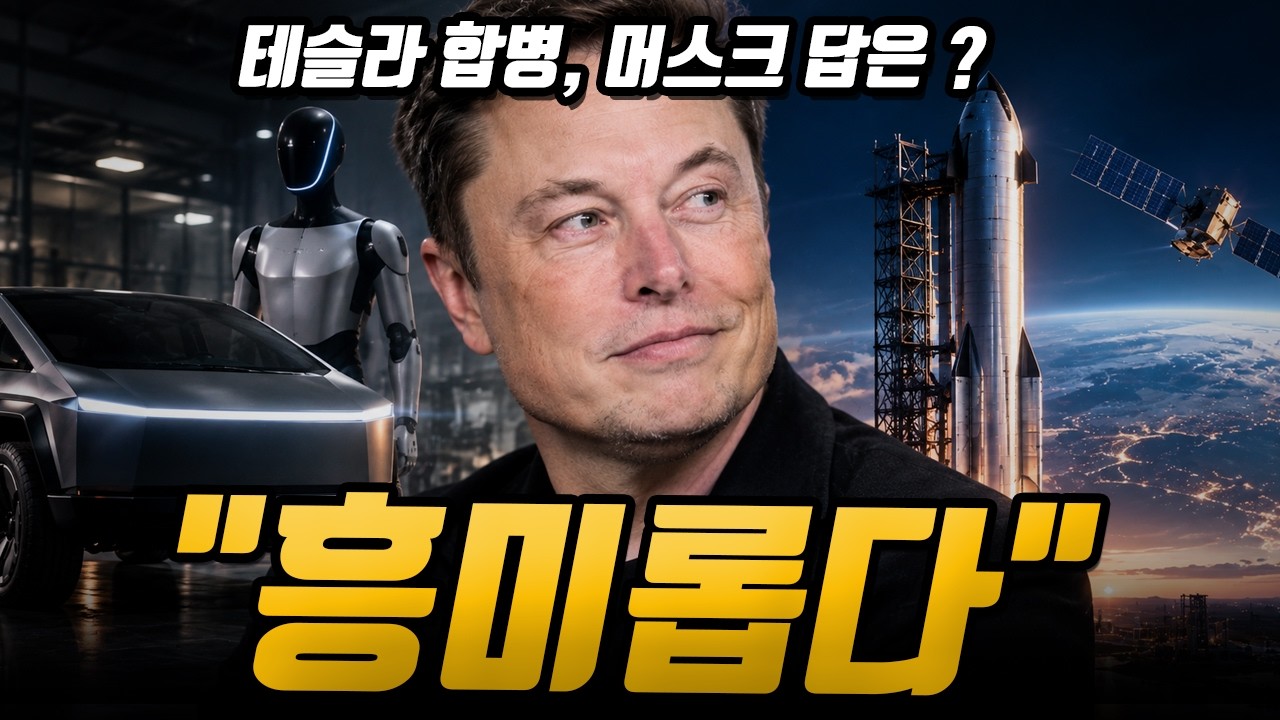
● AI-Driven-Shift-2027
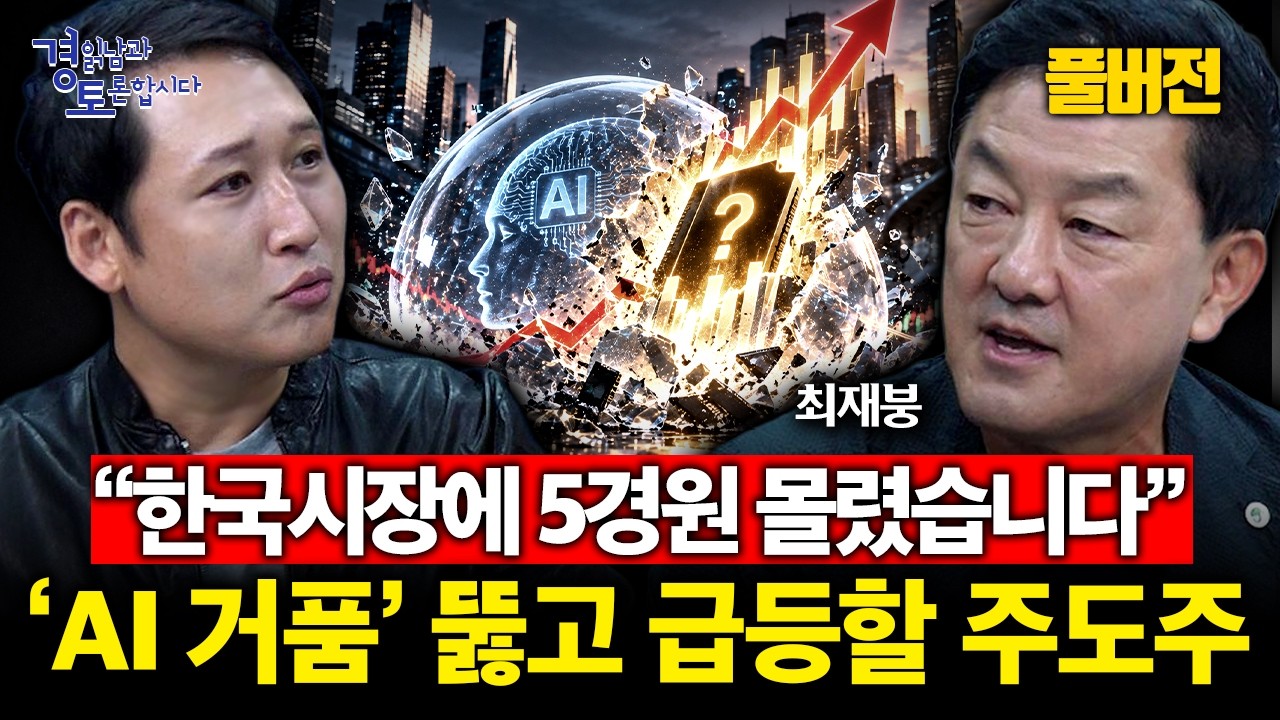
Why AI Has Attracted 5 Quadrillion Won and the Next Battleground in 2027: Capital Will Shift From Data Centers to Physical AI
The core point here is not simply that “AI is rising.”
The issue is why 5 quadrillion won of AI investment has first flowed into data centers, semiconductors, HBM, and power infrastructure.
It is also necessary to examine why, from 2027 onward, that capital is likely to shift toward physical AI, humanoid robots, autonomous driving, and defense AI.
More importantly, South Korea may not be merely a beneficiary of this trend, but a core partner in the United States’ AI strategy.
In particular, the reason Samsung Electronics, SK hynix, Hyundai Motor, HD Hyundai, Doosan Robotics, LG Electronics, Naver, and power infrastructure companies are being revalued within the same AI value chain will be outlined below.
1. Why the AI slowdown debate has returned: The real issue may be competition, not safety
Recently, calls to slow down AI development have strengthened again.
On one side are those emphasizing AI risk, such as Sam Altman of OpenAI and Dario Amodei of Anthropic.
On the other side are Jensen Huang of Nvidia, Mark Zuckerberg of Meta, and the Trump camp, which broadly argues that slowing down would cede ground to China.
- At the surface, the slowdown debate appears to be about human safety.
- However, behind it are differences in corporate capital strength and the AI power struggle.
- Large technology firms with abundant capital can continue to invest aggressively in AI data centers and GPUs.
- By contrast, pre-IPO or cash-constrained AI startups face greater pressure from the pace of investment.
- In that sense, the slowdown debate is not only about safety, but also about which firms survive and which fall behind.
From an economic perspective, AI investment is becoming a key component of U.S. capital expenditure supporting GDP growth.
Spending on AI data centers, semiconductors, power grids, cooling systems, and cloud infrastructure is functioning as a form of economic stimulus.
For that reason, if AI investment were to slow materially, growth momentum in the United States could weaken.
In conclusion, AI development may face temporary adjustments, but it is unlikely to stop.
Once humans find a tool that improves survival and competitiveness, it is difficult to abandon it.
2. Is AI a threat to humans? The real contest is not AI versus humans, but AI users versus non-users
Concerns that AI may attack or dominate humans continue to circulate.
Humanoid robots running faster than humans or defeating people in combat demonstrations have intensified public concern.
However, there is still no confirmed case of AI independently developing human-like intent and deciding that humans must be eliminated.
The more immediate risk is different.
The issue is not that AI replaces humans directly, but that people who use AI effectively may replace those who do not.
- Smartphone users and non-users showed clear productivity gaps.
- Consumers using Coupang increasingly reduced reliance on traditional offline retail.
- Workers using AI agents can gain speed advantages in repetitive work, research, drafting, and analysis.
- As a result, labor market disruption is more likely to reflect differences in AI utilization than a direct conflict between AI and humans.
This is a practical issue for white-collar workers.
Jobs that do not require AI are becoming fewer.
Planning, marketing, manufacturing, finance, education, healthcare, logistics, and content creation are all moving toward AI competency as a baseline skill.
3. Is AI a bubble or the beginning? Equity markets may be volatile, but the industrial revolution is still early
The debate over an AI bubble will continue.
During the dot-com bubble, more than 80% of internet companies failed.
Yet the internet revolution itself did not stop.
By 2007, with the launch of the iPhone, the internet became a core part of everyday infrastructure.
AI is likely to follow a similar path.
In the near term, valuations in AI leaders, semiconductor equities, and data center investment themes may become overheated.
However, from a real-economy perspective, AI has not yet deeply penetrated manufacturing and services at scale.
- Smartphones initially centered on gaming and email, but later became central to finance, shopping, work, transportation, and content.
- AI currently appears to be limited to chatbots and writing tools, but it is likely to expand into AI agents, robots, factory automation, and defense systems.
- For that reason, AI is better understood as an early-stage expansion cycle rather than a mature trend.
The key point is this.
A correction in AI-related stocks does not imply the end of the AI industry.
A bubble may burst in financial markets, while the productivity transformation continues.
4. The first destination for 5 quadrillion won: AI data centers and semiconductors
In global capital markets, the market capitalization of AI firms has reached extraordinary levels.
The original phrase emphasized that “5 quadrillion won has flowed into AI.”
This symbolizes the extent to which investors are allocating capital to AI as a future growth center.
Capital tends to reveal priorities more reliably than rhetoric.
Investors place money where they expect survival and returns.
The first major destination has been AI data centers.
- AI model training and inference require massive computing power.
- The center of that computing power is GPUs, HBM, DRAM, and high-performance networking equipment.
- As AI data centers expand, the importance of semiconductor companies such as Nvidia, Samsung Electronics, and SK hynix increases.
- In particular, HBM is viewed as a critical component determining AI semiconductor performance.
As AI agents spread, demand for data centers is expected to increase further.
A simple chatbot often finishes after a single response, but an AI agent must independently execute multiple steps and decisions.
That means substantially higher computation and memory usage even for similar user interactions.
This is why the discussion of a semiconductor supercycle has emerged.
As AI becomes more advanced, the importance of memory semiconductors, HBM, power semiconductors, and packaging technology rises together.
5. The next battleground in 2027: After data centers, capital will move to physical AI
Until now, the first destination of capital has been AI data centers. From 2027 onward, the key theme is likely to be physical AI.
Physical AI refers to the stage in which software AI is integrated with machines, robots, vehicles, drones, and factory systems in the physical world.
- Humanoid robots
- Autonomous vehicles
- Smart factories
- Logistics robots
- Military unmanned systems
- AI-enabled home appliances and mobility systems
The importance of physical AI lies in its direct linkage to real-world productivity.
AI will move beyond writing documents and generating images to producing goods, moving logistics, operating vehicles, and controlling defense systems.
That said, physical AI is likely to attract investment and expectations before it produces meaningful profits.
Robotics is constrained by hardware, sensors, batteries, safety, regulation, and mass-production costs.
Meaningful commercialization may take until around 2030.
Still, capital is already moving.
Samsung Electronics has expanded its robotics organization, Hyundai Motor has strengthened its strategy with Boston Dynamics, and Doosan Robotics and LG Electronics are also entering the physical AI ecosystem.
6. The U.S.-China AI power struggle: Physical AI is also military technology
The AI competition is not only a corporate race.
It is a strategic contest between the United States and China.
China is advancing rapidly through models such as DeepSeek and Kimi.
The United States is responding by tightening control over AI semiconductors, equipment, and supply chains.
This makes physical AI even more sensitive.
Autonomous vehicles, humanoid robots, drones, unmanned vessels, and unmanned combat systems are all linked to military capability.
- The United States is pushing model competition through data centers and capital scale.
- China is attempting to catch up through software optimization despite semiconductor constraints.
- As AI expands into defense and manufacturing, national security considerations are likely to outweigh pure economic efficiency.
- In that case, public finance and private capital may be deployed simultaneously.
The United States’ weakness is manufacturing.
Over the past 20 years, much of the country’s top talent has moved toward software, finance, and platform businesses rather than manufacturing.
As a result, the physical AI era requires manufacturing partners.
This is where South Korea’s strategic value increases sharply.
7. “AI is difficult without South Korea”: HBM, manufacturing, robotics, automobiles, shipbuilding, and power infrastructure
One of the strongest messages from the discussion is that AI is difficult without South Korea.
While this may sound exaggerated, it is a credible view when examined through the AI value chain.
- South Korea is a key global supplier in HBM and DRAM.
- Samsung Electronics and SK hynix are indispensable to the AI semiconductor supply chain.
- Hyundai Motor links automotive manufacturing, robotics, autonomous driving, and U.S. production capacity.
- HD Hyundai has manufacturing capabilities in shipbuilding, defense, and marine platforms that the U.S. may need.
- Doosan Robotics and LG Electronics contribute to robotics, appliances, and manufacturing automation.
- Naver holds capabilities in AI platforms, cloud, and data.
- Including power grids, transformers, ESS, and communications infrastructure further increases South Korea’s AI supply-chain value.
In particular, the United States will find it difficult to rely on Chinese physical AI products without hesitation.
Humanoid robots and autonomous vehicles include cameras, microphones, sensors, and communication modules, creating security concerns.
If robots enter homes, factories, or military facilities, Chinese-origin systems would pose a significant burden for the United States.
Accordingly, the United States needs trusted manufacturing partners other than China.
South Korea is one of the most realistic candidates.
8. Why Jensen Huang’s meeting in Korea was more than a social event
Nvidia CEO Jensen Huang’s meetings with Korean companies should not be viewed as a simple networking event.
If the next stage of AI is physical AI, Nvidia cannot build a complete ecosystem with GPUs alone.
Nvidia does not directly manufacture washing machines, refrigerators, cars, robots, ships, or power equipment.
It needs manufacturing partners to connect GPUs and AI platforms to the physical world.
Korean companies are prominent among those potential partners.
- Samsung Electronics: semiconductors, smartphones, home appliances, foundry, robotics
- SK hynix: HBM, DRAM, AI memory
- Hyundai Motor: automobiles, robotics, U.S. manufacturing, mobility
- HD Hyundai: shipbuilding, defense, marine manufacturing, smart ships
- LG Electronics: appliances, robotics, smart home, automotive components
- Doosan Robotics: collaborative robots and industrial automation
- Naver: AI platform, cloud, data
South Korea effectively holds multiple parts of the AI physical ecosystem outside of GPUs.
If this aligns with U.S. AI strategy, Korean manufacturing could be revalued.
9. The key point often missed in other coverage: South Korea’s real opportunity is not stock prices, but AI manufacturing standards
Most coverage focuses on Samsung Electronics’ share price, SK hynix’s earnings, or Nvidia’s GPU demand.
These are important, but the larger issue is whether South Korea can establish itself as an AI manufacturing standard.
In the AI era, capital will not go only to chip vendors.
It will also flow to companies that build AI data centers, supply power, provide cooling, manufacture robots, integrate vehicle systems, and connect to ships and factories.
- AI data center power systems
- Marine and floating data centers
- ESS, transformers, and grid automation
- AI factory operating systems
- Robot-based production lines
- Defense AI and unmanned systems
For example, a company that manufactures marine engines may be able to enter the AI data center power supply market.
Shipbuilders may develop floating data center platforms.
Power equipment companies may benefit directly from rising demand for transformers, distribution grids, and ESS.
This is the more important structural change.
The AI industry is not only a software competition; it is a process that turns manufacturing into AI infrastructure.
10. The key economic outlook for 2027: The gap between countries inside and outside the AI value chain will widen
The global economy remains under pressure from low growth.
War, the aftereffects of high interest rates, supply chain restructuring, and weaker consumption continue.
However, countries integrated into the AI value chain are facing a different growth dynamic.
Among roughly 200 countries, only around 20 may be meaningfully involved in the AI value chain.
The rest may be excluded from the main flow of AI investment.
- Countries that produce AI semiconductors
- Countries that build data centers
- Countries that supply power infrastructure
- Countries that hold cloud platforms and AI models
- Countries with physical AI manufacturing capability
South Korea spans several of these areas simultaneously.
As a result, in the global economic outlook, it may be reclassified not merely as an exporter, but as a core country in the AI supply chain.
However, domestic polarization may also intensify.
The gap between companies that contribute to AI development, companies that use AI to raise productivity, and companies with little AI exposure may widen.
The same applies to individuals.
The productivity gap between workers who use AI agents and those who do not is likely to increase.
11. What companies and individuals should prepare for by 2027
Companies should reassess their businesses from an AI value-chain perspective.
If they assume, “We are not an AI company,” they may miss the opportunity.
- Can our product be used in AI data centers?
- Can our technology connect with power infrastructure, cooling, ESS, transformers, or communications networks?
- Can our factory be transformed through physical AI and robotics?
- Can our services be integrated with AI agents?
- Can our roles improve productivity by more than 2x through AI?
Individuals should move beyond simply trying AI tools and integrate them into daily work processes.
Report writing, data analysis, customer service, marketing copy, coding, research, meeting notes, and presentation creation should all be connected to AI workflows.
Going forward, the competitive advantage will likely shift from “I can use AI” to “I achieved measurable results with AI agents.”
12. From an investment perspective: AI leaders may change, but the AI cycle will continue
One key risk in AI investing is assuming that all AI-related stocks will keep rising.
During the dot-com bubble, the internet survived, but many companies did not.
AI will likely follow the same pattern.
- Phase 1 beneficiaries: GPUs, HBM, DRAM, data centers
- Phase 2 beneficiaries: power grids, transformers, ESS, cooling, construction infrastructure
- Phase 3 beneficiaries: AI agents, cloud, security, industrial software
- Phase 4 beneficiaries: physical AI, robotics, autonomous driving, smart factories, defense AI
In 2027, semiconductors may still remain central.
At the same time, as expectations shift toward physical AI, attention may broaden to robotics, automobiles, shipbuilding, power infrastructure, and defense.
The key is to evaluate not only short-term themes, but also earnings, orders, supply-chain position, and technological barriers.
The important question in the AI economic outlook is not whether AI is rising, but where capital is moving from and to.
13. The most important conclusion from this discussion
AI is unlikely to stop.
The slowdown debate may continue, but the U.S.-China power struggle, the capital strength of big tech, and corporate survival incentives are likely to keep investment moving.
AI is still at an early stage.
Just as smartphones became embedded in daily life, AI agents and physical AI may become basic infrastructure for industry and everyday activity.
The battleground in 2027 is likely to be physical AI after data centers.
In that stage, South Korea may attract attention as one of the few countries with HBM, semiconductors, automobiles, robotics, shipbuilding, and power infrastructure.
However, opportunities do not arrive automatically.
Companies need to identify how they fit into the AI value chain, and individuals need to convert AI usage into measurable performance gains.
< Summary >
The AI slowdown debate can be viewed not only through the lens of safety, but also through corporate capital strength and geopolitical competition.
AI development may slow temporarily, but it is unlikely to stop.
AI is still in the early stage of industrial diffusion, and equity-market bubbles should be distinguished from real-economy transformation.
The 5 quadrillion won of AI capital has first flowed into data centers, GPUs, HBM, and semiconductors.
From 2027 onward, the next battleground is likely to be physical AI, including humanoid robots, autonomous driving, and defense AI.
South Korea may emerge as a key AI supply-chain country with strengths in HBM, semiconductors, automobiles, robotics, shipbuilding, and power infrastructure.
The next stage of competition is likely to be defined by the gap between AI users and non-users, and between companies inside and outside the AI value chain.
[Related Articles…]
*Source: [ 경제 읽어주는 남자(김광석TV) ]
– [풀버전] AI에 5경 원이 몰렸습니다… 2027년 돈이 향할 ‘다음 승부처’ | 경읽남과 토론합시다 | 최재붕 교수님