● Musk Shakes Memory, Kospi Crashes, Tesla Wins
What Tesla shareholders should take from Musk’s two lines: the KOSPI plunge, memory semiconductors, and the AI cost war are now linked
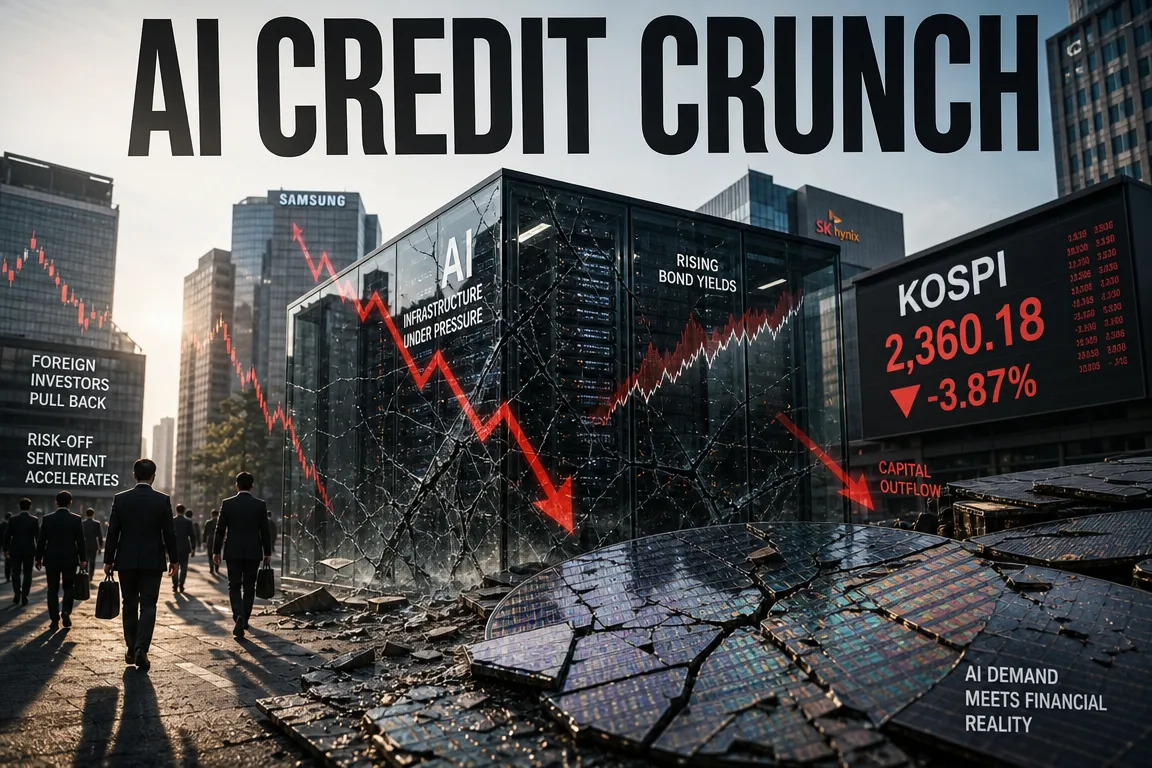
The key issue here is not simply that the KOSPI fell more than 5%.
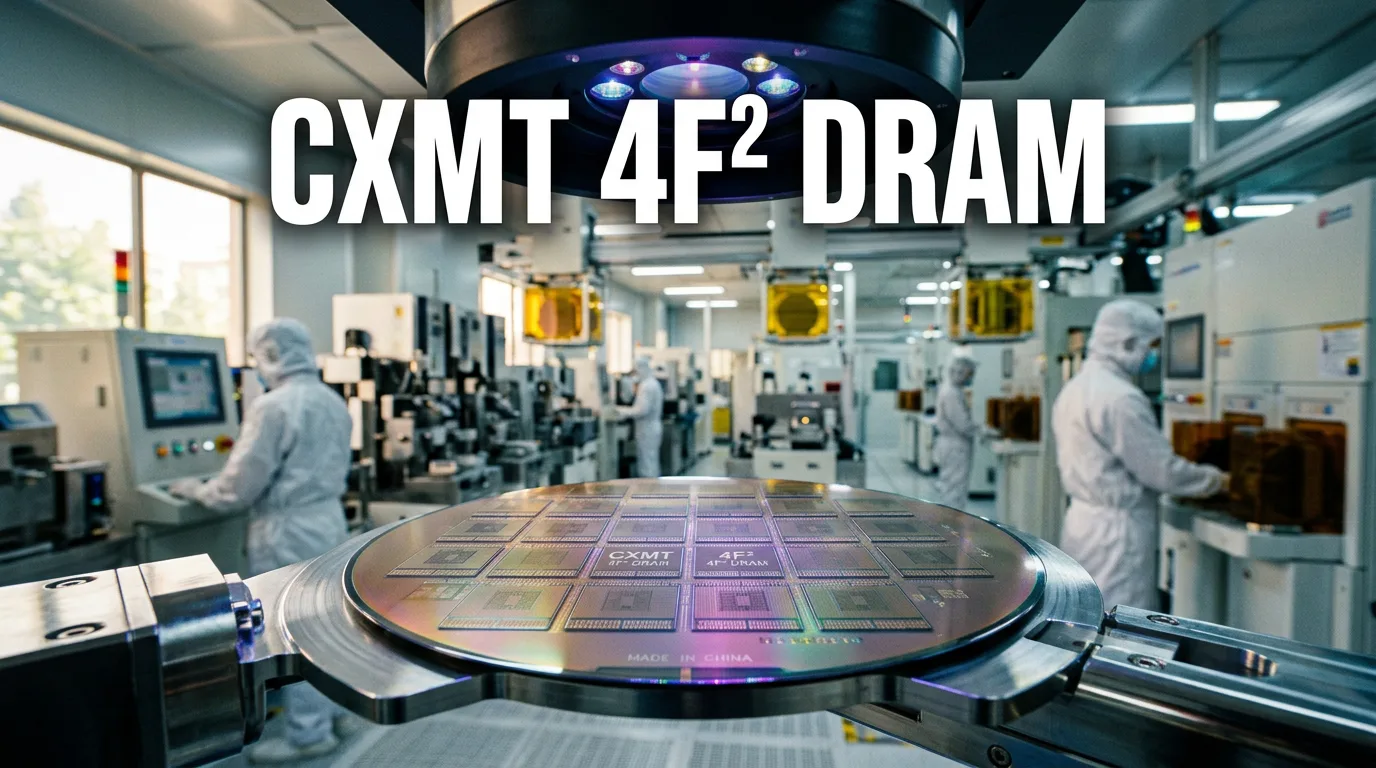
The more important point is that China’s CXMT has begun to disrupt the standard DRAM market, which is a headwind for Samsung Electronics and SK hynix but could become a long-term cost-reduction opportunity for Tesla.
That context became sharper after Elon Musk said, “Micron was reasonable, and the others were outrageous. Customers do not forget.” His remarks publicly pressured memory chip suppliers.
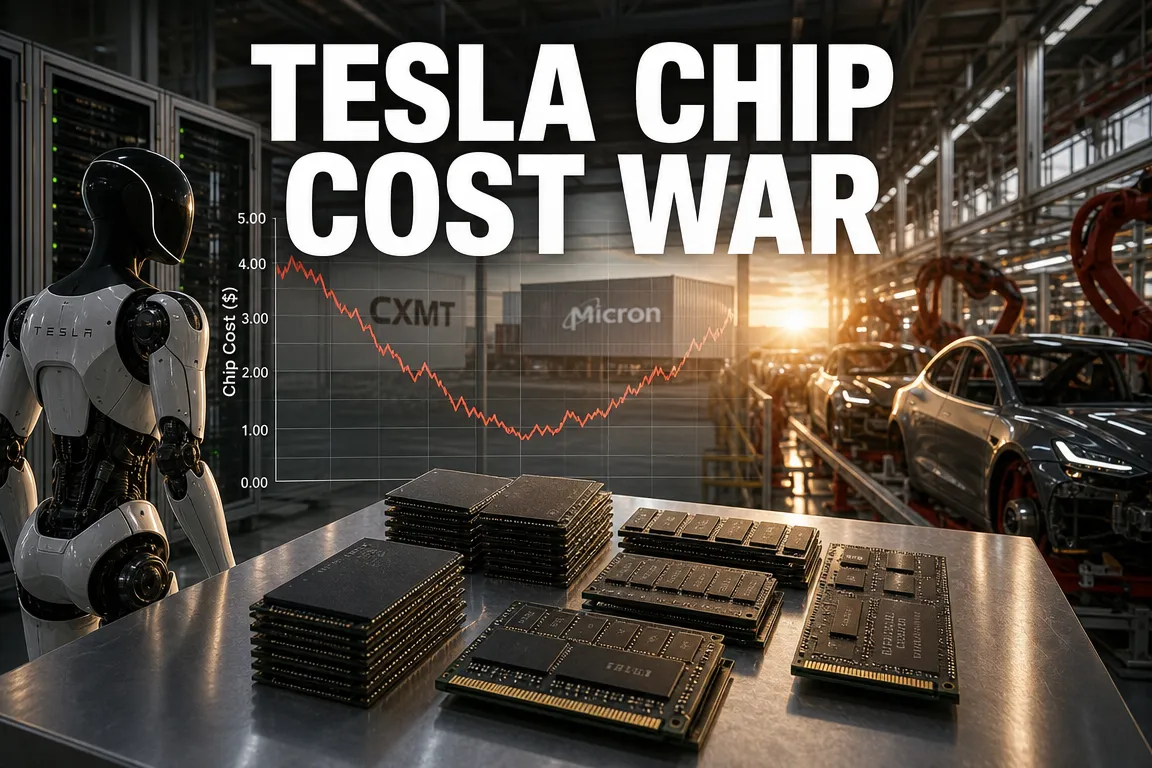
With Tesla trading around $375, shareholders should focus less on the near-term stock price and more on memory pricing, which will affect AI5 chips, autonomous driving, Optimus, and Cybercab production costs.
In other words, this news ties together the KOSPI decline, China’s semiconductor expansion, AI data-center spending pressure, and Tesla’s autonomous-driving cost structure.
1. U.S. equities were calm on the surface, but market discipline has intensified
In the original report, Tesla closed at $375.23, down 0.74% on the day.
The SpaceX-related transaction or valuation figure cited was $156.54, down 4.21%.
Major U.S. indices finished with limited movement.
- The S&P 500 fell 0.02%.
- The Nasdaq fell 0.15%.
- The Dow Jones fell 0.35%.
Although the session looked quiet on the surface, sentiment underneath was more cautious.
Market expectations shifted sharply after large-bank earnings.
- Citi’s net income rose 40% year over year, but the stock fell 5.6%.
- Wells Fargo beat EPS expectations, but the stock fell 3.1% on weaker revenue.
- JPMorgan missed earnings expectations, but the decline was limited to 0.8% after it raised its full-year interest-income outlook.
The implication for Tesla shareholders is straightforward.
The market is no longer rewarding companies simply for doing better than expected.
It is now examining revenue, margin, cost structure, and forward guidance more closely.
For Tesla’s upcoming earnings report, investors will be highly sensitive to automotive margins, AI spending, autonomous-driving revenue, and memory costs.
2. Interest rates and oil remain a persistent burden for growth stocks
With the September U.S. CPI release pending, the market continues to focus on inflation and rates.
The original text described the Fed as having raised rates again in September and noted that the U.S. 10-year Treasury yield remained around 5.2%.
In an environment where bank deposits can still generate returns near 5%, growth stocks with cash flows concentrated far in the future remain relatively disadvantaged.
Tesla is no exception.
Oil is another variable.
Following the Houthi attack issue involving Saudi facilities in Yemen, crude prices rose again, with Brent cited around $106 per barrel.
Higher oil prices are a headwind for inflation.
However, the effect on electric vehicles is more nuanced.
When fuel costs rise, consumers tend to revisit the EV purchase decision.
As a result, higher oil prices can be a short-term negative for Tesla through interest-rate pressure while also acting as a medium- to long-term demand tailwind for EVs.
3. The KOSPI decline was driven less by current earnings weakness than by future memory pricing
The biggest issue in the original report was the KOSPI plunge.
The KOSPI fell 5.46%, and at one point during the session it dropped below 6,000.
A sidecar mechanism was also triggered for the first time in two months.
Semiconductor leaders were hit particularly hard.
- Samsung Electronics fell 7.39%.
- SK hynix fell 10.09%.
- Foreign investors sold a net 4.53 trillion won in a single day.
The important point is that Samsung Electronics and SK hynix did not decline because their earnings suddenly collapsed.
Samsung’s third-quarter operating profit actually exceeded expectations, and memory pricing was still described as strong.
Even so, foreign selling accelerated because investors began to question whether current pricing could be sustained.
That concern centers on China’s CXMT.
4. Memory semiconductors must be divided into two categories to understand the trend
To understand this issue, memory semiconductors should be viewed in two broad categories.
The first is standard DRAM.
This is a general-purpose memory used in smartphones, PCs, automobiles, and servers.
It is essentially a standardized component.
Once the standard is established, substitution is possible as long as the technical requirements are met.
In standard DRAM, technology remains important, but over time the core competitive factor becomes who can produce more at lower cost.
The second is HBM.
HBM is the high-performance memory attached directly to Nvidia AI chips.
It is a technically demanding product built by stacking multiple memory dies, making it far harder to mass-produce than standard DRAM.
SK hynix currently holds the strongest position in HBM, while Samsung Electronics is also an important supplier.
In other words, China is first catching up in standard DRAM, while a meaningful technology gap remains in HBM.
5. Why CXMT pressured Samsung Electronics and SK hynix
CXMT’s global DRAM market share reportedly rose rapidly from around 4% a year earlier to roughly 10% in the second quarter of this year.
That is not a trivial development.
In the memory industry, the emergence of another large supplier can change the pricing cycle materially.
According to the original text, the spot price for a standard PC DRAM product rose from $1.65 in April last year to $26 in September this year.
That is more than a sixteenfold increase in roughly 18 months.
Samsung Electronics and SK hynix benefited significantly from that environment.
However, once a large Chinese supplier expands output in a market where prices have already risen sharply, investors immediately ask whether those prices can hold.
That uncertainty is the core reason behind the KOSPI selloff and the large foreign outflows.
6. The meaning of Musk’s reference to a “Chinese-style expansion”
Elon Musk said that China is catching up quickly in standard memory, while HBM remains far more difficult.
He also noted that once China learns how to manufacture something, it can scale faster than anyone else, as seen in batteries and solar.
This matters because it accurately reflects the strengths of Chinese manufacturing.
After catching up technically, China is highly effective at expanding supply through capital, factories, labor, domestic demand, and policy support.
The same pattern has already been seen in batteries and solar.
Musk’s comparison suggests that standard DRAM could also enter a price-competition phase.
That would be a negative for memory suppliers such as Samsung Electronics and SK hynix.
By contrast, it could be a long-term benefit for Tesla, which must buy memory in large volumes.
7. CXMT’s weakness is also clear: HBM and leading-edge equipment remain gaps
While CXMT is growing quickly in standard DRAM, it has not yet fully closed the gap in HBM.
The original text said CXMT had reportedly begun small-scale HBM production.
However, access to ASML’s latest equipment, which is required for leading-edge processes, remains constrained.
Accordingly, standard DRAM and HBM should not be viewed on the same basis.
Standard DRAM faces greater pricing pressure.
HBM remains an area where Korean semiconductor companies retain a clear competitive advantage.
For that reason, it is excessive to interpret the situation as an immediate collapse in Samsung Electronics or SK hynix.
The separate issue is whether standard DRAM pricing can sustain its recent level.
8. The technology-transfer litigation matters
The original report also referred to a Korean technology-transfer legal case linked to CXMT’s origins.
It said a trial is underway at the Seoul Central District Court involving Samsung Electronics’ 18-nanometer DRAM process materials allegedly transferred to CXMT.
The case was described as involving technology Samsung developed over five years at a cost of about 160 billion won.
Ten CXMT-related personnel were indicted, and one defendant reportedly received a seven-year sentence at first instance.
This matters because once a product becomes standardized, the competition can shift from design know-how to manufacturing scale.
And scale manufacturing is China’s strongest field.
9. For Tesla, the key issue is standard DRAM, not HBM
Many investors associate Tesla and AI immediately with HBM.
However, the memory used in Tesla vehicles and Optimus robots is not HBM at present.
What matters for Tesla’s AI5 chip is standard DRAM in the LPDDR5 and LPDDR6 families.
Musk’s references to LP5 and LP6 point to this segment.
In other words, the very memory category that China is catching up in is the one most relevant to Tesla’s cost structure.
Tesla plans to produce hundreds of thousands of Cybercabs and millions of Optimus units.
As volumes rise, the memory cost per vehicle or robot becomes a material factor in total unit economics.
For Tesla, lower memory prices would therefore improve long-term margins.
10. Musk’s two lines: “Micron was reasonable, the others were outrageous”
On X, Elon Musk said Micron had been quite reasonable on memory pricing.
He said the others were outrageous.
He also warned that customers would not forget.
This matters to Tesla shareholders because it is not a simple complaint.
Tesla is moving toward becoming not only an automaker, but also an AI robotics company, an autonomous-driving platform, and an AI infrastructure company.
In that process, memory semiconductors may become as important as batteries.
Suppliers that priced memory aggressively or constrained supply could face a weaker position in Tesla’s long-term supply chain.
By contrast, a company such as Micron, which offers more reasonable terms, could become more strategically important to Tesla.
11. Why Tesla is so sensitive to memory pricing
The original report said the memory cost in a vehicle with autonomous-driving functionality had risen from roughly 120,000 won previously to close to 300,000 won recently.
It also noted that a Level 4 autonomous vehicle could require more than 300GB of memory.
A robot may require about 200GB of memory.
These figures matter because of Tesla’s future product line.
- Cybercab is a robotaxi platform designed for mass production.
- Optimus is a humanoid robot planned for production in the millions.
- AI5 is the core chip in Tesla’s autonomous-driving and robotics strategy.
Even a modest increase in memory prices can materially raise total cost in mass-production settings.
Conversely, lower memory prices would give Tesla more flexibility in vehicle pricing, robot pricing, and autonomous-driving hardware cost.
12. Reducing AI5 memory may reflect cost and volume constraints, not performance priorities
According to the original text, Tesla reduced the memory configuration in AI5 by roughly one-quarter from the initial plan.
Musk has said that this was the only practical way to produce more Optimus units and lower prices.
This point is important.
The reduction may not have been driven by a desire to lower performance, but by memory pricing and supply constraints.
If standard DRAM prices decline and supply stabilizes, Tesla could revisit a higher-memory configuration later.
That would affect autonomous-driving performance, robot performance, and cost structure at the same time.
13. Micron’s relationship with Tesla has become more important
Musk reportedly thanked Micron twice during the July earnings call, saying it had allocated substantial volume to Tesla at reasonable prices.
Micron is known to use pricing ranges in long-term customer contracts.
In simple terms, this helps customers secure supply within a defined price band even when market prices rise sharply.
For Tesla, that kind of arrangement is highly important.
Memory supply disruptions could delay the entire schedule for AI5, FSD, Optimus, and Cybercab.
Therefore, Tesla’s contract size, duration, and pricing terms with Micron may become key variables for assessing future margins.
14. Could Tesla make its own memory?
The original report said Tesla has discussed a TerraPack or TerraFab concept in which logic and memory packaging would be brought under one roof.
However, no specific timeline or production method has been disclosed.
For now, the memory used in vehicles and robots must still be sourced externally.
But the direction is clear.
As with batteries, Tesla does not want to rely entirely on outside suppliers for critical component pricing.
At present, the likely path is to secure pricing through long-term contracts with Micron and, over time, to increase bargaining power through partial production or packaging integration.
In that context, Musk’s remark that customers do not forget may be read as a signal of future supply-chain restructuring rather than a simple expression of frustration.
15. The same news can be a headwind for Samsung Electronics and a tailwind for Tesla
The most important interpretation is this.
A decline in memory pricing is negative for companies that sell memory.
For Samsung Electronics and SK hynix, weaker standard DRAM pricing could pressure earnings estimates.
That is why the KOSPI fell and foreign investors sold aggressively.
Tesla, by contrast, is a large buyer of memory.
If standard DRAM prices fall, Tesla’s AI5 chip, autonomous-driving hardware, Optimus robots, and Cybercab units could all become cheaper to produce.
Thus, the same memory news can be a burden for Korean semiconductor equities and a long-term cost benefit for Tesla.
That distinction is necessary to interpret the KOSPI decline and Tesla’s stock trend together.
16. In the near term, memory prices may not fall immediately
That said, memory pricing should not be assumed to decline right away.
The original report said CXMT’s factories were already booked through 2027 with utilization around 95%.
Building new fabs takes years.
Therefore, even if China plans to expand output, the amount of new supply reaching the market next year may be limited.
The market also expects fourth-quarter standard DRAM contract prices to rise another 10% to 15%.
Micron is reportedly negotiating new contracts at higher prices that reflect current market conditions.
As a result, Tesla’s memory cost pressure is likely to persist in the near term.
Longer term, price relief is possible, but the cost burden remains in place for now.
17. FSD naming changes in Europe: Tesla chose approval over branding
Tesla has begun removing the FSD label in some European countries and using “Tesla Assisted Driving” instead, according to the original text.
The change was confirmed on the company’s pages in Germany, Spain, and the Netherlands, while the U.S. site retained the existing wording.
The German transport ministry raised concerns that “Full Self-Driving” could imply a vehicle is capable of driving entirely on its own.
Tesla reportedly chose to change the name first.
This can be read as a signal that Tesla is prioritizing regulatory approval in Europe over branding.
With a European autonomous-driving vote or review pending, Tesla appears to have removed one obstacle in advance.
For shareholders, the approval process matters more than the name change itself.
18. Concerns about AI infrastructure spending also affected SpaceX
The original text linked SpaceX’s 4.21% decline to concerns over AI investment spending.
The market increasingly views SpaceX not only as a rocket company, but also as a company tied to AI data centers, satellite networks, and large-scale computing infrastructure.
There was also mention of a report last week that Nvidia chip purchases could require $40 billion in financing.
Broadcom’s CEO said many companies are spending on AI but have not found monetization.
Musk also said AI data-center demand is large, but building facilities with the necessary power, cooling, and networking is difficult.
This is a practical response to the AI-bubble debate.
Demand is real, but capital alone does not produce functioning AI infrastructure immediately.
19. The OpenAI surveillance-device issue shows how sensitive the AI industry has become
The original report also noted that a hidden listening device was found at an OpenAI office.
OpenAI reportedly used its own AI to identify the employee who installed it, leading to dismissal and an FBI arrest.
There was no evidence that core model data had been stolen, but the incident shows how serious industrial espionage risk has become in AI.
AI models, semiconductor design, data-center know-how, and training data have become strategic assets pursued by both governments and corporations.
The AI race is now a broad contest that includes technology leakage and supply-chain security.
20. The point other coverage often misses: Tesla’s real advantage may be component-pricing power, not just chip performance
Most coverage of Tesla focuses on EV sales, FSD performance, robot demos, or Musk’s comments.
But the more important issue in this case is Tesla’s ability to control the cost of its future products.
No matter how advanced AI5 becomes, Cybercab and Optimus cannot be built cheaply if memory is expensive.
No matter how capable Optimus is, high memory costs slow mass adoption.
No matter how far autonomous driving advances, a high hardware bill of materials weakens price competitiveness.
Ultimately, Tesla’s long-term competitiveness depends not only on software, batteries, and chip design, but also on securing memory semiconductors at stable and competitive prices.
Musk’s public pressure on memory suppliers reflects that reality.
This should be viewed not as a simple post, but as part of Tesla’s supply-chain negotiation strategy.
21. Questions investors should watch in Tesla’s quarterly report
The main questions for Tesla’s earnings release are clear.
- First, how much have higher memory prices pressured per-vehicle costs?
- Second, how much was the AI5 memory configuration actually adjusted?
- Third, what volume and duration are covered by Tesla’s long-term supply arrangement with Micron?
- Fourth, are there any memory procurement risks in the Optimus and Cybercab mass-production plans?
- Fifth, does Tesla provide any concrete update on memory internalization under the TerraPack or TerraFab concept?
- Sixth, is there an update on European FSD regulatory approval?
Tesla trading around $375 should not be judged simply as expensive or cheap.
At this stage, what matters more is how well Tesla can control its cost structure as it transitions into a future AI manufacturing company.
22. Investment conclusion: memory pricing is a hidden variable in Tesla’s margin profile
The KOSPI decline was not driven by a sudden deterioration in the current earnings of Korean semiconductor companies.
It was driven by concern that CXMT’s expansion in standard DRAM supply could alter the future pricing cycle.
That is a headwind for Samsung Electronics and SK hynix, which sell memory.
But for Tesla, the same issue could become a long-term opportunity to reduce component costs.
In the near term, however, DRAM supply remains tight and prices may still rise further.
Accordingly, Tesla shareholders should not conclude simply that “more Chinese memory production is good for Tesla.”
The real question is when Tesla can secure the LPDDR-family memory it needs, in what volume, and at what price.
Musk’s line that customers do not forget should be read as a strong signal that Tesla may seek to reshape its memory supply chain.
< Summary >
The core driver of the KOSPI selloff was not a sudden deterioration in Samsung Electronics’ and SK hynix’s current earnings, but concern that CXMT’s expansion in standard DRAM could pressure future pricing.
Standard DRAM prices have already risen sharply, and a larger Chinese supplier could weaken the pricing cycle.
That is a burden for Korean semiconductor companies that sell memory, but it could become a long-term cost advantage for Tesla, which must buy memory in large volumes.
Musk’s statement that “Micron was reasonable, and the others were outrageous. Customers do not forget” should be read as public pressure on memory suppliers.
Tesla’s competitiveness in AI5, FSD, Optimus, and Cybercab will depend heavily on memory pricing and supply stability.
In the near term, DRAM prices may continue to rise, leaving Tesla with ongoing cost pressure, but over time China’s supply expansion and Tesla’s internalization strategy could strengthen bargaining power.
In Tesla’s earnings release, investors should focus on memory costs, AI5 configuration, Micron contracts, Optimus production costs, and European FSD approval.
[Related Articles…]
- Tesla AI5 and Autonomous Driving Semiconductor Strategy
- China’s Memory Semiconductor Expansion and the Global Supply Chain Shift
*Source: [ 오늘의 테슬라 뉴스 ]
– 테슬라 주주가 놓치면 안 될 머스크 두 줄 — 코스피 -5% 다음 날 “고객은 잊지 않는다”, $375 주주는?
● Semis Peak, Money Rules
Semiconductor Price Peaks Are Approaching: The Next Cycle Is About Money, Not Just HBM
The key point in this semiconductor cycle is not simply whether Samsung Electronics and SK hynix will continue to rise.
The core issue is how quickly the market recognizes the next growth logic, the Q cycle, as memory semiconductor prices approach a peak.
Here, Q refers to quantity, or shipment volume.
More importantly, the decisive variable is financing capacity for continued AI infrastructure investment.
The market is currently focused on five interlinked themes: HBM, AI semiconductors, data center investment, hyperscaler CAPEX, and Treasury yields.
While semiconductor prices are nearing a peak, demand for AI servers and data centers remains firm.
The issue is not whether demand exists, but whether sufficient capital can continue flowing to convert that demand into actual investment.
1. Semiconductor stock performance this year: reasons for the first-half rally and second-half correction
Semiconductor stocks rose strongly in the first half of the year.
The main drivers were threefold.
- Expectations for explosive growth in the AI market
- Concentration of global liquidity into the AI sector
- Expectations for South Korea’s semiconductor support policies
In particular, surging demand for AI semiconductors and HBM led to strong gains in SK hynix, Samsung Electronics, semiconductor equipment stocks, and materials names.
The market rapidly priced in the view that memory semiconductors would become structurally different in the AI era.
Sentiment changed in the second half.
The main reason was liquidity tightening.
Capital had flowed into AI-related stocks in the first half, but rising Treasury yields and deleveraging by investors created pressure on the semiconductor sector.
Stocks with heavy leverage exposure saw particularly sharp corrections.
SK hynix’s decline and subsequent rebound should be viewed in this context.
Even after the rebound, however, the market did not enter a broad-based renewed rally; instead, funds rotated into Kosdaq and other themes.
This does not mean semiconductors are over; rather, it reflects a phase in which the existing bull case has become harder to extend.
2. The core of the current cycle: moving from a P cycle to a Q cycle
The most important framework for understanding semiconductor cycles is P and Q.
- P stands for price.
- Q stands for quantity.
The current rally has been closer to a P cycle.
With constrained memory supply, rising HBM and DDR5 prices have driven earnings improvement.
When average selling prices, or ASPs, rise, revenue and profit can increase materially even if shipment volumes remain unchanged.
The market is now shifting its question.
It is moving from “Can prices rise further?” to “Can shipment volumes grow even if prices stop rising?”
That is the Q cycle.
Even if price growth slows, a significant increase in shipments can sustain revenue growth.
The logic is straightforward.
Growth is P × Q.
If prices stagnate or decline only modestly, sufficient volume growth can still support or expand total revenue and earnings.
3. Why this cycle differs from previous ones
In prior memory semiconductor cycles, demand was driven mainly by consumer products such as smartphones, PCs, and TVs.
When consumers delayed purchases, upgrade cycles lengthened, PC shipments weakened, and memory inventories built up.
That led to rapid price declines and a semiconductor downcycle.
This time, the end demand base is different.
The main buyers of memory semiconductors are not individual consumers, but hyperscalers such as Amazon, Microsoft, Google, Meta, and OpenAI.
They are building large-scale data centers and AI infrastructure to support generative AI services.
This difference is significant.
Consumer demand is highly sensitive to the business cycle.
Infrastructure investment, by contrast, is harder to halt once it begins.
AI data centers are increasingly viewed as essential infrastructure for future competitiveness, much like power grids, roads, and telecommunications networks.
As a result, this semiconductor cycle may not unwind as quickly as past cycles when the broader economy slows.
AI infrastructure investment is both a competitive strategy for U.S. big tech and part of the broader technology rivalry between the United States and China.
This is a key reason the cycle may differ from past memory downturns.
4. Why HBM tightens supply further
HBM is not merely a high-margin memory product.
It changes the supply structure of the entire memory market.
When DDR5 production lines are converted to HBM, issues arise.
HBM is more difficult to manufacture and has lower yields, so more wafers are required for the same output.
In practical terms, a quantity that once required one wafer may require two or three wafers in HBM production.
As HBM output expands, supply of conventional DRAM becomes relatively tighter.
This creates a cannibalization effect.
The more HBM sells, the tighter the supply of general-purpose memory becomes, which helps prevent overall memory prices from falling sharply.
If next-generation memory interfaces such as CXL expand further, memory semiconductors will no longer remain simple commodity products.
The share of customer-specific, server-optimized, and AI infrastructure-oriented products will increase.
In effect, memory semiconductors are moving from commodity-like products to higher-value specialized products.
5. When does the semiconductor price peak arrive: the market’s most sensitive question
The central debate is when semiconductor prices will peak.
Views vary slightly, but one point is common.
Price growth is already slowing, and the peak is not far away.
One view is that memory prices can remain elevated at least through the middle of next year.
Under this view, even if price growth slows, price levels may not decline sharply, supported by strong AI server demand and continued HBM supply constraints.
Another view is that the peak could come earlier.
The reason is interest rates.
AI infrastructure is ultimately CAPEX investment.
CAPEX is large-scale capital expenditure, and capital expenditure is sensitive to financing costs.
When Treasury yields rise, corporate funding costs also increase.
That can slow the pace of data center investment.
In that case, the semiconductor price peak could arrive earlier than expected.
For example, if the market had expected price gains to continue until the second quarter of next year, higher rate pressure could trigger an earlier reaction in the first quarter or even sooner.
6. The real variable is not price, but money
The most important issue in this discussion is financing risk.
Many market participants focus on the strength of AI demand.
However, the more important question is this:
“Even if demand is strong, is there enough capital to execute it?”
Hyperscalers must build data centers, buy GPUs, secure HBM, and connect power infrastructure.
All of this requires substantial cash.
AI infrastructure competition is not only a technology race, but also a capital race.
When rates are low and liquidity is abundant, big tech firms can invest aggressively.
But if Treasury yields rise, corporate bond financing costs increase, and the market begins to question the monetization path of AI investment, the picture changes.
Market sensitivity to recent controversy around OpenAI’s revenue outlook reflects the same dynamic.
AI infrastructure spending is rising rapidly, but there is still debate over whether AI services can generate revenue and cash flow quickly enough.
If front-end AI service companies fail to produce sufficient sales and cash flow, the semiconductor and data center value chain behind them may also weaken.
7. Why U.S. equities remain strong while Korean equities lag
The Nasdaq continues to trade near record highs, while the KOSPI remains range-bound.
This gap is not explained solely by Korea’s valuation discount.
U.S. equities include the top-tier companies in the AI ecosystem.
Firms such as Nvidia, Microsoft, Google, Amazon, and Meta are leading both AI infrastructure investment and service monetization.
By contrast, Korea sits at the core of the memory supply chain, but has relatively less platform power in AI services or cloud infrastructure.
As a result, Korean semiconductor stocks benefit from AI growth while also reflecting greater concern over the memory price cycle.
When signs emerge that prices are peaking, the market quickly begins to worry about earnings peaking at Samsung Electronics and SK hynix.
U.S. big tech, by contrast, is viewed as spending on AI infrastructure while retaining the potential to recover those costs through long-term AI services.
This difference is a major factor behind the divergence between the Nasdaq and the KOSPI.
8. Key points for investors in Samsung Electronics and SK hynix
Investors in Samsung Electronics and SK hynix should look beyond memory prices alone.
The following four factors will matter going forward.
- Whether HBM prices can continue to rise
- How resilient DDR5 and general DRAM prices remain
- Whether hyperscaler data center CAPEX is sustained
- How much rising Treasury yields pressure financing conditions
SK hynix is being highly valued by the market for its HBM competitiveness.
However, much of that expectation is already reflected in the stock price, so further upside will likely require confirmation of both shipment growth and pricing resilience.
For Samsung Electronics, recovery in HBM competitiveness is the key issue.
Improvement in the general memory cycle alone may not be sufficient.
The main question is how quickly Samsung Electronics can regain share in premium memory markets within the AI semiconductor value chain.
For both companies, the period in which valuation was driven mainly by price increases is ending.
They will now be evaluated on shipment growth, product mix improvement, customer wins, and the sustainability of AI infrastructure investment.
9. The most important point rarely emphasized elsewhere
Most news coverage stops at “HBM demand is strong,” “AI semiconductors are growing,” or “Samsung Electronics and SK hynix earnings are improving.”
The more important points are different.
First, AI demand is strong, but the AI investment monetization model has not yet been fully validated.
Data center investment is rising quickly, but whether AI service revenue and earnings can keep pace remains debated.
If this gap widens, the market could suddenly question the sustainability of AI CAPEX.
Second, the bottleneck in this cycle may be financing rather than semiconductor supply.
In the past, bottlenecks centered on wafers, equipment, and inventories.
This time, money may be the constraint.
Even if hyperscalers want to invest, higher rates and tighter capital markets could slow execution.
Third, U.S. policy resolve is a major variable.
AI is not just an industry; it is a central instrument in the technology rivalry between the United States and China.
That means the U.S. government and big tech may be unwilling to scale back AI infrastructure investment easily, even with rising costs.
This is a strong argument supporting the Q cycle.
Fourth, stocks move ahead of real prices.
Semiconductor equities are leading indicators rather than lagging ones.
Stock prices often peak before earnings do, and bottom before earnings recover.
Accordingly, even if memory prices begin to decline, the market may already be discounting the next Q cycle.
10. Three possible scenarios ahead
The semiconductor market ahead can be divided into three broad scenarios.
The first is the base case.
Memory prices stabilize at high levels while HBM and AI server memory shipments continue to grow.
In that case, P slows but Q rises, and earnings at Samsung Electronics and SK hynix may remain relatively resilient.
The equity market is likely to view this positively.
The second is the positive case.
Prices hold up longer than expected while shipment volumes also increase.
If HBM shortages persist and data center investment continues to expand, P and Q could both work in tandem.
In that case, semiconductor stocks could re-enter a strong upward phase.
The third is the risk case.
Rising Treasury yields and financing pressure delay hyperscaler CAPEX.
Even if AI infrastructure demand exists, actual orders and investment could be postponed.
In that case, the semiconductor price peak could arrive earlier than expected, and the Q cycle could be delayed.
Under this scenario, semiconductor stocks may need to pass through another growth correction phase.
11. Investment takeaway
The semiconductor market should not be judged simply as good or bad at this stage.
It is currently in the late stage of the P cycle and the early stage of the Q cycle.
The price-driven narrative is weakening, but the volume-driven narrative is only beginning.
The issue is that a gap can emerge between the two.
Investors may remain cautious until a price peak is confirmed, and may not gain confidence until the Q cycle is reflected in actual numbers.
Stocks may remain volatile during this transition.
Accordingly, the most important checkpoints for semiconductor investors are threefold.
- Whether memory prices are undergoing a soft landing rather than a sharp decline
- Whether HBM and AI server memory shipments are actually increasing
- Whether hyperscaler data center CAPEX is holding up despite higher rates
If all three are confirmed, semiconductor stocks could be reassessed positively.
If prices weaken, volume growth is delayed, and CAPEX also slows, the market may respond more defensively in the short term.
< Summary >
The semiconductor market is entering the later stage of a price-driven P cycle.
The next growth logic is the Q cycle, centered on shipment expansion.
HBM and AI infrastructure demand remain strong, but financing capacity to sustain data center investment has emerged as the key variable.
Rising Treasury yields could pressure hyperscaler CAPEX.
Samsung Electronics and SK hynix are now being evaluated not only on memory prices, but also on HBM competitiveness, shipment growth, customer acquisition, and the sustainability of AI infrastructure investment.
In short, semiconductor price peaks are approaching, but if the Q cycle is confirmed, this cycle may not end quickly.
[Related Articles…]
*Source: [ 경제 읽어주는 남자(김광석TV) ]
– 반도체 가격 정점이 온다…다음 Q사이클, 문제는 ‘돈’이다 | 경읽남과 토론합시다 | 3자토론 이형수x장우진x김광석