● High-Yield Shock, AI Rebound Weakness
Something suspicious about the U.S. stock market: 10-year Treasury yield at 5.1%, the real reason AI stocks are rebounding weakly
The most important point in today’s market is not simply that the Nasdaq rose 1%.
On the surface, it looked like U.S. stocks were rebounding, but beneath the surface, AI investments, semiconductor stocks, data center bonds, international oil prices, and the FOMC rate outlook are all shaking at the same time.
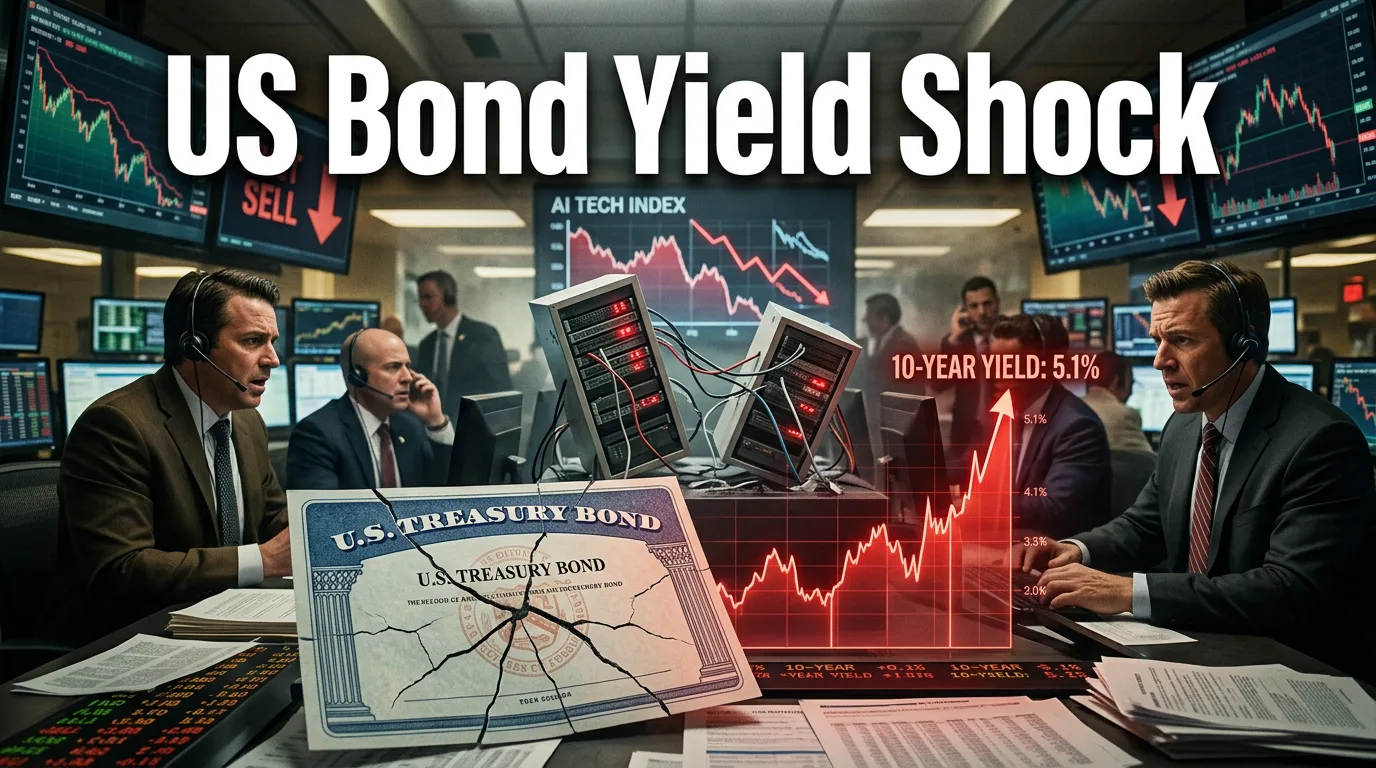
In particular, as the 10-year Treasury yield climbed back toward 5.1%, it is strongly weighing on the entire market.
In this article, let’s take a look at why AI-related stocks can no longer rise as strongly as before, why Goldman Sachs upgraded CoreWeave to “Buy” while lowering its target price, and even the possibility of a SpaceX-Tesla merger, all in one place.
1. Today’s U.S. market core takeaway: the Nasdaq rose, but the rebound lacked strength
Looking only at the indexes, today’s U.S. market was not bad.
The Dow Jones slipped slightly, while the S&P 500 rose about 0.4%.
The Nasdaq gained about 1%, and the Philadelphia Semiconductor Index also rebounded.
But what matters is the quality of the rebound.
Given the recent losses and volatility, on a day when the Nasdaq rises 1%, the semiconductor index would naturally need to jump at least 3% or more to feel convincing.
However, semiconductor stocks rose early in the session and then gave back the gains, and AI infrastructure names also surrendered most of their advances.
This trend is a sign that the market still cannot relax.
If the AI theme were truly alive, names like Nvidia, Marvell, CoreWeave, Super Micro, and Dell should have moved much more strongly.
But in reality, even a slight rise in rates brought immediate selling.
2. 10-year Treasury yield at 5.1%: the strongest gravity currently weighing on the market
The most important variable in the market right now is the 10-year Treasury yield.
As the U.S. 10-year Treasury yield fell to 5.07% and then climbed back toward 5.1%, pressure increased across growth stocks and AI-related names.
When rates rise, the valuations of stocks that depend on future growth expectations are immediately hit.
In particular, AI investment companies are structured to be valued highly not for current profits, but for future data center demand, GPU rental revenue, and cloud scalability.
So when Treasury yields rise, the discount rate increases, and the present value of future earnings falls.
Put simply, this is what it means.
No matter how promising AI may be, if safe U.S. Treasuries are yielding more than 5%, investors will demand a higher return from stocks.
As a result, AI stock valuation multiples have no choice but to be compressed.
3. FOMC rate outlook: a pause in October is highly likely, but the problem comes after that
The probability of a rate hike at the October FOMC has fallen to around 17%.
At this level, the market is effectively treating a pause as the base case.
But the real problem is not October.
The market has started to price in another 0.25 percentage point hike in December and January.
In other words, even if the Fed pauses at the next meeting, concern is rising that it could hike again if inflation remains elevated.
Recent PPI data came in higher than expected, and CPI also beat market expectations.
This means inflation is becoming sticky again.
When inflation pressure strengthens, the Fed has difficulty moving in a dovish direction.
In the end, the market’s core question is one.
“Are we entering another rate-hike cycle like 2022?”
4. Rising international oil prices: Brent at $109 and WTI at $98 are re-igniting inflation
Oil price trends are also quite burdensome.
According to the source text, Brent crude is around $109 and WTI crude around $98.
These levels are price ranges that burden both corporate costs and consumer prices.
In particular, the problem this time is not just crude oil prices.
Refined products such as gasoline and diesel are creating an even bigger burden.
When refined product prices rise, logistics costs, transportation costs, and production costs all rise, and eventually the increases are passed on to consumer prices.
Although there were some moves to ease certain sanctions and tariffs related to Russia recently, the market still has not seen a clear stabilizing effect on oil prices.
If oil prices remain elevated, inflation will be hard to bring down, and if inflation does not fall, expectations for FOMC rate cuts will also be pushed further out.
5. Why AI stocks are weak: Gartner warnings and hedge fund position cuts
Sentiment toward AI-related stocks is also weakening.
Gartner warned that the roughly $3.5 trillion scale of AI investment currently being discussed may not generate sufficient profitability in reality.
In other words, it is questionable whether AI investments can translate directly into high returns, as in cloud service expansion.
This warning increased market anxiety.
Even if AI investment must continue in the long run, in the short term there is growing suspicion that too much money has been invested too quickly.
Similar trends can be seen in Goldman Sachs’ prime brokerage data.
Hedge fund clients’ long positions in AI stocks are shrinking significantly, while short positions continue to grow.
As a result, net positioning has nearly disappeared, and expectations for AI stocks are interpreted as having reverted to early 2025 levels.
In simple terms, hedge funds have already reduced their AI stock exposure quite a bit.
6. Vara Fund loss rumor: it could be a hidden cause of AI stock selling pressure
Another issue that drew attention in the market over the weekend was Vara Fund.
This fund was known for its AI-related portfolio and was also compared to the earlier Leopold-related AI fund issue.
According to the source text, Vara Fund is said to have recorded losses of about 44% recently.
Because it likely used leverage, some interpret the situation as being close to forced liquidation.
This is important because AI stock declines may not be purely a sentiment issue.
When leveraged funds reduce positions, even high-quality AI stocks can end up being sold.
That is why even good news fails to lift stock prices, and intraday gains are often given back.
However, this situation is different from the Leopold episode in July.
At that time, the reason for the decline was unclear, and after the liquidation ended, a short squeeze drove a sharp rebound.
But this time, there is a clear negative factor in the form of rising Treasury yields.
So it is risky to expect only a simple short squeeze.
7. Long-term AI investment outlook: the forest is still growing, but many trees have been hurt
Although AI stocks are shaking in the short term, it is hard to say the long-term AI investment trend itself has been broken.
Goldman Sachs expects new AI server investment to increase by about 31% in 2027 and an additional 45% in 2028.
The total AI infrastructure investment scale is estimated at around $3.3 trillion, or roughly 4,200 trillion won.
This outlook matters because AI is no longer just a competition among private companies.
China is catching up quickly, and from the U.S. perspective, it cannot give up AI leadership.
In the end, U.S. policymakers and big tech companies are likely to continue pushing AI infrastructure investment.
Still, investors must distinguish between the forest and the trees.
The forest of AI can keep growing.
But within it, individual companies, especially those with heavy debt and unstable cash flows, can be shaken sharply.
8. Goldman Sachs’ “Buy” on CoreWeave: but why lower the target price?
The most suspicious part is Goldman Sachs’ CoreWeave report.
Goldman Sachs reiterated a “Buy” rating on CoreWeave.
However, it lowered the target price from the previous $140 to around $105–$106.
From a retail investor’s perspective, that naturally feels strange.
It is hard not to think, “If it’s a Buy, why lower the target price?”
Goldman Sachs’ logic is this.
If CoreWeave’s return on investment is higher than its funding cost, then the business is fundamentally viable.
In other words, if the profit earned from borrowing money to invest in AI data centers and GPU infrastructure is greater than the interest cost, the calculation says the business is still okay.
But the market is very sensitive to CoreWeave’s debt structure.
9. CoreWeave debt structure: the market’s 15% rate fear is only half right
CoreWeave’s total borrowings are said to be around $35.6 billion.
Of that, the amount financed at a 15% interest rate is only about $1.3 billion.
That is only a portion of the total debt.
Also, the coupon on the recently issued 2032 bond is 9.625% per year.
Of course, it is true that the market yield on that bond rose to around 15% as market rates increased.
But not all of the money already borrowed is paying 15% interest.
From a weighted average cost of capital perspective, CoreWeave’s actual average interest burden is more accurately around 8.4%.
This is very different from the 15% fear being discussed in the market.
However, the problem lies ahead.
If CoreWeave needs to raise new funds, it may have to bear much higher rates in the current market.
Especially if it borrows through unsecured bonds, the financing cost becomes very expensive.
10. GPU collateral and Microsoft/OpenAI contracts: why CoreWeave is still holding on
CoreWeave’s debt is not automatically dangerous.
A significant portion is backed by GPUs as collateral, and the financing structure is based on GPU assets inside existing data centers.
On top of that, large customer contracts with Microsoft and OpenAI are in place.
These long-term contracts help stabilize cash flow.
It can be viewed as similar to project financing in real estate, where collateral and future cash flows are bundled to strengthen credit.
As a result, secured loans can be financed at relatively lower rates.
According to the source text, this is described as a funding structure in the low 8% range, roughly benchmark rate plus 4%.
The problem is unsecured funding.
Money borrowed without collateral, based only on credit, is naturally expensive.
It is the same principle as personal unsecured loans being more expensive than secured loans at a bank.
11. What CoreWeave needs to survive going forward
If CoreWeave wants to keep going, simply issuing more bonds will not be enough.
Several realistic survival strategies can be summarized.
First, it needs prepayments from hyperscaler customers.
If major clients like Microsoft and OpenAI pay a certain amount in advance along with long-term usage contracts, the funding burden is reduced.
Second, it needs to use financial leasing and structured finance.
Rather than simply piling debt onto the balance sheet, it needs to lower funding pressure through leasing structures and securitization methods.
Third, it can also consider hybrid financing such as convertible bonds.
If the stock price rises above a certain level and converts into equity, the company can reduce its interest burden for now.
Fourth, it must actively leverage the rising residual value of GPUs.
The rental prices of the latest Blackwell GPUs and Nvidia GPUs have increased significantly compared with the past.
According to the source text, as GPU rental rates rose compared with a year ago, concerns over the residual value of collateralized GPUs have actually eased somewhat.
However, CoreWeave has a problem in that some long-term contracts were locked in too early.
If GPU rental rates rise further but there are many contracts signed at lower past prices, it cannot fully benefit from the increase.
That is becoming a double-edged sword for CoreWeave now.
12. Weakness in data center bonds: this is not just CoreWeave’s problem
Data center bond prices are generally weak.
According to the source text, data center-related bonds are down about 10%, and CoreWeave bonds are down about 20%.
This is not just a credit issue unique to CoreWeave; it is the result of the shock from rising Treasury yields.
When government bond yields rise by 1 percentage point, long-duration bond prices fall significantly.
In the case of the 10-year Treasury, if rates rise by 1 percentage point, prices can fall by more than 7%.
This is called the duration effect of bonds.
In other words, the key driver behind the fall in data center bond prices is rising Treasury yields.
Among them, bonds from lower-credit companies are taking the bigger hit.
13. Stock-by-stock trends: AI infrastructure is weak, while software is relatively resilient
AI infrastructure names were weaker than expected.
CoreWeave rose nearly 8% early in the session but eventually gave back the gains and closed lower.
Nebius was also weak, Super Micro rose only about 1.4%, and Dell gained just around 0.37%.
By contrast, software names were relatively better.
Datadog rose about 5% on Bernstein’s target price increase.
Palantir also gained about 4%, while ServiceNow and Oracle showed decent performance.
Storage-related stocks also rebounded.
Western Digital rose about 6%, and SanDisk about 5%.
Micron gained about 3%, but given the extent of recent losses, it was somewhat disappointing.
SK Hynix ADR rose about 5%, creating hopes for a short-term rebound in the Korean semiconductor market.
In AI semiconductors, Nvidia rose about 1.3%.
Marvell gained about 4%, but with such a large recent decline, it is hard to view that as a strong recovery.
Intel received a positive assessment after JPMorgan raised its target price to $80.
14. Big tech trends: Amazon strength, Tesla rebound, Apple near all-time highs
Among big tech names, Amazon stood out.
After Morgan Stanley named Amazon its top pick, the stock rose about 5%.
Tesla also rose about 3.76%.
However, Tesla may face increased short-term volatility as earnings and SpaceX-related issues overlap.
Apple, despite having relatively less direct exposure to AI, climbed to near historic highs.
This can also be seen as a signal that the market currently favors stable mega-cap names more than high-growth AI stocks.
In other words, the market seems to be valuing “stability” slightly more than “growth.”
15. SpaceX earnings and Elon Musk’s remarks: even a Tesla-SpaceX merger possibility is being discussed
The SpaceX earnings announcement is also an important event.
According to the source text, SpaceX is being mentioned as potentially turning profitable.
On top of that, Elon Musk made an interesting statement.
He said he would give one share of SpaceX stock to every child in America next year.
If you assume about 73 million children in the U.S. and apply a share price of $150, that amounts to about $10 billion, or roughly 14 trillion won.
This statement may look like a simple donation, but the market interpreted it differently.
That is because it came right after Anthropic announced plans to donate 5% of its equity to a public-interest foundation.
It can also be seen as a message linking AI and the space industry to the dreams of future generations.
At the same time, the possibility of a Tesla-SpaceX merger has also come back into focus.
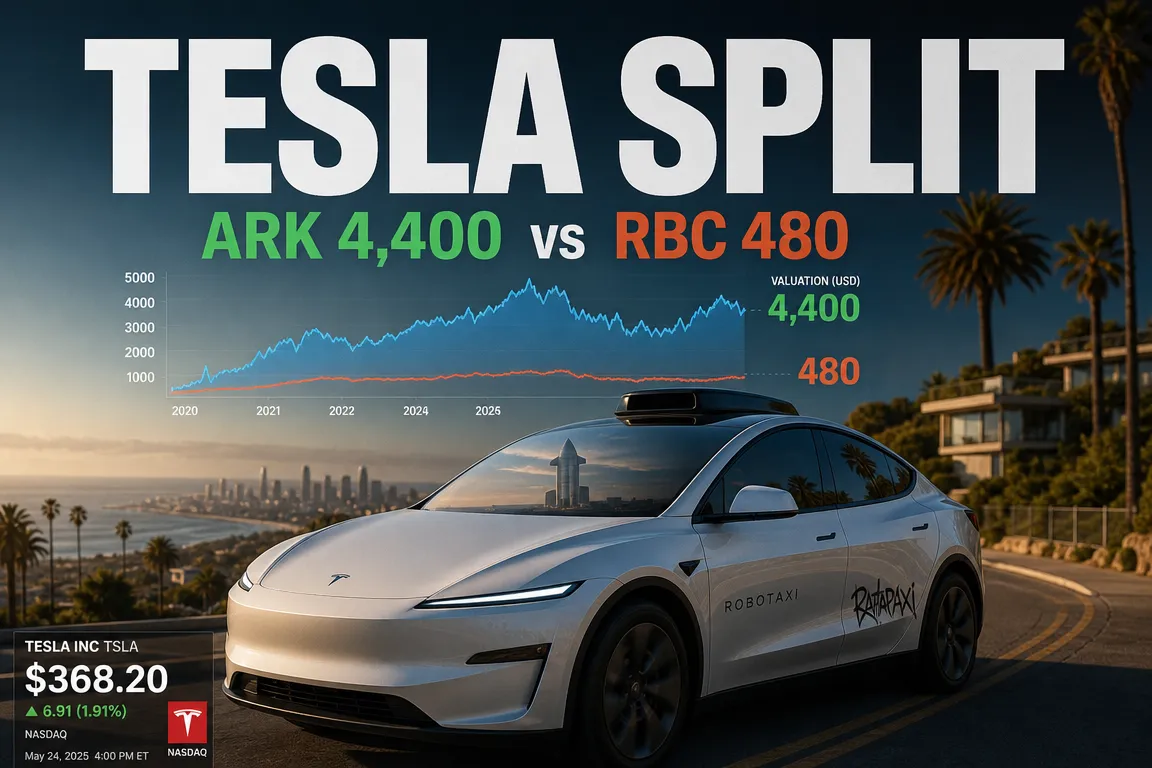
On prediction market Kalshi, the probability of a Tesla-SpaceX merger by 2028 was mentioned as having risen to 75%.
Of course, this is not a confirmed fact, but more like a bet by market participants.
As for the merger price, there are rumors of Tesla being valued at $420 per share, about a 20% premium to current levels.
Since this has not been confirmed, it is better not to use it directly in investment decisions, but rather as a way to see where market expectations are forming.
16. Major events this week: Netflix, Meta, Tesla, Nvidia GTC, FOMC
This week is packed with market-moving events.
SpaceX and Netflix earnings are scheduled first, followed by Meta and Tesla results.
For Meta earnings, the scale of AI infrastructure investment and the recovery in ad revenue will be important.
For Tesla earnings, the key points are EV margins, robotaxis, the energy business, and comments on possible links with SpaceX.
The Nvidia GTC Berlin keynote also deserves attention.
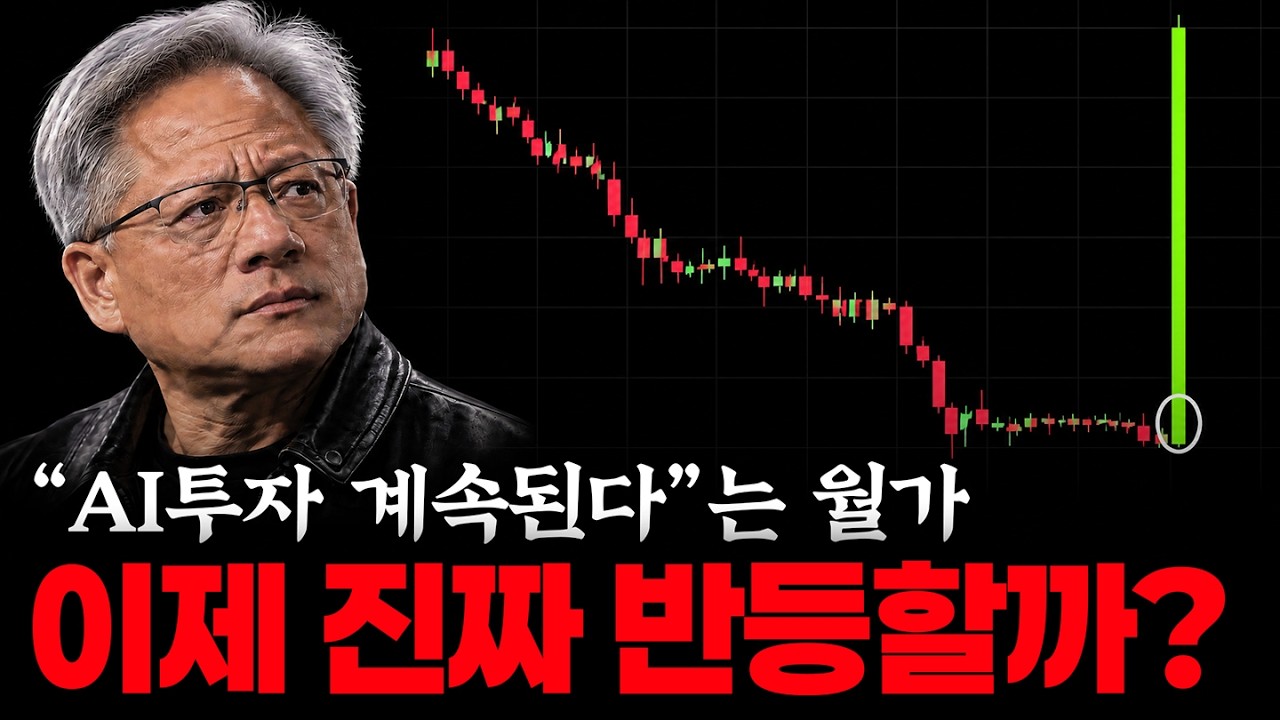
What matters is what Jensen Huang says about AI demand and the next-generation GPU roadmap.
What the market wants now is not just optimism, but confidence in actual demand and profitability.
And the FOMC rate decision is scheduled for October 27.
The base case is a pause.
But what really matters is the dot plot and Chair Powell’s comments.
How much room is left open for additional hikes in December and January is likely to determine the direction of the U.S. stock market.
17. The real core takeaway that other reports often miss: more important than the AI bubble debate is “funding cost”
Most news focuses only on whether AI is a bubble or not.
But what matters more right now is how cheaply AI companies can borrow money and how much they can earn from that money.
AI data center companies ultimately have a structure similar to finance businesses.
They buy GPUs, build data centers, sign long-term customer contracts, and then borrow against those cash flows again.
In that structure, Treasury yields and credit spreads are extremely important.
The real risk for CoreWeave is not that “AI demand disappears.”
The real risk is that new funding costs become too expensive to maintain growth.
The AI industry can grow over the long term.
But in a high-rate environment, winners and losers separate much faster.
Cash-rich big tech can endure, while debt-heavy AI infrastructure companies can be shaken.
So from now on, it is risky to invest based only on the label “AI beneficiary.”
You need to look at debt maturities, average funding costs, customer prepayments, collateral structures, GPU residual value, and long-term contract pricing as well.
18. Investment takeaway: a short-term rebound is possible, but this is still a risky zone
The current market may be in a short-term technical rebound phase.
Because the recent decline was large, some rebound is natural.
But if Treasury yields rise again, oil prices stay high, and inflation concerns intensify, upside is likely to be limited.
For AI stocks to rise strongly again, several conditions are needed.
First, the 10-year Treasury yield must stabilize.
Second, the upward trend in Brent and WTI oil prices must reverse.
Third, the possibility of additional rate hikes at the FOMC must fall.
Fourth, Nvidia and major big tech companies must provide strong evidence about the profitability of AI investment.
Fifth, funding anxiety for AI infrastructure companies like CoreWeave must ease.
Right now, long-term optimism about AI and the reality of high rates are colliding head-on.
Therefore, a defensive approach is needed in the short term, and in the long term, it is important to distinguish which companies in the AI infrastructure ecosystem are truly generating cash flow.
< Summary >
Today’s U.S. market saw the Nasdaq rise 1%, but the rebound in semiconductor and AI-related stocks was weak.
The biggest burden is that the 10-year Treasury yield climbed back toward 5.1%.
The October FOMC is likely to hold steady, but concerns about additional rate hikes in December and January are rising again.
International oil prices at Brent $109 and WTI $98 are also increasing inflation pressure.
Gartner’s warning about AI investment profitability and hedge funds cutting AI stock positions have also weakened market sentiment.
While the fear of 15% rates at CoreWeave is somewhat exaggerated, higher costs for new funding are clearly a risk.
AI investment is likely to continue in the long run, but in a high-rate environment, debt-heavy AI infrastructure companies may be the first to wobble.
This week, SpaceX, Netflix, Meta, Tesla earnings, Nvidia GTC, and the FOMC dot plot are the key events likely to determine market direction.
[Related Articles…]
- AI investment cycle and semiconductor market outlook
- U.S. Treasury yields and global stock market trends analysis
*Source: [ 월텍남 – 월스트리트 테크남 ]
– “뭔가 좀 수상한데?”