● Tesla Camera Faith Clash, GM, Waymo, Cybercab Battles Robotaxi Economics
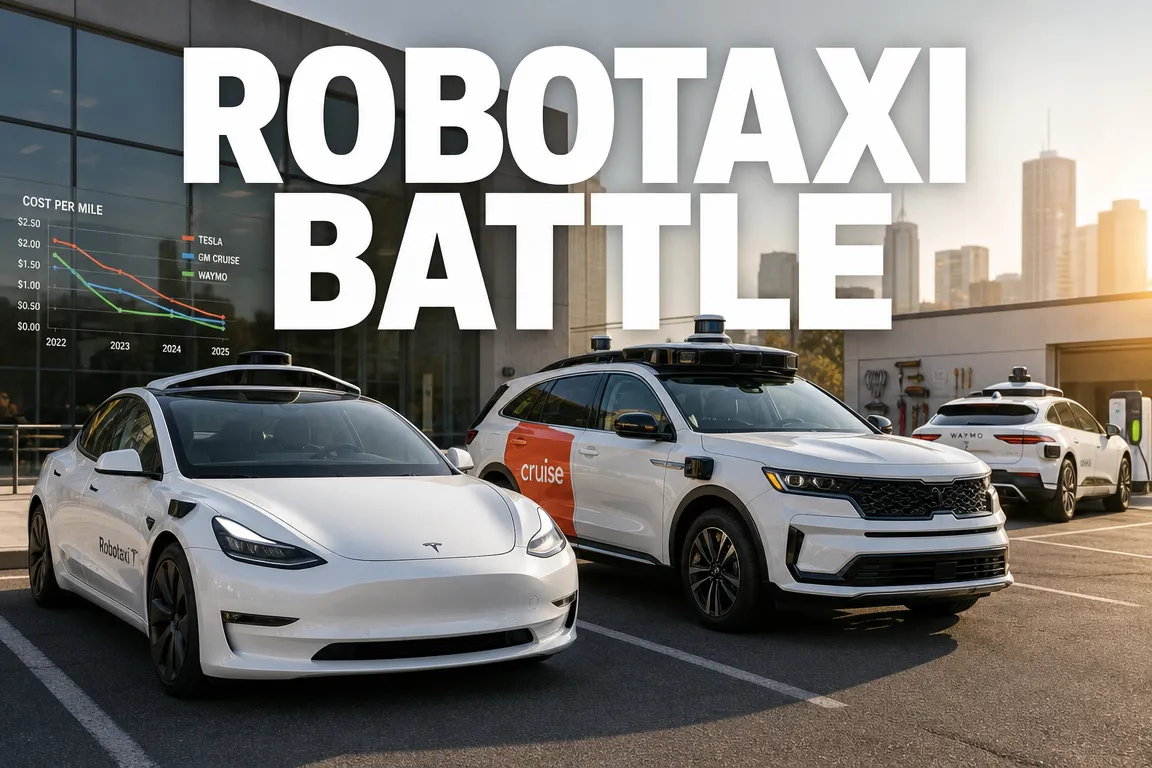
Is Tesla’s Camera-Only Autonomy a “Religion”? The Real Robotaxi Economics Revealed by GM, Waymo, and Cybercab
A former Tesla executive now at GM criticized camera-centric autonomous driving as a “religious approach that ignores physics,” reigniting the industry’s sensor debate.
For investors, the central issue is not whether cameras or lidar represent the more advanced technology.
The likely winner in robotaxis will be the company that can minimize vehicle production, repair, remote-support, and insurance costs while maintaining safety.
The debate connects GM’s case against Tesla’s camera strategy, widening losses in Alphabet’s Other Bets segment, Cybercab’s repair-oriented battery design, the strategic direction of Optimus and industrial robotics, and Wall Street’s changing standards for evaluating AI investment.
Two points are particularly important: Waymo-related losses cannot be attributed solely to sensor costs, and Cybercab’s battery and paint designs may affect robotaxi economics more directly than autonomous-driving software alone.
1. Tesla’s Share Price and the Financial Market Environment
At the time of the source report, Tesla closed at $404.20, down 0.8% from the previous session.
However, short-term price movements cannot be explained by autonomous-driving news alone.
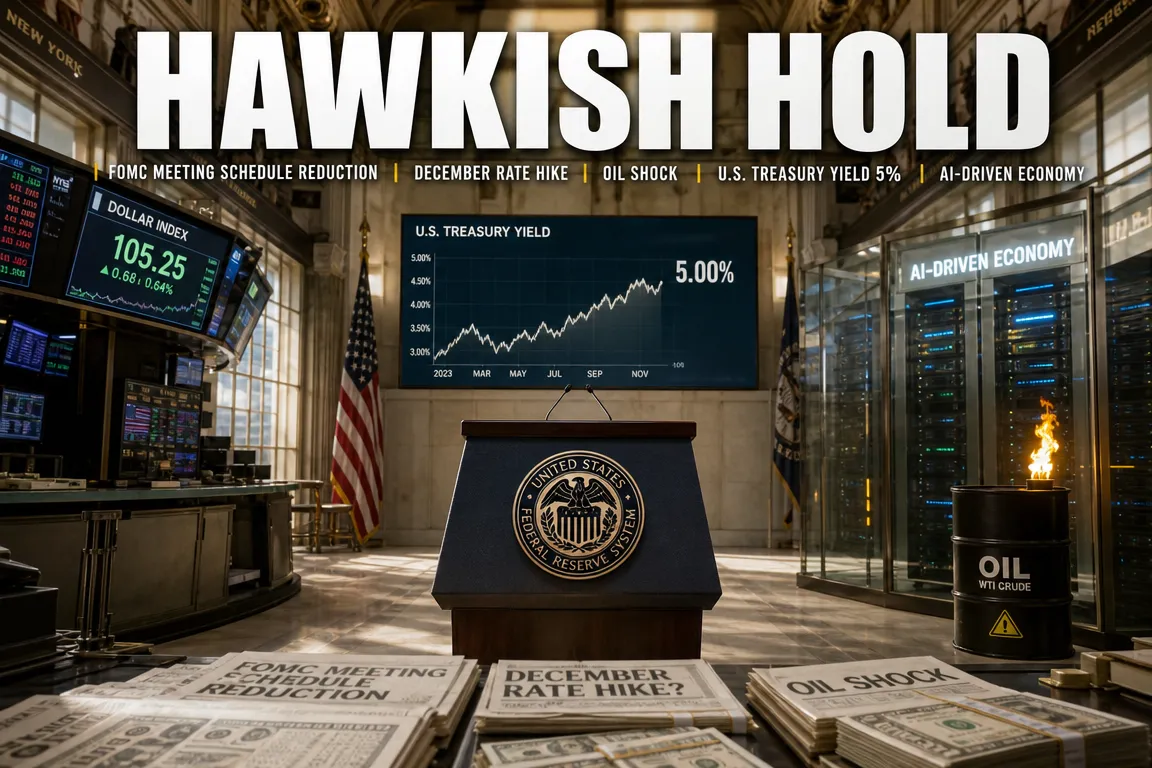
As a growth company whose valuation reflects substantial future earnings, Tesla is sensitive to U.S. policy rates and long-term Treasury yields.
The Federal Reserve reportedly held its policy rate at 3.75%-4.00%, while two of 12 officials supported a 0.25-percentage-point increase.
The report also indicated that the 10-year U.S. Treasury yield had exceeded 5%.
Higher long-term rates increase the discount-rate burden on companies such as Tesla, whose valuations incorporate expected future profits from robotaxis and humanoid robots.
Oil at $102 per barrel and gold at $4,080 per ounce were also cited as indicators of inflation risk and potentially prolonged monetary tightening.
Interest rates, bond yields, oil prices, and gold prices can change rapidly. Investors should verify current figures through official market data and Federal Reserve statements.
2. Wall Street’s Standards for Evaluating AI Companies Have Changed
Microsoft and Alphabet illustrate the metrics that increasingly matter in AI investment.
Microsoft’s Azure revenue reportedly increased 48% year over year, while lower-than-expected capital expenditure supported its shares in after-hours trading.
Alphabet reported strong revenue and Google Cloud growth, but its shares declined sharply after quarterly capital expenditure reached $51.4 billion.
The market is no longer rewarding AI companies solely for the scale of their investment.
The central issue is when spending on data centers and AI infrastructure will convert into revenue and free cash flow.
Tesla is subject to the same standard.
The company reportedly reduced its annual capital expenditure plan from $25 billion to $20 billion.
Tesla’s valuation should therefore be assessed using robotaxi unit economics, Optimus production costs, service revenue, and capital payback periods rather than factory scale or GPU purchases alone.
3. Why a GM Executive Criticized Tesla’s Camera-Centric Approach
The debate centers on Sterling Anderson, GM’s head of product.
Anderson previously led Autopilot development at Tesla and co-founded autonomous-driving company Aurora.
When asked whether GM could adopt a camera-centric system similar to Tesla’s, he argued that removing radar was not physically rational.
His position rests on three points:
-
Cameras may face limitations in dense fog, heavy rain, glare, and other low-visibility conditions.
-
Radar is effective at directly measuring the distance and relative speed of objects ahead.
-
Lidar can generate precise three-dimensional environmental data that supports AI training and localization.
GM is pursuing a multi-sensor architecture combining cameras, radar, and lidar.
The company reportedly aims to introduce highway autonomy in the 2028 Cadillac Escalade IQ at a level that could allow the driver to sleep while the system is active.
The system would request that the driver resume control before reaching the destination. If the driver failed to respond, the vehicle would stop at a safe location.
4. Tesla and GM Are Solving Different Problems
Comparing GM and Tesla solely by sensor count overlooks fundamental differences in their operating objectives.
GM is targeting high-level autonomous driving within defined road environments, particularly highways.
Tesla is pursuing a scalable, general-purpose system based on camera data and neural networks across a broader range of public roads.
GM seeks to improve safety and validation through sensor redundancy.
Tesla seeks to deploy relatively low-cost hardware across millions of vehicles and improve software using large volumes of real-world driving data.
The central difference is not simply the number of sensors, but the operational domain in which each company can deliver accountable autonomy at an economically viable cost.
5. Strengths and Remaining Weaknesses of Tesla’s Camera Strategy
Tesla’s principal advantages are lower vehicle hardware costs and production scalability.
Cameras are generally less expensive than lidar and easier to integrate into vehicles.
Deploying standardized hardware across millions of vehicles can create economies of scale in data collection and software updates.
Elon Musk has argued that humans primarily drive using vision, supporting Tesla’s camera-and-AI approach.
However, human vision and automotive cameras are not equivalent.
Humans combine visual information with hearing, balance, experience, and contextual understanding.
Camera systems must also address lens contamination, condensation, glare, heavy rain, fog, and low-light exposure.
Tesla’s success therefore depends not on whether cameras are theoretically sufficient, but on whether extreme real-world edge cases can be controlled to an acceptable statistical standard.
6. How to Interpret the 43% Increase in Losses Associated with Waymo’s Segment
Alphabet’s Other Bets segment, which includes Waymo, reportedly generated quarterly revenue of $372 million, up 8% year over year.
Operating losses increased approximately 43%, from $1.4 billion to $2.0 billion.
On a simplified basis, the segment recorded more than $5 in operating losses for every $1 of revenue.
However, these figures should not be treated as Waymo’s standalone results.
Other Bets may include projects such as drone delivery in addition to Waymo.
Without separate financial disclosure, the increase in losses cannot be attributed solely to lidar, radar, or Waymo’s sensor strategy.
Early-stage robotaxi operations also require spending on vehicles, mapping, safety personnel, remote support, cleaning, charging, maintenance, insurance, accident response, and regulatory approval in new cities.
The losses may therefore reflect expansion-related investment rather than technological failure.
Key metrics include paid rides per vehicle, utilization, revenue per passenger-mile, remote-intervention frequency, and city-level breakeven performance.
7. Cybercab’s Key Advantage May Be Battery Repair Costs
Cybercab’s most significant design change may be its emphasis on maintenance rather than its exterior styling or lack of a steering wheel.
In a teardown video cited by the source, a Tesla battery executive gave the Model Y’s structural battery pack a low assessment.
Structural batteries integrate cells into the vehicle body, reducing weight and component count but making manufacturing and repairs more difficult.
If a localized cell failure requires replacement of the entire battery, the cost burden becomes substantial for a high-mileage commercial vehicle.
Cybercab reportedly divides its battery into four modules, allowing individual modules to be replaced.
Its steel battery enclosure and additional internal space are also notable.
The design may provide room for additional cells if Tesla later adopts lithium iron phosphate batteries, which generally have lower energy density but may offer advantages in cost, thermal stability, and durability.
Robotaxi economics would deteriorate significantly if Cybercab required a complete battery replacement before reaching approximately 500,000 miles, or 800,000 kilometers.
If modular replacement is implemented in production vehicles, it could materially reduce Tesla’s robotaxi operating costs.
8. Eliminating the Paint Shop Could Lower Robotaxi Costs
Cybercab is reportedly being developed to minimize conventional automotive painting processes.
The proposed approach would apply color during exterior-panel molding, with only selected side modules painted separately.
Automotive paint shops require substantial capital expenditure, energy consumption, processing time, and environmental-compliance spending.
Eliminating or significantly reducing the paint shop could lower both factory construction costs and per-vehicle manufacturing costs.
However, repair costs could rise if damaged panels are difficult to color-match.
Investors should assess replacement-panel costs and parts availability in addition to production savings.
9. Cybercab’s Value Should Be Assessed on Cost per Kilometer
Cybercab must operate longer, achieve higher utilization, and be repaired more quickly and economically than a conventional passenger vehicle.
Key investor metrics include:
-
Actual manufacturing cost per Cybercab.
-
Maintenance cost per kilometer, including batteries and tires.
-
Average daily paid-service hours and passenger occupancy.
-
Remote-support interventions per vehicle.
-
Accident and insurance costs.
-
Downtime for cleaning, charging, and maintenance.
-
Regulatory approval and service-expansion speed by city.
Tesla’s low-cost camera hardware would provide limited economic advantage if remote-support and insurance costs remained high.
Conversely, Waymo could remain competitive despite expensive sensors if high utilization and low accident rates reduce insurance and operating expenses.
10. The “Religious” Debate Over Optimus and Industrial Robots
Anderson has also expressed skepticism about humanoid robots.
His argument is that the human body evolved for survival in natural environments rather than for optimized factory work.
GM believes that task-specific equipment, including fixed or overhead multi-jointed robots, may be more efficient than humanoid systems.
For repetitive work in controlled factories, wheeled or fixed robots are likely to be less expensive and more stable than bipedal humanoids.
Tesla’s rationale for Optimus is that factories, warehouses, offices, stairs, doors, handles, workstations, and tools are already designed for humans.
A humanoid capable of using existing infrastructure without modification could offer greater versatility.
The relevant performance measures are not demonstrations or acrobatics, but hourly throughput, operating time between failures, human-intervention frequency, unit cost, and investment payback period.
11. Humanoid Robotics Should Be Evaluated Through Cash Flow, Not Demonstrations
The source reported that a Chinese robotics company’s revenue increased 70% while net income declined 17%. Its recent share-price gains were influenced by demonstration videos and investment-bank upgrades.
The humanoid robotics market continues to assign substantial value to demonstrations and long-term expectations rather than current profitability.
Investors should focus on whether paying customers have deployed robots in production environments.
For Optimus, objective valuation will require evidence of reliable repetitive work in Tesla factories and measurable labor-cost savings.
12. Implications of a Proposed Expansion of U.S. EV Tax Credits
A bill was reportedly introduced in the U.S. House of Representatives to expand electric-vehicle tax credits.
The proposal would increase the maximum credit for new EVs from $7,500 to $15,000 and the credit for used EVs from $4,000 to $8,000.
It would also reduce the income threshold for married couples filing jointly to $225,000.
The proposal could support EV demand and Tesla sales, but introduction does not imply enactment.
The bill would require committee approval, passage by both chambers of Congress, and presidential approval.
Similar proposals have previously failed to advance beyond committee.
13. Tesla Semi Fire and Battery Safety
A Tesla Semi reportedly caught fire on Interstate 880 near Hayward, California.
No injuries were reported, but smoke and firefighting operations led to prolonged closures in both directions.
It was not confirmed whether the vehicle was a recent production model or an earlier test vehicle, and the cause remained under investigation.
Because electric heavy trucks carry large battery packs, thermal runaway can require extended firefighting and traffic-control operations.
The key issues are the cause, recurrence risk in vehicles using the same design, battery-protection architecture, and potential changes to emergency-response guidance.
14. Criticism of a Tesla-SpaceX Combination Requires Careful Distinction
New York University professor Scott Galloway reportedly compared Tesla to a financially distressed patient and argued that SpaceX shareholders could effectively become organ donors.
He suggested that combining a financially stronger company with one requiring additional capital could disadvantage certain shareholders, citing the combination of X and xAI as a precedent.
Unless a Tesla-SpaceX transaction or its terms are formally confirmed, this remains a critical scenario rather than an established fact.
Galloway previously forecast a substantial decline in Tesla’s valuation and a potential acquisition, neither of which occurred.
However, that record does not invalidate current governance concerns.
If a transaction is proposed, investors should evaluate the exchange ratio, asset valuations, voting rights, conflicts of interest, and minority-shareholder protections.
15. Overseas Equity Merger Tax Issues for South Korean Investors
A petition before South Korea’s National Assembly reportedly seeks to defer capital-gains taxation on overseas shares exchanged in a merger until the investor ultimately sells the replacement shares.
At the time of the source report, the petition had received 17,937 signatures, approximately 36% of its target.
When investors receive shares rather than cash in a merger or stock exchange, immediate taxation can create a funding burden.
For long-term investors in U.S. technology companies and other overseas equities, the issue concerns the timing of taxation rather than a straightforward tax reduction.
Meeting the petition threshold would not automatically amend the law. Legislative review and formal tax-law revisions would still be required.
16. The Most Important Issues Often Overlooked in Other Coverage
First, the camera-versus-lidar debate is fundamentally about total system cost, not sensor prices alone.
A low-cost vehicle can become uneconomic if accident rates and remote-intervention requirements increase insurance and operating expenses.
Expensive sensors may produce lower lifetime costs if they support higher safety and utilization.
Second, Alphabet’s Other Bets losses should not be interpreted as Waymo’s standalone losses.
Without separate segment disclosure, the losses cannot be treated as evidence that Waymo’s sensor strategy has failed.
Third, Cybercab’s most significant innovations may extend beyond autonomous-driving software.
Modular batteries, simplified painting, and repair-oriented component design could materially reduce total lifecycle costs.
Fourth, Tesla and Waymo follow different expansion models.
Waymo seeks high reliability within restricted operating areas before expanding, while Tesla relies on low-cost vehicles and large-scale data collection to pursue broader deployment.
Fifth, regulatory approval and legal liability are as important as technical capability.
For driverless vehicles, the allocation of liability among manufacturers, software operators, and vehicle owners could materially affect business costs.
17. Investor Monitoring Checklist
-
Review the safety data and supporting evidence Tesla submits in response to regulatory questions regarding Cybercab.
-
Assess operating restrictions under camera contamination, adverse weather, and nighttime conditions.
-
Monitor disclosure of Cybercab’s production cost and battery-module replacement expenses.
-
Compare Tesla robotaxi paid mileage, accident rates, and remote-intervention rates.
-
Track Waymo’s city-level mileage, vehicle utilization, and any standalone financial disclosure.
-
Determine whether Optimus progresses from demonstrations to measurable labor substitution in operating factories.
-
Evaluate how U.S. policy rates and long-term Treasury yields affect Tesla’s financing costs and valuation.
< Summary >
A former Tesla executive now at GM argues that camera-centric autonomous driving faces physical limitations in adverse weather and distance measurement, supporting the use of radar and lidar.
Tesla is pursuing scalable autonomy through low-cost cameras and large-scale driving data, while GM and Waymo use multi-sensor systems to improve redundancy and safety.
Operating losses in Alphabet’s Other Bets segment increased approximately 43%, but they should not be treated as Waymo’s standalone losses or attributed solely to sensor costs.
Cybercab’s potential competitive advantages include modular batteries and simplified painting processes that could reduce repair costs and operating expenses per kilometer.
The likely winner in robotaxis will not be determined by the number of sensors, but by the ability to demonstrate superior total economics across safety, utilization, insurance, maintenance, remote support, and regulatory compliance.
[Related Articles…]
*Source: [ 오늘의 테슬라 뉴스 ]
– 테슬라 출신 GM 임원, 카메라도 옵티머스도 “종교” — 웨이모는 손실 43% 확대, $404 주주는?
● Samsung,Slump,Shock
Why the KOSPI Rally Collapsed: Samsung Electronics, Shareholder Returns, and the Gift Tax Controversy
The recent KOSPI decline was not simply a correction caused by weak Samsung Electronics earnings.
The primary issue was the absence of a detailed shareholder return policy. The Korean equity market’s dependence on foreign investor flows concentrated in Samsung Electronics again emerged as a structural weakness.
Additional factors included the FOMC interest-rate decision, concerns over Microsoft and Alphabet’s AI investment burden, semiconductor industry expectations, and the Samsung Group gift tax controversy.
This report examines why Samsung Electronics can influence the broader KOSPI, the extent to which gift taxes may affect its share price, and the underlying risks that may be overlooked in market coverage.
1. Overview of the KOSPI Decline
Domestic market conditions were relatively stable in early trading.
The Federal Open Market Committee’s interest-rate decision was broadly in line with expectations, while capital expenditure announcements by major U.S. technology companies were not sufficiently negative to trigger an immediate market shock.
Investor sentiment deteriorated rapidly after Samsung Electronics failed to provide the level of shareholder return measures expected by the market.
As Samsung Electronics declined, the KOSPI came under pressure because of the company’s significant index weighting.
- The FOMC decision remained within market expectations.
- Disappointment over AI capital expenditure by major U.S. technology companies affected sentiment.
- Expectations for improved Samsung Electronics earnings had already been largely priced in.
- Share buyback, cancellation, and dividend expansion plans lacked sufficient detail.
- Weakness in Samsung Electronics influenced foreign investor futures positioning and broader KOSPI sentiment.
2. Why Samsung Electronics Declined Despite Strong Earnings
Equity markets generally price in future policies and growth prospects before reported earnings.
Even when earnings exceed consensus estimates, the announcement may not provide additional upside if investors have already incorporated the improvement into the share price.
Post-earnings performance therefore depends more heavily on the semiconductor outlook, high-bandwidth memory competitiveness, foundry profitability, and shareholder return policies.
Investors appeared to expect stronger earnings alongside measures capable of directly supporting shareholder value, including higher dividends and share buybacks or cancellations.
However, references to potential future board discussions without specific amounts or timelines can be interpreted as disappointing.
The decline was primarily an expectations reset, as market expectations had risen beyond the reported earnings improvement.
3. Why Samsung Electronics’ Shareholder Return Policy Matters
Shareholder returns involve distributing corporate cash through dividends, share buybacks, and share cancellations.
For a company with substantial cash generation such as Samsung Electronics, capital allocation is as important as operating performance.
Even with significant capital expenditure requirements, investors may demand stronger shareholder returns when free cash flow remains sufficient.
Share cancellation reduces the number of shares outstanding and can increase earnings per share and per-share value.
By contrast, repurchased shares that are not cancelled may later be used for employee compensation or other purposes, limiting their potential valuation impact.
Investors should assess the following factors in any future shareholder return announcement:
- Whether the buyback is meaningful relative to total market capitalization.
- Whether repurchased shares will be permanently cancelled.
- How regular and special dividend policies will change.
- Whether the funding source is one-time cash or sustainable free cash flow.
- Whether the company provides a specific execution schedule.
4. Is Samsung Electronics’ Share Price Being Suppressed Because of Gift Taxes?
The source material states that Executive Chairman Lee Jae-yong received Samsung Electronics shares as a gift from his mother and presents the view that there may be an incentive to keep the share price low during the gift tax valuation period.
This interpretation must be clearly distinguished from officially verified facts.
Under Korean tax law, the taxable value of listed shares received as a gift is generally calculated using the average closing price over a specified period surrounding the gift date.
The standard calculation typically uses average closing prices during the two months before and two months after the gift date. A lower share price during this period may reduce both the assessed value and the associated tax liability.
However, the applicable valuation period may vary depending on the actual gift date, trading suspensions, ex-rights events, capital increases, capital reductions, and other exceptional circumstances.
The period from September 2026 to January 12, 2027 must therefore be evaluated against the confirmed gift date and relevant regulatory disclosures.
Objective evidence would be required to conclude that the company or controlling shareholder intentionally suppressed the share price to reduce tax liability.
A weaker-than-expected shareholder return announcement alone does not establish deliberate price suppression.
Investors should review gift disclosures, substantial shareholding reports, official company statements, and board decisions.
5. Why the FOMC Decision Failed to Support the KOSPI
An FOMC decision that meets expectations indicates the absence of a new negative surprise, but it does not guarantee an equity market rally.
Markets generally place greater emphasis on the expected pace of future rate cuts, U.S. Treasury yields, the dollar, and the Federal Reserve’s inflation outlook.
Even when rates remain unchanged, continued emphasis on inflation risks can push Treasury yields and the dollar higher.
Dollar strength can increase depreciation pressure on the Korean won and weaken foreign investors’ capacity or willingness to purchase Korean equities.
Accordingly, even a neutral FOMC outcome may be outweighed by company-specific factors affecting major index constituents such as Samsung Electronics.
6. How Microsoft and Alphabet’s AI Investment Affects Korean Equities
Capital expenditure by Microsoft and Alphabet is widely used as a leading indicator of global AI semiconductor demand.
Greater investment in data centers and AI infrastructure can support demand for GPUs, HBM, server DRAM, and enterprise SSDs.
Conversely, slower-than-expected spending growth or concerns over investment returns can affect global semiconductor valuations.
However, moderately weaker capital expenditure does not necessarily indicate that long-term AI growth has ended.
The allocation of capital to AI servers and the timing of data center deployment are more important than aggregate investment alone.
Korean investors should focus on the types of memory products supplied by Samsung Electronics and SK hynix, customer qualification progress, and product-level profitability.
7. Why Samsung Electronics Can Move the Entire KOSPI
Samsung Electronics represents a substantial share of total KOSPI market capitalization.
Foreign and institutional trading in KOSPI 200 futures and exchange-traded funds often generates corresponding transactions in Samsung Electronics.
A decline in Samsung Electronics therefore affects more than the company’s individual market capitalization.
It can also weaken sentiment across the semiconductor sector, electrical and electronics stocks, KOSPI 200 futures, and large-cap ETFs.
When foreign investors sell Samsung Electronics shares and KOSPI futures simultaneously, program trading may accelerate the index decline.
This market structure highlights the Korean equity market’s dependence on a limited number of large-cap companies and semiconductor exports.
8. Key Issues Often Overlooked in Market Coverage
The first issue is confidence in capital allocation rather than earnings alone.
Even when Samsung Electronics holds substantial cash, its valuation may remain discounted if investors lack confidence that the funds will be allocated efficiently to improve shareholder value.
The market requires a clear hierarchy among semiconductor investment, mergers and acquisitions, dividends, and share cancellation.
The second issue is the potential link between the gift tax controversy and the corporate governance discount.
Regardless of whether price suppression occurred, a perceived conflict between controlling shareholders and minority shareholders can widen the Korea discount.
Companies can address this risk by disclosing predictable shareholder return criteria and transparent decision-making processes.
The third issue is that Samsung Electronics and the KOSPI do not always move in the same direction.
Even if Samsung Electronics remains weak, capital rotation into shipbuilding, defense, nuclear energy, financials, and biotechnology could limit the index decline.
Conversely, relying solely on a Samsung Electronics rebound may obscure differences in sector-level earnings trends.
The fourth issue is that AI capital expenditure does not benefit all semiconductor companies equally.
AI-related gains depend on HBM supply capabilities, advanced packaging, customer qualification, and production yields.
A favorable semiconductor cycle does not automatically translate into higher earnings for every company.
9. Conditions Required for a Sustainable KOSPI Recovery
A sustainable KOSPI recovery will require more than a short-term rebound in Samsung Electronics.
Foreign investor flows, the won-dollar exchange rate, U.S. Treasury yields, semiconductor exports, and corporate earnings expectations must improve concurrently.
- Monitor whether Samsung Electronics announces a detailed shareholder return policy.
- Assess HBM supply expansion and customer qualification progress.
- Determine whether higher memory prices translate into operating profit growth.
- Track foreign investor positioning in Samsung Electronics shares and KOSPI 200 futures.
- Monitor stabilization in the won-dollar exchange rate.
- Confirm whether U.S. technology companies execute planned AI capital expenditure.
- Review official disclosures related to gifts and ownership changes.
10. Key Considerations for Investors
A sharp decline in Samsung Electronics should not automatically be treated as a buying opportunity.
A lower share price does not necessarily indicate that a company is undervalued.
Short-term investors should monitor foreign investor flows and technical support levels. Long-term investors should focus on HBM competitiveness, free cash flow, and shareholder return policies.
Investment decisions should not be based solely on speculation concerning gift taxes.
Unverified governance concerns may increase volatility, but they do not replace analysis of operating performance and cash flow.
The KOSPI outlook should be assessed through four principal variables: exports, exchange rates, interest rates, and corporate earnings.
< Summary >
The immediate driver of KOSPI weakness was not poor Samsung Electronics earnings, but a shareholder return message that failed to meet market expectations.
The FOMC decision remained within expectations but did not provide a sufficiently strong catalyst to reverse foreign investor flows.
Concerns regarding Microsoft and Alphabet’s AI investment weakened semiconductor sentiment, but they do not confirm a long-term slowdown in AI demand.
Although share prices can affect gift tax valuation, claims of intentional price suppression should not be treated as fact without official documentation and objective evidence.
The principal drivers of a recovery in Samsung Electronics and the KOSPI are HBM competitiveness, foreign investor flows, exchange-rate stabilization, and specific share cancellation and dividend policies.
[Related Articles…]
- Samsung Electronics Outlook: AI Memory Competitiveness and Shareholder Returns
- KOSPI Outlook: Interest Rates, Exchange Rates, and Foreign Investor Flows
*Source: [ 내일은 투자왕 – 김단테 ]
– 잘나가던 코스피 이것에 무너졌다. #코스피 #삼성전자 #증여세