● Musk AI Boom, Terrafab, Optimus, Starlink, Space Data Centers
Elon Musk’s AI Economic Blueprint: The Strategic Significance of Terafab, Optimus, Starlink, and Space-Based Data Centers
The central theme of the discussion between Ron Baron and Elon Musk was not Tesla’s automotive business.
The broader strategy connects U.S.-based AI semiconductor production through Terafab, Optimus humanoid robots, space-based data centers designed to address terrestrial power constraints, and Starlink infrastructure capable of handling rapidly expanding AI traffic.
Musk and Baron also discussed potential outcomes including $500 billion in annual SpaceX revenue, 20-30% global economic growth from digital superintelligence, and one terawatt of annual AI computing capacity.
These figures are not reported results or formal corporate guidance. Many represent long-term scenarios proposed by Musk and Baron.
The discussion should therefore be assessed as a broad AI, energy, semiconductor, robotics, and space infrastructure strategy that could influence the long-term global economic outlook, rather than as conventional Tesla news.
Key Takeaways
- Musk outlined plans for a large U.S. Terafab intended to reduce the geopolitical risks associated with AI chip production concentrated in Asia.
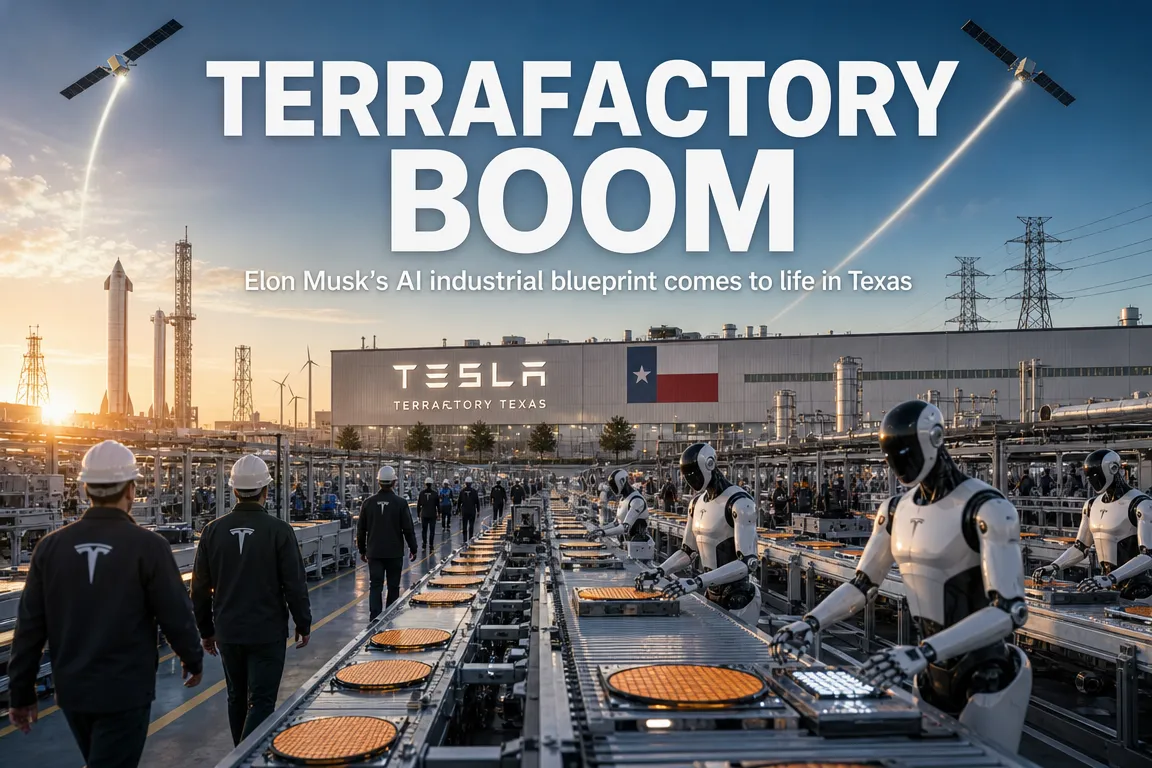
- The proposed structure includes a semiconductor research fab in Austin, Texas, and a large-scale production facility in Grimes County.
- Musk identified wafer transportation and waiting time as major inefficiencies in conventional semiconductor manufacturing.
- He argued that iteration speed, rather than capital alone, is the primary determinant of AI development speed.
- The rapid construction of the Memphis data center and dedicated power infrastructure was presented as evidence of execution capability in large-scale AI infrastructure.
- Musk estimated that digital AI alone could increase global economic output by 20-30%.
- He argued that 20 million to 30 million Optimus-class humanoid robots could generate output comparable to the current U.S. economy.
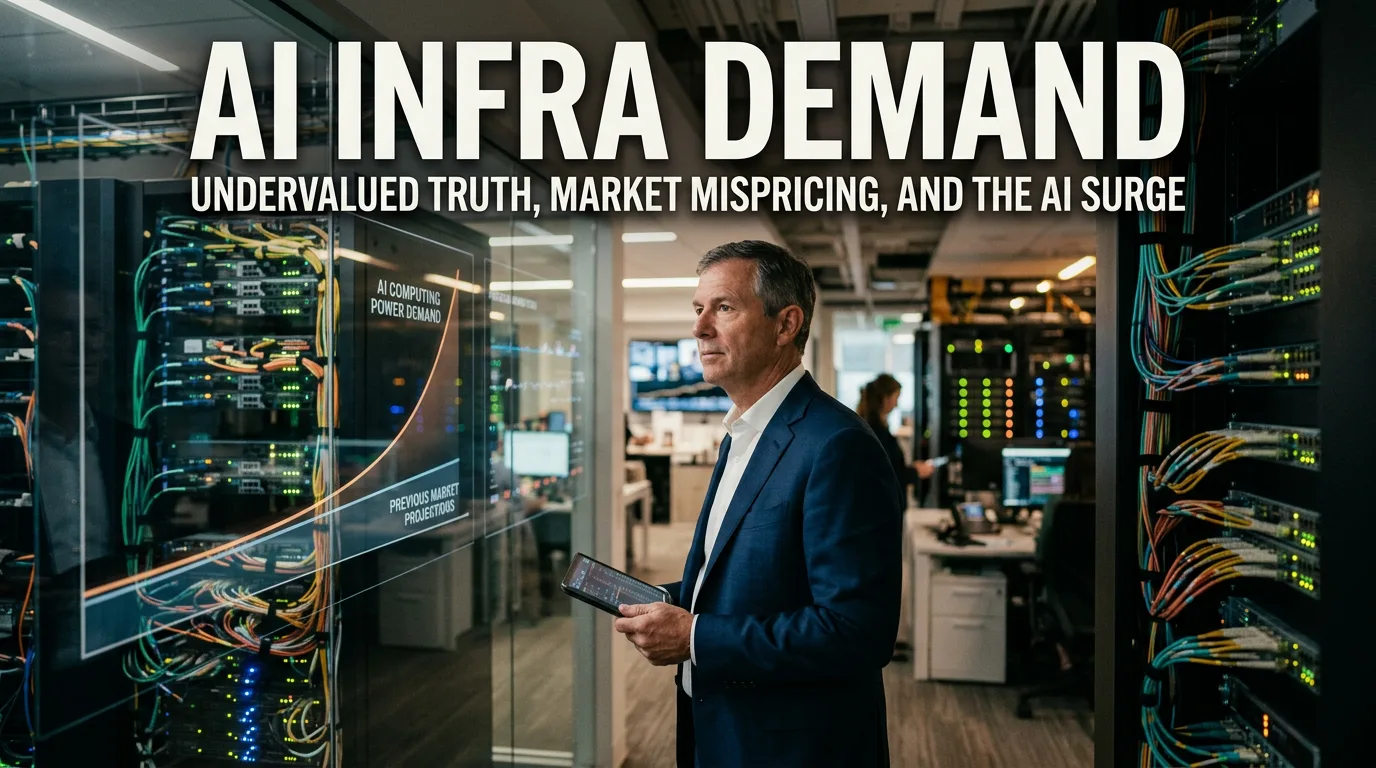
- Musk expects terrestrial power grids to face significant constraints in supporting AI demand ranging from hundreds of gigawatts to one terawatt.
- Full Starship reusability could substantially reduce launch costs and improve the economics of space-based data centers.
- As AI agents generate more traffic than human internet users, Starlink’s satellite count and communications capacity could expand materially.
1. Terafab Is More Than a Semiconductor Factory
The term “Tera” in Terafab refers primarily to terawatt-scale capacity rather than to Earth.
The objective is not limited to producing a modest volume of proprietary AI chips. Musk described a long-term goal of manufacturing AI computing chips with an aggregate capacity equivalent to one terawatt annually.
According to estimates discussed in the interview, current global AI chip production represents approximately 20-25 gigawatts per year and could rise to approximately 35-45 gigawatts in the following year.
On that basis, one terawatt would be approximately 20-30 times larger than projected annual global production.
Musk acknowledged the project’s execution risk, stating that Terafab could be regarded as imprudent if it fails but as a major industrial innovation if it succeeds.
Why Produce AI Chips in the United States?
Advanced semiconductor production remains heavily dependent on Asian manufacturers and production centers, particularly Taiwan Semiconductor Manufacturing Company and Samsung Electronics.
Although TSMC and Samsung are building U.S. facilities, Musk argued that their announced U.S. capacity would represent only a fraction of their Asian production base.
The principal concern is not limited to manufacturing cost.
A geopolitical disruption in the Taiwan Strait or elsewhere in East Asia could materially constrain AI chip availability for U.S. companies.
If Tesla is to develop from an automotive manufacturer into an AI and robotics company, it may require control over both chip design and the underlying semiconductor supply chain.
Samsung’s reported participation in manufacturing Tesla’s AI5 and AI6 chips is consistent with this strategy.
However, Musk’s position is that third-party manufacturing alone may not provide sufficient long-term capacity, creating a rationale for proprietary production facilities.
Wafer Idle Time as a Manufacturing Constraint
Musk focused on semiconductor process design rather than only on equipment performance.
He argued that, although wafers appear to move rapidly through a fab, the time during which productive atomic-scale processing occurs may account for less than half of the total manufacturing cycle.
In some cases, productive processing may represent only approximately 20% of total cycle time.
The remaining time is spent transporting wafers between tools or waiting for the next process step.
Established semiconductor manufacturers tend to avoid major changes to validated process recipes because each fab requires substantial capital investment.
Incremental improvements are common, but comprehensive redesigns of the production system are less frequent.
Musk views this institutional conservatism as a potential opportunity for a new manufacturing platform.
Austin Research Fab and Grimes County Production Fab
The proposed structure separates experimental research from high-volume manufacturing.
A research fab near Tesla’s Austin Gigafactory would test alternative semiconductor manufacturing methods.
The objective would be to integrate logic, memory, packaging, lithography, and testing in one location, reducing the time between chip design and final product validation.
If a development cycle that normally requires approximately one year could be reduced to one month, the number of annual design iterations would increase substantially.
Validated technologies could then be transferred to a larger production facility in Grimes County, near Texas A&M University.
The principal competitive advantage would be the speed of feedback between research and mass production, rather than the physical size of the facility alone.
2. Iteration Speed as the Core Competitive Advantage
Musk described technological development as a function of two variables:
- The number of experiments and improvement cycles completed within a defined period.
- The magnitude of technical progress achieved during each iteration.
If one company runs experiments ten times faster than a competitor while achieving similar progress per iteration, its overall development rate could theoretically approach ten times that of the competitor.
This framework applies across Tesla vehicles, SpaceX rockets, xAI models, data centers, and Optimus development.
Vertical integration across Musk-led companies can therefore be interpreted less as a requirement to manufacture every component internally and more as a strategy to reduce decision-making and experimentation cycles.
Fewer Approval Layers Can Accelerate Factory Construction
Ron Baron cited the experience of a manufacturing executive formerly employed by Ford.
At Ford, changes to production processes reportedly required multiple approval stages. At Tesla, the executive could present proposals directly to Musk at the factory.
A former Intel semiconductor specialist similarly stated that other executives conducted brief factory visits, while Musk spent several hours meeting engineers and reviewing manufacturing processes and production speed.
The relevant factor is not executive charisma but the reduction of organizational decision latency.
In capital-intensive manufacturing, delayed decisions can sometimes impose greater costs than imperfect decisions.
Why Musk Participated Directly at the Memphis Site
Musk stated that he inspected the Memphis data center site several times per day.
He also described participating in work involving high-voltage cables, optical fiber, electrical switches, and power plant management software.
His stated rationale was that executives need direct exposure to operational work to understand employee constraints and identify bottlenecks.
Living in an Airstream trailer near the site was presented as another method of reducing decision time.
This management approach may not be appropriate for every organization, but it can support rapid execution during the initial construction phase of large infrastructure projects.
3. GPUs Are Not the Only Constraint in AI Data Center Development
Market commentary often assumes that securing GPUs is sufficient to establish an AI business.
Musk argued that GPU procurement alone does not create an operational large-scale computing facility.
An AI data center also requires land, power generation or supply agreements, substations, cooling systems, network infrastructure, optical communications, buildings, operating software, and skilled construction labor.
According to Musk, the number of people planning and commissioning projects in the United States has increased faster than the number of qualified workers capable of building the underlying infrastructure.
He compared the situation to a widely circulated image showing one worker excavating a road while several others observe.
More purchase orders do not result in more completed infrastructure unless the physical labor force and equipment base expand accordingly.
This imbalance could lead to a growing number of incomplete data center projects and the dispersion of workers and equipment across too many construction sites.
Data Center Construction Costs and Profitability Claims
The discussion included an estimate that a conventional one-gigawatt data center could require approximately 30 months and $50 billion to $60 billion to complete.
By comparison, Musk-affiliated companies were described as potentially capable of completing a similar project in approximately eight to nine months at a cost of around $35 billion.
The discussion also suggested that excess computing capacity could be leased to external customers, potentially generating substantial revenue.
However, construction costs, leasing revenue, and investment returns depend heavily on GPU configuration, power contracts, depreciation, network costs, utilization, and customer demand.
The figures of $35 billion in investment and $50 billion in annual revenue should not be treated as representative economics for a conventional data center business.
They are better interpreted as long-term scenarios rather than audited financial results or contracted revenue.
xAI and SpaceX Must Be Distinguished
Some parts of the discussion appeared to combine the Memphis data center and related revenue expectations with SpaceX operations.
However, the Colossus data center in Memphis is principally known as xAI’s AI training infrastructure.
SpaceX is a separate company focused on Starlink, launch services, Starship, and potential space-based computing infrastructure.
Tesla’s relevant activities include AI semiconductors, autonomous driving, vehicles, and Optimus.
Although the three companies share Musk’s leadership and may benefit from technical cooperation, their revenue, assets, and valuations should be analyzed separately.
4. Potential Economic Impact of Digital Superintelligence
Musk estimated that digital AI, excluding robotics, could increase the size of the global economy by approximately 20-30%.
Assuming a global economy of approximately $130 trillion, this would imply more than $25 trillion in incremental economic value.
The core assumption is that AI could substantially increase productivity in knowledge-intensive work.
Software development, accounting, legal services, research, customer support, design, marketing, and medical analysis could be among the first sectors affected.
However, a doubling of productivity would not automatically double corporate revenue or gross domestic product.
Cost savings may be passed through as lower prices, while labor market restructuring, regulation, education, and income distribution could influence realized economic outcomes.
The economic impact of AI will depend not only on technical performance but also on the speed at which companies and governments integrate AI into operational workflows.
A Feedback Loop in Which AI Creates Additional AI Demand
When asked why such large quantities of power and semiconductor capacity would be required, Musk argued that digital superintelligence would itself generate demand for additional intelligence.
Initially, humans use AI systems. Over time, large numbers of AI agents could communicate with one another, perform tasks, and consume additional computing resources.
If AI systems write code, conduct research, and design new models and services, computing demand could increase further.
If this scenario materializes, AI agents rather than humans could eventually become the primary source of internet traffic.
5. The Calculation Behind 30 Million Optimus Robots
Musk estimated that approximately 120 million people in the United States directly produce goods and services.
This is a simplified estimate excluding students, retirees, and people outside the labor force.
A humanoid robot could theoretically operate for up to 24 hours per day and 168 hours per week.
The calculation assumes that robots do not require vacations, meals, sleep, or personal breaks and may perform some tasks faster than humans.
Based on these assumptions, Musk estimated that one robot could deliver at least five times the weekly output of one human worker.
Dividing 120 million workers by five produces an estimate of approximately 24 million robots.
He therefore argued that approximately 20 million to 30 million humanoid robots could generate output comparable to current U.S. production.
Leasing May Be More Likely Than Direct Optimus Sales
Musk discussed leasing as a potential business model for humanoid robots.
Customers could deploy robots without incurring the full upfront purchase cost, while the manufacturer would receive recurring usage revenue.
When combined with software updates, maintenance, and insurance, the revenue model could resemble cloud services more closely than automotive sales.
Initial production costs could be comparable to those of a vehicle but may decline below automotive costs at scale.
Actual robot productivity must account for battery charging, maintenance, safety requirements, workplace conditions, and human supervision.
Continuous 24-hour operation and productivity five times higher than that of human workers remain unverified long-term assumptions.
6. Data Center Opposition and Local Economic Effects
Community opposition to data centers typically reflects concerns about electricity prices, water consumption, noise, air pollution, and pressure on transmission infrastructure.
Musk argued that the Memphis project had increased restaurant and hotel revenue, wages, and tax receipts.
He also stated that compensation for some positions was nearly twice the prevailing local wage.
Support for schools and local communities, as well as higher municipal tax revenue, was cited as an additional benefit.
However, local economic benefits do not eliminate environmental and power-system concerns.
To secure community support, data center operators may need to provide specific commitments regarding electricity-price stability, lower-emission generation, water-use disclosure, employment plans, and local investment.
7. From Terrestrial to Space-Based Data Centers
Musk argued that annual AI computing capacity of 200 gigawatts to one terawatt may ultimately require deployment in space.
Average U.S. electricity consumption was described as approximately 500 gigawatts.
Adding 200 gigawatts of AI infrastructure annually would therefore require new generation capacity equivalent to roughly 40% of average U.S. electricity demand each year.
This expansion would require not only additional power plants but also transmission lines, substations, and cooling infrastructure.
In space, solar panels can receive sunlight without atmospheric attenuation and may be less affected by terrestrial night cycles and seasonal variation.
Lower dependence on battery storage was also cited as a potential advantage.
The discussion suggested that solar generation in space could be approximately 30% higher than comparable generation on Earth.
Practical Constraints on Space-Based Data Centers
Abundant solar energy does not make space-based data center operations straightforward.
In a vacuum, conventional air- or water-based cooling is unavailable. Heat must be rejected through thermal radiation using large radiators.
Space radiation can also create semiconductor errors and accelerate equipment degradation.
Repairing or replacing failed servers would be more expensive than servicing terrestrial infrastructure.
Additional constraints include latency, orbital debris, collision risk, launch failure, and regulatory requirements.
The economics of space-based data centers therefore depend on low launch costs, radiation-tolerant computing hardware, long equipment life, and efficient thermal management.
StarMind and Space-Based AI Computing
The discussion referenced satellites testing Nvidia GPUs and Google TPUs in space.
Musk also described a phased deployment concept involving a “StarMind” computer reportedly designed in cooperation with Nvidia.
The initial deployment would be limited, followed by larger launch volumes if early systems perform successfully.
However, the launch schedule and production scale discussed in the interview should be treated as preliminary estimates.
Specific deployment dates should not be assumed without confirmation of the interview date and formal project announcements.
8. Full Starship Reusability Is a Core Requirement
Space-based data centers require servers and solar infrastructure to be placed in orbit at significantly lower cost.
Musk estimated that full Starship reusability could reduce space transportation costs to less than one-hundredth of existing levels.
Falcon 9 reuses its first-stage booster and payload fairings, but its upper stage is not recovered.
Musk compared the cost of a Falcon 9 upper stage to that of a medium-sized commercial aircraft.
If part of an aircraft had to be discarded after every flight, transportation costs could not fall to their theoretical minimum.
Starship is designed to recover both the Super Heavy booster and the upper-stage spacecraft for rapid reuse.
Why the Launch Tower Uses Mechanical Arms to Catch the Rocket
The Starship system is designed to return to its launch site and be captured by mechanical arms attached to the launch tower.
This approach could reduce turnaround time by eliminating the need to land elsewhere and transport the vehicle back to the launch pad.
The long-term objective is to reuse the Super Heavy booster on an hourly basis.
However, recovering and rapidly reusing the orbital upper stage is more difficult than recovering the booster.
The spacecraft must survive extreme reentry heating while using a thermal protection system that requires minimal inspection and repair.
The Space Shuttle required extensive post-flight inspection and maintenance of its thermal protection system.
Rapid Starship reuse will require materially higher reliability in heat-shield tiles and structural systems.
Significance of the Flight 42 Catch Attempt
Musk referred to an attempt to catch Flight 42 at the launch tower.
The plan was described as the next step after demonstrating accurate controlled ocean landings.
However, because the interview date was not clearly established, references to an attempt occurring “about one week later” should not be interpreted as a current schedule.
Starship test schedules frequently change because of technical readiness, regulatory approval, and weather conditions.
9. A 100,000-Satellite Starlink Network and 1,000-Fold AI Traffic Growth
The discussion suggested that Starlink could expand from approximately 10,000-11,000 satellites to as many as 100,000 over the long term.
This was presented as a scenario based on future AI communications demand rather than as a confirmed deployment plan.
Musk argued that internet traffic generated by AI agents may already exceed, or could soon exceed, human-generated traffic.
The discussion also cited a projection that AI traffic could reach 1,000 times human traffic within five years.
AI agents continuously accessing search engines, video, software code, databases, and other AI models could generate substantially more data usage than individual human users.
Capacity Growth in Third- and Fourth-Generation Starlink Satellites
Musk stated that third-generation Starlink satellites could provide more than ten times the performance of second-generation satellites.
If both per-satellite capacity and the number of satellites increase, total network bandwidth could rise by approximately 100 times within several years.
Fourth-generation satellites were also described as potentially delivering another tenfold improvement over the third generation.
The plan may include increasing inter-satellite laser link capacity from approximately 100 gigabits per second to as much as 10 terabits per second.
Equipping each satellite with multiple high-speed laser links could create a network capable of moving large AI datasets through space.
At that stage, Starlink could develop beyond consumer broadband into a space-based AI backbone.
Why the Acquisition of a Telecommunications Operator Was Discussed
Spectrum is a critical asset in wireless communications.
Musk stated that, if SpaceX could use spectrum more efficiently than an incumbent telecommunications operator, acquiring that operator could become a long-term option.
Combining Starlink direct-to-device services with terrestrial mobile spectrum could create an integrated satellite and ground-network operator.
However, a telecommunications acquisition would require regulatory and national security approval. Technical feasibility should therefore be distinguished from transaction probability.
10. Competition Between China and the United States Is Also a Power Competition
Musk views industrial production capacity as broadly correlated with electricity generation.
Even advanced AI models and robots cannot produce large-scale economic output without sufficient power and semiconductor manufacturing infrastructure.
The discussion included a claim that China’s electricity production capacity is approximately three times that of the United States and could eventually reach four times the U.S. level.
Accurate comparisons must distinguish installed generation capacity from actual electricity output and account for utilization rates. Nevertheless, China’s rapid expansion of generation, transmission, and manufacturing infrastructure remains strategically relevant.
Musk’s conclusion was that, if the United States cannot compete with China through terrestrial grid expansion alone, it may need to use space-based solar generation and computing.
Under this framework, the space industry becomes infrastructure for national industrial competitiveness and AI leadership rather than a market limited to exploration or tourism.
Why Full Ownership of Tesla’s China Factory Matters
Tesla’s Shanghai factory obtained an unusual structure for a foreign automotive company in China: full ownership without a domestic joint-venture partner.
Musk stated that securing this structure required several years of negotiation with Chinese government officials.
His rationale was that requiring a partner’s approval for production and product changes would reduce operating speed.
The Shanghai factory subsequently became central to Tesla’s manufacturing cost reductions and global exports.
The case illustrates Musk’s preference for decision-making control and execution speed over shared ownership structures.
11. How Should SpaceX Revenue Projections Be Assessed?
The discussion suggested that SpaceX’s annualized revenue could exceed $100 billion and potentially reach $500 billion in the following year.
Revenue of $1 trillion was not ruled out, although Musk assigned that outcome a probability of only approximately 2%.
These figures should not be interpreted as formal financial guidance.
The discussion may have combined potential xAI data center leasing revenue, Starlink communications revenue, and future space-based AI computing revenue.
Because SpaceX and xAI are privately held, external investors cannot independently verify detailed business-segment revenue and cost data.
Investors should focus on measurable indicators including launch frequency, Starlink subscribers, capacity per satellite, data center utilization, power costs, and capital expenditure rather than headline revenue scenarios.
12. The Meaning of “Sometimes Late, but Eventually Delivered”
Musk disputed the view that all of his forecasts are delayed, arguing that media coverage emphasizes missed timelines more than successful ones.
He stated that he attempts to set forecast dates at approximately a 50% probability of success.
This implies the use of aggressive schedules under which roughly half of targets may be achieved on time and half may not.
Most companies communicate timelines with a relatively high probability of completion. Musk has tended to publish the earliest date considered technically possible.
This approach can accelerate organizational execution but may also result in repeated delays from the perspective of investors and customers.
Musk’s forecasts should therefore be evaluated by separating the probability of eventual technical achievement from the expected timing.
Reusable rockets and mass-market electric vehicle production illustrate cases in which the strategic direction proved viable but implementation took longer than initially projected.
Key Strategic Implications Often Overlooked in Other Coverage
First, Musk’s Primary Asset Is an Integrated Production System Rather Than Any Single Company
Tesla, xAI, SpaceX, and Starlink are legally separate businesses.
From an industrial perspective, however, semiconductors, power, data centers, AI models, robots, rockets, and satellite communications could form an interconnected system.
AI chips manufactured by Terafab could operate in terrestrial or space-based computers, Starship could transport the equipment into orbit, Starlink could transmit the data, and AI systems could control Optimus robots.
If this integrated structure is realized, competitors would need to compete with an entire technology and infrastructure platform rather than with a single product.
Second, the Primary AI Constraints May Be Power and Physical Execution Rather Than Capital
Financial capital alone cannot immediately create power plants, substations, data centers, or semiconductor fabs.
Skilled labor, specialized equipment, permits, transmission infrastructure, and cooling systems cannot be replicated rapidly.
Power availability and construction speed may therefore become increasingly important determinants of corporate value in the AI sector.
Third, Space-Based Data Centers Could Create Structural Demand for Starship
Starship requires high launch frequency to achieve lower unit transportation costs.
Space-based data centers could create recurring demand for the launch of servers, solar arrays, radiators, and replacement equipment.
Starship could enable space-based data centers, while continued data center deployment could improve Starship’s utilization and economics.
Fourth, Optimus Economics Depend More on Productive Hours Than on the Sale Price
Even if a humanoid robot costs as much as a vehicle, its economic value could be greater if it operates for substantially more hours and can be reassigned across industries.
The most relevant Optimus metrics would therefore include task completion rates, hourly output, utilization, maintenance cost, and supervision requirements rather than unit sales alone.
Fifth, Starlink’s Largest Future Customer Base Could Be Machines Rather Than People
Starlink currently serves individuals, businesses, and governments that require connectivity.
If AI agents and space-based computing expand, machine-to-machine communications could become the network’s largest source of data demand.
In that scenario, Starlink’s valuation could depend more on total network bandwidth and AI traffic pricing than on subscriber count alone.
Key Risks for Investors and Readers
- Terafab’s production capacity, capital requirements, and completion schedule require confirmation through formal documentation.
- One terawatt of annual AI chip production is an exceptionally aggressive long-term target relative to current global capacity.
- The Memphis data center and related revenue must be separated between xAI and SpaceX when analyzing financial performance.
- The projection of $500 billion in annual SpaceX revenue is a high-growth scenario, not formal guidance.
- The assumption that Optimus can deliver five times the productivity of a human worker has not been validated in commercial industrial environments.
- Space-based data centers must address cooling, radiation, maintenance, communications, and regulatory constraints in addition to launch costs.
- A 100,000-satellite Starlink network could intensify concerns regarding orbital congestion and space debris.
- AI infrastructure expansion could increase electricity prices and create environmental and community conflicts.
- Musk’s forecasts may prove more accurate regarding long-term technical direction than implementation timing.
< Summary >
Musk’s proposed future is not centered on a single AI model. It is an integrated industrial system combining semiconductors, power, data centers, robotics, rockets, and satellite communications.
Terafab is intended to localize AI chip supply in the United States and accelerate development through faster iteration.
If deployed at a scale of tens of millions of units, Optimus could materially affect labor supply and economic output.
Space-based data centers were presented as a potential response to terrestrial power constraints, with full Starship reusability serving as a critical enabling technology.
Starlink could develop beyond human internet access into a large-scale communications network serving AI systems, robots, and space-based computing infrastructure.
However, the revenue, power, robot productivity, and schedule estimates discussed remain aggressive long-term scenarios rather than confirmed outcomes.
The principal investment implication is not that each forecast should be accepted at face value. It is that Musk identifies semiconductors, electricity, manufacturing speed, and space transportation as the central bottlenecks of the AI economy.
[Related Articles…]
- AI Data Centers and Power Infrastructure Reshaping the Global Economy
- Starlink and Space-Based Data Centers as the Next AI Network
*Source: [ 오늘의 테슬라 뉴스 ]
– 일론 머스크 “가끔 늦지만 결국 해낸다” | 론 바론 × 일론 머스크 1시간 대담 한글자막