● Tesla SpaceX Merger Bombshell – AI Hype, Dilution, Musk Pay
Tesla–SpaceX Merger Speculation: Exchange Ratios, AI Synergies, and Musk Compensation for Shareholders at $374
For Tesla shareholders, the key issue is not whether a merger occurs, but the terms under which their shares would be exchanged.
The analysis covers potential AI and robotics synergies, ownership dilution, Elon Musk’s compensation terms, and tax implications for South Korean investors.
The statements in the supplied material, recent market prices, and regulatory filings have not been independently verified. Merger plans and attributed statements therefore remain unconfirmed; the following is an assessment of potential transaction implications.
1. Merger Speculation: Statements About Potential Benefits Are Not a Formal Transaction
The rationale for Tesla and SpaceX to collaborate in AI and robotics is distinct from confirmation that a merger agreement has been signed.
Even if management outlines potential benefits, shareholders cannot assess the financial implications without disclosed transaction terms.
- Strategic concept: Assessing whether combining technology and resources would create value.
- Formal transaction proposal: Identifying the entities involved, valuations, consideration, and exchange ratio.
- Approval and closing: Completing board and shareholder approvals, regulatory reviews, and other requirements under the transaction structure and applicable law.
Official transaction documents must establish whether a shareholder meeting is required and how voting rights will be exercised.
A merger announcement should not be assumed to require a separate shareholder meeting in every case.
The Tesla price of $374.41 cited in the source material lacks a verified trading date and market-data source and should not be treated as the current share price.
Claims regarding SpaceX’s listing status and share price, Anthropic’s listing status and market capitalization, and a change in Nvidia’s chief executive also require official confirmation before use in investment decisions.
2. Why Is AI Emerging as a Merger Rationale?
The starting point is not the combination of automotive and space businesses, but their increasing need for shared AI development resources.
Overlapping resource requirements alone do not establish that a merger is the optimal structure.
- Computing infrastructure: Large-scale AI training requires semiconductors, data centers, electricity, and networks.
- Real-world AI: Autonomous driving and humanoid robotics depend on perceiving the environment and translating that information into physical actions.
- Semiconductor and system design: In-house design and supply-chain collaboration can affect cost, performance, and development schedules.
- Talent and software: Research tools and development expertise may be transferable, but product-specific safety standards and operating environments differ.
Large-scale AI model operations should not automatically be classified as SpaceX businesses.
The ownership structures, intellectual property rights, staffing arrangements, and computing contracts of related companies, including xAI, must first be established.
Companies associated with the same executive may have different legal owners of technology and assets.
For AI investors, the central issue is which company’s shareholders receive the resulting cash flows.
3. The Key Driver of Tesla Shareholder Value: Exchange Ratio, Not Merger Size
A larger combined market capitalization does not automatically increase the value of existing Tesla shareholders’ holdings.
Investors must assess both their ownership percentage in the combined company and the earnings attributable to that stake.
A hypothetical example illustrates the mechanics.
- Assume Company A has an equity value of $1 trillion and Company B has an equity value of $2 trillion.
- In an all-stock combination with no other adjustments, Company A’s existing shareholders could receive approximately one-third of the combined company.
- If Company B is overvalued, Company A’s shareholders would receive a relatively smaller ownership stake.
- If integration creates substantial incremental value, their holdings could increase in economic value despite a lower ownership percentage.
These figures illustrate exchange-ratio mechanics and are not valuations of Tesla or SpaceX.
Assessing the implications for Tesla shares requires reviewing the following:
- Relative valuations: The assumptions used to value each company’s future earnings and risks.
- Fully diluted ownership: Existing shareholders’ ownership after accounting for options, equity compensation, and other dilutive instruments.
- Net debt and investment requirements: Debt assumed and potential additional financing needs.
- Integration costs: The extent to which restructuring and systems integration reduce expected synergies.
Whether an investor purchased Tesla at $374 or another price, transaction terms—not the purchase price—determine the merger’s economic implications.
4. Musk Compensation: Contractual Terms Matter More Than a Waiver Statement
A verified statement that Musk would not receive compensation solely because of a merger could be relevant to shareholders.
However, a public statement does not automatically amend an existing compensation agreement.
The key issue is whether that commitment is incorporated into legally effective agreements and required approvals.
- Definition of a change in control: Determine which transactions qualify under the compensation agreement.
- Accelerated vesting: Review whether the transaction accelerates unvested awards or awards tied to unmet performance conditions.
- Performance-target adjustments: Assess how merger-related valuation increases are distinguished from Tesla’s standalone operating performance.
- Effectiveness of waivers and amendments: Confirm that required written agreements and approvals have been completed.
The number of award tranches, market-capitalization targets, and any waivers of operating targets must be verified against the applicable official compensation documents.
A merger does not necessarily constitute a change in control under a compensation agreement.
5. How Do Robotaxis, Chinese Production, and Interest Rates Fit Into the Analysis?
Tesla’s standalone operating performance must be assessed separately from merger speculation.
The business continues if a merger fails, and a completed merger does not automatically resolve profitability challenges.
① Robotaxis: Per-Vehicle Economics Matter More Than the Number of Cities Served.
Cybercab operations in any specific city require verification through official announcements, local permits, and actual service conditions.
Commercial viability depends on fleet size, paid operating hours, empty-mileage rates, insurance, remote-support expenses, and maintenance costs.
② Chinese Production: Higher Output Does Not Necessarily Mean Higher Earnings.
Factory shipments may include both domestic deliveries and exports, making it necessary to distinguish production, shipments, and end-customer sales.
If discounts and financing incentives support volume growth, average selling prices and automotive margins must also be reviewed.
③ Interest Rates: AI Growth Expectations Must Be Weighed Against Financing Costs.
All else equal, higher interest rates can pressure growth-stock valuations by reducing the present value of distant future earnings.
AI infrastructure investment increases demand for power and equipment while potentially improving long-term productivity, so its inflation effects are not necessarily one-directional.
Daily U.S. equity-market moves should be assessed alongside official Federal Reserve minutes, Treasury yields, and corporate earnings rather than attributed to a single Federal Reserve statement.
6. A Critical Benchmark: How Much More Value Would a Merger Create Than Collaboration Alone?
The central question is not merely whether synergies exist, but whether achieving them requires a merger.
Joint procurement of computing resources, technology licensing, collaborative research, and long-term supply agreements could deliver some benefits without combining ownership.
The relevant comparison is therefore not limited to two companies operating without cooperation.
A merger must demonstrate incremental value over two independent companies pursuing targeted collaboration.
- Incremental benefits: Cost savings or development improvements that contractual arrangements cannot readily deliver.
- Incremental risks: The potential for financing constraints or regulatory problems in one business to affect the other.
- Capital allocation: Where Tesla-generated cash would be invested and which return thresholds would apply.
- Conflict-of-interest safeguards: Independent review mechanisms for transactions involving overlapping executives and major shareholders.
Independent board review, external valuations, and the treatment of interested parties’ voting rights are important indicators of shareholder protection.
Growth in the combined company does not necessarily translate into benefits for existing Tesla shareholders.
7. South Korean Investor Checklist: Can an All-Stock Transaction Trigger Tax?
Capital gains taxation on foreign shares requires review even when investors receive only replacement shares in a merger.
The absence of cash proceeds does not establish that a transaction is tax-free.
- Transaction structure: Determine whether consideration consists of cash, shares, or a combination.
- South Korean tax treatment: Establish whether the transaction constitutes a taxable disposal and whether tax-deferral provisions apply.
- Valuation and timing: Calculations may depend on acquisition cost, disposal value, exchange rates, and the transaction’s effective date.
- Tax-payment liquidity: Investors may need separate cash resources if tax arises without cash consideration.
U.S. tax-deferral treatment does not automatically extend to South Korean tax residents.
Petitions or referrals to legislative committees must also be distinguished from enacted and effective tax-law changes.
Once a transaction is disclosed, investors should confirm their treatment through brokerage guidance, National Tax Service materials, and professional tax advice.
< Summary >
- Statements about a potential merger must be distinguished from a formal merger agreement.
- Asset ownership, exchange ratios, and existing shareholders’ ownership should be reviewed before assessing AI synergies.
- Musk’s compensation depends on effective contractual amendments and waivers, not public statements alone.
- A merger requires a credible case for greater net value than collaboration between independent companies.
- Robotaxi economics, automotive margins, interest rates, and South Korean tax implications require separate assessment.
[Related Articles…]
*Source: [ 오늘의 테슬라 뉴스 ]
– 일론 머스크, 5년 전엔 “합칠 이유 없다” 했는데… 지금은 왜 다를까? $374 테슬라 주주는?
● AI Chip Shock, KOSPI Warning
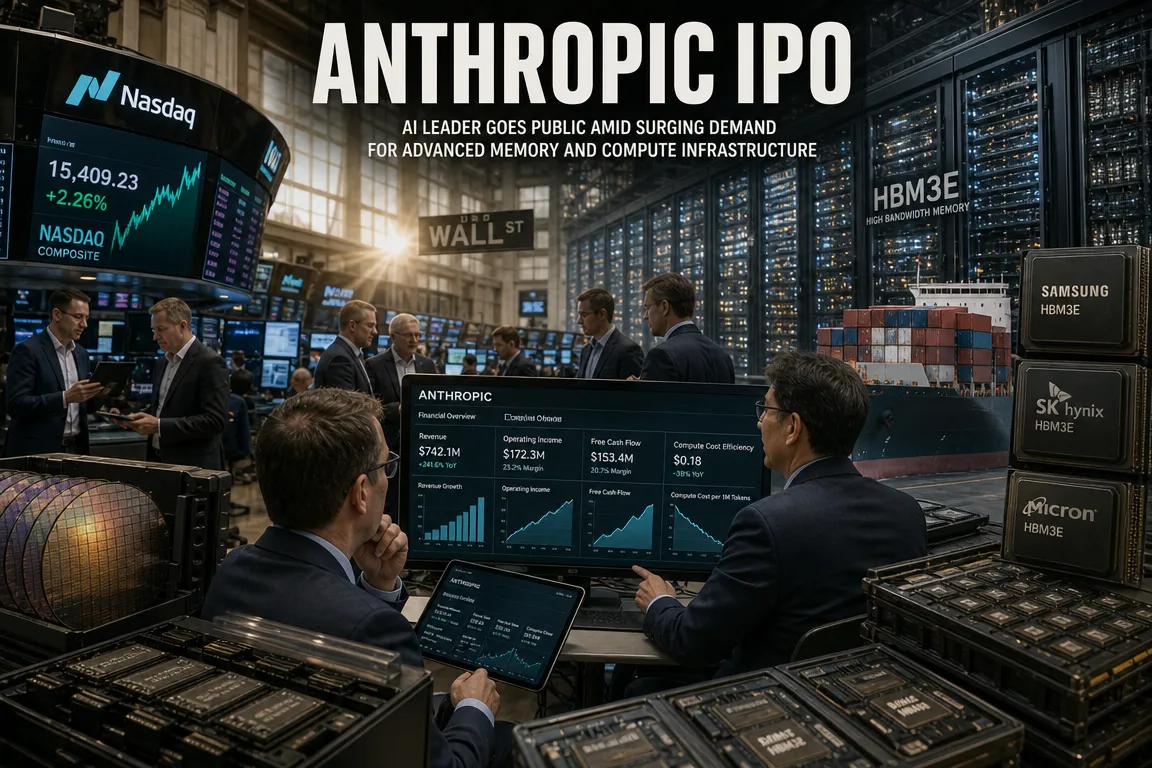
Anthropic IPO and AMD Export-Control Allegations: Key Variables for KOSPI and AI Semiconductor Investors
Capital flows matter more than the reception of an AI company’s IPO, while the implications for shipments and earnings matter more than allegations involving AMD.
This report examines how an Anthropic IPO and AMD export-control concerns could affect the Nasdaq and KOSPI, and why Samsung Electronics, SK hynix, and Samsung Electro-Mechanics require distinct assessments.
Verification status: The supplied material contains no trading date or verifiable filings or news sources. It therefore does not establish that Anthropic completed an IPO, raised a record amount, or experienced the stated post-listing share-price movements. The alleged short-seller report involving AMD and the reported market selloff also remain unverified.
The following analysis addresses potential market transmission channels if these claims are substantiated, rather than presenting them as confirmed news.
1. The Central Issue: Funding and Earnings Behind AI Growth Expectations
The concerns fall into two categories.
- Capital allocation: A major AI listing could redirect investment from existing technology stocks into newly issued shares.
- Business uncertainty: If AMD export-control concerns result in actual sales restrictions, earnings expectations for AI semiconductor and component suppliers could decline.
Together, these factors could prompt investors to reduce growth-stock exposure.
However, attributing Nasdaq and KOSPI weakness solely to two companies would be insufficient.
U.S. Treasury yields, the USD/KRW exchange rate, foreign investor activity in futures, and the semiconductor industry outlook also require assessment.
2. Anthropic IPO: Could a Major Listing Absorb Market Liquidity?
Initial distinction: Anthropic’s listing status, offering size, and share-price performance require confirmation from official sources.
The analysis below addresses the general market implications of a large AI IPO.
① A major IPO could compete with existing technology stocks for capital in the short term.
If institutional investors sell existing holdings to finance subscriptions, AI and semiconductor stocks within the same growth-investment category could face selling pressure.
Large, actively traded index constituents may become sources of cash even without deterioration in their investment outlook.
② IPO proceeds do not disappear entirely from the market.
Proceeds from newly issued shares go to the company, while proceeds from sales of existing shares go to selling shareholders.
Corporate investment and shareholder reinvestment can subsequently channel these funds back into the economy and financial markets.
The more accurate framework is therefore a short-term market imbalance caused by capital reallocation, rather than a permanent loss of liquidity.
③ A post-listing decline alone does not establish weakening enthusiasm for AI investment.
Performance can depend on the offering valuation, tradable share supply, and early profit-taking.
A decline from an intraday high also differs materially from a decline below the offering price.
Assessing AI demand requires examining paid enterprise adoption, revenue growth, service delivery costs, and cash burn alongside share prices.
3. AMD Export Controls: Firmware Evidence Does Not Establish a Violation
The supplied material alleges that AMD-related firmware was found at a Chinese server manufacturer subject to U.S. sanctions.
Firmware alone does not establish an unlawful semiconductor export or a direct compliance violation by AMD.
An assessment requires the following information.
- Products involved: Identify the chips and equipment, and determine whether they were subject to export controls at the relevant time.
- Transaction timing: Distinguish transactions completed before restrictions took effect from subsequent shipments.
- Distribution channels: Establish whether the manufacturer sold directly or whether distributors or secondary-market resellers were involved.
- Licenses and counterparties: Verify any required export authorization and restrictions applicable to the end user.
- Regulatory action: Distinguish allegations from investigations, enforcement measures, and shipment restrictions.
Short-seller reports can uncover material issues, but their authors may benefit financially from a share-price decline.
A company denial likewise does not independently resolve the allegations.
Investment assessments should give greater weight to verifiable transaction records, official disclosures, and regulatory announcements than to unsupported claims.
4. How AMD-Related Uncertainty Could Affect Korean Semiconductor Stocks
AMD-related uncertainty could affect Korean semiconductor stocks through interconnected AI server supply chains.
However, a decline in AMD shares does not automatically imply weaker earnings for Korean suppliers.
① Changes in AI accelerator shipment expectations
Actual sales restrictions could alter shipment volumes and customer order schedules.
This could affect demand for associated memory and substrates.
The impact would depend on customer revenue exposure, contract terms, and inventory levels.
② Risk aversion preceding earnings changes
Investors may sell AI semiconductor stocks broadly before verifying individual supply relationships.
In that case, short-term price declines may reflect higher risk premiums rather than confirmed earnings losses.
③ Orders shifting to other suppliers
Even if one accelerator supplier loses sales, total AI server investment could remain intact if customers switch to competing products.
The key distinction is whether aggregate AI investment declines or market share merely shifts among suppliers.
5. Samsung Electronics, SK hynix, and Samsung Electro-Mechanics: Different Assessment Criteria
Samsung Electronics: Evaluate the broader business, not memory alone.
Samsung Electronics operates across DRAM, NAND, HBM, foundry services, mobile devices, and other businesses.
Rather than extrapolating company-wide earnings from developments at one AI accelerator supplier, investors should assess memory prices, product mix, customer qualification, and supply expansion.
SK hynix: Focus on HBM demand durability and customer order changes.
HBM is a critical AI accelerator component, but supply relationships vary by product generation and customer.
Assessing AMD-related exposure requires confirmation of actual supply relationships and revenue dependence.
Major customers’ capital expenditure plans, HBM shipment volumes, selling prices, and profitability are also important.
Samsung Electro-Mechanics: Assess it as a substrate and electronic components supplier, not a memory producer.
Samsung Electro-Mechanics supplies package substrates, MLCCs, and other electronic components, with a business structure distinct from HBM manufacturers.
AI server exposure should be evaluated through demand for high-value-added package substrates, customer mix, utilization rates, and profitability.
Share-price weakness should not be attributed to a specific customer without verified direct revenue exposure to AMD.
6. KOSPI Outlook: Market Indicators to Examine Before Headlines
The KOSPI’s substantial weighting in major semiconductor companies makes it sensitive to changes in sector sentiment.
However, market declines do not necessarily share the same cause.
- Foreign investor flows in equities and futures: Distinguish semiconductor-focused selling from a broader reduction in exposure to Korean assets.
- USD/KRW exchange rate: Assess whether won depreciation coincides with foreign selling without assuming a direct causal relationship.
- U.S. Treasury yields: Rising yields can pressure valuations of technology companies with high expected future growth.
- Semiconductor earnings expectations: Determine whether share prices alone are falling or forward operating profit estimates are also being revised lower.
- Breadth of declines: Distinguish an AI-focused correction from broader, cross-sector risk aversion.
As volatility rises, changes in earnings expectations matter more than the size of the price decline alone.
A flow-driven correction with stable earnings and an earnings-driven correction accompanied by weaker orders require different analytical assumptions.
7. A Critical Distinction: AI Industry Growth and AI Equity Returns
First, rising AI usage does not ensure higher profits for every company.
AI service providers may face delayed profitability improvements despite user growth because of inference costs and price competition.
Semiconductor and memory suppliers may benefit from higher investment while facing pricing pressure from increased competition and capacity expansion.
Connecting AI trends to investment outcomes requires identifying which companies capture revenue, bear costs, and generate profits, rather than focusing solely on usage growth.
Second, HBM supply cannot necessarily be redirected immediately between customers.
Differences in product design, qualification requirements, and packaging specifications can prevent immediate reallocation.
Consequently, shipment delays for specific products can affect near-term earnings even if long-term demand remains intact.
Third, the use of IPO proceeds may matter more than the initial funding impact.
A major listing could pressure existing technology stocks in the short term, but proceeds invested in AI infrastructure could subsequently support demand for servers, semiconductors, and power equipment.
Investment in proprietary facilities and spending on external cloud services benefit different suppliers and produce different revenue timelines, making detailed use-of-proceeds disclosures important.
Three questions should guide the assessment.
Have the allegations been officially substantiated? Have actual orders and earnings changed? How much of the risk is already reflected in share prices?
Separating these questions helps distinguish headline risk from investment-relevant evidence.
< Summary >
- The supplied material does not verify Anthropic’s IPO, the AMD allegations, or the reported market movements.
- A major IPO can trigger short-term capital reallocation, but its proceeds do not permanently disappear from the market.
- Claims involving AMD-related firmware must be distinguished from confirmed export-control violations.
- The impact on Korean semiconductor stocks depends on actual customer relationships, product demand, and opportunities to redirect orders.
- The KOSPI outlook requires monitoring foreign investor flows, exchange rates, yields, and earnings revisions.
- Company-specific profitability and expectations embedded in share prices matter more for investment returns than AI industry growth alone.
[Related Articles…]
*Source: [ 내일은 투자왕 – 김단테 ]
– 앤트로픽 AMD가 문제 #코스피 #AMD #앤트로픽