● AI Market Meltdown or Buying Opportunity
AI Crash, Is It Really a Crisis or an Opportunity: Core Outlook from Nvidia, AI Capex, and Data Center Demand
The key point to watch in this AI stock correction is not simply that “tech stocks have fallen a lot.”
The core point is that Nvidia leadership, concerns about slowing AI investment, big tech data center expansion, semiconductor stock valuations, and the U.S. economic outlook are all interconnected at once.
In particular, the market is asking one question above all others right now.
“Are stocks falling because AI demand has actually rolled over, or is fear coming first while the data has not yet caught up?”
In this article, based on the perspective of Dan Ives, a leading Wall Street tech analyst, we will summarize in news style why the current AI crash may not be a simple correction, and why, on the other hand, it could become a rare entry opportunity for long-term investors.
1. Why the market is panicking: It looks more like a ‘confidence shock’ than just an AI correction
The recent plunge in AI-related stocks is difficult to explain by ordinary valuation pressure or changes in rate expectations alone.
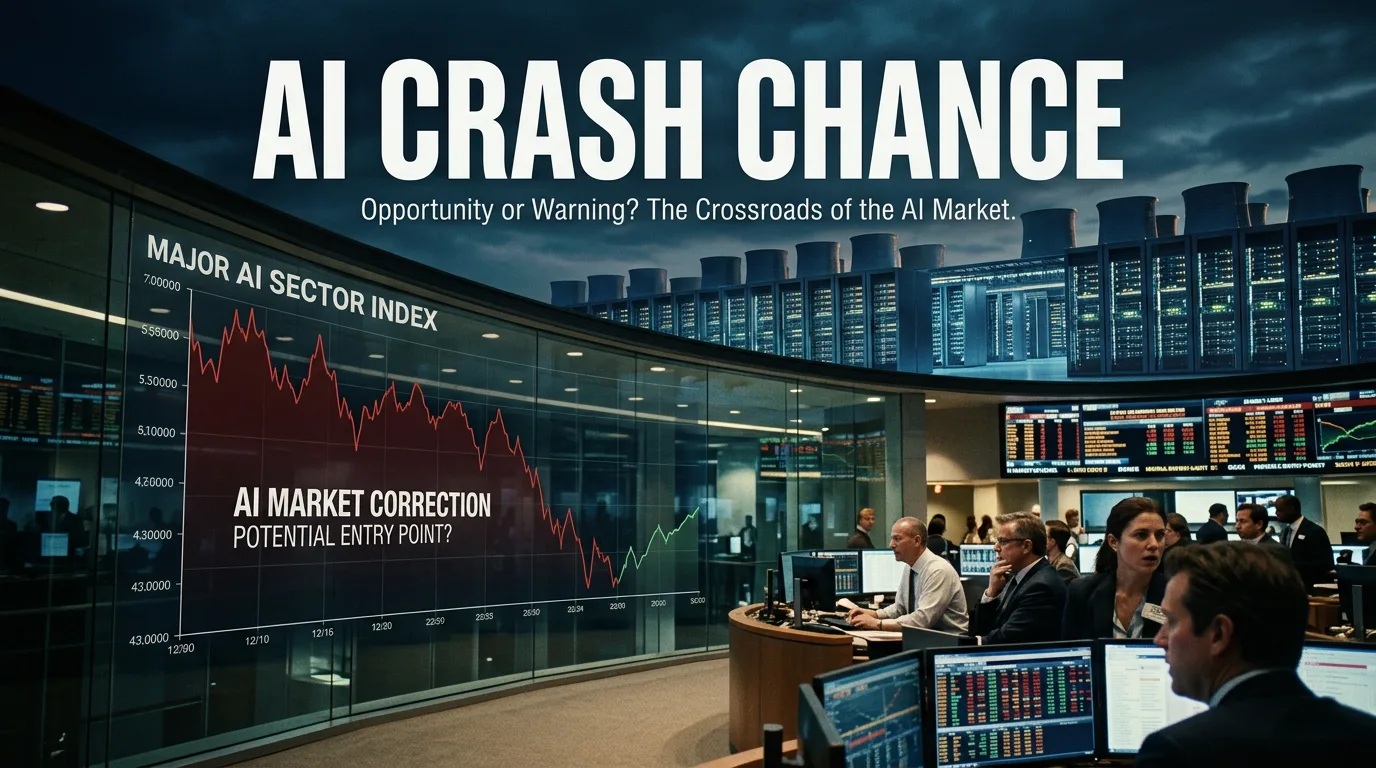
Beyond a correction in tech stocks overall, some AI infrastructure-related names have dropped nearly 40% to 50% from their highs.
Dan Ives says this decline should not be viewed as a “healthy correction.”
The reason is that the backdrop for the stock decline is not just profit-taking, but a mix of investor fear and doubts about the durability of AI spending.
In particular, as Nvidia leadership concerns and the possibility of slowing AI capex have emerged together, the market has begun asking whether the AI growth story itself is wobbling.
But the important point here is that there is still no clear confirmation in earnings data or demand indicators that AI demand is slowing.
2. Why Wall Street is not completely turning its back on Nvidia despite the shock
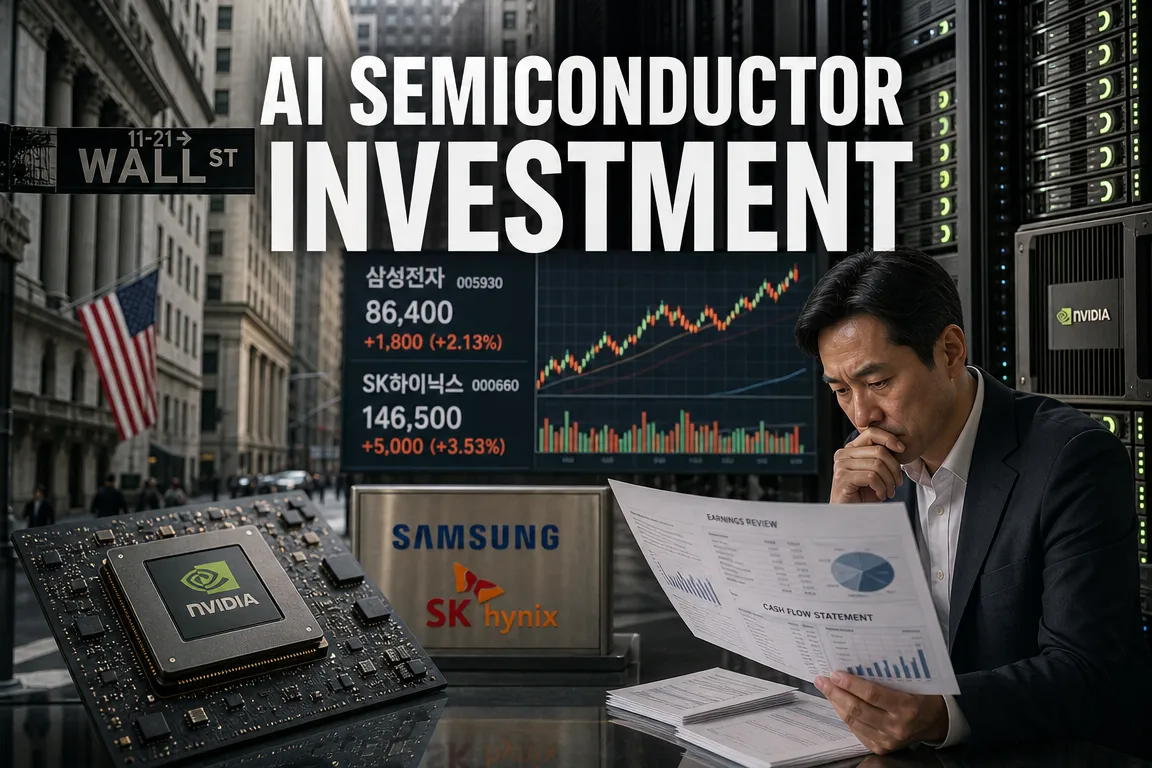
Nvidia sits at the center of the AI semiconductor market.
In the current global AI investment cycle, Nvidia GPUs have become essential infrastructure for data centers, cloud services, generative AI model training, and the expansion of enterprise AI services.
Dan Ives lowered his price target on Nvidia from $300 to $225, but he did not downgrade the investment rating itself.
That point matters.
Cutting the price target means the risk premium has increased.
But keeping the rating intact means he does not believe AI semiconductor demand or Nvidia’s competitive advantage has been undermined.
His logic is relatively clear.
Nvidia is at least two to three years ahead of competitors, and even compared with Chinese semiconductor firms, the technology gap remains wide.
He also emphasizes that supply shortages continue to such an extent that even when U.S. companies place orders for next-generation GPUs, actual delivery can take more than a year.
In other words, the stock is wobbling, but the core point is that demand for AI infrastructure has not yet declined.
3. Concerns about slowing AI capex: the numbers still do not justify a conclusion yet
The market is increasingly worried that big tech AI capex could slow starting next year.
AI capex refers to the massive capital spending by cloud companies, big tech firms, and neocloud companies on GPUs, servers, power, and data centers.
Dan Ives expects AI-related spending to reach $3 trillion to $4 trillion over the next few years.
He also projects that big tech capital spending alone next year could expand to roughly $1.3 trillion to $1.5 trillion.
The reason this number matters is simple.
If AI capex really rolls over, then not only Nvidia but also semiconductor stocks, cloud companies, power infrastructure firms, data center REITs, and network equipment makers would all need their valuations recalculated.
But in the earnings releases and conference calls we have seen so far, the signal that stands out more than “demand is slowing” is “supply is still tight.”
In particular, the fact that GPU rental prices at neocloud companies remain firm can be read as a real-time indicator that AI demand is still solid.
4. Data centers are the key bottleneck: demand is 160GW, and supply cannot keep up
In the AI investment cycle, the most important bottleneck is no longer GPUs alone.
Data center sites, power grids, cooling systems, permitting, and local community acceptance are all acting as bottlenecks.
Dan Ives explains that about 75% of data centers scheduled to go live in 2027 to 2028 have already received permits.
That means that even with political variables or local regulatory risks, a substantial portion of the supply plan is already moving forward.
There is also a forecast that 800 to 1,000 data centers could be built over the next year and a half.
That said, some projects may be delayed or canceled.
Even so, current U.S. AI data center demand is estimated at around 160GW, and even after accounting for existing capacity and new supply, demand is far larger than supply.
Put simply, the data center market is structurally closer to shortage than oversupply.
This point is also important for the U.S. economic outlook.
If AI data center investment continues, the ripple effects could extend to power, construction, semiconductors, cooling equipment, and network infrastructure industries.
5. Why companies are really spending on AI: revenue growth, not just cost reduction
It is hard to understand the current scale of AI investment if you think of it only as “automation for cost reduction.”
Companies are not pursuing tens of millions of dollars’ worth of AI projects just to cut labor costs.
The core point is productivity gains and faster revenue growth.
For example, consumer companies can use AI to refine customer segmentation, optimize marketing, and enhance cross-selling strategies.
Pharma and biotech companies can use AI to improve drug candidate discovery and clinical trial design efficiency.
Financial institutions can simultaneously pursue risk analysis, fraud detection, personalized product recommendations, and internal workflow automation.
As in the example Dan Ives cited, if a company runs a $15 million AI project and expects a $75 million economic impact in the first year, that is not just an experimental budget.
AI is now moving beyond the pilot-project phase into a stage where it is tied to actual corporate profitability.
6. The most important criterion for judging the current AI crash
The core issue in the market right now is not the stock decline itself.
The truly important thing is revisions to analysts’ AI capex forecasts that will come next.
If big tech and neocloud AI investment forecasts for 2027, 2028, and 2029 are sharply lowered, then the current stock decline can be explained to some extent.
For example, if the 2028 to 2029 AI capex outlook is cut by 20% to 30%, the market may interpret the current fall as already “priced in.”
But if that data does not materialize, the story changes.
If AI demand remains intact, GPU prices stay strong, and data center investment continues, yet stocks only plunge, then current prices may be in an excessively cheap zone.
In other words, this is not a time to buy or sell emotionally, but a time to check the investment outlook and company commentary that will be released going forward.
7. The most important point that other news often misses
The most important signal in this correction is how stocks react when “bad news” comes out.
Market bottoms are often formed not when good news appears, but when bad news no longer pushes prices lower.
If AI capex slowdown forecasts are announced and yet Nvidia, semiconductor stocks, and cloud infrastructure firms do not fall much further, that could be a bottoming signal.
On the other hand, if the bad news has not yet been fully priced in, volatility could pick up again after downward revisions are announced.
So the three metrics to focus on right now are these.
First, whether big tech AI investment plans are actually being reduced.
Second, whether GPU rental prices and order lead times are holding up.
Third, whether data center permitting and power supply schedules are being delayed.
If those three do not break down, then the AI investment cycle is likely not over, but in a mid-cycle correction.
8. Investment takeaway: the AI bullish case remains, but stock selection matters more now
Dan Ives sees the current period as year three of an 8- to 10-year AI buildout cycle.
In other words, AI infrastructure investment is still in the early to middle stage.
That said, one thing has changed compared with six months ago.
The market no longer values every AI-related company in the same way.
Companies like Nvidia, with a strong technology lead and high demand visibility, should be viewed differently from neocloud firms that depend on financing.
Among AI semiconductors, power infrastructure, data centers, cloud platforms, and enterprise AI software, the gap is likely to widen between companies that can generate real cash flow and those that cannot.
Ultimately, the AI investment strategy going forward should shift from “buy it because it’s AI” to “select companies where AI demand translates into earnings.”
9. Key upcoming dates and indicators to watch
The first thing to check is the next earnings reports from Nvidia and major semiconductor companies.
In particular, data center revenue growth, next-generation GPU order trends, and comments on supply bottlenecks will be important.
The second is AI capex guidance from Microsoft, Amazon, Google, and Meta.
If these companies maintain their data center investment plans, the AI infrastructure cycle will not easily weaken.
The third is GPU utilization rates and rental prices at neocloud companies.
If GPU rental prices keep rising, that means real demand is still strong despite market fear.
The fourth is the interest rate outlook.
Because AI investment has become so large, the Fed’s rate path and financing costs can have a direct impact on tech valuations.
The fifth is data center regulation and grid investment.
In the AI era, power and land are becoming as important as semiconductors.
10. Conclusion: The AI crash is not the end, but the beginning of validation
This AI crash is not just a tech stock correction.
It is closer to the first major test of whether the AI investment cycle can translate into real profits.
But based on the demand indicators confirmed so far, it is difficult to conclude that AI demand has suddenly rolled over.
Instead, GPU supply shortages, excess data center demand, and the expansion of enterprise AI projects are still showing a strong trend.
What matters is the size of the forecast cuts that will come next.
If AI capex does not fall as much as the market fears, the current stock decline could become a meaningful opportunity for long-term investors.
Conversely, if actual investment slowdown is confirmed in the numbers, then differentiation between strong and weak companies within AI-related stocks will become even more pronounced.
Right now is not the time to be swept up by fear, but the time to confirm the durability of the AI cycle with data.
< Summary >
The sharp drop in AI stocks is not just a correction, but the result of Nvidia leadership concerns, fears of slowing AI capex, and data center bottlenecks all being priced in at once.
But based on current earnings, GPU rental prices, and data center demand, there is still not enough evidence that AI investment demand has weakened.
Going forward, the key issue is how much big tech and neocloud AI investment forecasts for 2027 to 2029 are revised downward.
If stocks do not fall any further even after bad news, that zone could become the bottoming signal for AI semiconductor stocks.
From here on, rather than buying the whole AI theme, it will be more important to select areas where real demand and earnings are connected, such as Nvidia, data centers, power infrastructure, and enterprise AI.
[Related Articles…]
Nvidia AI semiconductor cycle outlook
Data center investment and AI infrastructure growth analysis
*Source: [ 월텍남 – 월스트리트 테크남 ]
– 월가 전설의 미친 인사이트 “AI 폭락장은 다시 없을 기회”