● Cybertruck 2026 Sold Out-2027 Waitlist Chaos-FSD Transfer Trap-Starlink EU Shakeup
What “Cybertruck Sold Out Through 2026” Actually Means
This note focuses on four core points:
1) A structural interpretation of why Cybertruck shifted from “sold out through 2026” to “2027 deliveries / reservation backlog.”
2) Why the March 31 FSD Transfer deadline can function as a “trap,” summarized through practical purchase scenarios.
3) A unified view of monetization across the Tesla ecosystem, combining Tesla Semi (assumed urban-focused refresh) and Starlink (European connectivity).
4) A separate section highlighting the most decision-critical points often under-covered elsewhere (pricing, delivery, and the intent behind option design).
1) Key News Briefing (Investor-Style Summary)
1-1. Cybertruck: 10-day limited pricing ends → price increase → delivery timing shifts to 2027
Tesla presented an aggressive, time-limited price for the Cybertruck Dual Motor AWD and raised pricing roughly 10 days later, quickly exiting a “value” positioning. Price increased by approximately $10,000, and the website delivery indication shifted from 2026 to 2027 or removed specific month guidance. This is less indicative of a simple stock-out and more consistent with a move toward supplier-driven pricing power.
More important than the price increase is the concurrent design in which lead time is used to move customers toward higher trims. This is a conventional margin-optimization approach and signals prioritization of higher-value customers amid macro uncertainty (rates volatility and consumption slowdown concerns).
1-2. Premium AWD: ~$10,000 upsell + 10–12 week delivery as a “time-to-money” mechanism
Tesla positions a higher-spec configuration at a clear $10,000 premium (air suspension, rear-seat display, upgraded interior/audio, etc.). The key lever is delivery speed. While standard AWD appears to be pushed to 2027, Premium AWD is indicated at 10–12 weeks, converting waiting time (opportunity cost) into price.
This approach is uncommon in a price-competitive EV market and is typically viable only when demand is sufficiently strong, implying Tesla has confidence in Cybertruck demand elasticity at the current price band.
1-3. March 31 FSD Transfer deadline: requires delivery completion, not order placement
The critical condition is that eligibility is tied to delivery completion by March 31, not merely placing an order.
Cybertruck timing conflicts with this requirement: standard AWD is effectively ineligible, and even a 10–12 week Premium AWD window is tight when factoring regional allocation, end-of-quarter delivery dynamics, and documentation delays. As a result, existing Tesla owners targeting Cybertruck may be structurally forced to forgo FSD Transfer.
Conversely, this design supports end-of-quarter delivery acceleration for models that can be delivered within the quarter (Model 3/Y/S/X), aligning with revenue recognition timing and quarterly delivery metrics.
1-4. Tesla Semi: potential signal of lineup segmentation toward urban/short-haul logistics
Recent sightings of Tesla Semi near Gigafactory Nevada included mention of altered upper-body structures (aerodynamic changes). This may indicate testing for an urban logistics or short-haul configuration rather than a pure long-haul focus.
This is relevant as an extension of Tesla’s strategy to expand into the commercial EV market using total cost of ownership (TCO) economics. Urban and European road constraints (turning radius, infrastructure) also suggest optionality for future European positioning.
1-5. SpaceX: IPO speculation (confidential draft filing, timing, valuation) + dual-class governance as a key variable
Bloomberg-sourced commentary suggests SpaceX may pursue a confidential draft submission to the SEC. Potential timing (e.g., June), valuation, and large-scale capital raise scenarios are discussed.
Two investor-relevant points:
- Confidential submissions can reduce near-term market volatility and improve issuer leverage; an IPO of this scale can also become a macro liquidity event.
- Dual-class voting structures would indicate acceptance of public capital while preserving long-horizon control, creating polarized investor reception.
1-6. Starlink x Deutsche Telekom: satellite-to-phone connectivity in Europe (2028) as a structural shift
Starlink and Deutsche Telekom are reported to be pursuing direct-to-smartphone satellite services, with references to 2028 commercialization, primarily addressing coverage gaps.
This matters because shifting connectivity from ground-network capex dependence toward space-based infrastructure can raise the minimum baseline of connectivity. This can alter service design across autonomy, logistics, and disaster response.
1-7. Tesla service center arson: potential for significant federal sentencing
A Tesla facility attack in Nevada is described as involving a guilty plea and potential maximum sentencing, with aggravating elements such as unregistered weapons, incendiary devices, and premeditation. The framing implies the incident may be treated as an attack on interstate commerce infrastructure.
Beyond an isolated event, this can contribute to an elevated risk premium if EV infrastructure and brand assets remain targets within broader social tensions.
2) Why the “2027 Reservation Backlog” Emerged (Structural View)
2-1. Price increases are more consistent with strong demand than weak demand
While the broader EV market has been characterized by price cuts, Cybertruck moved in the opposite direction by increasing prices while maintaining a queue. This suggests a shift from unit-volume maximization toward ASP and margin prioritization.
Sustained waiting demand in an inflationary/high-rate environment implies material brand and product differentiation.
2-2. Delivery delays function as price discrimination
The structure effectively asks customers: “Pay more, or wait longer.”
Tesla uses this to segment customers and push adoption toward higher-margin configurations. It is less a conventional “options strategy” and more a monetization mechanism enabled by constrained production capacity.
2-3. What “sold out through 2026” implies: capacity constraints and demand management
“Sold out through 2026” reflects both demand and potentially conservative production capacity assumptions (Gigafactory Texas). Whether Tesla expands capacity, maintains a high-margin mix, or both will shape the nature of the 2027 queue.
3) March 31 FSD Transfer “Trap” Checklist (Practical Scenarios)
3-1. “Delivery completion by the deadline” is the binding constraint
Many interpret promotions as “order by the deadline,” but the operative condition is delivery and handover completion.
3-2. Why Cybertruck buyers are structurally disadvantaged
Standard AWD delivery timing (2027 indication) makes eligibility infeasible. Premium AWD at 10–12 weeks remains challenging when accounting for end-of-quarter logistics, allocation variability, and administrative friction.
3-3. Where the benefit likely concentrates: deliverable inventory models
The policy is more likely to stimulate near-term deliveries of models with available inventory and shorter lead times (e.g., Model 3/Y) than to accelerate Cybertruck demand, aligning with quarterly delivery targets and cash flow timing.
4) Separate Section: The Most Material Points Often Under-Discussed
4-1. Tesla is selling delivery slots more than it is selling price
The apparent $10,000 upsell is fundamentally the pricing of scarce production capacity via “faster delivery rights.” This implies Cybertruck is being managed closer to a supply-controlled platform product than a conventional vehicle.
4-2. The FSD Transfer deadline may be a quarterly delivery lever, not a Cybertruck incentive
Cybertruck already carries long lead times and does not require incremental demand incentives. The incentive is more effective when applied to deliverable products, which clarifies the program as a delivery-volume and cash-flow management tool.
4-3. Semi (commercial), Starlink (connectivity), and FSD (software) share a common monetization model: recurring revenue and network effects
Cybertruck may appear to be a one-time hardware sale, but Tesla’s longer-term monetization pathway centers on software subscriptions and services (autonomy, insurance, connectivity). Starlink strengthens defensibility as its subscriber base scales, while Semi can anchor long-duration commercial relationships spanning vehicles, charging, service, and software. Collectively, this supports a platform-style valuation narrative beyond manufacturing.
5) Macro and Industry Variables to Monitor (Cross-Linking Economics and Sector Dynamics)
Key variables include:
- Rate-cut expectations, which can support demand for high-ticket durable goods.
- Inflation re-acceleration risk, affecting labor and input costs and pricing strategy.
- FX volatility, pressuring imported components and international pricing policy.
- Equity liquidity conditions, potentially impacted by a large-scale SpaceX IPO.
- Ongoing EV price competition, with Tesla’s upsell effectiveness potentially influencing broader industry benchmarks.
< Summary >
Cybertruck shifted from a short-term value posture to a margin-led position following the end of a ~10-day limited-price window and an ensuing price increase. Delivery guidance moving toward 2027 signals that 2026 production slots are effectively exhausted, while Tesla uses a ~$10,000 Premium trim to offer materially faster delivery and drive upsell conversion. The March 31 FSD Transfer condition requires delivery completion rather than order placement, which is likely to disadvantage Cybertruck buyers and function primarily as an end-of-quarter delivery lever for readily deliverable models. When combined with indications around Semi (urban logistics), Starlink (European satellite-to-phone connectivity), and SpaceX IPO speculation, the broader Musk ecosystem appears oriented toward recurring revenue models and network-effect-driven scaling.
[Related Articles…]
- https://NextGenInsight.net?s=Cybertruck
- https://NextGenInsight.net?s=Starlink
*Source: [ 오늘의 테슬라 뉴스 ]
– 사이버트럭 2026년 매진! 3월 31일 사이버트럭 FSD 이전의 함정과 2027년 예약 대란 이유는 ?
● Iran Shockwave, AI Arms Race, Tesla Repriced, Megapack Power Grab, BYD Capacity Crunch, SpaceX IPO Sucks Liquidity
Why the Iran Situation Makes an “AI Investment Pause” Unlikely: Tesla, SpaceX, BYD, and Energy Storage Systems (ESS) in One View
This note focuses on three primary drivers of capital allocation.
First, following the Iran situation, AI is increasingly framed not only as a productivity (earnings) theme but also as a defense and national security priority, altering the investment rationale.
Second, Tesla is entering a phase in which valuation is increasingly defined less as an EV manufacturer and more as a “real-world AI” platform (robotaxis and humanoid robotics).
Third, a sequence of headlines (Canada Megapack deployments, Vancouver auto show exclusion, and legal treatment of Tesla-related attacks) clarifies why ESS is becoming a central pillar of the next industrial cycle.
1) Key Headlines That Moved Markets This Week (News-Style Briefing)
1-1. Iran situation: “AI is no longer solely about productivity; security priorities reduce the likelihood of a slowdown”
Alongside internal political developments in Iran, prediction markets indicated an increase in perceived probability of renewed U.S.–Iran negotiations.
The core market implication is not the political event itself, but the higher likelihood that AI has expanded further into defense, intelligence, and operational domains.
AI investment was already supported by the productivity-to-earnings pathway; if security competition becomes a parallel driver, AI spending is less likely to be deprioritized even in a downturn.
This framing tends to reinforce the durability of AI infrastructure investment (data centers, power, semiconductors, and frontier models).
1-2. U.S. Department of Defense vs. Anthropic: the implications of a “supply-chain risk” designation
The reported narrative centers on Anthropic restricting access to military-related model use and the Department of Defense characterizing the issue as a supply-chain risk.
The strategic signal is that the U.S. may be moving to classify AI not merely as a commercial innovation area but as a strategic asset category.
Going forward, valuation sensitivity may extend beyond model performance to include eligibility for government contracts (or exclusion), and the enforceability of usage constraints (e.g., surveillance or autonomous strike-related restrictions).
2) Tesla: Why “FSD, Cybertruck, Semi, and Megapack” Are Converging into One Strategic Narrative
2-1. FSD hazard-avoidance video: autonomy shifts from “feature marketing” to “insurance economics”
Reported footage showing FSD avoiding a high-risk scenario reinforces the interpretation of autonomy as a safety layer rather than a convenience feature.
If similar evidence accumulates, pricing and adoption may increasingly be evaluated on risk reduction and liability mitigation rather than feature utility alone.
2-2. Cybertruck: discount removal, price increase, and 24/7 production hiring indicate demand exceeding supply
Discount removal for dual-motor Cybertruck variants and subsequent price increases were accompanied by messaging implying extended order backlogs.
The operational takeaway is demand outpacing supply, pushing production optimization and throughput to the top of execution priorities.
Hiring to support continuous production suggests a shift from demand stimulation to capacity and efficiency maximization.
2-3. FSD transfer policy change: customer trust risk vs. economics of an unsupervised autonomy era
A key controversy concerns a change in perceived eligibility—from “purchases before late March qualify” to a stricter interpretation tied to delivery completion by a specific cutoff date.
This introduces reputational and trust risk with customers.
From Tesla’s perspective, once unsupervised FSD approaches robotaxi-grade capability, “lifetime transferability” could materially impair future software cash flows.
This risk may be amplified during hardware transition cycles (e.g., next-generation compute), where policy design can effectively convert software into a permanent, transferable entitlement.
2-4. Tesla Semi: electrification targets freight economics, not consumer EV differentiation
Ongoing sightings and indications of factory expansion keep attention on an underweighted theme: freight is primarily a total cost of ownership (TCO) competition.
Even if passenger EV markets become more competitive, electric trucking can scale on operating cost advantages.
If autonomy is layered onto freight, two major cost components (fuel and labor) can be structurally pressured.
3) Canada: “You can dislike Tesla, but you cannot easily replace Megapack” as an indicator of the next infrastructure cycle
3-1. 1,200 MW-scale ESS and 300+ Megapack equivalent: the key issue is policy contradiction, not the headline number
Surface-level reporting focuses on large-scale ESS deployment in Canada with Tesla Megapack participation.
In parallel, the Vancouver auto show previously excluded Tesla citing security concerns, and Tesla indicated non-participation in the 2026 event.
The contradiction is that social and political sentiment may be hostile to Tesla while grid realities (renewables intermittency and peak demand management) still favor Tesla’s ESS solutions.
3-2. Implication: in power systems, physics tends to dominate politics
Power systems are ultimately governed by reliability, speed of deployment, and cost.
ESS underpins renewables penetration, EV charging expansion, and rising data-center load growth.
As a result, ESS demand may exhibit stronger structural characteristics and comparatively lower cyclicality than many discretionary sectors.
4) BYD: utilization rates are a more material risk signal than headline sales
4-1. Musk’s utilization heuristic: 80% is strong, 60% is survivable, below 50% is painful
The cited concern is that production outpacing sales can compress utilization rates, creating operational stress.
This matters because the EV industry is fundamentally a scale and fixed-cost absorption business.
Lower utilization typically transmits into higher unit costs, escalated discounting, margin compression, inventory build, and weaker cash flow.
4-2. Scenario: even with government support, falling utilization can drive adverse outcomes
Subsidies and financing support can provide short-term relief, but persistent global demand softness combined with accumulated excess capacity can extend price competition.
In that regime, the differentiator shifts from “who grows fastest” to “who sustains cash flow and balance-sheet resilience.”
5) SpaceX IPO: market implications of a potential $1.75 trillion-scale listing
5-1. The significance of a one-word confirmation: a mega-IPO comparable to or larger than Tesla
The narrative implies effective confirmation of discussion around a ~$1.75 trillion IPO valuation.
If the process follows a conventional timeline (filing followed by listing within months), markets may increasingly anchor on a mid-year window.
5-2. Key market risk: overhang and liquidity absorption
Mega-IPOs can concentrate attention and absorb liquidity.
This can create near-term supply-and-demand pressure on large-cap growth equities, including Tesla.
Offsetting that risk, Tesla-specific catalysts (robotaxi milestones, FSD progress, and Optimus updates) may support a “real-world AI” narrative that partially insulates relative valuation.
6) Core point under-discussed by mainstream news and commentary: a durable shift in the AI investment rationale triggered by the Iran situation
6-1. Prior framework: AI investment = productivity gains = payback through earnings and growth
Historically, AI infrastructure spending was justified primarily by an economic payback thesis tied to productivity and monetization.
6-2. Emerging framework: AI investment = security and military competition = high penalty for delay
The key shift is that investment becomes harder to reduce even when near-term economic payback is slower.
When national-level competition becomes the driver, temporarily weaker efficiency can be tolerated because stopping investment introduces strategic risk.
6-3. Implication: scarcity value increases for “real-world AI”
Digital AI competition is broadening as major technology firms converge on similar capabilities.
Real-world AI (robotics and autonomy) requires integrated strength across data, hardware, manufacturing, and operations.
This increases the option value of platforms with end-to-end execution capacity; when combined with ESS, power, data centers, and AI can be evaluated as a single linked chain.
7) Investor checklist for interpreting these developments through a global macro lens
Assess whether AI infrastructure spending is becoming structurally less sensitive to the business cycle.
Track whether data-center buildout and grid bottlenecks (ESS, transmission, transformers) are moving in tandem.
In EVs, prioritize utilization, inventory, and pricing dynamics over unit sales growth.
Monitor whether mega-IPOs absorb liquidity and increase volatility in rate-sensitive growth equities.
Evaluate how robotaxi and unsupervised autonomy reshape regulation, insurance markets, and liability frameworks.
[Related Articles…]
- Expanded AI Infrastructure Investment and the Data-Center Power Constraint: Identifying Beneficiaries
- Tesla Robotaxi and the Roadmap to Unsupervised FSD: A Valuation Regime Shift
< Summary >
The Iran situation extends AI from a productivity theme to a security theme, strengthening the durability of the investment rationale.
Tesla may be increasingly evaluated as a real-world AI platform centered on FSD, robotaxis, and Optimus, while the Canadian case illustrates that grid requirements can sustain Megapack (ESS) demand regardless of political sentiment.
For BYD, utilization deterioration is a more critical risk indicator than sales headlines, and a potential SpaceX mega-IPO could amplify market technicals by absorbing liquidity and increasing near-term volatility.
*Source: [ 허니잼의 테슬라와 일론 ]
– [테슬라] 이번 이란 사태로 더 이상 멈출 수 없게 된 AI, AI의 끝은 현실세계 AI! 일론, 스X 상장규모 공식 확인! 캐나다의 모순이 보여주는 에너지 저장장치의 파급력
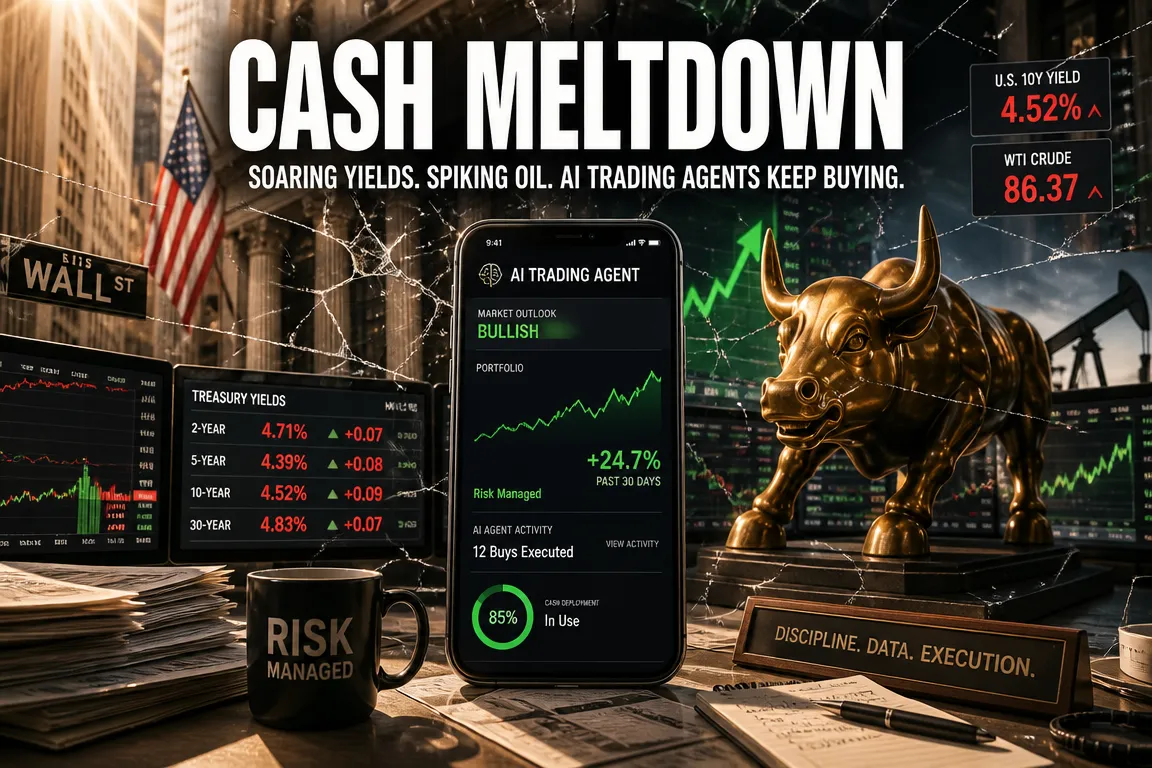
● War Fears, Inflation Panic, Treasury Yields Spike
Why U.S. Treasury Yields Rise Even as War Escalates: When Markets Fear Inflation More Than Geopolitics
This report consolidates five key points:
1) The primary drivers behind the rise in U.S. Treasury yields (10Y/2Y) despite escalation risk
2) How higher oil, gold, and natural gas prices alter the inflation outlook and the Fed’s rate-cut path
3) Why markets tend to destabilize as conflict shifts from missile strikes to drone-driven attrition
4) Risk indicators to monitor when equities, bonds, and commodities diverge
5) Core, under-discussed decision points relevant for investment positioning
1) One-line market summary (briefing format)
U.S. equities: Opened after the Iran developments; closed higher excluding the Dow after intraday volatility
Commodities: Oil continued rising; gold remained firm; natural gas surged
Rates: Despite higher geopolitical risk, Treasuries sold off (i.e., yields rose)
Key read-through: Inflation re-acceleration risk is currently outweighing safe-haven demand
2) Why yields rose despite escalation: markets priced inflation risk ahead of “safety”
Under typical escalation dynamics, capital rotates into Treasuries, driving prices up and yields down. The session moved in the opposite direction.
Market mechanism:
1) Prolonged conflict increases the probability that energy prices become persistent rather than transient
- If oil and gas move from a temporary spike to sustained cost pressure, the disinflation trend can stall.
2) If inflation risks re-emerge, the Fed’s pivot becomes less likely
- Expected rate-cut timing can be pushed back and/or the expected number of cuts reduced, lifting both short- and long-end yields.
3) The inflation risk premium exceeded the geopolitical risk premium
- Safe-haven flows may support Treasury prices, but if inflation repricing is stronger, net yields can still rise.
Interpretation: Markets appear to treat inflation persistence as a more durable macro constraint than geopolitical headlines.
3) Frontline variables: the key is not “Hormuz” rhetoric, but infrastructure and interception attrition
The central market focus is the widening scope of exposure.
Operational checkpoints:
- LNG facility disruption in Qatar linked to attack-related shutdown concerns
- Reported drone-strike damage in Kuwait
- Partial damage in Saudi oil infrastructure during interception efforts
- Civilian casualties and airport/civil facility damage referenced in the UAE
Market focus: less on blockade signaling alone, more on whether cumulative damage to energy and logistics infrastructure translates into measurable supply disruption.
4) Why the Dimon comment resonated: oil can re-activate the inflation regime
Jamie Dimon’s warning that inflation could be higher than expected aligned with prevailing market sensitivity.
Transmission logic:
- If oil spikes are short-lived → inflation impact more containable (potentially absorbed via base effects)
- If oil remains elevated → broader cost pass-through (transport, power, inputs) → higher probability of spillover into core inflation
In this setup, Treasury yields can respond faster to inflation repricing than to war headlines. The 10-year yield is particularly sensitive because it embeds expectations for growth, inflation, and policy.
5) Why the “missiles to drones” shift is structurally riskier for markets
A key risk is a transition from high-intensity, inventory-constrained missile exchanges to a drone-centered, longer-duration attrition model.
Why drone-centric conflict is more market-negative:1) Higher likelihood of persistence (cheaper, scalable production and deployment)
2) Air defense is constrained by finite interceptor inventories
3) Over time, the probability of occasional penetrations rises
4) Cumulative civilian infrastructure damage can convert supply disruptions into a recurring baseline
Market implication: risk can rotate away from equities toward cash, USD, and short-duration instruments. If energy-driven inflation persists simultaneously, Treasury yields may remain elevated or re-accelerate despite geopolitical risk.
6) Three decision variables likely to drive near-term pricing (checklist)
Variable A: speed of de-escalation (e.g., 4–5 weeks vs. prolonged duration)
- Faster resolution → oil stabilizes → inflation concern moderates → scope for lower yields
- Prolonged attrition → oil persistence → inflation risk → upward pressure on yields
Variable B: measurable disruption to energy/logistics infrastructure
- Markets will prioritize data such as production outages, shipment delays, and insurance premia over rhetoric.
Variable C: sustainability of interception capacity (inventory, support, coalition involvement)
- If interception remains robust, risk can be contained; visible inventory strain can rapidly change pricing.
7) Four under-covered core points for investment decisions
1) The yield increase reflects inflation prioritization, not indifference to war risk
2) A Hormuz disruption is not binary; even partial frictions (insurance, rerouting, delays) can structurally lift prices
3) Drone-driven conflict functions as a volatility engine by increasing the frequency of disruptive incidents over time
4) Once rate-cut expectations reset lower, equity rebounds can become more fragile, particularly in duration-sensitive sectors
8) Investment framing: the critical interpretation pathway
A single “war vs. peace” lens is insufficient. Current pricing operates as a two-step chain:
Step 1: conflict headlines → commodity response (oil/gas)
Step 2: commodities → inflation expectations → U.S. yields → equity valuation repricing
Equities can remain resilient amid escalation, but if yields continue to price inflation persistence, equity volatility may materialize with a lag.
- U.S. Treasury yields rose despite escalation because inflation repricing outweighed safe-haven demand.
- If oil and natural gas remain elevated, expected Fed rate cuts are likely to be pushed out or reduced, supporting higher yields.
- A shift toward drone-based attrition increases the relevance of interceptor constraints and cumulative infrastructure damage.
- Markets are currently pricing energy-driven inflation persistence ahead of geopolitical risk headlines.
[Related Articles…]
- U.S. Treasury Yield Volatility: Primary Drivers and Investment Scenarios (NextGenInsight.net?s=Treasury%20yields)
- Inflation Re-acceleration Signals: How Energy Prices Reshape the Fed’s Options (NextGenInsight.net?s=inflation)
*Source: [ Maeil Business Newspaper ]
– [홍장원의 불앤베어] 전쟁 확산에도 국채금리 상승. 시장은 이제 물가를 두려워한다