● Jobs Crash, Oil Spike, Stagflation Panic
Trump’s call for Iran’s “complete surrender,” a U.S. employment shock, and a sharp rise in crude oil prices have converged at once. Markets are beginning to price in not a routine correction, but growing stagflation risk. The key implications for the Fed, equities, Bitcoin, commodities, and Korean stocks are summarized below in a news-style format.
There are three core points in this development.
First, a much weaker-than-expected U.S. nonfarm payroll report has revived recession concerns.
Second, geopolitical risk tied to Iran, combined with Trump’s hawkish remarks, is pushing oil prices higher again.
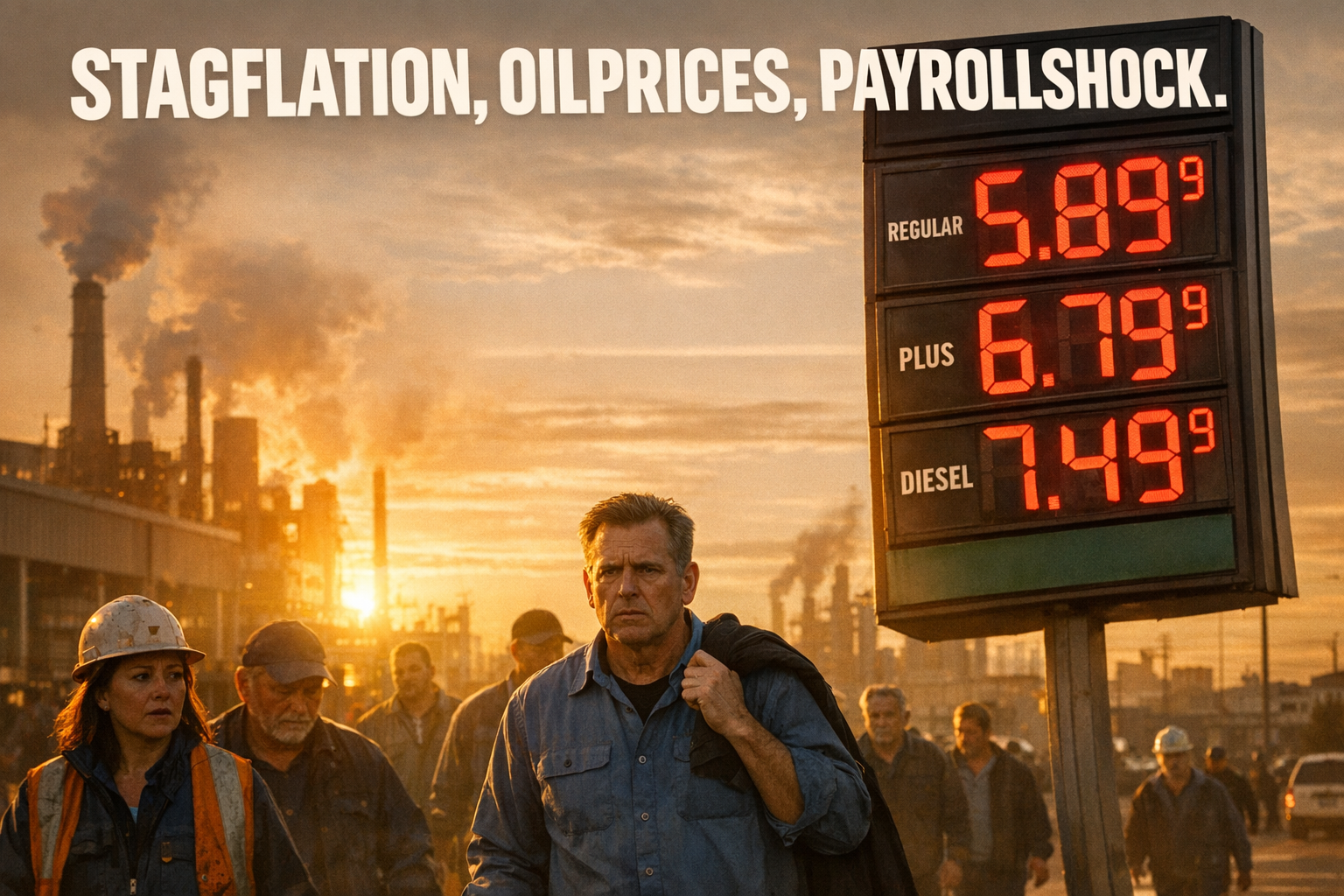
Third, the risk of stagflation is rising as slower growth and renewed inflation pressures appear simultaneously, complicating the Fed’s rate path.
In other words, this is not simply a case of “weak payrolls.”
The critical issue is that labor market deterioration, rising oil prices, renewed inflation pressure, wavering rate-cut expectations, and higher volatility in risk assets are becoming linked.
1. Key market-moving developments at a glance
U.S. employment data shock
February nonfarm payrolls reportedly fell by 92,000, well below market expectations.
Given consensus estimates of roughly +55,000 to +58,000, the result was effectively a shock rather than a modest miss.
With the prior reading also revised lower, concerns are rising that cracks in the previously resilient U.S. labor market may be broadening.
Decline in labor force participation
A more concerning element than the headline unemployment rate was the drop in the labor force participation rate.
This may indicate that some individuals are not only losing jobs, but also exiting the labor market altogether.
Rise in unemployment rate
The unemployment rate increased to 4.4%.
While not an extreme move in isolation, the deterioration appears more meaningful when viewed alongside the decline in participation.
Trump’s hawkish remarks on Iran
Trump stated that Iran should make a “complete surrender.”
The market interpreted this not as routine rhetoric, but as a signal that Middle East tensions could become more prolonged, directly affecting energy markets.
Renewed rise in crude oil prices
Concerns are building that WTI could test USD 90 per barrel.
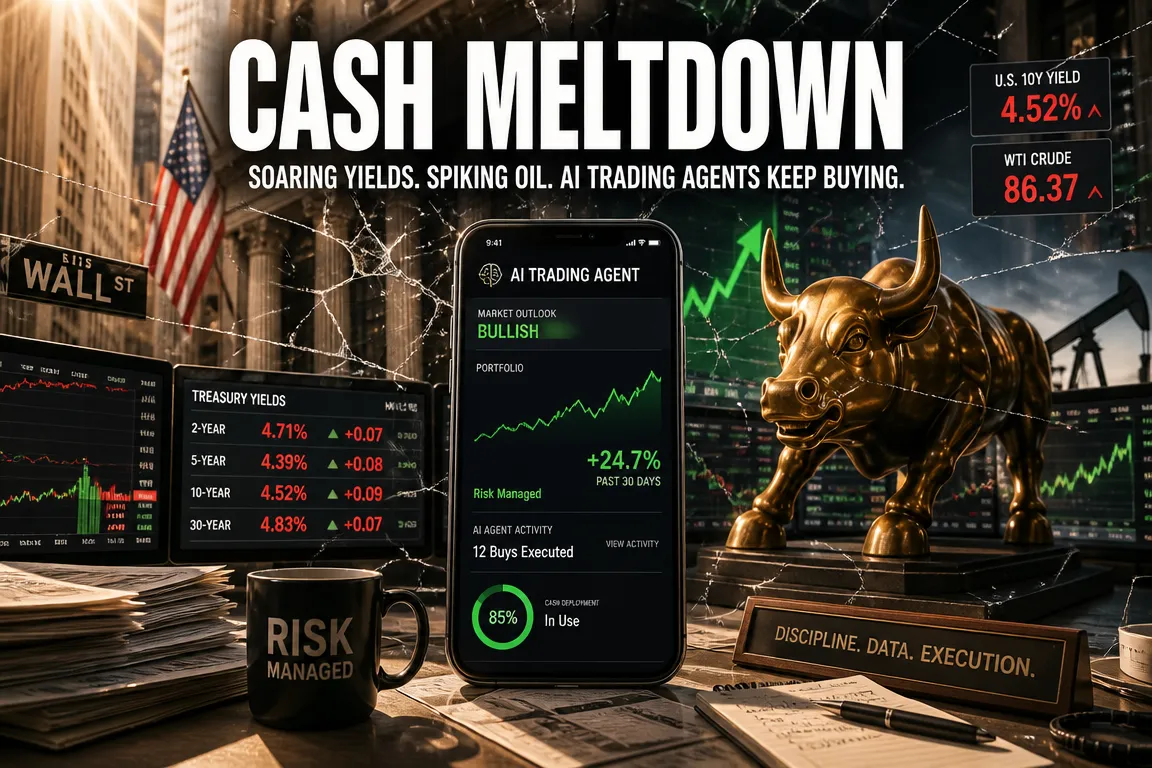
Higher oil prices feed directly into inflation risk, prompting markets to return to a more defensive inflation-sensitive stance.
2. Why this employment report is being viewed as especially risky
Weak U.S. nonfarm payrolls are not unprecedented.
However, this release is being interpreted more negatively for reasons beyond the size of the decline.
2-1. Payroll contraction and lower participation occurred simultaneously
In the early stages of slowing growth, employment typically weakens through slower hiring.
This time, labor market participation itself also declined.
That suggests a possible increase not only in those unable to find work, but also in those giving up the search altogether.
Under this structure, the unemployment rate may appear less severe than the underlying reality.
This is because the unemployment rate is calculated based only on individuals still considered part of the labor force.
As more people exit the labor market, measured unemployment may understate actual labor market deterioration.
2-2. Confidence in prior payroll strength may weaken
The downward revision to the previous figure carries significance.
It raises doubts about the earlier narrative that U.S. employment remained solid.
Markets are increasingly asking:
“If labor was the final pillar of resilience, is that pillar now weakening as well?”
2-3. Consumer spending may slow
The U.S. economy is heavily consumption-driven.
If labor conditions soften, wages and consumer sentiment are likely to be affected with a lag.
As job insecurity rises, households typically cut back first on discretionary big-ticket spending such as autos, travel, housing, and appliances.
This could lead to weaker corporate earnings, valuation compression in equities, and stronger demand for defensive assets.
3. Why the unemployment rate alone is insufficient
This is a central point emphasized in the original discussion.
The unemployment rate is a convenient metric, but it does not fully capture underlying conditions.
In a weakening economy, some individuals become unemployed.
If conditions worsen further, some stop looking for work and leave the labor force.
In that case, the actual number of people unable to work may rise sharply even if the unemployment rate increases only modestly.
For this reason, the following three indicators must be assessed together:
Nonfarm payroll growth
Unemployment rate
Labor force participation rate
Taken together, the latest data look weaker than the headline suggests.
In short, markets are beginning to price in the possibility that real economic conditions are weaker than the headline numbers imply.
4. Why the rise in crude oil is especially damaging
The issue is not just weaker growth.
Normally, if growth weakens, inflation should also ease.
That would create room for the Fed to cut rates.
However, if Middle East risk drives oil prices higher, that framework breaks down.
4-1. Oil is one of the fastest channels into inflation
Energy prices quickly feed into transportation, manufacturing costs, logistics, airfares, and food prices.
In other words, higher oil prices are not merely a gasoline issue.
They affect the broader cost structure of the economy.
4-2. If inflation rises again, rate-cut expectations retreat
The market’s recent baseline scenario had been relatively simple.
If growth slows and inflation moderates, the Fed can eventually lower rates.
Now, growth is weakening while oil may reintroduce inflation pressure.
Under those conditions, the Fed will have less flexibility.
4-3. A double burden on corporate earnings
Slower growth reduces revenue.
Higher oil prices increase costs.
For companies, this can become a worst-case combination of declining sales and rising input costs.
Airlines, transportation, chemicals, consumer goods, and smaller manufacturers may be particularly exposed.
5. The scenario markets are increasingly concerned about: stagflation
Stagflation refers to a period in which growth slows or contracts while inflation remains elevated.
Investors view this scenario negatively because it can pressure multiple asset classes simultaneously.
5-1. Central bank policy becomes harder
If growth weakens, rates should be lowered.
But if inflation remains high, rates should not be lowered.
Policy options become constrained.
This is one of the most difficult environments for the Fed.
5-2. Equity valuation pressure rises
Slower growth leads to lower earnings expectations.
Inflation pressure keeps rate burdens elevated for longer.
When these forces combine, growth stocks, technology shares, and small caps can come under pressure.
The Nasdaq and broader U.S. equity market are particularly sensitive to changes in rate expectations.
5-3. The bond market is not straightforward either
If recession risk were the only issue, bond yields would likely fall and fixed income could outperform.
However, if inflation reaccelerates, long-end yields may not stabilize easily.
As a result, this is a more complex environment in which bonds cannot automatically be treated as a clean safe haven.
6. Why this is a worst-case combination for the Fed and Powell
The Fed is tasked with both price stability and maximum employment.
At present, those two objectives may be moving in opposite directions.
Employment conditions are deteriorating.
At the same time, higher oil prices could reignite inflation.
Cutting rates in this environment could risk reaccelerating inflation.
Maintaining elevated rates for longer could intensify recession concerns.
As a result, Powell’s communication may become more cautious and potentially more hawkish.
For markets, this makes it harder to rely solely on rate-cut expectations.
7. Implications by asset class
7-1. U.S. equity market
Negative factors
Slower employment growth increases concern over corporate earnings.
Higher oil prices simultaneously raise cost burdens and inflation risk.
If rate cuts are delayed, the premium on growth stocks may compress.
Relatively defensive sectors
Energy
Defense
Select consumer staples
Dividend-oriented defensive equities
Relatively vulnerable sectors
Airlines
Transportation
Consumer discretionary
High-valuation technology
Cyclically sensitive small caps
7-2. Crude oil and commodities
If Middle East tensions lead to actual supply disruptions, oil prices could remain elevated for longer than expected.
Higher oil prices could also affect natural gas, refining margins, shipping rates, and certain metals.
Commodity markets may once again begin pricing in a geopolitical risk premium.
7-3. Bitcoin and digital assets
Bitcoin often performs well in liquidity-driven environments.
However, when macro uncertainty increases, it can trade like a risk asset in the short term.
If rate-cut expectations weaken, volatility may rise.
That said, longer-term themes such as confidence in fiat currencies, geopolitical risk, and institutional inflows may remain relevant, so short-term and medium-term views should be separated.
7-4. Korean equities and domestic investors
Korean equities are influenced simultaneously by the won, exports, semiconductors, foreign flows, and oil prices.
If U.S. growth concerns intensify, export expectations may weaken.
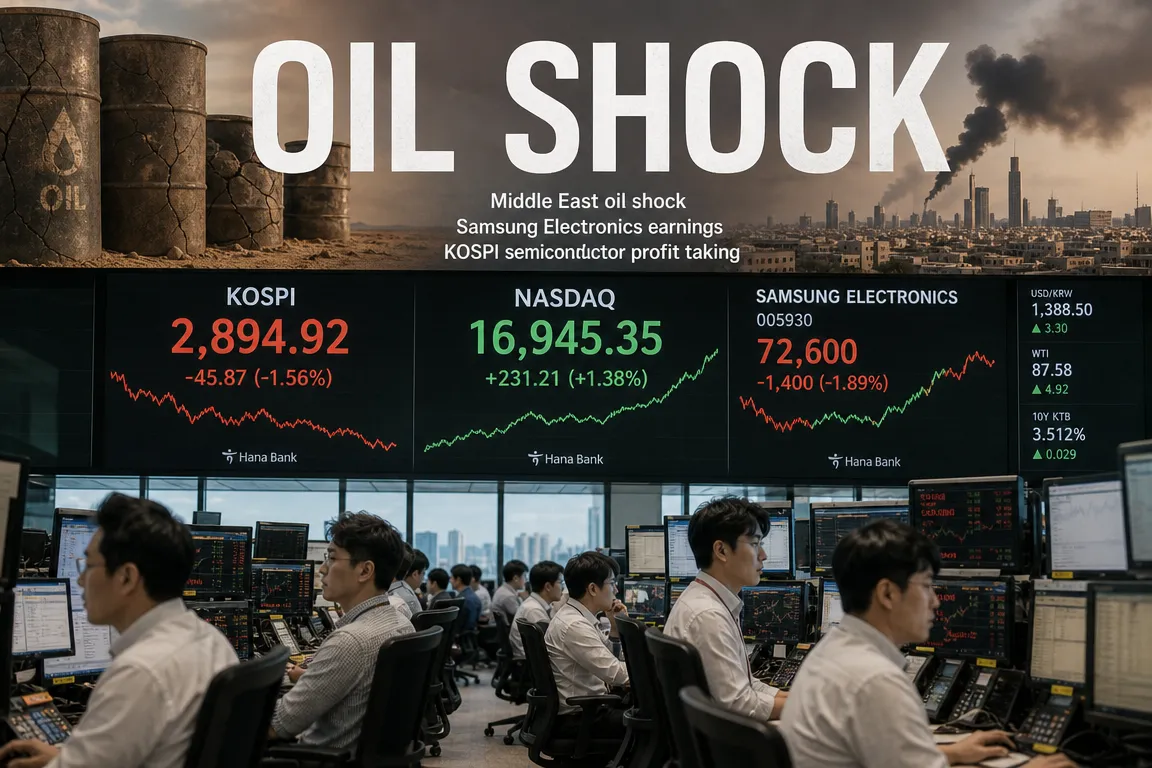
At the same time, rising oil prices are a burden for an economy with high energy import dependence.
Both the KOSPI and KOSDAQ are likely to become more sensitive to foreign investor flows.
Domestic investors should monitor the following in particular:
Whether the U.S. dollar continues to strengthen
WTI price direction
U.S. 10-year Treasury yield
Fed communication
Sustainability of the semiconductor cycle
8. Political and economic significance of Trump’s remarks
Trump’s statement calling for Iran’s “complete surrender” sends several signals to markets.
8-1. Middle East uncertainty may not be a short-lived event
Such rhetoric suggests greater emphasis on pressure than negotiation.
That may prevent the geopolitical risk premium from fading quickly.
8-2. Oil price stability may become harder to achieve
Markets price in the risk of supply disruption before actual military conflict occurs.
The Strait of Hormuz, exports from oil-producing nations, and maritime transport risk are all highly relevant to oil pricing.
8-3. It may also connect to the U.S. election cycle
Trump’s hard-line foreign policy messaging could bring external policy issues back into the election narrative.
Markets may read this not merely as rhetoric, but as an indication of future U.S. foreign policy direction.
9. The most important point often missed elsewhere
The key issue is not simply that employment weakened.
The core issue is that the market’s prior optimistic baseline is being challenged on multiple fronts simultaneously.
That baseline had been roughly as follows:
The U.S. economy remains more resilient than expected.
Labor conditions are still relatively solid.
Inflation is gradually easing.
The Fed will eventually cut rates.
As a result, risk assets can move higher again.
This latest combination of developments directly challenges that framework.
Employment has weakened.
Oil prices have risen.
The inflation disinflation path may be disrupted.
The Fed’s policy position has become more difficult.
In other words, the market is shifting from a “good slowdown” narrative toward the risk of a “bad slowdown.”
This distinction is significant.
A good slowdown supports rate-cut expectations, while a bad slowdown raises concern about both recession and inflation at the same time.
10. Key signals investors should monitor now
10-1. What to watch in the next labor market report
Whether payroll weakness persists
Whether labor force participation rebounds
Average hourly earnings growth
Initial jobless claims
It remains important to determine whether this was a one-off shock or the start of a trend change.
10-2. Key inflation-related variables
Whether CPI and PCE reaccelerate
Persistence of higher energy prices
Whether core inflation remains on a stabilizing path
The Fed’s interpretation will depend on whether the oil spike is temporary or becomes a medium-term uptrend.
10-3. Key financial market checkpoints
Direction of U.S. Treasury yields
Movement in the U.S. dollar index
Magnitude of the Nasdaq correction
Relative strength of energy and defense stocks
Bitcoin’s sensitivity as a risk asset
11. Three possible scenarios going forward
Scenario A. Most constructive case
The employment shock proves temporary, and the rise in oil prices remains limited.
In that case, markets could return to a scenario of gradual Fed rate cuts.
Under this outcome, both U.S. and Korean equity markets could stabilize relatively quickly.
Scenario B. Most likely case
Employment slows gradually, while oil prices remain elevated but range-bound.
The Fed delays cuts further or proceeds very cautiously.
In this case, markets may trade in a volatile range rather than establish a clear directional trend.
Scenario C. Most adverse case
Employment deterioration becomes persistent, and Middle East tensions push oil prices higher still.
Inflation rises again, constraining the Fed, while corporate earnings weaken.
Under this scenario, stagflation concerns could intensify materially, leading to a broader global risk-off move.
12. This issue in one sentence
The market could have been destabilized by the U.S. employment shock alone, but with Trump’s hard-line remarks on Iran and the surge in crude oil added to the mix, investors are now entering one of the most difficult phases, where recession risk and inflation risk must be assessed simultaneously.
13. Core conclusion for a blog-style summary
The essence of this market shock is not simply weak data.
The key issue is that U.S. employment, previously seen as the economy’s main support, is weakening, Middle East risk is lifting energy prices, and the Fed’s policy flexibility is narrowing.
As a result, investors should focus less on short-term equity rebounds and more on broader structural shifts in the U.S. and global economy.
Stagflation is not yet a confirmed base case, but it has become significant because markets are starting to price in that risk more explicitly.
Ultimately, market direction will depend on three factors.
Whether U.S. labor conditions weaken further, whether oil prices continue to rise, and what message the Fed delivers as it balances inflation and growth.
If these three variables align, the outlook for global equities and investment strategy could shift materially.
< Summary >
U.S. nonfarm payrolls deteriorated significantly relative to expectations, reviving recession concerns.
With labor force participation also declining, actual labor market conditions may be weaker than implied by the unemployment rate alone.
At the same time, Trump’s hawkish remarks on Iran have increased Middle East risk and lifted crude oil prices, raising the likelihood of renewed inflation pressure.
This combination makes Fed rate cuts more difficult and increases stagflation concerns in financial markets.
Going forward, labor data, crude oil prices, and Fed communication are likely to be the key variables shaping the global economy, U.S. equities, and Korean equities.
[Related Articles…]
How stagflation concerns affect U.S. and Korean equity markets
Key market indicators investors should watch after a surge in crude oil prices
*Source: [ Maeil Business Newspaper ]
– [속보] 트럼프 “이란 완전한 항복해야”. 시장에 커진 스태그 공포 l 홍장원의 불앤베어