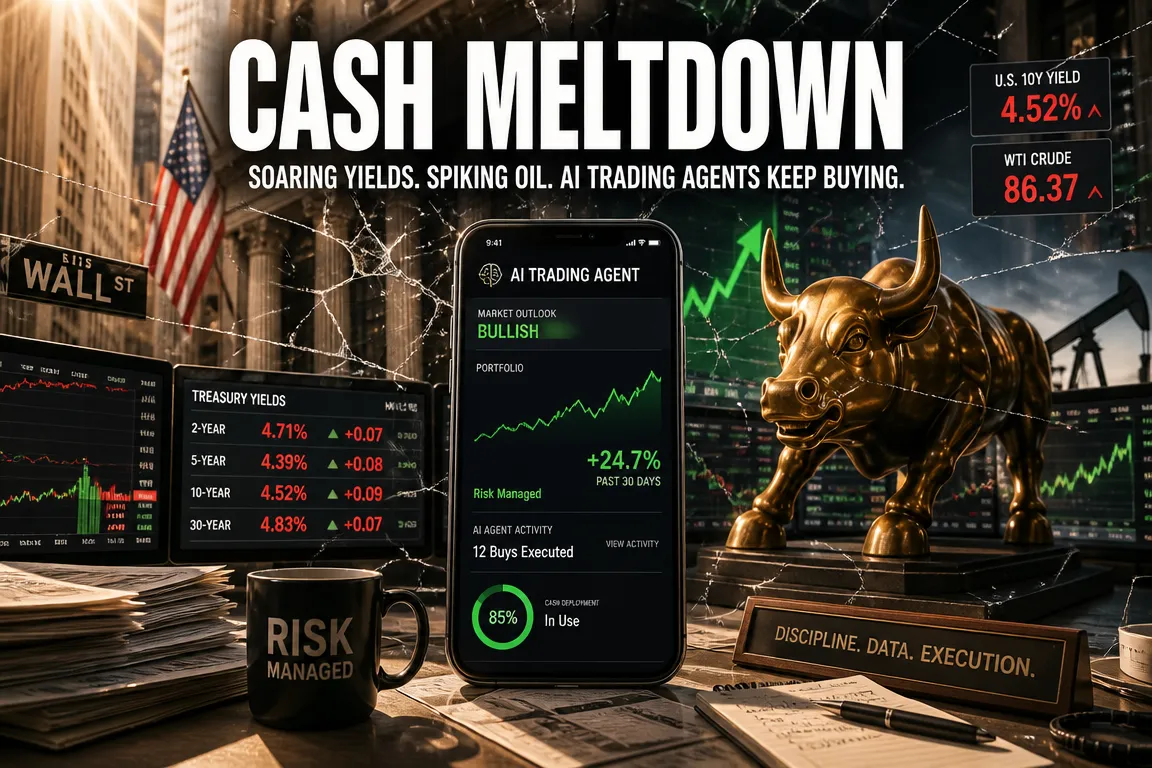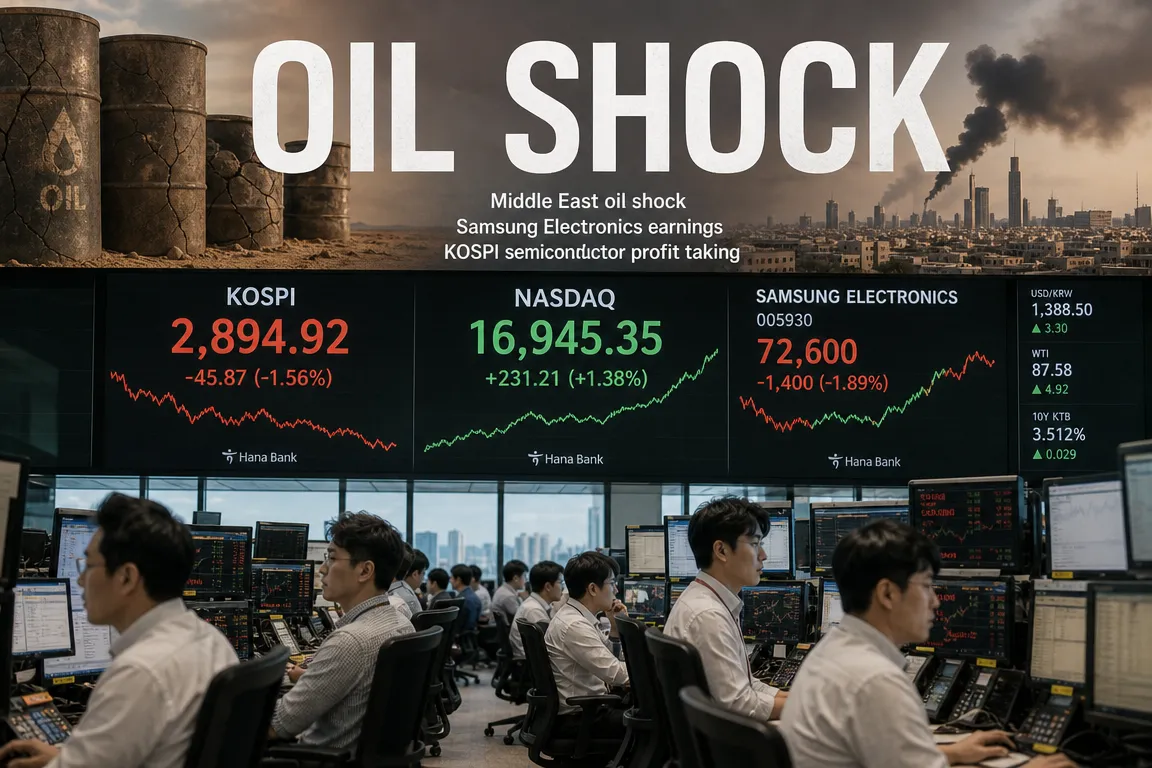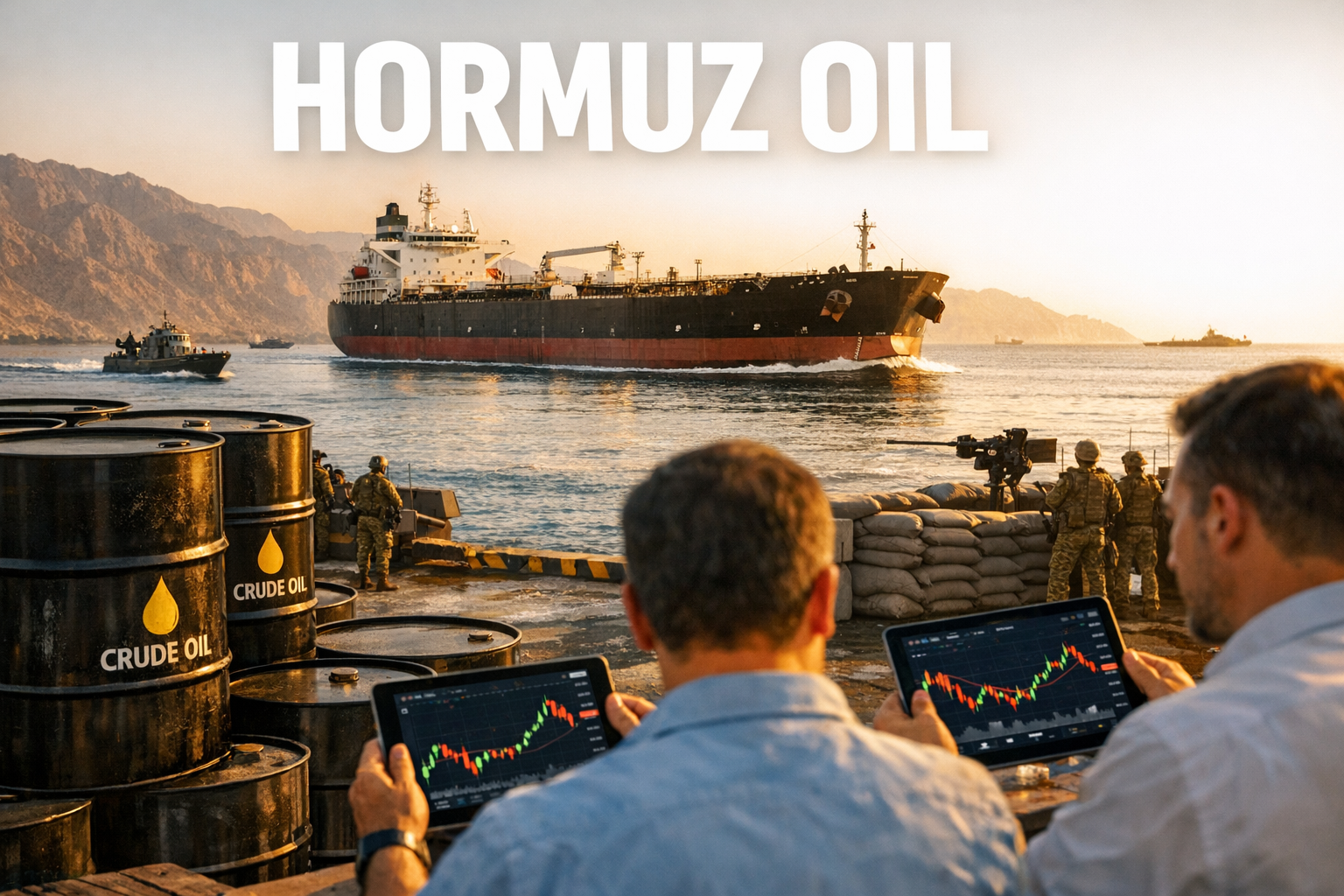
● Middle East War Shock, Oil Spike, Hormuz Chokepoint, AI Stocks Surge
Structural Constraints on a Prolonged Middle East Conflict: Oil, the Strait of Hormuz, Semiconductors, and Global Equities
This situation is not adequately explained by an Iran-Israel confrontation alone. The core variables are:
1) Why markets have attempted to stabilize despite persistent war headlines.
2) To what extent crude oil and Strait of Hormuz risks are being priced in.
3) Why semiconductors and AI-linked equities are regaining momentum amid geopolitical stress.
This report organizes key developments chronologically, outlines structural constraints on conflict duration, assesses energy-supply impacts on global inflation and growth, and highlights investor-relevant indicators. A dedicated section addresses why major economies have strong incentives to push for rapid de-escalation from a macroeconomic perspective.
1. Market Snapshot: Oil Moderation; Equities Rebound with Elevated Caution
Crude oil remains the primary transmission channel across asset classes. Oil declined toward the low-80s per barrel range, easing from prior tail-risk pricing that had briefly approached triple-digit extremes. This suggests partial retracement of “worst-case” risk premia.
US equities did not stage a full risk-on rally, but major indices held modest gains and near-term panic conditions eased. Korean overnight futures (KOSPI and KOSDAQ 150) also indicated reduced immediate risk-off pressure.
2. Key Driver of Oil Stabilization: G7 Strategic Petroleum Reserve (SPR) Release Discussions
One of the most relevant stabilizers has been discussion among G7 members regarding potential SPR releases. The mechanism is straightforward: incremental supply reduces perceived severity of prospective shortages and compresses the upper bound of oil price expectations.
In wartime, oil often rises less from current scarcity than from forward-looking fear of escalation and disruption. A credible SPR release option functions as a psychological and practical cap on that fear premium.
3. Intraday Volatility Catalyst: US Naval Tanker Escort Confusion
Oil volatility increased following a social media post by the US Energy Secretary suggesting successful US Navy escort of tankers through the Strait of Hormuz. Markets interpreted this as a signal of heightened US commitment to maritime security, pressuring oil lower.
The post was subsequently deleted, and an official White House briefing stated that no such escort occurred. The episode underscored that markets are increasingly reacting less to the conflict itself and more to the perceived extent of US involvement and willingness to secure shipping lanes.
4. Higher-Severity Risk: Indications of Iranian Naval Mine Activity
Oil risk premia increased again after reporting that US intelligence observed indications consistent with Iranian mine deployment preparations. Naval mines can materially disrupt shipping and can impair passage even without a formal blockade.
The strategic relevance is economic rather than purely military: the Strait of Hormuz is a critical global energy chokepoint. Any impairment directly affects export flows from major producers such as Saudi Arabia, Iraq, the UAE, and Kuwait. Consequently, markets are more sensitive to “shipping disruption” than to “headline escalation.”
Transmission to equities is direct: higher oil strengthens inflation concerns, weakens expectations for rate cuts, and increases valuation pressure—particularly on duration-sensitive growth and technology stocks. Strait risk is therefore a global asset-pricing variable.
5. Structural Constraints on Prolonged Conflict (I): The United States Cannot Sustain Politically Costly Escalation
A prolonged conflict is politically costly for the US, particularly in election-sensitive periods. Higher gasoline prices and broader cost-of-living pressure tend to translate quickly into domestic political damage.
This creates a strategic constraint: the US may seek to appear militarily credible while avoiding an extended escalation path that elevates inflation and undermines political support. This increases the probability of diplomatic containment and managed, limited confrontation.
6. Structural Constraints on Prolonged Conflict (II): Iran Faces Regime-Stability and Economic Risks
Iran also faces significant constraints. As conflict duration increases, domestic economic stress and internal dissent risks rise, alongside intensified external military and sanctions pressure.
Even if Iran signals short-term resolve, that does not necessarily imply willingness to sustain open-ended confrontation. Incentives exist to pursue controlled escalation followed by negotiation or a limited exit route to preserve regime stability.
7. Structural Constraints on Prolonged Conflict (III): Israel, China, and the Global Economy Absorb Rising Costs
Israel faces growing economic costs under prolonged conflict conditions: higher defense spending, weaker investment sentiment, slower consumption, and potential capital outflows.
China is structurally sensitive to energy price shocks due to manufacturing intensity and high import dependence. Rising crude prices increase production costs and weigh on growth, particularly when the recovery is already uneven.
Overall, key actors and major economies share exposure to the economic costs of sustained disruption. This differentiates the current episode from conflicts where energy chokepoints are less directly involved.
8. Differentiation Versus Ukraine-Russia: Energy Chokepoint Exposure Is More Immediate
The Strait of Hormuz introduces direct and rapid macro transmission. As disruption persists, both crude and natural gas pricing face structural upside pressure driven by logistics and security risk, not only sentiment.
The macro chain is consistent: higher freight and energy costs feed into producer prices, electricity costs, consumer inflation, and ultimately delay or reduce the probability of monetary easing. This makes the conflict a global macro problem rather than a localized geopolitical event, increasing incentives for accelerated de-escalation.
9. Emerging Evidence of Supply Impact: Announced Production Cuts by Key Gulf Producers
Reports indicate that sustained disruptions have increased storage utilization in major exporting states, contributing to announced production reductions totaling approximately 6 million barrels.
Against a global baseline near 100 million barrels per day, this represents roughly 6% supply contraction—material by historical standards. Current market composure likely reflects expectations of resolution rather than a lack of real-world impact. If disruption persists, this magnitude of supply tightening can reaccelerate crude prices and inflation pressure.
10. Semiconductor Resilience: Market Attention Rotates Back to AI and Memory
Despite geopolitical risk, semiconductor equities strengthened. Notably, Micron rose approximately 6% and Sandisk about 7%, indicating renewed market focus on AI-driven memory demand and the broader semiconductor cycle.
Micron-specific drivers included:
- Reduced concern regarding exclusion from the HBM4 supply chain, following industry commentary indicating inclusion.
- A next-generation memory joint R&D announcement with Applied Materials.
The market is increasingly valuing semiconductors not only on cyclical recovery but on structural AI data center expansion and high-bandwidth memory demand.
11. AI Trend Implications: Energy Shocks and AI Investment Interact
Energy risk and AI are connected through operating and capital cost structures. AI expansion requires large-scale data centers, high-performance compute, and power infrastructure. Higher energy prices can increase data center operating expenses and raise the cost of infrastructure buildouts.
Near term, however, when energy fears ease, capital often rotates quickly back into growth, technology, and semiconductors. The recent strength in memory-linked names aligns with this pattern. Markets are simultaneously pricing geopolitical risk and AI growth expectations.
12. Headline Checklist: Key Items to Monitor
1) Crude oil
Stabilized near the low-80s per barrel range, but remains highly sensitive to Strait-related headlines.
2) Strategic petroleum reserves
G7 SPR release discussions act as an upper-bound constraint on oil risk premia.
3) US naval protection signals
Perceived commitment to maritime security materially affects oil and broader risk sentiment.
4) Potential mining activity
Even without execution, the probability of Strait disruption is a high-impact risk.
5) Real supply tightening
Announced cuts by Saudi Arabia, Iraq, the UAE, and Kuwait suggest supply stress is emerging.
6) Semiconductor leadership
Strength in memory and AI-linked semiconductors indicates persistent structural demand confidence.
13. Under-Discussed Core Point: A Prolonged Conflict Is Negative-Sum Economically
The principal market driver is not relative military strength but the cost structure created by energy chokepoints. As duration increases, more actors incur rising macroeconomic losses via energy inflation and tighter financial conditions.
This structure increases the likelihood of coordinated pressure for de-escalation. While extended conflict cannot be excluded, incentives to sustain a long-duration escalation path appear limited.
14. Investor Framework: Scenario-Based Positioning
- Near-term headline volatility should be expected; Strait of Hormuz disruption risk and US involvement signals can move oil and indices rapidly.
- If de-escalation progresses, semiconductors and AI-linked growth equities are likely to exhibit the fastest rebound in risk appetite.
- If disruption intensifies or production cuts persist, inflation risk may reemerge, pressuring rate-cut expectations and equity valuations.
A balanced approach requires concurrent monitoring of oil dynamics, physical supply constraints, and AI-related equity leadership.
15. Conclusion: The Primary Variables Are Energy Transmission and Market Structure
The central analytical task is linking geopolitical developments to crude oil, inflation expectations, global growth, and the positioning of AI and semiconductor equities. Markets currently reflect both a partial unwind of worst-case outcomes and continued sensitivity to escalation risk.
Given US political constraints, Iran’s regime-stability risks, China’s energy sensitivity, and the broad global inflation channel, a prolonged escalation path appears structurally difficult to sustain. Nonetheless, headline-driven volatility is likely to remain elevated, and market direction may shift rapidly.
< Summary >
The current Middle East conflict appears structurally constrained from becoming prolonged: US domestic politics, Iran’s regime-stability considerations, and the energy-cost sensitivity of China and the global economy limit incentives for extended escalation. The key risk variable is the Strait of Hormuz; sustained disruption could rapidly reprice crude oil and inflation. Supply tightening signals have already emerged via announced production cuts. At the same time, markets continue to emphasize AI semiconductors and memory-cycle recovery, implying that easing geopolitical risk could strengthen semiconductor-led equity rebounds.
[Related Links…]
- https://NextGenInsight.net?s=AI
- https://NextGenInsight.net?s=oil
*Source: [ 내일은 투자왕 – 김단테 ]
– 전쟁 장기화는 어려운 진짜 이유
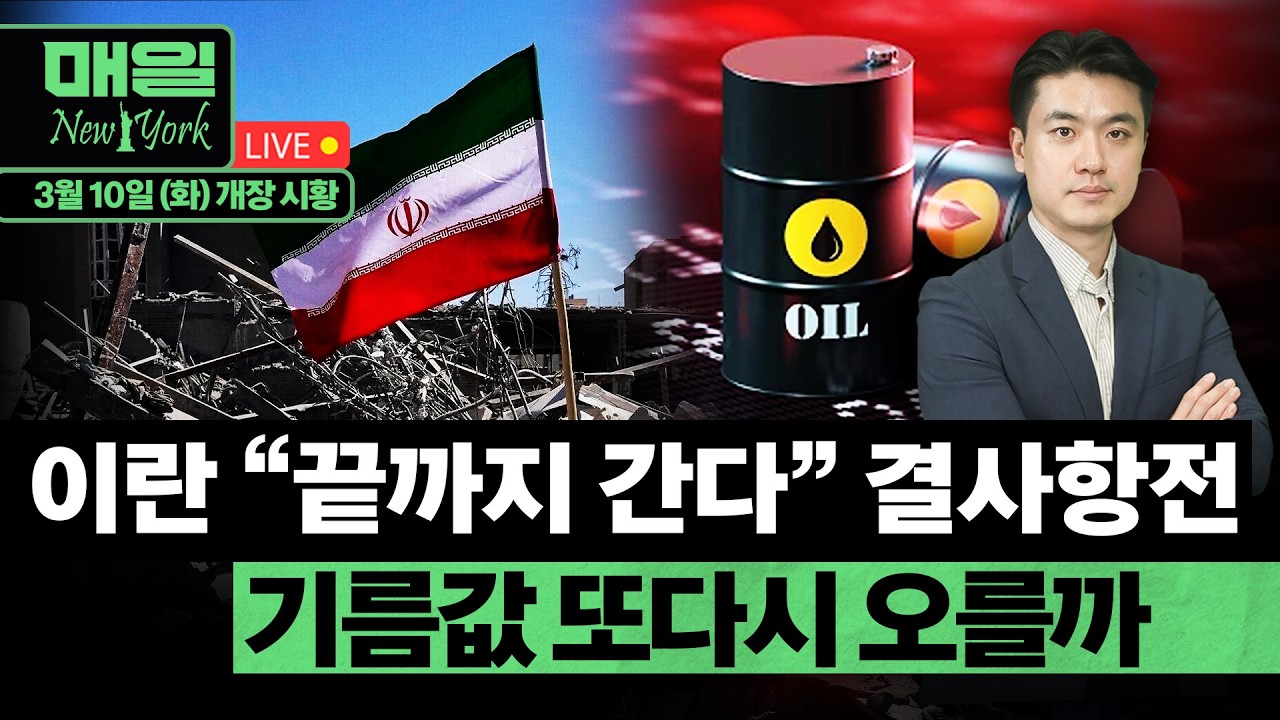
● Trump Shocks Oil, AI Power Surge, TSMC Explodes
Oil Volatility Triggered by a Single Trump Remark, SpaceX Nasdaq-100 Expectations, and TSMC Revenue Surge The core market focus is shifting from “war headlines” to “algorithmic flows, power infrastructure, and a reassessment of semiconductor demand.”
Today’s market moves can be summarized superficially as Middle East risk, crude oil fluctuations, and U.S. equity volatility.
However, the underlying drivers extend beyond geopolitics into AI-driven trading systems, U.S. sector rotation, semiconductor supply-chain dynamics, and competition for data-center power infrastructure.
This report covers:
First, why a single comment by President Trump moved both crude oil and U.S. equities.
Second, why Iran’s hardline messaging and recent attacks on energy facilities remain unresolved risks.
Third, why TSMC’s 30%+ revenue growth in January–February links to Korean semiconductors and U.S. mega-cap tech.
Fourth, why expectations of SpaceX entering the Nasdaq-100 may signal structural market change rather than a one-off event.
Fifth, why Wall Street is increasingly focused on power generation, gas turbines, and cooling infrastructure in addition to defense.
Key points that are often underemphasized in other coverage are also included.
1. Market Snapshot: Early Rebound, Followed by Renewed U.S. Equity Instability
U.S. equities attempted an early rebound led by the Nasdaq, but risk sentiment weakened as the session progressed.
Initial support came from semiconductor strength and expectations of stabilization in crude oil.
Subsequent hardline Iran-related headlines and renewed Middle East tension pushed the S&P 500 and Dow into negative territory, and the Nasdaq failed to hold gains.
Three forces dominated:
(1) expectations of a semiconductor/AI demand rebound,
(2) moderation in near-term oil-spike concerns,
(3) re-escalation of geopolitical risk.
The lack of a clear directional outcome reflected the simultaneous collision of these drivers.
2. Why Markets Reacted Immediately to Trump’s “Dialogue” Message
Following President Trump’s remarks implying the possibility of talks with Iran and a potentially short conflict, markets reacted immediately.
The key mechanism is market structure: price discovery increasingly reflects headline-driven, automated responses rather than discretionary interpretation.
AI/quant systems scan for terms such as “ceasefire,” “end,” “talks,” and “de-escalation,” translating them into reduced geopolitical risk, prompting oil selling and tech buying.
The market did not require confirmed diplomatic progress; it required keyword-triggered signals that met automated trading conditions.
This contributed to a rapid intraday decline in crude, movements in Nasdaq futures, and improved sentiment in semiconductors and mega-cap technology.
3. Why Complacency Is Premature: Iran Remains Hardline; Energy Facility Attacks Are Material
Developments on the ground may diverge from optimistic political messaging.
Iran has continued to communicate a hardline stance rather than signaling a clear path to compromise.
Importantly, the risk is not limited to rhetoric; attacks affecting energy infrastructure have been reported.
The reported fire at a major refining facility in the UAE is notable for its implications: it highlights vulnerability at critical nodes in the global energy supply chain.
While the Strait of Hormuz is a well-known sensitivity for oil, threats extending to onshore refining amplify supply disruption concerns.
Markets may temporarily price de-escalation on headlines, but conflict risk has not been resolved.
Positioning should avoid assuming “the war is over” based on a single narrative.
4. Why Oil Rose Then Fell: Beyond Supply, the Drivers Were “Machines” and Demand Slowdown Risk
Despite worsening headlines, oil has not moved in a straight line upward and has shown sharp pullbacks.
Two factors explain this pattern.
First, algorithmic trading.
After Trump’s remarks, automated systems prioritized “ceasefire probability” over “escalation risk,” triggering liquidation of long oil positions and accelerating declines alongside short-term traders.
Second, fear of demand deterioration.
Markets are not only pricing supply shock; they are also discounting the possibility of weaker demand amid prolonged softness in China and concerns around U.S. consumption under higher-for-longer rates.
Crude is effectively balancing a “geopolitical risk premium” against “recessionary demand risk,” increasing the likelihood of outsized swings.
5. Headline Summary: Key Points on Oil and the Middle East
– Trump’s reference to possible talks drove a sharp intraday drop in crude oil.
– Iran maintained a hardline posture, and reports of energy facility incidents persisted.
– Algorithmic reactions amplified volatility by pricing de-escalation language first.
– Wall Street is simultaneously weighing supply disruption and demand loss from global growth deceleration.
– Oil direction is being set by both geopolitics and macro demand expectations, not a single news item.
6. TSMC January–February Revenue Up 30%+: A Core Signal for Semiconductors
TSMC’s 30%+ revenue growth in January–February is more than a positive earnings datapoint.
It suggests AI chip demand remains robust and that leadership in advanced-node capacity is increasingly concentrated at TSMC.
TSMC functions as a production hub for the AI era and provides early read-through to end-demand from key customers such as Nvidia, Apple, and AMD.
The market inference typically includes:
– ongoing AI server capex strength,
– sustained shipments of high-performance chips,
– continued hyperscaler data-center investment momentum,
– potential spillover to memory, equipment, and advanced packaging.
For Korean investors, the linkage to Samsung Electronics and SK Hynix is direct through HBM, DRAM, advanced packaging, and high-bandwidth memory demand.
TSMC strength can therefore act as a catalyst across both Korean equities and U.S. technology.
7. Nvidia GTC, Micron Strength, and the Transmission to Korean Semiconductors
Next week’s Nvidia GTC is a key near-term catalyst, with attention on potential announcements covering new AI chips, server architectures, data-center strategy, and partner ecosystems.
Micron’s recent strength is consistent with renewed expectations for memory-cycle improvement rather than a purely technical rebound.
In Korea, strong moves in Samsung Electronics and SK Hynix align with the same framework: improving memory pricing expectations alongside HBM demand.
Semiconductors are being re-rated less as cyclical exposure and more as strategic AI infrastructure.
8. SpaceX and Potential Nasdaq-100 Inclusion: Implications
Expectations around SpaceX entering the Nasdaq-100 may reflect more than a headline event.
It can be interpreted as a signal of where U.S. growth equity leadership may be expanding.
The rationale is that space is increasingly viewed as a cash-flow-generating industry spanning communications, defense, data infrastructure, and commercial launch services.
Starlink is effectively a global communications infrastructure business, supported by government contracting and defense-related demand.
If inclusion were to occur, potential effects include increased passive inflows, ETF rebalancing demand, and greater index-level representation of a space/defense/communications convergence theme.
This would also be consistent with market attention broadening from AI alone toward post-AI infrastructure buildout.
9. Wall Street Focus: Power Infrastructure Is Gaining Priority Alongside Defense
Geopolitical escalation typically directs attention to defense equities.
Lockheed Martin, RTX, and Northrop Grumman retain structural tailwinds.
However, investor focus has increasingly shifted toward power generation and cooling infrastructure.
As AI data-center buildout accelerates, constraints are moving beyond chips to reliable power delivery and efficient heat removal.
Frequently cited beneficiaries include GE Vernova and Vertiv Holdings.
10. GE Vernova: Why Gas Turbines Are Re-emerging as a Strategic Asset
GE Vernova has gained attention following significant target price increases, driven by rising expectations for AI-related power demand.
Data-center expansion requires substantial incremental electricity.
Near-term supply is difficult to meet with renewables alone, while nuclear buildouts require long lead times.
As a result, natural gas generation and gas turbine demand are increasingly viewed as practical bridging solutions.
A central support for the thesis is the company’s strong backlog, implying multi-year visibility.
Some market commentary suggests tight supply conditions could extend toward 2030, potentially strengthening pricing power across the power equipment value chain.
For Korean investors, potential read-throughs may include domestic suppliers such as Doosan Enerbility, depending on global turbine supply-chain constraints.
11. Vertiv Holdings: Why Data-Center Cooling and Power Management Are Levered to AI
Vertiv provides data-center cooling and power management solutions.
As high-performance AI deployments expand, thermal density rises and conventional air cooling faces limitations.
This increases adoption of liquid cooling and higher-efficiency power distribution systems.
AI capex beneficiaries therefore extend beyond chipmakers to facility-level infrastructure vendors.
AI supply chains increasingly price the full stack: power generation, power distribution, and thermal management.
12. Oracle Earnings: Why the Market Is Monitoring the Print
Oracle’s earnings release is a near-term checkpoint.
The stock has been pressured amid concerns around data-center investment intensity and balance-sheet implications.
Beyond headline results, the market focus is likely to be on AI infrastructure capex plans, customer demand signals, and margin/FCF resilience.
Weak guidance could weigh on broader software sentiment; stronger AI-related bookings and credible expansion plans could support re-rating.
13. FOMC and Rates: The Next Meeting Is Priced for a Hold
Markets largely price the upcoming FOMC decision as a hold.
The critical variable is not the policy rate itself but the Fed’s balance of Middle East energy risk, inflation implications, and signs of U.S. growth softening.
A renewed oil spike would sustain inflation pressure, while weaker growth data strengthens defensive positioning.
The meeting is therefore primarily a calibration of “how long to wait,” rather than a venue for a surprise cut.
14. Why Consumer and Travel Stocks Remain Relatively Weak
During periods of heightened geopolitical risk and oil instability, consumer and travel equities often face early pressure.
Airlines, hotels, and online travel platforms are exposed to fuel costs, sentiment, and cyclical demand simultaneously.
Sector dispersion remains pronounced: selective tech can rebound while travel lags.
This market environment favors sector selection over index-level positioning.
15. Stablecoins and Circle: A Structural Shift Gaining Visibility
Circle’s strength is noteworthy beyond a simple crypto beta narrative.
The market is increasingly focused on stablecoin utility in real-world payments and settlement.
Use cases include faster cross-border corporate transfers, shorter settlement times, and lower transaction costs versus legacy rails.
If scalable, stablecoins may be evaluated as financial infrastructure rather than purely speculative instruments.
This intersects with digital finance and AI-enabled automation in the broader economy.
16. Underemphasized but Critical Points
First, near-term price action is increasingly driven less by geopolitics itself than by algorithms interpreting geopolitical headlines.
In practice, which words appear in the headline can influence minute-by-minute pricing more than fundamental verification.
Second, AI capex beneficiaries are expanding from semiconductors into power and cooling infrastructure.
This theme remains less crowded in retail narratives but is increasingly reflected in institutional positioning.
Third, TSMC’s revenue acceleration may indicate that AI supply-chain bottlenecks remain closer to “supply constraint” than “demand shortage,” affecting how the semiconductor cycle is framed.
Fourth, oil not rising does not imply Middle East risk is resolved.
If demand-slowdown fears are capping oil, markets may be shifting from war risk to recession risk as the dominant concern.
Fifth, SpaceX-related narratives can be interpreted as a test case for how U.S. growth indices may incorporate the next major infrastructure theme after AI, including converging technology, defense, communications, and space systems.
17. Investor Checklist
– For crude oil, monitor algorithmic headline sensitivity alongside macro demand risks, not only conflict developments.
– In U.S. equities, prioritize sector dispersion across semiconductors, power infrastructure, cooling, defense, and consumer cyclicals.
– TSMC trends, Nvidia GTC outcomes, and Micron signals transmit directly to Korean semiconductors.
– SpaceX inclusion expectations should be assessed through passive flows and growth-sector reconstitution dynamics.
– For the next FOMC, focus on the Fed’s inflation-growth trade-off rather than the likelihood of immediate cuts.
18. Conclusion
Today’s narrative centered on Iran, crude oil, and Trump’s remarks.
Market internals reflected a combination of algorithm-driven short-term price distortion, semiconductor supply-chain optimism, data-center power bottlenecks, and global growth deceleration concerns.
Traditional rules of thumb (e.g., “war up = oil up, tech down”) are less reliable in a regime where AI, power infrastructure, semiconductors, rates, geopolitics, and digital finance interact simultaneously.
The key requirement is not speed in consuming headlines, but the ability to map headline catalysts into algorithmic flows and structural industry shifts.
< Summary >
Trump’s comments about potential talks with Iran immediately moved crude oil and U.S. equities, but risk remains unresolved given Iran’s hardline posture and reported incidents affecting Middle East energy infrastructure.
The pullback in crude reflected algorithmic trading dynamics and rising concern over global demand slowdown, not only “peace expectations.”
TSMC’s 30%+ January–February revenue growth signals continued strength in AI-related semiconductor demand, with positive read-throughs for Korean semiconductor leaders.
Expectations around SpaceX entering the Nasdaq-100 may indicate rising prominence of a space/communications/defense infrastructure complex within U.S. growth equity leadership.
Wall Street focus is extending beyond defense toward AI-enabling infrastructure, including power generation, gas turbines, and data-center cooling.
[Related Posts…]
- TSMC Revenue Surge and Signals of a Semiconductor Upcycle Re-acceleration
- Reassessing the Global Economic Outlook After Crude Oil Volatility
*Source: [ Maeil Business Newspaper ]
– 트럼프 대통령, 이란과 대화 가능성 언급ㅣ스페이스X, 나스닥100 편입 기대ㅣTSMC, 1~2월 매출 30% 이상 증가ㅣ홍키자의 매일뉴욕