● AI Layoff Shock, Korea’s 50s Face Brutal Job Cliff
Large-Scale Restructuring Among Workers in Their 50s May Be Only Beginning
Low-growth and AI-era realities facing the 40s–60s cohort first, and the conditions of resilient jobs
Korea’s macro labor environment is being reshaped by two structural forces:
1) Persistent low growth becoming structural rather than cyclical, and
2) AI and automation raising productivity while accelerating job reallocation.
This report focuses on why the 40s–60s cohort is likely to face the earliest and largest shock; why the core issue extends beyond employment into identity, family stability, and social standing; and which industries and business models appear comparatively resilient.
Key framing points:
- The primary impact is often identity loss, not unemployment alone.
- In the AI era, scarcity shifts from information to relationships, trust, and community-based experiences.
- The 40s–60s cohort remains a primary consumption and experience-driving demographic, not merely a protected group.
1. Key News Drivers: Why Restructuring in the 50s Is a Higher-Weight Issue Now
The current employment risk is driven by overlapping structural pressures: demographics, industrial restructuring, AI-led automation, and deteriorating long-term growth expectations.
- Structural low growth reduces firms’ capacity for hiring and retention.
- Legacy industries (e.g., petrochemicals) face restructuring pressure from intensified global competition and fast catch-up dynamics in Asia.
- AI and robotics displace repetitive work, pressuring middle-management, operations, and administrative roles first.
- Retirement preparation coincides with a labor reality requiring income generation into the 70s for many households.
- Re-employment is necessary, but hiring systems remain effectively youth-centric.
Core issue: earlier exits + longer post-exit living horizon + narrower re-entry channels.
2. Why the 40s–60s Cohort Faces the First Shock
2-1. Demographics Alone Can Trigger Labor-Market Dislocation
Workers in their 50s represent a substantial share of total employment. As this cohort moves into the 60s bracket, structural displacement increases via early retirement, voluntary separation programs, and organizational downsizing.
- The former “retire at statutory age” pattern is weakening.
- Longer life expectancy increases the post-retirement horizon by roughly 20–30 years for many individuals.
This is a labor-market design problem, not a cohort-specific anomaly.
2-2. Industry Contraction and AI Automation Are Arriving Simultaneously
Industrial restructuring is compounded by AI substitution.
- Manufacturing, middle management, shared services, and standardized operations are pressured by weaker growth; AI and automation then reduce the need to maintain prior headcount levels.
- For the 40s–60s cohort, experience is an asset, but employers often evaluate through a cost-to-productivity lens, reinforced by perceived digital-transition risk.
2-3. Distinct From Youth Employment Stress
- Youth: difficult entry.
- Mid-to-late career: difficult re-entry after exit.
For the 40s–60s cohort, job loss interacts with established responsibilities: mortgages, children’s education, parental support, and retirement funding.
3. The Central Risk: Psychological Shock Over Pure Joblessness
Economic coverage often stops at unemployment and industry outlooks; field outcomes indicate severe second-order effects driven by psychological impact.
3-1. Increased Household Alienation Risk
Individuals with long company-centric careers may have weaker domestic roles and communication routines. Post-exit time does not automatically restore relationships and can amplify perceptions of not having a role at home.
This affects execution: re-employment search, retraining, and entrepreneurship decisions frequently stall when psychological stability deteriorates.
3-2. Loss of Social Status Erodes Self-Identity
A former title-based identity can collapse after separation.
- Income declines are compounded by the loss of a defining social label.
- Higher prior status often correlates with a larger perceived decline.
Restructuring therefore presents a identity risk as well as an income risk.
3-3. “Collapse of Willingness to Adapt” Is More Material Than Capability
The constraint is often not learning speed but reduced confidence and fear of change that suppress attempts to re-skill.
Priority order: recovery and agency first, training second.
4. Conditions of Resilient Jobs in a Low-Growth, AI-Driven Economy
4-1. Roles Where Experience Converts to Advantage
AI is strongest in answerable, repetitive, document-heavy, and prediction-driven tasks. Humans retain comparative advantage in trust, real-time field response, emotional intelligence, and multi-factor judgment.
Resilient roles typically include:
- Trust-based interpersonal work
- High-variance field operations and incident response
- Coordination, supervision, mentoring functions
- Service quality roles that directly monetize experience
- AI-assisted workflows where accountability and final judgment remain human
4-2. Beyond Re-employment: “Job Redesign”
Credential-driven approaches often fail to translate into hiring.
Strategic focus: decompose career experience and redesign into roles such as:
- Field coach
- Store/branch operations mentor
- Client relationship training lead
- Service quality manager
Retraining objective: translate existing experience into new demand, not replicate entry-level profiles.
4-3. Training Must Be Linked to Placement
Training without hiring pathways increases time and cost burdens.
Effective sequence:
- Role diagnostics
- AI/digital baseline adaptation
- Field practicum
- Short project-based experience
- Hiring linkage or platform-based matching
5. Practical Infrastructure: A Dedicated Matching Platform for the 40s–60s Cohort
General job platforms create direct competition across all ages; employers rationally prioritize younger candidates at lower wage levels where substitutable.
A dedicated platform functions as labor-market infrastructure, not a convenience layer.
5-1. Why a Dedicated Platform Is Needed
- Aggregate age-compatible and mid-career-friendly roles.
- Translate experience into standardized job-language and competency mapping.
- Enable employers to post roles explicitly designed for mid-career hiring.
- Match by work style, wage range, region, physical requirements, and digital proficiency.
This can develop into a scalable industry segment supporting re-entry at scale.
6. Three Industry Segments With Stronger Growth Potential
The 40s–60s cohort is both a major consumer base and a key labor supply pool.
6-1. Prevention-Oriented Health
Growth is shifting from treatment to prevention and maintenance.
Areas include:
- Fitness and coaching
- Nutrition management
- Sleep improvement
- Stress management
- Health-data-driven lifestyle improvement
- Mid-career tailored wellness programs
These are service-intensive and retain human-delivered value.
6-2. Anti-Aging and Appearance Management
Demand is tied to employability, social participation, and confidence, not discretionary luxury alone.
Sub-segments:
- Skin care services
- Body composition management
- Hair and styling
- Male grooming
- Image consulting linked to healthy appearance
- Self-care lifestyle services
6-3. Community Businesses
As AI reduces information scarcity, willingness to pay shifts toward shared experiences, belonging, and curated social interaction.
Examples:
- Reading and discussion groups
- Interest-based dining meetups
- Programs combining fitness and networking
- Offline classes built around “doing together”
For small businesses, differentiation increasingly requires designing reasons for people to gather, not only selling products or space.
7. Self-Employment and Entrepreneurship: Required Changes
Post-restructuring entrepreneurship often occurs without adequate preparation; basic storefront replication is increasingly uncompetitive.
Higher-probability approach: add community-layer functionality to existing categories.
- Restaurants: become an interest-group hub, not only dining.
- Cafes: integrate study, reading, talks, and networking flows.
Core principle: product-only models enter price competition; relationship and experience models build retention and pricing power.
8. Policy Priorities
Individual effort is insufficient; coordinated action is required across government, local authorities, corporates, and platforms.
8-1. Mid-Career Hiring Infrastructure
- Support dedicated matching platforms for the 40s–60s cohort
- Incentives for firms hiring mid-career candidates
- Expanded regional job-matching centers
- Resume/portfolio “experience translation” support
8-2. Field-Linked Retraining
- Reduce credential-only programs
- Expand practicum-based training
- Introduce corporate project-based training
- Require baseline AI-tool utilization training
8-3. Psychological Recovery and Social Re-Connection
Employment counseling alone is insufficient.
- Post-separation psychological counseling programs
- Links to mid-career community participation
- Family relationship recovery programs
- Retirement-transition coaching
9. Under-Addressed Points in Mainstream Coverage
9-1. The 40s–60s Cohort Remains the Core Consumption Base
This cohort has material purchasing power, experience, decision authority, and asset influence. Market design should treat them as primary customers, not only beneficiaries.
9-2. AI-Era Premium Shifts to Human Connection
Economic value increasingly accrues to businesses that use AI effectively while strengthening human connection and belonging.
9-3. Restructuring Reflects System Misalignment
Firms pursue productivity, the state prioritizes employment stability, and individuals must work longer. Current systems fail to integrate: retirement rules, re-skilling, job design, hiring platforms, and local communities.
Without correction, downstream pressure may rise across consumption, social spending, small business viability, and employment stability.
10. What Should Be Prepared
For individuals (40s–60s):
- Adopt AI as a work-assist tool rather than a threat
- Decompose career history into transferable role modules
- Shift toward relationship-based, field-based, trust-based roles
- Join communities to reduce isolation and increase opportunity flow
- If starting a business, design the gathering structure before the product
For employers:
- Evaluate redeployment models for experienced workers, not only reductions
- Excess focus on cost can degrade service quality, operational stability, and tacit knowledge retention
For policy:
- Dedicated labor-market infrastructure for mid-career workers is critical to mitigating pressures on domestic demand, small businesses, and social expenditure.
11. Conclusion: Risk With a Concurrent Shift in Market Center
Large-scale restructuring among workers in their 50s is plausible under simultaneous low growth and AI transition. The 40s–60s cohort may face the earliest pressure, but also remains positioned to become a central driver of employment design, consumption, health services, and community-based business models.
Two differentiators:
1) Capability to translate experience into redesigned roles
2) Capability to design and deliver human connection, which gains scarcity value as AI expands
< Summary >
As low growth and AI diffusion reinforce each other, the 40s–60s cohort, especially those in their 50s, faces elevated restructuring and re-employment constraints. The primary risk extends beyond unemployment to household alienation, status loss, and confidence erosion. Priority responses include dedicated mid-career matching infrastructure, field-linked retraining, and experience-based job redesign. Higher-potential segments include prevention-oriented health, anti-aging services, and community businesses. The strategic lens should treat the 40s–60s cohort as a core consumer and experience market, not only a restructuring 대상.
[Related Links…]
- https://NextGenInsight.net?s=AI
- https://NextGenInsight.net?s=low%20growth
*Source: [ 경제 읽어주는 남자(김광석TV) ]
– 50대 대규모 구조조정 시작된다. 저성장·AI 시대, 살아남는 일자리의 조건 | 경읽남과 토론합시다 | 이시한 교수 3편
● Hormuz Shock, Oil Spike, AI Squeeze
Shock at the Strait of Hormuz, Iran’s Rapid Military Degradation, and Speculation over Japanese Deployment: What the Current Middle East Risk Signals for the Global Economy and the AI Industry
This is not a routine regional conflict update.
Key variables must be assessed together: potential disruption at the Strait of Hormuz, a reported sharp decline in Iran’s missile and drone launch capacity, U.S. operational objectives, the possibility of Japan dispatching Self-Defense Forces, shocks to crude oil and global supply chains, and second-order effects across defense, energy, and AI.
The core implication is that Middle East instability is evolving from a geopolitical risk premium into a multi-channel macro and industry driver affecting inflation, interest rates, commodities, shipping, defense procurement, semiconductor supply chains, and AI infrastructure capex.
1. Situation Snapshot: Why This Episode Represents Elevated Risk
A central claim is that Iran’s missile and drone launch capability has fallen to less than one-tenth of its first-day level.
If broadly accurate, this implies not only exchange of strikes but a rapid impairment of Iran’s asymmetric deterrence. Iran’s leverage has historically relied on missiles, drones, proxies, and maritime disruption more than conventional force projection. A sharp degradation materially reduces strategic options and bargaining power and may increase domestic fragility.
Two implications are material:1) State-function degradation
Sustained strikes can extend beyond military sites to command-and-control, logistics, communications, and energy infrastructure.2) Conflict-scope expansion risk
If the U.S. objective is to push Iran’s capabilities into a non-recoverable decline, markets should treat this as a broader strategic campaign rather than a short-duration exchange.
2. Issue Map by Category
2-1. Degradation of Iranian Capabilities
- Reported sharp decline in missile and drone sortie capacity.
- Erosion of core deterrence, particularly via drones as low-cost, high-impact assets for proxy operations and maritime pressure.
- Reduced optionality increases reliance on fewer, potentially higher-risk tools.
2-2. Strait of Hormuz Tensions
- The Strait is a critical chokepoint for global crude flows.
- Escalation can embed a fear premium into oil prices beyond fundamental supply loss.
- Risks extend to LNG and broader energy logistics, raising both energy and freight costs.
2-3. U.S. Strategic Objective
- The referenced view suggests an objective of irreversible degradation rather than limited retaliation.
- If so, operational duration and uncertainty increase, shifting market focus from immediate headlines to persistent risk.
2-4. Potential Japanese Self-Defense Force Deployment
- If Japanese commercial shipping is attacked or directly threatened, political justification for deployment may strengthen.
- This would signal broader shifts in East Asian security posture and could influence defense-industrial realignment.
3. Global Macro Implications: Beyond Oil
3-1. Higher Oil Prices and Inflation Re-acceleration Risk
- Rising crude prices propagate through refining, aviation, shipping, chemicals, and power generation.
- Energy-driven inflation can complicate the disinflation path at a time when major central banks are evaluating rate-cut timing.
3-2. Increased Uncertainty Around Rate Trajectories
- If inflation expectations reprice upward, central banks may stay restrictive longer.
- High-duration assets (growth/technology, including AI-linked equities) may see higher volatility under a higher-for-longer risk.
3-3. Supply Chain Re-optimization
- Energy and maritime instability affects manufacturing broadly: semiconductors, autos, batteries, specialty chemicals, defense, and shipbuilding.
- Longer, more complex supply chains are more exposed to transit delays and cost inflation.
- This may reinforce reshoring and friend-shoring dynamics.
3-4. Risk-Off and Safe-Haven Rotation
- Escalation typically supports USD, gold, and U.S. Treasuries.
- EM risk assets can weaken; energy-importing economies face added FX and import-price pressure.
4. Key Transmission Channels for South Korea
4-1. Higher Energy Import Burden
- High dependence on imported crude and gas increases vulnerability.
- Refining/chemicals/transportation face direct cost pressure; refiners may see short-term margin effects, while medium-term demand sensitivity remains relevant.
4-2. Higher KRW Volatility
- Risk-off USD strength can pressure KRW.
- A weaker KRW can support exporters but raises the local-currency cost of energy and raw materials.
4-3. Re-rating Potential for Defense and Shipbuilding
- Elevated geopolitical risk can accelerate defense spending and procurement.
- Korean defense exporters may benefit from perceived competitiveness and delivery capacity.
- Maritime security concerns can support demand for naval platforms, MRO, and surveillance systems.
5. Why This Matters for AI and the Broader Tech Cycle
5-1. Data Centers as an Energy-Sensitive Asset Class
- AI compute requires large-scale power and cooling.
- Higher oil/gas and electricity costs can raise total cost of ownership for AI infrastructure and pressure ROI assumptions.
5-2. Defense AI and Drone-Centric Warfare
- The conflict highlights drones, precision strike, EW, satellite ISR, and real-time analytics as central to modern warfare.
- AI is increasingly integral to target recognition, routing, surveillance, anomaly detection, and air-defense decision support, supporting defense-AI demand.
5-3. Semiconductor and Advanced-Tech Supply Chain Realignment
- Under heightened geopolitical stress, advanced technologies increasingly function as strategic assets.
- AI chips, communications, satellites, cyber, and edge computing gain dual-use importance, accelerating industrial-policy and supply-chain restructuring.
6. Key Points Often Underweighted in Mainstream Coverage
6-1. Focus on the Speed of Capability and State-Function Erosion
- The critical variable is not only the scale of retaliation but the rate at which military and state functions degrade.
- If recovery is constrained, the situation can shift from episodic conflict to systemic instability.
6-2. Strait of Hormuz as an Insurance and Risk-Premium Shock
- Even without full physical closure, elevated maritime insurance and risk premia can raise costs rapidly.
- Price effects can occur ahead of realized volume disruptions.
6-3. Japanese Deployment Debate as an East Asia Security Signal
- A broader operational footprint would reflect structural shifts in Japan’s security role and could affect regional defense dynamics.
6-4. If the Objective Is Capability Removal, Markets Price Duration Risk
- Limited strikes can fade quickly; capability-removal campaigns increase tail risk and uncertainty, influencing positioning and capex decisions.
7. Monitoring Framework for Investors and the Real Economy
7-1. Near-Term Indicators
- Crude price trend.
- DXY and USD/KRW.
- Shipping rates and maritime insurance premia.
- Gold and U.S. Treasury yields as risk sentiment proxies.
7-2. Medium-Term Indicators
- Clarity on whether operations remain limited or broaden.
- Whether Japan and European states expand operational roles.
- OPEC response and spare capacity signaling.
- Central bank reaction function to energy-driven inflation.
7-3. Sector-Level Watchlist
- Defense: order flow and policy momentum.
- Refining: margins and inventory effects.
- Airlines/shipping: cost pressure versus freight-rate upside.
- AI/semiconductors: rates, power costs, and data-center capex plans.
8. Three Plausible Forward Paths
8-1. Managed, Limited Conflict
- Continued friction without sustained closure of key sea lanes; oil stabilizes within a managed range.
- Markets absorb an initial shock and normalize.
8-2. Accelerating Iranian Capability Erosion and Rising Internal Instability
- Cumulative damage weakens control capacity.
- Risk shifts toward regional order reconfiguration rather than only oil.
8-3. Expanded Maritime Confrontation and Multinational Response
- Attacks on commercial shipping or sustained threats trigger broader coalition activity.
- Concurrent spikes in oil, freight/insurance costs, FX volatility, and equity drawdowns become more likely.
9. One-Line Summary
The core issue is a multi-factor shock: Strait of Hormuz risk transmits into oil, inflation, rates, supply chains, defense, semiconductors, and AI infrastructure costs, with the key variable being the pace of Iran’s military and state-function degradation rather than headline retaliation intensity.
< Summary >
- Strait of Hormuz tensions function as a global macro variable, not a local conflict headline.
- Reported erosion of Iran’s missile/drone capability increases the probability of broader state-function stress.
- Higher oil prices can re-accelerate inflation and raise uncertainty around rate cuts.
- Supply chains, maritime logistics, and insurance premia may reprice even without full physical disruption.
- South Korea faces higher energy-import costs and FX volatility, alongside potential defense/shipbuilding upside.
- AI is impacted via power-cost sensitivity and rising defense-AI demand; semiconductor supply chains may further realign.
- The dominant signal is the speed of capability and state-function erosion, not only the probability of short-term escalation.
[Related Links…]
- Strait of Hormuz crisis and key drivers for crude price outlook: https://NextGenInsight.net?s=Hormuz
- Defense industry growth and South Korea export strategy: https://NextGenInsight.net?s=Defense
*Source: [ 달란트투자 ]
– “역대급으로 판 커졌다” 호르무즈 맹폭에 이란 날벼락. 곧 중동 전역이 발칵 뒤집힌다 | 김민석 특파원 1부
● AI Networking Boom, CPO Revolution, Optical Surge
Wall Street’s 2026 High-Conviction Growth Theme: How CPO and Optical Interconnects Are Reshaping AI Infrastructure
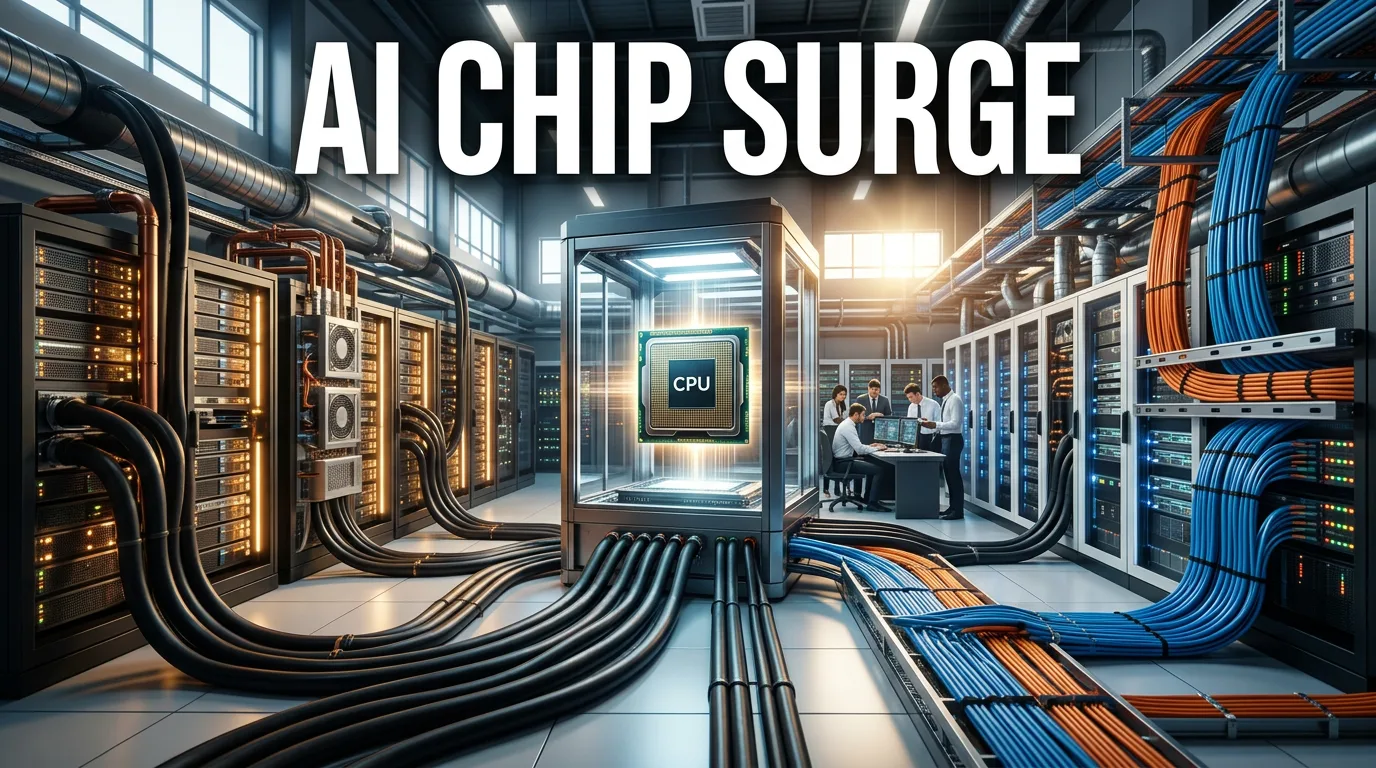
In today’s AI market, the decisive factor is no longer chip performance alone. The competitive edge is increasingly determined by how quickly and efficiently GPUs, CPUs, and HBM can be interconnected. This report summarizes why Wall Street is positioning Co-Packaged Optics (CPO), silicon photonics, optical interconnects, and data-center networking as core growth vectors into 2026.
This analysis focuses on: (i) why copper-based electrical interconnects are reaching practical limits, (ii) why the next investment locus after AI semiconductors is shifting toward networks and data-center infrastructure, (iii) what structural changes CPO introduces, and (iv) which companies and value-chain segments warrant monitoring.
The central thesis is that the primary bottleneck is increasingly connectivity rather than compute.
1. Key Takeaways
Wall Street’s 2026 high-growth theme within AI infrastructure is interconnect technology.
CPO, silicon photonics, and fiber-based data-center networks are central to this shift.
As AI models scale, single-GPU execution is insufficient; training and inference require thousands to tens of thousands of GPUs operating in parallel.
While GPU performance continues to improve, copper-based electrical links face constraints in reach, heat, and power efficiency.
As a result, data centers are entering a phase where connectivity innovation is becoming more urgent than incremental compute gains.
Optical signaling is rising as the preferred solution, with CPO at the leading edge.
2. Why the Primary AI Bottleneck Is Shifting from Compute to Connectivity
2-1. Model Scaling Requires Multi-GPU Parallelism
Modern large models have expanded rapidly in parameter count. Performance increasingly depends on tightly coupled parallel clusters rather than a single accelerator.
System-level competitiveness is therefore driven by low-latency, high-throughput, power-efficient interconnects across chips, servers, racks, and clusters.
2-2. System Throughput Is Constrained by Interconnect Quality
Superior accelerators do not translate into end-to-end performance if interconnect capacity and latency are insufficient.
In AI data centers, overall productivity is determined more by interconnect efficiency than by any single chip’s specifications.
Market attention is shifting from AI semiconductors to AI infrastructure, and within infrastructure toward networking and optical connectivity.
3. Data-Center Network Structure and Why CPO Matters
3-1. Four-Layer Hardware Stack
Data-center infrastructure can be simplified into four layers:
First, the chip layer: CPU, GPU, or integrated “superchip” components.
Second, the server layer: multiple chips assembled into a server.
Third, the rack layer: multiple servers integrated into a rack.
Fourth, the cluster layer: multiple racks interconnected into a large compute fabric.
3-2. Scale-Up, Scale-Out, and Scale-Across
Scale-up increases performance density within a system (e.g., higher-performance servers per rack).
Scale-out expands horizontally by adding more servers and racks.
Scale-across connects clusters to clusters, and potentially data center to data center.
Current constraints extend beyond intra-system scale-up; interconnect limitations intensify as architectures scale out and scale across.
4. Why Copper Interconnects Are Increasingly Constrained in AI Data Centers
4-1. Reach Limitations
At higher data rates, practical electrical reach declines sharply.
In current high-speed environments, approximately 1 meter is often cited as a practical limit; future generations may compress this toward ~50 cm.
Such constraints complicate even adjacent-rack connectivity and restrict physical scaling as data centers expand.
4-2. Higher Frequencies Increase Loss and Thermal Load
Copper interconnects face skin-effect behavior at high frequencies, concentrating current near the conductor surface.
This reduces effective cross-sectional area, increases resistance, elevates heat, and degrades signal integrity.
As speeds rise, thermal, power-loss, and signal-distortion challenges worsen simultaneously.
4-3. Power Costs Pressure Data-Center Economics
Data centers are driven by ongoing operating costs including depreciation, maintenance, cooling, and electricity.
Power cost is a primary sensitivity. Beyond procuring GPUs, the cost to interconnect, power, and cool systems becomes a key profitability determinant.
The market is shifting from performance-centric to power-efficiency-centric decision frameworks, reflecting economic as well as technical constraints.
5. Copper Is Not Obsolete
5-1. Copper Retains Roles at Short Reach
Copper is unlikely to disappear near term. It remains practical for short links such as in-rack and on-board connectivity.
Major platforms continue to deploy copper-based backplanes and cables in scale-up domains.
5-2. AEC and Retimers Extend Copper’s Usable Window
Active Electrical Cables (AEC) integrate active components such as retimers to restore signal quality.
This approach can extend reach and improve reliability for copper links.
Credo and Marvell are frequently cited for exposure to AEC and high-speed electrical connectivity.
However, at the next speed node, distance constraints can re-emerge.
AEC is therefore better viewed as a transition solution; over the longer term, optics is positioned to capture a larger share of interconnect demand.
6. Plug-in Optical Transceivers Also Face Constraints
Existing optical transceivers address many limitations, but they introduce new constraints at extreme scale.
Port-based, pluggable designs are limited by front-panel real estate and slot counts.
Power delivery and thermal density also become more complex as module counts increase.
Large AI clusters therefore require higher-density, more structurally integrated optical architectures.
7. Core Enabling Technology: CPO (Co-Packaged Optics)
7-1. Definition
CPO places optical engines adjacent to, or within the same package as, the switch ASIC or compute package.
Conventional architectures route electrical signals out of the package over longer distances before optical conversion in external transceivers.
CPO shortens the electrical segment, reducing power consumption and improving signal integrity while increasing bandwidth density.
7-2. Why CPO Improves Efficiency
First, the electrical path is materially shortened, reducing loss and power draw.
Second, fiber connectivity is more direct; fiber supports high data rates over longer distances without copper’s resistive penalties.
Third, space utilization and bandwidth density improve versus multiple pluggable modules.
Fourth, scalability improves as server density and aggregate interconnect requirements rise.
8. Why Silicon Photonics Is Discussed Alongside CPO
Silicon photonics integrates optical transmission functions using semiconductor manufacturing processes.
It is relevant because it improves manufacturability and cost trajectories by leveraging existing semiconductor ecosystems rather than requiring entirely new production stacks.
Silicon photonics is therefore positioned at the intersection of technical feasibility and manufacturing scalability.
9. Why 2026 Is Viewed as an Inflection Point
9-1. The Technology Pre-Existed; Commercial Conditions Are Converging
CPO has been studied and prototyped for years.
Market expansion requires concurrent progress in technical readiness, economics, and deployment urgency from large buyers.
These conditions are increasingly aligning.
9-2. AI Capex and Data-Center Upgrades Create Adoption Pull
Cloud providers, hyperscalers, and AI service operators are expanding data-center investment.
Without resolving connectivity bottlenecks, incremental GPU additions can yield diminishing returns, supporting investment in network architecture upgrades.
This underpins expectations that commercialization and financial impact may become more visible around 2026.
10. Value-Chain Mapping: What to Monitor
10-1. End Demand: Systems and AI Infrastructure Buyers
NVIDIA, AMD, Broadcom, and major cloud providers are best viewed as adoption drivers and demand anchors rather than primary direct sellers of CPO components.
Their architecture decisions influence order flow and capex allocation across the supply chain.
10-2. Networking and Interconnect Solution Providers
Marvell is frequently cited due to broad exposure across optical connectivity, DSP, AEC, and custom silicon, positioning it across multiple transition pathways.
Credo is commonly associated with AEC and high-speed connectivity, benefiting from transition-phase demand tied to extending copper performance.
10-3. Optical Components, Modules, and Materials
Lumentum and Coherent are notable in optical components and modules, with potential indirect leverage to broader CPO adoption through lasers and optical subsystems.
Corning is relevant for fiber and glass technologies; expanding AI optical infrastructure increases the strategic importance of materials suppliers.
10-4. Packaging and Manufacturing Process Ecosystem
CPO is a packaging-led shift rather than a simple component substitution.
Advanced packaging, thermal management, and opto-electronic integration capabilities become critical.
Over time, outsourced assembly and test, packaging equipment, and test/measurement solution providers may gain relevance.
11. Investment Considerations
11-1. Partial Price Discounting Has Occurred
The theme is not entirely undiscovered; several equities have moved in advance.
Investor focus should emphasize differentiation between structural beneficiaries and names driven primarily by expectations.
11-2. Separate Near-Term and Long-Term Beneficiaries
Near-term beneficiaries can include AEC, retimer, and pluggable transceiver suppliers due to transition demand.
Long-term structural beneficiaries are more likely to be concentrated in CPO, silicon photonics, and optical packaging/integration.
The current market phase reflects overlap between late-cycle copper extension and early-cycle optical expansion.
11-3. Semiconductor-Only Views Are Incomplete
Interpreting AI solely through leading GPU suppliers understates the breadth of the next phase.
Networking, optical interconnects, power efficiency, and advanced packaging are increasingly integral to the AI infrastructure cycle.
12. Underappreciated Point: Value Migration Toward Connectivity
The primary implication is not that CPO is a superior component, but that AI value creation is expanding from compute silicon into connectivity architecture.
This shift can alter profit pools across the stack.
Historically, premium economics were concentrated in high-performance accelerators. As systems scale, networking, optical modules, fiber, packaging, and power-efficiency technologies are positioned to capture a larger share of value.
This transition has linkages to cloud capex, data-center buildouts, power infrastructure, supply chains, and equity market sector leadership.
13. Risks to Monitor
First, commercialization may lag expectations due to reliability and deployment conservatism among large data-center operators.
Second, standards and architectural competition may create uncertainty regarding dominant packaging and interconnect approaches.
Third, valuation risk is elevated in names with substantial prior appreciation; industry attractiveness and equity attractiveness can diverge.
Fourth, macro conditions (e.g., growth slowdown, interest-rate shifts) may affect hyperscaler capex pacing, creating near-term volatility across the supply chain.
14. Conclusion
The 2026 AI infrastructure focus extends beyond stronger GPUs to the ability to connect more GPUs over longer distances at higher density with lower power.
Copper will remain relevant in specific short-reach use cases, but its scalability is increasingly constrained by speed, reach, and efficiency requirements.
Optical interconnects and CPO are moving toward essential infrastructure for next-generation AI data centers.
Investors should evaluate AI semiconductors, data centers, networking, optical connectivity, packaging, and power efficiency as a single integrated investment framework.
< Summary >
Wall Street’s key 2026 growth theme is connectivity technology within AI infrastructure.
Network architecture that efficiently connects thousands to tens of thousands of chips is becoming more critical than standalone GPU performance.
Copper interconnects face structural limitations in reach, heat, and power efficiency in scale-out environments.
Optical connectivity and fiber address these constraints, with CPO (Co-Packaged Optics) as a central enabling architecture.
CPO places optical engines closer to the chip/package, reducing power loss and heat while improving scalability.
The core shift is AI value migration from chip-centric performance to connectivity-centric system architecture.
Coverage should extend beyond AI semiconductors to include data-center networking, optical interconnects, packaging, and power-efficiency ecosystems.
[Related Articles…]
- CPO and Optical Connectivity: AI Data-Center Investment Framework
- Data-Center Infrastructure Restructuring: Why US Equities React First
*Source: [ 월텍남 – 월스트리트 테크남 ]
– 월가가 주목하는 26년 “압도적 성장 테마”