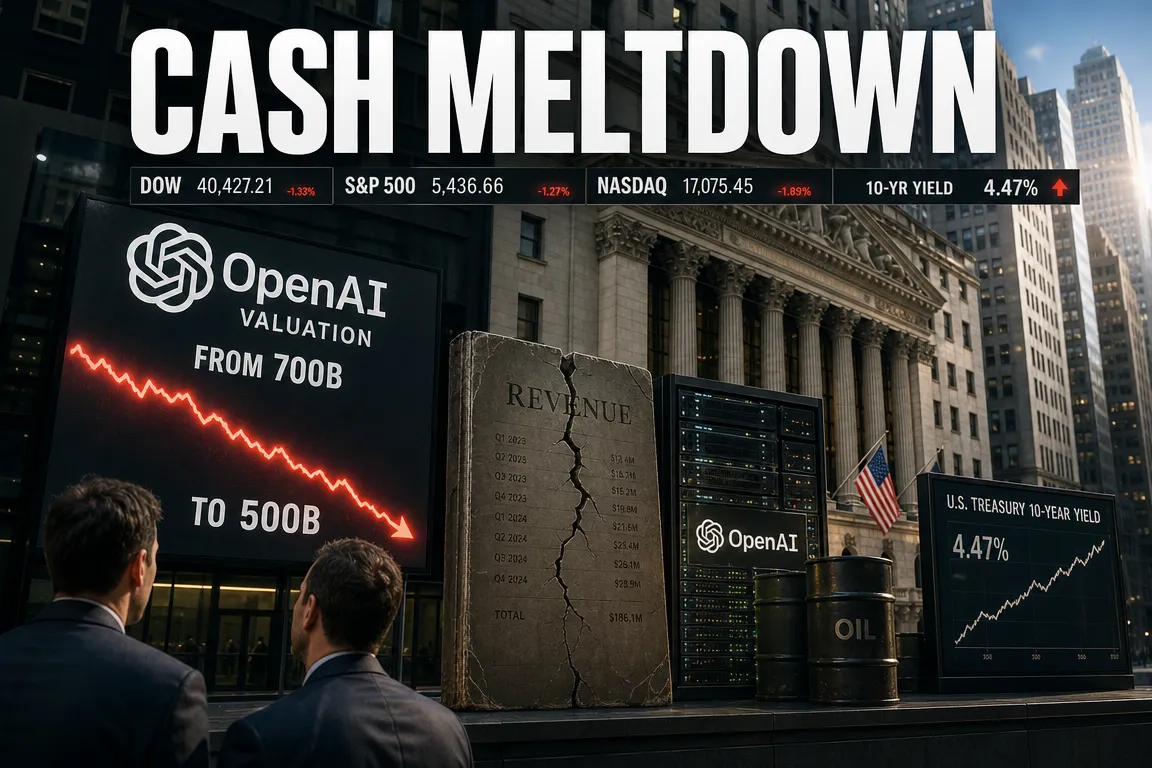
● Private Credit Meltdown, AI Shocks, 2008 Echoes
The Risks in Private Credit Resembling the 2008 Financial Crisis: Why It’s More Complex This Time
What’s really important in the market now is not simply “a certain fund has halted redemptions.”
The core point of this issue is that private credit, loans to software companies, collateral value being shaken by AI, and a general liquidity squeeze in the global financial market are all interconnected at once.
The mention of major financial institutions like Blackstone, BlackRock, Morgan Stanley, Blue Owl, and JP Morgan is not just an isolated bad news, but a scene that makes us suspect structural instability.
This article will easily summarize in a news format what’s happening now, why comparisons to 2008 are emerging, how dangerous the situation really is, and what individual investors should check.
I’ll also organize the real core points that aren’t well covered in other news or on YouTube.
1. Current Situation at a Glance: What’s Happening in the Private Credit Market?
Recently, the redemption restriction issue in private credit funds is rapidly spreading on Wall Street.
In simple terms, investors are asking to “return my money,” but some large asset management firms are only paying up to the stipulated limit or have stopped altogether.
Here’s how the market’s attention has unfolded.
Blue Owl Capital delivered a strong shock with its redemption halt issue,
Blackstone buffered with internal funds when redemption requests exceeded the standard in a specific fund,
BlackRock saw increased redemption requests, adding to market anxiety,
Morgan Stanley also highlighted the structure of only partial payouts due to the growing request scale.
This isn’t just about “fund refunds being delayed.”
From the market’s perspective, the suspicion that “even the biggest financial institutions feel the burden of liquidity management” started to spread.
Thus, financial and alternative asset-related stocks wavered sensitively, and investment sentiment quickly cooled.
2. Why is the Market So Sensitive About Private Credit?
Private credit is, simply put, a structure where funds or alternative investment managers lend money to companies instead of banks.
Unlike public funds, which anyone can easily participate in, it primarily revolves around institutions or high-net-worth individuals.
The problem is getting bigger for three reasons.
- Lack of disclosure makes it hard for outsiders to understand the quality of internal assets in real time.
- A large portion consists of hard-to-price assets like unlisted properties and special loans.
- While returns seem high in favorable times, liquidity plummets during crises.
Thus, it looks like “a more flexible and high-return alternative than banks” when things are good,
yet during market stress, it suddenly becomes uncertain “what’s inside and whether the values are correct.”
This is why it’s often referred to as shadow banking.
3. Why Are Redemption Restrictions Seen as a Warning Signal?
Legally, fund redemption restrictions don’t automatically mean a crisis.
Structurally, private equity funds can adjust the pace when withdrawal requests exceed a certain limit.
However, the market doesn’t view it that calmly.
Here’s how investors interpret it.
- “Why restrict if cash is sufficient?”
- “Perhaps there are too many unsellable assets?”
- “Is it only beneficial to those who withdraw first?”
Ultimately, the effect of redemption restrictions is more psychological contagion than the fact itself.
Fear originating in one place spreads to other funds,
prompting investors in other management firms to say, “What if it happens to us?” and request redemptions in a chain reaction.
A psychology akin to a bank run takes hold.
4. The Real Catalyst of the Current Situation: Software Company Loans and AI Shock
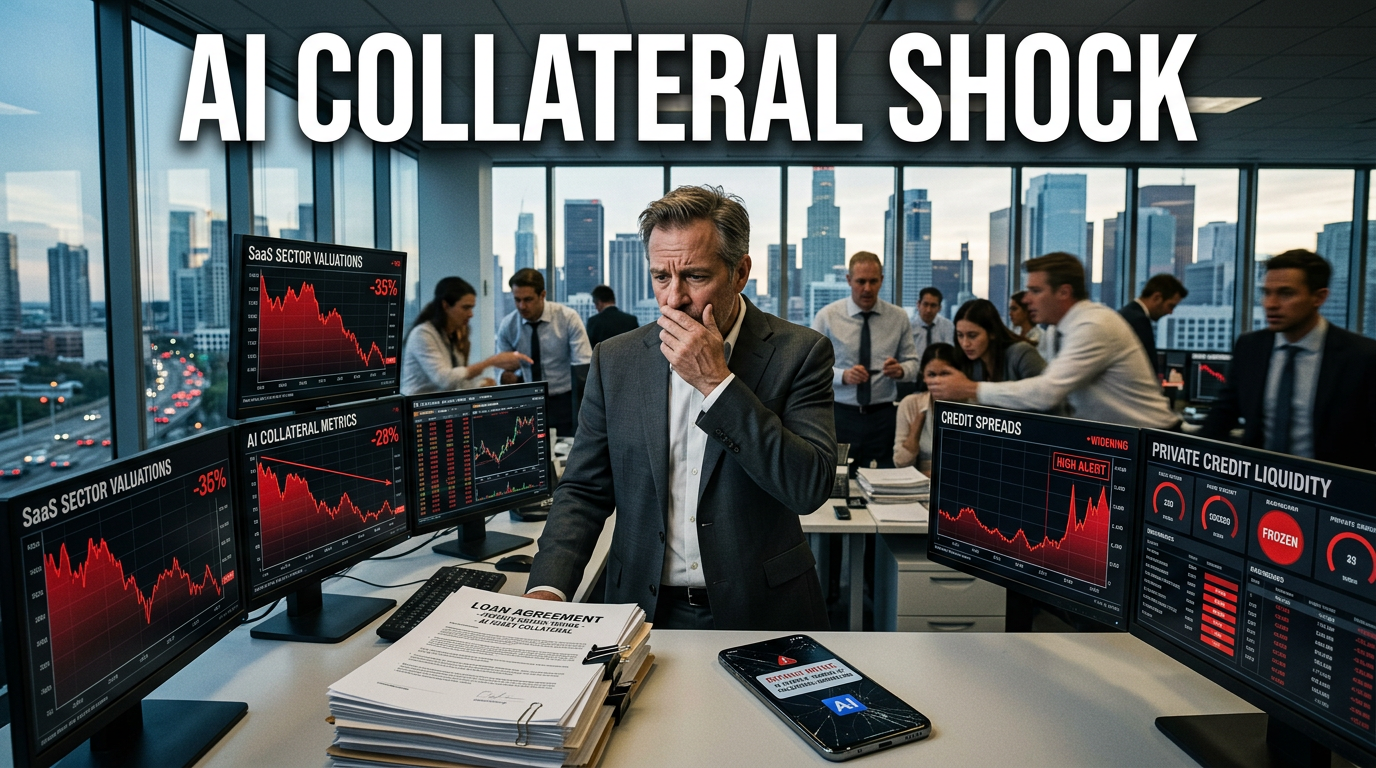
What’s more complex about this issue is that it’s not just about real estate problems but rather that software company loans are highlighted as a core component.
And the AI trend connects directly to this.
For some time, many software companies, especially SaaS companies, have been valued highly based on their recurring subscription revenue.
With monthly subscription fees consistently coming in, it appeared as a stable cash flow,
enabling favorable terms in loans or valuations.
However, as AI agents and generative AI rapidly spread, this premise started to shake.
- Will the existing software subscription model sustain long-term?
- Will enterprise SaaS be absorbed into AI-integrated services?
- Could similar functions be replaced more cheaply?
Why is this important?
It’s because in the private credit market, the future cash flow of these software companies was practically seen as collateral for lending money.
If AI raises questions about that cash flow’s sustainability,
the collateral value itself becomes unstable.
Even in the worst case, real estate collateral leaves behind assets.
However, software companies have few physical assets, with core value lying in code, subscriptions, brand, and user retention,
all of which could be weakened by AI, causing widespread fear.
5. Why Comparisons to 2008 are Emerging
It’s an overstatement to say this situation is exactly like the 2008 financial crisis.
However, there are definite aspects the market feels resemble it.
- Assets previously perceived as stable now suddenly face distrust.
- Problems emerged in areas with opaque asset valuation.
- Liquidity crisis and psychological fear are spreading simultaneously.
- Involvement of large financial institutions raises concerns of systemic risk.
In 2008, subprime mortgages and structured products were central.
Now, private credit and unlisted loans, along with exposure to the tech sector, are at the core.
The form differs, but comparisons arise because of the situation where “assets that seemed fine suddenly become unsellable and their prices questionable during a crisis.”
6. Points of Market Fear: The Asset Valuation Challenge
In the private market, asset prices aren’t tracked in real-time like stocks.
Asset management typically evaluates using internal models and comparables.
This can seem fine under normal circumstances.
However, it becomes a huge problem during a crisis.
- The actual sale price can differ from the ledger price.
- Old valuations might remain high for years.
- Liquidity discounts, i.e., forced sale prices, might not be properly reflected.
Especially if distressed assets remain overvalued on the books for long,
the gap is fully exposed once redemption requests flood in.
Then, the market perceives it not as an individual asset issue but rather a systemic trust issue.
7. Why German and European Financial Sectors Are Tensed
The reason this issue doesn’t stop as an internal Wall Street news but extends to Europe is
concerns that large banks might have similar exposures.
Although banks and private credit funds might seem different,
there are quite a few cases where they lent money backed by similar industries, borrowers, and collateral.
For example, if the percentage of software company loans is high,
when an issue arises with private funds, worries about bank asset soundness can grow.
Thus, movements from European financial institutions like Deutsche Bank are reacted to sensitively.
Ultimately, this issue shouldn’t be viewed merely as a problem with U.S. asset management firms,
but rather a revelation of hidden risks within the global financial market.
8. A More Ominous Aspect: Hidden Software Exposure
The most critical part of this situation on a personal level is that
“software loans might not be recognized merely as software.”
Even if they appear classified as food and beverage, chemicals, services, or industrials,
their actual business might be a software-based platform or subscription service.
Thus, assessing risk based solely on industry classification can lead to underestimating real risks.
This is a very critical issue.
It might be because the market hasn’t yet identified the total exposure accurately.
This is precisely where the fear that “if there’s one visible cockroach, there are more” emanates.
9. A Key Signal from JP Morgan: Downgrade in Collateral Valuation
One of the practically significant scenes in this trend is,
major financial institutions starting to view software company collateral values and lending conditions conservatively.
This effectively reduces the life support metaphorically speaking.
- Previously, loan extensions were possible at high collateral values.
- Now, only lesser amounts are recognized.
- Borrowers must secure additional cash from outside.
- If not, restructuring, asset sales, or down rounds could occur.
Ultimately, the private credit market crisis doesn’t just end within the fund,
it can impact the actual tech company fundraising market, startup ecosystems, employment, and investment cycles.
10. AI Trend Perspective: Key Changes to Watch
This incident is a financial issue but might concurrently be the first scene where the side effects of AI industry reconfiguration spill into finance.
In the AI era, not all software companies receive similar evaluations.
The market is likely to partition more forcefully going forward.
- Companies enhancing product competitiveness through AI
- Companies whose existing functions are being replaced by AI
- Companies with repetitive revenue but weak differentiation
- Companies strong in data, distribution channels, ecosystems
Previously, the formula “subscription SaaS = stable” was quite effective.
But now, “Is there a reason to continue paying this subscription fee in the AI era?” has become more critical.
This change can alter company valuations, venture investment, private credit criteria, and M&A prices entirely.
11. What Should Individual Investors Check?
The most important thing during these times is avoiding both excessive fear and unconditional optimism.
It’s not at a stage to definitively say a 2008-level global financial crisis is imminent.
However, risk management has undeniably become more crucial.
11-1. Portfolio Checkpoints
- Check if the high-growth stock proportion is too high
- Review the share in ETFs or stocks with large exposure to software, fintech, and private holdings
- Ensure you are not maintaining an excessively low cash or defensive stock proportion
- Check if you possess many assets vulnerable to rising interest rates and oil prices
11-2. Areas That Might Be Favorable in the Current Market
- Value stocks with stable cash flow
- Assets related to energy, raw materials, and infrastructure
- Large-cap stocks with solid earnings base
- Companies benefiting clearly from AI with pricing power
Especially in the current phase, “theme stocks with good stories” are less important
compared to performance, cash flow, debt structure, and price transfer ability.
Given the simultaneous presence of recession concerns and inflation volatility, investment strategies need to be a bit more realistic.
12. Brief News Summary
The private credit issue is spreading with redemption restriction cases from major management firms like Blue Owl, Blackstone, BlackRock, and Morgan Stanley heightening market anxiety.
The core point is the shaking trust in the quality and price of assets inside, more than liquidity itself.
Specifically, software company loans expanded on recurring revenue collateral but are facing re-evaluation pressure as AI proliferation questions business model sustainability.
This affects not just private credit markets, but banks, European financial institutions, and tech stock investment sentiment simultaneously.
While it’s not a stage to address system collapse immediately,
it’s more accurate for the global economy and market to view it as an “early phase where hidden vulnerabilities are beginning to emerge.”
13. The Most Important Information Not Usually Mentioned in Other News or YouTube
Most stop at “redemption restrictions emerged,” “it’s like 2008,” or “financial crisis concern.”
However, the genuinely important aspects are different.
- This isn’t just a liquidity crisis but a structural change where AI challenges the existing software collateral system.
- There might be hidden exposures not categorized just as software.
- The valuation method of the private credit market itself could face a credibility crisis.
- This shock can extend sequentially from startups, SaaS, venture investment, loan markets, to employment.
In other words, simply viewing this incident as “fear in the financial sector” means seeing only half.
The core is that AI is restructuring industries faster than the financial system is adapting.
The larger this gap, the more frequently similar shocks are likely to occur in the future.
14. Conclusion: Now is the Time to Understand the Structure, Not Panic with Fear
The current market reflects much deeper changes beyond short-term news headlines.
Private credit anxiety, tech stock valuation adjustments, the restructuring of the software industry by AI, and variables like interest and oil prices are intertwined simultaneously.
Therefore, what is needed now is not panic selling but structural understanding.
Which assets genuinely have liquidity,
which companies strengthen with AI,
what business models are eroded by AI,
and how slow financial institutions are in reflecting those changes should be assessed.
Going forward, the most critical aspect in the global economic flow is
how seemingly safe assets are re-evaluated amid AI and liquidity shocks.
Those who grasp this trend are more likely to survive the next investment cycle.
< Summary >
Redemption restriction issues are spreading through the private credit market, increasing financial market anxiety.
With big institutions like Blue Owl, Blackstone, BlackRock, and Morgan Stanley being simultaneously mentioned, concerns over system risk have expanded.
The core issue is that the collateral value of software company loans is being shaken by AI proliferation.
This event is not entirely like 2008, but it resembles it in the spread of liquidity crises and distrust in asset values.
Individual investors should check their bias toward growth stocks and focus on risk management with assets having stable cash flow.
[Related Articles…]
- Key Takeaways from AI Industry Restructuring Affecting Global Investment Strategies
- Interest Rate Cuts Delayed and Recession Concerns: Financial Market Outlook for the Second Half
*Source: [ 월텍남 – 월스트리트 테크남 ]
– 2008년과 놀랍도록 닮았다…역사는 반복되는가?