● Tesla Shockwave, Nvidia-Samsung-TSMC Tremor, AI Chip Empire Countdown
Potential Tesla “Semiconductor Empire” Announcement in 7 Days: Why It Could Pressure Nvidia, Samsung Electronics, and TSMC Simultaneously
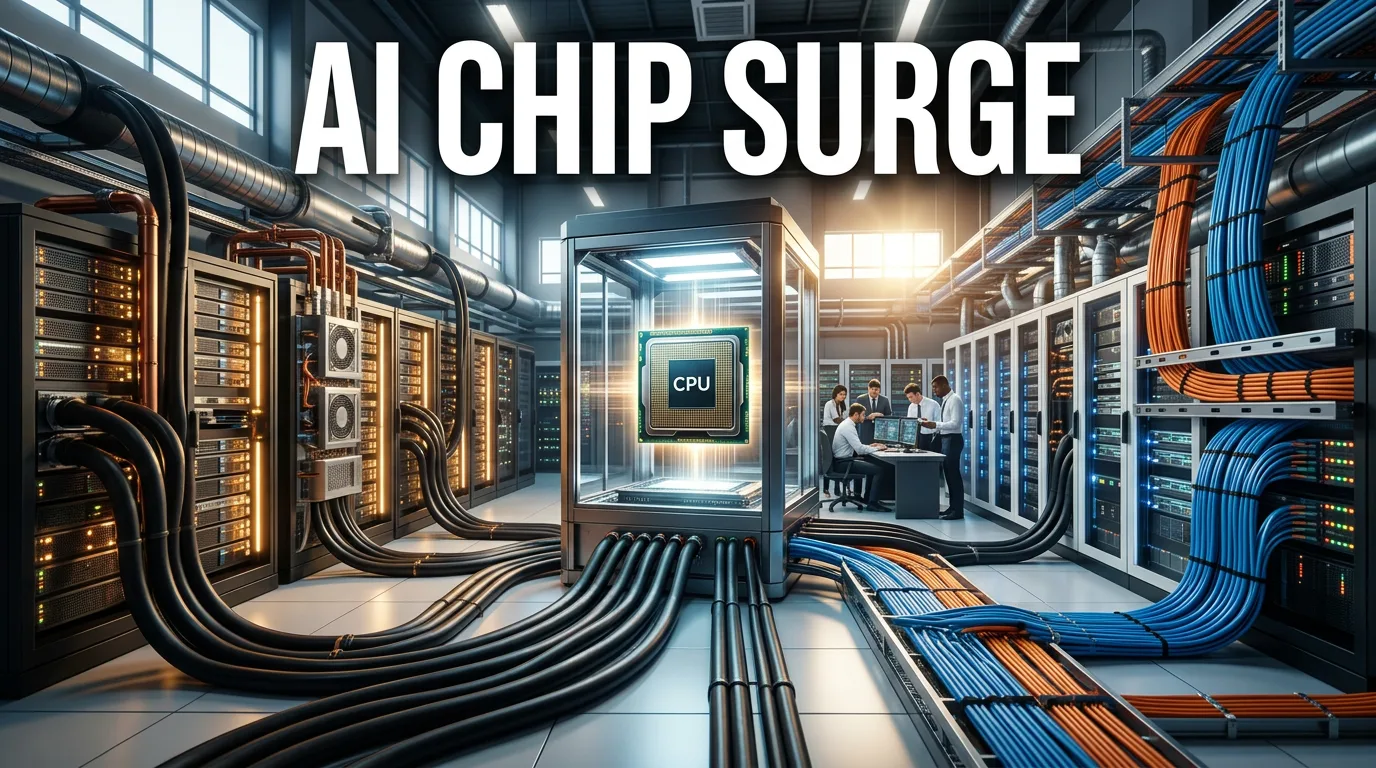
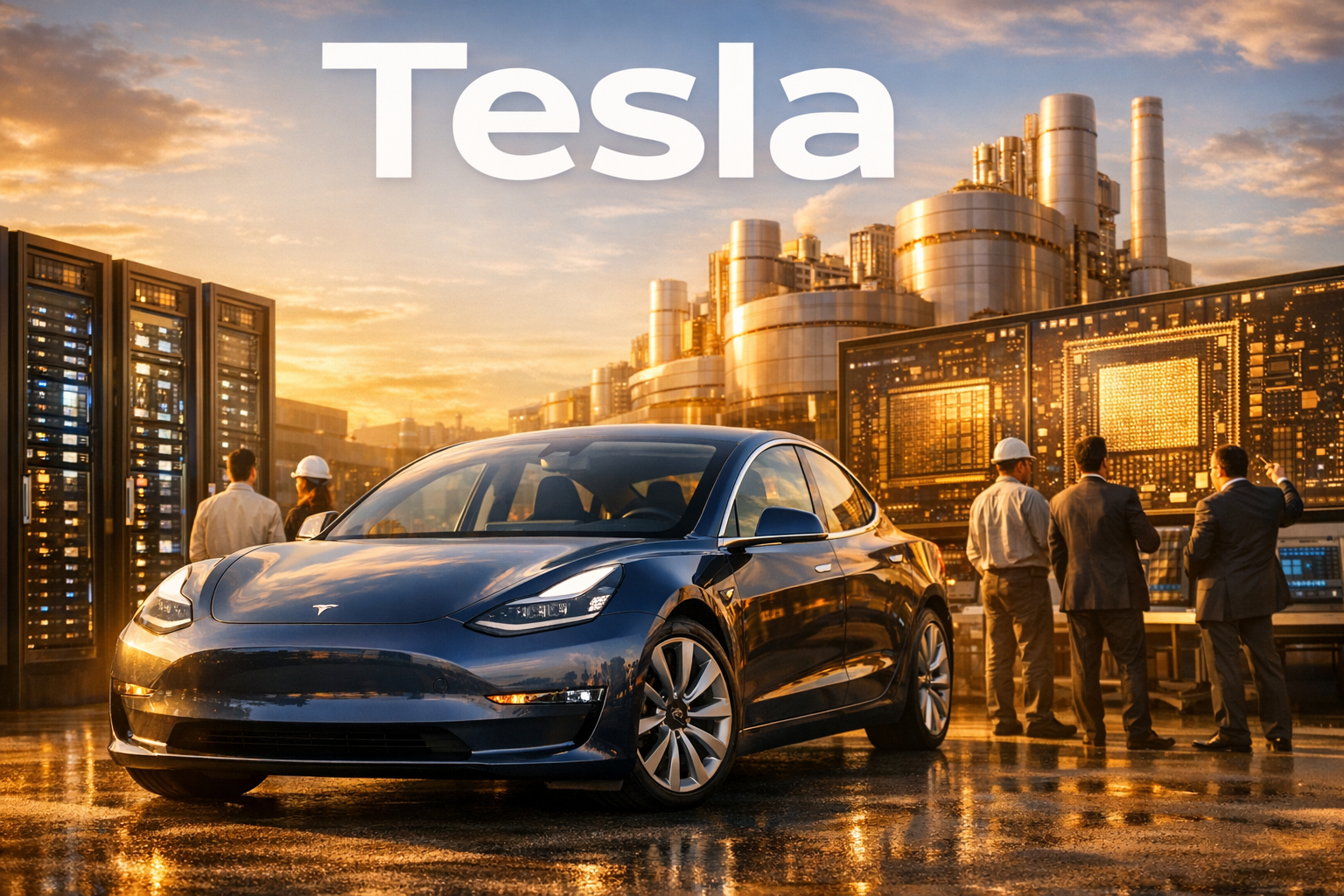
A Tesla semiconductor initiative that may begin in seven days is not a routine chip-development headline. The market focus centers on three issues:
1) Why Tesla would reduce reliance on Nvidia and move toward deeper semiconductor vertical integration, potentially including manufacturing.
2) Whether this direction is a threat to, or a large-scale partnership opportunity for, leading foundries such as Samsung Electronics and TSMC.
3) Whether the initiative represents a platform strategy spanning AI semiconductors, autonomous driving, robotics, data centers, and energy infrastructure.
This report summarizes why the “tera-scale” semiconductor concept is attracting attention, the practical plausibility of a “1 million wafers per month” target, the extent to which Nvidia’s dominance could be challenged, and potential implications for Korea’s semiconductor industry and broader macro conditions. A final section highlights key points often underweighted in mainstream coverage.
1. Key Takeaways
A short “starts in 7 days” message posted by Elon Musk on X has been interpreted as a signal not only of a semiconductor project launch, but also of Tesla accelerating its transition toward an AI infrastructure company.
Key points:
- Potential move toward in-house semiconductor production and/or large-scale internalization of the semiconductor supply chain
- A stated pathway from an initial ~100,000 wafers per month to a long-term target of ~1,000,000 wafers per month
- Strategy to secure sufficient compute for autonomous-driving AI, Optimus robotics, and data-center-class workloads
- Intent to reduce Nvidia dependency and improve AI economics
- Increasing emphasis on an integrated strategy linking semiconductors with power, solar, and broader infrastructure
2. Why Tesla Would Pursue Semiconductors Directly
2-1. Margin and cost structure: reducing Nvidia dependency
A primary driver is economics. High-performance AI accelerators are expensive, and the supplier profit pool is concentrated. For an organization scaling both autonomous-driving training and robotics AI, compute demand can grow rapidly; continued reliance on external accelerators can worsen long-term cost structure as AI intensity rises.
In-house chips can function as a profitability lever, not solely “tech independence,” by improving unit economics and sustaining margins as compute intensity increases.
2-2. Need for Tesla-specific chips rather than general-purpose silicon
Nvidia’s GPUs are highly general-purpose (graphics, LLM training/inference, HPC). Tesla’s requirements are more application-specific: autonomous-driving decisioning, vision processing, real-time planning, and robotics control. Purpose-built silicon can improve performance-per-watt by removing unused functionality and optimizing for Tesla’s workload profile.
2-3. Supply-chain constraints as a growth limiter
Tesla has repeatedly highlighted supply-chain bottlenecks. If external supply cannot scale with FSD, Optimus, and training infrastructure expansion, vertical integration becomes a strategic option. This parallels prior behavior in other critical components where control over production capacity is treated as a competitive requirement.
3. “1 Million Wafers” Target: Practical Considerations
3-1. Scale is material
A monthly target of 1 million wafers is significant, even when benchmarked against top global foundry capacity. If achieved with leading-edge nodes, it would imply meaningful influence over industry structure.
3-2. More likely a staged ramp than immediate execution
Market interpretation suggests a phased approach: an initial scale around 100,000 wafers per month, with potential expansion toward 2030. The near-term issue is not immediate output, but whether Tesla discloses investment commitments and a credible roadmap.
3-3. Funding capacity is not the binding constraint
Tesla’s liquidity profile suggests the company is not constrained by a lack of capital. However, semiconductor fabrication is capital- and execution-intensive: equipment, cleanrooms, specialized talent, yield stabilization, and process know-how typically require multi-year investment cycles and large upfront commitments.
4. Implications for Samsung Electronics and TSMC
4-1. Near-term: collaboration may dominate
Replacing Samsung Electronics or TSMC in the near term is unlikely. Manufacturing—especially at sub-2nm-class nodes—requires decades of accumulated process control, yield learning, packaging, and qualification infrastructure. Even if Tesla announces vertical integration ambitions, early execution would likely rely on incumbent foundries.
4-2. Medium-to-long term: a customer could become a competitor
If Tesla develops credible internal manufacturing and supply-chain capability, it could reduce external foundry demand and potentially emerge as a competitor in select application-specific AI silicon segments, particularly within vertically integrated automotive and robotics platforms.
4-3. Korea: risk and opportunity
For Korean investors, the near-term probability skew may favor opportunity: if Tesla cannot fully self-execute at advanced nodes, collaboration demand for leading foundry services and packaging could increase. Over the longer term, a successful ramp could create a mixed relationship: customer plus potential competitor.
5. Can Tesla Meaningfully Pressure Nvidia?
5-1. Indirect pressure is more plausible than direct displacement
Displacing Nvidia’s ecosystem in the near term is unlikely due to Nvidia’s software toolchain, developer base, and entrenched customer adoption. A more realistic vector is workload-specific silicon economics, where purpose-built accelerators may offer superior efficiency for defined use cases (autonomy and humanoid robotics).
5-2. Weak points in AI compute economics: price and power
AI scaling constraints increasingly include power, cooling, data-center real estate, and operating costs, not only chip supply. The competitive axis may shift from peak performance to performance-per-watt and total cost of ownership. Tesla’s energy assets (storage, solar, power management) could provide complementary leverage if integrated into an end-to-end compute strategy.
6. Why This Is Not a Simple Semiconductor Story
6-1. Automotive expansion vs. AI infrastructure bundle
Tesla’s implied architecture is broader than vehicles:
- Data collection from fleets
- Training and inference using internal silicon
- Data-center scaling and model iteration
- Deployment into Optimus robotics
- Power infrastructure support via energy products
- Potential longer-horizon linkage to communications and space infrastructure
This frames the chip initiative as part of a vertically integrated AI economy stack, not a standalone semiconductor program.
6-2. Focus metric: energy efficiency rather than raw compute
A central differentiator is the emphasis on power as the limiting factor. If correct, competition extends beyond process nodes into grid access, generation, cooling, and operational efficiency, reshaping how AI infrastructure advantage is built and defended.
7. Signals from SXSW: Execution Direction
7-1. Optimus: moving from concept toward service experimentation
Observed demonstrations emphasize more precise manipulation and practical interactions, suggesting a shift from feasibility narratives to early service-environment exploration, despite remaining maturity gaps.
7-2. Cybercab: interface test for urban AI mobility services
A steering-wheel-free, pedal-free configuration and public-facing demos indicate continued positioning toward autonomous mobility services. Both robotaxis and humanoid robotics reinforce the centrality of AI silicon to Tesla’s platform.
8. Robotics: Dual-use Risk and Control Structures
8-1. Similar control technologies can yield divergent outcomes
Advanced control and learning systems are application-neutral. The same capability can support civilian services or military applications, linking robotics progress to regulation, national competitiveness, and defense policy.
8-2. Winners may be determined by control of software, data, and supply chains
Beyond hardware capability, market structure may be shaped by who controls software layers, data access, and the power-and-semiconductor supply chain. In this framework, semiconductor internalization is a governance and control strategy as much as a manufacturing decision.
9. Core Risks: Lessons from Dojo
9-1. Design and manufacturing are different disciplines
Vision and architecture do not guarantee manufacturability. At advanced nodes, execution quality and accumulated process learning determine yield and cost.
9-2. Yield failure can drive substantial cash burn
Semiconductor fabs can become prolonged capital sinks if yield stabilization fails. The project therefore carries asymmetric outcomes: potentially large upside if successful, significant downside if execution stalls.
9-3. Incumbents will defend
Samsung Electronics and TSMC are likely to respond with pricing strategies, customer-specific process offerings, packaging expansion, and AI-focused capacity planning.
10. Why It Matters for the Global Macro Outlook
10-1. AI semiconductors are now central to capex cycles
AI chips, data centers, power infrastructure, and automation capex are increasingly interlinked, influencing market leadership and valuation frameworks. A Tesla escalation could contribute to broader U.S. manufacturing reshaping and technology-competition dynamics.
10-2. AI-driven GDP expansion: interpret as a productivity thesis
Claims of order-of-magnitude GDP expansion should be treated as directional rather than literal. The underlying argument is that AI and robotics can relax labor constraints and drive productivity gains, potentially triggering valuation re-rating for firms controlling compute, power, communications, and robotics platforms.
11. Underweighted Points in Mainstream Coverage
11-1. The objective may be an “energy-plus-compute” integrated company
The strategic frame is not “becoming a chip company,” but integrating power generation/storage/distribution with compute and robotics deployment into a unified system.
11-2. Primary goal may be speed and control, not only cost
Beyond reducing supplier margin capture, internalization can secure control over iteration velocity: product release timing, training cadence, and scaling pace.
11-3. For Korean investors: track the supply-chain impacts
The more actionable lens is the supply chain: equipment, materials, foundry services, advanced packaging, power and cooling, and data-center infrastructure. Broad second-order beneficiaries may emerge as these domains converge.
12. Conclusion: What Tesla May Be Signaling
This semiconductor initiative suggests Tesla is positioning beyond automotive toward AI infrastructure, aiming to control two primary bottlenecks: semiconductors and power. It can pressure Nvidia on economics and efficiency, while sending mixed signals to Samsung Electronics and TSMC—near-term collaboration potential, longer-term competitive optionality.
The critical issue in seven days is not the headline itself, but the scope: chip design only, manufacturing investment, or a broader integrated strategy spanning data centers and energy.
< Summary >
Tesla’s semiconductor initiative is framed as a platform strategy spanning AI silicon, autonomy, robotics, data centers, and energy infrastructure.
Key objectives include reducing Nvidia dependency, optimizing workload-specific chips, and gaining supply-chain control.
A 1 million wafers-per-month target is aggressive; a staged ramp increases plausibility but execution risk remains high.
For Samsung Electronics and TSMC, near-term collaboration potential coexists with longer-term competitive risk.
The core strategic thesis is integration of power and compute into an AI infrastructure platform, not standalone semiconductor expansion.
[Related Articles…]
- Semiconductor power competition: the next battleground for Samsung Electronics and TSMC (NextGenInsight.net?s=semiconductors)
- Expanding AI infrastructure investment: new currents in global equities and U.S. technology (NextGenInsight.net?s=AI)
*Source: [ 오늘의 테슬라 뉴스 ]
– 테슬라 7일 뒤 반도체 제국 선포! 왜? 엔비디아를 치고 삼성·TSMC를 긴장시킬까? ( 수정본 )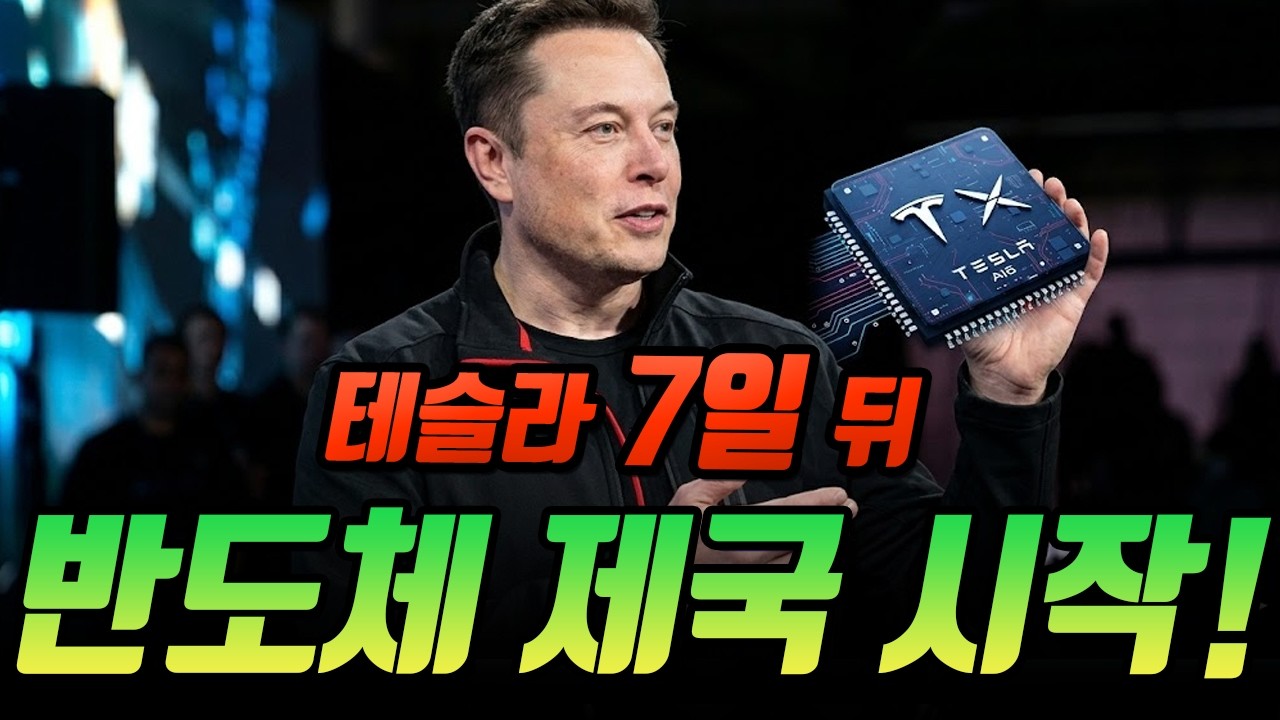
● Semiconductor Shockwave, Samsung Surge, KOSPI 7000 Explosion
The Real Rationale Behind “KOSPI 7,000” and “Samsung Electronics KRW 250,000”: De-escalation Risk, a Foundry Inflection, and a Korean Manufacturing Re-rating
The core argument is not a simple “bullish Samsung” view. It is a framework for (i) why Samsung could reclaim prior highs, (ii) why KOSPI 7,000 may be discussable under defined conditions, and (iii) why the next semiconductor battleground may shift from memory-cycle recovery toward foundry normalization and supply-chain restructuring.
Key conclusion: the primary driver of Samsung’s upside is not near-term earnings but the probability of foundry stabilization and re-rating; the condition for a broad market re-rating is that gains extend beyond semiconductors into Korea’s legacy manufacturing complex.
1. Executive Summary: Why KRW 250,000 for Samsung and KOSPI 7,000 Enter the Narrative
The thesis starts from three conditions:
- Geopolitical de-escalation or reduced tail risk
- Accelerating global supply-chain reconfiguration
- A more explicit US strategy to reduce reliance on TSMC
If these align with a memory upcycle, expanding AI-related semiconductor demand, and stronger manufacturing alliances, Samsung’s narrative can shift from cyclical recovery to structural multiple expansion.
Under that scenario, Samsung at KRW 250,000 and KOSPI in a 6,500–7,000 range becomes a valuation-driven discussion rather than a purely aspirational target.
2. Core Equity Driver (1): Foundry Matters More Than Memory for the Valuation Ceiling
Many investors still underwrite Samsung primarily as a memory company. Memory remains important, but the argument emphasizes that Samsung’s valuation ceiling is more likely determined by foundry recovery than by memory earnings.
2-1. Memory Can Improve, but Multiples Are Typically Constrained
Memory is structurally cyclical:
- High sensitivity to macro demand
- Pronounced pricing cycles
- Large earnings volatility tied to supply-demand balance
As a result, memory-led businesses often trade at discounted multiples even in peak earnings phases due to sustainability skepticism, contributing to Samsung’s historically low headline PER.
2-2. Why Foundry Commands Higher Multiples
Foundry economics differ:
- Customer-specific production
- Long-term engagement and qualification cycles
- Higher visibility relative to commodity memory
Foundry success can change the company’s valuation profile rather than only lifting earnings. TSMC’s premium reflects its strategic position as core global manufacturing infrastructure, not only market share.
If Samsung demonstrates meaningful share stabilization, improved yields, customer confidence, and a path to profitability, the market may treat this as a structural re-rating catalyst.
3. Strategic Opportunity: A US Push to Reduce TSMC Concentration Risk
Market attention often focuses on the probability of conflict; the more investable question is how the US assesses concentrated reliance on one geography for leading-edge capacity.
3-1. TSMC Concentration as a Global Supply-Chain Tail Risk
A highly centralized leading-edge foundry supply chain can be efficient in stable environments, but becomes a national-security and continuity risk under geopolitical stress.
A rational US response could include not only deterrence but also structural diversification away from a single-node dependency.
3-2. Samsung as a Practical Alternative
Intel is also a candidate, but the number of players with both leading-edge manufacturing ambition and scaled production experience is limited.
Samsung’s strengths include:
- Established leadership in memory
- Significant capex capability and technology base in non-memory/foundry
Key constraints remain yield, customer trust, and production stability. Improvement in these areas could reposition Samsung from a secondary alternative to a primary beneficiary of supply-chain diversification.
4. Why De-escalation or War Termination Can Be a Tailwind for Samsung
“War termination” should be interpreted broadly as reduced geopolitical stress across key hotspots (including the Middle East and the Taiwan Strait), improving risk appetite and enabling policy-driven supply-chain actions.
4-1. Risk Premium Compression
During elevated geopolitical risk, equities can trade at discounted valuations regardless of earnings momentum, particularly in long-duration technology and semiconductor sectors.
De-escalation can compress risk premia, supporting higher index and large-cap tech valuations.
4-2. Supply-Chain Reconfiguration Can Convert to Orders
The more material channel is demand allocation:
If large US fabless firms and hyperscalers reassess over-concentration at TSMC, Samsung’s foundry option value increases. This links to industrial policy, subsidies, alliance formation, and national-security framing.
5. Valuation Logic Behind the KRW 250,000 Scenario
The argument is valuation-led: Samsung’s discounted PER could rise if ROE improves and structural discount factors fade.
5-1. Current Discount Factors Typically Priced by the Market
- Memory-cycle volatility
- Foundry losses and yield concerns
- Lower credibility versus TSMC
- Geopolitical risk and “Korea discount”
If these weaken, Samsung’s equity story can shift to a different valuation regime.
5-2. Mechanism for Multiple Expansion
A memory-only framing supports lower multiples. A credible recovery in foundry can raise the appropriate multiple applied to consolidated earnings.
Reframing Samsung as an integrated “memory + foundry + AI infrastructure” platform can justify a higher premium, making KRW 250,000 a conditional, modelable outcome rather than a purely narrative target.
6. KOSPI 7,000: A Structural Interpretation Rather Than Pure Optimism
Given Samsung’s heavy index weight, a structural re-rating of Samsung implies a higher KOSPI level mechanically and through sentiment spillover.
6-1. When Semiconductors Are Sufficient, and When They Are Not
A semiconductor-led rally could plausibly explain a move into the mid-6,000s. Sustaining levels above 7,000 would likely require broader earnings growth across autos, shipbuilding, machinery, nuclear, batteries, materials, and industrials.
6-2. Why Korea’s Broad Manufacturing Base May Re-enter the Investment Focus
AI is not purely software-driven in economic terms; it drives demand for physical buildout:
- Data centers
- Power generation and grid investment
- Robotics and automation
- Autonomous systems
- Defense modernization
- Smart factory upgrades
This “physical AI” phase can favor economies with deep manufacturing ecosystems, positioning Korea to benefit if capex cycles broaden.
7. AI Lens: The Core Investable Point
AI beneficiaries are often framed as software platforms and US megacaps. The larger capital intensity may migrate toward deploying AI into real-world systems.
7-1. The Emergence of Physical AI
Physical AI refers to AI operating industrial and physical assets (factories, robots, vehicles, defense systems, and power networks). This phase elevates:
- Foundry capacity
- Advanced packaging
- High-bandwidth memory
- Power semiconductors
- Sensors
- Industrial robotics components
Samsung’s relevance increases because it is one of the few players with both leading memory and meaningful non-memory manufacturing ambition.
7-2. Korea’s Positioning in AI Semiconductors
The market currently centers on Nvidia, but long-term demand expands across:
- AI servers and edge devices
- Industrial AI
- On-device AI
- Defense AI
Beyond design leadership, competitive advantage increasingly depends on stable manufacturing, customer co-development, advanced packaging, power efficiency, and supply-chain resilience.
8. Broader Market Transmission: From Semiconductors to Legacy Manufacturing
A semiconductor boom concentrates benefits in high-value technology segments. For economy-wide effects and durable index breadth, legacy manufacturing must also improve.
8-1. Why a Broad Manufacturing Upswing Matters
- Higher employment multipliers
- Stronger regional economic linkage
- Wider stimulation across parts, materials, and equipment
- Export growth can support domestic sentiment
KOSPI 7,000 is more meaningful if it reflects broader earnings expansion rather than a narrow index-weight effect.
8-2. Sectors to Monitor
- Semiconductor equipment and materials
- Shipbuilding and defense
- Power infrastructure and nuclear
- Industrial automation and robotics
- Autos and autonomous-driving components
- Secondary batteries and advanced materials
These segments align with supply-chain restructuring, AI infrastructure capex, and re-shoring/ally-shoring trends.
9. Key Variables Investors Should Monitor
This scenario is not self-executing; confirmation signals are required.
9-1. Samsung-Specific Checklist
- Foundry yield improvement
- New large-customer wins
- Leading-edge process competitiveness and pace of recovery
- HBM and advanced packaging readiness
- Durability of the memory upcycle
9-2. Macro and Policy Checklist
- Pace of US rate cuts
- USD strength versus FX stability (impacting foreign flows)
- Middle East and Taiwan Strait risk levels
- Post-election US industrial policy direction
- Probability of a global downturn
FX and rates are particularly important for foreign positioning and KOSPI momentum.
10. News-Style Key Takeaways
- First, Samsung’s upside framework is driven more by foundry re-rating than by memory rebound alone.
- Second, a stronger US push to reduce TSMC reliance increases Samsung’s strategic option value.
- Third, geopolitical de-escalation can compress risk premia and accelerate supply-chain realignment.
- Fourth, KRW 250,000 requires multiple expansion, not only earnings recovery.
- Fifth, KOSPI 7,000 likely requires breadth: a recovery across Korea’s manufacturing complex, not semiconductors alone.
- Sixth, AI’s economic impact increasingly links to physical infrastructure and manufacturing, where Korea may be structurally advantaged.
11. Under-Discussed Core Point: From “Good Memory Producer” to “Strategic Foundry Partner”
Most coverage stops at target prices, memory pricing, HBM competition, or foreign flows. The more material re-rating catalyst would be a perception shift toward Samsung as a strategically necessary foundry partner within US-aligned supply chains.
11-1. Not Only an Earnings Issue, but a National-Strategy Issue
TSMC concentration is increasingly framed through national security, technological leadership, and AI infrastructure control. If Samsung’s foundry normalization aligns with allied industrial strategy, the valuation impact can exceed a typical corporate turnaround.
11-2. Why This Cycle Could Differ
Prior Samsung rallies were largely memory supercycle-driven. A regime combining memory recovery, foundry improvement, AI infrastructure demand, and supply-chain restructuring could support a broader reduction in the “Korea discount.”
12. Reframed Conclusion
The critical point is directionality, not the headline numbers. The market focus is shifting from memory recovery to include foundry normalization and manufacturing supply-chain restructuring.
As AI deepens, value accrues not only to designers but also to scaled, reliable manufacturers. Under that framework, Samsung can function as a central lever for both Korea’s growth narrative and a potential equity-market re-rating.
< Summary >
Samsung’s valuation upside is more sensitive to foundry normalization than to memory-cycle recovery.
A stronger US effort to reduce TSMC dependence could trigger a re-rating of Samsung’s non-memory value.
Geopolitical de-escalation may compress risk premia and catalyze supply-chain reconfiguration.
KRW 250,000 becomes plausible only with multiple expansion supported by foundry progress.
KOSPI 7,000 likely requires a broad recovery across Korea’s manufacturing sectors, not semiconductors alone.
AI’s next phase is increasingly physical and infrastructure-intensive; Korea may be well-positioned in that shift.
[Related Articles…]
Samsung Electronics stock outlook and key semiconductor restructuring analysis
https://NextGenInsight.net?s=Samsung%20Electronics
KOSPI upside scenarios and Korea growth beneficiary sectors
https://NextGenInsight.net?s=KOSPI
*Source: [ Jun’s economy lab ]
– 전설의 반도체 애널리스트가 코스피 7000, 삼성전자 25만원을 보는 이유(ft.소현철 교수 2부)
● Oil Shock, Trump-China Delay, Hormuz Crisis
Trump’s Potential Delay of a U.S.–China Leaders’ Summit, Strait of Hormuz Tensions, and Oil Price Volatility
This development extends beyond a Middle East security headline. It links:
- renewed risk of U.S.–China trade friction,
- crude-driven inflation pressure,
- global supply-chain instability,
- China’s diplomatic trade-offs, and
- cross-asset implications for risk assets such as Bitcoin and global equities.
This report explains:
- why markets did not panic even after WTI briefly broke above USD 100,
- why Trump raised the Strait of Hormuz issue in messaging toward China,
- why uncertainty around Iran’s internal decision-making is a larger market variable, and
- why rising “vessel waiting” is a key leading indicator that is often underweighted.
This is directly relevant for investors monitoring equities, ETFs, U.S. markets, crude oil, and rates.
1. Key Takeaways (Today)
Three market-critical points:
- WTI surged above USD 100 early in the session but gave back part of the move, shifting into a high-volatility regime.
- Trump stated that a U.S.–China leaders’ summit could be delayed, refocusing attention on U.S.–China trade uncertainty.
- The Strait of Hormuz is not fully closed; limited passage continues alongside a sharp increase in vessels waiting, indicating a fragile operating environment.
Markets are not fully pricing a worst-case scenario, but risk is not contained.
2. Oil Price Spikes and Pullbacks: Why Markets Stayed Relatively Orderly
Significance of WTI Breaking USD 100
Weekend strikes made an opening spike in oil futures a mechanical response. A decisive move above USD 100 signaled rapid pricing of near-term supply-disruption risk. The subsequent retracement suggests markets view the situation as elevated but not yet an immediate full shutdown scenario.
Why Oil Did Not Only Move Higher
Key drivers limiting follow-through:1) The Strait of Hormuz has not been fully blocked.
2) Some flows—particularly cargoes bound for China and India—continue.
3) Expectations for a late-month U.S.–China summit have not fully collapsed.
Markets are simultaneously pricing geopolitical stress and a non-zero probability of diplomatic de-escalation.
Investor-Relevant Implications
Sustained oil around USD 100 can:
- revive inflation concerns,
- delay rate-cut expectations, and
- rotate equity leadership away from duration-sensitive growth.
U.S. equities: potential relative strength in energy, defensives, and commodities-linked exposures.
Korean equities: higher import-cost pressure, KRW weakness risk, and increased volatility in refining/petrochemicals.
3. Why Trump’s Remarks Matter
“The Summit May Be Delayed”: Practical Implications
This is not merely scheduling commentary. The core is the use of the Strait of Hormuz as leverage in messaging toward China. Trump argued that China obtains roughly 90% of its oil via Hormuz and should therefore participate in protection operations. This frames Middle East maritime security as a test of China’s position, with implied consequences for bilateral engagement, including summit timing.
Why China Faces a Constraint Set
China’s dependence on Middle East crude is structurally high, while its relationship with Iran remains strategically relevant. Active participation in U.S.-aligned escort operations could strain ties with Iran; limited participation could weaken China’s position in U.S. diplomatic and trade negotiations. The issue is therefore an interaction among energy security, diplomatic balancing, global supply chains, and U.S.–China trade dynamics.
Current Market Interpretation
Markets appear to assign a higher probability to the summit proceeding as planned or with limited adjustment rather than a full breakdown. Constraints exist on both sides: the U.S. is sensitive to inflation and equities, while China faces growth and export headwinds and benefits from a diplomatic outlet. However, headline risk is likely to remain high until the meeting window.
4. Iran’s Internal Power Uncertainty: Why Markets Treat It as a Higher-Risk Variable
Why Speculation Around Mojtaba Khamenei Has Intensified
The central issue is limited verifiable information. A lack of visible public appearances and reliance on Telegram-channel messaging has amplified overlapping narratives (health, injury, weakened control). Markets typically penalize uncertainty in command-and-control more than a clearly communicated hardline stance.
Interpreting the “Compensation” Message
Reported messaging included demands for compensation from adversaries, with threats of seizure or destruction absent compliance. The inclusion of “compensation” can also be read as leaving room for conditional negotiation. This ambiguity is one reason the oil spike did not fully extend.
Why the “Russia Transfer” Narrative Is Not Market-Irrelevant
Unconfirmed reporting suggested injury and surgery in Moscow, with no official confirmation from Iran or Russia, and claims that even Israeli intelligence could not pinpoint location. The market relevance is less the factuality and more the dissemination: it reinforces perceived opacity in Iran’s internal control, raising concerns about policy coherence and escalation risk. Geopolitical risk can rise when leadership clarity is low.
5. Strait of Hormuz: The Key Issue Is “Imperfect Transit,” Not Only “Full Closure”
Current Operating Picture
The strait is not at a standstill. Some vessels continue to transit, including shipments observed toward China and India. Reports also indicate Iranian vessels reaching China, suggesting continued—though fragile—throughput.
Why This Is Not Reassuring
Ongoing transit does not eliminate risk. The most important near-term indicator is the surge in vessels waiting outside the strait. This reflects carrier and cargo-owner behavior consistent with: “passage may be possible, but confidence is low.” The result is a sharp decline in shipping efficiency even without complete disruption.
Why Rising Vessel Waiting Is a Leading Indicator
While oil prices are a visible outcome, changes in waiting times and routing are earlier real-economy signals. If waiting persists:
- freight rates can rise,
- insurance premia can increase,
- delivery delays can propagate,
- cost structures across refining, petrochemicals, aviation, shipping, and manufacturing can be stressed.
These effects can accumulate and later appear in inflation data and corporate results.
6. Implications for Equities and Cryptoassets
U.S. Equities
Near-term drivers likely include:
- renewed inflation concerns from higher crude,
- U.S.–China summit uncertainty, and
- escalation vs. de-escalation in the Middle East.
Nasdaq-heavy growth exposures are rate-sensitive and may face pressure if oil-driven inflation expectations rise. Energy and select defensives may remain relatively resilient.
Korean Equities
Given high dependence on imported commodities, Korea is comparatively vulnerable to oil spikes. Airlines, transportation, chemicals, and parts of manufacturing may face margin pressure. Refiners, defense, and select commodity-linked names may attract flows.
Bitcoin and Ethereum
Cryptoassets may exhibit mixed behavior:
- supported by “alternative asset” narratives during geopolitical stress,
- pressured by USD strength and risk-off deleveraging.
Direction is likely to depend more on U.S. rates, the dollar index, and broader risk appetite than on Middle East headlines alone.
7. Underweighted Market Points
Most Important Point 1: Markets Focus on “Control,” Not Only “Closure”
Coverage often centers on whether the strait is blocked. A more relevant variable is who can control events on the ground. If Iran’s decision structure is unclear, small incidents can scale faster than expected. Predictability of policy response may matter more than the initial magnitude of supply disruption.
Most Important Point 2: China Is Not a Mediator; It Is a Direct Stakeholder
China is directly exposed via energy supply, diplomatic balance, and trade negotiations with the U.S. The Hormuz issue can function as an additional theater for U.S.–China strategic bargaining.
Most Important Point 3: Vessel Waiting Can Signal Early Supply-Chain Deterioration
Oil prices are a reported result; vessel waiting is a potential starting point of broader supply-chain strain. If this indicator worsens, knock-on effects can extend to inflation, rates, corporate margins, and consumer sentiment.
8. Key Dates and Variables to Monitor
- Whether the U.S.–China leaders’ summit schedule holds
- Progress in U.S.–China senior-level working talks
- Strait of Hormuz transit volumes and the pace of growth in waiting vessels
- Official statements and visible public activity from Iran’s leadership
- Whether WTI and Brent stabilize above USD 100
- U.S. long-end yields and the trajectory of USD strength
- Changes in global shipping freight rates and war-risk insurance costs
A convergence of these variables could shift conditions from a headline-driven episode to broader risk-off positioning across global markets.
9. Investor Summary
This is neither a point for indiscriminate panic nor complacency. The three highest-signal variables are:
- whether crude stabilizes after the initial spike,
- whether the U.S.–China summit proceeds, and
- whether vessel waiting at Hormuz continues to increase.
These factors should be evaluated jointly to assess market direction. Portfolio positioning should incorporate the interaction among energy prices, rates, geopolitical risk, and supply-chain indicators.
< Summary >
Markets did not fully break down despite WTI crossing USD 100 because:
- the Strait of Hormuz is not under full closure,
- Iran’s messaging retains interpretive room for negotiation, and
- expectations for a U.S.–China summit have not fully deteriorated.
However, Trump’s remarks function as leverage against China, and both uncertainty around Iran’s internal decision-making and the increase in waiting vessels at Hormuz remain key variables with potential implications for crude, inflation, rates, U.S. equities, and Korean equities. The market is treating this as a multi-factor risk spanning U.S.–China trade dynamics, supply chains, and energy security.
[Related Posts…]
-
International Oil Spike: Key Checkpoints for Equities and Commodities
https://NextGenInsight.net?s=international%20oil -
Global Investment Strategy as U.S.–China Frictions Re-emerge
https://NextGenInsight.net?s=US-China
*Source: [ Maeil Business Newspaper ]
– [홍장원의 불앤베어] 중국 압박하는 트럼프 “미중 정상회담 연기할 수 있다”