● NVIDIA Shockwave, Space Datacenter Gambit, Tesla-SpaceX Merger Buzz
GTC 2026 Key Takeaways: NVIDIA’s Robotaxi and Orbital Data Center Agenda, and Why Tesla–SpaceX Integration Is Back in Focus
This is not a single-event narrative limited to NVIDIA’s GTC 2026. The disclosures connect orbital compute infrastructure, robotaxi platform competition, structural differences between Tesla FSD and NVIDIA DRIVE, Elon Musk’s emphasis on SpaceX as a long-duration asset, and the renewed rationale behind Tesla–SpaceX integration commentary.
A primary implication is that AI leadership is shifting from model-level performance toward power, networking, and infrastructure constraints, including potential space-based capacity.
1. Executive Summary of the Core Developments
At GTC 2026 in San Jose, Jensen Huang positioned NVIDIA as an end-to-end AI infrastructure architect rather than a GPU vendor.
Key points:
- Introduction of the next-generation AI platform “Vera Rubin”
- Formalization of an orbital AI data center roadmap
- Expansion of a robotaxi ecosystem with Hyundai Motor Group, BYD, Nissan, and others
In parallel, Elon Musk communicated that, while other companies may lead in the near term, SpaceX could ultimately exceed the combined scale of other assets. The market relevance is that AI competition is increasingly tied to:
- Power availability
- Communications networks
- Data processing infrastructure
- Space-based network access
2. What Mattered Most in NVIDIA’s GTC 2026 Announcements
2-1. Vera Rubin Platform: Targeting Compute Standardization for Agentic AI
NVIDIA emphasized “Vera Rubin” as its next AI platform, framing it as enabling infrastructure for agentic AI at scale.
Disclosed highlights:
- Vera CPU with 88 custom cores
- ~2x power-efficiency improvement versus prior data center baselines (as presented)
- Increased overall compute throughput
- Improved memory bandwidth to support stable operation of large-scale models
Strategic intent: move beyond chip sales toward platform-level control analogous to an operating layer for AI infrastructure.
2-2. Orbital Data Centers: Rationale for Off-Earth Compute
NVIDIA outlined a space-orbit AI data center concept, positioning it as a response to terrestrial constraints rather than a purely conceptual initiative.
Stated drivers:
- Rising electricity costs for ground-based data centers
- Increasing cooling costs
- Grid capacity limitations
- Rapidly growing AI compute demand
The thesis is that space-based solar power and redesigned thermal management could address key bottlenecks in power and cooling, subject to feasibility and economics.
2-3. NVIDIA’s Broader Strategy: From Semiconductor Supplier to Industry Platform
The messaging prioritized platform unification across verticals:
- Automotive
- Robotics
- Telecom
- Manufacturing
- AI servers
- Space-linked infrastructure
This mirrors historical platform dynamics (e.g., OS-level control) where ecosystem adoption can be as important as component performance.
3. Robotaxi Competition: How the NVIDIA vs. Tesla Dynamic Is Evolving
3-1. Scale of NVIDIA’s Automotive Coalition
NVIDIA highlighted broadened adoption of its autonomous driving stack by major OEMs, including Hyundai Motor Group, BYD, Nissan, and Geely.
Implication: competitive advantage may shift toward ecosystem scale and deployment velocity.
NVIDIA referenced DRIVE Thor, Hyperion, and next-generation autonomy software, with a stated roadmap targeting:
- Level 4 commercialization around 2027 (as indicated)
- Subsequent robotaxi deployments in major cities
3-2. Why This Pressures Tesla’s Positioning
Tesla’s approach remains vertically integrated:
- Vehicle
- Custom compute
- Software stack
- Data collection
- AI training pipeline
NVIDIA’s model is platform-based, enabling multiple automakers rather than producing vehicles directly. If adoption accelerates, platform diffusion could expand faster than a single-manufacturer deployment model, creating ecosystem-driven competitive pressure.
3-3. Structural Weaknesses in a Multi-Party Platform Model
Large coalition size does not remove commercialization friction. Key risks include:
- Ambiguous liability allocation in accidents
- Potential shortage of real-world driving data versus vertically integrated fleets
- Fragmented legacy ECU architectures across OEMs
- Need for deep redesign of factories, supply chains, and vehicle architectures
In liability-heavy environments (insurance, regulators, courts), multi-party responsibility can slow rollout. Tesla’s single-entity accountability may simplify portions of regulatory and claims workflows.
On data, simulation strength may not fully substitute for extensive edge-case coverage from large real-world fleets.
4. xAI’s Wall Street Hiring: Strategic Relevance
4-1. Not Recruitment Alone: Competition for Financial AI Capabilities
xAI’s hiring from finance is consistent with an effort to build domain-capable systems for:
- Document intelligence in financial workflows
- Structured product comprehension
- Tax and capital markets strategy support
This implies a move from general chat interfaces toward specialist automation in high-value financial tasks.
4-2. Why Musk May Be Accelerating Financial AI
Two drivers are suggested:
- Competitors are expanding financial-domain training and tooling
- Alignment with a longer-term plan to integrate payments, finance, and information within the X platform
This supports a potential shift from advertising-dependent monetization toward higher-margin, data- and finance-enabled services.
5. Why Musk Is Emphasizing SpaceX Now
5-1. The Core of the AI Competition Is Changing
AI competition is increasingly constrained by the ability to operate models:
- At lower cost
- For longer durations
- With greater stability
- At larger scale
Operational determinants:
- Power
- Cooling
- Communications networks
- Data center infrastructure
5-2. SpaceX as Infrastructure Leverage
SpaceX operates:
- A global satellite communications network (Starlink)
- Launch capability and orbit access
If AI infrastructure expands into orbit, SpaceX could become a gatekeeper for deployment logistics and space-network connectivity, increasing its strategic value within the AI infrastructure stack.
6. Tesla–SpaceX Integration Thesis: Why It Reappears
6-1. Market Logic: Platform Consolidation vs. Fragmented Assets
NVIDIA is building coalitions; Google integrates AI, cloud, and infrastructure. By contrast, Musk’s businesses are strong but structurally separate:
- Tesla: vehicles and energy
- xAI: model development
- X: distribution and user platform
- SpaceX: space infrastructure
Some market participants argue tighter integration could improve competitive positioning against large, unified platforms.
6-2. Potential Synergies Often Cited
- Tesla: energy storage and power management
- SpaceX: launch systems and satellite network infrastructure
- xAI: model capability
- X: user distribution and data flow
A combined structure could resemble an “AI + energy + communications + space infrastructure” platform rather than a pure automotive company.
6-3. Practical Risks and Constraints
Material obstacles include:
- Valuation and exchange ratio disputes
- Public vs. private company structure mismatch
- Regulatory review complexity
- Potential near-term earnings and cash flow pressure
- Shareholder dilution and governance concerns
Even if strategically coherent, the transaction profile could introduce near-term uncertainty and valuation discounts.
7. Underemphasized but High-Impact Points
7-1. The Primary Battlefront Is Energy Allocation, Not Only Model Quality
AI is increasingly an electricity-intensive industry. Sustainable advantage may depend on:
- Securing power at scale
- Improving cooling efficiency
- Expanding compute capacity at lower marginal cost
This links directly to macro and policy variables:
- Grid investment
- Nuclear and solar expansion
- Transmission buildout
- Power pricing
- National industrial policy
7-2. Robotaxi Outcomes May Be Driven by Liability and Regulation
Commercial deployment may depend less on technical benchmarks and more on:
- Legal accountability frameworks
- Insurance structures
- Regulatory response speed
Vertical integration may reduce coordination and liability ambiguity.
7-3. Orbital Data Centers: Early Concept, Active Capital-Market Attention
Near-term feasibility remains debated; however, the discussion signals where the industry expects future capacity constraints to be resolved, which can influence long-duration capital allocation.
8. Investment Monitoring Checklist
8-1. NVIDIA
NVIDIA maintains leadership in AI compute and platform positioning. Key monitoring focus shifts from GPU revenue alone to platform monetization across:
- Automotive
- Robotics
- Data centers
- Telecom
- Space-linked infrastructure
8-2. Tesla
Tesla’s differentiated assets include:
- FSD and robotaxi initiatives
- Energy storage products
- Optimus
- Dojo
- Large-scale real-world driving data
Market recognition is likely to hinge on demonstrated commercialization speed and monetization clarity.
8-3. SpaceX
Direct access remains limited due to private ownership, but it is potentially a strategic asset if AI infrastructure increasingly depends on space-network capacity and orbit access.
8-4. Global Macro Context
This development set reflects more than company-specific news. It intersects with:
- U.S. industrial policy centered on AI infrastructure
- Strategic resets across China, Europe, Korea, and Japan in automotive, semiconductors, and energy
In U.S. equities, valuation re-rating may increasingly favor infrastructure, power, semiconductors, and networks over model-centric narratives.
9. Bottom Line: What GTC 2026 Signaled
GTC 2026 functioned as a platform-scale declaration: AI competition is transitioning from model performance to infrastructure dominance; from terrestrial constraints to potential orbital expansion; and from standalone firms to ecosystem warfare.
NVIDIA is advancing a coalition-driven standard-platform approach. Tesla retains advantages in vertical integration and real-world data. Musk’s emphasis on SpaceX aligns with a view that durable AI advantage depends on control over power, connectivity, and access to space-enabled infrastructure.
< Summary >
- Core GTC 2026 items: Vera Rubin launch, orbital data center roadmap, and expansion of a robotaxi coalition.
- Hyundai Motor Group, BYD, Nissan, and others support NVIDIA’s attempt to become the autonomy platform standard.
- Tesla retains strategic strengths in real-world data and vertical integration.
- Musk’s SpaceX emphasis reflects the shift of AI advantage toward power, communications, and space-linked infrastructure.
- Tesla–SpaceX integration commentary reflects this backdrop but faces major execution, regulatory, and shareholder risks.
- Long-term AI leadership may be determined less by raw semiconductor performance and more by control over energy, networks, data centers, and space access.
[Related Links…]
- https://NextGenInsight.net?s=NVIDIA
- https://NextGenInsight.net?s=Tesla
*Source: [ 오늘의 테슬라 뉴스 ]
– [GTC 2026] 젠슨 황의 선전포고! 로보택시·우주 데이터 센터까지 테슬라 정면 승부? 테슬라-스페이스X 합병설 이유는?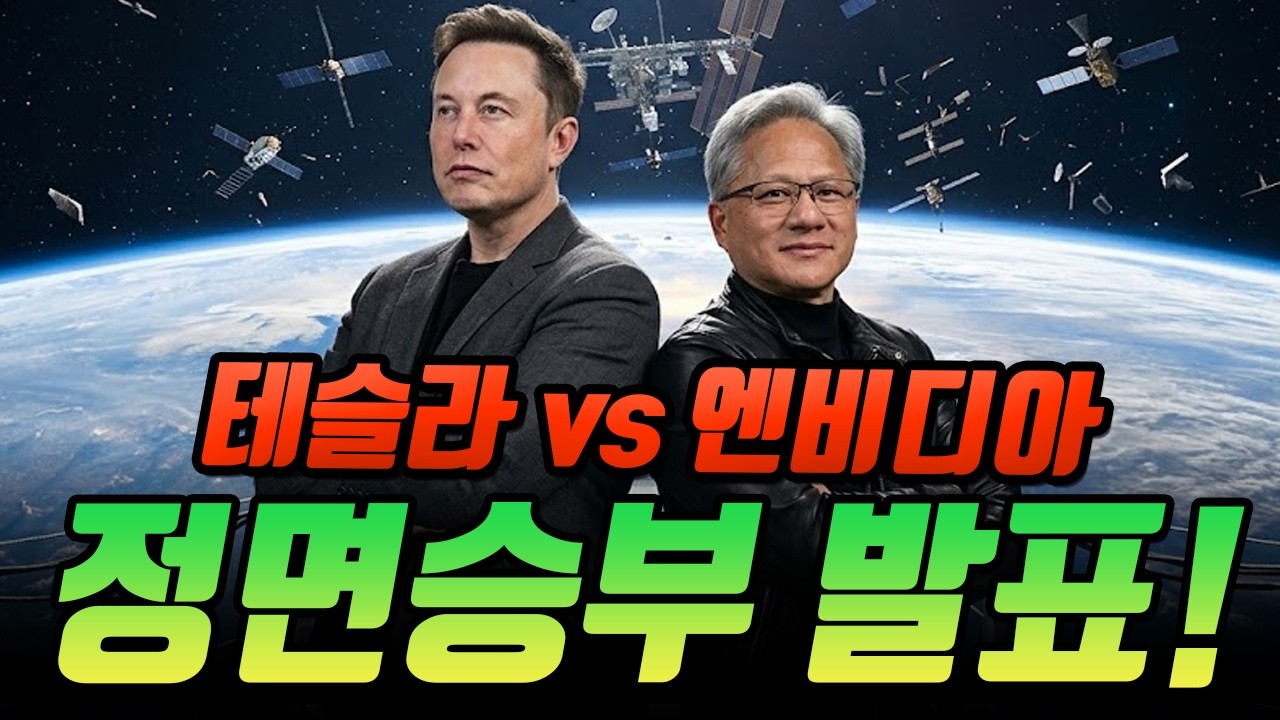
● Tesla crushes Nvidia, the real self-driving war is data monetization not AI power
Tesla vs. NVIDIA: The decisive factor in autonomous driving is not AI benchmark performance, but an economically self-sustaining data acquisition model
This topic is not primarily about which company has superior technology.
The core issue is operational and economic:
- Who can capture higher-quality real-world data
- Who can accumulate that data faster and at lower cost
- Who can generate revenue while collecting it
This report consolidates key messages from NVIDIA GTC on autonomous driving and physical AI, contrasts Tesla’s FSD real-world loop with simulation-centric approaches, frames structural limits of AI versus human intuition, and highlights “monetize while collecting data” models (e.g., Niantic). It also links Tesla’s compute and manufacturing strategy to broader AI infrastructure constraints, and notes AI’s expansion into healthcare and other physical domains.
1. Issue Snapshot: Key Takeaways
- At NVIDIA GTC, physical AI, autonomous driving, robotics, and the importance of simulation-generated (synthetic) data were emphasized.
- Jensen Huang highlighted that real-world data alone is insufficient to cover edge cases; synthetic data and simulation are required to expand scenario coverage.
- A counterpoint commonly associated with Tesla is that, in human-dominated, highly interactive environments, simulation has structural limits and real-road data is more decisive.
- Tesla monetizes supervised FSD via purchase and subscription while simultaneously collecting real-world driving data.
- This creates an integrated revenue-and-data flywheel that is difficult to replicate in the broader semiconductor/AI/autonomy ecosystem.
2. What NVIDIA GTC Signaled: Physical AI Is Already in Motion
2-1. NVIDIA’s core message
- NVIDIA framed autonomous vehicles as a flagship application of large-scale physical AI.
- Emphasis was placed on systems that can not only act, but also produce interpretable rationales (e.g., why a lane change occurs, why an obstacle is avoided).
2-2. Why NVIDIA prioritizes simulation
- Real-world data collection is slow, expensive, and carries safety and operational risk.
- Simulation is faster, repeatable, and more cost-efficient.
- In controlled domains (factory robotics, warehouse automation, surgical-assist robotics), simulation can deliver high productivity gains.
- NVIDIA is building an ecosystem of tools (e.g., Isaac Lab, Newton, Cosmos) to accelerate synthetic data generation and training throughput.
2-3. Why autonomous driving is structurally different
- Factory environments are largely governed by physics and controlled variables.
- Public-road driving requires modeling unpredictable human behavior and social interaction.
- Simulation can generate many scenarios, but may not fully reproduce the distribution and dynamics of real-world human edge behavior.
3. Tesla’s Advantage: Real-World Data Has Different Properties, Not Just More Volume
3-1. The battleground is edge cases
- The critical challenges are rare, high-impact scenarios rather than routine driving.
- Examples include unexpected double-parked vehicles, atypical pedestrian motion, and non-compliant behavior by drivers or motorcyclists.
- These interactions are difficult to replicate with high fidelity in simulation at scale.
3-2. Tesla is learning in production
- With supervised FSD, large numbers of drivers use the system on public roads.
- The system can capture more than video: intervention events, model uncertainty moments, and human decisions in context.
- This feedback loop is not easily substituted by synthetic data alone.
3-3. Continuous real-world validation
- FSD is not generally regarded as unsupervised autonomy.
- However, broad real-world usage creates continuous performance visibility, intervention statistics, and iterative validation at scale.
- Simulation-driven approaches may demonstrate capability, but widespread, consumer-scale validation data is typically more limited.
4. Terrence Tao’s Framing: AI Scales with data; humans generalize with intuition
4-1. Why this matters
- AI excels at aggregating and generalizing from large datasets.
- Humans often infer patterns and context from sparse data through intuition and experience.
- This distinction is relevant in autonomy where context and social interaction dominate.
4-2. Why intuition is relevant to driving
- Driving is not merely rule execution; it requires contextual inference (e.g., anticipating intent, detecting abnormality).
- Many of these judgments are hard to encode and may require human-labeled or human-intervention-derived signals.
4-3. What simulation may miss
- Simulation is strong at repeating and varying known events.
- It is weaker at generating genuinely novel, socially grounded interactions that reflect real human behavior distributions.
5. The Structural Differentiator: Collecting data while generating revenue
5-1. Niantic and Pokemon GO as a model
- Pokemon GO functioned as a consumer product that also contributed to the accumulation of street-level imagery and mobility/location signals.
- The dataset can be leveraged for robotics navigation, localization, and digital-twin development.
5-2. The key mechanism: users pay and generate data
- The most defensible data advantage occurs when customers pay for the product and produce valuable data as a byproduct of usage.
- This creates a compounding loop between monetization and model improvement.
5-3. Tesla already operates this loop
- Customers purchase or subscribe to supervised FSD based on perceived utility.
- Tesla receives recurring revenue while collecting training and validation data at scale.
- Platform providers can supply infrastructure, but replicating Tesla’s consumer monetization-and-data loop is structurally difficult.
6. Limits of NVIDIA in Autonomy, and Why NVIDIA Can Still Monetize
6-1. Separate autonomy software outcomes from NVIDIA’s business model
- Even if simulation-centric autonomy does not become the dominant end-state versus Tesla’s approach, that does not imply weak NVIDIA monetization.
6-2. OEMs require near-term solutions
- Many automakers lack clear differentiation in autonomy.
- Autonomy remains a strategic necessity, increasing reliance on third-party platforms.
- NVIDIA can capture revenue in transitional market phases by providing hardware and software stacks.
6-3. Cost structure advantage favors vertical integration
- Tesla vertically integrates vehicle hardware, in-house chips, software, and AI stack.
- NVIDIA’s solutions must be purchased and integrated by customers.
- For comparable functionality, vertically integrated stacks may achieve superior cost competitiveness.
7. The Strategic Meaning of “Terafactory”: Compute and supply control as an AI advantage
7-1. Not only manufacturing scale
- The strategic objective is to secure large-scale compute and the production capacity needed to support AI training and deployment.
- In an environment of accelerating AI demand, the ability to control compute supply becomes a competitive variable alongside model capability.
7-2. Why this matters in macro context
- The global environment includes rate uncertainty, inflation dynamics, supply-chain restructuring, energy costs, and geopolitical risk.
- Firms with stronger control over supply chains, production, and energy/compute inputs may command valuation premiums.
- Compute infrastructure, datacenters, semiconductors, and power procurement are increasingly central to AI economics.
7-3. Why “orbital datacenter” concepts are discussed
- The logic extends beyond terrestrial constraints: power, cooling, and space limitations could drive alternative infrastructure concepts over long horizons.
- References to space-based compute indicate early-stage exploration rather than near-term execution.
8. AI Is Expanding into Healthcare: Implications of an mRNA-based veterinary case
8-1. Why the case is notable
- A reported example described accelerated tumor analysis and mRNA therapy design supported by AI tooling, followed by observable clinical improvement.
- The investment-relevant point is capability diffusion: non-specialists can access advanced analytical workflows with AI assistance.
8-2. AI’s impact extends beyond software
- The larger industrial shift is toward robotics, manufacturing, logistics, healthcare, and biotech.
- AI is moving from information processing to physical-world execution and decision support.
8-3. Infrastructure emphasis follows from domain expansion
- If AI adoption broadens across physical and regulated industries, scarce resources include compute, data, power, chips, and production capacity.
- This reinforces strategic focus on infrastructure buildout.
9. Optimus vs. Autonomous Driving: Different domains, different simulation efficiency
9-1. Distinguish road autonomy from humanoid robotics
- Road autonomy is dominated by human-driven unpredictability and complex social interaction.
- Many humanoid tasks in factories involve repetitive manipulation under more constrained physics-based conditions.
9-2. Simulation can be more effective for humanoids
- A training approach that iterates between high-fidelity simulation and real-world validation can be more efficient in factory-like settings.
- Simulation is not intrinsically inferior; its payoff depends on domain controllability and distributional realism.
10. Investment Framing for Tesla: How markets price uncertainty
10-1. Market pricing often lags structural shifts
- Historically, large-scale bets (space launch, EV manufacturing scale, batteries, autonomy, humanoids, AI factories) have faced early skepticism before later repricing.
10-2. Returns accrue to bearing uncertainty
- High-upside opportunities typically involve high volatility and visible execution risk.
- Outcomes depend on long-term industrial structure and sustained operational execution.
10-3. Key risks to monitor
- Timeline slippage, technical barriers, capital intensity, and expectation overshoot remain material risks.
- The relevant framing is multi-year, tied to autonomy, robotics, AI infrastructure, and energy systems rather than short-term event trading.
11. Under-discussed but decisive point
11-1. The decisive factor is the economics of the data flywheel
- The long-term determinant is not only model capability, but the ability to accumulate real-world data at low marginal cost, quickly, and continuously.
11-2. Monetized data collection is defensible
- Examples across consumer and developer products show that when users perceive value, firms can charge for usage while obtaining data exhaust.
11-3. Autonomy is an economic problem as much as an AI problem
- Success requires accuracy, low cost, mass adoption, and a reinforcing data loop.
- Technology, business model, and infrastructure must align.
11-4. NVIDIA can be a “tools provider” winner
- Even if not the ultimate autonomy software winner, NVIDIA can benefit by selling GPUs, AI platforms, and tooling to many participants.
- Tesla and NVIDIA are not strictly zero-sum; they may win at different layers of the stack.
12. Conclusion (one-sentence framing)
Tesla’s autonomy advantage is primarily structural: it collects real-world edge-case data while generating revenue, embeds human-intervention signals into training, and continuously validates performance in production; simulation-first approaches remain valuable for physical AI broadly, but face higher hurdles in human-dominated road environments.
< Summary >
- The Tesla vs. NVIDIA autonomy discussion is fundamentally about data acquisition economics, not isolated technical benchmarks.
- NVIDIA’s simulation-first physical AI approach is strong in controlled environments; road autonomy is more dependent on real-world human-interaction data.
- Tesla monetizes supervised FSD while collecting training and validation data, forming a durable revenue-and-data flywheel.
- The AI vs. human intuition distinction highlights why real-world feedback remains difficult to replace with synthetic data.
- “Monetize while collecting data” models (e.g., Niantic) tend to create defensible compounding advantages.
- “Terafactory” strategies reflect the growing importance of compute, semiconductors, datacenters, and power in AI economics.
- AI adoption is expanding into biotech, healthcare, robotics, and logistics; both Tesla and NVIDIA can be long-term beneficiaries through different mechanisms.
[Related Articles…]
- Tesla AI and Autonomous Driving: Recent Developments
https://NextGenInsight.net?s=Tesla - NVIDIA GTC and AI Infrastructure: Investment Considerations
https://NextGenInsight.net?s=NVIDIA
*Source: [ 허니잼의 테슬라와 일론 ]
– [테슬라 VS 엔비디아] 왜 테슬라의 자율주행이 승리할 수 밖에 없는가? / 테라팹의 진정한 의미
● Oil Slump Sparks Stock Surge, But Inflation, Delayed Rate Cuts, Recession Risk Loom
US Equities Rebounded on Lower Oil, but the Core Issue Lies Elsewhere: Why Inflation, Rates, and Recession Signals Must Be Assessed Together
Today’s tape looked constructive.US equities broadly rebounded, and growth stocks including semiconductors strengthened.However, the key point is not simply that “a one-day oil pullback triggered a relief rally.”
This is not a standalone crude-oil headline.To interpret the setup, investors should evaluate the oil–inflation linkage, the risk of delayed Fed easing, shifting views on US Treasuries (especially the front end), and why recession probabilities could re-price higher.
This note summarizes, in a news-style format:the drivers of the equity rebound; why oil is not yet at a comfort level; potential impacts on the US economy and global supply chains; how AI diffusion and labor-market softening may intersect with the cycle; and the variables investors should monitor.
One-line market recap: Equities rebounded, but risks have not cleared
US equities reflected improved sentiment as oil eased in the near term.With energy prices pausing from a sharp rise, markets temporarily discounted the worst-case scenario of escalating inflation pressure.This supported risk appetite, led by technology and semiconductors.
Memory and storage-related names such as Micron and SanDisk contributed to semiconductor leadership.This aligns with continued expectations for AI infrastructure spending: demand for data centers, high-bandwidth memory, and storage remains supported.
Critically, “oil down” and “oil low” are different conditions.The market reacted to direction, not the absolute price level.Current oil levels can still pressure inflation and rates.
Why the latest oil pullback should not be treated as full relief
1. Middle East risk looks more like “delayed resolution” than de-escalation
Recent signals suggest prolonged uncertainty rather than rapid normalization.References to potential delays in talks, diplomatic schedule changes, and summit postponements indicate that the market’s “quick stabilization” scenario remains unconfirmed.
This implies geopolitical risk may not fully clear within the month.Even without immediate supply disruption, persistent uncertainty can sustain an energy risk premium.
2. The futures curve is signaling medium-term oil expectations
Front-month prices can fall quickly.More important is how expectations 6–12 months forward evolve.A firming of longer-dated crude futures suggests markets are beginning to price a structurally higher oil regime, not only a transitory shock.
If oil fails to decline meaningfully and instead stabilizes at elevated levels, that level can propagate into longer maturities over time, raising the broader energy price structure.
Bond, commodity, and FX markets typically respond more sensitively than equities to this shift.Accordingly, oil dynamics are likely to remain a direct input into US equity valuation and positioning.
Why higher oil can re-accelerate inflation
1. The impact extends well beyond gasoline
Oil is a core cost input across production, transportation, cold-chain storage, packaging, and distribution.Higher crude prices can therefore transmit broadly into headline and certain components of consumer inflation.
2. Food inflation is also exposed
Agriculture is energy-intensive: machinery operation, fertilizer production, transportation, and refrigerated logistics all embed energy costs.Food prices can react with a lag when oil remains elevated.
This matters for perceived inflation.Households do not experience higher equity prices as improved living standards, while fuel, food, travel, airfares, and delivery costs affect budgets immediately and can weigh on sentiment and consumption.
3. Rising inflation expectations would force the Fed to remain cautious
A re-emergence of inflation signals is the primary constraint for the Federal Reserve.While rate-cut expectations persist, sustained high oil can alter the path.If inflation re-accelerates, the Fed may delay easing.
Under prevailing market interpretations, a high probability of holding rates through September remains, with potential discussion of a first cut around September at most.This can pressure high-multiple growth equities, including AI-linked technology stocks, via a higher discount-rate regime.
Why equities rose while bonds began to emphasize a different risk
1. Markets are shifting from “inflation shock” toward renewed “growth slowdown” concerns
Conventionally, war-driven oil spikes are negative for bonds:oil up → inflation risk up → tighter Fed stance → yields up → bond prices down.
Recently, some Wall Street views diverge: inflation risk may be partly priced, while the risk of global growth deceleration and US activity deterioration may be underappreciated.
Under this framing, US front-end Treasuries may show relative resilience.If growth risks intensify, safe-haven demand can support short maturities; if tensions ease, overly hawkish rate expectations may retrace, also pulling yields lower.
2. Why the front end is in focus
Long-duration bonds can be more sensitive to inflation persistence and fiscal risk, while short-duration bonds can respond more directly to growth surprises and policy-expectation shifts.In high-uncertainty environments, the front end may offer comparatively favorable asymmetry across scenarios.
This is not only a trade idea; it indicates markets may be moving from “inflation-only” to “potential growth rollover” monitoring.
Why recession risk is resurfacing
1. Historical pattern: recessions often followed oil spikes
Excluding pandemic-era distortions, major recessions have frequently followed periods of sharp oil increases.The US has greater energy self-sufficiency than in prior decades, improving shock absorption, but household and corporate cost pressures do not disappear.
2. The starting point: consumption was already weakening
The risk is amplified because consumption sentiment was not strong before the latest oil dynamics.Lower- and middle-income purchasing power has been under pressure, while prolonged high rates have increased credit-card burdens, debt-service costs, and housing expenses.
If gasoline, jet fuel, and diesel rise, transportation, travel, and broader living costs can increase, reducing real purchasing power.Weaker consumption can slow corporate revenue growth, prompting cost controls, hiring freezes, or layoffs.
3. AI diffusion combined with labor-market softening could worsen perceived conditions
AI is a long-term productivity driver, but in the short term it can raise automation pressure across certain roles and serve as a cost-reduction lever for firms.
In a slowdown, faster AI adoption can coincide with hiring restraint, white-collar workflow redesign, middle-management and support-function rationalization, and outsourcing model changes.
This mix can appear as an AI-led equity narrative while translating into labor insecurity and weaker consumption in the real economy. The divergence may become increasingly material.
Why semiconductors and AI-linked equities strengthened, and what to monitor
1. AI infrastructure demand remains supported
Semiconductor strength should be viewed as more than a mechanical rebound.Demand for Nvidia-related ecosystems, memory, storage, and server infrastructure is linked to the AI capex cycle.Ongoing spending on generative AI, data centers, and cloud expansion supports earnings expectations for key suppliers.
2. If high rates and slowing growth coincide, valuation risk increases
The constraint is valuation.Even with strong AI growth narratives, if oil stays elevated, re-ignites inflation, and delays Fed easing, the discount-rate headwind for long-duration growth assets rises.
AI fundamentals may remain intact, but macro conditions can slow price appreciation and increase volatility.Distinguishing “attractive industry” from “attractive entry point” becomes more important.
Key takeaways (news-style)
Market
US equities rebounded alongside a near-term pullback in oil.Semiconductors and technology led, with a short-term improvement in sentiment.
Energy
Crude declined on the day, but the absolute level remains elevated.Middle East uncertainty persists, and longer-dated futures continue to reflect higher pricing.
Inflation and rates
Higher oil can lift not only gasoline but also food, logistics, and travel costs.This can re-accelerate inflation and delay the timing of Fed rate cuts.
Rates/bonds
Some market participants increasingly emphasize growth-slowdown risk over incremental inflation risk.This has improved relative sentiment toward short-duration US Treasuries.
Recession
If higher oil interacts with weakening consumption, declining real purchasing power, margin pressure, and softer labor conditions, recession probabilities can re-price higher.Lower- and middle-income consumption sensitivity is a key variable.
AI and the technology cycle
AI infrastructure investment may persist, but in a slowing economy, AI-driven automation can increase labor-market stress.The gap between AI-led asset performance and real-economy sentiment may widen.
Most important points often underweighted in mainstream coverage
1. “Oil level persistence” matters more than daily direction
Many narratives focus on whether oil rose or fell today.More consequential is how long oil remains elevated.Persistent high oil can raise longer-term inflation expectations and delay easing, becoming a key macro variable.
2. The key risk is a combined shock, not a binary inflation-vs-recession debate
Rather than a single dominant risk, oil-driven inflation pressure and growth slowdown can coexist.A stagflation-like impulse could reappear in certain phases.
3. An AI bull market can coexist with weaker household conditions
AI-linked earnings and equities can strengthen while households and labor markets deteriorate.Nasdaq strength should not be equated with broad economic health.Understanding this divergence is essential for interpretation.
4. The short-duration bond thesis implicitly warns: growth can weaken even if the Fed cannot cut
More constructive views on the front end are not merely about carry or positioning.They reflect increasing attention to growth downside and recession risk.
Key indicators to monitor
1. Crude oil and the futures curve
Focus less on front-month moves and more on whether longer-dated contracts remain elevated.Persistent strength in the back end can signal sticky inflation pressure.
2. US consumption indicators
Track retail sales, card-spending data, lower-income consumption patterns, and travel-demand softening.Consumption sensitivity is central in this cycle.
3. Fed communication and inflation expectations
Monitor CPI, PCE, and inflation-expectation measures for renewed upward pressure.If easing expectations weaken, technology-sector volatility can rise.
4. Labor-market data and corporate restructuring
Watch initial claims, nonfarm payrolls, wage growth, and evidence of expanding layoffs in IT and office roles.If AI adoption coincides with a slowdown, labor-market stress can increase.
5. Durability of semiconductor and AI capex
Assess whether AI infrastructure investment persists and whether data-center and memory demand converts into realized results.AI strength may endure, but market pricing can shift if macro conditions deteriorate.
Conclusion
The surface narrative is straightforward: oil declined, equities rose, and semiconductors led.However, multiple cross-currents remain active.
Oil is not yet at a comfort level; if elevated prices persist, inflation may remain sticky and delay Fed easing.Simultaneously, weaker consumption and labor conditions can increase recession risk.
In the AI era, innovation can support asset prices while automation and restructuring can cool real-economy sentiment.The relationship “equity gains = economic recovery” may be less reliable.
Core variables to prioritize are the absolute level of oil, the risk of delayed rate cuts, consumption deceleration, and the labor-market implications of accelerating AI adoption.Their interaction is likely to shape the next phase of market direction.
< Summary >
US equities rebounded as oil pulled back, but conditions are not yet risk-free.The absolute level of crude remains elevated, and Middle East uncertainty persists.If oil stays high, inflation can re-accelerate and delay Fed rate cuts.
At the same time, weakening consumption and softening employment can raise recession risk.AI diffusion is supportive for semiconductors and technology, but may pressure certain labor segments.The current setup is best framed as an interaction of oil, inflation, rates, recession risk, and AI-driven automation.
[Related Posts…]
- US Rate Outlook and Asset-Market Repricing: Key Points to Monitor Now
- AI Semiconductor Supercycle: Identifying the Next Beneficiaries After Nvidia
*Source: [ Maeil Business Newspaper ]
– [홍장원의 불앤베어] 유가 하락에 증시는 반등했지만…