● Teslas FSD Gamble Hits Wall
“There’s a reason Tesla isn’t going up right now” — Summarizing only the core investment takeaways from FSD, Robo-Taxi, and Optimus
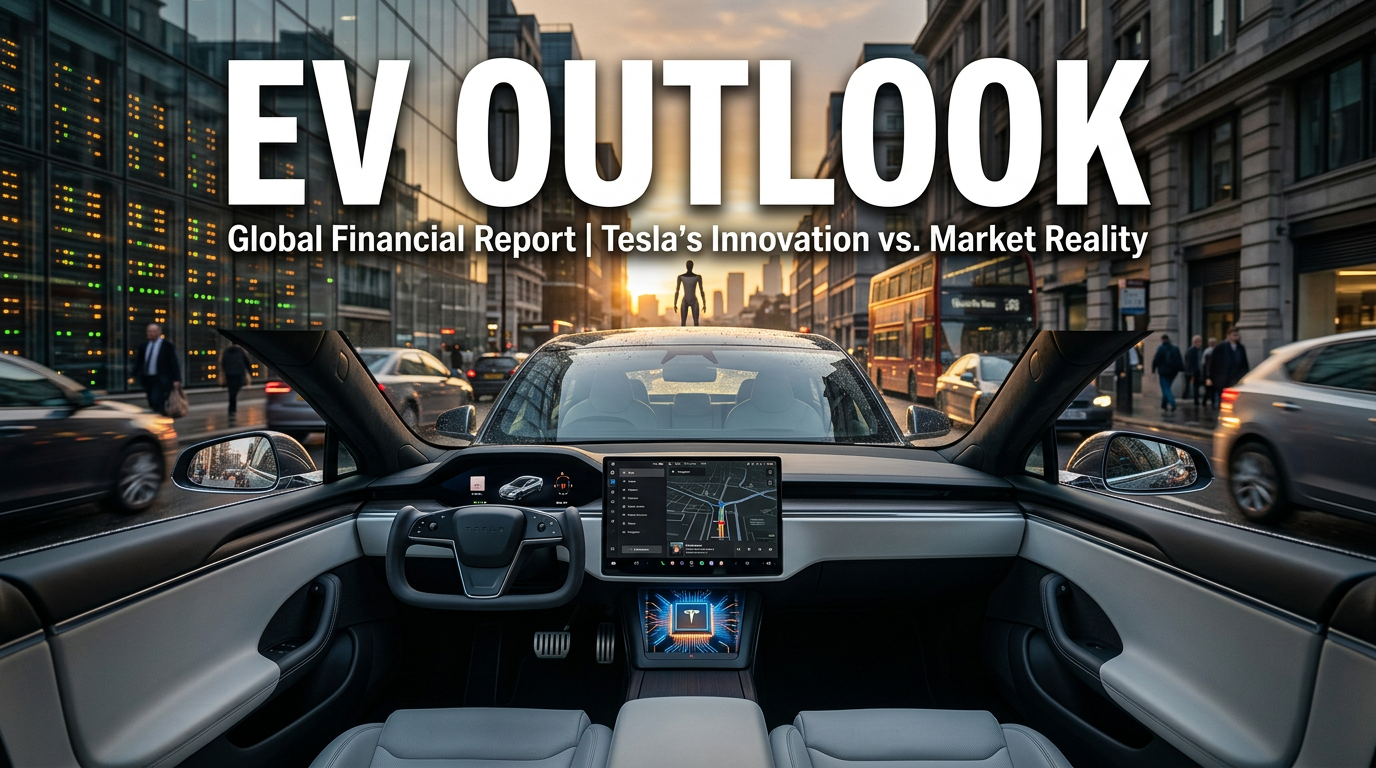
When the Tesla stock price has been moving frustratingly lately, the question everyone is most curious about is this. “The technology is good—so why does the stock price keep staying flat or falling?” And in this article, I’ll pinpoint that core issue for you. You shouldn’t view Tesla’s short-term momentum (EV sales) and its mid- to long-term momentum (FSD/Robo-Taxi/Optimus) at the same pace.
Also, here, I organize a practical hint on “so when should you buy?” by focusing on FSD regulatory approval (Europe/China) + subscription penetration rate + scenario-based valuation.
1) JP Morgan’s remarks: “Tesla is expensive; it could fall another 60%”
- Content : JP Morgan presents a target price in the low $100s and maintains a tone that “the current level is expensive”
- Market reaction : After Tesla’s recent peak (in the $500s), the stock has been pulled down for nearly six months, increasing investor anxiety
- Key checkpoint : In the short term, valuation tends to come out lower because it’s judged based on “automotive sales” and “the EV industry outlook”
The important point here isn’t whether this remark was right or wrong, but that the frame you use to evaluate Tesla—what business you value—determines the conclusion.
2) Difference in perspective: Overvalued as an automaker, but it changes as an AI/robotics company
- Automaker perspective
- Q1 2026 deliveries fall below consensus (expected 365,000 vs. recorded 358,000)
- As competition in China intensifies, there’s doubt whether the EV market will continue on the same growth curve as before
- So an assessment emerges that forward valuation is burdensome
- AI/platform perspective
- If FSD subscriptions expand properly, the operating profit structure could change
- If it expands into Robo-Taxi, the “software-like revenue” could become the bigger picture than car sales
- If Optimus also becomes real, there’s a greater chance that the multiples for the manufacturing/robotics business will be reassessed
In other words, even with the same number (the stock price), if the viewpoint differs, “expensive” vs. “cheap” can both be true at the same time. That’s the essence of investing in Tesla.
3) “FSD is bound to come”—Subscription penetration and the timing of regulatory approvals set the game’s rules
- Current penetration : FSD subscription penetration is mentioned to be around 12%
- Outlook : Scenarios such as 20%+ by year-end, 30–40% next year, and 50%+ by 2030 are presented
- Why it matters : Vehicle sales are heavily influenced by cost, inventory, and production—but the logic is that with FSD, once approvals “open the gate,” the growth rate can change
- Conclusion : If FSD spreads, it’s likely that Robo-Taxi expansion will naturally follow
The one line readers should take away here is this. Tesla’s “stock price catalyst” comes not from EV sales, but from FSD regulatory approvals and the subscription growth rate.
4) “Optimus is a distant future,” but still plays the role of keeping the market’s upper end open
- Optimus risk : The production rollout timing and the diffusion speed are uncertain
- Why still look at it : The judgment is that Tesla’s data, manufacturing capabilities, and computing power could create an advantage in robot competition
- Near-term reflection : Because Optimus isn’t fully confirmed yet, a conservative stance also appears that the stock price may be difficult to rise straight up immediately
To sum up, Optimus is not a “near-term earnings” story—it’s an “upper scenario for a multiple reassessment”.
5) “So should you buy now?” — The key is prioritizing the “bottleneck industry,” not chasing timing
- Perspective on adding to Tesla : If the price has dropped a lot and you’re in a period where subscription penetration is rising, you can approach it “gradually”
- However, strategic caution : If FSD performance is confirmed immediately at an earnings release, it could be too late already; you’re essentially trying to catch the moment when regulatory/approval news triggers a sharp reassessment
- Key advice (other investment perspectives) : Before Tesla’s “agentic AI” can get underway, the infrastructure bottlenecks such as power, GPUs, memory, optics, and data centers must be solved first—this is the framework
- In short : If “Tesla is a theme going toward FSD/robotics,” then the claim is that the “current beneficiary may be the AI infrastructure bottleneck”
From an SEO perspective, very important keywords are naturally connected here as well. AI infrastructure, agentic AI, autonomous driving, data centers, robotics. By bundling these five axes together, you can see “where the money flows.”
6) Talking about SpaceX listing/stock options: the possibility of reassessing Musk’s stake value
- Stock option structure : Elon Musk splits Tesla options into 12 steps, and it’s mentioned that for the last step to be met, a market cap on the order of $8.5 trillion is needed
- Possible scenario : If the market expands valuation as “Tesla + SpaceX,” stock expectations could change
- Holding company structure possibility : It assumes an inverted triangular merger form, such as Tesla Holdings + integrating SpaceX
- Risk (near-term volatility) : SpaceX funding could divert some demand, but the logic is that if synergies/a premium are attached, it could also be beneficial for Tesla shareholders
The point of this section is one thing. Expanding the Musk ecosystem (listing/structural changes) can affect “sentiment and multiples.” However, since this isn’t confirmed and remains in the scenario realm, portfolio weight should be conservative.
7) Tesla risk factors: EV industry slowdown and competition in China
- EV cycle : The slowdown in EV growth has been going on for the third year, and the market is waiting for a “turnaround”
- Lithium price variable : A decline in lithium prices can re-stimulate EV price competition, which could be a plus factor in the mid- to long term
- Competition in China : Competition among Chinese firms has intensified, and their manufacturing/price competitiveness is acknowledged
- Defense argument : In the U.S. market, it may be difficult for Chinese cars to come in due to tariffs, etc.; and when looking solely at FSD technology, there’s a judgment that Tesla has an advantage
So the risk is less about “the technology being bad,” and more that the industry outlook (demand) and regional competition (especially China) could weigh on the stock price.
8) A 4-item checklist of “points that could lift the stock price”
- 1) FSD regulatory approval : The most important #1 indicator is expansion across Europe/China
- 2) Robo-Taxi expansion : Mentions the possibility of step 2 within 1–2 years after step 1
- 3) Mass production of low-cost vehicles (entry-level) : If lower-priced models come out, the “speed of mainstreaming” could pick up
- 4) Energy business + Optimus : Growth in energy storage/data centers and Optimus handle the upper-end scenarios
These four are close to the order in which the stock reacts when they appear as news. So investors shouldn’t only look at financial numbers—they should track approval/expansion/production schedules together.
The most important conclusion readers must know—“Something you rarely hear elsewhere”
- The biggest reason Tesla’s stock price doesn’t rise isn’t a lack of technology; it’s the delay in the “evaluation framework.” When automotive results/EV cycles are weak, the market tends to price Tesla even more as an “automotive company.”
- The game is decided by FSD regulatory approval and subscription penetration. The moment you can confirm the speed at which subscriptions are growing, you may see the limits of automotive revenue and other multiples open up.
- Before buying Tesla, the core is to look at the AI infrastructure bottleneck industry too. For agentic AI to operate in earnest, power/data centers/GPUs and other foundations need to start earning money first, so “what is the current bottleneck” could strongly determine the portfolio order.
< Summary >
- JP Morgan’s “Tesla is expensive (possible further downside)” remarks can result in lower valuation because they’re based on an automaker/EV outlook perspective
- Tesla’s valuation can change dramatically when including scenarios for FSD (subscriptions), Robo-Taxi, and Optimus
- The stock price catalyst is likely to come from FSD regulatory approval and increasing subscription penetration, not from EV sales alone
- Optimus is a big risk for the distant future, but it also plays the role of a “major option” that keeps the upper end of the multiple open
- The investment priority remains valid as a strategy that also looks at AI infrastructure bottlenecks (power, data centers, GPUs, etc.) before Tesla
- Risks are EV industry slowdown and competition in China; falling lithium prices could ease competitive pressure in the mid- to long term
[Recommended keywords in related articles: “FSD” / “AI infrastructure”]
- FSD approval and the stock price inflection point: scenarios created by subscription penetration
- The bottleneck industry for agentic AI (power, data centers, GPU)—where does money go first?
*Source: [ 월텍남 – 월스트리트 테크남 ]
– 테슬라 “이 때” 노리시는게 더 낫습니다