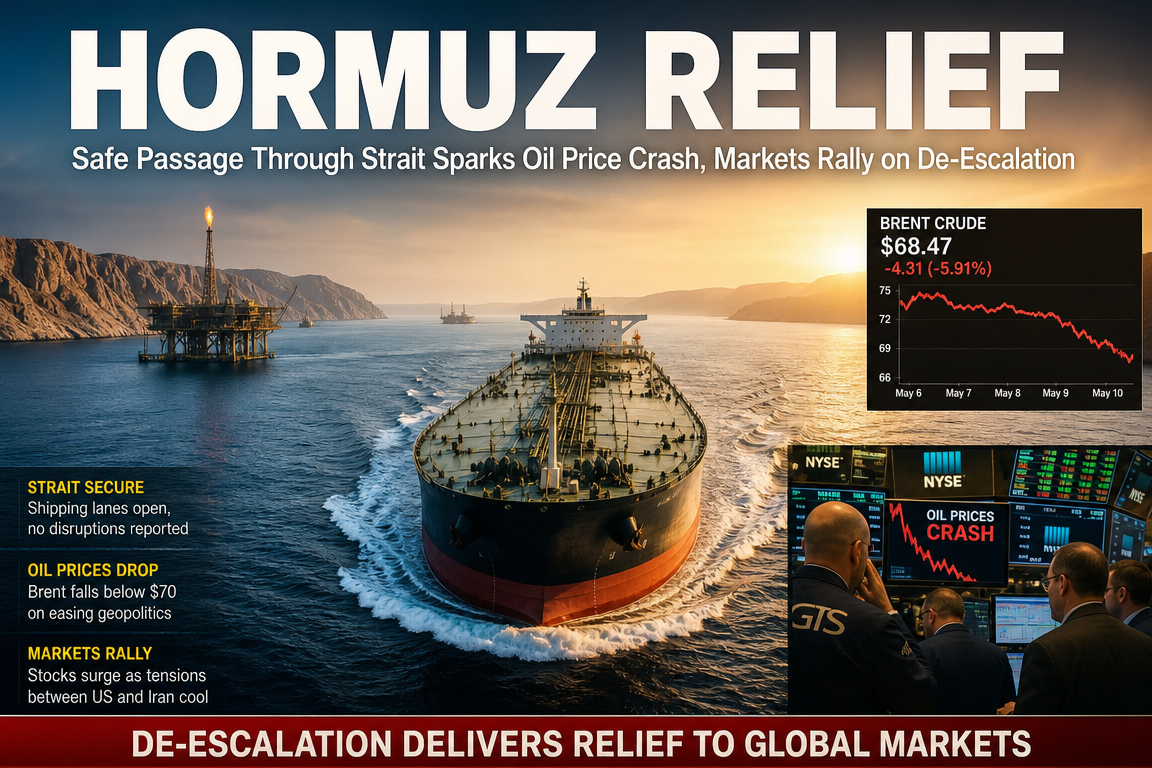
● Oil Crash, Relief Rally
Iran Signals Resumption of Safe Passage Through the Strait of Hormuz; Crude Prices Start to Drop Sharply — The Market’s Key Focus Lies Elsewhere
This development extends beyond a simple “Middle East tensions easing” headline.
This report consolidates: the drivers behind the oil sell-off; the likelihood of normalization in the Strait of Hormuz; de-escalation signals effectively coming from both the United States and Iran; the implications of rebounds in Bitcoin and U.S. equity index futures; and the macro variables most likely to change global economic and financial conditions.
It focuses on why markets moved into a rapid relief trade, how lower oil prices can affect inflation and rate expectations, and why the event matters for AI, semiconductors, and broader risk-asset sentiment.
1. Headline Summary: Iran Signals “Safe Navigation” in Hormuz; Markets React Immediately
Iran communicated that “safe navigation” through the Strait of Hormuz could become possible.
Markets interpreted this not as routine diplomacy but as a signal that global oil supply-chain disruption risk may be easing.
Given Hormuz’s role as a critical energy chokepoint, heightened risk typically drives crude higher; easing risk tends to push crude lower quickly.
Following the headlines, crude gave back prior gains; Bitcoin rebounded; and U.S. equity index futures moved higher.
In summary, expectations of reduced geopolitical risk translated into lower energy prices, improved risk appetite, and a stabilization of global investor sentiment.
2. Sequence of Events: Why Sentiment Reversed
The shift is best understood in three phases.
2-1. U.S. Signals a Pause in Escalation
Reports indicate President Trump’s side declared an operational halt and cited progress in negotiations with Iran.
This supports an interpretation that the U.S. shifted from primarily coercive pressure toward a more negotiation-oriented stance.
2-2. Iran Steps Back While Preserving a “Victory” Narrative
Iran’s state media framed the situation as a domestic victory; however, the market-relevant point is different.
Iran appears to accept de-escalation while maintaining face-saving messaging.
In geopolitics, the narrative of de-escalation can matter as much as de-escalation itself.
By signaling navigational normalization without appearing to concede publicly, Iran delivered a message markets treat as operational risk reduction.
2-3. Rising Probability of a U.S.–Iran Draft Understanding
Markets focused on reports suggesting the two sides may be nearing a framework agreement.
Mentions of a one-page memorandum containing provisions such as halting nuclear activity and releasing frozen assets increased expectations that the episode could move from short-term calming to an early stage of political compromise.
Markets tend to price reduced uncertainty quickly.
Even without a finalized agreement, the existence of a negotiation framework can drive immediate repricing.
3. Why Crude Fell So Fast
The decline appears driven less by technical factors and more by the rapid removal of a disruption-risk premium.
3-1. The Strait of Hormuz as a Core Artery of the Oil Market
Hormuz is the principal export route for multiple Middle East producers.
If the strait is threatened or conflict risk rises, markets react rapidly to supply insecurity.
Crude can spike on perceived risk even without an actual supply interruption.
When safe passage is re-affirmed, the geopolitical premium can be removed quickly.
3-2. Markets Price Tail Risk First, Then Retrace on Relief
Energy markets are highly sensitive to fear-driven positioning.
They often price worst-case scenarios early and reverse part of the move once negotiations appear plausible.
The current sell-off is consistent with that pattern.
A single drop does not eliminate risk, but it indicates the market is reducing the implied probability of a full blockage scenario.
4. Macro Significance: Inflation and Rate Expectations Can Shift
Oil is not merely a commodity price; it is a direct input into global inflation and interest-rate expectations.
4-1. Lower Oil Prices Reduce Inflation Pressure
Higher oil prices lift transportation costs, manufacturing input costs, electricity prices, airfares, and broader consumer prices.
Stabilization in oil prices can reduce forward inflation pressure.
This is particularly relevant when central banks are sensitive to the timing of potential rate cuts.
4-2. Indirectly Supportive for the Federal Reserve’s Policy Outlook
The Federal Reserve remains alert to the risk of inflation re-acceleration.
A renewed oil spike would likely have undermined rate-cut expectations.
Conversely, de-escalation-driven oil declines can support a market interpretation of improving inflation dynamics and reduced policy constraints.
This is simultaneously a Middle East geopolitical headline and a U.S. rates/liquidity headline.
5. Why U.S. Equities, Bitcoin, and Risk Assets Rebounded Together
The move reflects a standard risk-on response.
5-1. U.S. Equity Index Futures Rose
When war-related risk declines, investors refocus on earnings and growth.
Oil stability can reduce corporate cost pressure and is generally supportive for equities.
Growth-heavy markets such as the Nasdaq are sensitive to rates and liquidity; lower oil can ease inflation concerns and partially reduce valuation pressure.
5-2. Bitcoin Rose
Bitcoin alternates between behaving like a hedge asset and a risk asset.
In this episode, it traded closer to the risk-asset regime.
Easing Middle East risk, potential moderation in dollar-strength pressure, and improved sentiment likely supported digital assets.
5-3. Markets React Most to “Avoiding the Worst Case”
Across equities and crypto, markets often respond more strongly to the removal of negative tail scenarios than to incremental positive news.
This episode aligns with that pattern.
6. Five Key Variables to Monitor
6-1. Whether Hormuz Navigation Remains Operationally Stable
Statements and on-the-ground conditions can diverge.
Political messaging does not eliminate maritime risk immediately.
Monitor shipping insurance rates, carrier routing decisions, and normalization of crude shipping schedules.
6-2. Whether a U.S.–Iran Draft Is Formalized
Durability depends on institutionalization.
Verbal signals can reverse; written commitments increase credibility.
Key details include the specificity of nuclear-related provisions, sanctions relief, and the scope of frozen-asset releases.
6-3. Whether Crude Rebounds After the Initial Drop
If the sell-off overshoots, short-covering or renewed caution can drive a partial rebound.
Avoid concluding a trend reversal from 1–2 sessions.
Track whether WTI and Brent establish a sustained downward or range-bound pattern over multiple sessions.
6-4. Whether Central-Bank Communication Shifts
If oil remains lower, policymakers may place less weight on energy-driven inflation risk.
This can affect policy-rate expectations, bond yields, the dollar, and emerging-market flows.
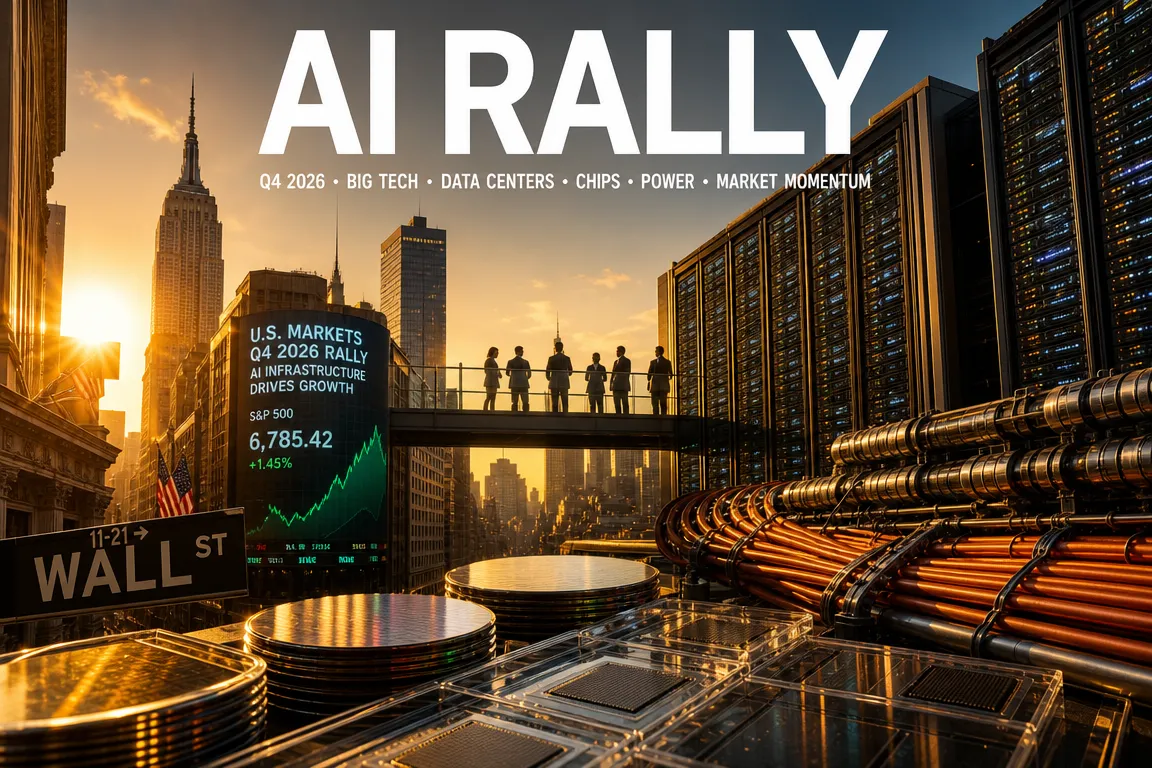
6-5. Whether Capital Rotates Back Into AI, Semiconductors, and Mega-Cap Tech
As geopolitical risk fades, markets often rotate back to growth themes.
Key areas include AI, semiconductors, cloud, power infrastructure, and data-center supply chains.
Reduced energy-shock risk can accelerate the market’s return to “next growth” narratives, with AI likely remaining central.
7. Why This Matters for the AI Trend
7-1. AI Infrastructure Is Sensitive to Power and Energy Costs
AI data centers, semiconductor fabrication, and cloud compute require substantial electricity.
Energy-price volatility can translate into higher operating and capex burdens across the AI stack.
Energy stabilization is therefore generally supportive for the AI ecosystem over the medium term.
7-2. Potentially Positive for Semiconductor Supply-Chain Stability
Rising geopolitical risk increases logistics and insurance costs, raises input-price volatility, and amplifies FX fluctuations.
These factors can pressure semiconductors and advanced-manufacturing value chains.
De-escalation can reduce supply-chain risk premia and support more stable corporate investment planning.
7-3. Market Attention Can Shift From Conflict to Productivity Innovation
When geopolitics dominates, long-duration themes such as AI can be temporarily deprioritized.
If risk recedes, attention can return to generative AI, robotics, automation, autonomous driving, and broader digital transformation.
This supports a stronger investment narrative around productivity-led innovation.
8. News-Style Recap: What Happened in Markets
– Iran signaled potential resumption of safe navigation through the Strait of Hormuz.
– The U.S. referenced an operational halt and progress in negotiations.
– Reports of a potential draft understanding increased expectations of de-escalation.
– Crude fell as supply-disruption fears eased.
– Bitcoin and U.S. equity index futures rebounded on improved risk appetite.
– Markets treated the event as relevant to inflation, rates, and risk sentiment rather than as a standalone diplomatic headline.
9. The Underappreciated Point
The key issue is not whether the conflict is “over,” but whether the episode changes the market’s macro interpretation.
If crude stabilizes, inflation pressure can ease, rate constraints can diminish, and flows may rotate back toward growth and AI-linked risk assets.
The core implication is a potential decline in the global risk premium.
A further supportive element is the emergence of a face-saving de-escalation structure in which both sides can claim domestic success while reducing operational risk—an outcome markets typically reward.
10. Practical Considerations for Investors
10-1. Confirm Sustained Energy-Price Stabilization
Do not extrapolate from a single-session move; confirm multi-day follow-through.
10-2. Maintain Macro Linkages in the Interpretation
This is not only an oil headline; it connects to inflation, policy rates, the dollar, equities, and digital assets.
10-3. Potential Re-rating for AI and Mega-Cap Tech
If geopolitical risk fades, markets tend to revert to earnings and growth.
Likely early beneficiaries include AI semiconductors, cloud, power infrastructure, and data-center exposures.
10-4. Prioritize Durability Over Headlines
The critical question is whether the trajectory holds over 48 hours, one week, and one month.
Political agreements can reverse; scenario-based positioning is more robust than certainty-based conclusions.
< Summary >
Iran’s signal on safe passage through Hormuz and the U.S. indication of a pause in escalation coincided with a sharp drop in crude and rebounds in Bitcoin and U.S. equity index futures.
The central relevance is macro: potentially lower inflation pressure, reduced rate constraints, improved global stability expectations, and a possible recovery in risk appetite toward AI- and semiconductor-led growth exposures.
Key monitors include operational normalization in Hormuz, formalization of any U.S.–Iran document, and sustained oil-price stability.
[Related Links…]
Summary of AI Infrastructure Investment Expansion and the Global Equity Market Reconfiguration
Impact of Rate-Cut Expectations and Oil-Price Stabilization on Asset Markets
*Source: [ Maeil Business Newspaper ]
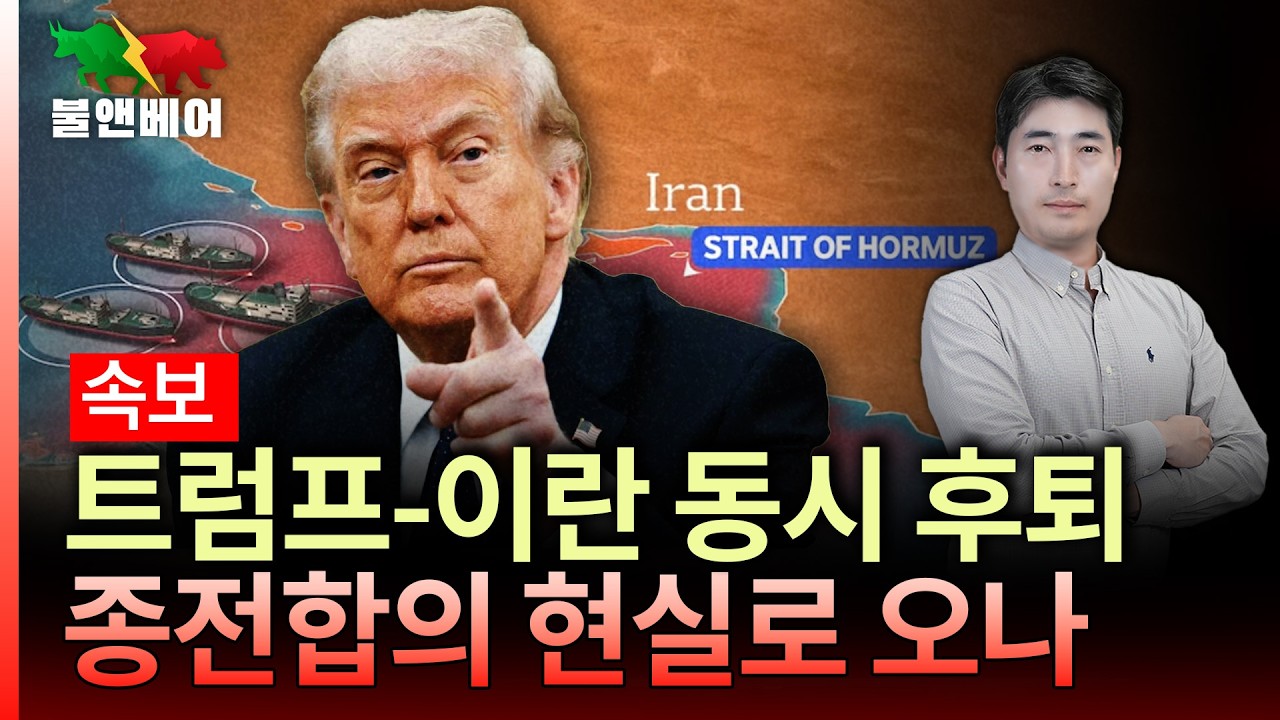
– [속보] 이란 “호르무즈 항행 가능할 것”. 국제유가 급락세 출발 I 홍장원의 불앤베어