● Middle East War Rattles Korea, Markets Surge
Prolonged Middle East Conflict, Debate Over South Korea’s Participation, and Why Equity Markets Rise
Key points to monitor in this development are consolidated below.
This is not solely a war headline.
It should be assessed as a single chain: potential South Korean actions related to the Strait of Hormuz, former President Trump’s remarks pressuring South Korea to participate, the presidential office’s message on reviewing domestic legal procedures, the impact of a prolonged conflict on crude oil and inflation, and the central market question: “Why are stocks rising while the war is unresolved?”
This report goes beyond event summaries and outlines: how to separate the real economy from capital markets, the Strait of Hormuz as a global supply-chain shock variable, the U.S.–China summit and China’s potential mediator positioning, and possible structural implications for South Korea’s macro outlook and investor sentiment.
Bottom line: this is not a simple geopolitical risk event. It is a multi-factor shock that can simultaneously affect supply chains, crude oil, rates, FX, inflation, and equity valuations.
1. Core news briefing: Implications of Trump’s “South Korea should participate” remarks
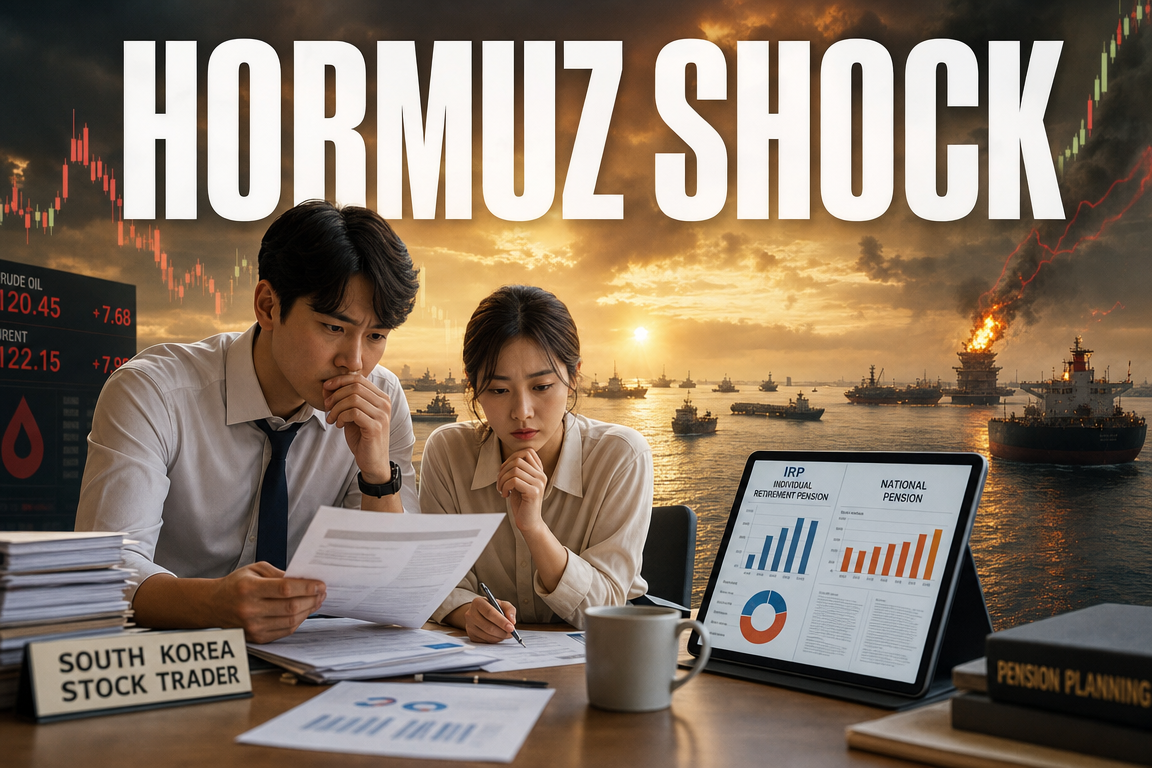
As the U.S. initiates a maritime operation in the Strait of Hormuz under the name “Project Freedom,” former President Trump stated that South Korea should join the operation.
The trigger was an explosion and fire involving the South Korean vessel HMM Namu.
Trump characterized the incident as an Iranian attack and argued South Korea should assume a military role in the Strait of Hormuz.
The presidential office stated it is reviewing the matter in consideration of: readiness on the Korean Peninsula, domestic legal procedures, and principles of maritime traffic safety.
This does not indicate immediate participation or deployment, but it marks a diplomatically sensitive phase.
2. South Korean government stance: Why an immediate response is difficult
Key constraints are as follows:
2-1. Domestic law and deployment procedures
Participation in overseas military operations requires more than an executive diplomatic decision.
It requires review of: National Assembly consent, legal basis, mission objectives, rules of engagement, and the security situation on the Korean Peninsula.
Public opinion costs are also significant for Middle East involvement.
2-2. Risk of a security gap on the Korean Peninsula
South Korea must consider not only Middle East interests but also: North Korea-related risks, linkage with U.S. forces in Korea, and broader Northeast Asia military balance.
Accordingly, Middle East deployment is a high-weight decision.
2-3. Protecting maritime logistics vs. military intervention
The government emphasizes stability of international maritime logistics.
This differs from direct military intervention.
South Korea may consider vessel/crew protection, energy shipping lane security, and participation in international coordination, while attempting to avoid full-scale military involvement.
3. Why the HMM Namu incident matters
The incident may be more than a maritime accident; it highlights a structural vulnerability in South Korea’s economy.
South Korea has high dependence on energy imports and on Middle East shipping lanes.
The Strait of Hormuz is a core corridor for global crude oil shipments.
If instability rises, multiple shocks can occur simultaneously: higher crude prices, higher freight rates, higher insurance costs, and supply-chain disruptions.
For an export- and manufacturing-heavy economy, rising energy and logistics costs can directly pressure corporate earnings and the trade balance.
4. Why the conflict is likely to be prolonged
This conflict is difficult to end due to underlying structural drivers.
4-1. The core issue is nuclear negotiations, with limited room for compromise
The U.S. objective is a substantive halt to Iran’s nuclear program.
Iran’s domestic hardliners face high political constraints against accepting a halt.
This is less a territorial conflict than an issue of regime security and deterrence.
Ceasefires may be feasible, but a comprehensive end-state agreement is difficult.
4-2. Division between Iranian hardliners and moderates
Beyond U.S.–Iran confrontation, internal Iranian power dynamics are a key variable.
Moderates may prefer limited compromise and sanctions relief, while hardliners may have incentives to preserve sanction-era shadow-economy structures and associated power.
Ending the conflict can trigger domestic power reconfiguration, creating incentives for certain actors to prefer continued conflict.
4-3. A stronger religious-war framing increases the probability of a long conflict
If the conflict shifts from military calculus to belief-driven confrontation, cost-benefit constraints weaken.
5. Strait of Hormuz risk: A primary trigger for crude oil and inflation
The Strait of Hormuz matters because it is a critical energy-supply corridor.
Rising regional tension typically transmits first through crude oil pricing.
Higher crude prices can translate into: higher transport costs, higher electricity costs, higher input prices, higher production costs, and higher consumer inflation.
This can reintroduce inflation pressure and constrain central banks’ ability to cut rates.
In adverse scenarios, markets may price a longer period of restrictive policy.
This is the most direct channel from conflict to the real economy.
6. Why equities rise: Separating the real economy from capital markets
Markets often confuse conflict persistence with market direction.
6-1. The real economy reacts to the duration of conflict
Prolonged conflict increases downside risk via higher crude, weaker corporate investment sentiment, softer consumption, higher sovereign yields, and higher funding costs.
This is a clear headwind to growth.
6-2. Capital markets react first to peak fear
Equities focus less on the existence of conflict than on whether conditions can become materially worse than already priced.
If investors judge that the worst-case scenario is largely reflected, markets can rebound even while negative news continues.
If fear peaked at a prior point and crude, USD, FX, rates, and equities printed extremes, subsequent moves can reverse despite ongoing real-economy deterioration.
6-3. Liquidity can support asset prices
As growth weakens, governments tend to increase fiscal support.
Markets may interpret this as eventual liquidity expansion.
When liquidity grows, scarcity value of assets can rise relative to cash, supporting equities, real estate, and gold.
This can produce a familiar configuration: weak growth alongside strong asset prices.
7. Implications for South Korea’s macro outlook
This Middle East variable is not solely a short-term issue; it may extend into 2H and 2026 as a structural risk.
7-1. Import-price pressure
Higher energy prices increase import costs, lifting both industrial input costs and consumer prices.
7-2. Higher trade-balance volatility
Even if semiconductor exports remain resilient, higher energy import bills can slow trade-balance improvement.
7-3. Risk of KRW-USD volatility
Heightened risk aversion can strengthen the USD.
A higher USD-KRW rate increases import-price pressure.
7-4. More complex Bank of Korea rate decisions
If growth softens while inflation is re-accelerated, stagflation risk increases.
This can limit the central bank’s ability to cut rates despite weaker growth.
8. Why the U.S.–China summit is a key hidden variable
While headlines focus on battlefield developments, markets focus on the U.S.–China summit because the conflict links to tariffs, supply chains, and oil-trade structures.
8-1. China is a key buyer of Iranian crude
A significant share of Iranian crude exports flows to China, and China has meaningful reliance on Iranian supply.
If the U.S. tightens Iran sanctions, China is likely to respond from an energy-security standpoint.
8-2. China may seek a mediator image
China may attempt to position itself as a mediator rather than a purely anti-U.S. actor.
This can support broader objectives: RMB internationalization, Belt and Road expansion, and exports of Chinese renewables, ships, and industrial equipment.
8-3. Markets treat diplomatic events as risk-asset signals
If the summit proceeds and delivers partial progress on tariffs or energy coordination, it can support an “relief rally.”
If talks fail, volatility may reprice higher.
9. AI-trend relevance
This development also intersects with AI-related structural trends.
9-1. In the AI infrastructure era, energy is a core competitiveness factor
AI data centers, advanced semiconductor manufacturing, and cloud infrastructure require substantial power.
Energy-price instability can disrupt AI industry cost structures.
AI competition increasingly depends not only on chips but also on power grids, renewables, and energy storage.
9-2. Rising strategic importance of South Korean semiconductors
HBM and memory are central inputs for AI.
In periods of higher uncertainty, South Korean suppliers’ strategic value in AI supply chains can increase.
However, if energy and logistics costs rise simultaneously, cost structure can become as important as demand conditions.
9-3. Conflict can accelerate AI defense investment
Longer-term demand may rise in drones, satellite intelligence analytics, autonomous systems, cybersecurity, and defense-AI applications.
This is linked to defense budgets and industrial policy, not only technology cycles.
10. Most important points for investors
10-1. The key variable is decision-making structure, not the battlefield
While it appears to be a U.S.–Iran conflict, Iran’s internal hardliner–moderate balance can be decisive for negotiation capacity and duration.
Monitoring who controls negotiating authority is critical.
10-2. Markets focus on peak fear rather than persistence
To avoid being driven by headlines, investors should separate real-economy deterioration from market pricing dynamics.
10-3. The longer-term cost may be the rate structure, not crude prices alone
Crude increases are visible, but more material risk may be re-anchoring of long-term inflation expectations and a higher-for-longer long-end yield structure.
This raises burdens across corporate investment, real estate, and fiscal dynamics.
10-4. For South Korea, a practical response is maritime security + energy security + supply-chain management
Beyond participation debates, key indicators are: ship protection, alternative routing, strategic stockpile expansion, import diversification, and enhanced insurance/logistics support.
11. Forward calendar and monitoring list
- Changes in the intensity of any Strait of Hormuz disruption
- Final determination of the HMM Namu incident cause
- U.S. escalation risk and scope of additional operations
- Shifts in Iran’s internal hardliner–moderate balance
- Crude price trajectory and futures-market response
- U.S. long-term Treasury yield movements
- USD-KRW direction
- Whether a U.S.–China summit occurs and its joint messaging
- Outcome of South Korea’s legal review regarding deployment
- Bank of Korea inflation and policy-rate stance changes
12. One-line summary
A prolonged Middle East conflict is negative for the real economy, but capital markets may rise after peak fear and on liquidity expectations. The more actionable focus for South Korea is energy security, maritime logistics resilience, price stability, and supply-chain robustness rather than direct military participation.
< Summary >
Trump’s call for South Korean participation is diplomatically sensitive, while South Korea’s response is constrained by domestic law and Korean Peninsula security considerations.
The conflict may be prolonged due to nuclear negotiation constraints and Iran’s internal political fragmentation.
Prolongation increases pressure on crude prices, inflation, rates, FX, and the trade balance, worsening South Korea’s macro backdrop.
Equities can rise during ongoing conflict because markets discount peak fear earlier than the real economy.
Key variables to monitor include the Strait of Hormuz, crude, the U.S.–China summit, and the direction of South Korea’s policy response.
[Related Articles…]
Middle East conflict duration and implications for South Korea’s economy and crude oil:
https://NextGenInsight.net?s=Middle%20East
AI semiconductors, global supply-chain reshoring, and opportunities/risks for South Korean industry:
https://NextGenInsight.net?s=AI
*Source: [ 경제 읽어주는 남자(김광석TV) ]
– [풀버전 – 경제 기초] 중동 전쟁, 러우 전쟁처럼 장기화될 수 있다 : 트럼프 “한국도 참전해야” 제안에…靑 “국내법 절차 감안해 검토” | 클로즈업
● Freelancer Pension Shock, No Severance, Urgent Start
Freelancers’ Pension Planning: Why Those Without Severance Pay Must Start Earlier
Freelancers often face a structurally weaker retirement setup due to:
- No automatic severance accumulation
- Self-managed National Pension contributions
- Volatile income that disrupts payment continuity
- Limited employment safety nets
- Higher probability that lump-sum cash is diverted to consumption or business needs
For freelancers, the primary objective is not maximizing returns first, but building forced, repeatable contribution mechanisms.
1. Why Retirement Planning Is Harder and More Material for Freelancers
Freelancers and sole proprietors may appear to earn more at times than salaried employees, but their retirement position is typically more fragile because the employer-driven system (severance, payroll withholding, default plans) does not exist. As a result, the individual must build the system.
2. First Priority: Audit National Pension Status
National Pension participation is the baseline for retirement planning because it functions as a core public pillar designed to hedge longevity risk.
2-1. Immediate Checklist
- Total contribution history to date
- Any missed or delinquent payments
- Current projected monthly benefit
- Benefit sensitivity to higher contribution levels
- Any contribution-exemption history
Low contributions can materially reduce future monthly benefits and limit the pension’s role as core living-expense coverage.
2-2. Why Freelancers Commonly Miss Payments
Unlike payroll withholding, freelancers must pay directly. Payment gaps often begin during income interruptions or liquidity stress and can become persistent.
2-3. Critical Point: Delinquency Can Become Irrecoverable Over Time
Contribution exemptions may be recoverable via catch-up contributions when eligible conditions are met. Delinquent periods may not be fully recoverable after certain time thresholds, creating permanent coverage gaps. Operationally, leaving the National Pension unattended is a high-impact error for freelancers.
2-4. Target Benefit Approach
A practical planning approach is to manage contributions toward a minimum target benefit of approximately KRW 1.0–1.5 million per month, subject to individual contribution history and declared income. Increasing contributions within affordability constraints can improve future benefit levels.
3. Without Severance Pay, Build a Self-Funded Severance System
Salaried employees accumulate severance and retirement benefits through employer systems. Freelancers require a self-funded substitute.
3-1. Core Vehicle: Individual Retirement Pension (IRP)
IRP functions as a self-directed retirement account with:
- Tax credit eligibility (year-end tax settlement or comprehensive income tax basis)
- Long-term investment suitability
- Restricted withdrawals before age 55, supporting enforced saving
- Access to diversified instruments, including ETFs
For freelancers, withdrawal restrictions operate as a structural advantage by limiting behavioral leakage.
3-2. Contribution Sizing
A practical baseline is approximately 10% of monthly income.
Example: KRW 3.0 million/month income → KRW 0.3 million/month IRP contribution.
Within annual tax-credit limits, IRP can combine tax efficiency with retirement asset accumulation.
3-3. Contribution Flexibility
IRP contributions can be scheduled flexibly:
- Monthly contributions
- Skipping certain months
- Annual lump-sum contributions
This flexibility aligns with irregular freelance cash flows.
4. Yellow Umbrella Mutual Aid: Who Benefits
Yellow Umbrella Mutual Aid is positioned as a severance-like mechanism for self-employed individuals, with meaningful tax benefits for those reporting business income.
4-1. Advantages
- Income deduction benefits
- Institutional stability designed for small business owners
- Lump-sum accumulation structure similar to severance
4-2. Limitations
- Return profile is typically not high
- Early termination or withdrawals can be restrictive
- Not designed for aggressive return-seeking strategies
This vehicle is primarily a tax and enforced-saving tool rather than a return-maximization product.
5. Tax-Exempt Annuities: Appropriate Use Cases
For freelancers with low reported taxable income or limited immediate value from tax credits, tax-exempt annuities may be considered. The benefit is generally concentrated at the payout stage via tax-exempt treatment.
5-1. Suitable Profiles
- Low current taxable income, limiting near-term tax-credit impact
- Preference for tax-exempt pension income at retirement
- Lower tolerance for investment volatility
Product structures, fees, and maintenance conditions vary and require due diligence before commitment.
6. Is an ISA an Annuity Vehicle?
An ISA is primarily a tax-advantaged investment account for capital formation rather than a pension account.
6-1. Practical Role of an ISA
- Systematic accumulation toward a lump sum
- Tax optimization to improve investment efficiency
- Bridge account that can transfer a portion of maturity proceeds into an IRP
6-2. Why It Can Be Ambiguous for Freelancers
For many individuals in their 30s–40s, ISA maturity proceeds are frequently diverted to business funding, living expenses, or discretionary spending rather than retirement. For retirement-first objectives, an IRP-centered design provides stronger capital lock-in.
Operational framing:
- ISA: purpose-based capital pool
- IRP: dedicated retirement capital
7. Why “Enforced Saving” Matters More Than “Flexibility” for Freelancers
Freelancers already operate with high work and income flexibility. If retirement saving is equally flexible, contributions are frequently deferred due to busy periods, cash-flow pressure, or short-term prioritization. Retirement outcomes are driven more by systems and habits than by incremental return optimization.
Structural trends (automation, platform labor, project-based contracting) suggest a larger share of the workforce may face similar retirement self-management requirements, increasing the value of robust self-funded retirement systems.
8. Practical Targets by Age Cohort
These figures are directional planning references rather than absolute standards.
8-1. 30s
- Approximately KRW 0.3 million/month over 20+ years
- Primary lever: time horizon and compounding
8-2. 40s
- Increase toward KRW 0.5 million/month
- Implement a portfolio structure across National Pension, IRP, and potentially Yellow Umbrella Mutual Aid
8-3. 50s
- Consider KRW 0.7–1.0 million/month, or
- Convert existing lump sums (e.g., KRW 50 million to KRW 100 million) into staged retirement contributions
Objective: build a self-funded severance-equivalent pool comparable to what many salaried employees hold in later career stages.
9. Investor-Style Summary: Key Takeaways
9-1. Public Pension Audit Is the First Step
Freelancers should verify National Pension contribution history and projected benefits. Missed and delinquent periods may become harder to remedy over time, making early review material.
9-2. IRP as the De Facto Freelance Retirement Plan
IRP provides tax advantages, long-duration compounding potential, and withdrawal constraints that enforce retirement allocation.
9-3. Yellow Umbrella Mutual Aid as a Tax-Deduction Severance Framework
For business-income earners, it can enhance after-tax outcomes and enforce accumulation, but should be evaluated as stability/tax optimization rather than high-return investing.
9-4. ISA as a Capital Account; IRP as the Retirement Anchor
ISA improves after-tax investment efficiency but may not remain dedicated to retirement due to liquidity accessibility. For retirement objectives, IRP-led structuring is more effective.
10. Underemphasized Core Point
10-1. The Primary Issue Is Structure, Not Product Selection
Freelancers lack default payroll-based accumulation. The priority is to implement mechanisms that automatically move funds out of the operating account into retirement allocations.
10-2. National Pension Is a Foundational Floor
A common regret among the self-employed is insufficient National Pension participation. Private products may outperform in some periods, but public pensions provide durable longevity protection via stable cash-flow design.
10-3. Automation Tailwinds May Expand Freelance Work
As employment becomes more flexible, the ability to build personal retirement systems becomes more broadly relevant. In income-volatility environments, retirement capital benefits from fixed, automated rules.
11. Practical Execution Sequence
- Review National Pension contribution history and projected benefits.
- Identify missed payments, delinquencies, and exemption periods.
- Evaluate increasing National Pension contributions if feasible.
- Open an IRP and begin contributions at approximately 10% of income.
- If business income applies, assess adding Yellow Umbrella Mutual Aid.
- If tax credits are less valuable, compare tax-exempt annuity options.
- Treat ISA as a lump-sum vehicle, not a pension substitute.
- Prioritize a no-withdrawal operating system before optimizing products.
12. Conclusion
Freelancers face structural disadvantages due to the absence of severance pay. However, a well-designed system can be implemented with greater customization and efficiency. A retirement framework anchored by National Pension and IRP, supplemented when appropriate by Yellow Umbrella Mutual Aid or tax-exempt annuities, reduces long-term downside risk. The core determinant is enforced continuity, not short-term return maximization.
< Summary >
Freelancers and sole proprietors without severance pay should build a self-funded severance structure centered on National Pension and IRP. First, verify National Pension contribution history, missed periods, and projected benefits, and manage contributions to support an approximate KRW 1.0–1.5 million/month benefit objective where feasible. Use IRP for tax efficiency and long-term accumulation; add Yellow Umbrella Mutual Aid for additional income-deduction benefits if business income applies. Treat ISA primarily as a tax-advantaged capital-formation account and anchor retirement funding in IRP to reduce leakage risk. The dominant driver is enforced saving discipline rather than incremental return optimization.
[Related Articles…]
- https://NextGenInsight.net?s=pension
- https://NextGenInsight.net?s=freelancer
*Source: [ Jun’s economy lab ]
– 프리랜서라 연금 준비가 막막하다면 이렇게 시작하세요 (ft.연금박사 이영주 대표)