● Bitcoin, Stablecoins, Fed Shock
Why the U.S. Department of Defense Is Starting to Evaluate Bitcoin: Stablecoin Legislation, Federal Reserve Variables, and the Structural Shift in One View
This issue extends beyond near-term Bitcoin price direction.
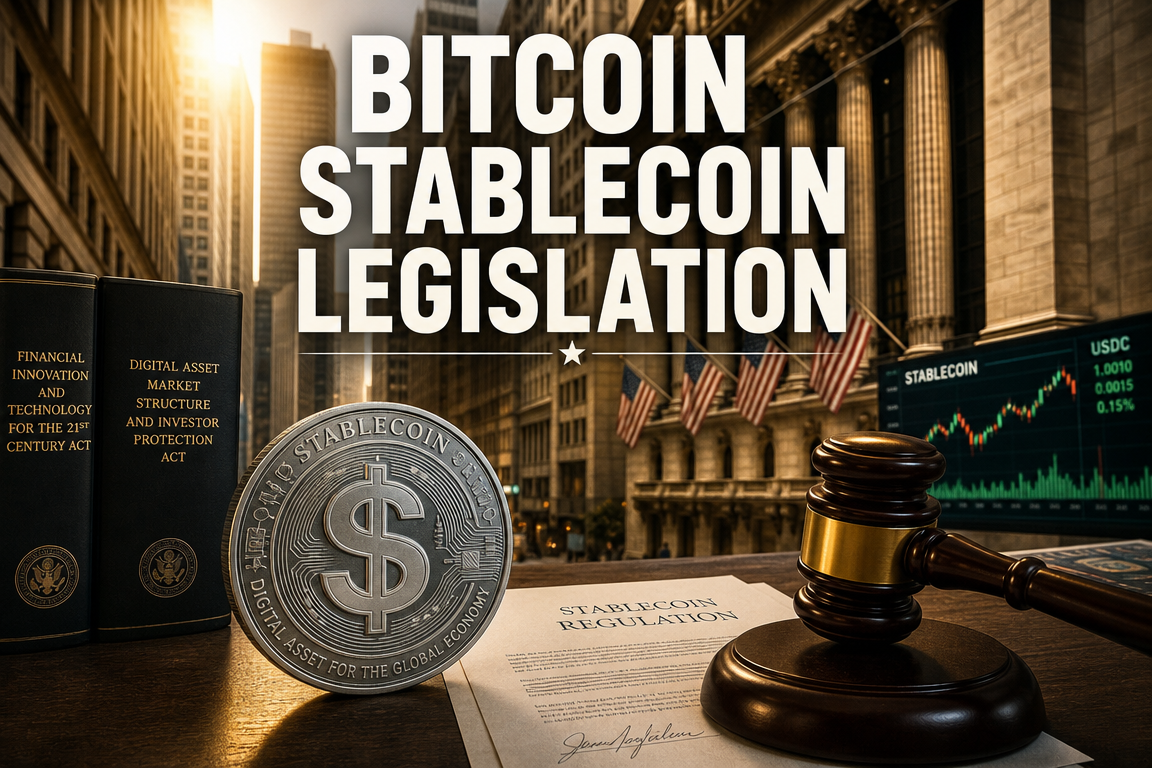
Key elements are increasingly interconnected: the U.S. Department of Defense’s changing posture toward Bitcoin, progress on U.S. stablecoin legislation, the Trump administration’s policy orientation, the possibility of a Federal Reserve Chair transition and related liquidity implications, and the structural drivers pushing traditional finance toward stablecoins.
This report consolidates these developments with a focus on (i) why U.S. institutions are beginning to frame Bitcoin as a national-security-relevant asset, (ii) why legislative passage is a practical starting point for institutional capital deployment, and (iii) how digital-asset leadership is increasingly tied to U.S.-China strategic competition.
1. Core Development: Implications of the U.S. Department of Defense Engaging with Bitcoin
The primary signal is that Bitcoin is moving beyond being treated solely as a speculative or alternative investment asset and is increasingly being examined within the category of national security and strategic assets.
References associated with U.S. Indo-Pacific Command, reports of Bitcoin node operation and network security testing, and commentary that China is part of the same competitive landscape indicate that digital assets are increasingly being evaluated as a geopolitical variable, not only a financial-market instrument.
1-1. Why This Matters
Historically, Bitcoin has been viewed through three main lenses:
1) A high-risk asset dominated by retail participation.
2) An alternative portfolio allocation accessed by institutions (e.g., large asset managers).
3) An inflation hedge held by select sovereigns or corporates.
Once national defense and security frameworks become involved, the evaluation expands to network resilience, censorship resistance, independence for cross-border value transfer and storage, sanctions circumvention risk, and strategic utility in contested cyber and communications environments.
1-2. Why the U.S. Could View Bitcoin as a Security-Relevant Strategic Asset
From a U.S. perspective, Bitcoin carries several strategic attributes:
1) A network without a centralized issuer.
The dollar system is powerful but remains a U.S.-controlled architecture. Bitcoin persists as a global network without state issuance, creating an option value as an external store of value under systemic stress.
2) A platform for testing resilience against hacking, disruption, and censorship.
If node operation and security experiments are occurring, the objective is less about price and more about survivability under wartime, sanctions, or communications-disruption conditions.
3) A function of U.S.-China strategic competition.
If China were to treat Bitcoin as a strategic asset and accumulate or deploy it accordingly, the U.S. would have limited incentive to lag. In competitive standard-setting, early validation and rule formation confer advantage.
2. Why Legislation May Matter More Than Bitcoin Price in the Near Term
A central interpretation is that the market is transitioning from retail-driven dynamics to institution-led participation. Institutions generally require legal clarity before scaling exposure.
Retail participants may position on expectations; institutions typically act after frameworks are established. As a result, U.S. digital-asset legislation, especially stablecoin and broader regulatory architecture, may be more consequential than near-term price action.
2-1. Why the GENIUS Act and the CLARITY Framework Matter
While stablecoin legislation can drive immediate market reaction, broader bills defining digital-asset legal status and supervisory boundaries are likely to have more structural impact.
Key reasons:
1) Enable regulated financial product design.
ETF structures, custody, payments, collateral, lending, and tokenized asset products require foundational legal definitions.
2) Reduce institutional onboarding bottlenecks.
Despite apparent market access, many institutions remain constrained by regulatory uncertainty. Legislation can remove these barriers.
3) Allow the U.S. to set global standards.
If the U.S. establishes the primary regulatory framework, U.S.-style standards could diffuse across cross-border capital markets and fintech norms, supporting dollar-system continuity.
2-2. Why Passage Has Been Delayed
The core issue is competition between incumbent banking interests and emerging fintech/crypto issuers.
- Banks argue that non-bank issuers providing deposit-like instruments and yield could destabilize the deposit base and increase run risk.
- Stablecoin issuers argue that they may face stricter requirements (e.g., full reserve backing) while being restricted from competing on distribution and product features.
This is not solely a sector dispute; it is a contest over control of next-generation payment rails and the gatekeeping function for digital-dollar distribution.
3. Why Stablecoin Legislation Appears Increasingly Likely to Advance
Aggregating the cited interpretation suggests a higher likelihood of legislative progress ahead of midterm elections. This can be understood across political, industrial, and policy-signaling dimensions.
3-1. Political Incentives Favor Speed
If the administration maintains a pro-crypto, pro-stablecoin stance, delivering regulatory outcomes before midterms can be positioned as tangible innovation leadership and competitiveness.
3-2. Economic and Industrial Costs of Delay Are Rising
Prolonged uncertainty impairs corporate investment decisions, delays institutional product launches, and increases risk premia. Regulatory hesitation can also encourage migration of capital and operations toward more permissive jurisdictions.
3-3. Significance of the White House Economic Advisory Reporting
Banks have emphasized that interest-bearing stablecoins could accelerate deposit outflows, particularly from small and mid-sized banks, potentially amplifying run dynamics.
If advisory reporting suggests the impact may be contained and not systemically destabilizing, the policy signal shifts toward enabling innovation rather than prioritizing incumbent protection.
4. Why Bitcoin Price Has Been Less Responsive Than Expected
Market participants have noted strong equity performance alongside comparatively muted Bitcoin upside. This is likely multi-causal.
4-1. Legislative Expectations Were Present, but Gridlock Persisted
Legislative progress is supportive, but expectations alone are insufficient for large-scale institutional deployment. Repeated delays can generate market fatigue. The gap between “likely” and “finalized” remains material.
4-2. Geopolitics and Liquidity Variables Also Constrained Risk Appetite
Bitcoin is no longer purely a risk asset, but it is also not fully priced as a safe-haven. War risk, U.S.-China friction, rate-path uncertainty, dollar strength, and liquidity-tightening concerns can increase volatility and suppress upside.
4-3. The Market Is in a Transitional Regime
Retail-driven markets can price narratives rapidly. Institution-led markets require time for legal, accounting, custody, internal risk processes, and supervisory alignment. Slower price response may reflect maturation costs.
5. Federal Reserve Chair Transition Risk and the Link to Crypto Markets
The referenced discussion includes Kevin Warsh. The core point is that labeling a candidate as “hawkish” based on historical statements can be misleading; policy is path-dependent and multi-variable.
5-1. Why the Fed Chair Matters
Over the long term, technology and regulation drive the sector; in the short term, liquidity remains a dominant factor. Rates, balance sheet policy, dollar liquidity, and broader risk appetite feed directly into crypto pricing.
5-2. How to Frame the Kevin Warsh Variable
The relevant question is not simply historical hawkishness, but whether current policy logic could support easing pathways.
Potential determinants include the inflation metrics prioritized, how AI-driven productivity gains are assessed, and the design of QT pace alongside rate cuts. This can produce more flexible outcomes than consensus positioning implies.
5-3. Implications of a More Crypto-Tolerant Fed Leadership
The impact extends beyond Bitcoin price. The larger effect would be on the policy temperature surrounding stablecoins, tokenized assets, digital payment systems, custody infrastructure, and regulated financial-institution participation. Even a non-obstructive posture can accelerate adoption.
6. Why Traditional Finance Is Structurally Incentivized to Move Toward Stablecoins
This is driven by settlement efficiency, cross-border capital mobility, dollar distribution mechanics, and platform-economy integration, not solely by market hype.
6-1. Stablecoins Reduce Payment and Settlement Friction
Legacy cross-border payment systems are slow and costly, with multiple intermediaries and operating-hour constraints. Stablecoins operate continuously, reduce settlement complexity, and enable programmable automation. For corporates, cost savings can be material.
6-2. A Mechanism to Extend Dollar Dominance in the Digital Era
While stablecoins appear private, dollar-denominated stablecoins can expand global dollar circulation via private distribution networks. This can reinforce dollar dominance without requiring aggressive rollout of a central bank digital currency.
6-3. Integration With Asset Tokenization
Tokenization of Treasuries, corporate credit, real estate cash-flow rights, fund interests, and deposit-like instruments implies a natural demand for on-chain cash. Stablecoins become the cash layer of next-generation capital-market infrastructure.
6-4. Why Banks May Participate Even if Initially Defensive
Customer demand for faster, cheaper, and more convenient settlement pushes incumbents toward adaptation. Banks typically converge on:
1) Attempt to block stablecoins.
2) Partner with issuers and participate in distribution.
3) Launch bank-linked digital deposits or tokenized deposit products.
A combination of (2) and (3) is a plausible base case.
7. Why Bitcoin and Stablecoins Should Be Analyzed Together
In policy and market structure, they are linked:
- Bitcoin: store-of-value and strategic-asset characteristics.
- Stablecoins: payment, distribution, and settlement infrastructure.
The U.S. appears positioned to pursue both: treating Bitcoin as a candidate strategic asset for resilience and security testing, while using stablecoins to expand digital-dollar distribution and using legislation to unlock institutional capital participation. If executed, this combination supports U.S. standard-setting in digital assets.
8. Key Macro Frame: More Than a Crypto Narrative
The underlying dynamics intersect with global growth, rate-cut expectations, inflation path, dollar-system durability, capital-market restructuring, and AI-driven productivity.
8-1. AI and Digital Finance Are Converging
AI-driven automation increases demand for real-time, programmable financial infrastructure. Legacy rails can become a constraint. AI-enhanced decision-making paired with blockchain-based settlement aligns with broader industrial digitization.
8-2. The U.S. Is Bundling Technology and Finance
Semiconductors, AI, cloud, cybersecurity, digital assets, and stablecoins function as a combined competitiveness agenda. Digital-asset policy operates simultaneously as industrial policy, foreign policy, and capital-market strategy.
9. Underemphasized Points in Common Coverage
9-1. The Primary Variable Is U.S. Rule-Setting, Not Near-Term Bitcoin Price
Many narratives focus on price. The more durable driver is which institutions define rules. Alignment across the Department of Defense, the White House, Congress, the Fed, and major financial institutions can set long-horizon market direction.
9-2. The Stablecoin Debate Is Not Simply Innovation vs. Safety
Operationally, it is a contest over control of future deposit-like liabilities, payments, settlement, and Treasury demand. As stablecoin issuers scale, they may become substantial holders of U.S. Treasuries, potentially supporting dollar-system funding dynamics. Incumbent bank interests and national-system interests do not always fully align.
9-3. “Bitcoin as a Security Asset” May Represent a Digital Reinterpretation of Gold
Gold requires physical storage and transport; Bitcoin is network-based value storage. If states are evaluating which asset is more operationally flexible under stress, the framing itself is strategically meaningful.
9-4. For Korea-Based Investors, U.S. Legislation and the Fed Must Be Monitored Together
Domestic-only analysis risks missing primary drivers. Digital-asset markets are likely to be increasingly sensitive to U.S. regulation, U.S. monetary policy, and U.S. technology-competitiveness strategy. Policy and liquidity monitoring may be more decision-relevant than chart-based narratives alone.
10. Monitoring Checklist
1) Timing and detailed provisions of U.S. stablecoin legislation.
Key items: permitted interest/yield features, reserve requirements, and issuer eligibility.
2) Degree of regulatory clarity for digital assets broadly.
Key items: security vs. commodity boundary and supervisory authority allocation.
3) Additional official statements from defense and security institutions regarding Bitcoin.
Symbolic and signaling value is high.
4) Federal Reserve leadership changes and monetary-policy direction.
Rate cuts, QT pace, and overall liquidity conditions link directly to crypto-market pricing.
5) Execution by major financial institutions.
Custody, payment rails, tokenized assets, and institutional stablecoin platforms would indicate a step-change in adoption.
Conclusion: The Primary Question Is Whether the Order Is Changing
The core structure is: the U.S. is beginning to evaluate Bitcoin as a candidate strategic asset; stablecoins are being positioned as a digital tool reinforcing dollar distribution; and legislation and Federal Reserve variables influence the implementation pace.
The relevant focus is structural change rather than short-term price fluctuations: Bitcoin being described in security-asset terms, stablecoins competing directly with bank-based systems, and the U.S. attempting to institutionalize these mechanisms to set global standards in digital finance.
- The U.S. Department of Defense’s interest in Bitcoin signals a shift toward evaluating Bitcoin as a strategic and security-relevant asset, not only a speculative instrument.
- Stablecoin legislation and broader digital-asset regulatory clarity are prerequisites for meaningful institutional capital participation; momentum could increase ahead of midterm elections.
- A Federal Reserve leadership transition and liquidity policy could be supportive for crypto markets, while traditional finance has structural incentives to adopt stablecoins for cost reduction and to extend digital-dollar distribution.
- The central variable is U.S. standard-setting in digital assets, not near-term price action.
[Related Articles…]
-
https://NextGenInsight.net?s=Bitcoin
Bitcoin as a Strategic Asset: Signals From U.S. Policy Shifts -
https://NextGenInsight.net?s=Stablecoin
The Stablecoin Competition and the 2026 Economic Outlook: The Next Move in Dollar Dominance
*Source: [ 경제 읽어주는 남자(김광석TV) ]
– 미국 국방부가 비트코인을 보기 시작했습니다… 판이 바뀝니다 | 경읽남과 토론합시다 | 정구태 대표 [1편]
● AI War, China Surge, Market Split
The Core Reason Equity Markets Are Diverging: The U.S.–China Summit Trap and China’s AI Counteroffensive
This is not a simple headline-driven move around a U.S.–China leaders’ summit. Key market divergence across U.S., China, and Korea is increasingly explained by a single connected chain: AI semiconductors, Huawei, DeepSeek, humanoids, EVs, and batteries.
Two points are central:
- China is not merely “catching up” to the U.S.; it is building a separate standard.
- In AI competition, the decisive variable may be cost and speed of diffusion, not peak performance.
As a result, global growth and equity markets may become harder to explain using rates and earnings alone, as investment maps evolve around a split between U.S.-style premium AI and China-style ultra-low-cost AI.
1. What Markets Should Actually Watch in This U.S.–China Summit
Conventional focus areas include Taiwan, Iran, trade tensions, tariffs, and diplomacy. The more durable market impact is likely to come from AI and advanced-technology rule-setting.
1-1. Why This Should Be Viewed as an “AI Summit”
AI is no longer a sector theme. It affects productivity, military capability, data sovereignty, platform power, and semiconductor demand simultaneously. The U.S. and China control a large share of global AI compute capacity; their standards may shape the operating environment for other economies.
1-2. Likely U.S. Objectives
1) Slow China’s AI upgrading, especially via continued restrictions on training-grade GPUs, advanced semiconductor equipment, and leading-edge memory access.
2) Secure practical economic gains amid inflation and election pressures, including supply-chain cooperation (e.g., critical minerals) and improved operating conditions for U.S. firms in China (e.g., Boeing, Apple, Tesla).
3) Manage military applications and controls, as AI is increasingly treated as a strategic asset.
1-3. Likely China Objectives
Publicly, China may seek easing of chip and investment restrictions. Practically, China has been operating under the assumption that access to U.S. chips may not return. Near-term partial access may be less important than buying time to strengthen domestic ecosystems and finalize an “U.S.-optional” industrial structure.
2. Why Equity Directions Diverge: The U.S. and China Are Not Following the Same Path
The prior framework—China following the U.S.—is less explanatory. The two systems are moving along different development paths, changing valuation frameworks and growth mechanics even within similar “AI beneficiary” labels.
2-1. The U.S. Path: Maximum Performance, Premium Pricing, Concentrated Winners
The U.S. ecosystem (e.g., Nvidia, OpenAI, Anthropic, Microsoft) emphasizes frontier models and infrastructure: high-performance compute, hyperscale data centers, large models, and enterprise-grade precision AI. This is a premium/supercar strategy.
2-2. The China Path: Cost-Performance, Mass Adoption, Rapid Diffusion
China’s central emphasis is “good-enough AI deployed broadly at much lower cost.” Even with lower peak performance, lower pricing can accelerate adoption. Diffusion compounds into larger ecosystems, more usage data, and faster service optimization.
2-3. Implications for Market Performance
- U.S. equities can continue to command premiums for the high-performance AI value chain (GPUs, cloud, power infrastructure, enterprise AI).
- China-linked assets may re-rate initially through valuation normalization rather than pure growth acceleration, with focus on diffusion industries (AI, EVs, robotics, batteries, cloud).
- Korean equities face a more complex positioning: as both powers deepen self-sufficient ecosystems, Korea’s “middle-ground” strategy may become harder to sustain.
3. The Core Threat From China AI: Cost Structure, Not Peak Performance
The key question for China is not “best AI in the world,” but whether it can deliver “good-enough AI” at materially lower cost and massive scale.
3-1. What DeepSeek V4 Signaled
DeepSeek V4 is less about being #1 in performance and more about a sustained cost-efficiency strategy. Reports indicate meaningfully lower pricing versus top U.S. models with closer-than-expected performance in some benchmarks. For enterprises, large reductions in adoption cost can be decisive, particularly as inference-driven workloads expand.
3-2. Why China’s AI Costs Can Be Lower (Structural Drivers)
1) Electricity pricing: AI training and inference are power-intensive; China has regions with lower power costs and the ability to price aggressively.
2) Talent cost structure: a large domestic talent pool and comparatively lower living-cost baselines can reduce total compensation levels relative to the U.S.
3) Cloud price competition: Huawei, Tencent, and Alibaba compete aggressively in cloud; policy support for data centers can further compress unit costs.
3-3. Investment Interpretation
Lower-cost China AI can slow monetization speed and pricing power for premium AI providers, especially where enterprises substitute cheaper models for many use cases. Competitive advantage may increasingly depend on price disruption and diffusion velocity.
4. Role Specialization Within China’s AI Ecosystem
China’s AI is better understood as a role-specialized system rather than a single-firm story.
4-1. Huawei: Hardware and Infrastructure Anchor
Huawei is central to domestic AI chips, cloud, telecom infrastructure, and data-center ecosystems, positioned as a local substitute for Nvidia-led stacks. However, a performance and supply gap is still widely cited in top-tier training chips versus Nvidia, despite meaningful progress in inference.
4-2. DeepSeek: Research and Direction-Setting
DeepSeek functions as a research-driven player that demonstrates architecture, cost-efficiency, and optimization paths, shifting reference points for the broader ecosystem.
4-3. Alibaba, Tencent, Baidu: Distribution and Commercial Diffusion
These platforms scale AI into real markets through cloud, search, content, messaging, commerce, autonomy, and enterprise services. Positioning differs: Baidu in autonomy and AI services, Tencent in platform distribution and talent, Alibaba in cloud and enterprise diffusion.
5. China’s Competitive Edge: System Execution, Not a Single Technology
A consistent observation is speed of experimentation and diffusion.
5-1. “Permit First, Regulate Later”
China often enables deployment first and tightens regulation after issues emerge. Examples include autonomous driving, drone delivery, city-scale pilots, and AI service rollouts.
5-2. National Mobilization Around Targets
Once priorities are set, China tends to maintain direction and pursue alternatives aggressively. When blocked, it substitutes; when direct competition is unfavorable, it changes the competitive dimension (e.g., shifting from peak performance to cost and diffusion).
5-3. Market Shakeouts to Select Survivors
Support is often followed by intense competition that eliminates weaker players. EV industry consolidation and rapid pruning among AI model providers illustrate this pattern. Survivors can emerge with strong execution capability.
6. Why Tencent Opened Internships for Middle-School Students: The Talent War
Tencent’s initiative to involve middle-school students in AI service development and optimization indicates a structured talent pipeline strategy.
6-1. Strategic Implications
1) Early capture of high problem-solving potential.
2) Company-led evaluation and customized development.
3) Long-term reduction in effective talent supply costs.
6-2. Geely’s 5-Year Integrated Track Is Similar
Early recruitment of top high-school graduates and integrated internal training across undergraduate-to-PhD pathways reflects a “locked-in and cultivated” talent supply chain.
7. Why U.S. Controls Have Not Fully Stopped China
U.S. technology restrictions are material, but China has repeatedly responded through three mechanisms.
7-1. Substitution
Accelerate domestic alternatives across equipment, AI chips, and software ecosystems.
7-2. Change the Battlefield
If constrained in top-end performance, shift toward cost-performance and mass deployment.
7-3. Use the Domestic Market as a Testbed
Combine incentives and competitive pressure to scale pilots into real adoption. Survivors strengthen rapidly.
8. Clear Weaknesses in China AI
Overestimation risk remains; constraints are identifiable.
8-1. Bottlenecks in Top-Tier Training Chips
Even with progress in inference, leading-edge training chips remain a major gap. Scale and stability of supply are additional constraints.
8-2. Sustainable Production Capacity
Prototype capability and mass manufacturing at scale are not equivalent; stable supply in large volumes remains uncertain.
8-3. Social and Economic Costs
AI-driven displacement, inequality, and concentrated wealth can create domestic stability risks. Competitive narratives may mask these costs near term, but they remain long-run variables.
9. Strategic Implications for Korea
9-1. China Is No Longer Only a Sales Market
China increasingly functions as an R&D trend center and a testbed for competitiveness and commercialization speed.
9-2. Korea’s Core Task: “Non-Substitutable” Positioning
Relying on geopolitical spillover benefits is fragile. Market access and share can reverse quickly under transaction-oriented policy shifts. Korea must strengthen “must-have” capabilities across semiconductors, materials, equipment, AI infrastructure, and software.
9-3. Prepare Beyond HBM
Korea’s memory leadership is meaningful, but China continues to progress in DRAM and next-generation memory. HBM should not be assumed to be permanently defensible. “Sandwich” risk may re-emerge in a more complex form.
10. The AI-Driven U.S.–China Dilemma: A Structural Issue
The longer-lived issue may be AI governance rather than tariff levels.
10-1. U.S. View: AI as a Strategic Asset
AI is increasingly treated as critical to defense and intelligence, reinforcing incentives to constrain China’s advancement.
10-2. China View: AI as Growth Infrastructure
China frames AI as essential to growth and industrial upgrading, prioritizing diffusion over restriction.
10-3. Persistent Collision
Divergent objectives can drive continued conflict over export controls, military use, data transfer, and model validation standards, implying “managed separation” rather than broad cooperation.
11. Humanoids and Physical AI: The Next Battlefield
AI is extending beyond software into humanoids, robotics, autonomous driving, BCI, 6G, and quantum computing. China is notably active in physical AI and humanoids because embedding AI into hardware can lift industrial efficiency, manufacturing competitiveness, and defense potential. Investors may need to evaluate robotics, sensors, batteries, drivetrains, power semiconductors, and communications infrastructure alongside software AI.
12. Key Points Often Missed in Mainstream Coverage
12-1. China Is Becoming a Different Standard, Not a Substitute
The shift is toward fragmentation: China is building a parallel standard grounded in its cost structure, service design, policy framework, and talent pipeline.
12-2. AI Competition Is Not Primarily About #1 Model Performance
Industrialization often rewards lower cost, faster deployment, and broader distribution more than marginal performance advantages. China’s system is positioned strongly on diffusion.
12-3. The Summit Is Less About Alignment Than Boundary-Setting
The practical outcome may be defining limits of mutual interference, reinforcing controlled decoupling dynamics.
12-4. Korea’s Risk Increases When China Is Ignored
Ignoring China can lead to late adaptation to China-led standards and pricing structures, weakening strategic preparedness in both investment and industrial policy.
13. Practical Investor Checklist
1) Whether post-summit technology controls ease or become more targeted and sophisticated.
2) The relative pace of Nvidia-led training investment versus China-led inference diffusion.
3) How Huawei, DeepSeek, Baidu, Tencent, and Alibaba expand their ecosystems by function.
4) Whether Korea’s semiconductor and battery industries advance from spillover beneficiaries to non-substitutable positions.
5) When humanoids and physical AI translate into material revenue pools.
14. One-Line Conclusion
Markets should not be reduced to “U.S. good vs. China good.” The U.S. is pursuing high-performance, capital-intensive AI; China is pursuing ultra-low-cost, rapid diffusion. This structural split may become a larger driver of markets than FX, rates, or near-term earnings, shifting emphasis from “best technology” to “fastest market capture.”
< Summary >
- The core of the U.S.–China summit is likely AI and advanced-technology rule-setting rather than security alone.
- The U.S. is building premium, high-performance AI; China is building ultra-low-cost, mass-deployed AI, forming divergent standards.
- China’s key advantage is structural cost and diffusion speed, not peak performance.
- Huawei, DeepSeek, Baidu, Tencent, and Alibaba play specialized roles in ecosystem expansion.
- Korea must strengthen non-substitutable capabilities rather than rely on geopolitical spillovers.
- Equity market direction may be increasingly driven by U.S.–China technology fragmentation and AI industry structure shifts, alongside traditional macro and earnings factors.
[Related Links…]
- AI leadership competition and global equity market restructuring: https://NextGenInsight.net?s=AI
- China’s technology drive and Korea’s industrial response strategy: https://NextGenInsight.net?s=China
*Source: [ Jun’s economy lab ]
– 이제 증시 방향이 갈리는 이유. 미중 정상회담의 함정(ft.이벌찬 기자 1부)