● KOSPI Rally, Inflation Cooldown, Oil Relief, Pension Boost
Three Reasons the KOSPI Has a Strong Case to Rise Tomorrow: Key Metrics and Market Transmission Channels
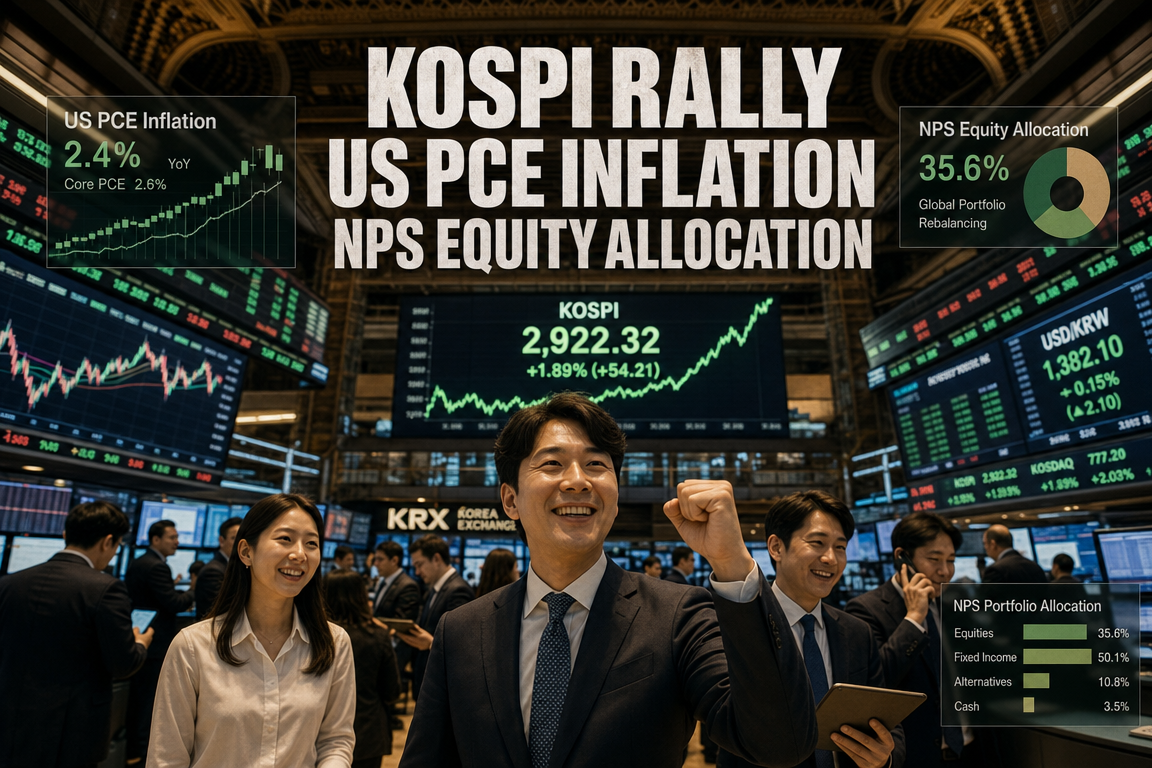
This note is not a sentiment-based call. It outlines three catalysts—(1) easing US inflation signals, (2) reduced Middle East geopolitical risk, and (3) an increased domestic equity target allocation by Korea’s National Pension Service (NPS)—and explains how they can translate into improved risk appetite, semiconductor leadership, and supportive market liquidity.
Conclusion: the market is facing a coincident improvement in inflation expectations, oil-price risk, and domestic equity flows. If these factors reinforce each other, the direction of US tech, Korean semiconductors, foreign investor positioning, and rate-cut expectations can align.
1. Why the Nasdaq Was Strong Overnight: US Inflation Data Printed Below Expectations
The primary driver was US inflation coming in softer than expected. Equity markets typically interpret downside inflation surprises as supportive for risk assets.
1-1. Why Lower Inflation Is Generally Supportive for Equities
- Higher inflation increases the likelihood that the Federal Reserve keeps policy rates restrictive for longer.
- Higher rates raise discount rates and compress valuations, particularly for growth and technology stocks.
- Nasdaq performance is therefore highly sensitive to inflation and rate expectations.
A softer inflation print is often translated by markets into:
- reduced probability of additional aggressive tightening,
- less upward pressure on expected terminal rates, and
- improved conditions for risk appetite and liquidity.
1-2. Why the KOSPI Often Tracks the Nasdaq Impulse
Korea’s equity market is export- and semiconductor-heavy, making it more exposed to global technology cycles than many peers. A Nasdaq rally can transmit through:1) improved global risk sentiment,
2) greater likelihood of foreign inflows into Asian technology exposure,
3) improved expectations for large-cap Korean semiconductors, and
4) index-level uplift due to the heavy weighting of top semiconductor names.
In simplified form: US disinflation signal → Nasdaq strength → semiconductor sentiment improvement → KOSPI support.
1-3. Why This Matters More for SK Hynix
SK Hynix should be viewed as a proxy for the global AI semiconductor cycle. With existing expectations tied to HBM, AI server demand, and the Nvidia supply-chain narrative, a lower-inflation backdrop can facilitate renewed growth multiple support.
SK Hynix is therefore leveraged to a combination of earnings expectations, the AI cycle, foreign flows, and US tech sentiment—making overnight US strength a potentially direct input into KOSPI leadership dynamics.
2. US–Iran De-escalation Signals: Geopolitical Risk Relief Is a Material Macro Input
A second catalyst was reporting that pointed to de-escalation or negotiation momentum involving the US and Iran, contributing to improved market risk sentiment.
2-1. Why Markets React Strongly to Middle East Headlines
The key transmission channel is crude oil:
- escalation risk raises concerns about supply disruptions,
- oil price spikes can re-accelerate inflation expectations,
- renewed inflation pressure can delay expected rate cuts, and
- valuation multiples can compress as policy stays restrictive.
Accordingly, de-escalation functions as a macro stabilizer across inflation, policy expectations, and corporate margin outlooks.
2-2. Why This Is Particularly Relevant for the KOSPI
Korea’s economy has high energy import dependence. Rising oil prices can pressure:
- trade balance and input costs,
- domestic inflation, and
- FX stability.
Given the KOSPI’s manufacturing-heavy composition, energy and commodity stability is a direct support for corporate cost visibility and broader risk appetite. A more stable FX profile can also improve conditions for sustained foreign participation.
2-3. Key Market Implication of the Current Newsflow
The key point is not that a conflict has conclusively ended, but that the probability of adverse tail scenarios may be moderating. Markets often respond more to falling uncertainty than to fully realized outcomes.
This risk relief can reinforce the same directional impulse as softer US inflation, supporting global equities and, by extension, Korea’s cyclical and technology exposures.
3. NPS Increasing Its Domestic Equity Target Allocation: The Most Actionable KOSPI Flow Catalyst
The third factor is a prospective increase in the NPS target weight for domestic equities. This is potentially consequential because it can alter the structural supply-demand balance in the KOSPI.
3-1. Why NPS Positioning Matters
NPS is one of the largest domestic institutional participants. Its strategic allocation decisions can meaningfully affect market flows, particularly in large-cap index constituents.
When the KOSPI is range-bound or under pressure, investors often focus on institutional selling intensity. A higher domestic equity target allocation can reduce the probability of persistent structural selling from this investor base.
3-2. Why Reduced “Overhang Risk” Is Important
A recurring market pattern has been rallies facing supply from institutional rebalancing. A higher domestic equity target can be supportive via:1) reduced structural selling pressure, and
2) greater capacity for stabilizing demand during drawdowns.
If foreign buying coincides with less institutional selling, index responsiveness can increase.
3-3. Practical Focus for Individual Investors
Market direction often depends more on flows than on headlines. Positive narratives without incremental buyers tend to fade, while durable inflows can sustain trends even with limited news support.
In a large-cap-driven market structure, institutional allocation changes can have outsized index impact.
4. Expected Market Mechanics When All Three Factors Align
- Softer US inflation reduces rate-related headwinds.
- Geopolitical de-escalation reduces oil and inflation re-acceleration risk.
- NPS allocation changes can improve domestic flow support.
Typical sequence:1) improved global risk sentiment
2) stronger US tech performance
3) increased focus on KOSPI semiconductor heavyweights
4) reduced pressure from foreign/instutional flow imbalances
5) greater probability of testing higher index levels
This is a thesis grounded in macro and flow alignment rather than a single headline catalyst.
5. Key Points in Report Format
US inflation printed softer than expected
Downside inflation surprise reduced perceived tightening risk and supported Nasdaq strength, with potential positive spillover to Korean semiconductors and the KOSPI.
Middle East geopolitical risk moderated
Negotiation/de-escalation signals reduced the probability of an oil-driven inflation shock. Given Korea’s energy import dependence, the macro impulse is comparatively supportive.
NPS domestic equity target allocation increased
Potential reduction in structural selling pressure and improved downside flow support represent a more actionable catalyst than short-term sentiment.
6. The Core Point Often Missed in Short Coverage
The critical issue is not the number of positive headlines, but simultaneous easing across three market pillars: inflation, oil-risk, and flows.
The KOSPI’s structure—semiconductor-heavy, export-linked, and sensitive to foreign participation—makes this alignment more likely to translate into measurable index effects.
7. Next Session Checklist: What to Monitor
1) Foreign flows in futures and cash equities
Primary indicator of whether the US tech impulse converts into KOSPI buying.
2) Opening response in Samsung Electronics and SK Hynix
Strong initial performance increases the probability of index-level support.
3) USD/KRW trajectory
Stability improves the odds of sustained foreign participation.
4) Institutional selling intensity
Key test of whether NPS-related allocation changes are reducing supply.
5) Post-gap behavior
Ability to hold early gains versus fading after an opening gap is a practical gauge of demand quality.
< Summary >
- Softer US inflation supported Nasdaq strength, with a clear transmission channel to Korea’s semiconductor-heavy index.
- Middle East de-escalation reduced oil shock risk and improved inflation/policy visibility, supportive for an energy-importing economy.
- A higher NPS domestic equity target allocation may improve KOSPI flow dynamics by reducing structural selling pressure.
[Related Articles…]
- KOSPI rebound signals: foreign flows and semiconductor trend checkpoints
https://NextGenInsight.net?s=KOSPI - AI semiconductor investment strategy: why SK Hynix and Nasdaq strength are linked
https://NextGenInsight.net?s=AI
*Source: [ 내일은 투자왕 – 김단테 ]
– 내일 코스피 제발 올라야 하는 이유 3가지
● Inflation-Alert, Fed-On-Edge, Markets-Brace
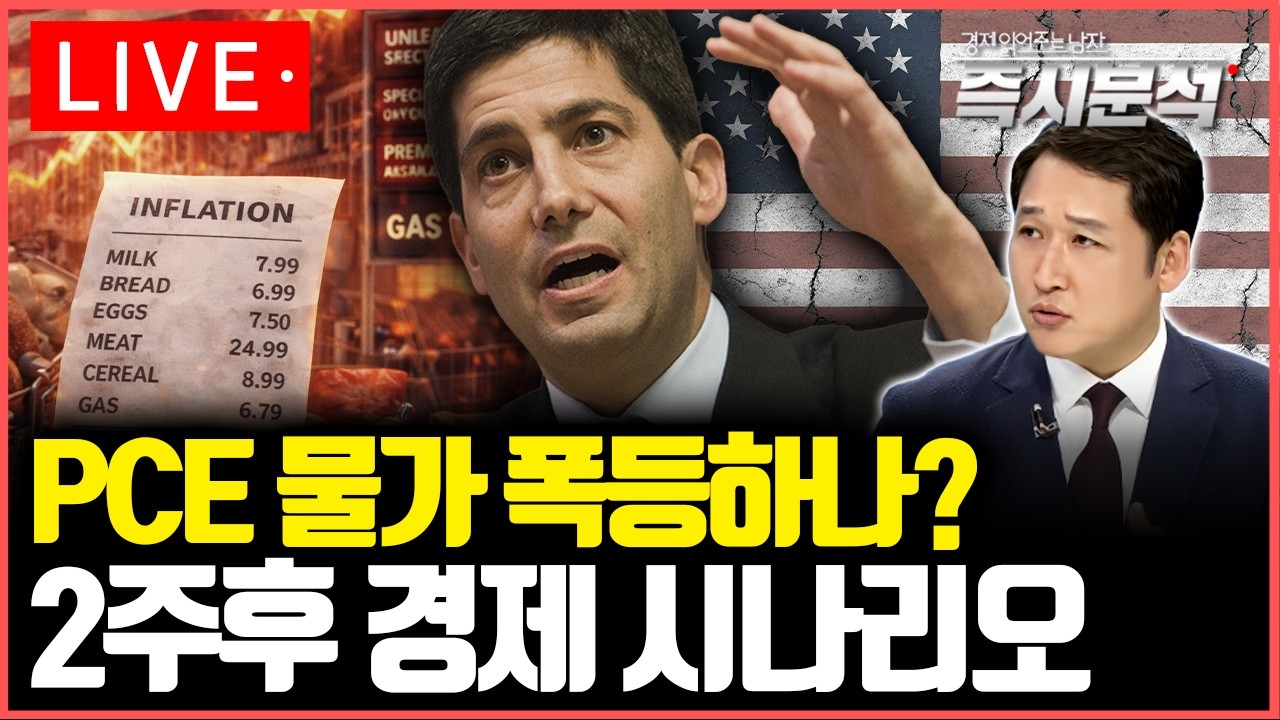
US PCE Inflation: No Shock, but Not Over — Key Points Investors Should Track
This release can be distilled into three points:
1) The figures matched consensus expectations, limiting the risk of an immediate inflation shock to financial markets.
2) The underlying trend is re-accelerating, pushing expected Fed rate cuts further out.
3) A short-term relief rally is possible, but medium-term risks are skewed toward renewed inflation vigilance across Treasury yields and equities.
This note summarizes the PCE release, the preliminary GDP interpretation, Fed policy implications, crude oil and Middle East risk, impacts on Korean equities (KOSPI), and key variables often underemphasized in mainstream coverage.
1. US PCE Release: Headline Figures Largely In Line
Key data points:
- Headline PCE inflation: 3.8%
- Core PCE inflation: 3.3%
- US Q1 preliminary GDP: 1.6%
Both inflation metrics were broadly consistent with market expectations. This reduced the probability of an upside inflation surprise that could have triggered abrupt repricing across equities, Treasuries, and the USD. The market had already incorporated a relatively elevated inflation profile, and the result fell within that expected range.
2. Why This Is Not a “Clear” Risk-Off Signal: The Direction Has Turned Higher
The primary issue is not the absolute level, but the trajectory. The data are more consistent with inflation momentum firming rather than continuing a stable disinflation path.
For the Fed, this is problematic: rate cuts require confidence that inflation is moving sustainably toward 2%. The latest profile provides limited support for that condition. The release is therefore best viewed as “no shock, but insufficient easing evidence.”
3. Short-Term vs. Medium-Term Read-Through Diverges
3-1. Short-Term Interpretation
Because the data met expectations, a relief response is plausible. If inflation concerns were already priced in, Treasury yields may stabilize modestly and risk assets may attempt to consolidate or rebound.
3-2. Medium-Term Interpretation
Medium-term implications remain restrictive:
- Can the Fed credibly cut rates within the year?
- Does “higher for longer” become the base case?
- Is there renewed upside risk to long-end Treasury yields?
- Can growth and technology valuations absorb a higher discount rate?
As these questions re-emerge, equity risk premia may need to adjust.
4. Q1 GDP at 1.6%: Not Recession, Not Overheating
A 1.6% reading does not signal an imminent downturn. However, the downgrade relative to earlier estimates suggests slowing momentum.
The combination is unfavorable:
- Growth shows signs of cooling
- Inflation is firming
This mix complicates policy and is typically negative for risk assets because inflation persistence constrains easing even as growth moderates.
5. Primary Inflation Driver: Supply-Side Shock More Than Demand Pull
Current inflation pressures appear less consistent with demand overheating and more aligned with supply-driven forces, particularly crude oil and geopolitical risk.
5-1. Transmission From Higher Oil Prices
Higher crude prices can feed through beyond gasoline:
- Higher naphtha prices
- Higher plastics and packaging costs
- Higher construction material costs
- Higher fertilizer and pesticide costs
- Higher agricultural commodity prices
- Higher animal feed costs
- Higher livestock product prices
- Higher dining-out inflation
Energy often acts as the initial impulse, with broader pass-through risk over time into goods and services.
5-2. Middle East Conflict and the Strait of Hormuz Risk
The core risk is not only current price levels but ongoing supply uncertainty. The Strait of Hormuz and broader regional tensions can lift inflation expectations through perceived supply disruption risk. For markets, the forward distribution of oil prices is increasingly relevant.
6. Why Producer Prices Matter: Potential Upward Pressure on Consumer Inflation
Producer prices often transmit into consumer inflation with a lag. If PPI remains firm, upcoming CPI and PCE prints may face persistent upside pressure.
This implies the event risk is not concluded; attention shifts to the next CPI and subsequent inflation releases. The appropriate framing is an extension of the risk window rather than closure.
7. Will the Fed Hike Again? Low Probability, but Cuts Are Further Away
A pragmatic scenario set:
- Near-term rate cuts are unlikely
- The Fed may keep policy restrictive for longer
- Immediate additional hikes remain a secondary risk, but not excluded
Given the current policy rate is already restrictive, the Fed may prefer to maintain rates and wait for clearer disinflation evidence. For equities, the key change is the deterioration of rate-cut timing expectations.
8. How to Read Fed Communication
Common signals across Fed commentary:
- Rate cuts are not imminent
- Inflation uncertainty remains elevated
- Energy and geopolitical risks persist
- Policy should remain cautious
While “data dependence” remains the formal message, the effective tone is hawkish, reducing the probability of a rapid pivot.
9. Implications for US Equities and Treasury Yields
9-1. US Equities
A short-term “bad news not worse” rebound is plausible. However, medium-term valuation sensitivity persists, particularly for AI-linked mega-cap and growth segments, which are highly exposed to real rates and discount-rate dynamics.
9-2. Treasury Yields
Yields may stabilize immediately following an in-line print. However, if subsequent inflation data re-accelerate, long-end yields may move higher again, tightening financial conditions and pressuring duration-sensitive equities.
10. Implications for KOSPI and Korean Assets
Korean markets are highly sensitive to US inflation and Treasury yields. An in-line PCE print is a near-term support factor, but Korea remains exposed to:
- Elevated commodity price sensitivity
- Higher FX sensitivity
- Foreign flows linked to the direction of US rates
Sustained oil strength raises import-price pressure. If USD/KRW also rises, corporate cost structures and consumer inflation can face simultaneous pressure. Monitoring upcoming US CPI and oil dynamics remains critical.
11. Bank of Korea vs. Fed: Why Korea Can Be More Reactive
The US policy rate is already high, reducing the likelihood of an immediate additional hike response to marginal inflation re-acceleration. Korea can face faster pressure through real-rate structure and inflation sensitivity.
In practice:
- The US faces a “higher for longer” duration problem
- Korea faces earlier potential pressure for incremental policy response
This distinction is important for interpreting Korean equities and rates.
12. News-Style Key Summary
- US PCE inflation: headline 3.8%, core 3.3%, broadly in line with expectations
- No immediate inflation shock; near-term market disruption limited
- Inflation direction appears to be turning higher
- US Q1 preliminary GDP at 1.6% indicates slowing growth momentum
- Supply-driven inflation characteristics complicate the Fed’s response function
- Crude oil, Middle East risk, and Strait of Hormuz uncertainty remain central variables
- Firm PPI suggests potential upside pressure on future CPI and PCE prints
- Fed rate cuts are pushed out; probability of prolonged restrictive policy increases
- US equities may see near-term relief; medium-term valuation pressure persists
- For KOSPI, oil, FX, and foreign flow dynamics must be monitored alongside US inflation data
13. Underemphasized Variables Investors Should Prioritize
13-1. The Print Matters Less Than the Next Prints
The primary consequence is not the current result but the elevated sensitivity to upcoming CPI and PCE releases. The market’s inflation event risk is extended.
13-2. “Hold to Cut” vs. “Hold With Hike Risk”
A hold can imply approaching easing, or it can imply extended tightening with residual hike risk. The current backdrop is closer to the latter, which has different implications for term premia and equity valuation.
13-3. If Energy-Led Inflation Spreads Into Services, Volatility Increases
If higher energy and input costs transmit into services (rent, dining out, transport), the Fed’s trade-offs worsen, and markets may reprice toward a more restrictive policy path.
13-4. Potential Collision Between the AI Rally and Inflation Persistence
Global equity leadership remains concentrated in AI-linked themes (semiconductors, data centers, cloud, power infrastructure, automation software). Structurally, the growth narrative is strong, but tactically these segments remain rate-sensitive. A re-acceleration in inflation can tighten discount-rate conditions and challenge near-term performance.
14. Upcoming Catalysts to Monitor
- Next US CPI release
- Next US PPI release
- Crude oil trajectory
- Changes in Middle East geopolitical risk
- Shifts in Fed communication tone
- Direction of US Treasury yields
- Foreign flows into KOSPI
- USD/KRW trend
As these variables converge, market direction should become more defined.
15. One-Line Conclusion
This PCE release does not represent an inflation shock, but it sustains re-acceleration risk; near-term relief is possible, while medium-term pricing may remain constrained by higher yields and delayed rate-cut expectations.
< Summary >
US PCE inflation printed at 3.8% headline and 3.3% core, broadly matching expectations. Immediate shock risk was limited and near-term relief is possible. However, inflation momentum appears firmer, and with crude oil, Middle East risk, and earlier producer-price strength, upcoming CPI and PCE releases carry increased significance. Fed rate cuts are pushed further out, raising the probability of prolonged restrictive policy. US equities and KOSPI may rebound tactically, but medium-term conditions remain sensitive to inflation and Treasury yield dynamics.
[Related Articles…]
- https://NextGenInsight.net?s=PCE
- https://NextGenInsight.net?s=AI
*Source: [ 경제 읽어주는 남자(김광석TV) ]
– [LIVE] 미국 PCE 물가 심층분석 : ‘인플레 쇼크’ 오는가? [즉시분석]