● KRW Crash, Structural Weakness, Dollar Shock
USD/KRW Surge Approaches 2008-Crisis Levels: The Core Driver Is Korea’s Economic Resilience, Not the Dollar
What matters is not merely that the USD/KRW exchange rate has risen, but that KRW depreciation is extending beyond what can be explained by USD strength alone.
This report frames the move as more than a short-term FX event, highlighting structural factors in the Korean economy and outlining policy implications for the government, the central bank, and corporates. Key linkages include the abnormal divergence between the DXY and USD/KRW, relative liquidity growth, fiscal deterioration, declining potential growth, and imbalances in FDI inflows vs. outflows.
1. Market Snapshot: Why This Is Being Treated as an “FX Dislocation”
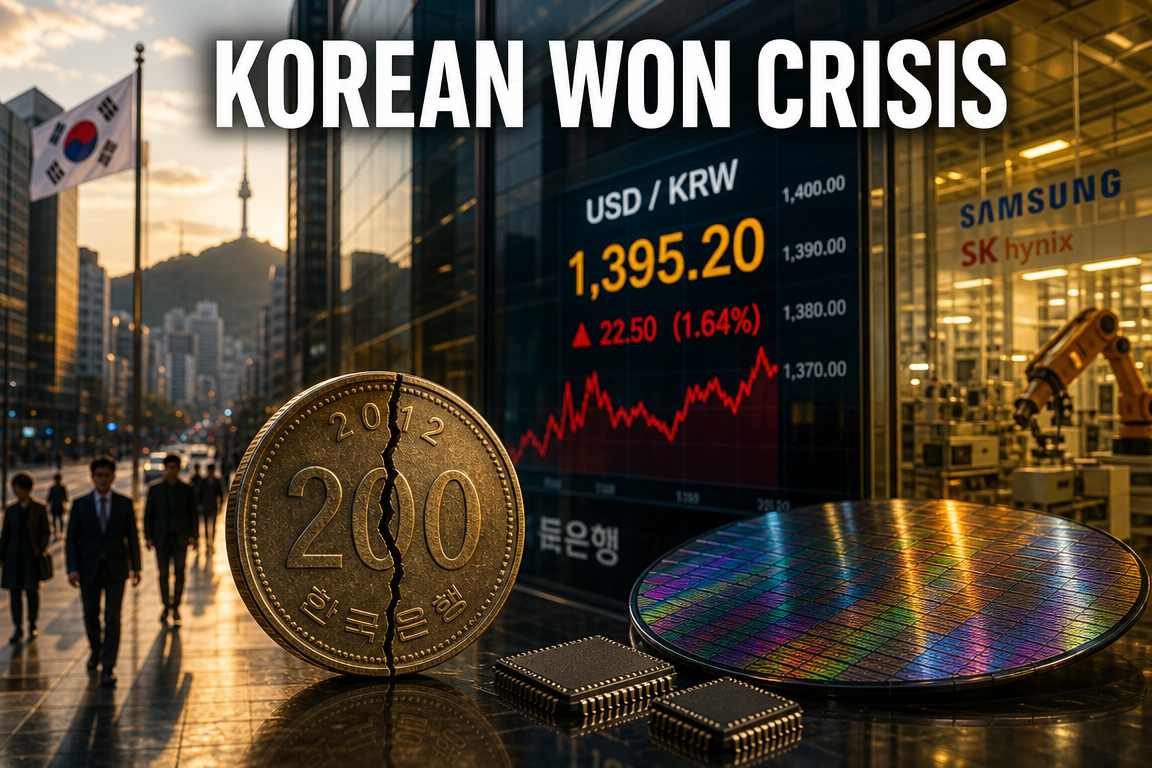
USD/KRW reached an intraday high near 1,562 and closed around 1,559, approaching post-2008 crisis extremes.
Headline drivers include Middle East risk, US inflation uncertainty, delayed Fed easing, and foreign outflows. However, the magnitude and persistence suggest more than “a strong dollar, weak KRW” dynamics.
The key signal is KRW weakness that appears excessive relative to USD moves, implying growing market emphasis on domestic fundamentals.
2. Structural Driver (1): KRW Underperformance vs. the Dollar Index Is a High-Risk Signal
Typically, USD/KRW co-moves with the DXY. Recently, USD/KRW has risen even when the DXY is flat to weaker.
This indicates idiosyncratic KRW weakness, consistent with declining relative confidence in KRW-denominated assets and policy credibility.
3. Structural Driver (2): Liquidity Expansion Risk—Faster Money Growth Weakens Currency Value
Rapid monetary expansion tends to weaken a currency’s value.
While US liquidity has increased, the key issue is that Korea’s M2 growth has reportedly outpaced the US, which can be interpreted as relatively faster KRW supply expansion—supporting additional depreciation pressure.
3-1. Why the Policy Rate Has Re-Entered the Debate
With elevated FX levels and inflation sensitivity, questions are rising on whether the Bank of Korea has been overly cautious.
The policy rate is not only a growth tool; it is central to managing liquidity and expectations. In a high-FX environment where import prices transmit into household costs, markets may prioritize FX and inflation stabilization over incremental growth support.
4. Structural Driver (3): Fiscal Credibility—A Constraint Observed by Foreign Investors
FX pricing reflects fiscal position, policy credibility, and medium-term growth capacity.
Persistent deficits since 2019 have increased scrutiny of:
- future fiscal capacity
- debt sustainability amid demographic decline
- remaining policy space during downturns
As confidence weakens, KRW risk premia can widen. FX defense depends not only on reserves but also on sovereign balance-sheet credibility.
5. Structural Driver (4): Declining Potential Growth—A Persistent Headwind to Currency Valuation
A central issue is potential growth. Repeated downward revisions in Korea’s potential growth imply reduced trend capacity across labor, investment, productivity, and innovation.
Potential growth figures cited are approximately 1.7% (this year) and 1.5% (next year), alongside a declining relative ranking. Currency valuation ultimately reflects expectations of medium- to long-term earning power; lower potential growth tends to embed structural depreciation pressure.
6. Why Upward Revisions to This Year’s Growth Are Not Sufficient
Even if this year’s growth forecast is revised higher, the report treats this as insufficient evidence of structural improvement due to:
- base effects following a weak prior year
- outsized contribution from a semiconductor export rebound
- renewed deceleration risk next year
The relevant question is multi-year resilience (e.g., 2027–2030), not a single-year print.
7. Structural Driver (5): Semiconductor “Optics”—A Narrow Growth Base
Strong export figures can mask concentration risk.
The report argues that semiconductor export value gains may reflect FX and pricing effects more than broad-based volume strength. If non-semiconductor exports remain weak, Korea’s external strength is dependent on a narrow sector base, reducing FX buffer capacity if the cycle turns.
8. Real-Economy Impact of a Sharp FX Move
8-1. Large Corporates vs. SMEs: Divergent Exposure
Export-oriented large caps (notably semiconductors, refining, and parts of manufacturing) can benefit via translation effects.
SMEs reliant on imported inputs face cost shocks, compressing margins and raising solvency risk.
8-2. Immediate Pressure on Household Living Costs
FX depreciation raises import prices (energy, food, raw materials, essentials), increasing the probability of real income compression.
This can deepen K-shaped distributional outcomes: export champions improve while import-dependent firms and households weaken.
8-3. Why This Can Be a Headwind for Equities and the KOSPI
A weaker KRW is not uniformly positive for the KOSPI. While selective exporters may benefit, broad markets can face:
- foreign outflows
- higher risk aversion
- higher country risk premium
If FX moves are driven by stress rather than growth expectations, equity implications skew negative.
9. Near-Term Response: Reserves and Verbal Intervention Have Limits
Authorities typically respond via communication and, if necessary, reserve-based stabilization.
These tools can reduce disorderly moves and speculative positioning, but they are characterized here as temporary measures. Persistent depreciation linked to fundamentals cannot be sustainably offset through FX-market actions alone.
10. Structural Policy Response (1): Reassess Liquidity Management
A first-line structural response is reviewing KRW liquidity growth and adopting a more conservative stance if needed, including rate policy.
Markets assess not only the level of rates but also the credibility of commitment to currency and inflation stability.
11. Structural Policy Response (2): Provide a Fiscal Consolidation Roadmap
Global capital prioritizes directionality over single datapoints.
Even if an immediate surplus is unrealistic, a credible plan is needed to:
- reduce structural deficits
- stabilize debt dynamics
- improve spending quality
Fiscal discipline is positioned as a core pillar of KRW credibility.
12. Structural Policy Response (3): Industrial Strategy to Lift Potential Growth
Addressing potential growth requires productivity-oriented policy rather than short-term stimulus, including:
- upgrading advanced manufacturing
- strengthening ecosystems in AI, semiconductors, robotics, and batteries
- labor market and regulatory reforms
- incentives for private investment
- raising service-sector productivity
Long-term KRW stability is linked to expectations of sustained national earning power.
13. Structural Policy Response (4): Increase Inbound FDI
The report highlights a structural imbalance: rising outbound direct investment while inbound FDI remains comparatively weak.
A wider gap increases structural USD demand and weakens relative KRW demand. Policies that improve Korea’s attractiveness for long-duration capital are therefore critical.
13-1. AI and the Fourth Industrial Wave: A Strategic Opportunity
The proposed lever is positioning Korea as a global R&D hub—framed as directly relevant to FX stability and potential growth.
Illustrative initiatives include attracting global firms to expand AI centers and R&D footprints across:
- AI compute and infrastructure
- semiconductors and adjacent supply chains
- robotics and physical AI
- automotive electronics
- smart appliances and industrial IoT
Expected channels:
- higher inbound FDI
- expansion of high-skill employment
- upgraded domestic technology ecosystems
- productivity gains
- improved medium-term growth capacity
- stronger KRW credibility
14. Weekly Market Watch: CPI, PPI, Semiconductors, and Major Event Risk
US inflation data are key. An upside surprise in US CPI could reinforce USD strength and risk-off behavior, amplifying volatility in Korean markets.
Additional sensitivity factors include PPI, semiconductor cycle expectations, and large-cap technology events. Directional clarity may be lower than volatility risk.
15. News-Style Key Points
- USD/KRW moved toward post-2008 crisis highs, increasing market stress.
- The move is not fully explained by USD strength; KRW-specific weakness is the central concern.
- Structural drivers cited include relative liquidity growth, fiscal credibility risk, and declining potential growth.
- Semiconductor-led export strength may overstate broad economic resilience.
- High FX levels tend to benefit large exporters while raising costs for SMEs and households via import inflation, worsening distributional outcomes.
- Reserves and verbal intervention are short-term tools; durable stabilization requires competitiveness and capital inflows.
- AI centers, global R&D hub strategy, and advanced-industry investment are positioned as medium-term levers for KRW stabilization.
16. Underemphasized but Material Takeaways
- (1) USD/KRW underperformance vs. the DXY implies a meaningful domestic-factor component.
- (2) FX stabilization is driven largely outside the FX market: industrial policy, fiscal trajectory, monetary credibility, and growth strategy.
- (3) Semiconductor strength can create a false signal of broad economic fitness; concentration risk remains.
- (4) AI-driven global R&D hub strategy is framed as an integrated policy tool for FX stability, capital inflows, and potential growth.
Sustained FX stabilization is most credibly achieved by reinforcing the investment case for Korea rather than relying on incremental FX-market supply.
17. Conclusion: Prioritize Structural Reinforcement Over Tactical Stabilization
The current USD/KRW surge is interpreted as a composite signal of market confidence, policy credibility, growth expectations, and capital flow structure.
Short-term stabilization measures remain relevant, but the durable response set includes liquidity discipline, fiscal consolidation planning, potential growth enhancement, advanced-industry competitiveness, inbound FDI expansion, and an AI/semiconductor-centered global R&D hub agenda.
< Summary >
The core issue behind the USD/KRW surge is KRW weakness rather than USD strength.
Key drivers cited include faster relative liquidity growth, fiscal credibility concerns, declining potential growth, and insufficient inbound investment.
Semiconductor export strength alone is not evidence of broad economic resilience.
Near-term stabilization may require market actions, but durable solutions are framed around AI/semiconductors/R&D hub strategy to raise competitiveness and attract foreign investment.
[Related Articles…]
- Korea’s AI infrastructure investment expansion and its impact on economic growth
https://NextGenInsight.net?s=AI - Post-surge USD/KRW implications for the KOSPI and export equities
https://NextGenInsight.net?s=exchange%20rate
*Source: [ 경제 읽어주는 남자(김광석TV) ]
– [LIVE] 원달러 환율, 2008년 금융위기 이후 최고점. 본질적 원인과 대응방안 [즉시분석]
● FX Shock, Kospi Selloff, Chip Boom
Why FX Volatility, KOSPI Consolidation, and the Semiconductor Supercycle Must Be Assessed Together
The key issue in the current market is not a standalone FX forecast. The relevant framework links: (i) drivers of KRW/USD volatility, (ii) foreign capital outflows and equity selling, (iii) the interaction among oil prices, interest rates, and risk sentiment, and (iv) the degree to which Korea’s semiconductor exports provide a material offset via USD inflows.
This report consolidates four principal headwinds and one major tailwind in a news-style format, connecting: net overseas investment outflows, foreign selling of KOSPI, the rising burden of crude oil imports, interest-rate decisions in Japan and the U.S., and the USD-earning capacity of Samsung Electronics and SK Hynix.
The primary takeaway is that attempting to precisely forecast spot FX levels is less actionable than assessing policy beneficiaries, asset allocation, and the widening performance gap between export-oriented and domestically oriented sectors.
1. Why FX Is Difficult to Forecast Now: One Variable Can Reprice the Market
FX is inherently difficult to predict due to multi-factor sensitivity. Even with multiple negative drivers, a single policy measure or a large export catalyst can offset pressure quickly. As a result, setting a definitive upside target for KRW/USD is not robust in the current regime.
The priority is volatility management rather than directional conviction. With authorities signaling stricter responses to speculative transactions, additional policy actions remain plausible in the near term.
2. News-Style Core Summary: Four Headwinds and One Major Tailwind
2-1. Headwind 1: Expansion of Net Overseas Investment Outflows
Domestic purchases of overseas equities and bonds remain elevated. Last year’s net overseas investment purchases were approximately USD 140bn (about KRW 200tn). This year through April, net outflows were about USD 34.2bn (roughly KRW 50tn).
For FX markets, this represents structural USD demand: outbound investment typically requires selling KRW and buying USD, contributing to depreciation pressure.
A key implication is that if FX stability rises on the policy agenda, authorities may consider incentives to redirect capital toward domestic assets, such as tax adjustments, measures to encourage local equity investment, or mechanisms that support repatriation flows.
2-2. Headwind 2: Large-Scale Foreign Selling in KOSPI
KOSPI strength is often supported by foreign inflows, which can also stabilize KRW. Recently, the opposite pattern has been observed: foreign investors have been net sellers despite market gains.
Market commentary highlights that foreign selling this year, even before mid-year, has been interpreted as exceeding KRW 100tn. A key driver is portfolio rebalancing: Samsung Electronics and SK Hynix weights have risen materially in global portfolios, increasing incentives for profit-taking and exposure reduction.
This dynamic may reflect valuation and concentration management rather than a deterioration in Korea-specific fundamentals. However, repatriation of proceeds into USD increases FX-market pressure. Additionally, KRW weakness can reduce USD-based returns, potentially reinforcing selling incentives.
2-3. Headwind 3: Japan/U.S. Rate Variables and the Interest-Rate Differential Burden
Rates are a high-sensitivity variable in this phase, particularly Japan’s policy stance and the U.S. Federal Reserve’s forward guidance.
In Japan, persistent JPY weakness can increase pressure for policy normalization. Historical precedent suggests that as USD/JPY approaches critical levels, the probability of intervention or policy shifts rises. A Japan rate increase could affect broader Asian capital flows, with spillovers to Korea.
In the U.S., a more hawkish-than-expected Fed stance (delayed cuts or renewed tightening risk) would likely support USD strength. This complicates Korea’s policy trade-offs: tightening to defend FX may amplify stress in property markets, corporate credit, small businesses, and domestic demand.
The market is therefore balancing interest-rate differentials against growth and financial-stability considerations.
2-4. Headwind 4: Higher Oil Prices and Increased Crude Import Costs
Oil prices transmit directly into Korea’s external accounts given high energy import dependence. Higher crude prices increase USD outflows and can widen the import bill versus last year.
Geopolitical risk could sustain oil above USD 90/bbl for longer than expected. Beyond trade balance effects, this can pressure CPI/PPI, corporate margins, logistics costs, and broader financial conditions.
A key risk chain is: higher oil -> higher inflation -> higher rate pressure -> higher recession risk. Accordingly, oil functions as a top-level variable affecting FX, rates, and equities simultaneously.
2-5. Major Tailwind 1: USD Inflow Buffer From Samsung Electronics and SK Hynix
Semiconductors are the central stabilizing pillar. Memory-cycle improvement has been stronger than many expected.
Samsung Electronics and SK Hynix generate a substantial share of revenue from exports, structurally earning USD. Their earnings recovery is viewed as a meaningful external-account buffer.
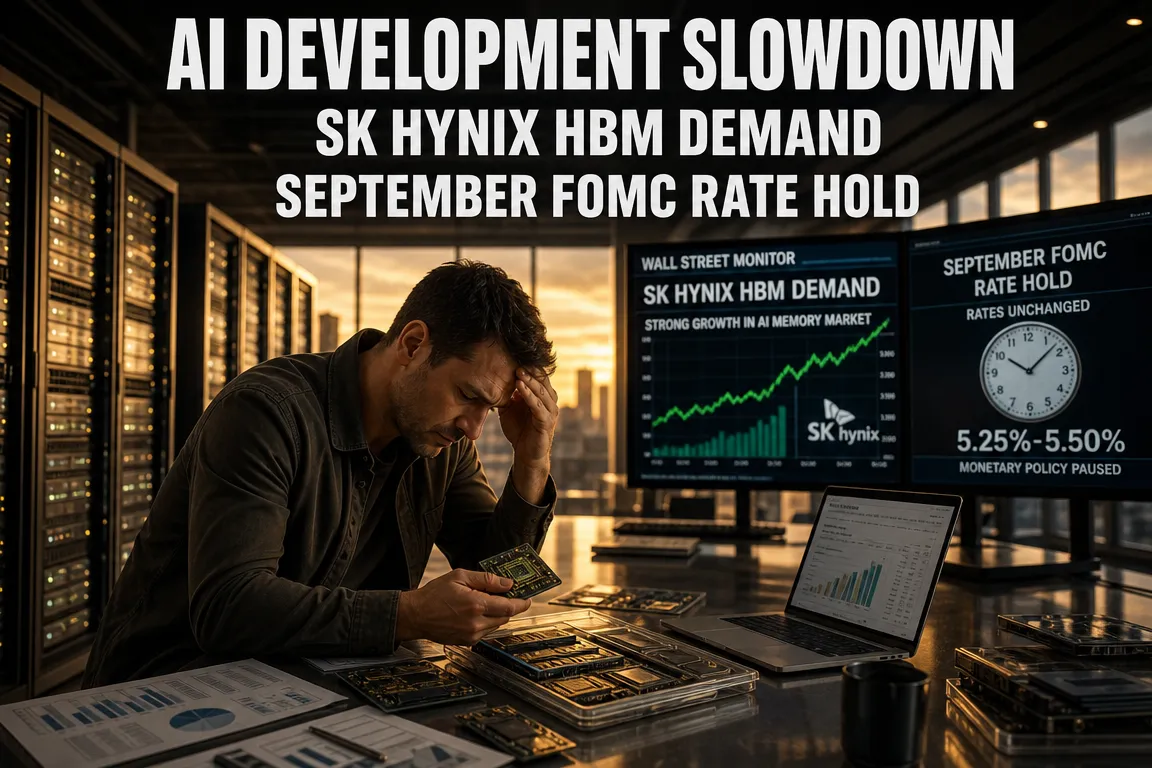
The timing is notable: as USD demand rises from outbound investment, foreign selling, and higher energy imports, semiconductor exports can supply large USD inflows, acting as a stabilizer. If AI server capex and memory demand (including HBM and data-center infrastructure) prove more structural than cyclical, Korea’s USD-generation capacity may remain supported for longer.
3. Interpretation: Why KRW Weakness Is Not Purely a Bear Case
Current conditions include multiple pressures: net overseas outflows, foreign selling, oil uncertainty, and rate risks. However, markets have not moved into a single-direction dislocation because USD outflows and inflows have both increased.
In effect, the system is experiencing a simultaneous shock and offset. This argues for viewing the current FX regime as a collision between competing USD flow channels rather than a one-way crisis narrative.
4. Policy Scenarios to Monitor
4-1. Potential Direct FX-Market Measures
During rapid FX depreciation, authorities may implement operational measures beyond signaling, including: tighter monitoring of speculative activity, FX liquidity management, and actions that encourage export-driven USD supply. Such signaling can reduce near-term volatility.
4-2. Domestic Equity Support and Capital Reallocation Incentives
A practical lever for FX stabilization is improving domestic capital-market attractiveness. Potential measures include tax incentives, policies encouraging higher dividends, corporate-value enhancement initiatives, and other domestic investment incentives. These are relevant not only for equity levels but also for FX stability via capital-flow dynamics.
4-3. Policy Preference Toward Export Champions
When FX is unstable, policy focus typically shifts toward USD-earning industries. Key beneficiaries may include semiconductors, autos, shipbuilding, and defense. Semiconductors in particular may be treated as a strategic external-balance sector rather than solely an earnings story.
5. Investor Positioning Considerations
5-1. Avoid Over-Concentrated FX Directional Bets
FX outcomes embed policy, geopolitics, rates, oil, foreign flows, and export performance. Concentrated exposure to a single FX direction increases risk.
5-2. Prioritize Potential Policy Beneficiaries
The relevant question is what policymakers are likely to defend: FX stability, macro outlook, export competitiveness, and capital-market stability. Sectors aligned with these objectives warrant monitoring (e.g., semiconductors, export manufacturers, high-dividend large caps, and sectors benefiting from weaker KRW).
5-3. Evaluate Domestic Sectors With Interest-Rate Sensitivity
If rate-hike pressure rises, domestic-demand sectors may face disproportionate downside. Real estate, consumption-linked segments, highly leveraged companies, and rate-sensitive balance sheets should be assessed with explicit duration and funding-cost assumptions.
5-4. Treat Semiconductor Cycle Persistence as a Primary Variable
Korea’s equity and FX sensitivity is highly linked to AI-driven memory demand. If AI is a structural capex and infrastructure trend (servers, data centers, HBM), semiconductors can continue to provide stabilization. If momentum fades, both equities and FX could face concurrent stress.
6. Underemphasized Core Point: Simultaneous Alignment of Multiple Variables
Many discussions isolate themes (FX up, foreign selling, oil risk). The critical point is that these variables can move in the same direction simultaneously: outbound investment outflows, foreign equity selling, higher oil-related USD demand, and rate-differential pressure would typically imply larger KRW depreciation risk.
The counterweight is the scale of semiconductor-export USD inflows. The current market structure is best characterized as a direct confrontation between USD outflows and USD inflows. This framework clarifies why conditions may appear more resilient than expected, and why a semiconductor downturn could rapidly increase systemic pressure.
7. Final Summary: A Practical Market Framework
Near-term pressure on both equities and FX remains. Risk sentiment may weaken at the start of the trading week. However, markets also price offsets, including policy expectations, semiconductor earnings strength, moderation in foreign selling, and shifts in domestic risk appetite.
The actionable focus is not the exact FX level, but policy response functions and sector-level winners and losers. From an asset-allocation perspective, elevated volatility favors tighter monitoring and reduced one-way positioning.
Assess KRW/USD, KOSPI, oil, rates, and semiconductor exports as a single system rather than independent variables.
< Summary >
Current FX instability is driven by: net overseas investment outflows, foreign selling in KOSPI, Japan/U.S. interest-rate variables, and higher oil prices. Semiconductor export strength led by Samsung Electronics and SK Hynix is generating large USD inflows that partially offset depreciation pressure. Accordingly, positioning should emphasize policy-linked sectors and the persistence of the semiconductor cycle, rather than concentrated FX directionality. The core structure is a simultaneous expansion in both USD outflows and USD inflows.
[Related Articles…]
- FX outlook and Korea macro drivers: https://NextGenInsight.net?s=exchange%20rate
- AI semiconductor supercycle and equity implications: https://NextGenInsight.net?s=AI
*Source: [ Jun’s economy lab ]
– 용기내서 환율 이야기 좀 하겠습니다