● Bitcoin-inflation, Buffett-warning, Saylor-bet, cash-drain, retirement-shift
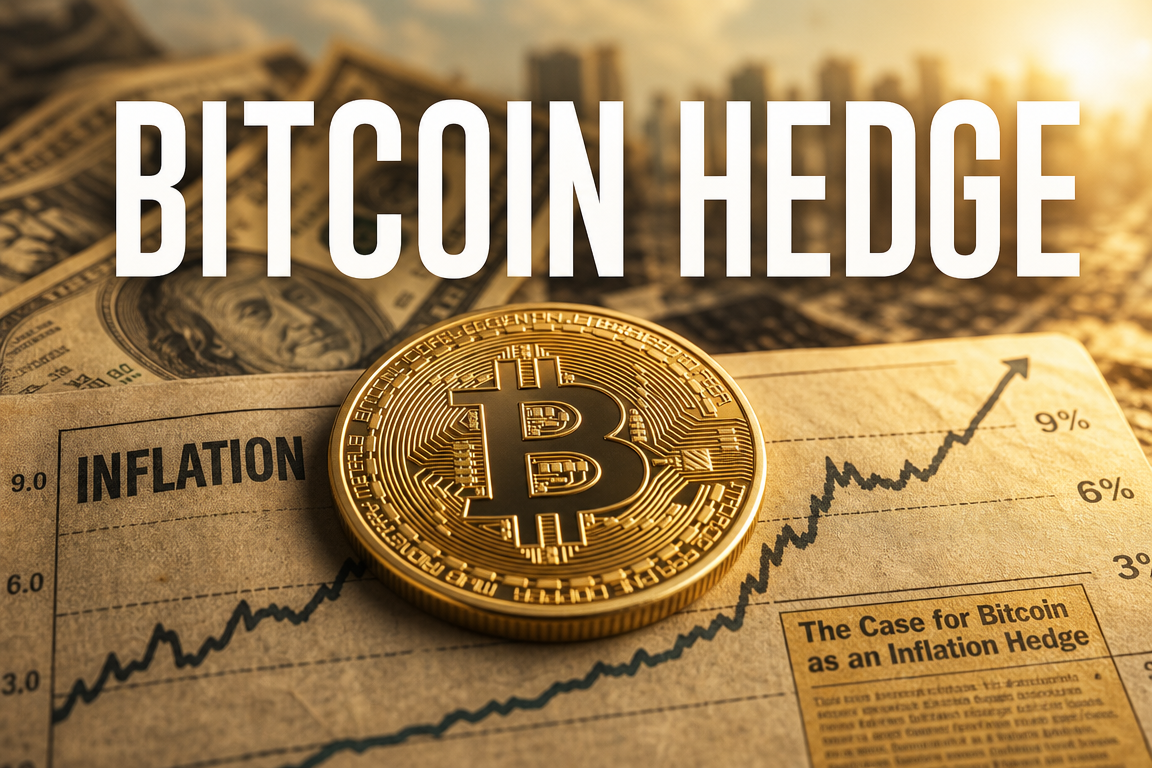
Buffett’s Inflation Warning: Is Bitcoin a Viable Hedge? Key Points Investors Should Not Miss
This topic is not limited to a single “Bitcoin outlook.”
It requires a unified view of:
- why Warren Buffett has consistently highlighted currency debasement risk,
- why Michael Saylor used corporate capital to accumulate Bitcoin,
- why narratives shifted from “never sell” to “sell if necessary,” and
- how these developments connect to global macro conditions, inflation, asset allocation, digital assets, and AI semiconductors.
This report prioritizes structural change over short-term price projections, focusing on the core question: what to hold in an environment where currency purchasing power erodes.
1. Core Message: Bitcoin Should Be Evaluated as a Monetary Alternative, Not Merely a Price-Driven Asset
The discussion framed Bitcoin not as a purely speculative asset.
The key reframing is:
- not “why hold a non-cash-flow asset with no dividends,”
- but “what can function as a store of value when fiat purchasing power declines over time.”
This aligns with Buffett’s broader concern. While Buffett is widely known as a Bitcoin critic, his primary warning has consistently targeted inflation and long-term currency debasement.
Accordingly, even if the conclusions differ, the starting point is similar: the risk that the unit of account itself loses value.
2. Buffett’s “Worst-Case Scenario”: Structural Currency Debasement
The central point is that Buffett’s greatest concern is not short-term asset price drawdowns.
The worst case is sustained weakening of money itself.
Equities can recover, real estate cycles, and bonds fluctuate with interest rates. However, if currency value structurally declines, most valuation frameworks and long-horizon planning assumptions become less reliable because the measuring stick is changing.
The discussion used an analogy: fish do not recognize “water” because it is the default environment. Similarly, most households do not directly perceive the gradual dilution of purchasing power.
In systems with expanding money supply, long-run currency debasement is structurally plausible.
Core question:“Are you holding money, or assets that can defend against money losing value?”
3. Why Bitcoin Is Chosen: Absolute Scarcity Versus Expanding Fiat Supply
The strongest pro-Bitcoin argument remains scarcity.
Fiat currencies (USD, KRW, JPY) can expand supply based on policy and macro conditions. Bitcoin supply is capped, creating high predictability on the supply side.
This matters because liquidity is a dominant variable in long-term macro outcomes:
- economic weakness often triggers easing,
- market stress often triggers liquidity support,
- supply increases can reduce currency scarcity.
In this context, Bitcoin is positioned as an asset that cannot be increased.
This creates overlap with gold as a store of value, while differing through:
- digital-native portability,
- easier global transfer and custody,
- network-based settlement.
4. Why Buffett Has Been Negative on Bitcoin
Traditional value investors emphasize intrinsic value.
In that framework, a high-quality asset should generate cash flows, represent an operating business, or enable estimation of future earnings. Bitcoin does not pay dividends, produce revenue, or offer conventional fundamental forecasting.
This underpins claims that it lacks intrinsic value.
The discussion noted, however, that market structure has changed, and older valuation frameworks may not fully capture newer drivers such as:
- liquidity cycles,
- monetary policy,
- ETFs,
- institutional flows,
- stablecoins,
- regulatory formalization.
As a result, Bitcoin is increasingly influenced by financial-system mechanics rather than solely narrative-driven retail behavior.
5. Why Michael Saylor Bought Bitcoin: Corporate Treasury Strategy, Not Personal Preference
A central point was that Strategy’s Bitcoin accumulation was not primarily a personal ideological stance.
It was a treasury decision: how to store and protect corporate capital.
Timing was critical. In 2020, global money supply expanded rapidly. With accelerating M2 growth, the real value of cash holdings faced higher perceived risk.
Saylor’s position effectively translated into: long-term fiat cash holdings are a risk to be managed, and Bitcoin was selected as the reserve asset.
6. Strategy’s Funding Structure: Convertibles, ATM Issuance, and Preferred Instruments
Investors should understand that the approach is not simple spot accumulation.
Capital is raised through multiple channels and deployed into Bitcoin. Key methods discussed:1) Convertible bond issuance
2) ATM programs issuing common stock into the market
3) More recently, preferred-like instruments with dividend characteristics
This structure appears highly effective in strong uptrends. In flat or declining markets, it raises scrutiny around:
- dividend coverage,
- balance-sheet resilience,
- leverage-like risk characteristics.
7. From “Never Sell” to “Sell If Necessary”: Why the Market Reacted
A major practical point was the symbolic impact of Strategy selling a portion of its Bitcoin.
Saylor previously communicated an “absolute hold” posture. When partial sales occurred, followed by renewed capital raising and repurchases, market participants interpreted it as inconsistency.
The discussion framed this as normalization:In corporate finance, committing to never sell can be operationally unrealistic. Corporations may need to:
- raise liquidity,
- manage payouts,
- adjust exposure based on risk constraints.
As institutional participation grows, the market may increasingly prioritize “how the position is managed” over “permanent holding” narratives.
8. The Key Crypto Variable: Evolution in Management Practices, Not Just Price
Many investors focus on whether Bitcoin will rise or fall.
The larger shift is that the profile and behavior of market participants are changing. The market is now increasingly shaped by:
- ETFs,
- public companies,
- institutional allocations,
- stablecoin ecosystems,
- legislation and regulatory regimes.
Bitcoin is becoming more integrated with traditional financial mechanics. As a result, simple cycle narratives (including halving-only frameworks) are less sufficient.
Key variables to monitor include:
- liquidity conditions,
- interest rates,
- US election cycle risk,
- regulatory direction,
- ETF flow dynamics,
- changes in corporate treasury behavior.
9. Bitcoin as a Retirement Asset: Feasibility and Constraints
A secondary theme was whether Bitcoin can be used in retirement planning.
The main objection is cash flow: homes can support reverse mortgages, equities can pay dividends, bonds pay coupons, while Bitcoin does not generate income.
The discussion proposed a different framing:The issue is not cash flow alone, but long-run growth rate and withdrawal design.
If long-term growth exceeds withdrawals, periodic sales could fund living expenses. This references the “4% rule” concept used in traditional equity-centered retirement planning, applied experimentally to Bitcoin.
10. Retirement Approach 1: Systematic Sales Based on a 4% Rule
The mechanism is straightforward:If holdings are sufficiently large and long-term appreciation exceeds the withdrawal rate, periodic sales can fund expenses while potentially maintaining principal.
Constraints are significant:Bitcoin volatility is high, and outcomes are highly path-dependent (entry price and withdrawal timing). This approach is suitable only for investors with high volatility tolerance and strong conviction in long-term adoption.
11. Retirement Approach 2: Collateralized Borrowing
Another approach is to borrow against Bitcoin rather than sell it.
Potential advantages:
- liquidity without disposing of the asset,
- retained upside exposure.
Material risks:
- sharp drawdowns can trigger margin pressure,
- platform and counterparty risk,
- interest-rate burden,
- liquidation risk.
This is an aggressive strategy and may be suitable only in limited size within conservative retirement planning.
12. Addressing the Cash-Flow Gap: Can Staking Improve Portfolio Functionality?
Ethereum staking was cited as a potential complement.
While Bitcoin has no yield mechanism, some proof-of-stake networks can generate rewards for participation. Ethereum staking was referenced with an expected range of approximately 3.5% to 5%.
This is not equivalent to traditional dividends, but can resemble an income-like stream.
The proposed structure:
- Bitcoin as the core reserve asset,
- a limited allocation to higher-quality alt exposure to support cash-flow functionality.
13. Altcoin Allocation: Selection and Position Sizing Over Return Chasing
A key constraint is that “adding altcoins” is not inherently a solution.
In overheated markets, capital often chases unverified assets due to FOMO. For long-horizon allocation and retirement design, indiscriminate exposure can destabilize the portfolio.
The focus should be:
- selective inclusion of only high-quality assets,
- strict sizing and risk control.
14. Bitcoin and Global Macro Linkages: Liquidity, Inflation, and Institutionalization
The discussion matters because it is not exclusively about Bitcoin.
The market is increasingly driven by three macro axes:1) Liquidity
2) Inflation and interest rates
3) Institutionalization
Rising liquidity can support risk appetite; inflation concerns can renew interest in stores of value. Regulatory and policy developments (ETFs, stablecoin regulation, clarity-oriented legislation) can accelerate Bitcoin’s integration into the financial system.
This may also influence how broader digital-asset valuations are framed over time.
15. Why AI Semiconductors and Bitcoin Should Be Analyzed Together
AI semiconductors and Bitcoin appear unrelated, but both are sensitive to liquidity and forward-looking growth expectations.
- AI semiconductors are leveraged to productivity gains and capex cycles.
- Bitcoin is leveraged to shifts in monetary credibility and digital store-of-value adoption.
Both function as “future-discounting” assets. In the current environment, analyzing them jointly can improve understanding of cross-asset flow dynamics.
16. News-Style Key Takeaways
1) Buffett’s core warning
Interpreted as prioritizing currency debasement and inflation risk over short-term asset price volatility.
2) Bitcoin’s functional thesis
A non-cash-flow asset framed as a scarcity-based store of value under long-run fiat dilution.
3) Saylor’s rationale
Primarily a corporate treasury decision to reduce cash-holding risk.
4) Strategy’s partial selling
Conflicted with “never sell” messaging, but may reflect normalization toward practical treasury management.
5) Bitcoin in retirement planning
Despite no yield, systematic sales and collateralized borrowing were discussed as potential cash-access frameworks, subject to volatility constraints.
6) Ethereum as a complement
Staking mechanisms may partially offset Bitcoin’s lack of income, with strict selection and sizing requirements.
17. The Most Undercovered Point: Change in Operating Philosophy
Most media focuses on “price targets,” “bottom calls,” or “post-halving rallies.”
The more material shift is operational:
- Bitcoin is transitioning from belief-driven retail positioning toward corporate and institutional treasury assets.
- “Never sell” narratives may be incompatible with mature financial structures; risk management requires flexibility.
- Retirement-framework discussions signal market maturation beyond short-term trading.
- The core debate is ultimately a disagreement about monetary systems, not chart patterns.
18. Investor Action Checklist
1) Evaluate Bitcoin as a monetary alternative, not only a price instrument.
This supports more disciplined long-term thesis review.
2) Monitor how corporations finance and manage Bitcoin exposure.
Funding structure and risk management may matter more than headline purchase size.
3) For retirement use cases, assess volatility tolerance first.
This is not universally suitable.
4) If using alt exposure for cash-flow support, prioritize quality and tight sizing.
Risk control dominates return narratives.
5) Do not analyze Bitcoin, AI, semiconductors, and macro in isolation.
Liquidity-driven regimes often link these assets through common flow channels.
19. Conclusion: Neither Blind Faith Nor Dismissal
Bitcoin may serve as a credible alternative asset under inflation and currency-debasement risk, but its usage is evolving toward more pragmatic, finance-engineered structures.
Key considerations are increasingly:
- macro regime,
- allocation size,
- funding and custody structure,
- liquidity and monetization pathways,
- risk management.
The consistent unifying question:“What should be held when the purchasing power of money weakens?”
< Summary >
Buffett’s primary warning is interpreted as currency debasement and inflation risk rather than short-term asset drawdowns.
Bitcoin is framed as a scarcity-based store of value responding to long-run fiat dilution.
Saylor’s accumulation is characterized as corporate treasury strategy rather than personal preference; partial selling can be seen as normalization of operating practices.
Bitcoin is increasingly discussed in retirement contexts via systematic sales or collateralized borrowing, with Ethereum staking proposed as a limited cash-flow complement.
The priority for investors is structural understanding of Bitcoin’s role within global macro and monetary-system evolution, rather than short-term price prediction.
[Related Articles…]
- Bitcoin Market Structure Shifts and Long-Term Allocation Frameworks
- AI Semiconductor Cycle and Liquidity-Driven Positioning
*Source: [ 경제 읽어주는 남자(김광석TV) ]
– 워런 버핏이 경고한 최악의 시나리오, 비트코인이 답일까? | 경읽남과 토론합시다 | 이장우x박종한 [4편]
● Goldbar-Scam-Surge
Why Bringing a Gold Bar to a Jewelry Shop Can Backfire: Practical Constraints Beyond “Just Sell It”
Gold bars may appear easy to convert into cash, but in practice the process is often constrained by compliance, reputational risk, and fraud controls. This report summarizes why jewelry shops and gold dealers are cautious about purchasing gold bars, why gold with unclear provenance can be difficult to liquidate, and how “gold-based” voice phishing schemes have recently expanded.
This is not limited to gold price direction. It addresses gold’s relationship with FX, the structure of the domestic gold market, the portfolio role and trade-offs of physical gold, gold’s function as a safe-haven asset, and potential future tax and regulatory risk.
The critical issue is execution: how to buy, store, and sell without creating legal, tax, or compliance friction. Without a defined exit process, even profitable gold positions can become difficult to monetize.
1. Key Development: Selling Mechanics Now Matter More Than Buying
Rising retail demand has increased gold bar purchases. However, physical gold cannot be liquidated as frictionlessly as equities or ETFs.
When selling a gold bar to a jewelry shop or dealer, decisioning often extends beyond authenticity to include:
- transaction size
- seller profile (including age)
- identity verification
- ability to explain provenance
- behavioral red flags
The rationale is structural: gold is a highly anonymous bearer asset. This supports privacy and, historically, tax minimization behavior, but also creates exposure to money laundering, stolen goods, and fraud—especially voice phishing.
2. Why Jewelry Shops May Start From Suspicion
2-1. High Cash-Like Utility, Low Traceability
Real estate leaves registry records; equities leave brokerage records; crypto increasingly faces KYC and improved traceability. Physical gold, by contrast, is harder for authorities to map in real time.
For holders, that can be an advantage. For buyers (dealers), it is a material risk: purchasing gold may imply potential future inquiry from law enforcement if provenance is questioned.
2-2. Large-Size Bars From Retail Sellers Trigger Heightened Scrutiny
If a retail seller brings a 1 kg bar or multiple bars for immediate liquidation, even legitimate sales can appear atypical. Dealers commonly ask:
- when it was purchased
- where it was purchased
- why it is being sold now
- whether the asset is beneficially owned by the seller
- whether documentation exists
While uncomfortable for sellers, this is increasingly treated as standard procedure. For high-value transactions, ID checks and signed documentation may be required.
2-3. Dealers Can Decline to Purchase
Possession does not obligate a dealer to buy. If the narrative is inconsistent, the transaction appears unusual, or there is perceived risk of theft or criminal proceeds, dealers may refuse.
Physical gold is liquid only under a “trusted transaction” condition.
3. Market Reality: Formal and Informal Channels Coexist
3-1. A Dual-Track Domestic Market Structure
The domestic gold market operates through:
- a formal, regulated channel
- an informal, cash-centric channel
Authorities have expanded transparency via mechanisms such as exchange-based gold markets, but cash-based demand persists due to gold’s inherent features: anonymity, portability, storage efficiency, convertibility, and incentives to reduce tax visibility.
3-2. Why Informal Activity Persists
The driver is demand. Some investors and high-net-worth participants prefer transactions that generate fewer records, particularly for legacy planning, emergency reserves, and asset diversification.
However, financial-sector controls have tightened. Large cash withdrawals can trigger purpose checks, fraud screening, and potential police verification, increasing friction for cash-based transactions.
4. Can Gold Be Purchased via Card, Bank Transfer, or Cash?
Generally yes, but payment methods vary by venue.
In regulated dealers, cash, bank transfer, and card payments are often available. Key diligence points include:
- whether cash purchases support receipt issuance
- whether card purchases include VAT where applicable
- whether the remitter matches the buyer
The last point is critical. If the buyer is Person A but the payment is remitted by Person B, dealers may flag the transaction as potential proxy purchasing or voice phishing.
5. Are There Taxes When Selling Gold?
5-1. In Principle, Selling Physical Gold Often Does Not Trigger Capital Gains Tax
This remains a key reason physical gold is viewed as attractive relative to certain alternatives. It supports its ongoing use for strategic allocation under uncertainty.
5-2. The Primary Risk Is Not the Sale Tax, but Source-of-Funds Scrutiny
Issues often arise not because the sale itself is taxed, but because the proceeds cannot be credibly explained.
Example: an investor buys gold bars for KRW 100 million and later sells them for KRW 1 billion. If the proceeds are deposited and then used to purchase real estate, source-of-funds verification may follow, typically in this sequence:
- where did the real estate funds come from
- from selling gold bars
- when and how were the gold bars purchased
- can the purchase be substantiated
If documentation is weak, authorities may suspect inheritance, gifting, or undeclared income.
5-3. Best Practice: Maintain Verifiable Purchase and Payment Records
A simple paper receipt may be challenged as easily forged or backfilled. Stronger evidence includes:
- bank transfer records
- officially issued cash receipt records
- contemporaneous transaction confirmations
This improves defensibility in future tax and compliance review.
6. The Structural Advantage of Physical Gold: Anonymity and Legacy-Transfer Flexibility
Physical gold remains favored by some affluent investors because it is:
- easy to store
- globally recognized in value
- relatively low in formal record footprint
- convertible during stress scenarios
Intergenerational transfer via physical handover has long been discussed as difficult to trace. The key constraint appears later: when heirs liquidate the gold or use proceeds for regulated asset purchases, source-of-funds scrutiny can re-emerge.
The risk point is not the transfer itself, but conversion into the formal financial system.
7. Will Authorities Tighten Taxation and Reporting on Gold?
7-1. International Precedent: Voluntary Disclosure Concepts
Some jurisdictions have discussed voluntary disclosure frameworks for inherited or unreported gold holdings, exchanging partial tax relief for bringing assets into the formal system.
The policy intent is to capture off-balance-sheet assets into a regulated, taxable base.
7-2. Domestic Outlook: A Non-Zero Probability of Stronger Traceability
Given fiscal pressure and revenue needs, tighter identity verification and transaction reporting thresholds for high-value gold purchases/sales are plausible over time.
Accordingly, the investment case should increasingly incorporate policy, reporting, and compliance evolution—not only price.
8. Why Domestic Gold Prices Can Diverge From International Benchmarks
Many investors monitor only the international gold price, but domestic pricing is highly sensitive to FX.
If the international price is stable but USD/KRW rises, domestic gold prices may increase. In periods of local currency weakness, the combination of higher international prices and FX depreciation can amplify domestic price levels.
Gold monitoring therefore requires parallel tracking of the USD trend and FX conditions.
9. Cross-Border Movement of Gold Is High-Risk and Compliance-Sensitive
Gold concentrates high value into small volume, making it historically prone to smuggling risk.
Legitimate import/export typically requires declaration and customs procedures. Businesses face tariff and compliance issues; individuals may find formal processing difficult.
Attempting covert transport materially increases legal risk.
10. How Authenticity Is Verified
10-1. Traditional Method: Touchstone and Acid Testing
A common baseline approach uses a touchstone and acid solutions to assess whether a scratch mark persists under a solution corresponding to a stated purity. This supports approximate classification (e.g., 24K, 18K, 14K).
10-2. Modern Method: Composition Analyzers
Counterfeiting has become more sophisticated, including plated exteriors with non-gold cores. As a result, X-ray based composition analyzers are increasingly used to assess beyond surface layers and detect certain composite fakes.
Dealer caution reflects the need to validate:
- authenticity
- legitimate circulation
- absence of legal or criminal linkage
11. The Most Acute Current Threat: Rapid Growth in “Gold” Voice Phishing
11-1. Earlier Pattern: Third-Party Remittance
A common structure was: Person A appears to buy gold; victim Person B remits funds. Dealers often require buyer ID and match it to the remitting account name.
11-2. Current Pattern: “Your Account Is Frozen—Buy Gold and Hand It Over”
This is the most dangerous variant. Fraudsters impersonate prosecutors, police, or financial institutions and claim:
- the victim’s account is linked to a crime
- deposits are at risk
- assets must be converted to gold for “safekeeping”
Victims purchase gold from legitimate dealers, then deliver it to a designated location. In some cases, malicious apps on the victim’s phone can interfere with communications, making detection harder.
11-3. Treat the Following Claims as Fraud Indicators
If any of the following instructions appear, the probability of fraud is effectively 100%:
- “Your account has been frozen.”
- “Move assets to keep them safe.”
- “Convert to cash or gold and deposit it with us.”
- “We will return it after the investigation.”
Government agencies do not instruct citizens to buy gold for safeguarding. This is financial crime.
12. What Gold Investors Should Monitor Going Forward
12-1. Design the Exit Before Entering the Position
Buying physical gold may be straightforward; selling and explaining proceeds is not. Key planning points:
- purchase venue
- payment method
- documentation retention
- intended liquidation use-case
12-2. Gold Is a Safe-Haven Asset, Not an “Outside-the-System” Asset
Gold can hedge inflation and crisis risk, but it is becoming harder to manage as a purely opaque asset. Transparent purchase records and compliant custody/liquidation planning are increasingly important.
12-3. Higher Macro Uncertainty May Increase Demand, But Oversight May Also Tighten
As U.S. rates, USD direction, FX volatility, geopolitical risk, and growth concerns evolve, gold demand may remain supported. At the same time, regulators may strengthen AML, transaction transparency, and tax-base capture.
The key question shifts from “up or down” to “can it be bought, stored, and liquidated cleanly within a changing regulatory environment.”
13. The Most Material Points Often Missed in General Coverage
- The primary risk in physical gold is not price volatility, but exit execution and compliance friction.
- Problems often arise not from tax on selling gold, but from inability to substantiate the origin of funds.
- Anonymity is an advantage until large-scale liquidation, when it becomes a vulnerability.
- Voice phishing has shifted from cash remittance to orchestrated gold purchases.
- Policy and traceability changes may become a larger variable than price.
Investment quality in gold is increasingly measured by the ability to monetize legally and document proceeds without conflict.
14. Practical Checklist Before Investing in Physical Gold
- Verify the dealer is formally established.
- Match buyer identity with remitting account name.
- Retain official cash receipts and/or bank transfer records.
- Do not rely solely on informal receipts; maintain an audit-ready evidence set.
- If future large purchases are planned (e.g., real estate), incorporate tax and source-of-funds planning.
- Treat “buy gold to protect your account” instructions as voice phishing.
- Track FX and international gold prices together.
- Do not interpret dealer diligence questions as abnormal; they are increasingly standard.
< Summary >
Selling a gold bar is operationally more complex than buying one. Physical gold is an anonymous safe-haven asset, but unclear provenance can lead dealers to refuse purchases.
While physical gold sales often do not trigger capital gains tax, proceeds can create tax or compliance issues if the origin of funds cannot be substantiated. Maintaining purchase history, bank transfer records, and official cash receipts is essential.
Gold-based voice phishing—especially schemes instructing victims to buy gold for “asset protection”—is expanding. Gold investment decisions should incorporate not only price and FX, but also regulation, taxation, and liquidation strategy.
[Related Articles…]
- Gold: 2026 Strategy Update for Safe-Haven Allocation
- FX: Managing Portfolios During Sharp Currency Volatility
*Source: [ Jun’s economy lab ]
– 금은방에 골드바 가져가면 안 되는 이유 (ft.금남일 대표 1부)