● Quantum Computing War
Quantum Computing War Begins: Why the United States Declared It Will Build a “Real Quantum Computer” by 2028
The core point of this issue is not simply “building a new computer.”
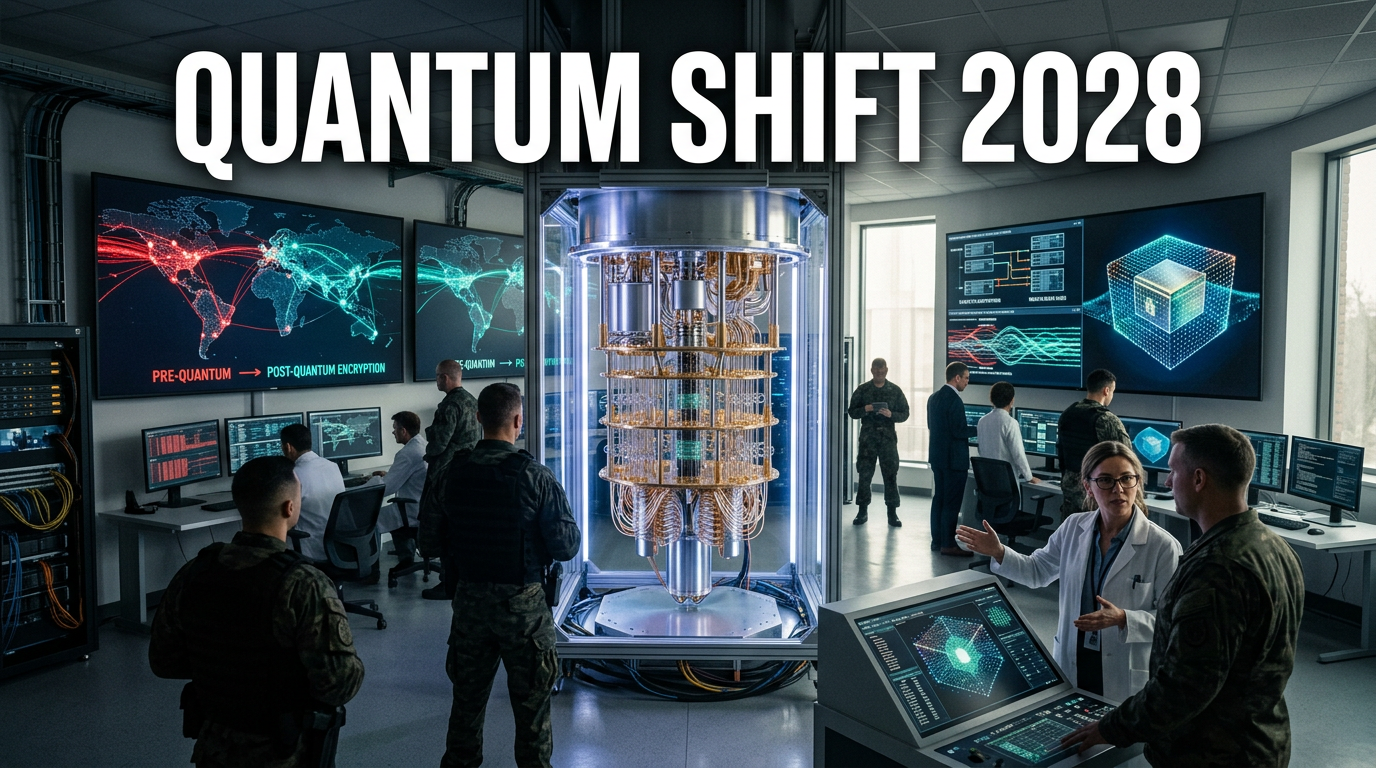
What matters is that the U.S. government has publicly committed to building a quantum computer that can correct its own errors by 2028, while also declaring that it will convert government systems to cryptography resilient to quantum hacking by 2030~2031.
In simple terms, the United States now sees quantum computing as the core weapon in the tech-hegemony war that comes after artificial intelligence.
This trend is an issue that could shake global economic outlooks, cybersecurity, semiconductor supply chains, U.S.-China tech hegemony, and even AI industry investment strategies all at once.
In particular, while many news reports only cover this as “quantum computer stocks rose,” the truly important point is that the government has started to enter the quantum computing industry not just as a supporter, but as a direct player.
1. Two Quantum Computing Executive Orders Signed by the United States
According to the original text, President Trump signed two executive orders related to quantum computing at the White House.
The first executive order is about “entering the next stage of quantum innovation.”
The core goal is to build a quantum computer capable of real scientific computation within the next five years and to expand quantum research centers and quantum networks.
The second executive order is about “protecting the nation from advanced cryptographic attacks.”
This order requires federal agencies to convert existing cryptographic systems to post-quantum cryptography.
In other words, one is a command to build the future technology, and the other is a command to protect the nation from the threats that future technology will bring.
This combination matters because quantum computers can be both a tool for economic growth and scientific innovation and the biggest threat to cybersecurity.
2. Why Quantum Computers Matter So Much
Conventional computers process information as 0s and 1s.
Our smartphones, laptops, data center servers, and computers used for AI model training all basically operate on this method.
By contrast, quantum computers use units called qubits.
Qubits do not simply choose either 0 or 1; they can handle multiple possibilities at the same time.
As a result, for certain problems, they may be able to process calculations far faster than conventional supercomputers, which would otherwise take thousands of years or even longer than the age of the universe.
That said, quantum computers are not万能 machines that make everything faster.
They are not meant to load web pages faster or organize Excel files more quickly.
The real value comes from ultra-difficult problems such as drug discovery, new material research, financial risk modeling, cryptanalysis, climate simulation, and AI optimization.
That is why quantum computing is evaluated in global economic outlooks not as a simple technology theme, but as a foundational technology that could change national productivity and industrial competitiveness.
3. The Core Term Is “Fault-Tolerant”
The most important expression in this announcement is fault-tolerant quantum computer.
In English, this is generally understood as a fault-tolerant quantum computer or an error-correcting quantum computer.
Quantum computers are extremely sensitive.
Minute changes in the surrounding environment, temperature, vibration, or electromagnetic interference can all cause computational errors.
That is why quantum computers up to now have been meaningful for lab demonstrations and limited problem solving, but still had major limitations for stable use in real industry and scientific research.
A fault-tolerant quantum computer must be able to detect and correct errors that occur during computation on its own.
Only when this stage is reached can it truly be called a “real quantum computer that can be used.”
What the U.S. government demanded by 2028 is not a simple prototype, but an error-correcting quantum computer capable of solving scientifically meaningful problems.
The reason this goal is so aggressive is that many experts had believed this level of quantum computer was still more than 10 years away.
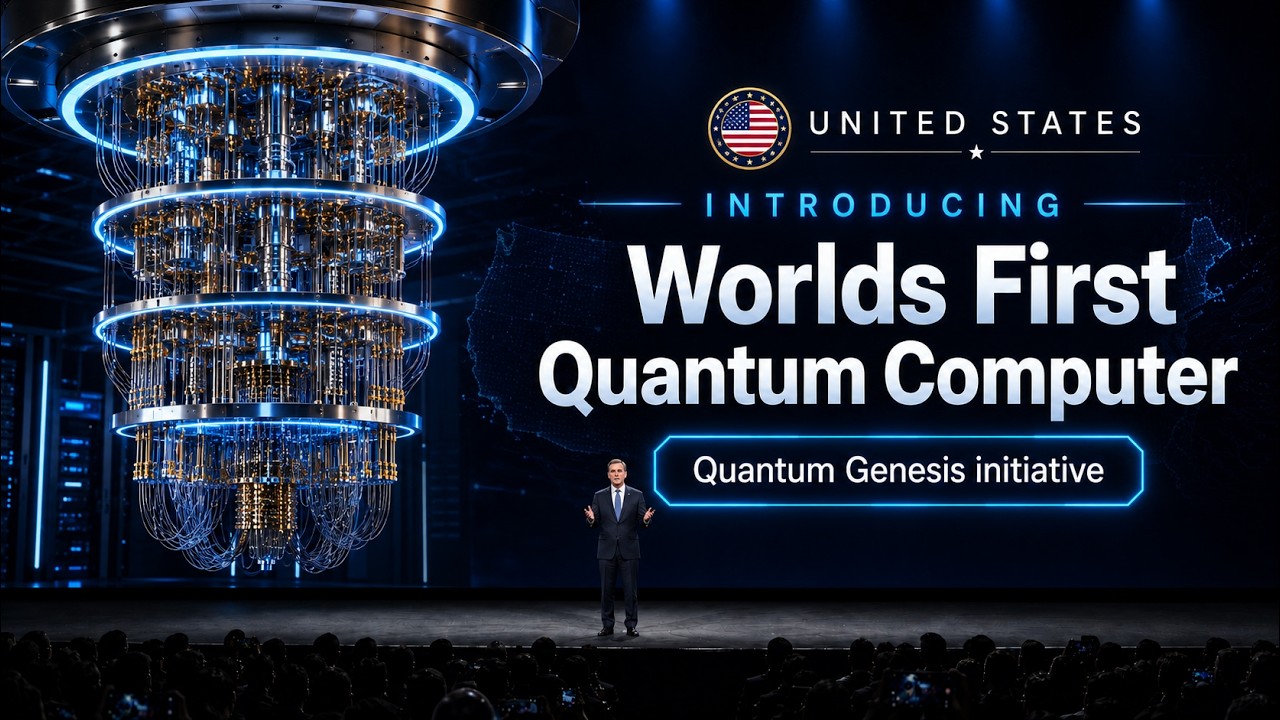
4. Who Will Build This Quantum Computer: Quantum Genesis Initiative
The organization taking on the execution role is the U.S. Department of Energy.
Through a program called the Quantum Genesis Initiative, the Department of Energy aims to build a fault-tolerant quantum computer by 2028 and deploy it in Department of Energy facilities.
What matters here is that this project is not just about research funding.
The structure involves the U.S. Department of Energy, the Department of Commerce, intelligence agencies, private companies, and universities operating like one team.
In other words, the U.S. government has started treating quantum computing as a national total-war priority.
The original text explains that related groundwork has already been laid since 2018, and that support worth about $2 billion has recently been announced for 9 quantum computing companies.
A large share was assigned to IBM, and the text also mentions a trend in which the government is even considering directly holding equity in some companies.
This is a very important change.
It means the government is no longer merely an “observer cheering on innovation,” but is entering as a direct investor and customer in the industry.
5. Why Quantum Computers Could Break Cryptographic Systems
The most frightening part of quantum computers is cybersecurity.
Today’s internet finance, bank logins, medical records, government secrets, military communications, and internal corporate networks all rely on cryptographic technology.
This cryptographic system is secure on the assumption that conventional computers would take too long to decrypt it.
However, once sufficiently powerful quantum computers appear, some cryptographic systems could be broken much more quickly.
This does not simply mean a hacker can look at your email.
It means financial systems, power grids, water systems, military networks, and national infrastructure could all be exposed to risk at the same time.
That is why the U.S. issuing both a quantum computer development order and a cryptographic transition order at the same time is a very logical move.
Rather than building the technology first and worrying about security later, the strategy is to advance technology development and defensive system transition simultaneously.
6. Why It Is Dangerous Right Now: Harvest Now, Decrypt Later
Many people may think, “Why worry now if quantum computers don’t even exist yet?”
But the strategy that cybersecurity experts worry about most is Harvest Now, Decrypt Later.
Put simply, it means steal now and decrypt later.
Adversary states or hacker groups do not need quantum computers right away.
They can simply steal and store encrypted data in large quantities.
Then, when powerful quantum computers appear years later, they can decrypt that data.
In that case, data leaked today may seem safe now but could become fully exposed in the future.
This is especially dangerous for long-lived information such as diplomatic documents, military intelligence, long-term contract data, biotech research materials, and key technical documents.
That is why the U.S. executive order requires federal agencies to designate responsible officials and convert the most sensitive systems to post-quantum cryptography by 2030 and 2031.
It also includes a schedule requiring pilot programs to verify actual functionality by the end of 2027.
This timeline is a checkpoint that investors and companies must watch closely.
7. The U.S.-China Quantum Computing Hegemony Competition
The essence of this issue is the tech-hegemony competition between the United States and China.
While the AI race centered on GPUs, data centers, and AI models, the quantum computing race is a deeper level of competition that combines computational power, cryptanalysis, science and technology, and national defense and security.
The United States sees quantum computing as a strategic technology connected to national security, economic growth, scientific research, and AI advancement all at once.
China has also invested heavily in quantum communication, quantum cryptography, and quantum computing.
The original text mentions a view that the United States is currently slightly ahead, but that word “slightly” is important.
In a tech-hegemony race, a small gap can be reversed quickly.
In particular, quantum computers are connected to semiconductor supply chains.
That is because they depend heavily on specific supply chains such as cryogenic equipment, special materials, precision control chips, optical equipment, and rare components.
In the end, quantum computing is highly likely to become the second semiconductor war.
8. Why Quantum Computing Stocks Surged
The original text explains that after the executive order announcement, quantum computing-related companies such as IonQ, Rigetti, and D-Wave reacted strongly in their stock prices.
The reason is simple.
The government signaled that it would provide money, policy, demand, and headlines all at once.
For early-stage technology companies, the biggest risk is not knowing when the market will open.
But if the U.S. government directly presents a 2028 target and says it will deploy the technology in Department of Energy facilities, investors interpret that as an officialization of future demand.
However, there is also an important caution.
Many quantum computing companies are still unprofitable or operating at a loss.
It will take time for the technology to become commercially viable, and it is not yet certain which quantum computing approach will win.
Superconducting, ion trap, photonic, and neutral atom approaches are all competing.
Therefore, quantum computing stocks are a theme with strong long-term growth potential but also very high volatility.
This is an area where, rather than chasing short-term spikes, one should look at policy schedules, technical validation, government contracts, and cash flow together.
9. Is the 2028 Target Possible?
The biggest question is this.
Can the United States really build a fault-tolerant quantum computer by 2028?
Experts are divided.
Those on the optimistic side believe that if government funding, private-sector technology, university research, and national security pressure are combined, a breakthrough could come faster than expected.
On the other hand, skeptics think the 2028 timeline is scientifically too fast and may be closer to a political target.
Both sides have a point.
Quantum error correction is not a problem that can simply be solved by pouring in more money.
However, history shows many cases in which technology advanced faster when a nation set a clear deadline and went all out.
Space development, semiconductors, the internet, and AI infrastructure were all like that.
So 2028 is not just a date; it is likely to become the first major proving ground for the credibility of the quantum computing industry.
10. The Most Important Point Other News Often Misses
First, the real meaning of this announcement is closer to “transitioning the national operating system for the quantum computer era” than simply “developing a quantum computer.”
That is because government systems, cryptographic systems, supply chains, research institutions, private companies, and intelligence agencies are all moving at once.
Second, quantum computing is not a technology that competes with AI; it is a foundational technology that can make AI stronger.
Quantum computing can, in the long term, improve AI performance in model optimization, drug candidate discovery, materials discovery, and complex simulations.
Third, the cybersecurity market can grow even before quantum computers are fully completed.
That is because companies and governments need to transition to post-quantum cryptography before quantum computers appear, not after.
Fourth, quantum computing investment should not focus only on quantum computer manufacturers but on the entire ecosystem.
You need to look at cryogenic equipment, special semiconductors, optical components, security software, cloud infrastructure, and defense contract companies together.
Fifth, the possibility of direct government equity participation could significantly change the industry landscape.
If the government holds not only funding but also equity in certain companies, those companies may be treated as strategic assets as well as technology firms.
11. Checkpoints to Watch from an Economic and Investment Perspective
-
End of 2027: Verify whether the U.S. government’s post-quantum cryptography pilot program actually works.
-
2028: The key question is whether the Quantum Genesis Initiative can present a fault-tolerant quantum computer capable of real scientific computation.
-
2030~2031: Watch whether key federal systems are converted to post-quantum cryptography.
-
Government contracts: It is important to see which companies sign direct contracts with the Department of Energy, defense, and intelligence agencies.
-
Semiconductor supply chain: Check who supplies the special chips, cooling equipment, and materials needed for quantum computing.
-
Cybersecurity companies: Watch whether demand for post-quantum cryptography transition turns into actual revenue.
12. One-Line Interpretation for Blog Readers
This quantum computing executive order is not news about “the United States making one faster computer.”
This is the start of a new competition that ties together the tech-hegemony after AI, cybersecurity, semiconductor supply chains, national security, and global economic outlooks.
Whether the 2028 target succeeds or fails, an important shift has already begun.
Government money is moving, company valuations are changing, security system replacement schedules are being set, and the strategic competition between the United States and China has become clearer.
Going forward, quantum computing is highly likely to become not just a keyword for future technology, but a core theme that moves global investment markets alongside the AI industry.
< Summary >
The United States has set a goal of building a scientifically meaningful fault-tolerant quantum computer by 2028.
At the same time, it announced that it will transition government systems to post-quantum cryptography by 2030~2031 to prepare for quantum hacking.
Quantum computers can be used for drug discovery, materials research, financial modeling, and AI optimization, but they also carry the risk of breaking existing cryptographic systems.
The core threat is the Harvest Now, Decrypt Later strategy, in which data is stolen now and decrypted in the future using quantum computers.
In the U.S.-China tech-hegemony competition, quantum computing is directly linked to semiconductor supply chains, cybersecurity, and national security.
Quantum computing-related stocks such as IonQ, Rigetti, and D-Wave reacted to policy expectations, but commercialization and profitability risks remain high.
The real checkpoints are the 2027 cryptography pilot, the 2028 quantum computer demonstration, and the 2030~2031 government cryptographic transition.
[Related Articles…]
-
Quantum Computing Could Reshape AI and Global Tech Dominance
-
Post-Quantum Cryptography and Cybersecurity Investment Strategy
*Source: [ TheAIGRID ]
– The Next AI Race Just Started – The World’s First Real Quantum Computer – Quantum Genesis