● AI Power Crunch, Transformers, SMR, Stablecoin Surge
The next bottleneck in the AI data center race is power, not semiconductors: power infrastructure, transformers, SMRs, and stablecoins, all in one overview
The key point is not simply that power-related stocks are attractive.
As AI data centers expand, the bottleneck is no longer limited to GPUs and HBM. Constraints are now extending to power grids, transformers, distribution equipment, ESS, and SMRs.
In the 2026 market outlook, semiconductors remain a leading theme, but from a medium- to long-term investment perspective, power infrastructure is emerging as the most durable bottleneck in the AI value chain.
In addition, developments in sovereign bond yields, KRW/USD exchange rates, energy transition, renewable energy, nuclear power, stablecoins, quantum computing, and physical AI are making this a core axis of the global economic outlook rather than a simple thematic trade.
Below is a news-style breakdown designed to make the complex landscape immediately understandable for investors and industry observers.
1. The key trend in 2026 markets: semiconductor concentration remains, but power has a longer runway
The first half of 2026 was clearly a tech-led market.
Capital flowed heavily into semiconductors and AI semiconductor value chains, especially Samsung Electronics, SK hynix, and Samsung Electro-Mechanics.
Since May, liquidity has concentrated in the semiconductor duopoly, while the power equipment sector has taken a breather.
However, this does not signal the end of the power infrastructure cycle.
The power equipment supercycle began in 2023 and likely entered an upcycle before semiconductors.
From a stock-price perspective, some companies have already re-rated sharply, so calling this an early stage is difficult.
From an industry-cycle perspective, however, the growth phase may extend through 2030 and possibly to 2035.
2. The AI bottleneck is moving from GPU to HBM, and now to power infrastructure
In the AI value chain, the first bottleneck was GPUs.
AI data center buildouts were constrained by shortages of Nvidia GPUs.
The next bottleneck shifted to HBM and high-performance DRAM.
That is why SK hynix and Samsung Electronics came into focus.
Now the larger bottleneck is power.
Even if a data center is ready to be built, it cannot proceed unless the region can supply sufficient electricity.
Globally, many data center projects are delayed by grid shortages, substation constraints, transmission bottlenecks, local opposition, and environmental regulation.
AI demand is surging, but physical infrastructure such as power grids cannot be expanded quickly.
This gap is the main driver of power equipment and infrastructure earnings over the next several years.
3. Why the power equipment supercycle is becoming longer
The power equipment cycle is not usually short.
Even replacement demand for aging power grids can create a cycle lasting five to six years or more.
This time, three demand drivers are converging simultaneously.
- Replacement demand for aging power grids in the United States and Europe
- Expansion of transmission and distribution networks to connect renewable energy
- New power demand from AI data centers
Because these three forces are occurring at the same time, the cycle is evolving from a simple recovery into a power supercycle.
In particular, the United States is seeing simultaneous growth in manufacturing investment and data center investment following reshoring policies.
As a result, demand for transformers, circuit breakers, switchgear, and transmission equipment is exceeding supply capacity.
In this kind of supplier-favorable environment, price increases become possible, which in turn supports EPS and operating profit growth.
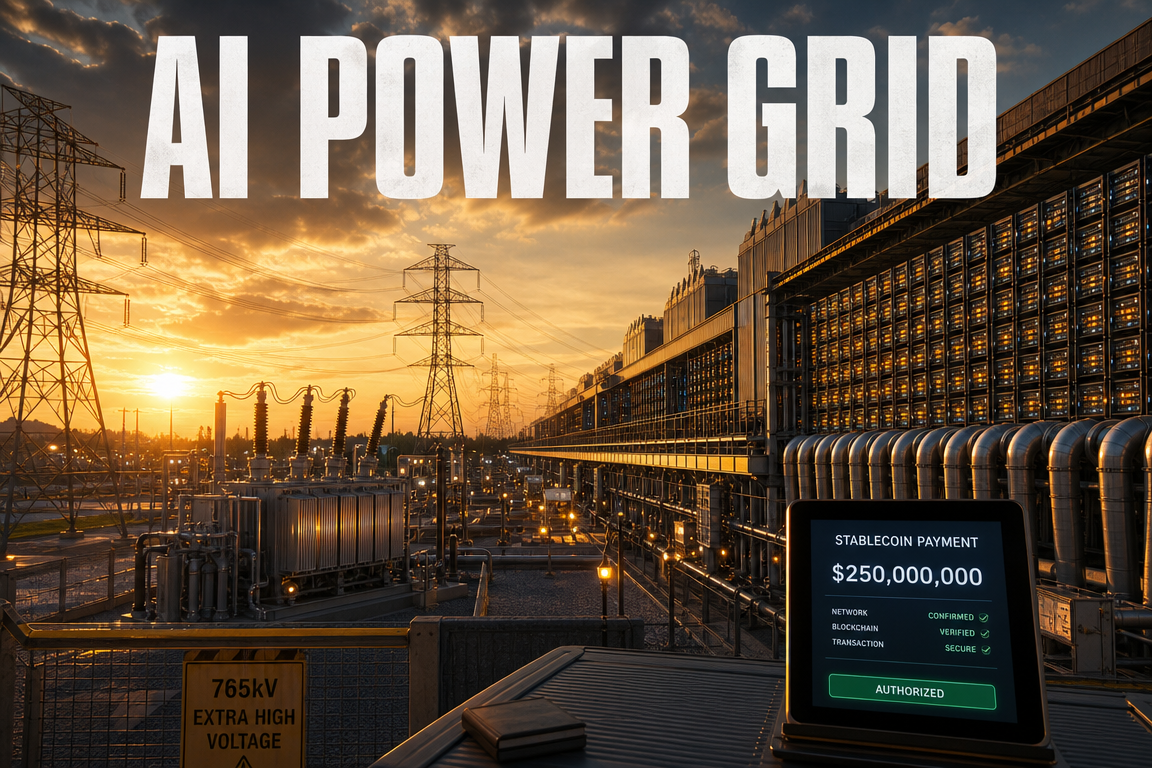
4. Why transformers matter: the scarcity of 765 kV extra-high-voltage transformers
One of the most important bottlenecks in power infrastructure is the extra-high-voltage transformer.
Only about four to five companies globally can produce 765 kV-class extra-high-voltage transformers.
In Korea, HD Hyundai Electric and Hyosung Heavy Industries have competitive positions in this area.
This is not a product that can be scaled quickly; it requires technical capability, production experience, certification, and delivery history.
With limited suppliers and concentrated demand from U.S. data centers and grid replacement projects, pricing power shifts to the supply side.
That is why companies in this segment can sustain relatively high operating margins.
KRW/USD exchange rate effects provide some support, but the main driver is product scarcity and supplier advantage rather than currency alone.
5. A sector supported by earnings, not just a thematic narrative
The reason the power equipment sector matters is that earnings are already improving.
Since 2023, operating profit at major power equipment companies has increased rapidly.
Some companies recorded annual operating profit growth of more than 100%, and have since sustained growth in the 50% to 60% range.
The market does not only look at whether profits are rising.
It favors companies where the rate of profit growth is accelerating.
For example, HD Hyundai Electric stood out earlier, Hyosung Heavy Industries gained momentum later, and more recently LS Electric has drawn attention as its earnings growth has steepened.
In other words, leadership within the power equipment segment can change.
That is one of the most important points for equity investors.
6. The practical answer to “It has already risen a lot — should I still buy?”
Some power equipment stocks have already posted strong gains.
For that reason, describing them as “early stage” is no longer accurate from a valuation standpoint.
Some names have already moved beyond undervalued territory.
However, from an industry-cycle perspective, the uptrend is not over.
Order backlogs remain strong, pricing continues to rise, and production lead times remain long.
For investors, the appropriate approach depends on the target return horizon.
Expecting a 100% gain in the short term may be unrealistic.
But for those focused on a three- to five-year cycle of earnings growth, the sector remains investable.
That said, valuation, order quality, product mix, U.S. sales exposure, and capacity expansion schedules must be assessed company by company.
7. Why equities held up despite rising sovereign bond yields: an earnings-driven market
In 2026, governments expanded fiscal spending after the Middle East conflict.
Defense spending, energy transition investment, grid expansion, and economic support measures all increased.
This led to higher sovereign bond issuance and upward pressure on bond yields.
Normally, rising yields are a headwind for equities.
However, sectors with strong earnings support, such as semiconductors and power equipment, absorbed much of that pressure.
That is the important distinction in the 2026 market outlook.
This was not a market driven only by liquidity, but one in which capital flowed toward sectors supported by earnings growth.
8. Exchange rate effects are a tailwind, but the real issue is supply shortage
When the KRW/USD exchange rate moved above 1,500, export-oriented companies benefited.
Power equipment companies also gained from this because of their high exposure to the U.S. market.
However, a decline in the exchange rate does not immediately end the power equipment cycle.
The real issue is the shortage of extra-high-voltage transformers and power equipment.
Only a limited number of companies can produce the highest-margin products, while demand remains elevated.
Some companies are also increasing U.S. local production, which may reduce currency sensitivity over time.
Accordingly, exchange rates are a supportive factor, but not the core driver of the power supercycle.
9. Why renewable energy and ESS are both expanding
Meeting data center power demand cannot rely on large-scale generation alone.
Nuclear power requires long construction periods, while thermal generation carries environmental and fuel-price risks.
That is why renewable energy and ESS are drawing attention as faster-to-connect options.
Combining solar power with ESS can provide a certain level of supply near data centers.
In particular, onsite power generation, meaning the installation of small-scale generation assets near the data center, is becoming more common.
ESS is not only a storage device but also a tool for stabilizing power loads.
Small-scale ESS demand is also increasing inside data centers.
This trend is likely to support batteries, power conversion systems, distribution equipment, and energy management systems.
10. SMRs are a key power alternative in the AI era
As AI data centers expand, interest in SMRs, or small modular reactors, will continue to grow.
Large nuclear plants can take more than 10 years from permitting to operation.
SMRs, by contrast, may be deployed more quickly as distributed power sources.
This is especially relevant when data centers are concentrated in specific regions and local power grids reach their limits first.
In that case, distributed power systems and SMRs emerge as alternatives.
SMRs are still years away from full commercialization, but they remain an area likely to attract sustained capital as AI infrastructure grows.
In the AI era, energy transition is not merely an environmental theme; it is a survival issue for operating data centers.
11. Why the distribution market also matters
Until recently, the market focused more on transmission and extra-high-voltage transformers.
Transmission equipment has high barriers to entry and attractive operating margins.
However, as data centers multiply, distribution equipment is becoming more important.
That is because power must be distributed precisely within and around the data center.
As onsite generation, ESS, and internal power management expand, demand for distribution panels, circuit breakers, and low- to medium-voltage equipment rises.
That said, the distribution market is more competitive than the transmission market.
Therefore, investors should not simply assume that distribution will benefit broadly; they should focus on companies gaining market share quickly.
12. Opportunities in specialty transformers and smaller power equipment companies
The specialty transformer market is also important.
Although specialty transformers may resemble distribution transformers in size, they can carry higher margins.
In Korea, companies such as Sanil Electric are drawing attention in this segment.
Specialty transformers face less competition and can deliver strong profitability when tied to specific customer demand.
However, the market tends to assign higher multiples to large companies producing extra-high-voltage transmission transformers.
For a specialty transformer company to receive a higher valuation, it needs evidence of expansion into extra-high- or medium-voltage products.
Key checkpoints include entry into 154 kV-class products, U.S. customer acquisition, capacity expansion, and margin sustainability.
13. Is a space data center a negative for power-related stocks?
With discussions of SpaceX and space data centers, some investors are asking whether terrestrial data center demand could decline.
The short answer is that the impact is likely limited in the near term.
Even if space data centers become technically feasible, they do not yet offer the economics needed to replace terrestrial hyperscale data centers.
Placing GPUs on satellites may be possible, but cooling, power, communication latency, maintenance, and launch costs remain major obstacles.
Before 2030, space data centers are unlikely to materially replace terrestrial data center power demand.
However, related headlines can still create short-term pressure on power equipment stocks.
Investors should distinguish between actual earnings risk and short-term market sentiment.
14. Marine data centers are also emerging as an alternative
Cooling accounts for a major share of data center power consumption.
Large amounts of energy are required to cool servers and GPUs.
For that reason, marine data centers are being explored as an alternative.
Using seawater for cooling can reduce power consumption related to thermal management.
In Korea, the offshore data center project off Ulsan has been discussed.
Marine data centers remain at an early stage, but they represent a new industry that could improve the energy efficiency of AI data centers.
15. Bitcoin remains in a winter phase, with regulatory reform as the key variable
The Bitcoin and crypto market is currently considered to be in a winter phase.
Institutional buying has weakened, and retail capital has shifted toward AI-related sectors.
Trading volumes on some exchanges have fallen sharply versus previous cycles.
From a halving-cycle perspective, the winter phase may have begun in the second half of 2025, following the April 2024 halving.
Some view this downturn as potentially lasting into the second half of 2026 or beyond.
The main variable that could change Bitcoin’s direction is regulatory reform.
Crypto-friendly policies under the Trump administration, stablecoin legislation, and the Clarity Act could all support sentiment.
If policy implementation is delayed, however, the period of pain for Bitcoin investors could extend further.
16. Stablecoins may become the payment infrastructure of the AI era
AI is moving beyond simple answer generation.
In the future, AI agents are likely to search, compare, order, and make payments on behalf of users.
One of the most suitable payment instruments for this environment is stablecoins.
Stablecoins are fast, low-cost, and efficient for cross-border payments.
In a world where AI kiosks, AI refrigerators, AI printers, and AI robots make repeated small-value payments, stablecoins may be more efficient than traditional card networks.
For example, an AI refrigerator could detect a shortage of eggs, place an automatic order, and complete payment in stablecoins.
From this perspective, stablecoins should be viewed not simply as a crypto asset, but as a payment layer for the AI economy.
17. Could quantum computers break Bitcoin?
In theory, sufficiently advanced quantum computers could threaten Bitcoin’s current security architecture.
In principle, if error-free high-performance quantum computers emerge, they could compromise existing encryption systems.
That does not necessarily mean the end of Bitcoin.
The Bitcoin community can upgrade to quantum-resistant cryptography.
In fact, the U.S. Department of Defense and major research institutions have been studying post-quantum cryptography for many years.
If quantum computers become powerful enough to threaten the broader financial system, both Bitcoin and legacy financial networks would need to update security protocols.
Investors should therefore focus less on abstract fear and more on how the Bitcoin ecosystem responds.
18. Reframing the AI bubble debate: the main phase has not yet begun
The AI bubble debate continues.
However, based on the actual stage of AI adoption, the more persuasive view is that the main phase has not yet begun.
At present, AI is in a stage where it learns human knowledge, absorbs corporate data, and builds industry-specific models.
In this phase, GPUs, HBM, data centers, and power infrastructure are the most important assets.
Looking ahead, AI agents, physical AI, on-device AI, and AI transformation across manufacturing and services are likely to expand.
In that sense, capital flowing into infrastructure today is not unusual.
Infrastructure must be built first for AI services to scale across industries.
Short-term corrections are possible, but describing the entire industry as a bubble may be too broad a conclusion.
19. In the physical AI era, why Nvidia is engaging with Korea
The reason Jensen Huang is meeting Korean companies so actively is clear.
Nvidia makes GPUs, but it does not directly produce smartphones, appliances, vehicles, robots, communication networks, or power grids.
For physical AI to become reality, it needs manufacturing data and a real-world product ecosystem.
Korea has key partners across the AI value chain, including Samsung Electronics, SK hynix, Hyundai Motor, LG Electronics, Naver, Doosan Robotics, SK Telecom, and Doosan Enerbility.
There are HBM suppliers, consumer electronics companies that can apply AI to PCs and devices, and firms in robotics and automotive.
These are linked with both communications infrastructure and power infrastructure.
For Nvidia, Korea is one of the most important testbeds and customer ecosystems for expanding the physical AI market.
20. The most important point that is often missing in other coverage
First, the power bottleneck can also partially relieve semiconductor bottlenecks.
If data center permitting and power delivery are delayed, near-term demand pressure on GPUs and HBM may be spread out.
In other words, bottlenecks in the AI value chain are not fixed in one place; they move.
Second, stock cycles and industry cycles are not the same.
Some power equipment stocks have already risen significantly, but the underlying industry cycle may continue through 2030 and beyond.
Investors must distinguish between “the industry is strong” and “the current price is cheap.”
Third, power infrastructure is not a subtheme of AI infrastructure; it is a precondition for AI expansion.
Without electricity, data centers cannot operate, even if GPUs are available.
Power grids, transformers, distribution systems, ESS, and SMRs are the hidden operating system of the AI era.
Fourth, stablecoins should be viewed as AI payment infrastructure.
As AI agents begin to make payments autonomously, a fast and low-cost payment network will be required.
Stablecoins could become a key layer connecting finance and AI.
Fifth, the key issue is the location of the bottleneck, not the AI bubble debate.
Capital always moves toward the scarcest constraint.
In 2024-2025, that was GPUs and HBM. In 2026-2027, power grids and data center permitting may become more important variables.
21. Key monitoring points for investors
- Delays in U.S. data center permitting
- Order backlog and lead times for extra-high-voltage transformers
- Pricing power of companies capable of producing 765 kV-class transformers
- U.S. local capacity expansion schedules for power equipment companies
- Earnings sensitivity if the KRW/USD exchange rate declines
- Differences in earnings growth among LS Electric, HD Hyundai Electric, and Hyosung Heavy Industries
- Growth pace in the distribution and ESS markets
- SMR commercialization timelines and policy support
- Stablecoin legislation and crypto regulatory reform
- Expansion of Nvidia-Korean cooperation in physical AI
< Summary >
The real bottleneck in AI data centers is shifting beyond GPUs and HBM toward power infrastructure.
The power equipment supercycle began in 2023 and may continue beyond 2030.
Extra-high-voltage transformers, distribution equipment, ESS, and SMRs are core infrastructure for the AI era.
Many stocks have already rerated, but from an industry-cycle perspective the growth phase is still long.
Bitcoin remains in a winter phase, while stablecoins could grow as AI payment infrastructure.
Quantum computing is a long-term risk, but quantum-resistant cryptography offers a path to mitigation.
AI is still closer to an early infrastructure buildout than to a bubble peak.
The key going forward is to look not only at semiconductors, but also at power grids, data centers, energy transition, and physical AI.
[Related Articles…]
*Source: [ 경제 읽어주는 남자(김광석TV) ]
– [모아보기] 반도체 다음은 전력? AI 데이터센터가 만드는 진짜 병목 | 경읽남과 토론합시다 | 손현정x김상윤
● Market Shocks, CEO Talk, Trump, Japan Chips
How Speech Moves Markets: CEO Rhetoric, Trump’s Statements, and Japan’s Semiconductor Strategy
The core point here is not simply “speaking well.”
A single remark from a global CEO or politician can move U.S. equities, exchange rates, interest rates, the KOSPI, and semiconductor stocks.
In particular, the cases of Jensen Huang, Steve Jobs, Elon Musk, Trump, and Takaichi show that rhetoric is not just image management; it functions as a market-shaping strategy.
For investors, the key is not who speaks most effectively, but how a statement frames expectations and how closely that statement is connected to actual action.
This report summarizes CEO rhetoric, political messaging, crisis communication, and investment interpretation in a news-style format based on the source material.
1. Common Traits Among CEOs Who Speak Effectively
The first figure cited in the source is Steve Jobs.
Jobs is often regarded as someone who made presentations fully his own.
He gave the impression of speaking his thoughts directly rather than reciting a script, which strengthened credibility.
For investors and consumers, this creates the impression that the speaker deeply understands the product.
Jensen Huang is discussed in a similar context.
When explaining AI semiconductors and Nvidia, he does not rely only on numbers; he also presents the industry direction and a broader future narrative.
This approach has become more important as the AI trend strengthens.
Companies must offer not only strong earnings, but also a story that the market can trust and follow.
Elon Musk is presented differently.
His statements have enormous market impact, but they are often seen as excessive and difficult to predict.
In practice, Musk’s remarks have at times supported Tesla’s share price, but they have also created corporate risk.
This is a representative case showing that a CEO’s words can lift enterprise value while also causing stock volatility.
2. Core Technique of Effective Speech: Framing Shift
The most notable example in the source is White House press secretary Karoline Leavitt.
Although she is not a CEO, the source highlights her command of language as a useful model.
Her strength lies in not accepting the questioner’s frame as given.
For example, if a reporter asks, “Public opinion is saying your administration’s policy has failed,” most people respond defensively within that frame.
Typical reactions include, “That is not true,” “I will check the facts,” or “I apologize.”
Leavitt’s style is different.
“That assumption is not accurate.”
“Let me first provide the correct information.”
This shifts the discussion away from whether the policy failed and toward whether the reporter’s premise is valid.
In other words, the speaker does not fight on the opponent’s field, but moves the conversation to a field of his or her own making.
This is a critical skill not only for politicians, but also for CEOs, investors, and employees.
Responding immediately to a question can trap the speaker inside the questioner’s frame.
In a crisis, it is more important to determine the frame of the answer than to rush toward a rebuttal.
3. Why This Matters to Investors: Markets React to Frames Before Numbers
In equity markets, earnings, interest rates, and exchange rates matter.
However, in the short term, markets often move first on words rather than numbers.
If a CEO says demand remains solid, investors expect earnings improvement.
If a central bank says inflation is clearly easing, expectations for rate cuts rise.
If a president says tariffs are under review, exchange rates and U.S. equities can move immediately.
In the end, words change expectations, and expectations move share prices.
That is why, when assessing the global economy, investors should not rely only on macro data but also track how the statements of key figures are shaping market frames.
4. Crisis Communication: There Are Times When Full Explanation Is Not the Best Response
The source also emphasizes silence as a crisis-management strategy.
When someone defines you with a negative label, repeatedly denying it can reinforce the image instead of removing it.
For example, if someone attacks you by saying, “You are A,” and you keep responding, “I am not A,” “Apologize for calling me A,” or “I will sue over A,” the term A may remain in the public mind.
An attempt to clarify can end up strengthening the negative frame.
The source references the Megyn Kelly case at Fox News.
When Trump made sexist remarks, she chose silence rather than direct confrontation.
Silence is not always the right answer, but when the opponent has set an unfavorable frame, stepping back to assess the situation objectively may be the better option.
In Sun Tzu terms, this means avoiding unnecessary entry into the opponent’s battlefield.
The key in crisis management is distinguishing between issues that require explanation and those that are likely to fade with time.
5. Trump’s Communication Style: Despite the Noise, the Broader Direction Still Matters
Trump is described in the source as the most stressful communicator.
He often changes his statements and shifts quickly from confrontation to reconciliation, making his messaging highly volatile.
For market participants, this makes interpretation difficult.
Still, Trump’s style has clear strengths.
First, his statements are short and forceful.
Second, they are easy for the media to turn into headlines.
Third, they are immediately understandable to his base.
There is a view that politicians seeking visibility should place headline-worthy language at the front of their remarks.
Trump is highly skilled in this respect.
However, investors should not take every Trump statement at face value.
The key issue is not whether each statement is correct, but where the statement points within the larger trend.
In Trump’s case, individual remarks may change, but the broad direction of U.S. interests, liberalism, capitalism, and domestic industrial protection is generally seen as consistent.
Accordingly, U.S. equity investors should not only ask how the market will move tomorrow, but also where the statement fits within U.S. industrial policy and global capital flows.
6. Takaichi’s Communication Style: Soft Language with a Hard Policy Core
The source also discusses Japanese politician Takaichi.
She reportedly made strong right-wing statements in political programs, but appeared much more moderate and diplomatic in summit settings.
This should not be reduced to “inconsistency” or “lightness of tone.”
The more important point is that she uses both soft and strong language depending on the situation to advance Japan’s interests.
Japan is intensifying its push into semiconductors.
TSMC’s plant in Kumamoto and the resulting strength in Japanese semiconductor-related stocks are cited as part of this trend.
While many domestic investors focus only on Samsung Electronics and SK Hynix, Japanese semiconductor value chains have also been undergoing quiet revaluation.
This is not simply a matter of political style.
It reflects the intersection of industrial strategy, semiconductor supply chains, and global capital allocation.
Investors should read the policy direction implied by political language, not just the language itself.
7. KOSPI and Sector Outlook: Quality Matters More Than the Headline Number
The source offers a brief market view on the KOSPI.
It suggests that the index may be close to its upper range.
The view is that much of the fundamental upside has already been reflected, and what remains is largely a matter of momentum and inertia.
Exchange-rate effects are an important factor here.
The index can still rise because of currency effects, but investors should ask whether such gains are qualitatively strong.
Even if the index rises, if only a few names advance and the overall opportunity set shrinks, investing becomes more difficult.
Another notable sector is beauty.
Netflix is likened to a highway, with Korean beauty and related consumer brands benefiting from traffic on that route.
The argument is that as K-content expands global consumer access, Korean cosmetics and beauty brands can gain traction overseas, including in Europe.
This is also linked to the AI trend.
Content platforms, recommendation algorithms, global commerce, and consumer brands may combine to accelerate the overseas expansion of Korean consumer companies.
8. The Core Point Rarely Emphasized in Other Reports and Videos
The main point is not “trust people who speak well.”
The real issue is whether the frame created by speech aligns with actual behavior.
Many commentaries focus on what Trump said, what phrase Jensen Huang used, or how charismatic a given CEO appeared.
For investors, however, three questions matter more.
First, what expectation did the statement create?
Second, is that expectation likely to be reflected in earnings or policy?
Third, what is the risk to share prices if words and actions diverge?
A CEO’s words can serve as a powerful asset that reduces the need for advertising.
Tesla is a case in which the CEO’s personal appeal helped strengthen the brand.
But if that same CEO creates controversy or fails to align words with actions, the result becomes a valuation discount.
Ultimately, words are both an asset and a liability.
Investors should not be attracted by rhetoric alone; they should verify whether the rhetoric is supported by numbers.
9. How Investors Should Filter the Words of CEOs and Politicians
First, identify the frame of the question.
The meaning of an answer changes depending on how the journalist structures the question.
If the question is built on an unfavorable frame, investors should assess whether the speaker is shifting that frame.
Second, distinguish between the headline and the substance.
Trump-style messaging is strong in headlines, but the detailed policy may differ.
Making investment decisions on the basis of only the most provocative line can expose investors to volatility.
Third, evaluate the alignment between words and actions.
If a CEO talks about AI investment, investors should check whether capital expenditure, hiring, and product launches follow.
If a politician talks about semiconductor development, investors should examine whether budgets, tax incentives, plant attraction, and supply-chain policies actually move forward.
Fourth, separate short-term remarks from long-term convictions.
Even an individual like Trump, whose statements change frequently, may still maintain a stable policy direction.
Conversely, some speakers remain consistently vocal while showing little action.
Fifth, silence is also a signal.
If a company or politician does not respond to an issue, investors should assess whether that silence is strategic or evasive.
10. Communication Strategies That Apply Directly to Employees and Investors
First, do not rush to explain yourself when facing an unfavorable question.
Check whether the premise of the question is valid, and if necessary, reframe it.
Second, lead with the message you want to emphasize.
People remember the main point stated first more clearly than the later explanation.
Third, present what was achieved before discussing limitations.
When explaining an investment view or business performance, framing the success first and the constraints afterward helps maintain control of the narrative.
Fourth, not every criticism requires a response.
If responding would only amplify the other side’s frame, stepping back may be the better option.
Fifth, words must ultimately rest on conviction.
People who change their language without a clear underlying direction lose trust over time.
By contrast, those with a clear strategic direction can vary their wording across situations without losing credibility.
< Summary >
The core message of the source is that speech is not merely a communication tool; it is a strategy that moves markets and power.
Steve Jobs and Jensen Huang are examples of CEOs who use language to shape the future of their industries.
Elon Musk shows that speech can both increase enterprise value and create risk.
Karoline Leavitt demonstrates the importance of avoiding the opponent’s frame and shifting the terms of debate.
Trump’s communication style is provocative and volatile, but investors should focus on the broader direction of U.S. interests.
Takaichi illustrates how soft language and strong industrial policy can coexist.
Investors should assess not just the statement itself, but also the expectations it creates, the actions that follow, and whether those actions are later validated by results.
In equity investing, the key is not to believe words, but to measure the distance between words and numbers.
[Related Articles…]
CEO rhetoric and its impact on corporate value and stock prices
Japan’s semiconductor strategy and the restructuring of global supply chains
*Source: [ Jun’s economy lab ]
– 말하는 법만 바꿔도 위기에서 살아남을 수 있습니다(ft.조수빈 아나운서 2부)