● Sk Hynix ADR Crashes, AI Spending Fear Spreads
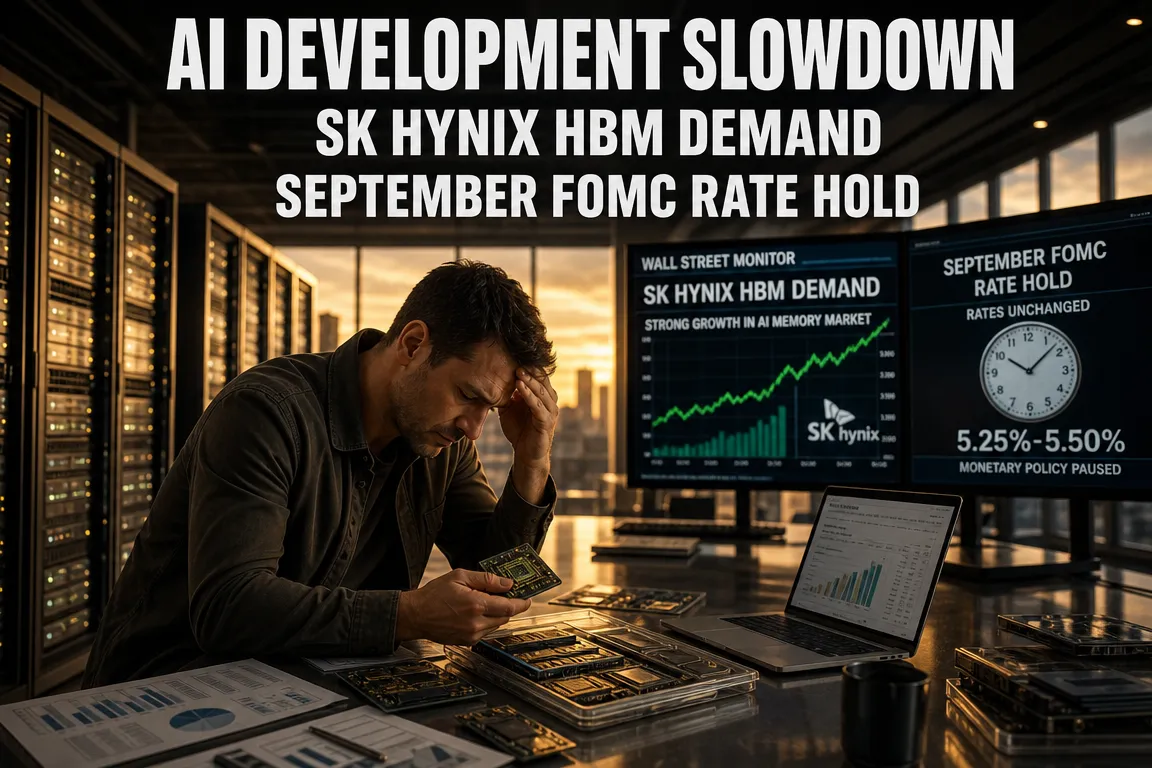
SK Hynix ADR plunges for a second straight session: is this the end, or is the real issue skepticism over AI investment?
This decline in SK Hynix ADR should not be dismissed as a simple correction after a strong rally.
The key issues in the market are threefold.
First, U.S. equities have not broadly weakened, yet memory semiconductors have been sold off aggressively.
Second, positive developments such as Micron’s long-term supply agreement, TSMC’s strong earnings, and the potential for tighter restrictions on Chinese memory chips have been largely ignored.
Third, the market has begun to price in a more fundamental question: whether AI investment and data center capital spending are fully justified.
In other words, this move is not only about SK Hynix. It reflects a broader combination of pressure across semiconductor equities, Big Tech earnings, AI investment, and KOSPI volatility.
1. SK Hynix ADR decline: situation summary
SK Hynix ADR fell sharply in U.S. trading for a second consecutive session.
On the day referenced in the video, it dropped more than 8%, extending the prior day’s weakness and further damaging sentiment.
Importantly, this did not occur in the context of a broad Nasdaq selloff.
The Nasdaq fell only about 0.6%, while SK Hynix ADR and other memory semiconductor names declined much more sharply.
This suggests concentrated selling pressure in a specific sector rather than a general risk-off move.
- Limited downside in the Nasdaq
- Sharp decline in SK Hynix ADR
- Weakness in Micron, SanDisk, and related storage names
- Relative stability in the M7 megacap technology group
The current U.S. market pattern is closer to “sell semiconductors, buy M7.”
2. The core U.S. market trend: semiconductor selling, M7 buying
Recent U.S. trading has renewed attention on the M7, namely Apple, Microsoft, Nvidia, Alphabet, Amazon, Meta, and Tesla.
While Micron and SanDisk have posted strong gains this year, some M7 names had lagged earlier in the cycle.
As a result, investors may now view M7 valuations as more attractive on a relative basis.
This has encouraged rotation out of memory semiconductors and into the M7 group.
The problem is that this rotation is occurring at the same time as Korea’s market structure has become more fragile.
The Korean market has already been sensitive due to leveraged ETF positioning, retail concentration, and elevated volatility.
When SK Hynix ADR fell sharply in the U.S., domestic semiconductor sentiment weakened further.
3. The unusual part: semiconductor stocks are falling despite positive news
The most notable feature of this move is that several positive semiconductor-related developments have been largely ignored.
Instead, the market has focused on downside risks.
3-1. Micron signs a long-term agreement with Qualcomm
Micron signed a long-term agreement with Qualcomm.
Such agreements help secure pricing and volume visibility, which is favorable for a memory supplier.
Given the cyclical nature of the memory industry, long-term contracts improve earnings stability.
However, the market did not reward this development, and Micron shares weakened instead.
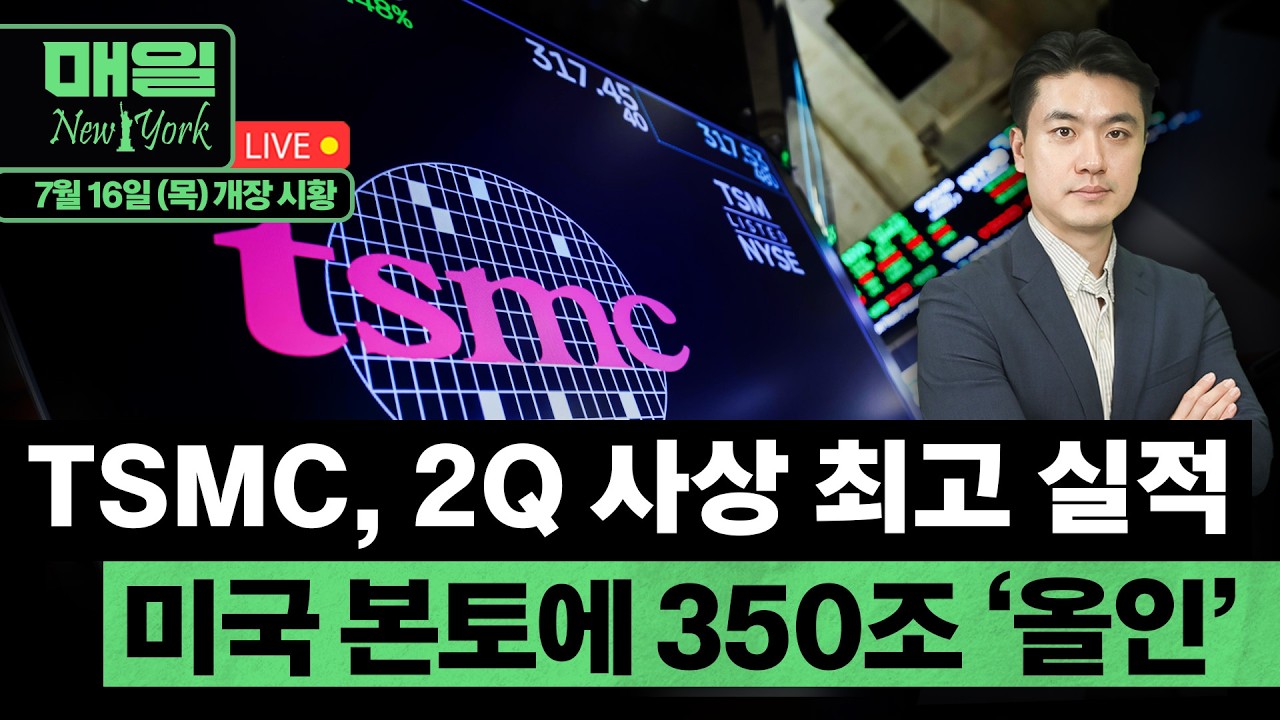
3-2. TSMC reported strong results, but the stock fell
TSMC also reported earnings.
On the surface, the results were solid.
AI-related demand remained strong, and the company indicated that it would further increase capital expenditure in 2026.
Management described AI as a major structural trend and said demand was stronger than expected.
Under normal conditions, such guidance would support the broader semiconductor sector.
Instead, TSMC shares also declined.
This suggests the market is more sensitive to concerns over AI spending intensity than to positive operational results.
3-3. U.S. political moves toward restrictions on Chinese memory chips
U.S. lawmakers have asked the Trump administration to prohibit purchases of Chinese memory semiconductors.
The companies most directly targeted are CXMT and YMTC.
The rationale is clear: AI infrastructure is tied to national security, and key components should not depend on Chinese suppliers.
This would normally be a positive development for Korean and U.S. memory producers.
Restrictions on Chinese memory products could improve the competitive position of SK Hynix, Samsung Electronics, and Micron.
However, the market has largely ignored this news as well.
3-4. OpenAI Codex growth also supports memory demand
OpenAI released usage metrics alongside a ChatGPT update.
Codex is an AI coding agent similar in concept to Claude Code.
It is designed to help developers write, edit, and automate code using AI tools.
Recent data show that Codex usage is rising rapidly, with reports of daily user growth approaching 1 million.
Rising OpenAI usage implies higher data center demand.
More data center demand supports not only GPUs, but also HBM, DRAM, and NAND memory products.
Even so, the market has not meaningfully reflected this news.
4. What the market is really worried about: is AI capital expenditure justified?
The central question in the U.S. equity market is this:
Are the massive investments by Big Tech and hyperscalers in AI likely to generate adequate returns?
Amazon, Microsoft, Alphabet, and Meta are investing heavily in AI data centers and semiconductor capacity.
This has driven explosive demand for Nvidia GPUs, HBM, high-performance memory, and server infrastructure.
SK Hynix has been viewed as a major beneficiary of this HBM cycle.
However, the market is now asking a different question.
- Are AI services translating into sufficient revenue?
- Is data center spending expanding too quickly?
- Will rising capital expenditure pressure future profitability?
- Could AI infrastructure investment create excess supply?
There is no clear answer yet.
But equity markets typically discount uncertainty.
As a result, the current stance is increasingly “sell first until clarity improves,” especially in memory semiconductors.
5. Why Korean equities are being hit harder
Korean equities are not only reacting to U.S. semiconductor weakness.
Domestic market structure is also contributing to instability.
KOSPI volatility has recently been described as exceeding levels seen during the COVID period, and some indicators have been compared with the 2008 financial crisis and the Asian financial crisis.
In particular, leveraged ETF trading concentrated in Samsung Electronics and SK Hynix has amplified volatility.
Daily swings of around 10% in major semiconductor names are not consistent with a normal market environment.
This suggests that Korea’s market is currently reacting more to flow imbalances than to fundamental price discovery.
6. Discussion of tighter leveraged ETF regulation
Recent losses in leveraged ETFs have raised concerns among investors in their 20s and 30s.
Some reports have cited that 62% of bankrupt accounts were held by investors in that age group.
As a result, financial authorities are reportedly considering stricter requirements for leveraged ETF trading.
6-1. Raising the base deposit from KRW 10 million to KRW 30 million
The current base deposit required for leveraged ETF trading is around KRW 10 million.
One proposal is to raise this to KRW 30 million.
The proposed implementation date is early August.
However, market participants have argued that this may come too late to stabilize current conditions.
6-2. Recognizing only cash for deposit eligibility
Another proposal is to count only cash when assessing base deposit eligibility.
This would exclude assets whose collateral value may fluctuate materially and focus on actual liquidity.
The measure may strengthen investor protection.
At the same time, it is being viewed as a delayed response to market stress that has already intensified.
6-3. Possible shift from one-share trading to 20-share blocks
Another possible change is to move from one-share trading to 20-share blocks.
The aim would be to reduce very short-term speculation and excessive entry.
However, since the implementation timeline is reportedly not until November, the market response has been muted.
That timing is too delayed to address current volatility.
7. Why the market is disappointed: the measures are weak and late
The regulatory direction is not necessarily negative.
However, investors appear to have expected stronger and faster action.
Some market participants argue that the base deposit should be raised not to KRW 30 million, but closer to KRW 100 million.
This reflects concerns that leveraged ETFs are distorting market flows.
When leveraged products are tied to large-cap names such as Samsung Electronics and SK Hynix, volatility becomes much more pronounced.
In the short term, even the announcement of new rules has added uncertainty, with slight weakness also noted in NXT trading for Samsung Electronics and SK Hynix.
8. What needs to happen for the decline to stabilize
Several conditions would be necessary for market normalization.
8-1. U.S. semiconductor selling needs to ease
The first requirement is a stabilization in U.S. market leadership.
At present, the dominant theme is “sell semiconductors, buy M7.”
If this continues, SK Hynix ADR and Korean semiconductor stocks are likely to remain under pressure.
Conversely, a recovery in Micron, SanDisk, TSMC, and Nvidia could help stabilize sentiment in Korea.
8-2. Big Tech earnings need to confirm AI demand
Ultimately, earnings will be decisive.
Major Big Tech earnings announcements are expected from late July.
The market will likely focus less on headline revenue and profit numbers, and more on AI-related indicators.
- Is AI service revenue growing?
- Are cloud growth rates holding up?
- Are AI data center investment plans being maintained?
- Are capital expenditure guidance levels still strong?
- Is AI investment translating into profitability?
Big Tech needs to signal clearly that AI demand remains strong and investment will continue.
8-3. Stronger leveraged ETF regulation is needed
On the domestic side, reducing flow-driven instability will require tighter controls on leveraged ETFs.
The currently discussed measures are directionally appropriate, but investors see them as insufficient in speed and intensity.
When volatility is already extreme, faster intervention becomes necessary.
If leveraged products are contributing not only to retail losses but also to broader market distortions, the authorities may need to consider more decisive measures.
9. The most important point not emphasized elsewhere
The key point in this episode is that the decline is not happening because there are no positive catalysts.
In fact, there have been many.
Micron’s long-term agreement, TSMC’s strong earnings, continued AI demand, OpenAI user growth, and the possibility of restrictions on Chinese memory chips are all favorable for the semiconductor industry.
Yet shares continue to fall, which indicates that the market’s attention has shifted elsewhere.
The market is no longer focused primarily on current earnings. It is focused on the sustainability of future investment.
The more important question is therefore:
Will AI data center investment continue at the current pace in 2026 and 2027?
If the market becomes more skeptical on this point, even strong current earnings may not be enough to support valuations.
Conversely, if upcoming Big Tech results confirm AI demand and investment discipline, the recent selloff may be viewed as excessive.
For now, the decline appears to reflect skepticism toward the durability of AI capital spending rather than a deterioration in the memory semiconductor cycle itself.
10. What investors should be cautious about now
The current market is not behaving in a conventional manner.
Daily swings of more than 10% in a leading semiconductor stock are not consistent with a normal investment environment.
In such conditions, impulsive trading is the greatest risk.
Constant monitoring of portfolios can intensify fear and impair judgment.
Leveraged ETFs, margin trading, and aggressive short-term chasing are especially dangerous in high-volatility periods.
Although a large volume of new information appears to be arriving, very little of it is truly decisive.
Most of the important positive and negative factors are already known to the market.
In this environment, stepping back may be the more prudent approach.
11. Key events and indicators to watch
In the near term, investors should monitor SK Hynix ADR, Micron, TSMC, and Nvidia in the U.S. market.
In Korea, the focus should be on Samsung Electronics and SK Hynix intraday volatility, foreign buying and selling, and leveraged ETF turnover.
Over the medium term, Big Tech earnings will be the main turning point.
Comments from Microsoft, Alphabet, Amazon, and Meta on cloud growth and AI investment will be particularly important.
If these companies express confidence in AI demand, sentiment toward memory semiconductors could recover.
By contrast, any language suggesting slower capital spending, delayed AI monetization, or data center investment fatigue could extend the market’s weakness.
12. Conclusion: the SK Hynix ADR selloff is a validation phase, not necessarily the end
The SK Hynix ADR decline should not be treated as a simple isolated negative event.
However, it should also not be dismissed.
This move indicates that global markets are beginning to re-evaluate the AI investment cycle.
Semiconductor stocks have already priced in a significant amount of AI optimism.
Markets are now demanding evidence of durability, not just expectations.
As a result, the current focus is no longer just on the narrative that AI is the next major theme.
Investors now want proof that AI is generating revenue, that Big Tech will continue investing, and that memory demand is supported by long-term contracts and actual earnings.
At present, fear is high.
In such conditions, risk management is more important than aggressive positioning.
For investors with heavy exposure to leveraged ETFs or short-term trading strategies, survival may matter more than trying to predict the next move.
< Summary >
SK Hynix ADR fell sharply for a second straight session, significantly weakening market sentiment.
Although the Nasdaq was relatively stable, selling was concentrated in memory semiconductor names such as Micron and SanDisk.
Positive catalysts, including Micron’s Qualcomm LTA, TSMC’s strong earnings, the possibility of restrictions on Chinese memory chips, and OpenAI Codex growth, were largely ignored.
The key issue is not the semiconductor cycle itself, but growing skepticism toward AI investment and Big Tech capital spending.
Korean equities are under additional pressure from leveraged ETF flows and elevated KOSPI volatility.
Market stabilization will likely require a pause in U.S. semiconductor selling, confirmation of AI demand in Big Tech earnings, and stronger management of leveraged ETF risk.
For now, cautious risk management is more important than reactive trading.
[Related Articles…]
*Source: [ 내일은 투자왕 – 김단테 ]
– 하이닉스 ADR 연이틀 폭락. 이대로 끝인가?
● AI Power Bottleneck, Market Shock
U.S. Equities: Strong UNH and Record TSMC Earnings Still Could Not Prevent Semiconductor Weakness; the Key Issue Is Now the AI Power Bottleneck
The most important takeaway from today’s market is not simply that semiconductors sold off or that UnitedHealth rose.
TSMC delivered record-level results, yet the stock declined, while UnitedHealth surged after demonstrating cost control in its insurance business.
At the same time, Big Tech continues to expand AI capital expenditure, New York State has paused data center construction, leverage remains elevated in U.S. equities, and Uber’s reported interest in Delivery Hero-related assets adds another layer of sector rotation.
Although the market appears to be moving on individual names, the underlying message is that the AI investment cycle is shifting from chip scarcity to power scarcity.
1. Early U.S. Market Action: Nasdaq Weakness and Continued Semiconductor Selling
The three major U.S. indexes opened with mixed performance.
The Nasdaq started down about 0.6%, while the S&P 500 traded near flat.
The Dow and Russell 2000 were comparatively firmer, reflecting a rotation into other areas of the market.
- Nasdaq: Lower on semiconductor weakness
- S&P 500: Near-flat trading
- Dow: Relative strength
- Russell 2000: Select buying on expectations of easing rate pressure
Semiconductors were the main source of pressure.
Nvidia fell more than 1%, while Broadcom declined more than 3%.
Intel, Texas Instruments, Marvell, SanDisk, and Western Digital also moved lower.
After Big Tech supported the indices previously, profit-taking in semiconductors again weighed on the broader market.
2. Why Did TSMC Fall Despite Record Earnings?
TSMC reported what amounted to record quarterly results.
Net income rose more than 77% year over year, extending its double-digit growth streak for a ninth consecutive quarter.
The results also confirmed that AI-driven demand for high-performance computing remains strong.
Nvidia, Apple, and major cloud platforms continue to wait for advanced chip production capacity.
Even so, the stock fell more than 4% premarket and remained weak intraday.
The issue was not earnings quality but capital expenditure.
TSMC raised its annual capex guidance from as much as $56 billion to as much as $64 billion.
Higher capacity investment supports long-term demand visibility, but it also increases short-term pressure on margins and cash flow.
- Positive interpretation: Evidence that AI chip demand is real
- Negative interpretation: Short-term cash flow and depreciation burden increase
- Market reaction: Long-term growth is acknowledged, but near-term profitability is under review
This is the current stance on Wall Street.
Investors accept that AI demand is strong, but they are concerned that too much capital is being deployed to meet it.
As a result, TSMC’s earnings are strong, but investors are already focusing on second-half and early-2025 margin expectations.
3. The Real Meaning of TSMC’s Arizona Expansion: A Reassessment of Geopolitical Risk, Not Just Capacity Growth
TSMC’s expanded investment in Arizona is also significant.
The reported plan includes roughly $100 billion of additional investment in the U.S., with advanced 2-nanometer and below manufacturing and advanced packaging capacity.
This is not simply another factory expansion.
It reduces the geopolitical risk discount that has long been attached to TSMC’s valuation.
Because of tensions between China and Taiwan, the company has always carried a risk premium despite being the world’s leading foundry.
Diversifying cutting-edge production into the U.S. could support a future valuation re-rating.
- Reduced concentration risk in Taiwan
- Stronger U.S.-based AI supply chain
- Potential easing of advanced packaging bottlenecks
- Closer strategic alignment with the U.S. government
- Potential reduction in TSMC’s valuation discount
TSMC is not a company that expands capacity indiscriminately.
It has historically managed supply conservatively and increases investment only when demand is visible.
For that reason, the capex increase is a strong signal that AI demand is being converted into real orders.
4. Big Tech AI Capital Expenditure: Why Alphabet, Meta, and Amazon Must Keep Spending
TSMC’s capex expansion is linked to rising AI investment across Big Tech.
According to a Citi report, capex forecasts for major megacap companies including Alphabet, Meta, and Amazon have been revised materially higher.
Alphabet and Meta were raised by about 20% versus prior estimates, while Amazon is also expected to continue large-scale infrastructure spending.
The key issue is AI infrastructure leadership.
Big Tech risks losing its long-term platform position if it slows investment now.
As a result, it is difficult to reduce spending on data centers, GPUs, networking, and power infrastructure even if near-term free cash flow deteriorates.
- Alphabet: Google Cloud growth and AI search competition
- Meta: AI recommendation systems, ad efficiency, and in-house model development
- Amazon: AWS competitiveness and Anthropic-related strategic value
- Microsoft: Support for the OpenAI ecosystem and Azure demand
The risk for investors is clear.
If AI spending does not translate into sufficient revenue and earnings, concerns over an AI bubble could re-emerge.
If more megacap companies see free cash flow turn negative, that would also weigh on U.S. equity valuations more broadly.
5. Why Semiconductor Price Targets Are Rising While Stocks Fall: The Answer Is Flow and Rotation
Many investors are confused by the gap between rising analyst targets and falling share prices.
It is not enough to say that Wall Street is wrong.
Price targets usually reflect 12-month forward valuation assumptions.
By contrast, institutional investors and portfolio managers are focused on this month and this quarter’s performance.
When semiconductor stocks have already risen significantly on the AI rally, higher price targets can coincide with profit-taking rather than fresh buying.
- Higher targets: Long-term fundamentals reflected
- Short-term weakness: Institutional profit-taking and portfolio rebalancing
- Rotation: Capital moving from semiconductors into Big Tech, healthcare, and cyclicals
- Retail risk: Late entry based only on target prices can increase volatility exposure
In July, the Philadelphia Semiconductor Index has fallen more than 10% on a month-to-date basis.
However, the move has not been uniform across the sector.
Nvidia, Broadcom, and Texas Instruments have shown relatively better resilience.
By contrast, higher-multiple names such as Marvell, ARM, and Astera Labs have been more volatile.
This indicates that capital is rotating within the sector toward companies with stronger cash flow visibility.
In this environment, investors should focus on earnings quality and cash generation rather than simply buying the largest decliners.
6. China’s CXMT Listing and the Negative Impact on Memory Sentiment
Semiconductor weakness was also affected by concerns over a potential listing by China’s CXMT.
Markets are worried that large-scale fundraising could support additional supply in legacy memory chips.
CXMT is not yet a direct competitor in HBM, but memory markets are highly sensitive to sentiment.
Recent memory price gains have been driven first by HBM shortages and then by recovery in DRAM and NAND pricing.
That has also supported share prices for Samsung Electronics, SK Hynix, and Micron.
However, when investors see possible supply expansion from China, they may choose to take profits first.
7. Excess Leverage in U.S. Equities: The Real Risk Is Buying on Margin
A key risk in this market is leverage.
The report cited U.S. investors’ net margin balance at roughly negative $992 billion.
In practical terms, that means borrowed funds are extremely large relative to cash holdings.
In such a setup, even modest market declines can trigger forced liquidations.
With interest rates, inflation, policy uncertainty, and geopolitical risk still present, volatility can rise quickly.
- Low cash levels can magnify downside moves
- Leveraged investors face elevated forced-sale risk
- Institutions may rotate out of expensive names into undervalued sectors
- Retail investors entering late may be exposed to sharp volatility
The key investment response is not to assume that the market will only rise.
Maintaining cash and building a structure that allows selective buying on pullbacks is more appropriate.
Even with a long-term upward bias in U.S. equities, the third quarter may remain volatile.
8. New York’s Data Center Construction Pause: The Real AI Bottleneck Is Power
One of the most important developments is not in semiconductors but in data center infrastructure.
New York State has imposed a temporary one-year pause on large-scale data center construction.
The stated rationale involves environmental and infrastructure concerns, but the core issue is grid capacity.
BlackRock CEO Larry Fink has also warned that U.S. power infrastructure is not keeping pace with AI data center expansion.
A data center cannot operate without electricity, regardless of how much physical capacity is built.
AI infrastructure competition is therefore shifting from GPU supply to electricity supply.
- AI data centers require very large amounts of power
- Grid investment is lagging behind construction demand
- Higher power costs directly affect data center profitability
- Utilities, nuclear, transmission, and storage infrastructure are emerging beneficiaries
China is advancing nuclear and solar projects through state-led deployment.
By contrast, U.S. private-sector AI expansion is running into permitting and grid constraints.
That difference could become an important factor in the global AI race.
9. AI Beneficiaries Are Not Limited to Semiconductors: Why Utilities Matter
If the AI bottleneck is power, investors should also monitor the utilities sector.
The report cited AI-related utility names highlighted by Benzinga, including Constellation Energy, Vistra Energy, and NextEra Energy.
- Constellation Energy: Exposure to nuclear-based power supply
- Vistra Energy: Beneficiary of rising electricity demand and quality-growth characteristics
- NextEra Energy: Focus on renewables and power infrastructure expansion
Until recently, AI investing focused mainly on Nvidia, TSMC, and Broadcom.
However, as data centers expand, demand also rises for power generation, transmission, transformers, cooling systems, and energy storage.
This is a less visible but increasingly important part of the long-term AI investment case.
10. UnitedHealth Surges on Improved Cost Control
UnitedHealth rose roughly 7% in premarket trading after reporting earnings.
The company beat market expectations and helped improve sentiment in the healthcare sector.
Revenue reached approximately $112 billion, up from a year earlier, while adjusted earnings per share improved to $6.38.
The key metric was the medical cost ratio, or MCR.
MCR measures the share of premium revenue used for medical expenses, and a lower ratio supports insurer profitability.
- Revenue: Above expectations
- Adjusted EPS: Strong year-over-year improvement
- MCR: Lower than expected, easing margin concerns
- Guidance: Improved outlook for profitability
- Share reaction: Strong post-earnings gain
UnitedHealth is not merely an insurer.
Through UnitedHealthcare and Optum, it combines insurance with healthcare services and pharmacy benefits management.
That gives it both defensive and growth characteristics within the healthcare sector.
The company is also viewed as a long-term dividend growth name.
In periods of higher technology volatility, it has re-entered focus as a portfolio stabilizer.
11. Why UNH Rallied Even After Berkshire Sold Shares
Earlier this year, Berkshire Hathaway’s sale of UnitedHealth shares weighed on sentiment.
Some investors interpreted the move as a sign of concern about the company or the insurance industry more broadly.
However, Berkshire also reduced positions in other high-quality names such as Amazon and Visa as it increased cash holdings.
That suggests portfolio de-risking rather than a company-specific deterioration.
The latest results show that UnitedHealth’s core business remains intact.
12. June U.S. Retail Sales: Signs of Slowdown, But No Major Shock
June U.S. retail sales rose 0.2% month over month.
On a year-over-year basis, sales were up 6.7%.
The data do not indicate a sharp collapse in consumer spending.
However, the slower pace of growth suggests that consumer moderation remains a key variable to monitor.
Slower consumption can ease inflation pressure, but it can also weigh on corporate revenue growth.
Markets will continue balancing that trade-off against the Fed’s policy path.
13. Commodities, Bitcoin, and Volatility: The Market Is Not Fully Calm
WTI crude traded around $80 per barrel, while Brent was near $85.
Geopolitical risk in the Middle East remains a source of inflation uncertainty.
Bitcoin attempted to hold around $65,000 but continued to trade in a narrow and hesitant range near the mid-$64,000 area.
The VIX remained near 16, which is not a panic level, but leverage makes the market vulnerable to sharp moves on small negative catalysts.
Gold falling below $4,000 also stood out.
Safe-haven pricing remains sensitive to both geopolitical risk and shifts in rate expectations.
14. Uber and Delivery Hero: A Sign of Restructuring in Delivery Platforms
The report also referenced Uber’s interest in Delivery Hero-related assets.
Delivery Hero is widely known as the parent company of Woowa Brothers, the operator of Baemin in South Korea.
Although the original text did not detail transaction terms, the investment implication is that global delivery platforms may be entering a new phase of consolidation.
- Uber: Expansion strategy combining mobility and delivery
- Delivery Hero: Regional delivery network and brand portfolio
- Baemin: Key player in the Korean delivery market
- Investment angle: Better profitability and regional restructuring across the sector
The delivery platform industry is now more about profitability than growth alone.
The model has shifted away from share gains through heavy marketing toward pricing, advertising, membership, and logistics efficiency.
Any renewed interest by Uber in Delivery Hero-related assets would suggest another round of consolidation in the global delivery market.
15. Amazon and Anthropic: A Key Watchpoint for the Upcoming Megacap Earnings Season
Amazon remains a major focus in the current Big Tech earnings season.
Investors are watching AWS growth as well as the strategic value of its Anthropic investment.
If Anthropic’s valuation rises meaningfully, it could support Amazon’s strategic AI positioning and reported asset value.
However, it remains unclear whether enthusiasm for AI startups will translate into durable earnings.
If the valuation of major private companies such as SpaceX, Anthropic, or OpenAI comes under pressure, AI sentiment could also weaken more broadly.
Three items will matter most in the next round of Big Tech results.
First, cloud revenue growth.
Second, the pace at which AI spending converts into revenue.
Third, the impact of rising capex on free cash flow.
16. The Most Important Point Missing From Many Headlines: The Center of the AI Rally Is Shifting
Many headlines still focus on whether Nvidia rises, whether TSMC falls, or where semiconductor price targets are set.
The more important change is that the center of the AI rally is moving from chips to infrastructure.
In the early phase, the key question was who could secure the most GPUs.
In the next phase, it became who could build data centers fastest.
Now the market is shifting to who can secure power, cooling, transmission, and permitting.
- Stage 1: AI model competition
- Stage 2: GPU acquisition race
- Stage 3: Data center construction race
- Stage 4: Power grid, nuclear, and utility competition
For that reason, a semiconductor-only framework is no longer sufficient for AI investing.
Investors now need to consider semiconductors alongside power infrastructure, utilities, cooling systems, and electrical equipment.
This shift is likely to shape U.S. sector rotation over the next one to two years.
17. Practical Investment Response
First, semiconductors should not be abandoned, but chasing them aggressively is also not appropriate.
AI chip demand remains strong, yet short-term valuation pressure and profit-taking are still significant.
Second, investors should closely monitor capex and free cash flow in Big Tech earnings reports.
If revenue is growing but cash generation is deteriorating, the market may reprice valuations again.
Third, power infrastructure stocks merit close attention on a medium- to long-term basis.
As AI data centers expand, power bottlenecks are likely to become more important.
Fourth, leverage should be reduced and cash preserved.
In a market with elevated margin exposure, declines can deepen faster than expected.
Fifth, index investing remains a valid option.
For investors who do not want to manage individual stock volatility, diversified exposure to the S&P 500 or Nasdaq may be more stable.
< Summary >
TSMC reported record earnings, but its stock fell on concerns over higher capex and short-term margin pressure.
The semiconductor sector is being driven more by profit-taking and rotation than by a breakdown in fundamentals.
UnitedHealth surged after stronger earnings and a better medical cost ratio, highlighting the resilience of healthcare defensives.
Big Tech continues to raise AI investment, but weakening free cash flow remains a key risk.
New York’s data center construction pause underscores that the real bottleneck in AI is now power rather than chips.
Going forward, AI investing should include semiconductors, utilities, power grids, nuclear, and data center infrastructure.
[Related Articles…]
- AI Infrastructure Investing: The Power Bottleneck Explained
- Semiconductor Rotation and U.S. Equity Strategy
*Source: [ Maeil Business Newspaper ]
– UNH 호실적&가이던스 상향, 주가 상승ㅣ우버, 배민 모회사 딜리버리히어로 인수ㅣ홍키자의 매일뉴욕