● Dollar, Yield, Liquidity, AI, Surge
The Real Reason U.S. Treasury Yields and the Dollar Are Being Pressured: Liquidity Ultimately Returns to AI Semiconductors and U.S. Equities
The most important issue in the market right now is not when rate cuts will begin.
The real focus is that the U.S. government, ahead of the midterm election cycle, is moving Treasury yields, the dollar, the corporate bond market, and stablecoins in the same direction.
At first glance, Treasury buybacks by the U.S. Treasury Department, the Federal Reserve’s monetary policy, U.S.-China summit talks, KRW/USD stability, and the AI semiconductor investment cycle may appear to be separate developments.
In the broader picture, however, they are all aligned in one direction.
The strategy is to suppress Treasury yields to lower corporate financing costs, weaken the dollar to improve U.S. export competitiveness, and ensure that AI capex continues without interruption.
This article summarizes the key 2026 second-half global macro themes centered on U.S. equities, Treasury yields, KRW/USD, liquidity, and AI semiconductors.
1. Key headline: Why is the U.S. trying to suppress Treasury yields and the dollar?
-
The U.S. Treasury has expanded its buyback program to stabilize long-dated Treasury yields.
The objective is to create demand for long-duration Treasuries by increasing the scale of repurchases.
-
The fact that the buyback period extends through November 4 is important.
November 3 is the U.S. midterm election date.
This suggests that the policy is not only about bond market stabilization, but also about managing growth and asset prices ahead of the election.
-
This liquidity cycle is not being created by rate cuts.
Even in an environment where rate cuts are difficult, liquidity is being supported through fiscal policy, Treasury buybacks, foreign-exchange policy, and stablecoin regulation.
-
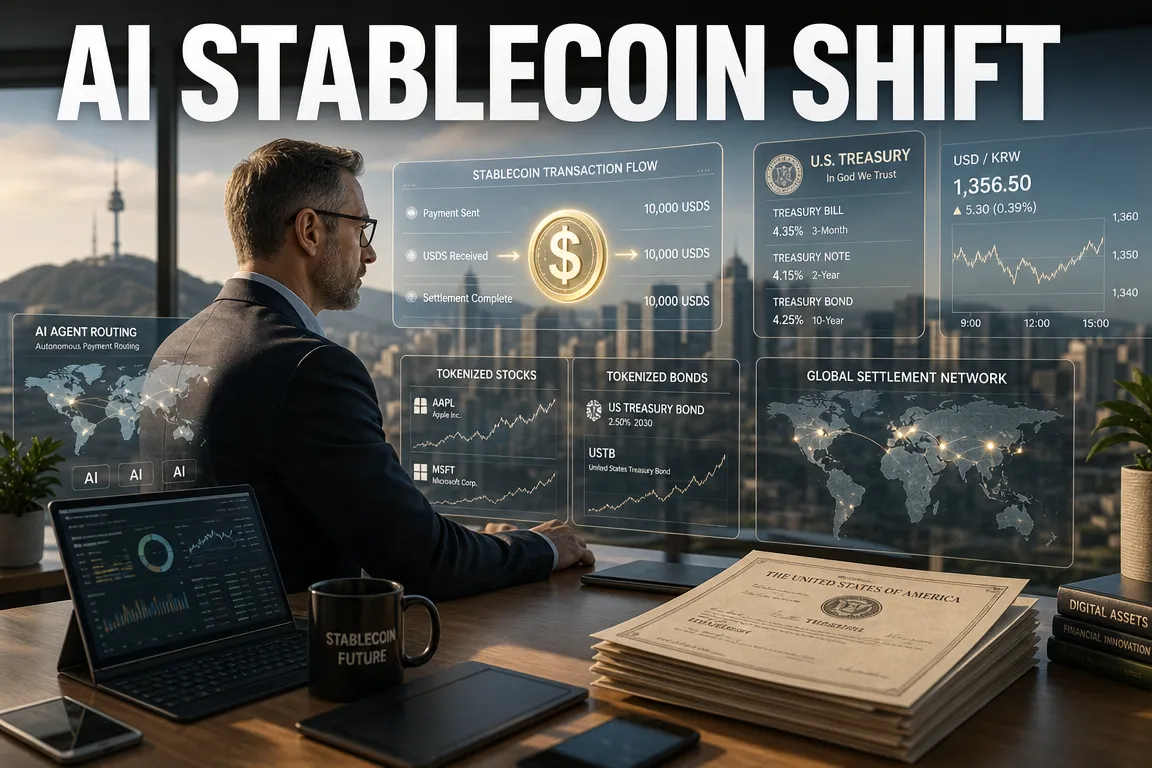
Stablecoins effectively function as a buyer of short-term U.S. Treasuries.
If the U.S. buys back long-term Treasuries and increases short-term issuance, a new source of demand is needed to absorb that supply.
Stablecoin issuers can serve that role.
-
Encouraging dollar weakness supports U.S. exports and the AI sector.
A lower dollar can improve export competitiveness for U.S. companies and support revenue growth in AI semiconductors, AI services, and GPU-related businesses.
-
Ultimately, capital is likely to flow back into the AI value chain.
Even if hyperscalers’ free cash flow declines, easier corporate bond funding conditions can allow AI capex to continue.
2. The key macro variable in the first half of 2026: Middle East conflict, oil, and inflation
One of the major global macro variables in 2026 was the Middle East conflict.
Geopolitical risk was not limited to headlines.
It first pushed crude oil higher.
Higher oil prices quickly reignited inflation concerns.
When inflation rises again, the Federal Reserve finds it difficult to cut rates and, in some cases, the possibility of further tightening is raised.
In that process, U.S. Treasury yields came under upward pressure.
Another important factor was the increase in fiscal spending after the conflict.
Countries directly affected by war raised defense and reconstruction spending.
Countries not directly involved responded to energy price shocks with fiscal measures such as energy vouchers, fuel subsidies, and emergency transfers.
As a result, global fiscal spending rose and sovereign bond issuance increased.
When bond supply rises, bond prices fall and yields increase.
At this point, the key concept is fiscal dominance.
Fiscal dominance refers to a regime in which government spending and bond issuance, rather than monetary policy, drive market behavior.
The 2026 first-half liquidity environment was shaped more by fiscal expansion than by rate cuts.
3. Why did Treasury yields rise in a liquidity-driven market?
In a conventional liquidity cycle, yields fall while equities, gold, and Bitcoin rally together.
In the first half of 2026, however, liquidity expanded while Treasury yields also rose.
The reason was that the source of liquidity was fiscal policy rather than monetary easing.
When the government injects fiscal spending, it must issue bonds.
Higher Treasury supply pushes prices down and yields up.
That created the unusual combination of more money circulating in the market and higher Treasury yields.
In this environment, not all assets rise together.
When the 10-year Treasury yield is close to 5%, investors tend to concentrate on companies with very strong earnings growth.
As a result, capital concentrated in U.S. mega-cap AI names and in Korea’s AI semiconductor leaders such as Samsung Electronics and SK Hynix.
This is a selective liquidity environment rather than a broad-based risk-on market.
4. U.S. Treasury buybacks: the key is suppressing long-term yields
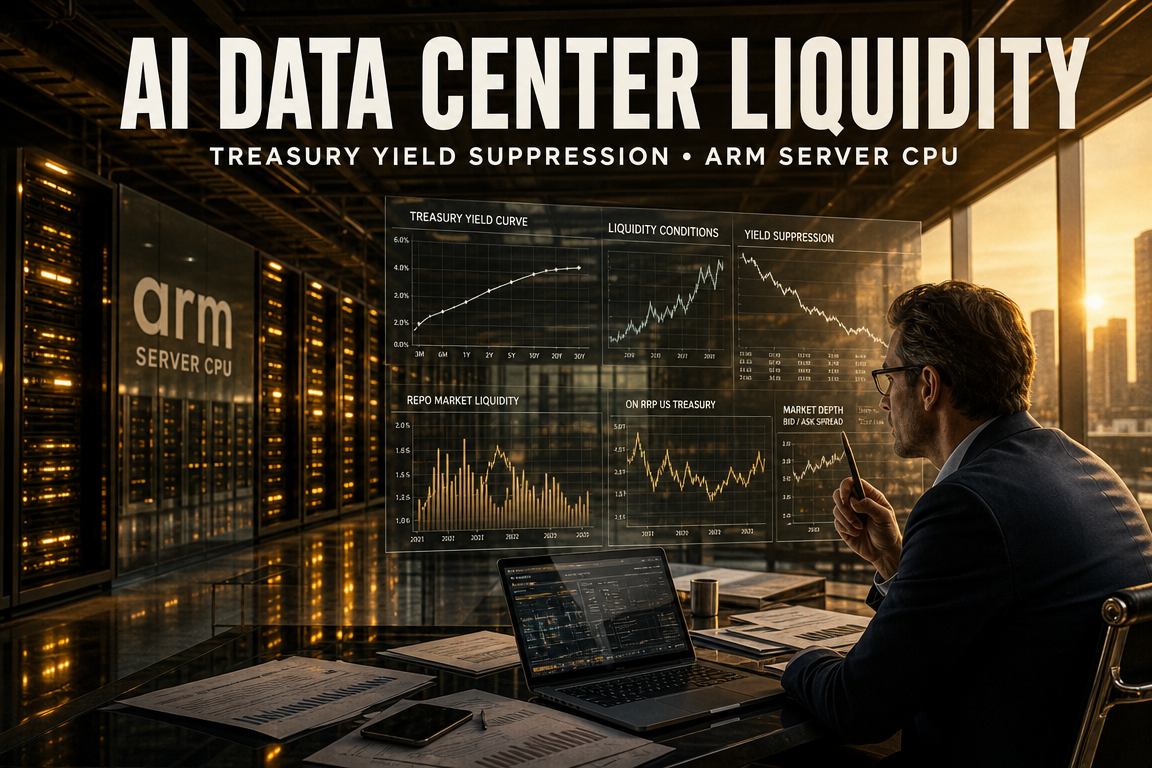
The U.S. Treasury’s decision to expand long-dated buybacks is an important market signal.
A buyback means the government repurchases Treasury securities that were previously issued.
That creates artificial demand for Treasuries.
More demand supports bond prices and lowers yields.
The key point is that the focus is on long-term Treasuries.
If the U.S. Treasury buys back long-duration bonds, 10-year and 30-year yields can stabilize.
Stable long-term yields support equities, real estate, and corporate bonds.
There is, however, a more important detail.
The U.S. Treasury may increase short-term issuance while buying back long-term bonds.
In effect, it is removing pressure from the long end while adding supply at the short end.
That raises a natural question:
“Will short-term Treasury yields rise?”
This is where stablecoins become relevant.
5. The real role of stablecoins: not just dollar-linked tokens, but a buyer of short-term U.S. Treasuries
Stablecoins should not be viewed only as digital assets pegged to the U.S. dollar.
Their most important function is as a buyer of short-term U.S. Treasuries.
Stablecoin issuers receive cash from users and issue tokens in return.
They then typically invest that cash in short-term U.S. Treasuries.
This generates a relatively stable interest-income model.
That business model is broadly similar to those of Tether and Circle.
From the U.S. government’s perspective, this is highly attractive.
The more stablecoins are used globally, the greater the demand to buy short-term U.S. Treasuries.
Even if the U.S. Treasury increases short-term issuance after buying back long-term bonds, stablecoin growth can absorb that supply.
For that reason, stablecoin regulation is not merely a crypto policy issue.
It is also linked to Treasury market stability, dollar reserve status, liquidity provision, and election-year strategy.
6. The Genius Act and the Clarity Act: why the U.S. is bringing crypto into the regulated system
Regulatory change in the U.S. crypto market is also an important trend.
The two key pieces are:
-
The Genius Act
A bill that establishes rules for stablecoin issuance.
Its purpose is less about restriction and more about creating a legal framework for the market.
-
The Clarity Act
A bill covering the trading, circulation, and custody of digital assets.
It is designed to move the crypto market closer to the regulated capital markets framework.
The fact that President Trump has engaged with key crypto industry figures and pushed for progress on the Clarity Act is consistent with this direction.
The broader goal is to move digital assets from an offshore speculative market into a more institutionalized financial structure.
This regulatory expectation can support Bitcoin prices.
Gold may also benefit from lower Treasury yields.
However, in a period when geopolitical tensions ease and risk appetite improves, Bitcoin may react more strongly than gold.
The reason is that Bitcoin also benefits from the expectation of regulatory normalization.
7. More important than actual rate cuts: changes in rate-cut expectations
Markets often focus on whether the Federal Reserve will actually cut rates.
However, capital markets are not driven only by the policy rate decision.
Expectations, caution, concern, and fear move first.
The Fed has kept rates unchanged for an extended period.
But markets reacted more strongly to the possibility of future hikes than to the freeze itself.
After the Middle East conflict pushed oil higher and inflation concerns intensified, expectations of further rate hikes increased.
That weighed on equities, Bitcoin, and gold.
Recently, however, inflation data has shown signs of peaking.
If CPI, PPI, and inflation expectations stabilize, concerns about further rate hikes should ease.
That alone is supportive for risk assets.
In other words, even without an immediate rate cut, the market can move in advance.
Once the narrative shifts from “a rate hike is still possible” to “a rate cut may also be possible,” liquidity can flow back into risk assets.
8. A possible shift in the Fed’s inflation framework: from core PCE to trimmed mean PCE?
The Federal Reserve has traditionally placed significant emphasis on core PCE inflation.
Core PCE excludes volatile food and energy components.
Recently, however, there has also been discussion of placing greater weight on trimmed mean PCE.
Trimmed mean PCE removes the most extreme increases and declines to better capture underlying inflation trends.
Because it is less volatile, it may provide a better read on the underlying inflation trend.
If the Fed increasingly references trimmed mean PCE, it may reach a more favorable conclusion on inflation stability.
Another important point is real-time data.
Current policy decisions are made using backward-looking data.
For example, a September meeting may rely on July or August inflation data.
But the real economy has already moved beyond that point.
That is why real-time growth indicators such as the Atlanta Fed’s GDPNow, the New York Fed’s nowcast, and FedWatch-based rate expectations may matter more.
If real-time inflation data continues to stabilize, expectations for rate cuts could rise further.
That would also be supportive for U.S. equities and AI growth stocks.
9. Trump’s China strategy: soybeans, corn, and inflation control
President Trump’s China strategy should also be viewed through an economic and political lens.
The U.S.-China summit agenda likely includes both diplomacy and inflation management.
China may seek lower tariffs and renewed access to Chinese manufactured goods and consumer products in the U.S. market.
The U.S. side wants China to buy American soybeans and corn.
That is especially important for political support in the Midwest, including the Corn Belt.
If China buys more U.S. agricultural products, Trump can claim a political win.
At the same time, if the U.S. increases imports of lower-cost Chinese consumer goods, it can help contain domestic inflation.
Cheaper Chinese products can reduce upward pressure on living costs.
In this sense, the summit is not simply a diplomatic event.
It is a political-economic package aimed at lowering inflation and securing agricultural support ahead of the election cycle.
10. Pressuring the dollar: after tariff policy comes currency competition
The effort to suppress Treasury yields is also connected to a weaker dollar strategy.
Lower rates can reduce the dollar’s attractiveness.
A weaker dollar improves the competitiveness of U.S. exports.
In the Trump economic framework, reducing the trade deficit is a central goal.
The U.S. has run persistent trade deficits for many years.
Reducing them requires more exports and fewer imports.
Tariffs were used as a tool to reduce imports.
However, tariffs alone are not sufficient.
If trading partners weaken their currencies, tariff effects can be offset.
For example, if the U.S. imposes a 10% tariff on Chinese goods but the renminbi weakens by 10%, Chinese products may retain much of their price competitiveness.
That is why currency competition tends to follow tariff competition.
If the U.S. encourages dollar weakness, American goods and services become more competitive.
This is especially supportive for AI semiconductors, GPUs, data-center equipment, and AI software exports.
11. A modern Plaza Accord: the linkage between the yen and the dollar index
The 1985 Plaza Accord was a major agreement to weaken the dollar and strengthen the yen and the Deutsche mark.
Today, the process is less explicit, but similar dynamics may emerge through coordinated FX intervention, possible Bank of Japan rate hikes, or yen appreciation.
The dollar index measures the dollar against a basket of six major currencies.
The yen has a meaningful weight in that basket.
If the yen strengthens, the dollar index can come under pressure.
When the dollar index falls, KRW/USD may also stabilize.
That does not mean the Korean won is becoming materially stronger on its own.
It means the dollar is weakening, which makes the won appear relatively stronger.
KRW/USD may remain volatile in the short term, but the broader direction may point toward dollar weakness.
12. KRW/USD outlook: U.S. dollar weakness matters more than Korean strength
When analyzing KRW/USD, looking only at Korea’s economy is too narrow.
Exchange rates are driven not only by the won, but also by the dollar.
In the second half of 2026, the U.S. may actively pursue policies that suppress the dollar.
If the U.S. pressures Treasury yields, supplies fiscal liquidity, formalizes stablecoin regulation, and uses FX coordination, downward pressure on the dollar could increase.
In that case, KRW/USD may move toward stabilization.
Some projections view around 1,350 as a key reference level around the midterm election period.
However, exchange rates are always volatile.
A renewed Middle East conflict, another oil spike, a fresh inflation pickup, or a more hawkish-than-expected Fed statement could trigger a temporary rebound.
Therefore, it is important to distinguish direction from short-term volatility.
13. The most important question: where does this liquidity flow?
What is the ultimate purpose of suppressing Treasury yields, weakening the dollar, and improving corporate bond financing conditions?
The core objective is to defend U.S. growth.
At the center of that effort is AI capex.
Looking at the components of recent U.S. growth, net exports and capex have become increasingly important.
In particular, AI-related equipment spending, data centers, semiconductor equipment, GPUs, and power infrastructure have become a core pillar of the U.S. economy.
The U.S. cannot materially reduce its debt burden in the short term.
The alternative is to expand GDP.
If GDP grows, the debt-to-GDP ratio can look more manageable.
In other words, if debt cannot be reduced, growth can be used to offset the apparent deterioration in fiscal metrics.
The most powerful industry capable of supporting that growth is AI.
For that reason, AI capex must not stall from the perspective of U.S. policymakers.
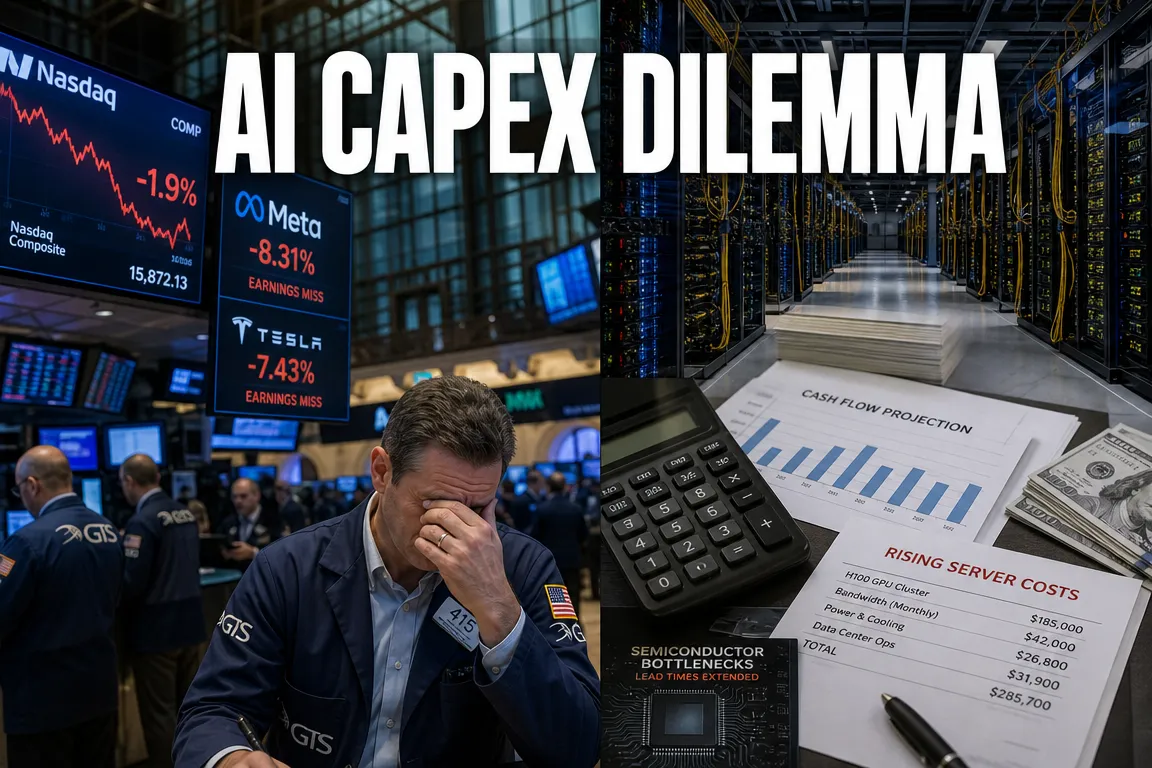
14. The hyperscaler dilemma: cash flow is tightening, but investment cannot stop
Amazon, Meta, Google, Microsoft, Oracle, and Nvidia are all making large-scale investments in AI infrastructure.
The issue is that their free cash flow may come under pressure.
The scale of investment is simply too large.
Markets naturally ask:
“If cash flow is declining, can AI semiconductor purchases continue?”
The key answer is corporate bonds.
Companies do not fund investment only with cash.
They can raise capital by issuing corporate bonds.
For that to work, Treasury yields need to remain stable.
If Treasury yields remain too high, investors may prefer safe government bonds over riskier corporate debt.
That would make financing more difficult for companies and slow capex.
Therefore, suppressing Treasury yields is not just about bond-market stability.
It is also about preserving the conditions for hyperscalers to finance continued AI investment.
15. AI semiconductors and U.S. equities: leadership shifts within the value chain, not away from it
Over the long term, each era has been led by a different growth engine.
At one point it was railroads.
At another point it was highways.
Later it was telecom networks.
Today it is AI infrastructure.
AI infrastructure includes semiconductors, data centers, power grids, cooling systems, cloud services, software, security, and networking equipment.
Current market leadership is moving within the AI value chain.
It is not only about Nvidia.
The full set of AI semiconductors, HBM, data-center power, servers, cloud, and AI software must be viewed together.
In the short term, corrections are possible.
Concerns about worsening free cash flow at hyperscalers, AI investment overreach, and peak-earnings risk can all unsettle the market.
But if policy remains aligned with sustaining AI capex, the major flow of capital is likely to remain within the AI value chain.
16. Market impact by asset class
-
U.S. equities
Stable Treasury yields and a weaker dollar are positive for growth stocks.
In particular, large-cap tech, semiconductors, and data-center-related companies tied to AI capex may benefit.
-
AI semiconductors
Concerns over hyperscaler free cash flow are a near-term headwind.
However, easier corporate bond financing can support continued investment.
-
U.S. Treasuries
Long-dated buybacks can put downward pressure on long-term yields.
However, short-term issuance and stablecoin demand need to be monitored together.
-
Bitcoin
Expectations of lower yields and crypto market normalization can work in its favor.
Capital may flow more aggressively into Bitcoin than into gold.
-
Gold
Expectations of lower rates are supportive for gold.
However, if geopolitical risk eases, gold may lag Bitcoin in relative momentum.
-
KRW/USD
If dollar weakness broadens, KRW/USD may stabilize.
However, renewed Middle East risk and higher oil prices remain short-term reversal factors.
-
Korean equities
If AI semiconductor demand remains intact, large-cap names such as Samsung Electronics and SK Hynix may continue to lead.
However, a weaker dollar can have mixed effects on export earnings, so sector selection remains important.
17. The most important point often missed in media coverage
The core theme of this cycle is not simply “which stocks benefit from rate cuts.”
The real issue is that the U.S. government is trying to keep AI capex from slowing by supporting the corporate bond market.
Most headlines focus separately on the Fed’s policy rate, CPI releases, Nvidia earnings, and Bitcoin prices.
But the more important chain of transmission is as follows:
-
The U.S. Treasury suppresses long-term yields.
-
Stable long-term yields reduce corporate bond funding pressure.
-
Easier bond issuance allows hyperscalers to continue investing in AI.
-
Continued AI investment supports U.S. growth.
-
Stronger GDP helps ease the apparent deterioration in debt metrics.
-
Liquidity then rotates back into AI semiconductors and leading U.S. growth stocks.
In other words, the central market axis is not simply the Fed’s rate decision, but the corporate bond market and the durability of AI capex.
The key issue is not whether hyperscalers can fund investment only from cash flow, but whether they can continue financing investment through bond markets.
Therefore, investors should focus not only on Treasury yields, but also on investment-grade credit spreads, large tech bond issuance, and AI capex guidance.
18. Key indicators to monitor
-
U.S. 10-year and 30-year Treasury yields
Whether long-term yields stabilize is critical.
-
Short-term Treasury issuance and stablecoin market size
The key issue is how much short-term supply stablecoins can absorb.
-
Progress of the Clarity Act
Regulatory normalization in digital assets may influence Bitcoin.
-
U.S. inflation peak-out
CPI, PPI, PCE, and inflation expectations should be monitored for stabilization.
-
Chinese purchases of U.S. agricultural products after the U.S.-China summit
This could have a direct effect on U.S. inflation.
-
The dollar index and KRW/USD
It is important to see whether dollar weakness persists and whether KRW/USD remains stable.
-
Hyperscaler capex guidance
This is central to AI semiconductor demand.
-
Investment-grade corporate bond issuance
The key issue is whether AI companies can continue raising capital.
< Summary >
The key issue in the second half of 2026 is not rate cuts themselves, but the U.S. policy mix aimed at suppressing Treasury yields and the dollar.
The U.S. Treasury’s long-dated buyback program may help stabilize long-term yields and improve corporate bond financing conditions.
Stablecoins serve as an important buyer of short-term U.S. Treasuries, while crypto regulation may support Bitcoin sentiment.
Dollar weakness can benefit U.S. export competitiveness and support AI sector growth.
As a result, liquidity is likely to rotate back into AI semiconductors, hyperscalers, data centers, and leading U.S. growth stocks.
Going forward, investors should monitor Treasury yields, the corporate bond market, stablecoins, KRW/USD, and AI capex alongside Fed policy decisions.
[Related Articles…]
-
AI Semiconductor Investment Cycle and Global Equity Market Trends
-
KRW/USD Outlook and the Impact of Dollar Weakness on the Korean Economy
*Source: [ 경제 읽어주는 남자(김광석TV) ]
– [풀버전] “국채금리·달러 찍어 누르는 진짜 이유” 결국 돈은 AI로 몰립니다 | 김광석의 경제학교 | 8월 월간특강
● ARM-AI-Data-Center-Shock
ARM Reveals Server CPU at Hot Chips 2026: AI Data Center Competition Is No Longer GPU-Only
The key point is not simply that ARM announced a new CPU.
The more important shift is that competition in AI data centers is moving away from GPU performance alone and toward full-system design capabilities that integrate CPU, GPU, HBM memory, networking, and power efficiency.
ARM’s decision to publicly unveil a server CPU suggests that future AI investment trends should be viewed through a broader lens, including ARM, Samsung Electronics, SK hynix, Micron, and packaging and interconnect companies.
As generative AI evolves into AI agents, the role of the CPU is expanding again, and this shift could have meaningful implications for U.S. equities and the semiconductor value chain.
1. The Core Theme of Hot Chips 2026: AI Can No Longer Be Solved by a Single Chip
The central theme at Hot Chips 2026, a leading semiconductor conference, was once again artificial intelligence.
Major technology companies including NVIDIA, AMD, Samsung Electronics, and SK hynix participated and presented next-generation AI infrastructure technologies.
Among them, ARM stood out the most.
- ARM is best known for mobile processor design.
- Companies such as Apple, Qualcomm, NVIDIA, and Amazon use ARM architectures in their chip development.
- ARM’s traditional business model has centered on licensing CPU design IP rather than manufacturing chips directly.
- This time, however, ARM publicly introduced a server CPU targeted at the AI agent era.
This indicates that ARM aims to expand from a pure design IP provider into an AI data center semiconductor platform company.
It marks a meaningful inflection point that could lift ARM’s position in the semiconductor industry.
2. Why CPU Is Becoming Important Again in the AI Era
Many investors associate AI primarily with GPUs.
In fact, GPUs remain essential for training and inference in generative AI.
However, the shift from chatbots to AI agents is changing the operating model.
Traditional generative AI responds to user prompts with generated text.
By contrast, AI agents understand user goals, break tasks into steps, and invoke tools and services directly.
For example, if a user says, “Plan my business trip next week, book the flight, and send emails to the relevant people,” an AI agent does more than generate a response.
- It analyzes the trip purpose and schedule.
- It searches flight and hotel booking services.
- It connects to calendar and email applications.
- It compares multiple options.
- It may hand off tasks to other AI models or external APIs.
- It verifies the result and revises the plan if needed.
GPU handles the heavy AI computation in this process.
But CPU is responsible for sequencing tasks, moving data, coordinating multiple models and applications, and keeping GPUs fully utilized.
In simple terms, the GPU is the specialist, while the CPU functions as the project manager.
In the AI agent era, without sufficient project management, even highly capable specialists cannot deliver efficient execution.
3. ARM’s Main Message: 40% to 60% of AI Workloads Occur in the CPU Domain
ARM stated that a significant portion of AI agent workloads is processed on the CPU.
This does not mean the CPU performs more AI computation than the GPU.
The key message is that the ability to use GPUs efficiently has become a core competitive factor in AI data centers.
GPU is one of the most expensive assets in an AI data center.
If CPU, memory, or networking is slow, the GPU waits for data and cannot operate at full utilization.
As a result, costly GPUs fail to deliver their full value.
The competition is therefore shifting from “How fast is the GPU?” to “How well is the entire system designed to keep the GPU continuously productive?”
4. ARM’s Strategic Shift: From Design IP Company to Server CPU Supplier
ARM has long been categorized as a company that provides semiconductor design IP.
Apple, NVIDIA, Amazon, Google, and Microsoft have used ARM assets to develop their own chips.
However, this server CPU announcement signals that ARM is targeting a larger market more directly.
- The existing business model was based on licensing CPU designs.
- The new direction is a more direct entry into the server CPU market for AI data centers.
- As AI infrastructure investment expands, ARM’s potential value capture could also increase.
- ARM may increasingly be viewed not only as a mobile processor company but as an AI data center platform company.
This shift is also relevant for U.S. equity markets.
AI semiconductor investment may broaden beyond NVIDIA to include ARM, AMD, Broadcom, Marvell, memory companies, foundries, and packaging firms.
5. What Matters More Than CPU Performance: Rack-Level AI System Efficiency
ARM emphasized not only CPU core count but also how many AI agents can be operated reliably and efficiently within a single rack.
In AI data centers, rack-level and cluster-level efficiency is more important than the performance of an individual server.
Even if the CPU is fast, performance declines when memory becomes a bottleneck.
Problems also arise if the data path between the GPU and memory is constrained.
Power consumption can further drive operating costs sharply higher.
ARM therefore highlighted an integrated design approach spanning CPU, memory, I/O, networking, and power efficiency.
This suggests that competition in AI infrastructure is moving from individual chips to system architecture.
6. Another Key Theme at Hot Chips 2026: HBM Memory
Memory was as important as CPU at this year’s event.
Samsung Electronics, SK hynix, and Micron all pointed to the same issue.
GPUs have become too fast for memory to supply data at the required speed.
Industry participants refer to this as the memory wall.
No matter how powerful the GPU is, it cannot perform effectively if it cannot access data fast enough.
AI models continue to grow larger.
Parameter counts are increasing, context windows are expanding, and multimodal workloads are becoming more data intensive.
In this environment, data movement speed and memory bandwidth are as important as raw compute capacity.
7. Different Approaches by Samsung Electronics and SK hynix
Samsung Electronics and SK hynix are addressing the same challenge, but with different strategies.
Samsung Electronics: Adding Limited Compute Inside Memory
Samsung Electronics presented an approach that integrates small-scale compute functions into HBM.
This structure enables memory to do part of the computation rather than serving only as storage.
The goal is to reduce the burden of continuously moving data to the GPU.
- It reduces data movement.
- It improves power efficiency.
- It helps alleviate GPU bottlenecks.
- It may support better AI inference performance.
This direction is closely related to processing-in-memory, or PIM, architectures.
As power consumption and data movement costs rise in AI data centers, the importance of such technologies is likely to increase.
SK hynix: Higher, Faster, and More Stable HBM
SK hynix emphasized improving HBM performance rather than embedding compute inside memory.
The strategy focuses on taller stacking, better thermal control, and higher data transfer speeds.
- Advancing HBM stacking technology is a key priority.
- Thermal management and packaging stability are critical.
- The objective is to increase bandwidth with GPUs.
- Mass production yield and customer qualification remain important competitive factors.
Although their methods differ, Samsung Electronics and SK hynix are pursuing the same objective.
Both aim to improve AI compute efficiency by ensuring that memory and the broader system work in concert with the GPU.
8. The Most Important Structural Change Investors Should Not Miss
The most important development is the shift in the center of gravity of AI semiconductor competition.
Until now, AI investment has largely been interpreted through demand for NVIDIA GPUs.
But GPU alone is no longer sufficient to resolve AI data center bottlenecks.
The relevant value chain is likely to broaden.
- CPU design companies such as ARM, AMD, and Intel may regain investor attention.
- GPU leadership will remain important, but system integration capabilities will matter more.
- Memory companies such as Samsung Electronics, SK hynix, and Micron will face intensifying HBM competition.
- Packaging companies will become essential as advanced chip integration grows in importance.
- Interconnect companies will gain relevance as data movement between CPU, GPU, and memory becomes more critical.
- Power and cooling providers will also become more important as AI data center energy consumption rises.
In short, AI infrastructure competition can no longer be understood by focusing only on NVIDIA.
The industry must be assessed as a broader semiconductor structural shift.
9. The Most Important Point Missing from Most Coverage
The real significance of ARM’s announcement is not simply its entry into the CPU market, but the emergence of profitability competition in AI data centers.
AI companies are no longer asking only how to build larger models.
They are increasingly focused on how many AI agents can be run simultaneously with the same power and cost base.
From this perspective, CPU, memory, networking, and power efficiency are not merely components.
They are key variables that determine the cost structure of AI services.
As AI agents are deployed more broadly in enterprise workflows, request volumes may rise sharply.
Continuing to add more GPUs alone would become too costly.
As a result, major technology companies are likely to prioritize lower power consumption, lower latency, and higher GPU utilization.
ARM’s server CPU launch reflects that reality.
In AI data centers, the CPU is becoming a central control layer that affects both operating cost and performance efficiency.
10. Key Investment Takeaways
This development provides an important framework for evaluating U.S. AI equities and Korean semiconductor companies.
- First, an investment strategy focused only on GPU dominance may face increasing limitations.
- Second, companies with control over CPU design and system architecture, such as ARM, may gain strategic value.
- Third, HBM demand is not a short-term theme but a long-term trend linked to AI data center architecture.
- Fourth, Samsung Electronics and SK hynix may increasingly be viewed as core suppliers to AI infrastructure rather than only as memory cycle beneficiaries.
- Fifth, advanced packaging, interconnect, power management, and cooling solution providers may become major parts of the AI semiconductor value chain.
Ultimately, AI investment should focus less on who builds the fastest chip and more on who builds the most efficient AI system.
This shift is reshaping AI data centers, the semiconductor industry, U.S. equities, generative AI, and HBM investment trends.
11. In One Sentence
ARM’s server CPU announcement at Hot Chips 2026 is not a sign that CPUs are replacing GPUs in AI.
Rather, it signals the start of a new AI infrastructure competition in which CPUs orchestrate GPUs, HBM reduces bottlenecks, and packaging and networking determine overall efficiency.
< Summary >
ARM unveiled a server CPU at Hot Chips 2026 aimed at the AI agent era.
The key issue is not GPU performance alone, but AI data center competition across CPU, GPU, HBM memory, networking, and power efficiency.
As AI agents execute more complex, multi-step workflows, the role of the CPU is expanding again.
Samsung Electronics and SK hynix are addressing HBM bottlenecks through, respectively, in-memory compute features and higher-performance stacking technologies.
Future AI semiconductor investment should extend beyond NVIDIA to include ARM, memory companies, packaging, interconnect, and power and cooling firms.
[Related Articles…]
- ARM Server CPU and the New AI Data Center Landscape
- HBM Competition and Investment Implications for Samsung Electronics and SK hynix
*Source: [ Maeil Business Newspaper ]
– ARM이 핫칩스에 CPU를 들고 나온 이유