● AI Infrastructure Surge
Why OpenAI Employees Use 350 Million Won Worth of AI Per Person Per Year: The Moment AI Infrastructure Investment, Semiconductor Stocks, and Interest Rate Outlook Connect at Once
The real key takeaway in this original text is not simply that “a new AI model got better.”
The core point is that inside OpenAI, AI has moved beyond assisting researchers and has entered a stage where it boosts actual research productivity by several times.
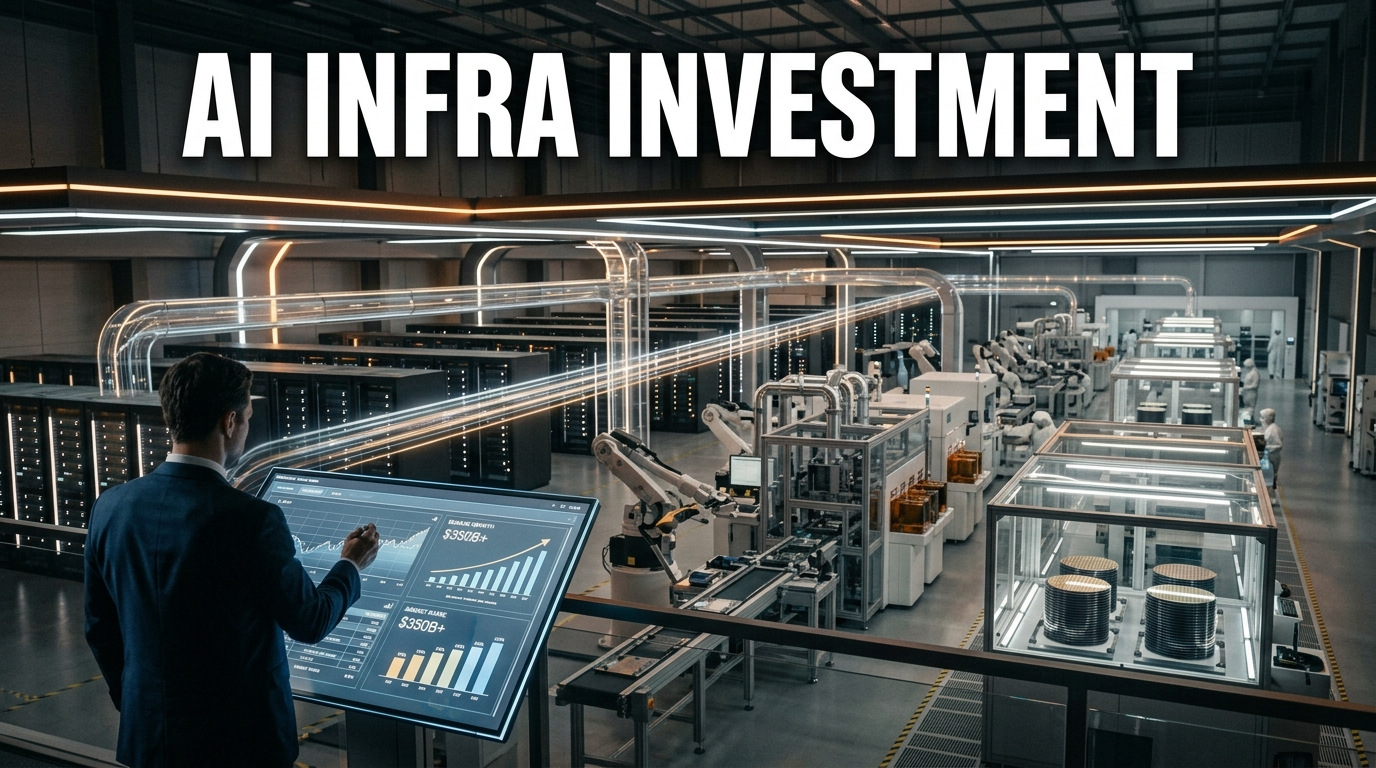
And this change immediately extends to AI infrastructure investment, memory semiconductor demand, data center power grids, optical communication equipment, and even the global economic outlook.
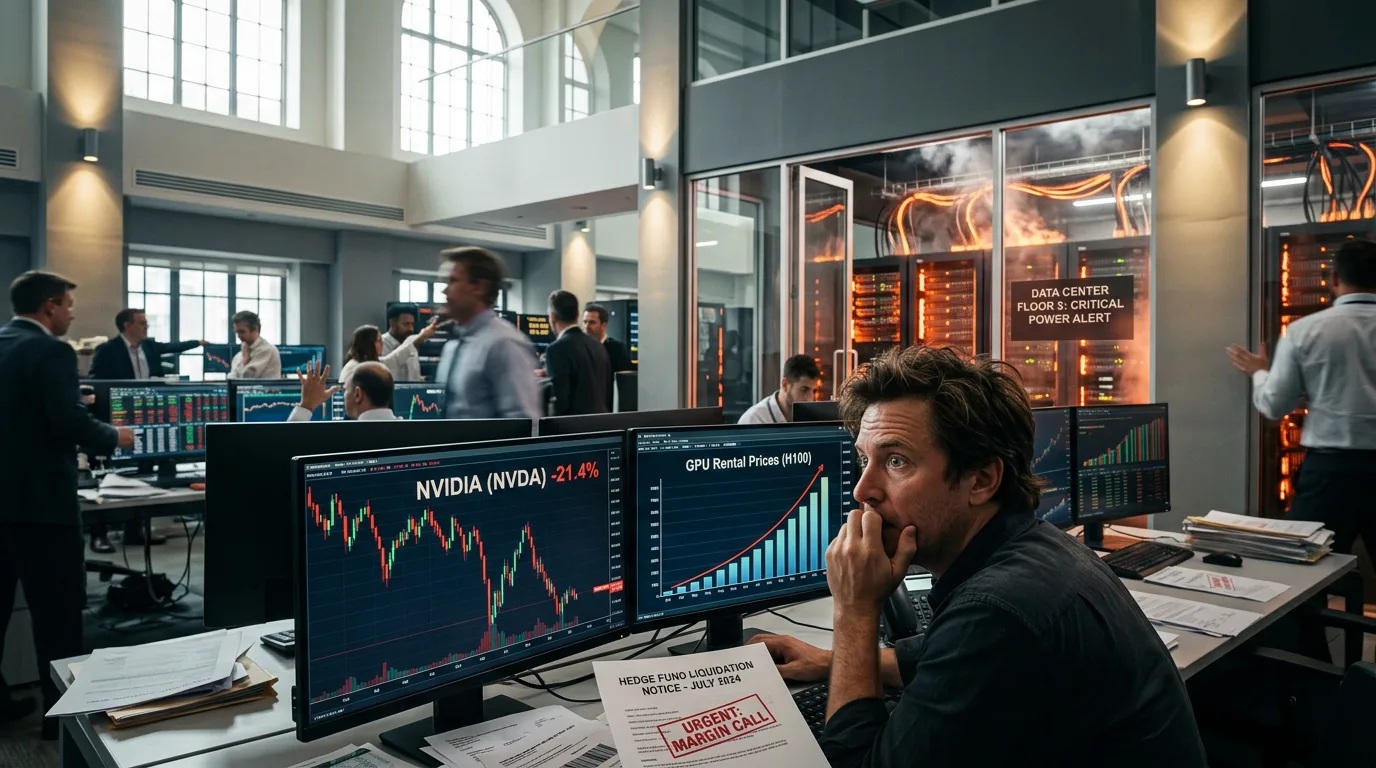
In simple terms, the market is no longer asking whether “AI can make money,” but has started asking whether there is enough computing power and memory to run AI.
1. Macro environment: rising oil prices, inflation, and interest rate pressure are weighing on the market again
The first variable highlighted in the original text is oil.
Brent crude was mentioned as having risen to around $99, while WTI was around $94.
Goldman Sachs was introduced as projecting that international oil prices could reach $120 if transportation disruptions last longer.
- Brent crude: around $99
- WTI: around $94
- Upper oil-price outlook: possible $120
- Practical resistance level: burden increases around $100
The reason oil matters is simple.
Oil is a core input to inflation, directly affecting logistics costs, production costs, and consumer prices.
When oil rises, inflationary pressure increases, and if inflation heats up again, the Fed has no choice but to be cautious about rate cuts.
The original text mentions that the U.S. 10-year Treasury yield began moving above 4.8%.
This range is quite burdensome for the stock market, especially for growth and technology stocks.
If it moves closer to 5%, valuation pressure on equities could become even stronger.
In short, the current interest rate outlook is not favorable for the stock market.
Even so, the key takeaway of this article is that AI infrastructure stocks are still rising.
2. Why is the Nasdaq under pressure while AI infrastructure stocks hold up?
Normally, when interest rates rise, Nasdaq technology stocks struggle.
Growth stocks, whose future earnings are valued more heavily, are especially vulnerable to a higher discount rate.
Yet the original text explains that while the Nasdaq is wobbling, semiconductor indexes and AI infrastructure-related names are rebounding.
The reason is one thing.
The market has started confirming AI demand in actual numbers again.
AI is increasingly seen not as a simple theme, but as a structural demand source that requires more GPUs, more memory, more power, and more optical networks.
The Philadelphia Semiconductor Index was mentioned as approaching the 12,000 level again.
This 12,000 level is a technically important support and resistance zone.
If it cannot break through immediately, it may move sideways, but if AI-related companies deliver strong guidance in the next earnings season, the chance of retesting prior highs increases.
3. The message GPT-6 Astra sent to the market: AI has come close to a stage where AI improves AI
The original text explains that market sentiment shifted after GPT-6 Astra was released.
In particular, Jensen Huang’s comment that Astra was trained on more than 100,000 Grace Blackwell chips is treated as important.
- Existing large-model training scale: about 20,000 to 30,000 GPUs
- Astra training scale: about 100,000 Grace Blackwell chips
- Expected next-model training scale: about 400,000 GPUs
This matters because it shows that AI performance gains are not just a matter of algorithms.
To achieve larger models, longer context, and greater autonomy, overwhelming computing infrastructure is ultimately required.
The original text mentions that the next model could be trained on the scale of 400,000 GPUs.
If four times more computing power is deployed than now, expectations arise that performance at the GPT-6.5 or GPT-7 level could become possible.
The important thing here is that the AI development cycle is getting shorter and shorter.
Once AI moves beyond helping with coding and begins participating in the research process itself, the pace of AI progress can become far faster than people expect.
4. AI model performance comparison: gaps among Astra, Claude, and Gemini also affect stock prices
The original text also mentions scores for major AI models.
- GPT-6 Astra: 53 points
- Claude Fable 5.1: 53 points
- Meta Muse Spark: 48 points
- China’s GLM: 45 points
- Grok: 44 points
- Gemini: 41.5 points
What stands out here is the assessment of Gemini.
The original text identifies Gemini’s relative underperformance as one reason Google’s stock has not risen strongly.
Of course, Google is a company with powerful assets such as Search, YouTube, Cloud, and TPU.
But if it fails to meet market expectations in AI model competition, even a big tech company can struggle to command a premium.
By contrast, companies like OpenAI, Anthropic, and Meta, whose model performance is improving rapidly, can gain greater influence within the AI ecosystem.
This ultimately connects to cloud demand, GPU demand, and memory demand.
5. The most important change: AI agents are now working longer
The real core point in the Astra-related section is not that “it answers well.”
The important part is that it has gotten better at completing longer tasks without human intervention.
In the past, AI agents often worked for a few minutes and then failed, lost context, or stopped by saying “I can’t do this.”
But the original text explains that this model can sustain work for much longer and complete more complex tasks more effectively.
For companies, this difference is enormous.
If AI can only handle five-minute tasks, it is just an assistive tool.
But if it can reliably handle work on the scale of one hour, three hours, or a full day, it becomes a system that can replace or extend actual employee work.
This is the starting point of the agentic AI market.
The original text also says that only about 1% of the global population is currently using proper agentic AI.
In other words, the market is still at an early stage.
6. Memory determines AI performance: why NAND, SSD, and HBM demand are increasing
The most important technical point in the original text is memory.
The explanation is that improving AI performance is not just about GPUs; working memory and long-context retention are becoming critically important.
It is mentioned that Astra-series models add a Notes feature.
This feature can be understood as a way for AI not to simply delete context, but to compress important information and retain it longer.
In other words, for AI to work like a human, it must continuously retain past conversations, prior task states, goals, error records, and key context.
To make that possible, more storage and faster memory bandwidth are needed.
- Increasing NAND demand
- Increasing SSD demand
- Increasing HBM demand
- Greater need for high-bandwidth memory
- Expanding working-memory capacity inside AI servers
The original text also mentions that the ARC-AGI benchmark has reached nearly 99%.
As background for that, it cites the ability to maintain long conversations and prior states, meaning improvements in memory architecture.
This is extremely important when evaluating the memory semiconductor cycle.
As AI gets smarter, the amount of information it must remember increases explosively, not just the amount it computes.
That is why memory semiconductors are likely to remain one of the bottleneck areas in AI infrastructure.
7. Why OpenAI employees use 350 million won worth of AI per person per year
The most shocking number in the original text is the token cost for OpenAI’s top 10% researchers.
It is mentioned that they incur about $7,000 in AI usage costs per day.
- Daily AI usage cost: about $7,000
- Won conversion: roughly 10 million won per day
- Monthly cost: about 30 million won
- Annual cost: about 350 million to 360 million won
This is not merely a story about an expensive subscription.
It means OpenAI researchers are using AI computing resources worth the equivalent of their own annual salaries.
By contrast, the average AI usage cost for ordinary companies is mentioned as about $10 per person per month.
Put simply, most companies are still only paying around the level of a ChatGPT subscription.
This gap is highly likely to become a gap in corporate productivity going forward.
The difference between companies that view AI as a cost and companies that use AI as a productivity lever worth tens of millions of won per employee will only widen over time.
8. A 120-fold increase in OpenAI internal productivity: researchers are no longer researching, AI is researching
The original text explains that OpenAI’s internal research output increased 120-fold over roughly eight months from December 2025 to August 2026.
This is an extremely bold claim.
But the reason the market reacts to it is clear.
It means AI is no longer just a tool that writes code, but is starting to participate in the entire research process: design, experimentation, analysis, revision, and iteration.
- May 2026: AI performs work at the level of 0.5 human researchers
- August 2026: AI performs work at the level of 3.14 human researchers
- Research output over 8 months: mentioned as a 120-fold increase
If this trend is true, the AI industry is entering a completely different phase.
That is because a feedback loop in which AI improves AI has begun.
This is the threshold of the AGI era described in the original text.
9. Market reaction ① neocloud: companies that rent out computing power benefit
When AI workloads increase, the first companies to profit are those that supply computing resources.
The original text mentions that neocloud companies rose sharply.
- CoreWeave: strength
- Nebius: strength
- Oracle: upward trend
These companies provide GPU clusters, cloud infrastructure, and data center capacity needed for AI training and inference.
If AI companies cannot meet demand using only their own data centers, the bargaining power of these neocloud companies grows.
Ultimately, increasing AI demand translates into higher revenue for cloud infrastructure companies.
This is the AI infrastructure investment logic the market is paying attention to again now.
10. Market reaction ② semiconductor stocks: the market that only watches Nvidia is over
The original text explains that AI semiconductor stocks broadly showed strength.
However, Nvidia was mentioned as being somewhat sluggish near its all-time high.
- NVIDIA: weak or stalled movement
- AMD: rising on expectations of expanding AI demand
- Intel: mentioned three 10% price increases this year, stock strength
- Qualcomm: benefiting from broader semiconductor demand
- Broadcom: expectations for AI networking and custom semiconductors
In particular, Intel’s price increases are interpreted as a sign of supply shortage.
If a semiconductor company can raise prices several times a year, it means demand is stronger than supply.
Now the AI semiconductor market can no longer be explained by Nvidia alone.
GPU, ASIC, CPU, network chips, memory, and storage are all moving together across the value chain.
11. Market reaction ③ optical communications: the hidden bottleneck in AI data centers
The original text mentions Corning’s contract for more than 8,000 miles of optical fiber.
This news positively affected optical communication equipment and component companies.
- Corning: benefit from optical fiber contract
- Lumentum: strong as a representative optical communication stock
- Coherent: benefit from optical communication components
- Ciena: benefit from network equipment
AI data centers exchange massive amounts of data internally and also have to process enormous traffic between data centers.
That is why optical communications is one of the key bottlenecks in AI infrastructure.
Many investors only look at GPUs, but the real bottleneck can emerge in the network.
As AI models get larger, the amount of data exchanged between servers explodes.
The original text also suggests that the optical communications sector could shine even more in 2027.
This is something worth continuing to monitor from a long-term AI infrastructure investment perspective.
12. Market reaction ④ power grids and cooling: the real-world limits of AI data centers
AI data centers use enormous amounts of electricity.
As a result, power grids, generation, cooling, and power module companies are also grouped among AI infrastructure beneficiaries.
- Bloom Energy: expected S&P 500 inclusion and benefit from power demand
- GE Vernova-related power infrastructure: expected grid investment
- Vertiv: benefit from cooling solutions and power modules
- NuScale Power: expectations for small modular reactors
- Oklo: long-term SMR optimism
However, the original text also takes a cautious view on SMR companies.
Small modular reactors are promising in the long run, but broad commercialization is closer to the 2030s.
For now, the areas more clearly tied to revenue and profit are power infrastructure, cooling, memory, and optical communications.
13. Memory semiconductors: if inventory is only 10 days, pricing power belongs to suppliers
The original text mentions news that memory inventory was down to only about 10 days.
Because of this, Seagate and SK hynix ADR reportedly showed strong movement.
- Seagate: expectations for storage demand
- SK hynix ADR: expectations for memory shortage
- NAND and SSD: benefit from the spread of AI agents
- HBM: key memory for AI training and inference
For AI agents to work properly, they must store past task states, load them, analyze them, and execute again.
Through this process, storage and memory demand keeps increasing.
In other words, the more AI works like a human, the more important the memory value chain becomes among semiconductor stocks.
14. Why software stocks are wobbling: AI agents are starting to move across apps directly
The original text also points out that when hardware is strong, software stocks tend to be weak.
Recently, AI infrastructure-related stocks have been strong, while traditional software companies have often come under pressure.
Companies such as Salesforce, ServiceNow, and Adobe are mentioned as examples.
The reason is that if AI agents can move across apps and handle tasks, the way existing SaaS is used may change.
For example, instead of the user entering a CRM system and typing data directly, an AI agent can connect emails, meeting notes, customer data, and quotes to process everything automatically.
The same applies to Adobe.
Many users are already moving parts of image, video, and design work to generative AI.
Software companies that integrate AI well may survive, but once AI itself becomes the interface, the existing subscription model can come under pressure.
15. Valuation: the S&P 500 looks expensive, but AI companies’ earnings growth is different
The original text explains that the S&P 500’s forward 12-month P/E has fallen into the low 20s.
The reason valuations have not risen much despite strong corporate earnings is interest rates.
In particular, IT companies were said to have an earnings surprise rate of 95%.
That means almost all IT companies beat Wall Street expectations.
Even so, the proportion of companies whose stock fell after earnings was said to be close to 60%.
- IT earnings surprise rate: about 95%
- Post-earnings decline rate: about 60%
- AI-related company EPS growth: mentioned at roughly 50% to 100% annually
This may be because market expectations were already high, or because rising rates made it harder for growth stocks to be awarded a premium.
But if AI-related companies continue to grow earnings at the 50% to 100% level in the next quarter and the one after that, the market’s view could shift again.
At that point, they are likely to be seen not as a “one-time earnings increase,” but as a “structural profit growth driven by AI.”
16. The most important point other news does not explain well
First, AI cost is not a cost but a productivity weapon.
Ordinary companies use AI at about $10 per employee per month, while OpenAI’s top researchers use about 350 million won worth of AI per year.
This is not just a cost difference; it is the starting point of a productivity gap between companies.
Second, the key to improving AI model performance is not just GPUs but memory.
AI has to remember in order to handle long tasks.
To remember, it needs NAND, SSD, HBM, and high-bandwidth memory.
That is why memory semiconductors are likely to become an even more important pillar of future AI infrastructure investment.
Third, AI adoption by software companies may not be an unconditional positive.
If AI agents directly operate software and move across multiple apps, the user touchpoint of existing SaaS can weaken.
The view emerges that companies supplying AI infrastructure may benefit more clearly than companies merely adding AI.
Fourth, the core of the AI bubble debate is usage, not stock prices.
If AI genuinely reduces work time, improves research productivity, and is valuable enough to justify internal corporate costs, then the bubble argument weakens.
Ultimately, what must be checked is the revenue, earnings, orders, and guidance of AI-related companies.
Fifth, bottlenecks are the investment point.
GPU, memory, optical communications, power grids, cooling, and data centers are all bottlenecks in AI expansion.
Companies that control bottlenecks are likely to secure pricing power and profitability.
17. Investment takeaway: focus on companies that use AI well and companies that sell AI infrastructure
The conclusion in the original text is quite clear.
Going forward, individuals and companies that use AI well are likely to gain a larger productivity edge.
At the same time, from an investment perspective, companies supplying the infrastructure needed to adopt AI may be easier to select than companies simply adopting AI.
There are too many companies using AI well, and it is difficult to choose which ones will be the real winners.
By contrast, AI infrastructure bottleneck companies are relatively clear.
- GPUs and AI accelerators
- Memory centered on HBM and NAND
- AI servers and data centers
- Optical communication networks
- Power grids and cooling infrastructure
- Neocloud and cloud computing
The view that the AI trend is still in its early stage is also important.
The agentic AI market is just beginning, and the physical AI and robot AI markets have not yet fully materialized.
Therefore, while short-term interest rate pressure certainly exists, the medium- to long-term AI infrastructure investment cycle is likely to continue.
< Summary >
Rising oil prices and inflationary pressure are weighing on the stock market outlook through interest rates.
Even so, AI infrastructure-related stocks are showing strength on expectations of actual demand growth.
GPT-6 Astra showed the potential of agentic AI that can handle longer tasks, and this is a factor that greatly increases demand not only for GPUs but also for memory semiconductors.
Top OpenAI researchers are using about 350 million won worth of AI per person per year, showing that differences in AI usage can lead to differences in corporate productivity.
The clearest AI benefits are likely to appear not in software, but in bottleneck infrastructure companies such as GPUs, memory, optical communications, power grids, cooling, and data centers.
[Related Articles…]
- AI Infrastructure Investment Cycle and Semiconductor Market Outlook
- Memory Semiconductor Supercycle and Data Center Demand Analysis
*Source: [ 월텍남 – 월스트리트 테크남 ]
– 오픈 AI직원이 1인당 35억치 AI쓰는 이유