● Tesla-Buy-Now, FSD-Robotaxi-Starlink-Surge
Why did CNBC say “Tesla is a buy now”? The key is not Optimus, but FSD, robotaxi, and Starlink metrics
The key point in this issue is not simply that Tesla’s stock rose from $358.
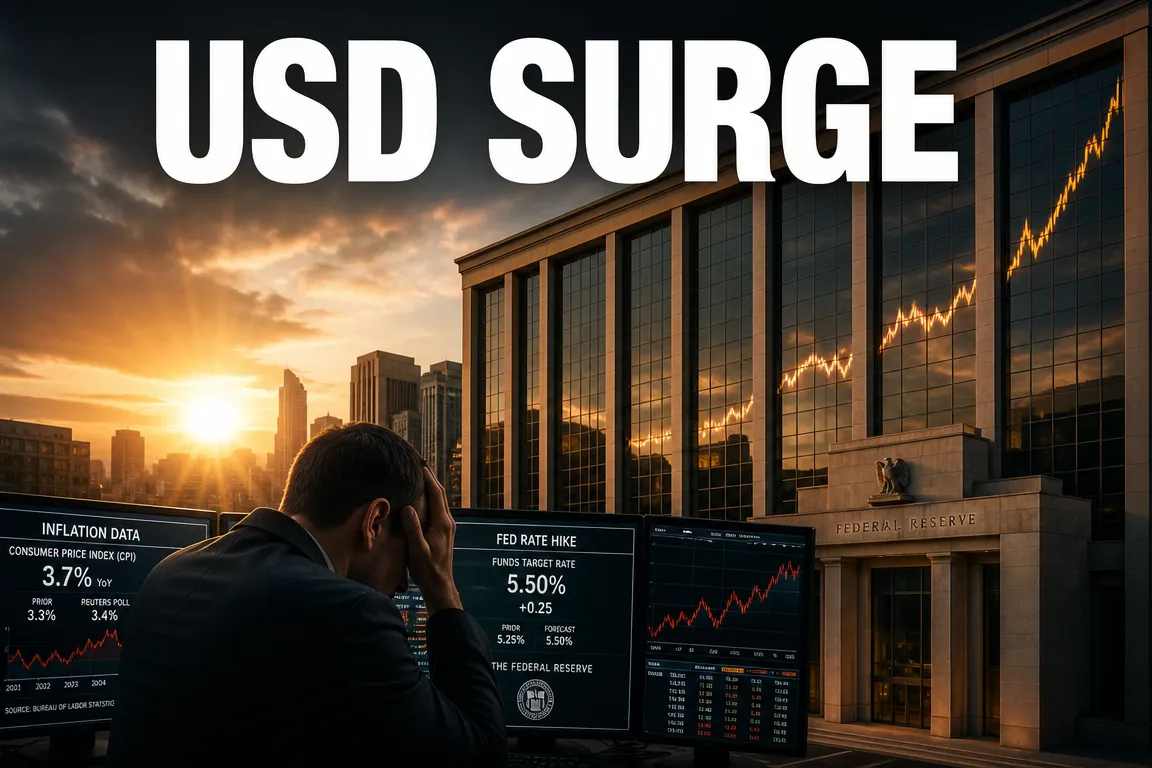
What matters is that Tesla and SpaceX both strengthened on a day when the Federal Reserve’s rate hike rattled the Nasdaq and the Dow.
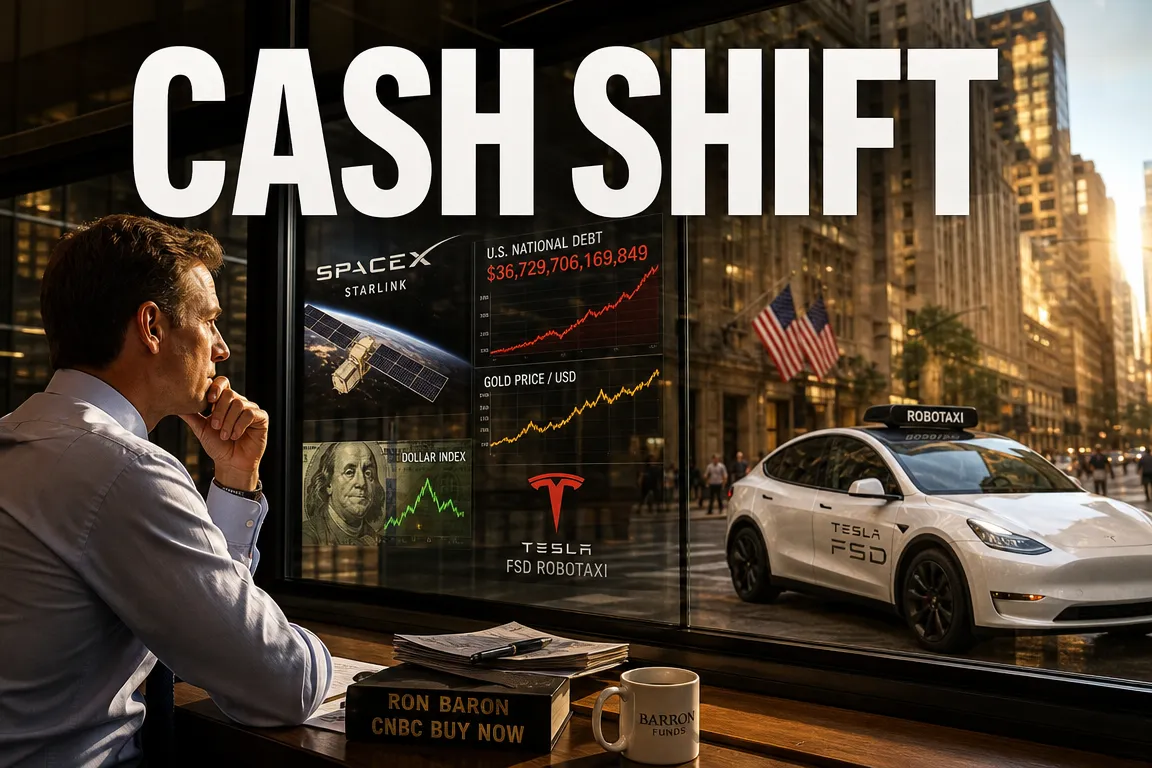
Market attention then shifted back to Tesla after Ron Baron, a long-time investor in Elon Musk, appeared on CNBC and said Tesla was “a buy now.”
What is more notable is that Baron said little about Optimus, the robot often cited as Tesla’s long-term growth story.
Instead, he focused on businesses already supported by measurable data, including FSD subscriber growth, robotaxi expansion, and Starlink’s growth potential.
This report connects Tesla stock, overseas equity investing, the EV market, autonomous driving, and interest-rate trends in one framework.
1. Market backdrop: Why did Tesla and SpaceX rise despite the Fed’s rate hike?
In the original report, Tesla was cited at $358.08, up 0.42%.
SpaceX was cited at $150.88, up 5.15%.
The broader market tone was weak on the same day.
The Fed raised the policy rate by 25 bps to a range of 3.75% to 4.00%, described as the first increase in roughly three years since 2023.
Markets initially reacted as if the move had been priced in and uncertainty had been removed.
However, the tone changed after the press conference raised the possibility of further hikes.
The S&P 500 fell 0.44%, the Nasdaq fell 0.01%, and the Dow fell 1.21%.
In this environment, growth and technology stocks typically face pressure.
Tesla, as a high-growth name, is particularly sensitive to rising-rate valuation pressure.
That Tesla and SpaceX still advanced suggests the move was driven by company-specific momentum rather than macro conditions alone.
2. Ron Baron’s CNBC message: “Tesla stock is a buy now”
Ron Baron was the central figure in the CNBC interview.
Baron, head of Baron Capital, is known as a long-term growth investor.
The report states that he holds approximately $25 billion in SpaceX, about $5 billion in Tesla, and roughly $30 billion in combined Musk-related equity exposure.
He first met Elon Musk in 2010 and has invested in Tesla since 2014 and SpaceX since 2017.
Because of this background, he is widely viewed on Wall Street as a key long-term supporter of Musk.
His main message was clear: Tesla stock is worth buying now.
His rationale was not limited to EV sales.
The main driver was the expansion potential of FSD, Tesla’s Full Self-Driving software.
3. The core growth driver Baron sees at Tesla is FSD
Baron believes Tesla’s FSD is moving toward broader adoption.
He said roughly 1.4 million people are currently using FSD.
The report notes that Tesla’s second-quarter results showed about 1.48 million active FSD subscribers, up 56% year over year.
This matters because Tesla’s business model is shifting from a pure automaker to a software-based recurring revenue platform.
In the EV market, vehicle margins can fluctuate.
By contrast, FSD subscriptions can generate revenue after the vehicle sale.
The structure is similar to Apple’s model, where the iPhone is followed by App Store and services revenue.
That is why Baron sees long-term upside in Tesla stock.
His view is that Tesla is no longer just a company selling Model 3 and Model Y vehicles, but a platform building autonomous software across millions of cars.
4. Robotaxi: still early, but now supported by operating data
Another area Baron emphasized is robotaxi.
The report states that Tesla robotaxi services are operating without supervision in six cities and have not produced any major accidents so far.
The key point is that robotaxi is moving from a theoretical future business to one that is accumulating operational data.
For Tesla investors, the next earnings report should be judged on more than delivery volumes.
Investors should watch whether the number of robotaxi operating cities increases.
They should also track cumulative miles driven.
Accident rates and intervention rates are also important.
Cybercab deployment is another key checkpoint.
If these indicators improve quickly, Tesla may no longer be valued solely as an EV manufacturer.
5. Tesla EV market share: the speed of competitors matters more than sales volume
Baron argued that Tesla’s EV market share is rising again.
According to the report, Tesla’s share of the U.S. EV market reached 52% year to date through August, up from 43% last year.
At the same time, Tesla’s own sales were said to have declined 16%.
At first glance, this seems inconsistent.
The implication is that competitors are weakening even faster.
In a slowing EV market, legacy automakers are facing margin pressure, battery-cost constraints, charging-infrastructure challenges, and limited software capabilities.
Tesla, by contrast, has a cost structure that can absorb price cuts, plus its charging network, FSD software, and brand loyalty.
In this setting, the leading company can strengthen its relative position even if the overall market is weak.
6. In the CNBC interview, SpaceX and Starlink were emphasized even more than Tesla
Baron was even more forceful on SpaceX than on Tesla.
Within SpaceX, the main focus was Starlink.
Baron said Starlink alone could reach annual revenue of $1 trillion within 10 years.
He also said that, applying an appropriate multiple, SpaceX could reach a valuation of $14 trillion to $15 trillion.
That is a highly aggressive outlook relative to the market’s current assessment of SpaceX.
His logic is based on declining launch costs.
The report says that in 2010, sending 1 kg into space cost about $19,000.
Under the Falcon 9 era, that cost fell to about $2,700.
With Starship and Super Heavy, the cost could fall to about $1,500 per kg.
In the longer term, next-generation rockets could reduce the cost to about $100 to $150 per kg.
Lower launch costs do not just mean cheaper rockets.
They allow more satellites to be launched more frequently and at lower cost.
As a result, Starlink coverage can expand, service quality can improve, and the subscriber base can grow faster.
7. Starlink from 15 million to 300 million users? Baron’s framework
The report says Starlink currently has about 15 million subscribers.
Baron believes this figure could rise to 300 million within 10 years.
He expects 30% to 35% of revenue to come from consumers, with the remainder coming from government, enterprise, and telecom segments.
This is an important point.
Starlink is not only a consumer internet service for remote areas or maritime users.
It also has potential across military communications, in-flight internet, maritime communications, emergency networks, telecom backhaul, and connectivity in developing markets.
In that sense, Starlink is targeting the global communications infrastructure market directly.
From this perspective, SpaceX is not only a space company but also a communications company, an infrastructure company, and ultimately a network company.
8. Tesla and SpaceX merger speculation: why Baron was cautious
CNBC also asked whether SpaceX could acquire Tesla or whether the two companies might merge.
Baron did not rule it out explicitly.
He instead said that if Musk decides something is better, he would support it.
This response revived merger speculation in the market.
The report notes that on Polymarket, the probability of a merger announcement by the end of December 2027 was priced at 66%.
Prediction-market probabilities do not necessarily reflect actual likelihoods.
Still, it shows that investors are paying close attention to the issue.
If a merger were to happen, Tesla shareholders would be exposed not only to EVs but also to the broader ecosystem of space, communications, AI, robotics, and autonomy.
On the other hand, if the structure were unfavorable to shareholders, dilution and valuation concerns could arise.
That may be why Baron avoided making a definitive statement.
9. The most important omission: why Optimus was left out
The most meaningful silence in the interview was about Optimus.
Optimus is a core part of Tesla’s long-term story.
Yet Baron barely mentioned it on CNBC.
That does not mean Optimus is unimportant.
Rather, it shows which arguments Baron is using to persuade the market now.
FSD has subscriber numbers.
Robotaxi has operating cities and miles driven.
Starlink has subscriber growth and launch-cost data.
By contrast, Optimus does not yet have regularly disclosed revenue, shipments, customers, margins, or production volumes.
In other words, Baron chose measurable future growth over speculative future potential.
That is the key takeaway from the interview.
Most coverage focused on the headline that Baron said Tesla should be bought.
But the more important issue is why he chose FSD, robotaxi, and Starlink instead of Optimus.
He emphasized data that investors can explain today, meaning growth curves that can already be verified.
10. What Tesla holders at $358 should monitor
If Tesla stock is around $358, investors should focus less on whether it is “cheap” or “expensive” and more on the following metrics.
First, whether active FSD subscriptions continue to rise.
Second, whether the FSD take-rate among new buyers is increasing.
Third, whether robotaxi operating cities and cumulative miles driven are expanding.
Fourth, whether Cybercab deployment and commercialization timelines become clearer.
Fifth, whether Tesla can maintain or increase its share of the U.S. EV market.
Sixth, whether SpaceX and Starlink valuation trends affect Tesla sentiment.
Seventh, whether interest-rate expectations and Nasdaq conditions continue to pressure growth multiples.
Tesla can no longer be understood as a pure auto company.
It is a complex growth asset priced across EV manufacturing, autonomous software, robotaxi networks, AI infrastructure, energy, robotics, and the Elon Musk ecosystem premium.
11. Investment interpretation: what Baron was actually saying
Baron’s message was not that Tesla will rise unconditionally.
More precisely, he appears to be saying that Tesla’s long-term growth is now entering a phase where it can be measured in numbers.
FSD subscriptions are increasing.
Robotaxi is generating real-world driving data.
Starlink is achieving scale economics through subscriber growth and lower launch costs.
Tesla’s EV share is strengthening as competitors weaken.
By contrast, Optimus and a Tesla-SpaceX merger remain unconfirmed.
Baron therefore avoided definitive claims on areas that cannot yet be measured and concentrated on growth engines that already have data.
That provides a practical signal for Tesla investors.
When evaluating Tesla, investors should not follow Musk’s vision alone; they should track when that vision begins to translate into numbers.
12. What to watch first in the next earnings release
In the next Tesla earnings report, the key items are not only revenue and EPS.
FSD subscriber growth is important.
FSD adoption rate is important.
Robotaxi operating metrics are important.
Cybercab deployment plans are important.
Recovery in EV market share is important.
Stability in automotive gross margin after price cuts is also worth monitoring.
Investors should also consider interest-rate trends and Nasdaq sentiment to assess Tesla’s stock direction more accurately.
Ultimately, Tesla’s next re-rating is more likely to come from the pace at which software and network revenue are added than from unit vehicle sales alone.
< Summary >
On CNBC, Ron Baron said Tesla is a buy now.
His rationale centered on FSD subscriber growth, robotaxi expansion, and EV market share recovery, not Optimus.
On SpaceX, he placed the strongest emphasis on Starlink’s growth potential and declining launch costs.
The omission of Optimus reflects not a lack of importance, but a lack of verified numbers such as revenue and shipments.
For Tesla holders at $358, the key metrics are FSD subscriptions, robotaxi driving data, Cybercab deployment, and EV market share, rather than the stock price itself.
Tesla investing is increasingly about whether the company can be revalued as an AI-driven software and platform business rather than only an EV manufacturer.
[Related Articles…]
Tesla Stock and Autonomous Driving Growth Strategy Analysis
AI Robotics Industry and Future Growth Stock Investment Trends
*Source: [ 오늘의 테슬라 뉴스 ]
– CNBC에서 테슬라 사라고 했는데, 정작 옵티머스 얘기는 쏙 뺐습니다 — $358 테슬라 주주는?
● Debt, Dollar, Gold Surge
Why Gold Is Rising in the Age of $40 Trillion U.S. Debt: The Real Driver Is Not Crisis, but the Decline in Money’s Value
The core issue in this article is not simply that “gold is going up.”
This report examines why gold price outlooks have regained relevance as U.S. debt exceeds $40 trillion, how the dollar and U.S. Treasury yields affect gold prices, and what investors should monitor amid war risk, political risk, and AI bubble debates.
Much of the news flow explains gold only as a war hedge. In practice, a more important variable exists.
That variable is whether the dollar can continue to function as a safe-haven currency and whether the U.S. government will dilute the value of money to manage its debt burden.
1. Three Key Variables Driving Gold Prices Today
Gold does not rise simply because markets are uneasy.
Gold tends to move strongly when three conditions align:
- U.S. Treasury yields
- The dollar’s value and the dollar index
- Geopolitical uncertainty and financial market stress
Gold is a non-yielding asset.
When U.S. Treasury yields are high, investors may prefer Treasuries because they provide income.
When Treasury yields decline, gold’s main disadvantage becomes less significant.
In that environment, gold has greater room to advance.
The second factor is the dollar.
Gold is typically priced in dollars.
A stronger dollar tends to suppress gold prices.
A weaker dollar can create upward pressure on gold.
The third factor is uncertainty.
War, financial instability, debt stress, and political disruption usually increase demand for safe assets.
However, safe assets include both the dollar and gold.
In periods of stress, markets decide which is more credible.
2. The Idea That War Automatically Raises Gold Prices Is Only Partly Correct
Many investors assume that war automatically pushes gold higher.
That is often true, but not always.
War can undermine confidence in the monetary system and sharply raise government spending.
However, even during conflict, gold may not rise as much as expected if the dollar strengthens.
If global investors still regard the dollar as the ultimate safe haven, capital may move into dollars rather than gold.
For this reason, gold outlooks should not rely on geopolitical risk alone.
War risk, dollar weakness, and lower U.S. Treasury yields should be assessed together.
When these three factors align, gold is more likely to move decisively higher.
If war risk rises but the dollar remains strong and Treasury yields stay elevated, gold’s upside may be limited.
3. Scenarios to Watch for Gold in the Second Half of 2026
The most discussed scenario for gold in the second half of 2026 is dollar weakness.
As U.S. debt burdens rise, fiscal deficits accumulate, and markets begin to price in dollar erosion, gold may attract renewed attention.
At the same time, geopolitical tensions may not continue rising indefinitely and could ease in part.
Events such as a U.S.-China summit, the U.S. midterm elections, and the APEC Summit could reduce market tension.
In that case, gold may struggle to find a strong near-term catalyst.
Ultimately, the gold outlook for the second half of 2026 should be assessed through the following combination:
- Are U.S. Treasury yields declining?
- Is the dollar index falling further?
- Is geopolitical uncertainty increasing again?
- Is concern about U.S. debt stress being reflected in prices?
- Are investors beginning to trust gold more than the dollar?
If this combination materializes, gold could enter a structural uptrend rather than a short-term rebound.
4. Why $40 Trillion in U.S. Debt Matters for Gold
U.S. national debt is widely described as having exceeded $40 trillion.
This matters not just because the amount is large.
The key issue is the interest burden required to sustain that debt.
U.S. annual interest costs are already discussed at more than $1 trillion.
Rollover pressure on roughly $10 trillion of debt is also frequently cited.
$1 trillion is roughly KRW 1,400 trillion.
That is far above the annual government budget of South Korea, and it represents interest expense alone for the United States.
As this burden persists, the U.S. government must issue more debt to service existing obligations.
The process of using new borrowing to repay old borrowing becomes recurring.
At that point, markets begin to ask:
Can the United States realistically manage this debt load?
As this question grows, confidence in the dollar may weaken.
And when confidence in the dollar weakens, gold may regain importance within safe-haven allocation.
5. The Real Meaning of Gold’s Rise Is the Decline in Money, Not Just the Strength of Gold
The most important concept here is debasement.
Debasement refers to the dilution of currency value.
When governments print more money, issue more debt, and expand borrowing, the purchasing power of existing currency declines.
Investors often misread this process.
They say gold has risen, stocks have risen, or real estate has risen.
Nominal prices are indeed rising.
But at a deeper level, the value of money is falling, making asset prices appear higher in relative terms.
In other words, gold is not necessarily becoming extraordinary as an asset.
Rather, confidence in paper money is weakening.
This effect becomes stronger during war or financial crisis.
When states print money to survive, currency weakens and investors seek assets that preserve value.
Historically, gold has been the asset to which people repeatedly return.
6. Why Gold Became the Basis of Currency
Gold is important not only because it is scarce and durable.
Historically, gold served as the foundation of money.
People once found it difficult to carry gold directly for transactions.
They deposited it with goldsmiths for safekeeping.
Goldsmiths issued receipts promising redemption of the deposited gold.
These receipts are known as goldsmith notes.
They are commonly described as the origin of modern paper money.
Paper money originally represented a claim on gold.
Over time, the link between gold and currency weakened, and modern money came to rely on sovereign trust.
When that trust is strong, paper money functions effectively.
When fiscal stress, war, debt concerns, or inflation risks rise, investors often turn back to gold.
7. Three Stages of Currency Decline in the 21st Century: Decline, Sharp Decline, and Erosion
In 21st century investing, one useful framework is to divide currency decline into three stages.
The terminology may be forceful, but it clearly explains the trend.
1) After the 2008 Global Financial Crisis: Currency “Decline”
After the 2008 global financial crisis, the Federal Reserve responded with large-scale quantitative easing.
The purpose was to prevent systemic collapse.
Zero rates, quantitative easing, and liquidity support followed.
The Fed’s balance sheet expanded to around $4.5 trillion.
The result was that the real economy and asset markets began moving at very different speeds.
The real economy grew gradually, while the Nasdaq rose more than 1,600% from its March 2009 low through 2025, as noted in the source material.
This divergence is difficult to explain through corporate growth alone.
It reflected the large-scale expansion of money and the flow of liquidity into capital markets.
There is an important distinction here.
Main Street refers to the real economy.
Wall Street refers to capital markets.
Even modest real economic growth can coexist with much larger gains in asset prices.
The driver is liquidity.
2) After the Pandemic and Financial Stress: Currency “Sharp Decline”
After 2008, each crisis reinforced expectations that central banks and governments would intervene.
When banks came under pressure or financial systems showed strain, markets expected money to be created to contain the damage.
Investors learned a new pattern:
“When a crisis arrives, money is ultimately printed.”
This expectation has supported asset prices.
At the same time, it has weakened long-term confidence in currency.
3) The Era of War and Security: Currency “Erosion”
War is the strongest policy justification.
Unlike financial crises, security threats do not end easily.
States increase defense spending, support allies, expand military capacity, and raise defense budgets.
That process requires more debt issuance and more fiscal spending.
If the United States continues to spend heavily on military support and maintaining strategic power, fiscal pressure will increase further.
In that case, currency decline is driven not only by economic management but also by national security logic.
This is the long-term backdrop for higher gold prices.
8. Why Holding Only Cash May Be Risky Today
In a system where money is structurally weakening, holding cash may appear safe, but it can be the riskier choice.
Even if the nominal account balance does not change, purchasing power may continue to erode.
For example, holding KRW 100 million in cash does not protect against higher inflation or rising asset prices.
What the money can buy may decline over time.
This is one of the most serious effects of an inflationary environment.
People may remain in place nominally while becoming poorer in real terms.
That is why asset allocation matters.
Investors should consider how to balance gold, equities, bonds, cash, dollars, real estate, and alternative assets.
The key is not concentration in a single asset, but a portfolio designed to withstand currency decline.
9. How the U.S. Midterm Elections and Trump-Related Risk Could Affect Gold
Political variables should not be ignored.
If political conflict rises after the U.S. midterm elections, markets may price in new uncertainty.
If Trump faces an unfavorable outcome in the midterms, issues such as lame-duck risk, Republican Party fragmentation, and impeachment risk may enter the market narrative.
In such a setting, leaders may also have incentives to emphasize external conflict or national security issues.
This is a scenario, not a forecast.
But markets respond to probabilities before they respond to certainty.
If political risk combines with geopolitical tension and dollar weakness, gold could react strongly.
Conversely, if the dollar remains the preferred safe haven despite political stress, gold’s gains may remain limited.
10. Why Central Bank Gold Buying Has Not Produced an Explosive Rally
Many reports continue to note that China and other countries are steadily buying gold.
Yet gold has not always surged in response.
The reason again lies in the three variables discussed above.
- If U.S. Treasury yields remain high, gold’s appeal is constrained.
- If the dollar index stays strong, gold prices may remain under pressure.
- If geopolitical stress eases, safe-haven demand may weaken.
Central bank purchases are an important support factor, but they do not fully explain gold’s price path.
Gold prices are ultimately the result of global liquidity, dollar credibility, U.S. debt, Treasury yields, and geopolitical risk.
11. The Connection Between the AI Bubble Debate and Gold
An interesting point in this discussion is the link between gold and the AI bubble debate.
Even in the AI era and the rise of stablecoins, one thing remains unchanged.
That is the issue of money’s value and trust.
AI growth can justify higher valuations in equity markets.
But in an environment of excessive liquidity, expectations for AI growth can be mixed with a broader liquidity bubble.
Investors should therefore distinguish between valuation driven by technological progress and valuation driven by currency erosion.
Failure to make that distinction can lead to underestimating risk near the top of a bubble.
Gold is not a high-growth asset like AI stocks.
Instead, it serves as a defensive asset when confidence in the system weakens.
That is why gold remains relevant even in the AI era.
Technology changes, but the human tendency to seek trusted stores of value during stress does not change easily.
12. The Most Important Point Often Missing from Media Coverage
The key point is that gold does not rise simply because of “crisis,” but because of the relative weakening of monetary trust, including trust in the dollar.
Most coverage explains gold through war, inflation, or rate cuts.
The deeper driver is more structural.
As U.S. debt rises, the United States moves closer to three choices:
- Raise taxes significantly.
- Reduce spending significantly.
- Gradually dilute the value of money.
The first two options are politically difficult.
Markets therefore focus on the third.
In practice, this means preserving nominal debt while reducing its real burden through inflation and liquidity expansion.
As that occurs, currency value weakens, and real assets such as gold can be repriced higher.
From this perspective, gold is not merely a war hedge.
Gold is closer to long-term insurance against U.S. fiscal stress and dollar credibility risk.
13. Indicators Investors Should Monitor for Gold Outlooks
If you are considering gold or broader safe-haven exposure, the following indicators deserve attention:
- U.S. 10-year Treasury yield: Lower yields are generally supportive for gold.
- Dollar index: A weaker dollar can support higher gold prices.
- U.S. fiscal deficit: Larger deficits increase debt stress concerns.
- U.S. Treasury issuance: Greater supply can affect yields and confidence in the dollar.
- Geopolitical risk: War, U.S.-China tensions, and Middle East risks can support gold demand.
- Central bank gold buying: This can provide a long-term demand floor.
- Global liquidity: Expanding liquidity tends to support asset prices broadly.
Monitoring only one of these variables is risky.
For gold outlooks in particular, U.S. Treasury yields and the dollar should be assessed together.
14. Gold Investment Strategy: Treat It as Insurance, Not an All-In Trade
Gold is better viewed as an insurance asset than as an aggressive return-seeking asset.
Therefore, the right question is not “How much can it make?” but “What does it hedge?”
Gold can help protect against dollar weakness, financial shocks, geopolitical stress, and a renewed inflation cycle.
However, it does not pay dividends or interest.
When U.S. Treasury yields are high, gold may trade without much momentum.
For that reason, a portfolio allocation approach is more realistic.
Investors should consider gold alongside cash, dollars, bonds, and equities when building a diversified allocation.
If you are concerned about dollar weakness and possible U.S. debt stress, a measured gold allocation may be appropriate.
On the other hand, if U.S. Treasury yields remain high and the dollar stays strong, an excessive gold position may be difficult to justify.
15. Conclusion: Gold’s Direction Depends on How the United States Manages Money
Short-term price charts alone do not capture the main issue in gold.
The real variables are U.S. debt, the dollar, Treasury yields, global liquidity, and geopolitical risk.
In an era where U.S. debt exceeds $40 trillion, questions about money’s value will become more frequent.
As debt rises, interest costs increase, and war-related spending expands, markets will re-evaluate trust in the monetary system.
In that process, gold may be re-rated not simply as a commodity, but as insurance against systemic risk.
For gold to rise meaningfully, dollar weakness, lower Treasury yields, and higher uncertainty must align.
Going forward, the key question is not whether war will occur, but whether the dollar remains credible.
When the market’s answer to that question changes, gold’s direction can change significantly as well.
< Summary >
Gold is drawing attention in the era of $40 trillion U.S. debt not merely because of war risk.
The core issue is dollar weakness and declining confidence in money.
Gold has the strongest upside when lower U.S. Treasury yields, a weaker dollar index, and rising geopolitical uncertainty occur together.
Since 2008, quantitative easing and global liquidity expansion have lifted asset prices faster than the real economy.
War and security spending increase fiscal pressure and may further weaken money over the long term.
Investors should view gold not as a short-term return asset, but as insurance against dollar credibility risk and debt stress.
Holding only cash may appear safe, but if inflation and currency erosion continue, purchasing power can decline steadily.
[Related Articles…]
*Source: [ 경제 읽어주는 남자(김광석TV) ]
– 미국 부채 40조 달러… 금값이 오르는 진짜 이유는 따로 있습니다 | 김광석의 북리뷰 | 이효석의 21세기 투자법 [2편]