Okay, here's the translation of your in-depth analysis of the Korean economy, with all Korean text converted to English, and maintaining the original formatting:
1. Collapse of Trust in the Korean Economy
a. Weakening of Trust Between Government, Corporations, and Citizens
- In the past, the government, corporations, and citizens functioned like a single organic system, achieving economic growth.
- Currently, a noticeable weakening of trust is evident: conflicts between political factions, gaps between large and small businesses, and confrontation between the middle class and small business owners.
b. Deepening Social Division
- Although Korea has a strong collectivist culture, it has now transformed into 'divided collectivism.'
- Society is fractured along specific classes, regions, and political orientations, creating a structure that strongly discourages cooperation between these divided groups.
c. Lack of Trust Hinders Economic Growth
- The lack of social cohesion is decreasing economic performance and productivity.
- If a national crisis like the IMF foreign exchange crisis were to occur again, it is doubtful whether the country could unite and overcome it as it did in the past.
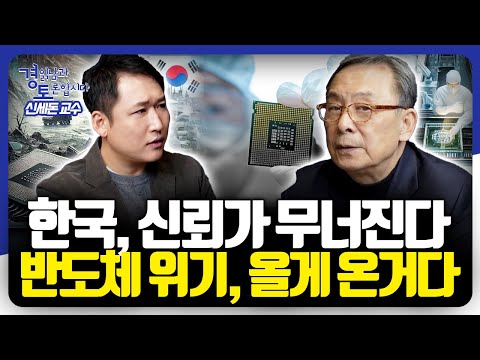
2. Current State and Future of the Semiconductor Industry
a. Crisis of Samsung and SK
- Decline in major semiconductor market share: especially a significant drop in the foundry (contract semiconductor manufacturing) market share.
- Intensified competition due to the U.S.'s strategy of domestic production and China's strong pursuit.
b. Inevitability of Industrial Change
- Technology-based industries like semiconductors inevitably experience periods of stagnation and intensified competition.
- Historical cases of global companies like Intel, IBM, and US Steel, which failed to keep up with market trends and declined, exist.
c. Need to Discover New Growth Engines
- Beyond relying solely on new technologies like semiconductors and AI, innovative opportunities must be sought in traditional industries.
- Example: A high-end strategy combining advanced technology and design in traditional industries such as luxury furniture, clothing, and household goods.
3. Absence of Corporate Research Institutes and Think Tanks
a. Reduction of Corporate Research Institutes
- There is a trend of downsizing major corporate think tanks, such as Samsung Economic Research Institute, or converting them to in-house consulting.
- This will lead to deficiencies in exploring the future direction of companies in the long term and preparing for foreseeable risks.
b. Value of Think Tanks
- Research institutes should not be evaluated merely as costs but should be regarded as intellectual assets for companies and society as a whole.
- One of the reasons for Samsung's success in the semiconductor market for more than 20 years in the past was the long-term strategic exploration provided by research institutes.
4. Direction of the Korean Economy
a. Balance Between New Technology and Traditional Industries
- Rather than focusing only on new technology investments, innovation opportunities should be found in neglected traditional industries.
- Korea can pursue high added value by modernizing small craftsmanship or traditional industries, similar to Japan.
b. Leadership and Social Consensus
- Along with restoring trust, a national consensus that can share strong long-term goals is needed.
- Talent should be cultivated through long-term investments, such as in research institutes, and the country should not lose sight of its future direction.
- Crafted by Billy Yang
[Related Articles at NextLens.Net]
- Survival Strategies of the Korean Semiconductor Industry
- Correlation Between Social Trust and Economic Growth
*YouTube Source: [경제 읽어주는 남자(김광석TV)]
– ‘분절화’된 한국경제, 신뢰 붕괴, 싱크탱크 부재, 저성장 위기… 혁신 해법은 | 경읽남과 토론합시다 | 신세돈 교수 2편
[Korean Summary]
[경제 읽어주는 남자(김광석TV)]
“분절화’된 한국경제, 신뢰 붕괴, 싱크탱크 부재, 저성장 위기… 혁신 해법은 | 경읽남과 토론합시다 | 신세돈 교수 2편“
1. 한국 경제의 신뢰 붕괴
가. 정부와 기업, 국민 간 신뢰의 약화
- 과거에는 정부, 기업, 국민이 하나의 유기적인 시스템처럼 작동하며 경제 성장을 이루었음.
- 현재는 신뢰가 약화되는 현상이 두드러짐: 정치권 간 갈등, 대기업과 중소기업 간 격차, 중산층과 소상공인 간 대립.
나. 사회적 분열 심화
- 한국은 집단주의가 강하지만, 현재는 '분열된 집단주의'로 변모.
- 특정 계층, 지역, 정치 성향에 따라 분열되고, 이러한 쪼개진 구조가 다른 집단들과 협력하지 않는 구조를 강하게 만듦.
다. 신뢰의 부재가 경제성장을 저해
- 사회적 결속력 부족이 경제성과와 생산성을 떨어뜨리고 있음.
- IMF 외환위기와 같은 국가적 위기가 다시 올 경우, 과거처럼 하나로 뭉쳐 극복할 수 있을지 의문.
2. 반도체 산업의 현재와 미래
가. 삼성과 SK의 위기
- 반도체 주요 시장 점유율 감소: 특히 파운드리(반도체 위탁 생산) 시장의 점유율이 크게 하락.
- 미국의 자체 생산화 전략과 중국의 강력한 추격 등으로 경쟁 환경 심화.
나. 산업 변화의 필연성
- 반도체와 같은 기술기반 산업은 필연적으로 정체기 및 경쟁 심화.
- 인텔, IBM, US 스틸 등 과거 글로벌 기업들도 시장 흐름을 제대로 따라가지 못해 쇠퇴한 사례.
다. 새로운 먹거리 발굴 필요
- 반도체, AI 등 신기술에만 의존하지 말고 전통 산업에서 혁신 기회를 찾아야 함.
- 예: 고급 가구, 의류, 생활용품 등 전통산업에 첨단 기술과 디자인을 접목한 고가 전략.
3. 기업 연구소와 싱크탱크의 부재
가. 기업 연구소의 축소
- 삼성경제연구소 등, 주요 기업 싱크탱크를 축소하거나 인하우스 컨설팅으로 전환하는 추세.
- 이는 장기적으로 기업의 미래 방향성을 탐구하고 예상 위험에 대비하는 데 부족점을 초래.
나. 싱크탱크의 가치
- 연구소가 단지 비용으로만 평가될 것이 아니라, 기업 및 사회 전체의 지적 자산으로 여겨져야 함.
- 과거 20년 이상 반도체 시장에서 삼성이 성공했던 배경 중 하나는 연구소가 제공한 장기적 전략 탐구 덕분.
4. 한국 경제의 방향성
가. 신기술과 전통산업의 균형
- 한쪽으로만 치우친 신기술 투자가 아니라, 소외된 전통산업에서도 혁신 기회를 찾아야 함.
- 일본처럼 작은 장인정신이나 전통산업을 현대화하여 고부가가치를 추구할 수 있음.
나. 리더십과 사회적 합의
- 신뢰 회복과 함께 강력하고 장기적인 목표를 공유할 수 있는 국가적 합의가 필요.
- 연구소와 같은 장기적 투자를 통해 인재를 양성하고, 미래 방향성을 잃지 않아야 할 것.
- Crafted by Billy Yang
[관련글 at NextLens.Net]
- 한국 반도체 산업의 생존 전략
- 사회적 신뢰와 경제 성장의 상관관계
*유튜브 출처: [경제 읽어주는 남자(김광석TV)]
- '분절화'된 한국경제, 신뢰 붕괴, 싱크탱크 부재, 저성장 위기… 혁신 해법은 | 경읽남과 토론합시다 | 신세돈 교수 2편