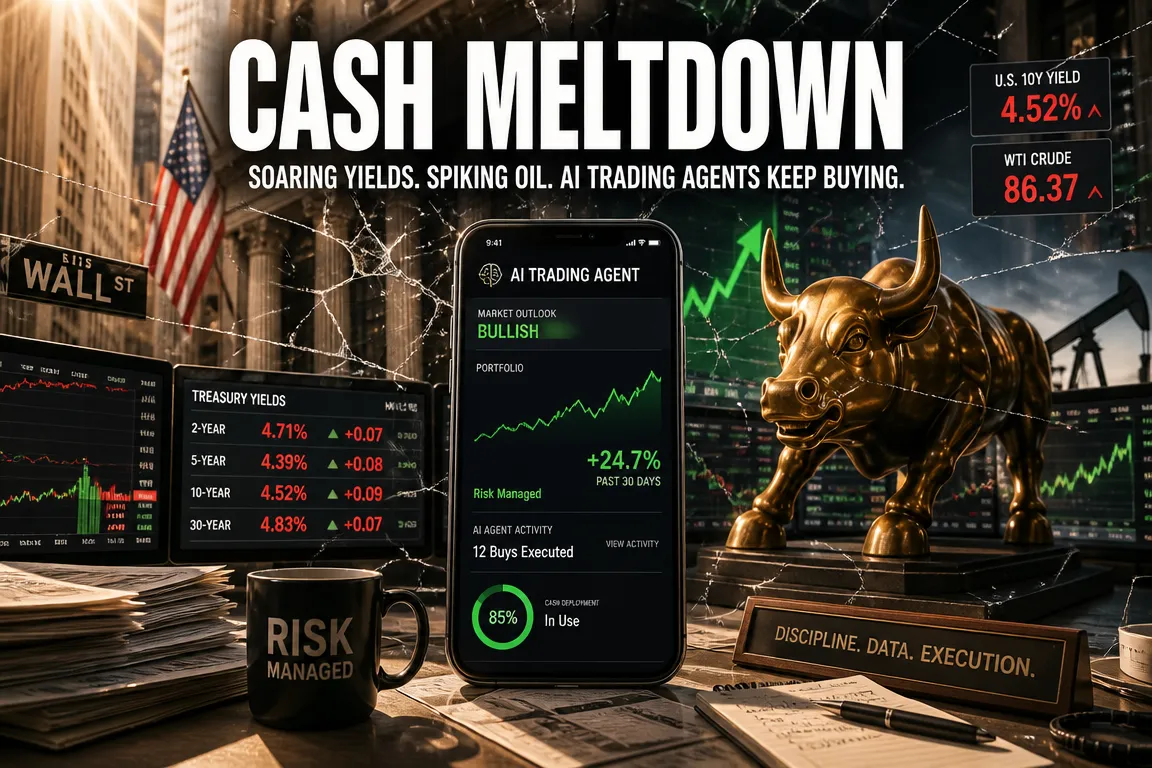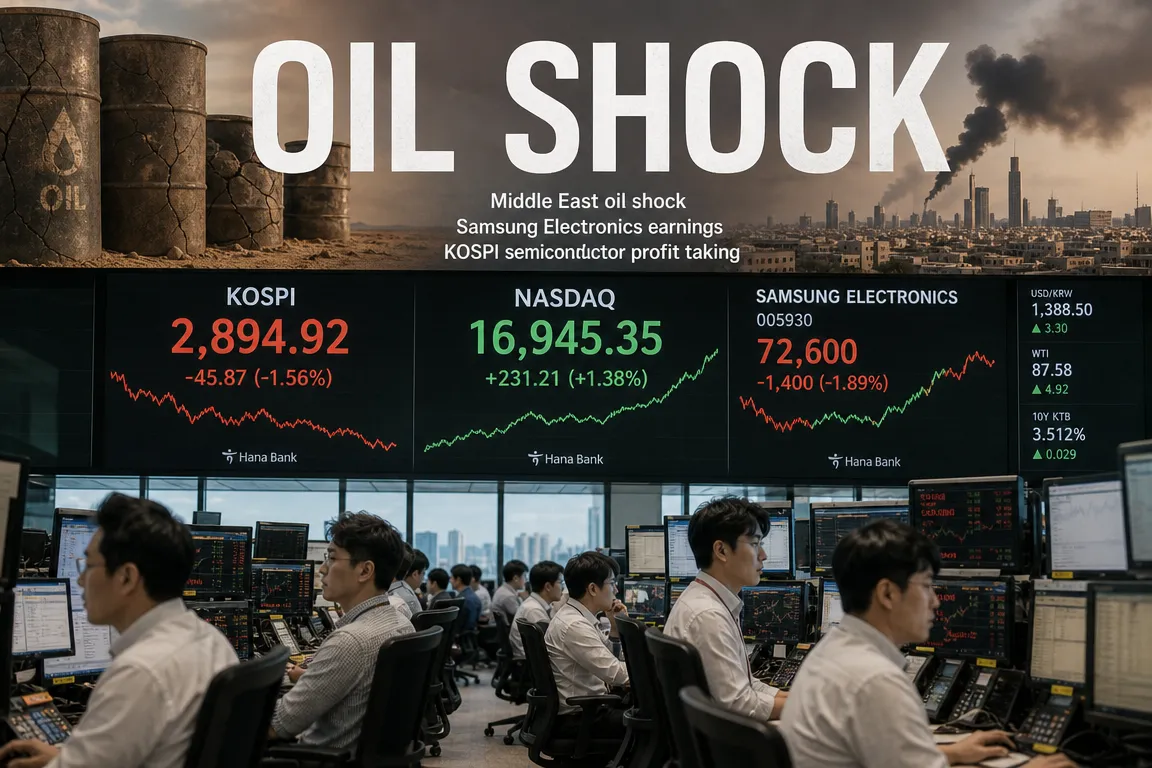
● Amazon Shockwave, AI Cashflow, Chip Power, Space Surge
A Reversal Signal at Amazon That Wall Street Missed: 2025 Roadmap for AI Monetization, In-House Semiconductors, and Space-Related Beneficiaries
This year’s Amazon annual letter went beyond a standard shareholder message. The key shift was a more explicit timeline addressing the market’s core question: when large-scale AI investment translates into profits. The letter also reframed Amazon’s in-house semiconductor program as a standalone growth vector and linked AWS durability, global e-commerce penetration, satellite broadband, and logistics automation into a unified investment thesis.
This report summarizes the letter’s core messages, why the stock reacted positively, which industries and equity groups could benefit, and under-discussed points with material relevance to U.S. equities, AI semiconductors, cloud, data centers, and big-tech positioning.
1. Key News Takeaways: Why the Annual Letter Was a Surprise
Three elements stood out:
1) A clearer-than-expected indication of when AI investments can meaningfully contribute to earnings.
2) In-house semiconductors positioned not only as cost optimization but as an independent growth business.
3) A framework in which AI acts as a catalyst across business lines beyond AWS and e-commerce, including space, robotics, and autonomous systems.
In effect, Amazon argued that current spending is demand-led and contract-driven, and that these investments may begin to translate into materially stronger cash generation from around 2027.
2. The Central Issue: When AI Investment Becomes Profitable
The most market-relevant message was that large-scale AI investment could begin contributing meaningfully to earnings from around 2027.
2-1. Why the Statement Matters
Recent U.S. big-tech volatility has been driven less by AI enthusiasm and more by uncertainty around payback timing. Suppliers such as NVIDIA monetize immediately, while platform companies absorb near-term cash flow pressure from data center and infrastructure buildouts.
Amazon’s framing relied on contracted demand and a long-duration cash flow model, rather than aspirational guidance.
2-2. Why the Market Interpreted It Positively
Large capex expansion typically pressures stocks in the short term. Here, investors interpreted capex as a response to visible demand rather than discretionary expansion. This distinction is increasingly central to evaluating AI infrastructure strategies across big tech.
3. In-House Semiconductors as the Core Strategic Lever
The strongest signal in the letter was the elevation of Amazon’s custom silicon initiative. Historically positioned as AWS efficiency tooling, it was presented more explicitly as a growth pillar.
3-1. Why In-House Silicon Matters
The primary constraint in AI infrastructure is compute, specifically accelerators and related supply. NVIDIA GPUs remain high-performance but are costly and supply-constrained. For Amazon, custom silicon can:
- Reduce unit compute cost and improve AWS margin durability
- Improve supply security and planning
- Create an additional growth vector via broader customer adoption
This is not only vertical integration; it strengthens pricing leverage and increases customer lock-in when cloud and silicon are co-optimized.
3-2. Implications of Trainium and Graviton
Amazon’s chip portfolio broadly includes AI training/inference accelerators and server CPUs. Graviton has already contributed to AWS cost structure improvements. The letter’s key implication was not internal validation but reported external demand intensity, suggesting growing adoption and potential capacity constraints.
3-3. Relationship with NVIDIA and Broadcom: Competition and Coexistence
In-house silicon does not imply immediate displacement of NVIDIA. Large cloud providers are likely to operate mixed stacks combining NVIDIA, proprietary silicon, customized accelerators, and partner solutions. The strategic shift is bargaining power: higher proprietary chip utilization improves cost leverage and supply resilience, while also positioning Amazon as a more consequential player in AI silicon over time.
4. AWS Is Not a Mature Story: It May Still Be Early
A common investor assumption is that cloud is already mature. Amazon argued the opposite, emphasizing that a substantial share of global enterprise workloads remains on-premises.
4-1. Cloud Migration Has Further Runway
Despite widespread cloud visibility, global enterprise infrastructure remains heavily on-premises. This implies a higher ceiling for AWS than commonly assumed.
4-2. AI Re-Accelerates Cloud Demand
Cloud demand is shifting from storage/compute efficiency to end-to-end AI workloads: training, inference, data pipelines, and application deployment. AI adoption could represent a second growth cycle for cloud, allowing AWS to be re-evaluated as an AI infrastructure platform rather than a conventional cloud utility.
5. E-Commerce Still Has Structural Runway
Amazon continues to position e-commerce as a long-duration growth engine.
5-1. Global Retail Remains Predominantly Offline
While certain markets are highly digital, global retail is still largely offline, indicating continued penetration potential.
5-2. E-Commerce, Ads, Logistics, and Membership Reinforce Each Other
Amazon’s advantage is a multi-engine flywheel:
- Higher retail volume improves logistics efficiency
- Prime increases retention and purchase frequency
- Advertising scales alongside transaction data
- AI-driven recommendations can improve conversion
Growth in one segment tends to strengthen the economics of others.
6. AI as a Company-Wide Accelerator, Not a Single Product Line
Amazon’s framing treated AI as an operating layer across the enterprise.
6-1. Logistics Robotics
AI can drive measurable operational gains in fulfillment and delivery through warehouse automation, inventory placement optimization, routing, and demand forecasting. Amazon’s scale and installed robotics base increase the likelihood of AI translating into operational and margin improvements.
6-2. Advertising
Amazon Ads benefits from commerce-intent data. Generative AI can improve creative production efficiency and conversion optimization. Given the high-margin nature of advertising, AI enablement may have outsized profitability implications.
6-3. Cloud and Enterprise Services
AWS can expand monetization via Bedrock, model hosting, agentic tooling, inference optimization, and bundled AI services. This supports both usage growth and higher revenue per customer.
7. Additional Optionality: Space, Autonomous Systems, and Satellite Broadband
Viewing Amazon purely as retail plus AWS risks missing longer-duration optionality, particularly in space-related initiatives.
7-1. Strategic Relevance of Project Kuiper
Amazon is developing a low-earth-orbit satellite broadband network. This should be assessed as infrastructure with potential linkages to cloud, edge computing, global connectivity, and enterprise/government networks. A combined satellite layer and AWS footprint could extend Amazon’s platform beyond terrestrial data centers.
7-2. Autonomous Systems and Logistics
Near-term revenue impact is uncertain, but autonomy can structurally affect delivery efficiency and long-term logistics cost.
Overall, Amazon’s strategy points to an ecosystem approach spanning retail, cloud, silicon, automation, and network infrastructure.
8. Why Amazon Benefits as Anthropic Scales
This linkage is often underexplained relative to its potential importance.
8-1. Beyond an Equity Stake
Amazon is not only an investor; it is also an infrastructure supplier. As Anthropic grows, AWS consumption can rise, and demand for training/inference capacity may increase, potentially supporting broader adoption of Amazon silicon.
8-2. Why the Structure Is Attractive
Venture-style returns typically depend on exit valuation. Amazon can potentially monetize during the pre-IPO growth phase through usage-based cloud revenue and infrastructure demand, creating a higher-quality growth mechanism than equity upside alone.
9. Potential Beneficiaries: Sectors to Monitor
If Amazon’s confidence translates into execution, spillover benefits extend beyond Amazon equity.
9-1. First-Order Beneficiaries: AI Infrastructure
Direct exposure includes data centers, servers, networking, power, cooling, and optical connectivity. AI capex first manifests as hardware demand, and optics remains central as data center traffic scales.
9-2. Second-Order Beneficiaries: Semiconductor Ecosystem
Even with rising in-house chip penetration, broader semiconductor value-chain demand can expand: design, foundry, advanced packaging, memory, testing, and equipment. AI semiconductors are likely to remain a multi-winner market segmented by performance, power efficiency, and cost.
9-3. Third-Order Beneficiaries: Cloud and Enterprise Software
As enterprises operationalize AI, demand extends to deployment environments, data pipelines, security, and observability/operations tooling, potentially supporting a renewed cycle in cloud and enterprise software.
9-4. Fourth-Order Beneficiaries: Robotics and Logistics Automation
Amazon’s logistics innovation can propagate across industrial automation: robots, sensors, automation equipment, and industrial AI.
10. Why This Matters for the Broader U.S. Equity Market
The letter is relevant beyond a single stock.
10-1. A Potential Reference Point for AI Payback Debate
If subsequent earnings calls provide clearer evidence of contracted demand, rising AWS AI revenue, and growing internal silicon utilization, investors are likely to demand similarly explicit monetization roadmaps from other big-tech platforms.
10-2. Potential for Big-Tech Re-Rating
Big tech has oscillated between AI enthusiasm and capex-driven valuation pressure. Greater visibility on monetization timing can support valuation re-assessment, alongside macro variables such as rates, growth, and earnings.
11. Under-Discussed Points with Potential Materiality
11-1. Amazon as an AI Infrastructure Empire
Model leadership is not the only path to value creation. Amazon owns critical layers—cloud, chips, networks, data centers, and logistics systems—that can monetize regardless of which frontier model wins.
11-2. In-House Silicon as Strategic Weapon, Not Only Margin Tool
Custom silicon influences AWS pricing power, customer acquisition, AI service bundling, potential external sales, and supply-chain negotiating leverage.
11-3. The Anthropic Link May Be Underpriced
As Anthropic scales, Amazon may benefit from both equity value appreciation and consumption-driven infrastructure revenue.
11-4. Space as Network Power Competition, Not a Theme Trade
Project Kuiper is best understood as long-term network infrastructure that can support global AI/cloud connectivity, not as a simple peer replication strategy.
12. Key Dates and What to Monitor Next
Execution matters more than messaging.
12-1. What to Confirm in Earnings
- Whether AWS growth re-accelerates
- Whether management provides more specific disclosure on AI-related revenue contribution
- Whether demand and adoption for in-house silicon expands, including external customer traction
- Whether capex growth is supported by contracted demand and measurable backlog indicators
12-2. What to Confirm in Market Behavior
Assess whether gains remain isolated to Amazon or broaden to semiconductor ETFs and data-center/optics-related equities. Broader participation would indicate the market is interpreting the message as an industry-level expansion signal.
13. Conclusion: Potential Early Stage of Structural Reassessment
The letter positioned Amazon as absorbing near-term cash flow volatility to fund demand-led AI infrastructure, with a monetization inflection potentially around 2027. It also integrated custom silicon, AWS, e-commerce, robotics, and space-based connectivity into a cohesive long-term framework.
The immediate stock reaction may reflect more than an event-driven move; it may signal an emerging re-framing of Amazon from a retail-centric narrative toward an AI infrastructure and platform narrative. The next earnings cycles and second-half execution will be the critical validation points.
< Summary >
- The annual letter indicated AI monetization could become more visible around 2027.
- In-house semiconductors were elevated from cost optimization to a potential growth business.
- AWS and e-commerce were framed as having further structural runway.
- AI was positioned as an accelerator across logistics, advertising, cloud services, robotics, and space initiatives.
- Beneficiaries may extend beyond Amazon to AI infrastructure, data centers, optical connectivity, and the broader semiconductor ecosystem.
- Anthropic linkage, custom silicon strategy, and the long-term significance of Project Kuiper may remain under-reflected by the market.
[Related Articles…]
- Amazon AI Monetization and AWS Re-Rating: Key Takeaways (https://NextGenInsight.net?s=Amazon)
- AI Semiconductor Reshaping: The Strategic Meaning of Big-Tech Custom Silicon (https://NextGenInsight.net?s=Semiconductors)
*Source: [ 소수몽키 ]
– 월가도 예상 못했다, 아마존 깜짝 부활 선언의 수혜주들
● China Wins, Hormuz Shock, Oil, Yuan, Bitcoin, Coins
Why China Waited for the Hormuz Crisis: A Consolidated Investor Brief Covering Oil, the RMB, Mediation Diplomacy, and Bitcoin/Stablecoins
The material issue is not limited to a potential Strait of Hormuz closure or a spike in global crude prices. The key is how this episode can reprice macro risk and potentially accelerate shifts in energy settlement currencies, China’s diplomatic leverage, and market attention to Bitcoin and stablecoins as cross-border value transfer instruments.
1. Core thesis: The Strait of Hormuz is not merely a shipping lane
The Strait of Hormuz is a critical global energy chokepoint. Escalation typically transmits through:
- Crude oil (supply-risk premium)
- Inflation expectations
- Sovereign bond yields
- Equity volatility
- USD positioning and risk-off behavior
In this cycle, sensitivity increased because the market began to price not only supply disruption, but also the possibility of logistics and settlement mechanisms changing at the margin.
2. Why China appeared to benefit structurally
2-1. China-linked shipping activity increased
Despite heightened Hormuz risk, China-linked shipping reportedly increased and China continued absorbing Iranian crude. This implies China could secure energy at discounted terms relative to global benchmarks without direct military involvement, helping protect manufacturing cost competitiveness.
2-2. A dual-benefit framework
China’s advantage can be framed as:
- Discounted Iranian crude intake during risk-off pricing elsewhere
- Greater policy and investor emphasis on energy transition, where China retains significant supply-chain leverage (solar, batteries, EVs, power equipment, critical minerals processing, grid infrastructure)
Prolonged Middle East instability can intensify the strategic imperative to reduce oil dependence, indirectly reinforcing China’s positioning in key transition industries.
2-3. India and Turkey share elements; China operates at scale
While other buyers may capture discounted flows, China can combine:
- industrial capacity,
- settlement options,
- diplomatic engagement,
- and energy-transition supply chains
This elevates the episode from a procurement advantage to a potential system-level leverage opportunity.
3. China’s strategic posture: escalation vs mediator
3-1. Scenario 1: Hardline response
Possible vectors include higher-profile security involvement, increased support to regional partners, or formation of a parallel diplomatic-security track. This carries elevated geopolitical and economic downside risk.
3-2. Scenario 2: Mediator positioning (more plausible)
A mediator role allows China to preserve economic benefits while presenting itself as a rule-shaping actor. Under certain conditions, third-party mediation can also provide an off-ramp for other stakeholders seeking containment rather than full escalation.
3-3. Why the mediator path is credible
China has sought to build a problem-solver narrative in recent years. If it can help structure limited agreements (e.g., de-escalation mechanisms), it could support:
- higher diplomatic standing,
- incremental RMB internationalization, particularly in sanctioned or politically constrained trade channels.
4. Why RMB settlement matters
4-1. RMB share in Iran-related trade is increasing
RMB settlement in China–Iran oil trade has been expanding, supporting:
- reduced reliance on USD rails,
- greater sanction circumvention capacity,
- incremental currency influence in commodity trade.
4-2. Not a USD replacement, but a larger secondary axis
Near-term displacement of the USD is unlikely. The relevant development is scope expansion: specific corridors, sanctioned counterparties, and targeted commodities where non-USD settlement becomes operationally normal.
5. Another channel favoring China: energy-transition dominance
Oil shocks can accelerate investment and policy support for:
- solar and wind equipment,
- batteries and storage,
- EV ecosystems,
- grid and power infrastructure,
- critical minerals and processing
China remains a central node in several of these supply chains, which can translate into medium-term industrial and trade advantages.
6. Why gold softened while Bitcoin held up
6-1. Different asset functions
- Gold: traditional safe haven, sensitive to real yields
- Bitcoin: predominantly a risk asset, with episodic haven-like demand in specific contexts
6-2. Drivers of gold consolidation
Key factors:
- risk already priced during the “fear” phase,
- valuation and positioning constraints after prior gains,
- oil-driven inflation expectations lifting bond yields, pressuring non-yielding assets
The yield channel can offset geopolitical support for gold.
6-3. Drivers of relative Bitcoin resilience
Potential contributors:
- cross-border capital mobility demand amid sanctions and asset-freeze concerns
- regulatory/legislative expectations supporting risk appetite
- relative valuation positioning after prior corrections
Volatility remains a structural constraint on Bitcoin’s use as a primary settlement instrument.
7. Strait transit fees: feasibility and significance
7-1. Legal constraints vs political practice
International legal justification may be weak, but geopolitical crises frequently operate through power dynamics rather than strict legal compliance.
7-2. The core issue is not revenue
The strategic signal is:
- who pays,
- in which currency,
- via which payment rails
This functions as a test of control, influence over energy flows, and a potential settlement experiment.
8. Why Bitcoin or stablecoins enter the settlement discussion
8-1. RMB settlement is ongoing; the market watches for additional rails
With RMB use already expanding in certain corridors, attention shifts to whether alternative instruments can be added.
8-2. Why Bitcoin is mentioned
- censorship resistance and cross-border transferability
- narrative linkage to sanctions circumvention
Constraint: high price volatility limits large-scale transactional use.
8-3. Why stablecoins are more operationally plausible
- lower volatility (relative to crypto-native assets)
- high transfer speed and global accessibility
- direct linkage to USD liquidity
Additionally, many stablecoins hold US Treasury assets as reserves, implying stablecoin growth can support indirect demand for US Treasuries. This creates a structure where “de-dollarization optics” can coexist with mechanisms that reinforce parts of the USD financial system.
9. Market transmission: oil to inflation, yields, equities, and digital assets
9-1. First-order: crude oil repricing
Supply-risk premium expands rapidly in futures markets.
9-2. Second-order: inflation re-acceleration risk
Energy feeds into transport, input costs, and headline CPI.
9-3. Third-order: upward pressure on sovereign yields
Inflation risk reduces rate-cut expectations; higher yields tighten financial conditions.
9-4. Fourth-order: higher equity volatility
Energy costs and rate uncertainty pressure risk assets; sectors with high input sensitivity (transport, airlines, chemicals, cost-intensive manufacturing) are exposed.
9-5. Fifth-order: digital-asset role reassessment
Increased focus on capital mobility, sanctions risk, alternative settlement narratives, and regulatory progress can support relative attention to Bitcoin and stablecoins in geopolitical stress regimes.
10. Frequently missed points
10-1. The central issue is settlement experimentation, not only supply shock
Energy trade settlement choices can have systemic implications for financial architecture.
10-2. China was positioned as a structural intermediary beneficiary
Without front-line exposure, China could combine discounted supply access, transition-industry leverage, RMB settlement expansion, and mediator optionality.
10-3. Stablecoins can be both “anti-USD narrative” and “pro-USD plumbing”
Reserve composition and Treasury linkages can make stablecoins an extension of USD infrastructure, not a direct substitute.
10-4. Gold and Bitcoin should not be framed identically
Gold is yield-sensitive; Bitcoin is liquidity-, positioning-, and adoption/regulatory-sensitive. Divergence can reveal which risks the market prioritizes.
11. Key scenarios to monitor
11-1. Near-term
- actual shipping disruption through Hormuz
- oil price volatility and risk premium
- US Treasury yield response
- gold continuation vs rebound
- Bitcoin/stablecoin volume and flows
11-2. Medium-term
- changes in China’s official diplomatic posture
- emergence of a mediation proposal
- partial nuclear constraint or freeze frameworks
- diversification of oil settlement currencies
- renewed energy-transition capex and supply-chain reconfiguration
11-3. Long-term
- stronger regional settlement role for the RMB
- broader incorporation of stablecoins into cross-border commerce
- industrial policy reorientation around energy security
- China’s enhanced mediator brand and geopolitical influence
12. Conclusion: why China “waited” for the Hormuz moment
China could interpret the episode as a rare convergence of four levers:
- discounted energy access
- increased visibility of energy-transition supply chains
- incremental RMB settlement expansion
- mediator diplomacy optionality
For investors, the episode should be monitored not only through crude directionality, but through the combined interaction of energy security, settlement currency evolution, inflation/yield repricing, and digital-asset payment rails.
China is positioned to benefit through discounted Iranian crude intake, transition-industry leverage, RMB settlement expansion, and mediator diplomacy optionality.
Gold faced headwinds from rising yields; Bitcoin showed relative resilience amid capital mobility demand and regulatory expectations.
Key variables include China’s mediation posture, growth in RMB and stablecoin settlement corridors, and the oil–inflation–yield feedback loop.
[Related Articles…]
- China macro outlook and RMB internationalization trends (NextGenInsight.net?s=China)
- Bitcoin, stablecoins, and changes in global settlement architecture (NextGenInsight.net?s=Bitcoin)
*Source: [ 경제 읽어주는 남자(김광석TV) ]
– [2편] 중국은 왜 호르무즈 사태를 기다렸나. 에너지·위안화·중재 외교의 계산 | 클로즈업 | 칠판강의_호르무즈
● Iran Crisis, Regime Collapse, Oil Shock
Iran Regime Stability, Ceasefire Signaling, US Pressure, and Middle East Risk: Investor-Relevant Summary
This issue should not be viewed as isolated domestic unrest. Three factors are central:
1) Iran’s internal succession dynamics and regime stability are simultaneously under strain.
2) Beyond military escalation, the more material risk is domestic economic deterioration and weakening social control.
3) Spillovers extend beyond regional geopolitics to crude oil, global growth, energy markets, defense sectors, and financial-market volatility.
This report consolidates the situation in a structured, news-style format and highlights market-relevant indicators, with emphasis on underweighted risks.
1. What is happening in Iran: Core situation
Recent Iran-related narratives cluster into four concurrent themes:
- Potential for ceasefire signaling or de-escalation between the US and Iran
- Rumors regarding senior leadership health and heightened sensitivity around succession
- Potential weakening of the Islamic Revolutionary Guard Corps (IRGC) and regime control capacity
- Risk that public dissatisfaction could translate into material regime stress
Some circulating claims (e.g., imminent state paralysis, immediate regime collapse, large-scale annihilation operations) are best treated as scenario rhetoric rather than confirmed fact. For investors, the key is the drivers behind these narratives.
2. Why de-escalation or negotiation signaling is being discussed
This is not only a military question; it is fundamentally economic.
Iran faces accumulated pressures: prolonged sanctions, currency weakness, high inflation, youth unemployment, constrained energy exports, and chronic underinvestment. Even if public messaging remains hardline, the capacity to sustain prolonged confrontation may be weaker than in prior cycles.
As regional conflict extends, regime risk may shift from external confrontation to domestic legitimacy and social stability. Negotiation signals may therefore reflect rising internal economic and governance costs rather than a change in strategic intent.
Market implication:
- De-escalation can stabilize crude oil in the near term.
- Intensifying domestic instability can reintroduce supply-disruption risk premia and renew upside pressure on oil.
Markets typically react more to energy supply-chain uncertainty than to headlines about conflict per se.
3. Why rumors around Mojtaba are market-relevant
“Mojtaba” is widely understood to refer to Mojtaba Khamenei, son of Iran’s Supreme Leader, often discussed in succession-related contexts. Any health or personal-security rumors can become systemically sensitive because leadership continuity is a core pillar of governance in a theocratic structure.
Verification is inherently difficult. The more relevant point for risk assessment is that repeated rumors signal perceived fragility in succession arrangements, which can elevate elite competition risk and increase uncertainty around IRGC–clerical power balancing.
4. Claims of IRGC “collapse”: How to frame the risk
The IRGC functions as more than a military force: it is a key pillar of regime security, a major economic actor, and a central tool of external strategy. Instability within the IRGC would therefore imply broader regime stress.
Immediate “collapse” framing is likely overstated. A more operational interpretation is organizational overload: prolonged external tension increases simultaneous burdens across deterrence, internal security, social control, and protection of economic interests.
Market implication:
Overload can increase unpredictability in external actions, elevating tail risks even if core institutions remain intact.
5. Public unrest: What it does and does not imply
Iran has experienced repeated episodes of large-scale protests driven by economic hardship, unemployment, and opposition to restrictive social controls. Public dissatisfaction is structurally elevated.
However, large-scale dissatisfaction does not automatically translate into regime change. Regime-collapse dynamics typically require three conditions:
1) Nationwide, sustained mass mobilization
2) Partial neutralization, fragmentation, or defection within security forces
3) Visible and public elite fragmentation
Current conditions may support the first factor as a latent risk, while the second and third remain uncertain. A more balanced characterization is rising systemic fragility rather than imminent collapse.
6. How realistic is US pressure escalation?
US policy tools include military signaling, intelligence operations, sanctions, and diplomatic isolation. Strong rhetoric is not new. Constraints against full-scale war remain material: electoral considerations, alliance management, oil-price sensitivity, and risk of regional spillover.
The baseline approach is more consistent with deterrence and risk management than large-scale invasion. The strategic objective is more plausibly to constrain Iran’s regional disruptive capacity than to pursue direct regime-change operations, which face high operational and political barriers.
7. The key macro channel: Oil and supply-chain risk
Investor focus often overweights military confrontation while underweighting second-order channels:
- Crude oil and refined-product pricing
- Maritime logistics and shipping insurance
- Inflation re-acceleration risk
- Implications for the policy-rate path
- Risk-asset volatility and cross-asset correlations
Any perceived threat to the Strait of Hormuz tends to transmit rapidly into energy pricing. Higher energy prices can re-tighten financial conditions by lifting inflation expectations and delaying rate-cut timing, affecting equities, FX, and rates.
8. Implications for South Korea: Key channels
Four areas are most relevant:
1) Energy import burden: Higher crude prices pressure trade balance and corporate input costs.
2) Defense sector: Elevated regional tension can increase demand for air defense, missile defense, ISR, and unmanned systems.
3) Shipping and logistics: Higher maritime risk can raise freight, insurance, and delivery uncertainty.
4) Financial-market volatility: USD/KRW, foreign flows, and KOSPI sector dispersion may widen.
Large exporters (e.g., semiconductors, autos, chemicals) can be indirectly affected through energy costs and shifts in global demand conditions.
9. Why this matters for AI and the broader technology cycle
Modern conflict and domestic control increasingly depend on information operations, drones, satellites, cyber capabilities, surveillance technologies, and analytics.
Examples of relevant capability areas include: drone forces, precision strike, swarming unmanned systems, surveillance algorithms, communications disruption, and counter-disinformation. As internal instability rises, regimes often increase reliance on digital surveillance and information control, supporting demand for defense tech and cybersecurity.
This episode can therefore be read as evidence of how AI-enabled capabilities are being embedded into security doctrine and governance systems.
10. Headline-style summary
Iran (domestic):
- Succession uncertainty and economic stress are both salient.
- Public dissatisfaction is elevated; regime collapse is not confirmed.
US posture:
- Deterrence and warning-based management remains more plausible than full-scale war.
- Military action, if any, is more likely to be limited in scope.
Regional dynamics:
- Even with de-escalation signals, re-escalation risk remains.
- Hormuz-related transport risk is a primary market variable.
Market impact:
- Key risks: oil upside, inflation impulse, rate-path repricing, and higher equity volatility.
Sector impact:
- Areas of attention: defense, energy, shipping, cybersecurity, drones, and AI-enabled surveillance.
11. Underweighted point: Persistent uncertainty as the primary risk
The central issue is not whether Iran collapses immediately, but whether prolonged regime fragility normalizes a higher baseline of Middle East uncertainty. Markets typically price sustained uncertainty more negatively than brief shocks due to persistent risk premia and repeated supply-chain stress.
A second structural point is the rising cost of global leadership and resource allocation pressure for the US across multiple theaters. This can affect supply-chain strategies, risk-free asset demand, USD positioning, and broader safe-haven behavior.
The core question is less “Iran’s collapse” and more “the extent of systemic instability in the international order.”
12. Three practical scenarios
Scenario 1. Limited de-escalation
- Iran moderates intensity; the US avoids expansion.
- Oil may stabilize near term; underlying fragility remains.
Scenario 2. Rising domestic strain plus intermittent external clashes
- A plausible baseline: internal dissatisfaction grows while small-scale strikes and reprisals recur.
- Typically the most adverse for markets due to persistent uncertainty and repeated risk repricing.
Scenario 3. Major military escalation or accelerated regime crisis
- Lower probability, highest impact.
- Potential effects: sharp oil spike, broad risk-off, equity drawdowns, defense outperformance, and emerging-market financial stress.
13. Conclusion: How to monitor the risk
Key messages and narratives should be treated cautiously; the relevant risk is the intersection of domestic regime fatigue with external deterrence dynamics.
From a macro and investment standpoint, the priority is not binary “war vs. peace,” but the duration and intensity of uncertainty transmitted into energy and logistics.
Three indicators to track:
1) Whether protests and elite fragmentation expand in observable ways
2) Whether US posture shifts from deterrence to limited strikes
3) Whether oil and maritime logistics begin to price tangible supply disruption
If these factors align, the issue may extend from headline risk into a sustained driver of macro conditions and sector performance beyond 2026.
< Summary >
- The core Iran risk is the convergence of regime instability, succession uncertainty, economic deterioration, and public dissatisfaction.
- The US is more likely to pursue deterrence than full-scale war, but regional tensions can re-ignite.
- Markets should focus on crude oil, inflation, rates, supply chains, and financial volatility.
- For South Korea, key variables are energy costs, potential defense-sector demand, shipping risk, and FX volatility.
- The most material point is not immediate collapse, but prolonged uncertainty and its interaction with AI-enabled security and defense technology trends.
[Related Links…]
- International crude oil upside risk assessment and Middle East risk investment watchpoints: https://NextGenInsight.net?s=international%20crude%20oil
- Defense sector growth and AI-enabled defense technology themes: https://NextGenInsight.net?s=defense
*Source: [ 달란트투자 ]
– “3일 안에 국가 마비된다” 들고 일어난 이란 국민들 이란 정권 붕괴 임박했다 | 김민석 특파원 풀버전1