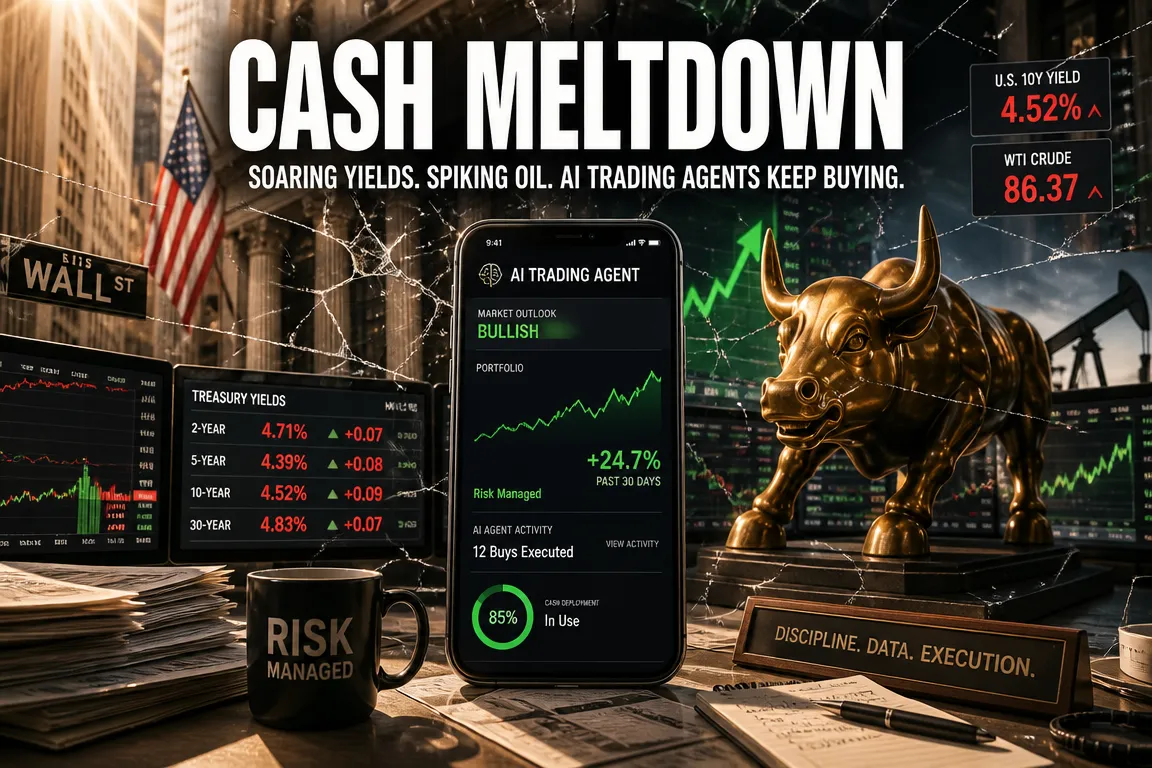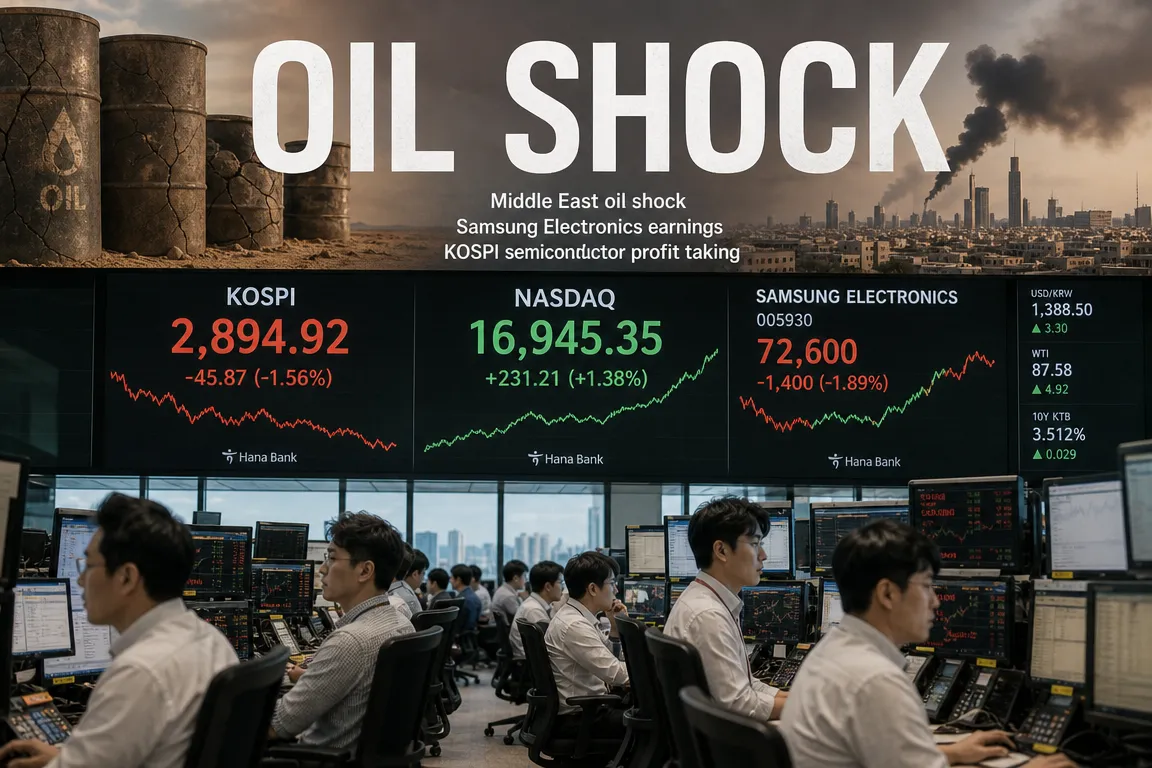
● Red Sea Blockade Oil Shock, Market Panic, Supply Chain Chaos
If Iran Blocks the Red Sea: What Actually Happens — Oil Prices, Global Supply Chains, and Equity Volatility
The issue has three core points:
1) Disruption from a Red Sea blockade could exceed the shock from a Strait of Hormuz blockade.
2) Markets are rebounding on negotiation expectations, but the underlying risk has not been resolved.
3) The key is to analyze the transmission mechanism across crude oil, logistics costs, inflation, and both U.S. and Korean equities.
This report organizes the negotiation landscape between Iran and the U.S., potential economic damage from a Red Sea blockade, risks to crude supply, the possibility of supply-chain reconfiguration, and actionable monitoring points for investors.
1. Why markets rebounded: the opening of a negotiation channel mattered more than near-term setbacks
Despite weekend volatility tied to U.S.–Iran headlines, equities rebounded strongly on Monday. The main driver was the fact that talks occurred at all, implying a path to follow-on negotiations if conditions align.
Markets discounted a “complete breakdown” scenario and instead priced the continued existence of a negotiation track.
2. Why the U.S. “counter-blockade” was interpreted as supportive for risk assets
A key interpretation is that U.S. countermeasures could reduce the effectiveness of Iran’s blockade leverage.
Even if Iran can pressure shipping through the Strait of Hormuz (e.g., by imposing costs), U.S. actions targeting Iran-linked vessels—or vessels that paid Iran—could reduce incentives for compliance, turning the blockade into a high-cost, low-payoff tool.
This was read as improving the U.S. negotiating position, supporting risk sentiment.
3. Residual risk: why Iran may shift to the Red Sea as an alternative leverage point
If the Strait of Hormuz becomes less effective as leverage, Iran or aligned actors may seek an alternative pressure point. The primary candidate is the Red Sea—specifically the Bab el-Mandeb Strait.
This chokepoint is narrow, easier to disrupt than open-water routes, and can generate a disproportionately large market reaction. Stabilizing this corridor may require additional U.S. naval assets beyond current deployments.
4. Why the Red Sea is strategically critical
The Red Sea is a core artery of global trade and energy flows, linking Asia and Europe and serving as a gateway to the Suez Canal.
Cited reference metrics:
- 70+ vessels transit daily
- ~30% of global container volumes pass through this route
- >USD 1 trillion in annual goods flows
Disruption would propagate into European inflation, freight rates, manufacturing lead times, and energy pricing.
5. Oil-market impact: why the risk is “spike volatility,” not only gradual price increases
Energy sensitivity is elevated. The referenced crude volumes transiting the Red Sea are ~8.8 million barrels per day.
If rerouted volumes (including flows using Saudi pipeline capacity toward the Red Sea) are simultaneously affected, the market impact could be larger than a single-lane disruption suggests.
In this setup, oil can reprice abruptly due to risk premia and forward-looking scarcity fears, especially via futures-market positioning.
Oil price strength would likely reintroduce inflation concerns.
6. Macro transmission: higher logistics costs, inflation re-acceleration risk, and a shift in rate expectations
A Red Sea disruption would likely lift:
- Ocean freight rates
- Marine insurance premia
Diversions around the Cape of Good Hope extend transit times and raise shipping costs, affecting broad categories:
- Auto parts
- Electronics
- Industrials
- Consumer goods
Costs would pressure margins and/or pass through to end prices, potentially re-stimulating inflation.
Chain reaction:Higher oil prices → higher inflation risk → reduced rate-cut expectations → valuation pressure on U.S. equities (especially growth-heavy segments).
7. Implications for Korea’s economy and domestic equities
Korea’s high energy import dependence and export-led structure increase sensitivity. Key channels:
1) Higher input costs for commodities and energy
- Direct impact on refining, chemicals, aviation, shipping, and power cost structures
2) Export logistics disruption
- Europe-bound exporters face lead-time and cost pressures
- Exposed sectors: autos, machinery, batteries, electronic components
3) KRW depreciation pressure
- Risk-off dynamics and USD strength can raise FX volatility
- A weaker KRW can further lift import prices
4) Sector dispersion in KOSPI
- Potential relative beneficiaries: refiners, defense, select shipping names
- Potential laggards: airlines, chemicals, consumer sectors, and freight-intensive manufacturers
8. Underpriced risk: duration of disruption risk is more damaging than a short-lived event
The primary market burden is not a one- or two-day shock but the perception that blockade risk persists or repeatedly re-emerges.
Behavioral and operational responses under persistent uncertainty:
- Shipping reroutes
- Higher insurance pricing
- Inventory stockpiling
- Front-loaded purchasing
- Higher required risk premia in financial markets
Cumulative effects can exceed headline-driven expectations and materialize with a lag in real activity.
9. Negotiation realism: domestic political incentives may favor escalation before compromise
Iran’s internal political constraints can limit rapid de-escalation. Concessions perceived as too easy may weaken domestic legitimacy, incentivizing more assertive signaling to improve bargaining terms.
Under this framework, Red Sea risk can function as strategic leverage rather than an accidental variable, increasing the probability of intermittent volatility despite ongoing talks.
10. Key points to monitor
(1) Negotiation expectations remain intact
The absence of a definitive breakdown supports near-term risk appetite. Both sides may moderate rhetoric, which can be supportive for equities.
(2) Alternative leverage remains
As Hormuz leverage weakens, the Red Sea/Bab el-Mandeb corridor becomes more central. Even tension without full closure can disrupt global supply chains.
(3) Oil and inflation must be monitored jointly
This is not solely a regional headline; it can alter the oil–inflation–rates pathway, with spillovers to FX, U.S. equities, and KOSPI.
(4) Equity sentiment is reflexive
Identical headlines can be priced differently depending on prevailing risk appetite. Recent gains reflect a shift in interpretation rather than resolution of risk.
11. Investor checklist (operational indicators)
1) Whether Red Sea and Bab el-Mandeb transit restrictions move from “risk” to “control.”
2) Whether military actions linked to the Houthis are isolated or persistent.
3) Whether crude is in a rebound or a risk-premium-driven spike.
4) Whether freight indices and insurance premia rise materially.
5) Whether the Fed’s stance shifts more hawkish via inflation concern.
6) Whether USD strength and KRW weakness intensify simultaneously.
7) Whether sector dispersion widens between refiners/defense/shipping vs airlines/chemicals/consumer and freight-heavy manufacturing.
12. The central analytical lens
The primary issue is less “whether a Red Sea blockade occurs” and more “how Iran restores negotiating leverage if Hormuz becomes less effective under U.S. countermeasures.”
This reframes the situation as a negotiation-power reallocation rather than a pure maritime security story, with second-order effects on oil and supply chains.
13. Conclusion: simultaneous support and risk
Markets are currently weighting negotiation optimism. However, Red Sea risk, crude supply uncertainty, inflation re-acceleration risk, and rate-path uncertainty remain active.
Equity strength does not imply risk removal. A disciplined approach requires joint monitoring of crude, inflation, supply-chain indicators, U.S. equity sensitivity to rates, and sector-level dispersion in Korea.
< Summary >
U.S.–Iran negotiation prospects supported risk sentiment, but as Hormuz leverage weakens, Red Sea blockade risk becomes more consequential. Given the Red Sea’s role in global trade and oil transit, disruption could trigger oil price spikes, higher inflation risk, rising logistics costs, and greater uncertainty around the rate path. Korea may face direct impacts via FX, import prices, export logistics, and sector-level equity dispersion. The core question is Iran’s choice of alternative leverage to maintain bargaining power; market risks remain unresolved.
[Related Articles…]
- International oil price spikes and implications for Korean equities (NextGenInsight.net?s=international%20oil%20prices)
- Key takeaways on AI semiconductors and U.S. equity strength (NextGenInsight.net?s=AI)
*Source: [ Jun’s economy lab ]
– 이란군이 홍해를 봉쇄하면 받을 피해를 계산해봤습니다
● Market Shock, AI Power Surge, Tesla Chip Boom
Morgan Stanley Earnings Beat, Middle East Military Tensions, and Tesla’s AI5 Chip: The Market’s Key Constraints Are “Capital, Power, and Compute”
Today’s market appeared broadly flat on the surface, but underlying positioning was more differentiated. The session reinforced several structural themes: renewed confidence from strong financial-sector earnings, power supply emerging as a primary bottleneck for AI infrastructure, Tesla’s AI5 as a broader AI compute platform signal rather than a vehicle-only chip update, and the market’s capacity to absorb geopolitics while capital concentrates in structurally advantaged sectors.
A key takeaway is increasing convergence across rates, inflation, data centers, digital assets, and AI semiconductors. Market leadership is progressively defined by the ability to mobilize capital, secure power, and scale compute.
1. U.S. Market Snapshot: Indexes Quiet, Internals Active
S&P 500 edged higher, Nasdaq advanced, and the Dow traded slightly lower. While index-level direction was limited, sector and single-name moves were pronounced.
- Financials strength: Morgan Stanley, Bank of America on solid earnings
- AI infrastructure strength: Oracle, Broadcom higher
- Power bottleneck beneficiaries in focus: Bloom Energy, GE Vernova; Caterpillar-related narratives continued
- Select semis and software firm: ServiceNow, Salesforce positive
- Oil and geopolitics remained overhangs, but risk-off behavior was contained
The session was driven more by thematic allocation than broad index beta.
2. Morgan Stanley 1Q Earnings Beat: Implications Beyond One Bank
2-1. Key points
Morgan Stanley reported results above consensus and the stock responded strongly. The market signal extends beyond quarterly figures: capital intermediation and wealth-driven flows remain resilient despite macro uncertainty.
2-2. Why it matters
With rate uncertainty persisting, inflation risks not fully discounted, and expectations for Federal Reserve easing less aggressive than prior cycles, investment banking and wealth platforms can face pressure. The earnings outperformance suggests high-net-worth and institutional capital remains active.
Sustained strength in wealth management is notable because volatility typically drives reallocation toward structured and fee-based products rather than a full withdrawal from markets. These flows can indirectly support ETFs, alternatives, digital assets, and AI infrastructure exposure.
2-3. Investor interpretation
- Large U.S. financials remain central to liquidity and capital distribution
- Fee-based wealth revenues appear comparatively durable in uncertain macro regimes
- Potential for continued product expansion across Bitcoin ETFs, alternatives, and AI-linked structured exposures
- Financial sector strength signals reduced recession pricing and greater emphasis on asset-market resilience
3. Bitcoin and Institutional Flows: Gradual Re-engagement
3-1. Underappreciated linkage
A notable framing is the linkage between bank earnings strength and Bitcoin market dynamics. Markets are increasingly treating digital assets as part of a unified liquidity system rather than a separate risk bucket. Traditional finance is integrating digital assets via regulated wrappers.
3-2. Why Bitcoin remains relevant
Growth in institutional channels and asset-manager productization indicates Bitcoin is increasingly accessible through retirement, advisory, and discretionary wealth platforms. The key variable is distribution architecture, not short-term price action.
3-3. Market implications
- Ongoing institutionalization of Bitcoin as an allocatable asset class
- Digital assets shifting from competitive displacement to integration within traditional finance
- Institutional bid may provide incremental downside support despite volatility
- U.S. equities and crypto markets are becoming more linked through liquidity transmission
4. The Primary AI Bottleneck Is Shifting From Chips to Power
4-1. Why the Oracle–Bloom Energy agreement matters
Oracle’s large-scale power procurement with Bloom Energy is a signal that AI infrastructure priorities are evolving. Compute hardware remains critical, but power availability has become a binding constraint: chips without electricity do not translate into deployable capacity.
4-2. Why power constraints are accelerating
Data center demand is rising rapidly due to generative AI training and inference, cloud expansion, and enterprise AI deployment. Meanwhile, lead times for large gas turbines are extended, pushing hyperscalers toward deployable, near-term power solutions such as fuel cells, gas engines, and distributed generation.
4-3. Why Bloom Energy, GE Vernova, and Caterpillar are discussed together
- Bloom Energy: fuel-cell-based, relatively fast-to-deploy generation options
- GE Vernova: core supplier across traditional power infrastructure buildout
- Caterpillar: equipment exposure to on-site and backup generation solutions
AI beneficiaries are broadening from semiconductors to power infrastructure, utilities, grid equipment, and data-center power solutions.
4-4. Longer-term significance
AI competitiveness increasingly depends on physical infrastructure: speed of data center deployment, reliability and cost of power procurement, regulatory and interconnection timelines, and grid upgrade capacity. Market valuation frameworks are expanding accordingly.
Key exposure areas:
- AI semiconductors: Nvidia, Broadcom
- Memory: SK hynix, Samsung Electronics
- Cloud and data centers: Oracle, Microsoft
- Power infrastructure: GE Vernova, Bloom Energy, Caterpillar
- Utilities and transmission/distribution: grid upgrade beneficiaries broadly
5. A Less-Discussed Core Point: The U.S. Is Treating AI Leadership as an Energy Security Issue
The market significance is not limited to Bloom’s price action or contract size. The U.S. is increasingly framing AI capacity as national infrastructure, with power availability as a strategic constraint.
China has expanded generation capacity at scale over the last decade. In the U.S., permitting, local fragmentation, environmental review, and transmission bottlenecks slow incremental capacity. As a result, large technology firms are prioritizing “available power now” over “optimal power later,” which is shifting the basis of value within energy markets toward speed of interconnection and deployability.
6. Middle East Tensions and Reports of Additional U.S. Troop Deployment: Why Markets Held
6-1. Risk acknowledged, but treated as manageable
Reports of additional U.S. troop deployment in the Middle East are relevant to oil, inflation expectations, and supply-chain risk, particularly via Strait of Hormuz sensitivities. Market reaction was comparatively contained, likely due to:
- Partial prior pricing of geopolitical risk
- Uncertainty regarding escalation into a material supply shock
- Earnings momentum and AI infrastructure capex acting as offsets to macro/geopolitical headwinds
6-2. Why this matters
Global equities are increasingly supported not by the absence of negative catalysts, but by capital concentration in sectors with earnings visibility and structural growth. AI, power infrastructure, semiconductors, and large financials have shown relative resilience. Sectors with weaker fundamentals and higher cyclical sensitivity remain more exposed.
7. Tesla AI5 Chip Design Completion: An AI Compute Ecosystem Signal
7-1. Core point
Tesla’s completion of AI5 chip design with a targeted 2027 production timeline is not only an automotive semiconductor update. It supports Tesla’s strategy to vertically integrate compute for autonomy, robotics, and inference workloads. AI5 should be viewed as a platform component within Tesla’s integrated AI stack.
7-2. Relevance for Korean semiconductors
Higher-performance AI chips can expand demand for advanced memory and foundry capacity.
- SK hynix: potential beneficiary via high-bandwidth memory
- Samsung Electronics: exposure via memory and foundry optionality
- TSMC: remains central for leading-edge manufacturing capacity
If AI5 advances on-device inference capability, this can reinforce demand for advanced packaging, high-performance memory architectures, and power-efficient compute design.
7-3. Follow-up checkpoints
- Confirmation of manufacturing partner(s)
- Memory configuration and the likelihood of adopting high-bandwidth memory
- Alignment with robotaxi timelines
- Integration with Dojo and Tesla’s overall compute allocation strategy
8. Prediction Markets, Robinhood, Coinbase: An Emerging Financial Platform Competition
Prediction markets may become a meaningful vector in financial platform growth. Monetization is primarily via intermediation and fees, with platforms potentially limiting direct directional exposure.
Robinhood and Coinbase are positioned due to existing user bases, engagement, and infrastructure that can unify equities, digital assets, and event-based trading within a single ecosystem. Regulatory risk remains material, including classification debates (derivatives vs gambling vs information markets), and will likely determine the pace of adoption.
9. Session Summary in News Format
Financials
Morgan Stanley’s 1Q earnings beat supported financial sector strength. Other large banks, including Bank of America, contributed to a constructive tone. The market read-through emphasized durability in wealth management and capital intermediation.
AI Infrastructure
The Oracle–Bloom Energy power agreement remained a focal point. As data center expansion accelerates, power constraints are drawing investor attention toward power infrastructure and distributed generation solutions.
Semiconductors
Broadcom and other semiconductor names traded higher. Tesla’s AI5 design completion supported broader AI compute ecosystem expectations. In Korea, attention is likely to remain elevated around SK hynix and Samsung Electronics.
Geopolitics
Reports of additional U.S. troop deployment increased headline risk, but equities were stable. Oil reacted more sensitively, while markets largely treated the development as pressure tactics rather than immediate escalation.
Digital Assets
Bitcoin remained supported by expectations of continued institutional participation. The declining boundary between traditional finance and digital assets elevates the importance of ETF-driven access and distribution.
10. Key Investor Monitoring Points
- Whether large financials can sustain earnings above consensus
- Whether AI-related power bottlenecks translate into measurable capex acceleration
- Potential impacts of Tesla AI5 on Korean memory and foundry supply chains
- Whether Middle East risk transmits into sustained oil spikes and renewed inflation pressure
- Persistence of institutional inflows via Bitcoin ETFs
11. Most Material Point: The Market’s Battleground Is Changing
- AI leadership is expanding from semiconductors into power procurement and grid capacity
- Traditional finance is productizing digital assets rather than positioning against them
- Even with elevated geopolitical risk, capital is concentrating in structurally advantaged sectors
- Tesla’s in-house chip strategy signals positioning toward an AI compute platform model
- Equity re-rating risk/return profiles increasingly reflect combined access to liquidity, power, and compute
In practice, markets are prioritizing firms positioned to operate and monetize the AI economy through capital capacity, power security, advanced chips, data centers, and scalable platforms.
12. Closing View: Prioritize Structural Drivers Over Event Noise
The day’s catalysts appeared diverse: bank earnings, Middle East troop headlines, Tesla AI5, and a major data-center power procurement agreement. Structurally, they connect through a common framework: capital mobilization in financial markets, power procurement by hyperscalers, and expansion of compute capacity across semiconductors and integrated platforms, with geopolitics acting primarily as a cost and inflation variable.
Monitoring power grids and interconnection timelines alongside chips and data centers, and tracking capital flow concentration rather than index levels, is increasingly necessary to interpret market direction.
< Summary >
Morgan Stanley’s earnings beat reinforced the durability of Wall Street’s liquidity and wealth channels. Bitcoin’s institutional integration continued through regulated access and distribution. The Oracle–Bloom Energy agreement highlighted that the AI bottleneck is expanding from chips to power infrastructure. Tesla’s AI5 design completion supports a constructive read-through for the AI compute ecosystem and relevant semiconductor supply chains, including Korea. Middle East risk persists, but markets remain supported by structurally advantaged sectors. The strategic edge increasingly accrues to firms with concurrent strength in capital access, power availability, and scalable compute.
[Related Articles…]
- AI infrastructure and accelerating data-center power demand: identifying next beneficiaries
https://NextGenInsight.net?s=AI - Tesla AI chips and the Korean semiconductor supply chain: mapping beneficiaries
https://NextGenInsight.net?s=tesla
*Source: [ Maeil Business Newspaper ]
– 모건스탠리 1분기 호실적, 주가상승ㅣWP “美, 중동에 추가로 6,000명 병력 배치 중”ㅣ테슬라, AI5 칩 설계 완료 27년 양산ㅣ홍키자의 매일뉴욕