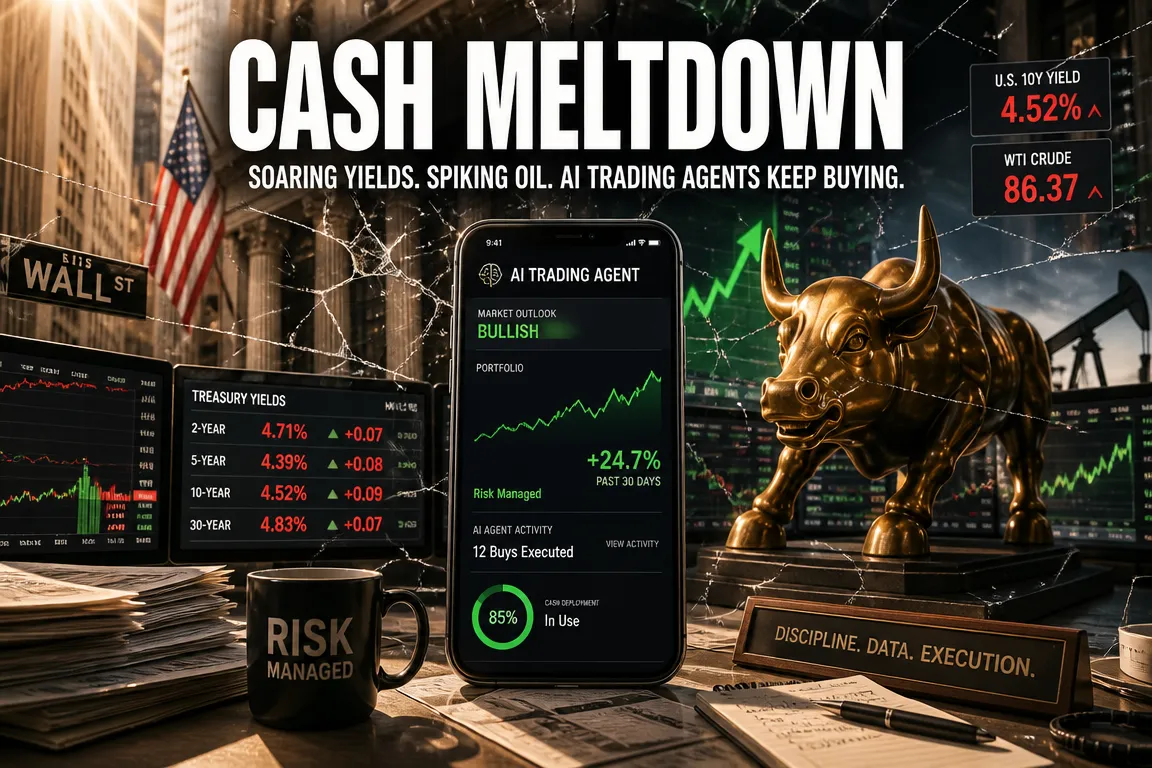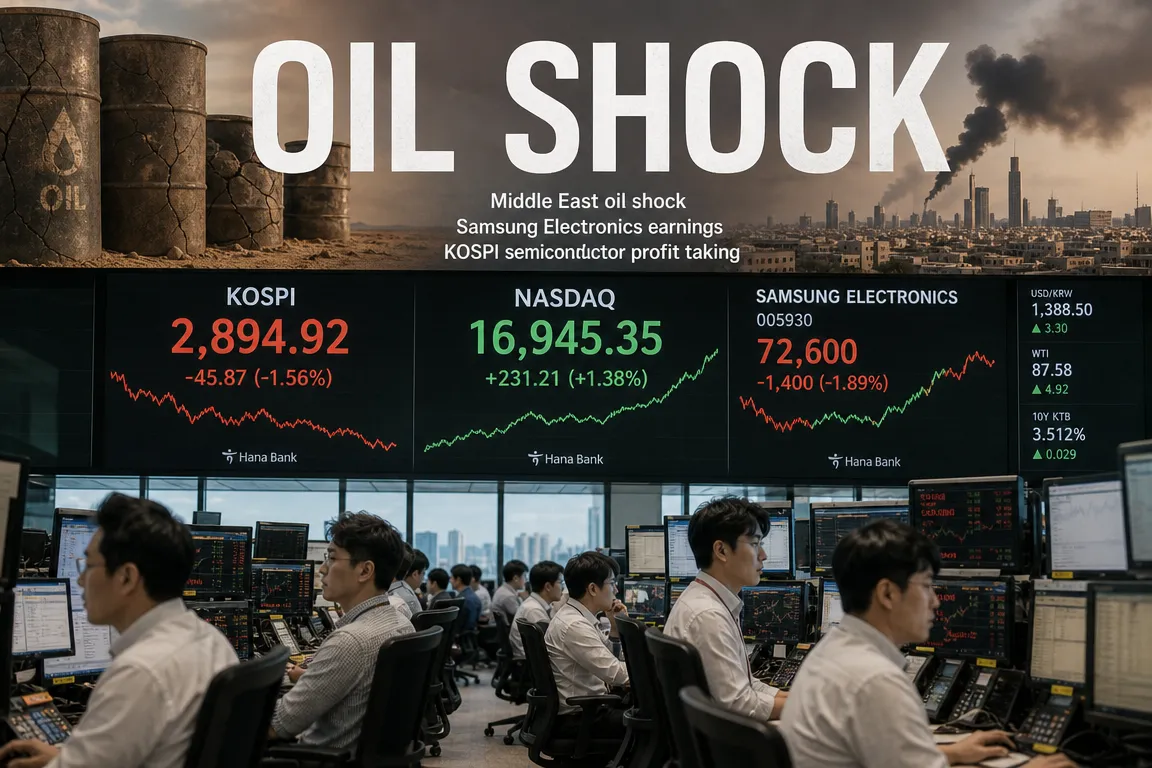
● Hormuz Shock, Oil Surge, Bitcoin Buzz
Strait of Hormuz Blockade Risk Reignites: Key Drivers Impacting Oil, Sovereign Yields, and Digital Assets
This development should not be treated as a single-line Middle East conflict headline. It links energy supply risk, inflation expectations, interest-rate repricing, payment-system leverage, and the evolving role of digital assets.
1. Situation Snapshot
The Strait of Hormuz issue is best read as a coercive bargaining tool rather than a purely military event. Markets are pricing higher geopolitical risk, a potential oil price spike, renewed inflation pressure, and a possible shift in the rate path. Discussion of transit fees also connects the event to alternative settlement rails, including stablecoins, Bitcoin, and RMB-based payment channels.
- Renewed risk of blockade or counter-blockade in the Strait of Hormuz
- Intensified pressure to constrain Iranian crude exports
- Rising concerns over oil prices and sovereign yields moving higher in tandem
- Nuclear talks as the key pivot between a short shock and a prolonged regime
- Transit-fee proposals linking maritime control to digital-asset settlement
- Higher probability of China emerging as a mediator
2. Why the Strait of Hormuz Matters
The strait is a critical global energy chokepoint. Disruption risk immediately transmits from regional conflict to global supply-chain pricing. Even without a complete shutdown, risk premia alone can move crude sharply higher.
3. Core Intent: A Negotiation Leverage Mechanism
The blockade narrative can be interpreted as a strategic pressure instrument tied to nuclear negotiations. Iran’s war financing and fiscal stability depend heavily on oil export revenues; constraining maritime throughput tightens that constraint and raises the cost of non-cooperation.
3-1. Why the United States Has Limited Room to Concede
US policy has framed the nuclear issue as a central justification for sustained pressure. A ceasefire without constraints on nuclear capability would be politically costly, particularly in an election-sensitive environment.
3-2. Why Iran Has Limited Room to Concede
For Iran, nuclear capability functions as a deterrence and regime-security instrument. Full rollback is difficult; any compromise is more likely to be structured as time-bound limitations rather than permanent dismantlement.
3-3. Most Plausible Compromise Scenario
A temporary freeze is more realistic than full termination. A defined suspension period (e.g., one year or aligned with major political cycles) could provide face-saving outcomes for both sides.
4. Secondary Objective: Restricting Inbound Supplies
The measure would not only pressure export revenues but also constrain inbound flows of weapons, essential goods, and strategic materials. Logistical compression reduces the capacity to sustain a prolonged conflict.
5. Transit-Fee Proposals: Why They Emerged
Iran requires reconstruction funding, while direct financing by the US would carry political constraints. A transit-fee regime could operate as an indirect funding mechanism. Regardless of legal controversy, such arrangements can emerge through power dynamics rather than formal consensus.
5-1. What the United States Would Likely Seek
The primary objective would be control over rules and enforcement: who governs passage, who sets settlement standards, and who defines maritime order. This extends from energy security into financial-system leverage.
6. Primary Market Transmission: Oil, Yields, Inflation
The market shock channel is straightforward:
- Strait of Hormuz risk widens
- Expected supply disruption rises
- Crude prices increase
- Inflation expectations rise
- Sovereign yields increase
- Equity valuation pressure intensifies
Oil and yields rising together is typically the most adverse combination for risk assets, reflecting simultaneous growth headwinds and renewed inflation pressure consistent with stagflation-like stress.
7. Higher-Risk Scenario: Escalation Toward Bab el-Mandeb
Hormuz primarily affects crude transport; Bab el-Mandeb is more directly linked to broader merchandise flows. Concurrent disruption would compound impacts across energy, shipping rates, import prices, and global supply chains.
8. China as the Key Variable
A central variable is China’s positioning. China has benefited from discounted Iranian crude and has strengthened industrial and renewable-energy supply chains in parallel. Extended instability can create strategic optionality.
8-1. China’s Two Strategic Paths
1) Confrontational posture: expanded security footprint or material support; higher escalation risk.
2) Mediator posture: more plausible, enabling gains in diplomatic stature, RMB internationalization, energy access, and influence across emerging markets.
China is therefore more likely to act as a convening platform than as a direct belligerent.
9. Why Transit-Fee Settlement Expanded to Bitcoin and Stablecoins
Settlement in USD or local currency is constrained.
9-1. Constraints of Conventional Currency Settlement
- Iran faces high inflation and currency depreciation, limiting the value of receiving large payments in local currency.
- USD settlement is exposed to sanctions, compliance controls, and asset-freeze risk.
9-2. Alternative Settlement Candidates: RMB, Stablecoins, Bitcoin
- RMB: already used in parts of trade settlement, with China-linked payment rails.
- Stablecoins: operationally efficient for digital settlement and cross-border transfer.
- Bitcoin: perceived as more resistant to unilateral control for settlement and value storage.
10. Why the United States May Prefer Stablecoins
Stablecoins can serve US strategic interests beyond payments.
10-1. Structural Support for US Treasury Demand
Major stablecoin issuers hold US Treasuries—especially short-dated bills—as reserve assets. Increased stablecoin usage can translate into incremental demand for US government debt.
10-2. Expansion of a Digital Dollar Distribution Network
Stablecoins function as a private-sector channel for USD circulation. Payment rails may change while dollar reach is preserved or expanded.
11. Why Bitcoin Also Remains Plausible
From Iran’s perspective, control and censorship risk is central. Stablecoins can be frozen or blocked at the issuer or intermediary level, implying residual exposure to US influence. Bitcoin may be preferred where sanction-resistance is prioritized.
12. Why Bitcoin Has Been Relatively Resilient During Conflict Stress
Bitcoin is not a traditional safe haven and often trades as a risk asset, yet it can hold up under certain conditions:
12-1. Capital Flight Demand in High-Sanction/High-Inflation Regions
Where local currencies weaken and financial controls tighten, demand for portable digital stores of value can increase.
12-2. Expectations of US Regulatory Normalization
Legislative and regulatory developments can provide a policy-driven floor independent of short-term risk-off dynamics.
12-3. Liquidity Linkage Between Stablecoins and Bitcoin
Growth in stablecoin issuance expands on-chain and exchange liquidity, which can support broader crypto-asset demand, including Bitcoin.
13. Why Gold Appeared Weaker Than Expected
War risk can support gold, but sustained oil-driven inflation pressure can push sovereign yields higher, which is typically negative for non-yielding assets. Elevated starting valuations can also amplify profit-taking.
14. If Transit Fees Become Institutionalized: Structural Shifts
14-1. Structural Inflation Pressure
The key risk is precedent. If chokepoint tolls become normalized, similar demands may emerge elsewhere, structurally raising shipping and import-cost baselines.
14-2. Accelerated Diversification of Crude Supply
Importers may intensify efforts to reduce Middle East dependence. This is not limited to suppliers; it can require changes in refining configurations, logistics fleets, and long-term contracting structures.
14-3. Stronger Rationale for Higher US Crude Imports
For the US, heightened risk can reinforce arguments for expanded energy exports and for partner countries to increase US energy procurement.
14-4. Deeper Integration of Geopolitics and Economic Security
Energy sourcing becomes less about price optimization and more about alignment within competing blocs and resilience frameworks.
15. Key Points for South Korea: Investor-Relevant Indicators
- Extent to which higher crude prices feed into import prices and corporate cost structures
- Impact of higher sovereign yields on FX dynamics and domestic financial conditions
- Pace and credibility of policy-led diversification of energy import channels
Given high dependence on Middle East crude and a manufacturing-heavy economy, oil shocks can simultaneously affect inflation and external competitiveness.
16. Underappreciated Core Point
The primary issue is not oil alone. Maritime control, payment-system design, digital-currency settlement, dollar influence, and supply-chain reconfiguration are being linked into a single strategic contest over who sets the rules of global logistics and settlement.
17. Scenarios to Monitor
17-1. Short Shock Resolution
Financial volatility may persist, but real-economy damage could be limited; partial mean reversion in oil and yields is possible.
17-2. Transition to a Prolonged Conflict Regime
Higher inflation pressure, slower growth, rate-path repricing, equity valuation compression, and supply-chain stress could occur concurrently. Downward revisions to global growth forecasts would become more likely.
17-3. Institutionalization of Transit Fees
The shift would be structural rather than cyclical, implying higher long-run trade costs, shipping rates, and inflation expectations.
17-4. Successful Chinese Mediation
China’s diplomatic position and RMB relevance could strengthen, reinforcing a more explicitly multipolar order.
18. Bottom Line
The Strait of Hormuz risk is a multi-layer event spanning nuclear negotiations, dollar influence, US Treasury demand dynamics, digital-asset settlement, global supply chains, inflation, and China’s mediation role. It should be evaluated as a potential inflection in global system design rather than a standalone regional conflict headline.
< Summary >
The Strait of Hormuz blockade risk is a composite strategy involving nuclear-negotiation leverage, constraints on Iranian export revenues, disruption of resupply, and potential normalization of transit fees. The most immediate macro spillovers are higher crude prices, higher sovereign yields, renewed inflation pressure, and supply-chain instability. Transit-fee settlement discussions elevate both stablecoins and Bitcoin: the US may prefer stablecoins for USD distribution and Treasury-demand support, while Iran may prefer Bitcoin to reduce control and freeze risk. China is more likely to seek mediator status than direct confrontation, and the strategic center of gravity is the reconfiguration of energy and payment architectures.
[Related Articles…]
- International oil price surge and implications for the global macro outlook: https://NextGenInsight.net?s=international%20oil%20prices
- Bitcoin and stablecoins: key fault lines in the evolving global financial order: https://NextGenInsight.net?s=bitcoin
*Source: [ 경제 읽어주는 남자(김광석TV) ]
– [풀버전] 이란, 하루만에 호르무즈 다시 봉쇄. 통행료 때문인가? 통행료는 왜 비트코인으로 기우나 | 클로즈업 | 칠판강의_호르무즈해협
● US-Iran Showdown, Oil Shock, AI War Shift
The Real Rationale Behind the Concentration of Three U.S. Carrier Strike Groups Near Iran: Maritime Containment and Technology Primacy Over War
This development is often framed as preparation for a direct U.S. strike on Iran. A more operationally grounded interpretation is that the posture is primarily designed to enable maritime containment, route control, and credible deterrence, with second-order effects across energy markets, global supply chains, and defense-technology competition.
1. Core Issue: Why Three U.S. Aircraft Carriers Are Positioned Near Iran
A large U.S. force concentration can appear to signal imminent kinetic action. In practical military terms, this posture is more consistent with blockade-ready positioning, sea control, and deterrence signaling.
The strategic center of gravity is the Strait of Hormuz.
The Strait of Hormuz is a critical corridor for global energy flows. Instability typically transmits rapidly into crude prices, then into inflation expectations, FX moves, industrial input costs, freight rates, and consumer prices.
This is simultaneously a regional security issue and a global macro variable.
2. Why the U.S. Is Unlikely to Push Carriers Deep Into the Strait of Hormuz
Even with naval superiority, moving carriers close to the Strait increases risk due to Iran’s asymmetric capabilities, including:
- Hypersonic missiles
- Long-range missile delivery systems
- Mine-laying capacity
- Irregular maritime operations exploiting littoral geography
- Drones and low-cost attritable strike systems
Systems such as the Fattah-series hypersonic missiles may have accuracy constraints, but proximity and constrained maneuver space increase carrier vulnerability in narrow waters.
For the U.S., the trade-off is not “closer equals stronger,” but “closer equals higher exposure of high-value assets.”
3. What Three Carriers Signify: A Minimum Viable Posture for Maritime Containment
Three carriers are not only symbolic. They can be interpreted as a minimum force level to sustain sea control and traffic supervision across the Arabian Sea approaches and access routes to the Strait.
The likely concept is to control chokepoint approaches from outside the highest-risk littoral zone, limiting the opponent’s options via route dominance rather than deep penetration.
Market narratives often equate carrier movements with imminent strikes; operational intent more often mixes blockade readiness, retaliation deterrence, allied reassurance, and energy shipping security.
4. U.S. Objective: Strategic Leverage Over Full-Scale War
U.S. regional posture often prioritizes control and negotiating leverage over prolonged conflict.
Control of Hormuz functions as more than a military lever:
- Energy price influence
- Demonstrated capacity to protect partners
- Supply-chain stabilization or pressure tool
- Reduction of Iran’s brinkmanship leverage
- Financial market confidence management
The signaling effect alone can shift oil risk premia, the USD, safe-haven demand, and sovereign bond flows.
5. Why Hormuz Disruption Transmits Quickly Into the Korean Economy
Korea’s high import dependence for energy implies rapid pass-through from Middle East shipping risk into industrial costs and consumer prices.
Typical transmission path:
- Increased Strait of Hormuz risk
- Higher crude prices
- Higher freight rates and insurance premia
- Higher import prices
- Producer and consumer inflation pressure
- Margin compression and higher equity volatility
Middle East risk therefore links directly to FX, rates, inflation, and equity market stability.
6. How a Carrier Strike Group Can Enable “Distant Containment”
A carrier does not operate alone; it is integrated with escorts and submarines providing air defense, anti-submarine warfare, strike capability, ISR, and protection.
A carrier strike group functions as a mobile integrated combat system.
Key stand-off options include:
- Air sorties for ISR and airspace control
- Cruise-missile strikes
- Maritime route monitoring and interdiction
- Deterrence against submarines and fast attack craft
- Allied defense support and intelligence integration
Stand-off strike systems such as Tomahawk-class cruise missiles reduce the need to operate carriers inside the highest-risk envelope.
7. Cruise Missiles vs. Ballistic Missiles and the Moving-Target Challenge
Ballistic missiles often offer range and payload advantages but may face constraints in reliably engaging mobile targets.
Cruise missiles are typically optimized for precision and target discrimination, making them more suitable for specific facilities and time-sensitive targeting under certain conditions.
Modern naval warfare is increasingly defined by integrated sensors, networks, missiles, drones, submarines, and electronic warfare rather than platform-to-platform engagements.
8. Is the “Carrier Obsolescence” Thesis Valid?
Carrier survivability is more contested than in prior eras, particularly under hypersonic and massed precision-strike conditions.
However, carriers remain among the most effective platforms for rapid global power projection and sustained air operations.
Primary value drivers extend beyond firepower:
- Rapid deployment
- Political and diplomatic signaling
- Persistent airpower generation
- Sea control and alliance cohesion
- Deterrence in pre-war escalation phases
Carrier air wings are likely to evolve toward manned-unmanned mixes, with greater reliance on drones and autonomous systems.
9. Common Terminology Confusion: Nuclear-Powered Submarines vs. Nuclear-Armed Submarines
A practical distinction:
- Nuclear-powered submarine: nuclear propulsion
- Nuclear submarine: often used to mean a submarine carrying nuclear weapons
In practice, capabilities can overlap, but the concepts differ: propulsion vs. payload.
Nuclear propulsion enables long endurance and high stealth. When combined with submarine-launched ballistic missiles, it provides a survivable second-strike deterrent.
10. Meaning of Nuclear Submarine Presence Near Iran: Deterrence More Than Employment
Forward deployment of nuclear-capable submarines does not inherently indicate imminent nuclear use.
Its primary function is escalation control through uncertainty and survivability. Submarines are among the hardest assets to track, complicating adversary planning and raising the threshold for expansion of hostilities.
11. Why Iran’s Mine Warfare Can Be More Disruptive Than Missiles
Mines are a low-cost asymmetric tool that can impose high operational friction on navies and commercial shipping.
In a narrow strait, psychological and insurance-market effects can materialize before physical damage, as even the perception of mines can raise premiums, delay sailings, and force rerouting.
12. Why Mine Clearance Can Outlast the Combat Phase
Even after de-escalation, mine risk can delay logistics normalization.
Mine countermeasures are slow and hazardous:
- Incomplete minefield mapping
- Multiple mine types (moored, bottom, drifting)
- Conservative thresholds for reopening commercial transit
- Difficulty achieving full confidence of clearance
Markets often underprice the lag between ceasefire headlines and actual maritime normalization.
13. Modern Warfare Shift: From Manpower to All-Domain Operational Integration
Military outcomes increasingly depend on integrated operations across land, sea, air, cyber, and space.
Competitive advantage is shifting from “quantity of platforms” to “speed of detection, connectivity, decision, and tasking” within sensor-to-shooter networks supported by AI and electronic warfare.
14. Three Core Drivers of Future Warfare: Drones, Robotics, and AI
Defense-industrial direction is converging on:
- Drones
- Robotics
- AI
Drones are expanding across ISR, loitering munitions, attritable strike, and swarm concepts. Robotics is scaling first in logistics and high-risk task substitution.
AI is the integration layer enabling detection, prioritization, command-and-control support, and autonomous operation.
15. What Replicator, Ghost Fleet, and Hellscape Concepts Imply
U.S. force design is trending away from dependence on a small number of high-cost manned platforms and toward low-cost, mass, unmanned, and attritable systems.
The operational logic is to saturate forward areas with unmanned underwater, surface, and aerial systems to complicate access and impose persistent denial.
These approaches are applicable beyond the Taiwan Strait, including Middle East and European maritime theaters.
Future naval warfare is moving toward manned-unmanned teaming within network-centric architectures.
16. Why Korean Defense Exports Are Increasingly Material in Global Supply Rebalancing
Korea’s defense sector is moving from “emerging” to “execution at scale,” supported by export performance and manufacturing capacity.
Key differentiators include:
- Short delivery timelines
- Flexible production scaling
- Designs reflecting operational lessons
- Systems integration aligned with allied standards
- Political acceptability as a supplier in many markets
This positions Korean suppliers as alternatives within a restructured global defense supply chain.
Defense exports also carry geopolitical and ethical constraints; growth should be assessed alongside export controls, diplomacy, and regional stability.
17. Korea’s Next Defense Growth Vector: Unmanned Systems and Physical AI
Further advancement will likely require expansion beyond traditional platforms into unmanned systems and physical AI.
Physical AI refers to embodied autonomy in real environments, integrating perception, decision-making, and action for robotic systems.
High-value military use cases include:
- Automated logistics
- Reconnaissance in hazardous areas
- Ammunition and materiel transport
- Perimeter security and surveillance
- Casualty reduction through task substitution
Competitiveness will increasingly depend on AI-enabled C2, autonomy, and robotics integration, not only hardware production.
18. Investment-Relevant Monitoring Points
Key market linkages include:
- Elevated Middle East risk increases oil and commodity volatility
- Higher attention to defense industry equities
- Potential re-rating of drone, robotics, and AI defense-enabling firms
- Cost-variable shifts for shipping, insurance, refining, and chemicals
- Higher volatility in FX and rate-sensitive equities
Geopolitical themes should not be traded mechanically; outcomes depend on news flow, policy decisions, export contracts, and technology timelines.
Structurally, energy security, supply-chain reconfiguration, unmanned transition, and AI-driven defense modernization remain persistent vectors.
19. Headline-Style Key Takeaways
- Three U.S. carriers: posture aligns more with blockade readiness and sea-lane control than imminent direct strikes
- U.S. constraint: operating carriers near the Strait increases exposure to Iranian asymmetric threats, including hypersonics and mines
- Primary objectives: secure sea lanes, pressure Iran, reassure allies, stabilize energy shipping
- Macro impact: Strait risk transmits into oil, inflation, FX, and equity volatility
- Military paradigm: advantage shifts toward all-domain networks, drones, robotics, and AI operations
- Korea implication: future competitiveness increasingly tied to unmanned systems and physical AI, beyond traditional exports
20. Underemphasized Points in Mainstream Coverage
- Three carriers more plausibly signal readiness to enforce maritime containment than immediate strike initiation
- Even after de-escalation, mines and maritime safety can prolong supply-chain disruption
- Warfighting advantage is increasingly driven by sensors, networks, AI, and unmanned operational competence
- Korea’s defense outlook will be increasingly shaped by drones, robotics, and physical AI
- Geopolitics is converging with technology primacy; economic power, military power, and technological capacity move as a single system
21. Bottom Line
The concentration of three U.S. carriers near Iran is better interpreted as a move to secure sea control and strategic leverage rather than a definitive signal of all-out war.
Iran’s threat set extends beyond missiles to mines, geography-enabled asymmetric tactics, and sustained disruption capacity.
At a higher level, the episode reinforces that competitive advantage is shifting toward technology-driven warfare, particularly drones, robotics, and AI, with direct implications for energy markets, supply chains, and defense-industrial strategy.
< Summary >
The concentration of three U.S. carriers near Iran aligns more with blockade readiness, route control, and deterrence than with immediate strike preparation.
The U.S. is likely to prioritize sea control from stand-off positions, while Iran leverages asymmetric tools including hypersonic missiles and mine warfare.
The situation directly affects oil, inflation, FX, and global supply chains; future warfare is shifting from manpower-centric metrics to drone-, robotics-, and AI-enabled all-domain operational advantage.
Korea’s defense sector is likely to face increasing emphasis on unmanned systems and physical AI capabilities in addition to conventional export platforms.
[Related Articles…]
- K-Defense Export Outlook and Key Themes in Global Defense-Industry Restructuring (NextGenInsight.net?s=defense)
- AI-Enabled Warfare: Investment Themes in Drones, Robotics, and Physical AI (NextGenInsight.net?s=AI)
*Source: [ Jun’s economy lab ]
– 이란에 미 항모 3대가 모인 이유(ft.최기일 교수 3부)
● Japan EV Disaster, Toyota Holds, Rivals Falter, Asia Shifts, Korea China Surge
Japan’s EV Market Setback: Key Drivers
Why Toyota is holding up while others weaken; shifting dynamics in Southeast Asia; structural disadvantages versus Korea and China; and spillovers into defense competition
This issue extends beyond “weak Japanese EV sales.” Three points are central:
1) Japan’s automotive sector missed the EV transition window, reducing its leverage in the ongoing reconfiguration of global supply chains.
2) Toyota’s “strategic resilience” may have slowed the broader industry ecosystem’s transition, potentially creating negative externalities for Japan’s overall competitiveness.
3) Eroding EV competitiveness is not confined to automakers; it affects semiconductors, batteries, materials, national competitiveness, and manufacturing investment flows.
In parallel, the defense-competition references in the source (including the KF-21 topic) highlight how conservative decision-making can become a structural disadvantage in future-oriented industries.
This report summarizes the causes of Japan’s EV underperformance, structural constraints within Japanese corporates, on-the-ground changes in Southeast Asia, why Korea and China are advancing, and under-covered drivers relevant to investors.
1. News Briefing: What Is Happening in Japan’s EV Market
Recent concerns reflect not only weak EV sales but a potential strategic failure at the industry level.
- Japanese automakers, broadly, moved late in the EV transition.
- Except for Toyota, major Japanese OEMs are rapidly losing visibility and perceived competitiveness.
- The issue is not limited to domestic demand. In Southeast Asia—historically a stronghold for Japanese brands—EV penetration is accelerating, with Chinese and Korean firms moving more quickly.
As EV adoption rises, legacy advantages—ICE quality and brand trust—are becoming less decisive.
2. Why Japan’s EV Transition Lagged
Toyota’s Strategic Influence on the Ecosystem
A key factor is Toyota’s long-standing emphasis on hybrids rather than full battery EVs.
- Given Toyota’s outsized influence, its strategic posture materially shaped industry-wide sentiment and investment cadence.
- Hybrids were a rational interim solution on fuel economy, emissions, and affordability.
- However, as the global market pivoted toward BEVs, Toyota’s caution contributed to slower ecosystem-wide adjustment.
The ICE Success Trap
Japan led during the ICE era through quality control, supplier networks, cost competitiveness, and manufacturing efficiency. EVs shift the competitive axis:
- From engines/transmissions to batteries, software, power electronics, vehicle platforms, and charging ecosystems.
- Historical strengths do not fully translate; the “rules of competition” changed, requiring structural redesign rather than incremental improvement.
Conservative Culture and Slow Decision Cycles
Japanese large enterprises often prioritize risk control, but pivot slowly—especially where legacy businesses remain highly profitable.
- EV transition requires large-scale capex, battery procurement, charging alignment, and software talent acquisition.
- “Wait-and-see” posture created a gap while China scaled rapidly and Korea strengthened both batteries and OEM execution.
3. “Only Toyota Survives”: How Accurate Is It?
Why Toyota Is Still Resilient
Toyota retains global brand power, strong cash generation, and best-in-class manufacturing systems.
- Leadership in hybrids supports near-term performance.
- Distribution and production footprints remain robust globally.
Why Toyota Is Not Insulated Long-Term
EV competition increasingly depends on:
- Scale economics
- Battery technology and cost
- Software and OTA capability
- ADAS/autonomy data accumulation
These factors can widen leader–laggard gaps over time. China’s pricing and localization advantages, and Korea’s battery and advanced manufacturing base, may pressure Toyota if hybrid dependence persists for too long.
4. The Core Risk: Market Change Is Accelerating in Southeast Asia
Southeast Asia as a Profit and Share Anchor
Thailand, Indonesia, Malaysia, and Vietnam have been core markets where Japanese OEMs built long-standing production, sales, and procurement networks.
The “Stronghold” Is No Longer Defensible by Legacy Advantages
As EV standards become the baseline:
- Chinese EV OEMs leverage aggressive pricing, policy-execution experience, and battery supply security.
- Korean firms maintain strengths in batteries and vehicle electronics.
- Southeast Asian governments have incentives to diversify supply chains and attract new FDI tied to EV manufacturing.
For Japan, share loss in Southeast Asia threatens not only unit sales but the global profit structure built on these markets.
5. Structural Reasons Japan Is Behind Korea and China
Late Response to Battery-Centric Competition
Batteries determine EV cost, energy density, charging performance, safety, and supply-chain resilience.
- Korea built global scale through its top battery manufacturers.
- China achieved dominant scale via CATL and BYD.
- Japan, despite historical strengths, has not maintained equivalent presence in large-scale EV battery ecosystems.
Slower Software Transition
EVs are increasingly software-defined products:
- OTA, in-vehicle OS, ADAS feature iteration, and data-driven services are growing in strategic importance.
- The US and China moved faster; Korea has been steadily advancing.
- Japan remains strong in hardware quality but less agile in software-led competition.
Policy–Corporate Misalignment
Industrial transitions require alignment across subsidies, infrastructure, standards, and R&D.
- Japan pursued hybrids, hydrogen, ICE efficiency, and EVs in parallel, diluting capital and policy focus.
- China concentrated resources on EV scale-up; Korea moved relatively quickly on batteries and advanced-industry policies.
6. Why This Extends Beyond Automakers: Macro and Industrial Spillovers
Autos as the Core of Japan’s Manufacturing Base
Japan’s auto industry anchors large employment and supplier ecosystems across components, materials, precision machinery, logistics, and regional economies.
Supplier Restructuring Pressure
ICE vehicles depend heavily on engines, transmissions, and fuel-system components. EVs simplify drivetrain complexity, increasing restructuring pressure on legacy suppliers. In countries with dense supplier ecosystems, the transition shock can be larger.
Shifting Global Capital Allocation
Investors increasingly prioritize future mobility strategy, decarbonization execution, digital capabilities, and battery supply assurance over brand legacy.
- Conservative positioning can reduce valuation support.
- Lower market confidence can constrain capex, R&D, and talent acquisition.
7. Why the Defense Angle Matters in This Context
Common Industrial Logic
Combining EV and defense discussions reflects a shared issue: the ability to accumulate technology quickly and operate a pragmatic development system under tight timelines.
Limits of Conservative Systems
Procedural strength and stability can reduce agility in paradigm shifts. In both autos and defense, transition speed is increasingly decisive.
What the KF-21 Topic Signals
The KF-21 case is relevant as an indicator of integrated high-tech manufacturing capability—design, materials, electronics, software, testing, and supply-chain orchestration—capabilities that also underpin next-generation mobility.
8. Key Points in Investor-Report Format
Industry Status
Japan’s EV response has lagged the global transition pace, weakening competitiveness at major OEMs.
Primary Causes
Toyota’s hybrid-first posture, conservative corporate decision-making, and delayed execution in batteries and software.
Most Material Warning Signal
Rapid EV penetration in Southeast Asia, historically Japan’s strongest regional base.
National Economic Implications
Potential restructuring across manufacturing, weaker export competitiveness, employment pressure, and slower growth.
Opportunities for Korea and China
Korea benefits from batteries and advanced manufacturing; China benefits from pricing and supply-chain control, expanding presence in future mobility.
9. Under-Covered Drivers
Core Insight 1: Toyota’s Strength May Have Delayed Ecosystem Transition
Toyota’s continued performance may have created complacency at the system level, slowing industry-wide urgency and investment.
Core Insight 2: EV Competition Is an Ecosystem War
Competitiveness depends on batteries, semiconductors, power electronics, critical minerals, charging infrastructure, operating systems, and data services—not only vehicle assembly.
Core Insight 3: The Constraint Is Speed of Transition, Not Technical Capability
Japan retains strong engineering depth and manufacturing precision, but executes slower in abandoning legacy success models.
Core Insight 4: Southeast Asia Directly Tests Japan’s Profit Model
Many analyses focus on the US/EU/China. For Japanese OEMs, Southeast Asia is often more economically sensitive; deterioration there can destabilize global earnings structure.
10. Forward Indicators to Monitor
Toyota’s EV Strategy Reset Velocity
Speed of BEV lineup expansion, battery investment, and software capability buildup.
Survival Strategies of Honda, Nissan, and Others
Partnerships, restructuring, platform consolidation, and battery alliances.
Reconfiguration of Southeast Asian Production Hubs
Which players secure EV manufacturing leadership in Thailand and Indonesia.
Upside Pathways for Korean Battery and Auto Firms
Potential gains in exports, component supply, JVs, and local capacity expansion if Japan’s response remains slow.
Chinese OEM Price Pressure
If value-focused Chinese EVs deepen penetration in Southeast Asia and other emerging markets, competitive difficulty rises for Japanese incumbents.
11. Conclusion: Japan’s EV Challenge Reflects Slow Industrial Transition
This is not a headline-level “Japan’s EVs failed” story. It is an observable case of how quickly an industrial leader can reposition during a technology shift.
Japan retains manufacturing depth, global brands, and technical competence. The primary risk is assuming legacy advantages will carry into a battery- and software-led era.
EV competition has become an integrated contest across batteries, semiconductors, AI/ADAS, autonomy, and strategic supply chains. As Japan’s transition lags, Korea and China are positioned to capture incremental share and investment.
- Japan’s EV underperformance is primarily a delayed transition issue rather than a short-term sales anomaly.
- Toyota’s hybrid-first strategy supported near-term resilience but may have slowed ecosystem-wide EV urgency.
- The most material threat is accelerating EV penetration in Southeast Asia, a historical profit base for Japanese OEMs.
- Spillovers extend to Japan’s broader manufacturing base, exports, employment, and advanced-industry competitiveness.
- The differentiator is transition speed and execution; Korea and China are currently advancing faster.
[Related Articles…]
- EV market restructuring and shifts in Asian manufacturing competitiveness: https://NextGenInsight.net?s=EV
- Battery supply-chain competition and strategic inflection points across Korea, China, and Japan: https://NextGenInsight.net?s=battery
*Source: [ 달란트투자 ]
– 대참사 터진 일본 전기차 시장 일본 기업 싹다 망할 판이다 | 이명찬 박사 3부