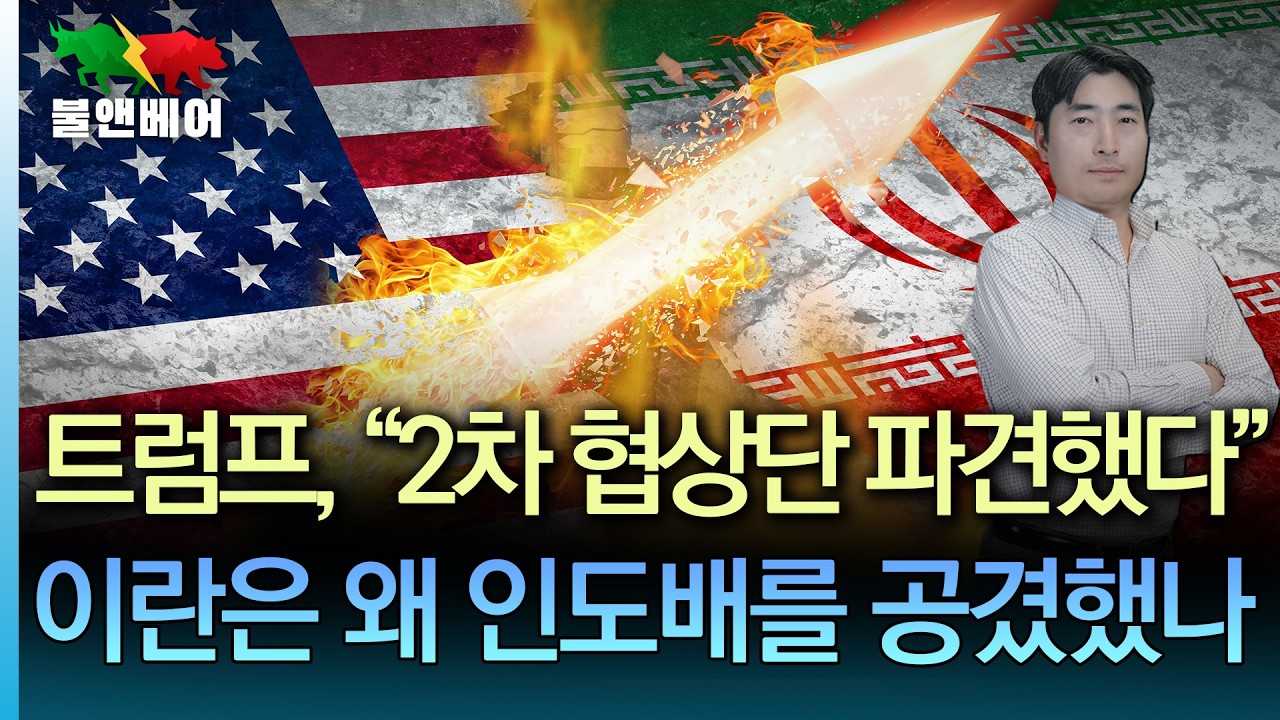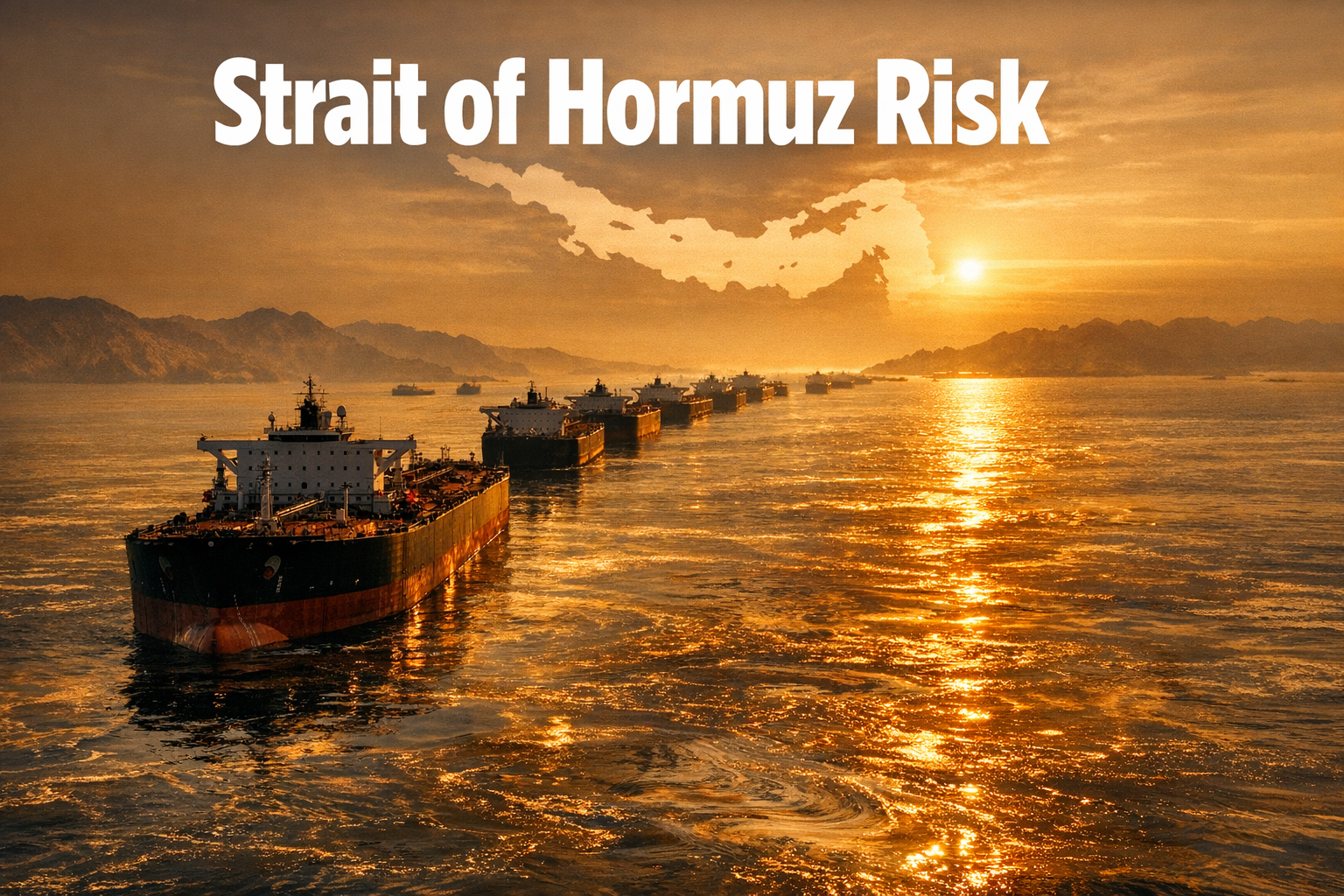
● Trump Iran Summit Shock, Hormuz Threat, Oil Spike
Trump to Re-Dispatch Negotiating Team to Pakistan: Signal of Renewed Iran Talks, While Strait of Hormuz Risk Remains Unresolved
Markets are focused on three questions:1) Whether a second round of U.S.-Iran negotiations will actually take place.
2) Whether the risk of disruption or closure in the Strait of Hormuz will ease.
3) How this will affect crude oil, U.S. equities, Bitcoin, and global supply chains.
This is not a routine diplomatic headline. It is a macro-sensitive geopolitical variable directly linked to oil prices, inflation expectations, interest-rate paths, safe-haven demand, energy security, and broader risk premia.
This report summarizes the implications of the U.S. decision to re-engage via Pakistan, Iran’s internal power fragmentation, developments around the Strait of Hormuz, market transmission channels, and key points often underweighted in mainstream coverage.
1. What just happened: Key developments
Signals from Trump’s camp indicated that a negotiating team is being sent again to Islamabad, reviving the possibility of a second U.S.-Iran meeting.
The message was dual-track:
- Negotiations remain on the table.
- Failure to reach agreement could trigger strikes on critical Iranian infrastructure.
This should be interpreted as opening a final diplomatic channel while maximizing military pressure.
Trump’s side also stated that Iran violated a ceasefire arrangement related to Hormuz, while simultaneously confirming delegation movement toward Pakistan. For markets, this is a high-intensity “coercion-and-negotiation” phase, which typically drives volatility in crude oil, shipping, defense, USD, gold, and broad risk assets.
2. Why Pakistan: Why Islamabad is emerging as the venue
A key detail is the choice of Islamabad.
Pakistan has functional ties with the U.S., geographic proximity to Iran, and can serve as a diplomatic buffer between the Middle East and South Asia. It is comparatively neutral, with strong security control—suitable for closed-door senior-level meetings.
Notably, security preparations in Islamabad reportedly preceded the public messaging, including:
- Major road restrictions
- Suspension of public transport
- Hotel booking constraints
- Closure of transport hubs
These measures can be interpreted as pre-positioning for a high-level schedule, though they do not guarantee talks will occur; Pakistan may also be preparing contingencies.
3. Iran is not acting as a single decision-maker: Internal fragmentation as a primary risk
A central risk is that Iran is not delivering a unified message.
Key centers of influence—diplomatic leadership, the president’s moderate camp, the Supreme Leader’s circle, and the IRGC—are not consistently aligned. This raises execution risk: agreements reached at the negotiating table can fail during implementation.
In reported messaging, the foreign minister signaled a more moderated stance on freedom of navigation, while IRGC-linked responses appeared to contradict it, including criticism of the foreign minister. This suggests weak coordination between diplomatic and military lines.
For investors, the risk is elevated because even if the U.S. concludes that an agreement exists, non-compliance by armed elements could intensify tensions.
4. Why the reported gunfire incident involving an Indian tanker matters
A potentially underappreciated point is reported IRGC gunfire directed at an Indian tanker.
India is not a fully adversarial counterpart to Iran and typically maintains channels of engagement. If gunfire occurred despite claims of prior passage authorization, it may indicate degraded command-and-control or inconsistent enforcement.
From a market perspective, uncontrolled tactical actions by armed units can create larger volatility than predictable hardline policy, because incident risk becomes harder to price.
5. The strategic focus of Trump’s message: Targeting the IRGC rather than Iran broadly
The framing appears to emphasize the IRGC more than Iran as a whole.
This can be viewed as a calibrated approach:
- Keep the door open for negotiations.
- Increase pressure on hardline actors.
- Leverage internal divisions.
The implied structure is:“We are offering a reasonable deal; the obstacle is the IRGC.”
If this framing gains traction, the U.S. may strengthen diplomatic legitimacy, provide moderates with justification to re-engage, and isolate hardliners via targeted pressure.
6. Ceasefire deadline and second-round talks: Near-term checkpoints
A primary timing variable is the ceasefire deadline referenced as the 22nd. If negotiations do not occur or fail before then, tensions could revert quickly toward renewed military escalation.
Key monitoring items:
- Whether senior-level talks occur in Islamabad
- Whether Pakistan provides official confirmation
- Whether Iranian diplomatic and IRGC messaging converges
- Whether additional incidents occur affecting Hormuz transit
- Whether U.S. operational preparations for military options become visible
These factors are likely to set the direction of global markets in the near term.
7. Why markets are sensitive: Linkages among oil, equities, rates, and USD
This issue transmits to markets through pricing, not narrative.
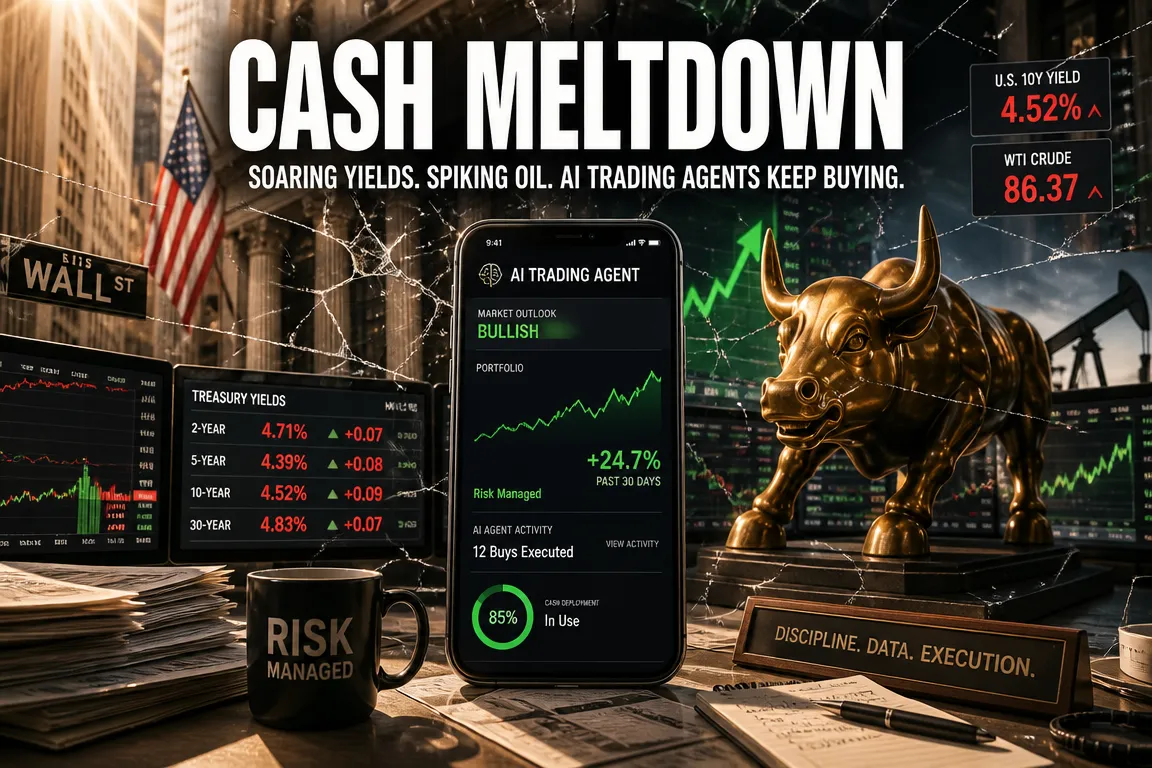
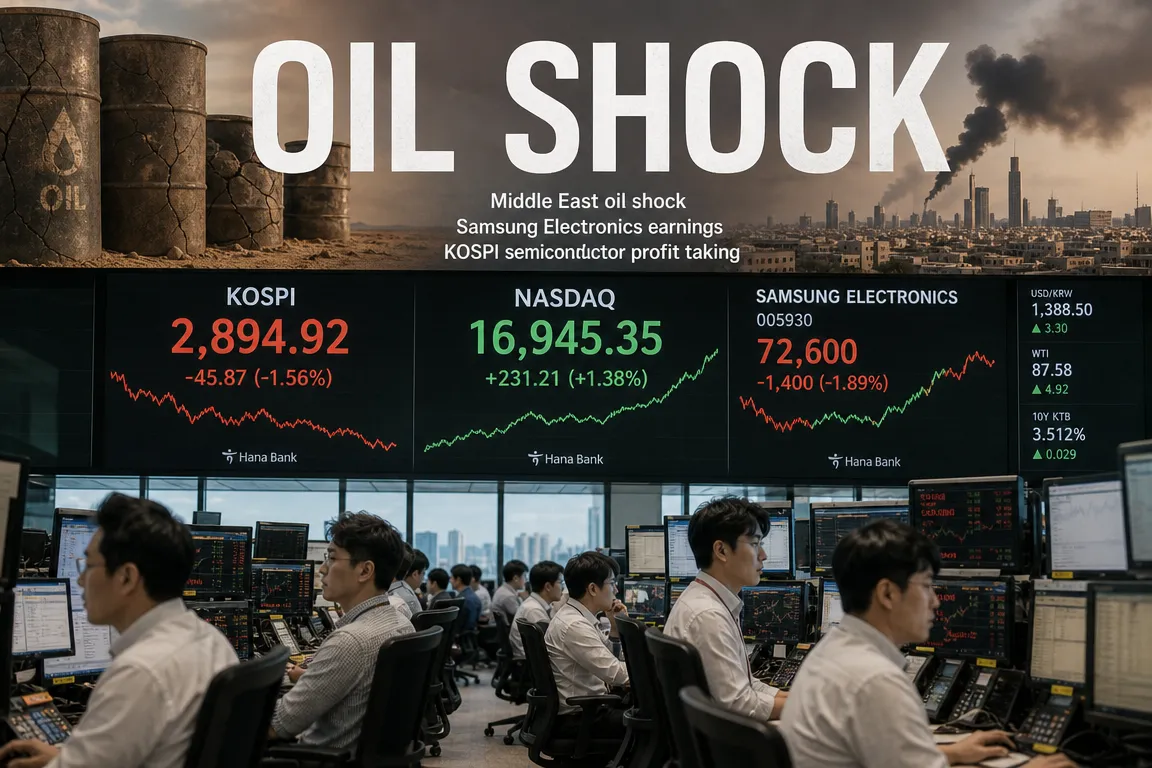
Crude oil is typically the first mover. The Strait of Hormuz is a critical chokepoint; even partial disruption concerns can lift prices.
Higher oil raises inflation risk via transport costs, input prices, and consumer energy prices, which can delay rate-cut expectations and complicate a dovish Fed narrative.
This is generally negative for U.S. equities—particularly growth and Nasdaq—through higher discount-rate pressure. Relative beneficiaries may include defense, energy, and select commodities exposures.
Heightened geopolitical risk can also support USD strength and higher gold prices via safe-haven demand.
8. Implications for Bitcoin and Ethereum
Crypto reactions are regime-dependent.
In the initial shock phase, Bitcoin may trade like a risk asset, with downside pressure if USD liquidity tightens and U.S. equity futures weaken.
Over a medium horizon, if financial-system uncertainty rises and diversification demand increases, the “alternative asset” narrative could re-emerge.
Base case framing: higher short-term volatility with conditional medium-term re-rating potential.
9. Key considerations for Korean investors
This is not a distant headline for Korea.
1) Import cost pressure: Korea’s high energy import dependence makes rising crude a direct headwind for trade balance and corporate margins.
2) FX sensitivity: risk-off dynamics and USD strength can lift USD/KRW, affecting foreign flows and KOSPI volatility.
3) Sector dispersion: refiners, defense, shipping, and some materials may attract attention, while airlines, transportation, chemicals, and select consumer sectors face cost pressure.
4) Supply-chain risk: beyond oil, shipping disruptions can raise insurance premiums, delay routes, and increase freight costs.
10. Core points often underweighted in coverage
The headline “talks may resume” is not the full story.
10-1. More important than whether talks occur: Who credibly represents Iran
The key issue is whether Iran’s negotiating representative has authority and enforcement capacity over operational actors. Without credible internal control, even a held meeting may not sustain market confidence.
10-2. Hormuz risk: Partial disruption is more destabilizing than a formal closure
Markets can reprice sharply without a full blockade. A small number of incidents, higher insurance costs, route delays, or inconsistent transit approvals can trigger immediate oil and shipping moves.
10-3. Trump’s hardline language may also serve domestic oil-price signaling
Statements implying limited U.S. downside may be intended to dampen domestic inflation and voter concerns tied to energy prices, while maintaining coercive leverage over Iran.
10-4. Not a short-term war headline: A template for hybrid geopolitical risk
Future geopolitical risk is likely to present as hybrid escalation—intermittent strikes, negotiation cycles, cyber activity, maritime harassment, and information operations—rather than conventional full-scale war. Portfolio positioning may require scenario-based risk control rather than binary “risk-on/risk-off” rules.
11. Scenario framework
Scenario A. Second-round talks proceed; tensions ease
Potential for rapid stabilization in crude. U.S. equities and global risk assets may rebound, with growth potentially benefiting if rate-cut expectations re-stabilize. Upside may be capped if Iran’s internal fragmentation persists.
Scenario B. Talks occur but no agreement
Highest volatility scenario. Markets may whipsaw on headlines; crude and U.S. equities could experience repeated swings, raising short-term trading difficulty.
Scenario C. Talks fail; maritime conflict re-escalates
Higher probability of oil spikes, USD strength, gold appreciation, and U.S. equity drawdowns. In Korea, USD/KRW upside and KOSPI volatility could rise simultaneously, with airlines/transportation/chemicals particularly exposed.
12. Investor takeaways
This should not be framed solely as “negotiation optimism.” Three points dominate:
- Negotiation optionality exists, but implementation credibility remains constrained.
- Iran’s internal power fragmentation may be a larger risk than markets assume.
- The Strait of Hormuz can generate material macro and supply-chain shocks without a formal full closure.
In this regime, scenario-based portfolio risk management may be more effective than directional conviction trades.
13. One-page news-style summary
- Trump’s camp signaled re-dispatch of a negotiating team to Islamabad.
- Strong warning issued: failure to reach agreement could lead to strikes on key Iranian infrastructure.
- Indications that Islamabad entered advance security posture.
- Messaging divergence observed between Iran’s diplomatic channel and the IRGC.
- Reported gunfire incident involving an Indian tanker suggests potential weakening of internal control.
- Negotiation outcome before the ceasefire deadline is a key variable for crude and U.S. equities.
- For Korean investors: monitor FX, commodities, energy, and defense exposures.
< Summary >
Re-dispatching a negotiating team to Pakistan increases the probability of a second U.S.-Iran negotiation channel, but the dominant risk is Iran’s internal fragmentation and the IRGC’s operational autonomy.
Strait of Hormuz disruption risk can materially affect crude and supply chains even without a full closure, making this a macro-relevant variable for inflation, rates, U.S. equities, FX, and crypto.
Near-term market direction is likely to depend on whether talks occur before the ceasefire deadline and whether maritime incidents re-emerge.
[Related Articles…]
- https://NextGenInsight.net?s=international%20crude%20oil
- https://NextGenInsight.net?s=AI
*Source: [ Maeil Business Newspaper ]
– [속보] 트럼프, 파키스탄에 협상단 보냈다. “협상 안되면 이란 불바다” I 홍장원의 불앤베어