● GPU Utilization War
“Why Musk handed over a $100B data center to a ‘competitor’” The real war behind it: coding agent + data center war + the contest of GPU utilization
The core point I want you to hold onto to the end of this article is exactly these 3 things.
1) A structure where the coding agent takes ‘most’ of the AI revenue
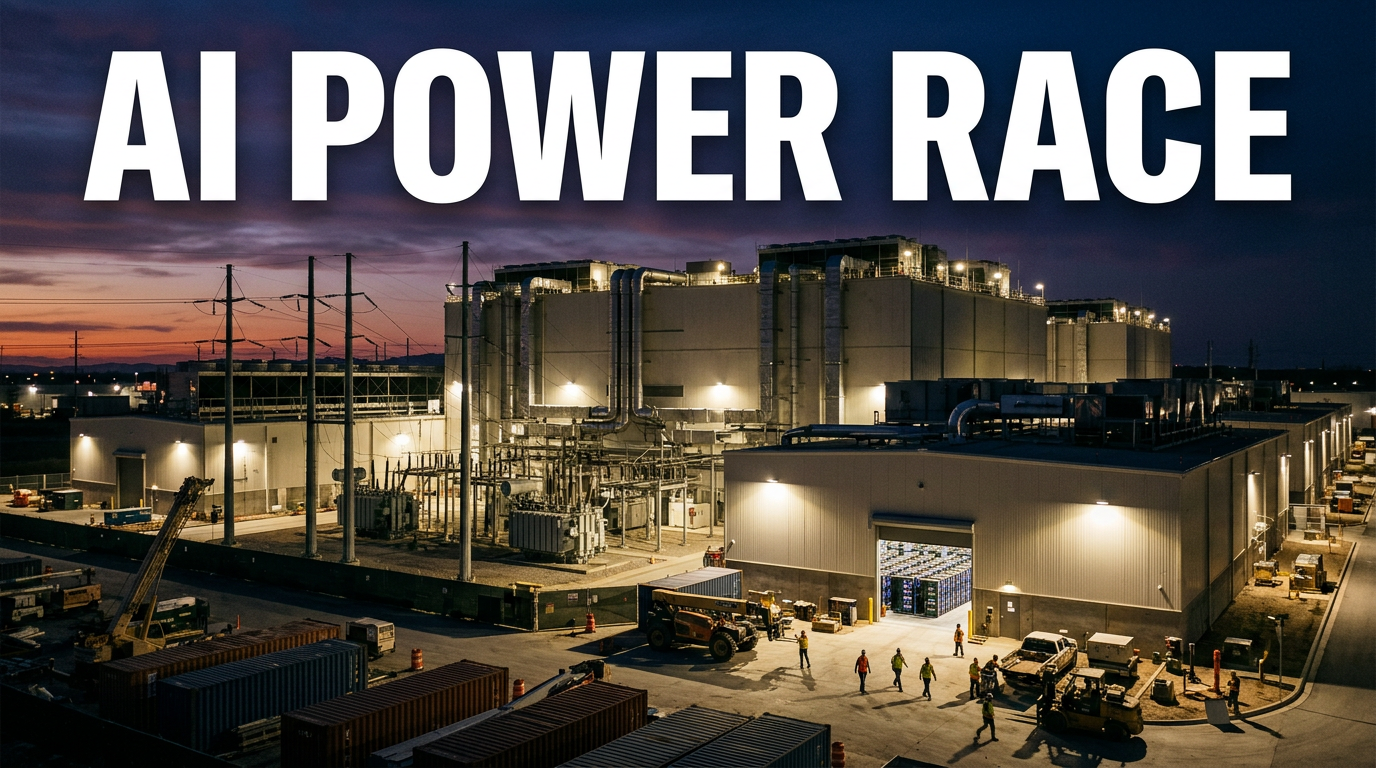
2) The war to secure data centers/power/computing power needed to run that coding agent
3) But XAI had GPUs it could use, and still took a loss due to the GPU utilization (uptime) problem, so Musk made the “it’s advantageous even if I hand it over” choice.
As these three come together, the monetization speed of coding AI like Claude (Code)·Codex and the three-horse scenario of OpenAI/Anthropic/Gemini, and even NeoCloud (a kind of AI-dedicated infrastructure) growth connect all at once.
1) Right now, the world is in a ‘computing power war’… and the standard of dominance is shifting toward GPUs
The big frame of the original piece is the view that “like a nuclear weapon, computing power determines dominance.”
In other words, the AI race isn’t only about building models—it’s becoming a matter of who first captures the infrastructure that actually runs AI (data centers/power/chips/operations).
- Source of exploding computing demand: Most of it comes from coding agents
- Monetization speed: Coding agents connect to cash faster
- IPO expectations: “Ultra-large events” like SpaceX·Anthropic·OpenAI further heighten market tension
The connection points are also clear from an SEO perspective.
Today’s topic ultimately comes down to “global AI investment” “data centers” “AI semiconductors” “power infrastructure” “GPU supply chain”.
2) Coding agents are eating up ‘most’ of AI revenue: the dash of Claude vs Codex
The most strongly stated figure in the original is this. 80% of AI B2B revenue comes from coding agents (based on a graph).
- The race for #1: the flow that Claude Code from Anthropic has the upper hand
- Chasing: OpenAI’s “Codex” is quickly catching up
- Pricing structure: for both services, “around $200 per person per month” effectively operates like a de facto standard
- Why $200 feels ‘essential’: if you can’t afford the tokens (usage), the work can be blocked—costs become so heavy
As a result, from a company’s perspective, it’s like this:
“Hiring an employee costs at least thousands of dollars,” yet
“With $200, you can extract more work,” so usage explodes, and
the revenue of coding models like Claude and Codex rises like an exponential function.
Based on the original, it mentions numbers like “Claude Code revenue grows by about 44x in a year,” and it also raises expectations of double-digit growth again next year.
3) Still, there was a problem: not the ‘model’—but a lack of ‘computing capacity’
From here, the story sharply changes.
Even if coding AI sells well, if there aren’t enough GPUs/power/servers to run it, the speed is inevitably capped.
In the original, the trigger to break through this bottleneck is “SpaceX’s data center rental offering.”
4) SpaceX acquired XAI, and gave its data center to Anthropic ‘by lining up’—the shocking reason
The point is simple.
XAI is building its own model (Grok)—so why would it lend computing power to a competitor (Anthropic)?
The original piece nails down that this question is the core.
- SpaceX–Anthropic partnership: mentions long-term plans like expanding orbit/AI computing capacity
- Relational structure: a win-win where each side’s “needs” line up perfectly
Especially, the deal size described in the original is like this:
- ~300MW-class data center (by size, it’s ‘medium’ rather than something that looks colossal)
- ~220,000 NVIDIA GPU (MVIDIA GPU) units worth of leasing (as expressed in the original)
- Securing 13.8GW within a month (however, based on “contracted power”)
- Available power: in reality, the “usable” power Anthropic secured could be lower
Also, the original frames OpenAI’s StarGate project (power procurement) as a comparison baseline, and draws contrasts like “OpenAI secured 18GW over 18 months.”
5) ‘Power + dedicated infrastructure’ is the deciding factor: NeoCloud rises faster than hyperscalers
Here, the economic/industry angle becomes stronger.
The core is “as demand for AI infrastructure grows, where that demand attaches faster matters more.”
- NVIDIA’s ACI revenue: split and tallied based on NeoCloud Plus/Sovereign AI demand
- Hyperscaler revenue growth rate: relatively more gradual
- ACI (NeoCloud) revenue growth rate: mention of growing 31% quarter-over-quarter
- Jensen Huang’s direction: “NeoCloud will grow faster in the long run”
The original translates this logic like this.
Hyperscalers rent out general-purpose GPUs, while NeoCloud builds an AI-dedicated cluster so that the “rental efficiency (full-stack efficiency)” is higher—meaning the market can only get bigger.
So this is no longer a model competition; it’s a phase shifting into a game of optimizing AI infrastructure investment.
That’s why everything gets bundled into the keywords “global AI investment,” “data centers,” “AI semiconductors,” “power infrastructure,” and “GPU supply chain.”
6) The real reason XAI stopped (before/after the rental): GPU ‘utilization’ was abysmal
This is what the original points to as the most shocking internal issue.
In XAI, GPU utilization is described as “out of 100 units, 89 were idle,” which is to say a utilization rate of 11%.
- Cause: the tail effect (straggler effect) sets the overall speed, determined by the slowest GPU
- Burden of mixed architecture: mixing different-generation chips (H100/H200/others) can reduce training/inference efficiency
- Competitive landscape: other competitors are said to raise GPU utilization to 30–40%, or up to 60% at most
So ultimately, the original interprets it as: not that “XAI lost in model competition,” but that the bigger mistake was in infrastructure operations.
7) Even so, SpaceX’s calculation for winning with ‘infrastructure, not models’: passing Colossus 1 to others might not be a loss
Here’s where the logic kicks in that Musk’s choice looks strange at first—but turns out to be rational.
- Colossus 1: mixed setup (as mentioned in the original, numbers like H100/H200/B200)
- Efficiency problem: with a mixed-chip structure, optimizing inference/training is hard, so it might not be the best efficiency even for themselves
- Anthropic is already strong in coding pipelines: helps fill the needed power/computing quickly
- A win-win: XAI speeds up how quickly it recovers costs via leasing, and Anthropic immediately fills the shortage in capacity
The original presents a picture that break-even could happen within about 3 years by comparing things like “total cost of owning and operating Colossus 1 (estimated at roughly $20B)” and “$6B per year via leasing (as expressed in the original).”
8) ‘Why buy the cursor?’: because coding capability is ultimately the core of the next model generation
Another big link is “coding model capability.” The original interprets it as XAI trying to quickly bring in coding experts from outside rather than just relying on its own Grok.
- Coding AI powerhouse Cursor is mentioned
- Option contract: structures like the right to acquire for $60B and an option cost of $10B are mentioned
- Why bring it from outside?: to accelerate the development speed of its own coding model in the short term
- Future trend: the direction where coding becomes more important than video (interpreted as because models can do self-learning/self-improvement)
The conclusion in the original is this.
“Both hyperscalers and AI labs focus on coding capability. In the end, the next GPT generation accelerates through coding pipelines.”
9) Ultimately the market moves toward a ‘three-horse system’: OpenAI · Anthropic · Gemini
The original presents the final picture as a “three-horse system.”
It’s still unclear which of OpenAI, Anthropic, and Gemini will take outright #1, but the emphasis is that Anthropic’s growth rate is too fast.
- The existing #1: OpenAI was overwhelmingly dominant
- Latecomer surge upward: Anthropic is chasing and overtaking
- Next viewing point: coding agent monetization + speed of securing data centers
And there’s an expression that “the SpaceX deal played an oxygen role for Anthropic.”
In reality, it says the “disconnect/mid interruptions” problems experienced in Claude were alleviated, and that usage limits and token limits were adjusted immediately.
10) The single most important line I’d extract from reading this original ‘differently’
I’d like to reinterpret this in one line like this.
The outcome of AI isn’t determined by a smarter model, but by the ability to operate data centers more efficiently running GPUs.
Here, the SpaceX–Anthropic deal isn’t just a simple “becoming friendlier” transaction; instead, it reads as infrastructure rebalancing to avoid inefficiencies in GPU utilization, scheduling, and mixed architecture—and to accelerate the growth speed of coding agent revenue.
Main content to convey (key takeaway summary that’s hard to include in the original only)
- Coding agents are at the center of AI B2B revenue: instead of “model performance,” it’s the “coding workflow that actually turns into money” that comes first.
- The winning condition for the data center war is power + uptime: it’s not just buying more GPUs—you have to raise utilization.
- XAI had GPUs but lost due to inefficiency on the scale of ‘11% utilization’: that’s why leasing/pivoting gets rationalized.
- NeoCloud (dedicated infrastructure) grows faster than hyperscalers: signals like ACI revenue growth rates support this.
- The three-horse setup continues, but the speed of securing data centers shakes up the board: OpenAI might not be the only guaranteed #1.
< Summary >
- Coding agents take most of AI B2B revenue (80% based on the original), and Claude and Codex are growing rapidly.
- However, expanding coding AI is bottlenecked by computing capacity and data centers/power/uptime.
- By leasing the data centers that SpaceX secured via XAI (part of the Colossus series) to Anthropic, Anthropic quickly bolsters power/computing.
- XAI can’t achieve efficiency because GPU utilization is low at around 11% (the claim that “89 out of 100 units were idle”), leading to infrastructure operations problems.
- NeoCloud (dedicated AI infrastructure) grows quickly in an ACI form, and it’s suggested it may become bigger than hyperscalers in the long run.
- In the end, AI competition shifts from model fights plus data center operations (utilization) fights, and the market develops under the three-horse lineup of OpenAI·Anthropic·Gemini.
[Related articles…]
- Coding agent dominance over corporate revenue: why ‘utilization’ makes money more than ‘models’
- The decisive battle in the AI data center war: power, uptime, and the GPU supply chain determine results
*Source: [ 월텍남 – 월스트리트 테크남 ]
– 머스크가 10조원 데이터센터를 클로드에게 넘긴 충격적 이유 ㄷㄷ…