● Tesla Rebounds, China Sales Surge, Model YL Leak, SpaceX Overvalued
Tesla Shares Rebound; China Sales Surge; Model YL Testing Signals; SpaceX Valuation Debate — Consolidated Investor Brief
The key points to monitor for Tesla are fourfold:
1) Signs of concurrent sales stabilization in China and Europe are reviving expectations for 2Q results.
2) The Model YL—previously viewed as unlikely for a U.S. launch—has reportedly been observed testing at the Fremont facility, suggesting potential shifts in product strategy.
3) Retail investors have been reducing exposure while institutional ownership has risen to record levels.
4) Warnings that SpaceX expectations may be running ahead of fundamentals warrant a reassessment of investor sentiment across the broader Musk ecosystem.
This report links these developments to U.S. equities, the global economy, the EV market, AI-related positioning, and rate-cut expectations.
1. Market Tape: Tesla Rebounded; Direction Matters More Than the Print
Tesla closed at $423.74, up 1.89%, following a prior-day decline of more than 4%. The move appears more closely tied to China sales data than purely technical factors.
Nasdaq and the S&P 500 posted limited gains, indicating Tesla-specific catalysts drove relative performance. Some institutions also flagged overheating risk in the AI rally, relevant to potential sector rotation. Tesla remains positioned as a hybrid auto/AI/autonomy/robotics/energy narrative, which may matter if capital rotates out of concentrated AI winners.
2. China May Sales Surge: The Most Direct Catalyst
China Passenger Car Association (CPCA) data show Tesla China May wholesale sales at 85,982 units:
- +39.44% YoY
- +8.18% MoM
- Jan–May cumulative: 378,858 units (+29.36% YoY)
The key implication is potential upward revision to 2Q delivery expectations. Tesla has faced growth concerns amid China competition, European softness, and headline risk. The combination of earlier European stabilization signals and strong China wholesale data has supported a “2Q trough” narrative.
3. China Demand: Structural Recovery vs. Financing-Driven Pull-Forward
The May acceleration should not be treated as definitive evidence of structural demand recovery. Tesla introduced financing programs in China during May, lowering minimum down payments (notably for Model 3), which may have pulled demand forward.
Monitoring June and July continuity is critical:
- Weak follow-through would support a pull-forward interpretation.
- Sustained strength would increase confidence in underlying demand normalization.
4. Critical Distinction: Wholesale vs. Customer Deliveries
The CPCA figure reflects wholesale volumes (factory shipments from Gigafactory Shanghai), not end-customer deliveries. It includes domestic China demand and exports to Europe and other regions.
Interpretation therefore requires separating:
- Potential China domestic demand improvement
- Potential increase in global exports from Shanghai
Given concurrent European stabilization indicators, markets may increasingly frame this as a broader rebound in Tesla’s global shipment cadence.
5. Europe: Why 2Q Expectations Are Being Recalibrated
Several European countries showed sharp increases (e.g., France +655%; notable improvements also cited in Denmark, Spain, and Sweden). These figures can be distorted by base effects, shipment timing, subsidy policy changes, and registration lags. The primary signal is the direction of the broader European trend rather than any single-country print.
If Europe and China improve simultaneously, investors may begin to price higher odds of a 2Q delivery upside surprise ahead of early-July delivery reporting.
6. Core Equity Driver: ASP and Margin, Not Volume Alone
Higher unit volume is not sufficient if achieved through price cuts or financing support that compresses profitability. The most relevant 2Q metrics are:
- Deliveries (volume)
- Automotive ASP resilience
- Gross margin and operating margin trajectory
Equity performance typically responds more to profit per unit than units shipped.
7. Fremont Model YL Testing: Potentially the More Strategic Development
Separate from near-term sales data, the more strategic catalyst is potential U.S. availability of the Model YL. A camouflaged vehicle was reportedly observed on the Fremont test track and speculated to be the Model YL.
The Model YL is described as a longer-wheelbase, 6-seat variant with second-row captain’s chairs and a third row, positioned as a family-oriented SUV. It has already expanded beyond China into Australia, New Zealand, and parts of Asia. A U.S. test program would be notable given prior commentary suggesting limited U.S. launch intent, implying potential strategic recalibration.
8. If Model YL Launches in the U.S., What Changes
A U.S. Model YL launch could affect product mix and economics, not merely add another trim. With Model S/X volumes and visibility reduced, Tesla’s premium three-row SUV offering is less central. Model YL could:
- Capture three-row demand at a lower price point than Model X
- Maintain manufacturing efficiency via the existing Model Y platform
- Support higher ASP relative to the base Model Y
- Strengthen positioning in the North American family-SUV segment
This combination may be favorable to revenue mix and profitability if pricing holds.
9. Why Model YL Matters to Financials: Mix Improvement Potential
A key recent challenge has been declining ASP driven by mix and pricing actions. A higher-priced variant on an established platform can improve mix without introducing the cost and complexity of a clean-sheet vehicle program, which can be advantageous in a more price-sensitive consumer environment.
10. Retail Selling vs. Institutional Buying: A Material Ownership Signal
Fintel-based ownership is summarized as:
- Institutions: 47.8%
- Elon Musk: 20.3%
- Retail investors: 31.9%
Institutional ownership has risen while retail participation has declined, suggesting a transfer of shares from retail to institutions.
11. Constructive Read: Institutions Accumulating at a Lower Valuation
A favorable interpretation is that long-duration capital is rebuilding exposure. Institutions often emphasize cash flow, product cycle optionality, and embedded autonomy/AI option value over short-term headlines. Rising institutional ownership can coincide with a base-building phase.
12. Cautionary Read: Institutional Buying Is Not Automatically Conviction
Higher institutional ownership can also reflect passive index/ETF flows rather than discretionary conviction. Declining retail ownership could also indicate erosion of a historically important retail narrative component, which may reduce upside elasticity even if it lowers volatility.
13. Historical Context: Similar Setups Have Been Pivotal but Not Deterministic
A comparable pattern was observed in 2019, when institutional positioning improved during elevated skepticism and was later followed by a major trend reversal. However, institutional accumulation can also precede extended range-bound trading. The key question is why institutions are increasing weight at this point in the cycle.
14. SpaceX IPO Expectations: Potential Capital Reallocation Risk for Tesla
SpaceX IPO anticipation may affect sentiment and flows within the broader Musk ecosystem. Retail capital, in particular, can rotate toward high-profile IPO narratives, potentially pressuring Tesla demand at the margin.
15. Morningstar’s SpaceX Assessment: Substantially Below Market Expectations
Morningstar presented a more conservative valuation view:
- Market expectation: approximately $1.75 trillion
- Morningstar estimate: approximately $781 billion
The gap reflects differing assumptions around long-term optionality.
16. Why SpaceX Faces “Overvaluation” Claims: Elevated Price-to-Sales
The key cited metric is price-to-sales (P/S):
- SpaceX implied P/S: ~93x to 107x (based on market expectation)
- Tesla P/S: ~16.8x; prior peak “overvaluation” periods cited at ~22x–25x
This implies the market is assigning SpaceX a premium well above Tesla’s historical peak multiples, effectively pricing in dominant future industry positioning.
17. Core Valuation Debate: Rocket Company vs. AI Infrastructure Platform
Morningstar attributed most value to launch services and Starlink (approximately $611 billion), with an incremental AI-related scenario value of about $170 billion. Market pricing appears to embed a materially larger AI premium.
Two frameworks dominate:
- Conservative: SpaceX is primarily an aerospace/communications company; AI premium should be limited
- Optimistic: Starlink could evolve into global data infrastructure integral to AI network effects
Valuation outcomes are therefore highly sensitive to platform assumptions rather than near-term earnings power.
18. Large IPOs: Strong Businesses Can Still Be Volatile Securities
High-profile technology IPOs have frequently experienced early volatility and drawdowns. A central risk factor is lock-up expiration, when early investors and employees may sell, increasing supply. If retail allocation is high, initial volatility can be amplified. Business quality and public-market entry valuation are distinct considerations.
19. SpaceX Business Quality vs. Entry Valuation
A valuation caution does not negate business competitiveness. Starlink is cited as demonstrating meaningful revenue and cash-generation capacity, and launch services have high barriers to entry. The debate is primarily whether current pricing is discounting too much future value too early—a recurring issue across AI-adjacent markets.
20. Why Tesla and SpaceX Should Be Viewed Together: Ecosystem Flow Dynamics
Although separate entities, Tesla and SpaceX are linked in investor psychology. Rising SpaceX enthusiasm can reduce Tesla’s relative appeal, while intensified SpaceX valuation skepticism can shift attention back toward Tesla’s more transparent cash flow and operating metrics. These cross-currents can influence near-term flows and volatility.
21. News-Style Key Takeaways
China
- May China wholesale: 85,982 units (+39.44% YoY), lifting 2Q delivery expectations.
- Financing incentives may have contributed; June–July follow-through is required.
Europe
- Multiple markets show recovery signals; China and Europe improving concurrently has led to upward 2Q expectation adjustments.
Product Strategy
- Model YL testing reportedly observed at Fremont.
- A U.S. launch could address the three-row gap and support ASP/mix.
Positioning/Flows
- Institutional ownership increased to 47.8%; retail ownership declined to 31.9%.
- The quality of institutional demand (active vs. passive) remains a key question.
SpaceX
- Morningstar’s valuation is materially below market expectations.
- The central disagreement is the size of the AI platform premium.
Core Monitoring Framework (Non-Consensus Emphasis)
The primary issue is not unit sales alone, but whether Tesla is being priced as a composite exposure spanning autos, AI, robotics, energy, and Musk-ecosystem flow dynamics. Key items to monitor:
- Whether China/Europe improvements translate into ASP and margin stabilization
- Whether Model YL meaningfully shifts North American revenue mix
- Whether institutional accumulation is predominantly active or passive
- Whether SpaceX IPO enthusiasm diverts flows from Tesla or triggers broader ecosystem repricing
This environment is best assessed through capital-flow and valuation-structure shifts rather than headline delivery prints alone.
22. Watchlist
- Near term: 2Q delivery expectations may provide support; durability requires margin and ASP resilience.
- Medium term: Confirmation of a U.S. Model YL launch could be a material mix catalyst.
- Flow risk: A strong retail rotation toward SpaceX-related narratives could weigh on Tesla near-term demand for the equity despite operational improvements.
< Summary >
Tesla is seeing renewed 2Q optimism as China and parts of Europe show stabilization signals. China May wholesale sales rose to 85,982 units, but the contribution of financing incentives remains unclear and requires June–July validation. A Model YL test sighting at Fremont suggests potential U.S. launch consideration, which could improve mix and support ASP. Ownership trends indicate institutions increasing stakes (47.8%) while retail participation declines (31.9%). SpaceX faces heightened valuation scrutiny, with Morningstar estimating a value well below market expectations; the key dispute is the magnitude of the AI premium. The central investor focus should remain on profitability, mix, the nature of institutional flows, and capital rotation within the Musk ecosystem.
[Related Links…]
- Tesla earnings and EV market restructuring: https://NextGenInsight.net?s=Tesla
- AI industry and U.S. equity flow analysis: https://NextGenInsight.net?s=AI
*Source: [ 오늘의 테슬라 뉴스 ]
– 모닝스타 “���페이스X, 목표가의 절반도 안 된다” — 그런데 기관은 테슬라를 47.8% 역대 최고로 담았다, $423 주주는?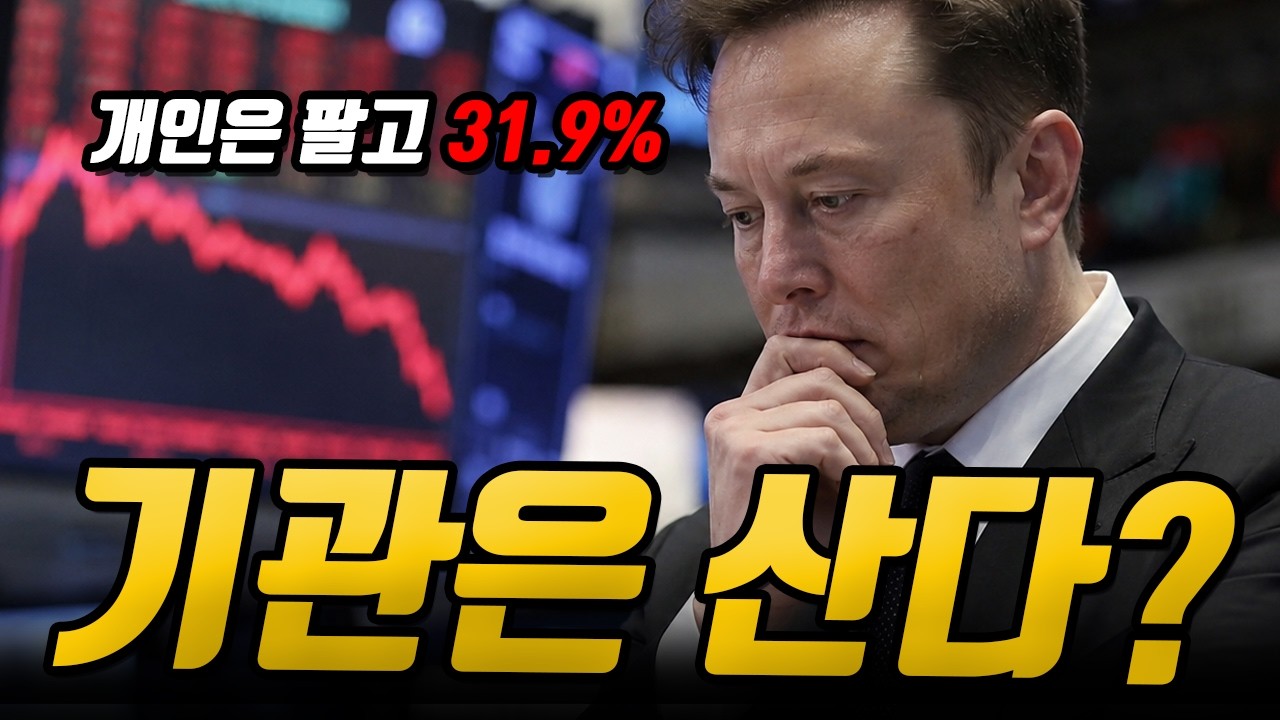
● AI-Bubble-Alert, Semiconductor-Feud, Tax-Windfall-Showdown
Performance Bonus Allocation, KRW 120 Trillion in Fiscal Over-Collection, and the AI Bubble Risk: Key Drivers of Current Economic Friction in Korea
This issue extends beyond simple redistribution. It simultaneously involves (i) corporate decisions on performance bonus allocation, (ii) national policy choices on how to deploy fiscal over-collection, and (iii) industrial policy design to scale AI and semiconductor investment while limiting bubble formation.
Key questions addressed:
- Why a semiconductor upswing can increase internal and societal conflict
- Why the talent competition between Samsung Electronics and SK hynix intensifies bonus disputes
- Why fiscal over-collection should be linked first to debt dynamics and future-oriented investment rather than broad cash distribution
- How poorly designed AI policy can amplify bubble risk via capital concentration
1. Core Thesis: “The Post-Windfall Phase Can Be Harder Than the Downturn”
During downturns, the primary challenge is endurance. When profits and tax revenues surge, the primary challenge becomes allocation. Latent conflicts often surface once incremental resources appear, both within firms and at the national level. The episode reflects structural distribution frictions rather than a narrow wage or fiscal debate.
2. Corporate Issue: Why Performance Bonus Allocation Is Not a Simple Compensation Matter
2-1. New Frictions Driven by a Semiconductor Upcycle
With semiconductor conditions improving and operating profit rebounding, bonus allocation criteria and magnitude have become central issues. Large performance dispersion across business units (e.g., memory vs. non-memory; semiconductor vs. non-semiconductor) can trigger internal disputes over fairness, attribution, and capital allocation philosophy.
2-2. Why Samsung Electronics vs. SK hynix Talent Competition Pushes Bonuses More Aggressively
Talent mobility increases the strategic role of bonuses. Bonus expansion can be framed not as concessionary labor spending, but as a retention mechanism for scarce, high-impact technical roles critical to competitiveness in HBM, next-generation memory, and AI semiconductor design/production. Under this framing, bonuses function as investment to sustain future execution capability.
2-3. Recurring Conflict Among Shareholders, Labor, and Management
Incentives diverge structurally:
- Shareholders prioritize higher capital returns
- Employees and labor groups prioritize performance-linked compensation
- Management must balance retention, reinvestment capacity, and financial discipline
As a result, governance and internal communication become stress-tested whenever bonus negotiations escalate.
3. Practical Communication Framework: “Level Plus One”
A direct, bilateral framing (“you vs. me”) tends to devolve into distributive conflict. Escalating the discussion to a higher-level shared principle (“level plus one”) can reduce friction.
Example:
- “Bonuses increased due to labor pressure” is likely to intensify shareholder resistance.
- “Bonuses are a strategic retention tool to protect competitiveness” is more coherent in capital-market terms.
The emphasis shifts from emotional dispute to guiding principles: rule consistency, market compatibility, and long-term incentive alignment.
4. Institutional Approach: Why Repeating the Strike–Mediation Cycle Is Inefficient
4-1. Proposal: Standing External Mediation Mechanism
Instead of recurring escalation (strike risk, production disruption, volatility, reputational damage) followed by ad hoc mediation, a standing third-party mechanism staffed by relatively independent experts could be institutionalized, with pre-committed adherence to decisions.
4-2. Rationale
A pre-designed buffer can intervene before disputes become systemically costly, improving operational resilience and reducing governance-related volatility.
5. National Issue: How to Use KRW 120 Trillion in Fiscal Over-Collection
5-1. Priority: Legal and Fiscal Governance Principles Over Politically Attractive Distribution
Fiscal over-collection should be handled in line with established fiscal governance: verify mandatory outlays and intergovernmental transfers, then prioritize sovereign debt reduction before discretionary expansion.
5-2. Why Debt Reduction Can Be Pro-Growth
Debt repayment and/or government bond buybacks can support interest-rate stability and improve private-sector financing conditions, indirectly expanding corporate capacity for capex, R&D, and new business formation. This functions as a structural support measure, not merely an accounting exercise.
5-3. Allocation of Residual Capacity: Two Rational Uses
After fiscal discipline measures:1) Support for vulnerable households exposed to shocks from geopolitics, high rates, inflation, and labor-market restructuring tied to AI adoption
2) Future-oriented investment to reinforce medium-term revenue-generating capacity, rather than one-off transfers that do not improve the production base
6. AI Investment and Bubble Risk: What Happens If Fiscal Resources Flow Into AI
6-1. Investment Scale Matters Less Than Policy Design
AI investment is structurally necessary amid global competition. However, the funding mechanism and allocation discipline determine whether capital improves productivity or inflates valuations.
6-2. Why Government-Directed Capital Can Amplify Concentration and Bubble Dynamics
Policy capital can concentrate into a small set of well-known firms, similar to index-linked flows that skew toward large constituents. Potential outcomes:
- Underfunding of early-stage but high-potential innovators
- Inefficiency at heavily funded recipients (rapid burn, over-hiring, excessive marketing, reduced capital discipline)
6-3. Key Requirement: Highly Granular Allocation Architecture
Even with AI or growth funds, allocation rules should be structured to preserve multiple channels, including smaller, more agile managers better positioned to identify early-stage innovation. Uniform competition rules that favor large managers can unintentionally suppress discovery of emerging leaders.
7. Implications From an AI Trend Perspective
7-1. AI Competition Is Not Purely Technical
Competitive outcomes depend on the combined system: technology, capital, talent, and organizational execution. Semiconductor investment alone is insufficient without retention, incentive design, dispute-cost containment, and productivity-focused capital allocation.
7-2. AI Transformation Ultimately Becomes an Organization and KPI Design Problem
AI transformation shifts from technology deployment to execution mechanics (KPIs, collaboration, decision speed). Overly fragmented KPIs can slow coordination. Partially overlapping KPIs that intentionally blur boundaries may improve cross-functional execution in data-driven operations and manufacturing AI contexts.
8. News-Style Key Points
8-1. Corporate
- Semiconductor recovery increased operating profits, bringing bonus allocation disputes to the foreground.
- Intensifying talent competition between Samsung Electronics and SK hynix reframes bonuses as a retention strategy rather than purely compensation.
- Shareholder communication is more credible when aligned with competitiveness and retention logic rather than labor-pressure narratives.
8-2. Institutional
- A standing external mediation mechanism is proposed to reduce repeated strike–mediation cycles.
- Such a buffer could lower the probability and cost of conflict escalation.
8-3. Fiscal
- Fiscal over-collection should prioritize rule-based governance and sovereign debt reduction.
- Debt reduction can stabilize rates and improve private financing conditions, supporting investment over time.
8-4. AI Industry
- AI investment is necessary, but policy-driven concentration into a few large firms can increase bubble and inefficiency risk.
- A more granular allocation structure is required to support early-stage innovation and diversified capital channels.
9. Under-Emphasized Points
- Windfalls can increase allocation conflict rather than reduce it.
- Performance bonuses function as the market price of talent retention in semiconductors and AI.
- The central issue of fiscal over-collection is not redistribution but reinforcement of a revenue-generating production structure.
- AI policy failure can arise from excessive concentration of funding, not only from underinvestment.
- In the AI era, organizational collaboration structures may be as decisive as technology.
10. Overall Interpretation
Korea faces a simultaneous opportunity and governance challenge: semiconductor tailwinds, rising fiscal receipts, and accelerating AI investment. Outcomes depend on allocation design and institutional execution:1) Firms should position bonus policy as talent strategy grounded in competitiveness.
2) The state should deploy fiscal over-collection according to fiscal rules, prioritizing debt dynamics and future-oriented investment.
3) AI industrial policy should focus on allocation architecture to reduce concentration-driven bubble risk and improve productivity outcomes.
- Semiconductor strength and fiscal over-collection are both opportunities and sources of distribution friction.
- Corporate bonuses should be treated as strategic retention tools; repeated labor disputes may require standing external mediation as a governance buffer.
- Fiscal over-collection should follow rule-based discipline, with priority on debt reduction and future investment.
- AI policy must avoid funding concentration that can inflate bubbles and reduce efficiency; granular allocation design is critical.
- The core requirement is institutional and capital-allocation design that converts windfalls into durable growth capacity.
[Related Links…]
- https://NextGenInsight.net?s=AI
- https://NextGenInsight.net?s=semiconductor
*Source: [ 경제 읽어주는 남자(김광석TV) ]
– 성과급 배분과 초과세수 돈이 생긴 뒤 더 어려워지는 경제 문제 | 경읽남과 토론합시다 | 조용민 대표 [3편]