● Jensen-Huang Network Bottleneck Ignites Marvell Surge
Jensen Huang “next 10x” mention: the real reason behind Marvell’s surge like the scale of a Marvel—AI data center “network bottlenecks” are switching to fiber optics
There are exactly 3 things you should make sure to take away from today’s post.
1) The background behind Marvell’s 40% jump in a single day isn’t just a meme—it’s connected to the explosion in demand for “network bottlenecks” in AI data centers
2) Why precisely “fiber optics, photonic fabric, and co-packaged optics” are the sectors drawing money right now
3) After the surge, valuation pressure appears (so you also need to compare alternatives like Nvidia and Broadcom)
I’ll organize the content below like news, and I’ll also pull out “key takeaways” along the way.
1) Marvell (Avago/Marvell-related) surge: Jensen Huang’s mention + overlapping AI network expectations
News summary: Marvell’s stock surged as it aligned with the stream of “AI data center network demand expectations” that Jensen Huang referenced directly.
Original point (from a fact-and-logic perspective): A strong momentum narrative appeared, such as a 40% jump in a day and a 3x rise over three months.
Why the market reacted this fast
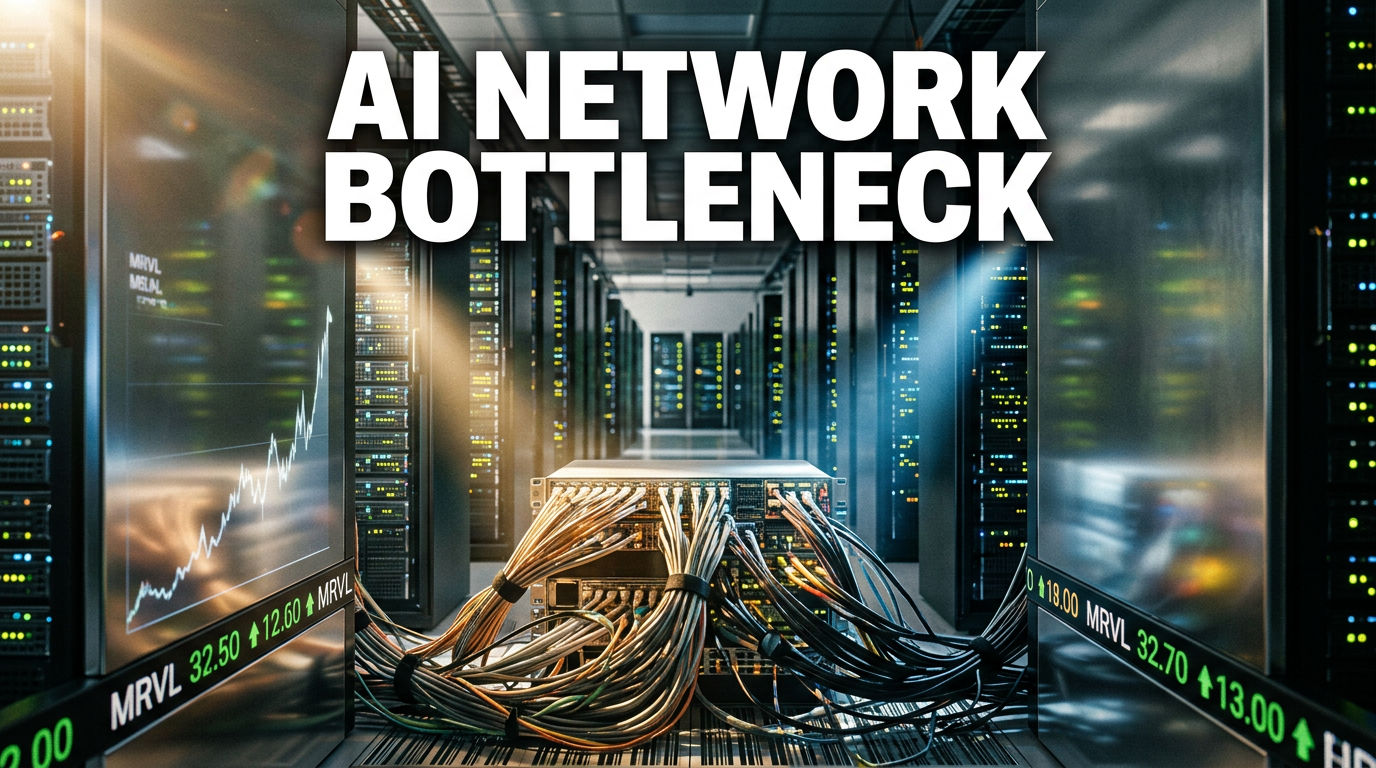
- In a phase where AI makes money, when the “network (transmission)” becomes a bottleneck rather than “GPU (compute),” the network value chain gets repriced
- A certain big-tech executive’s (Jensen Huang’s) views strongly pull investor sentiment
- Related stocks (fiber optics/network value chain) rise together, expanding the theme
Key takeaway, separately summarized
- Marvell’s surge is less about “the AI boom itself” and more about expectations concentrating at once on the segment where real money flows in AI data centers (solving the network bottleneck)
2) Jensen Huang’s trip/event issue: the stretch where stocks called the “Jensen Huang list” all run together
News summary: A pattern emerged where domestic large companies, partners, and theme stocks move up together sharply in relation to Jensen Huang’s schedule (Korea visit/event).
- In the original text, companies like Naver, LG, Hyundai, and GuDusans (spelling/labeling issues may be possible in the expression) were mentioned as being on the “Jensen Huang list”
- Scenes are described where “warmth spreads to Korea,” and expectation gets priced in before earnings
- In this process, fiber optics and network-related stocks especially react strongly (up around the 10% range in a day to surging)
Key takeaway, separately summarized
- Characteristic of this phase: a mode where “expectations” lift the stock price before earnings announcements (with volatility)
3) Why Marvell is being discussed as a “next 10x” candidate: the bottleneck in AI data centers is the network
News summary: Even if GPU performance improves, if server-switch-network-fiber transmission is the bottleneck, performance can’t come through properly—so network investment explodes.
Structure emphasized in the original (core concept)
- Network equipment’s share in the overall data center could be around 10%
- But the impact on overall performance can be as high as around 30%, according to the logic
- In other words, “a 10% investment in the network” determines overall system efficiency
Understanding with an analogy (reinterpreting the original style)
- Even if you hire an expensive chef (GPU), if you don’t have the person to serve / plates (the network), the job can’t be done properly
Key takeaway, separately summarized
- From an investor perspective, “what comes after the GPU” is moving toward the network: solving the AI data center network bottleneck is the money-making point
4) What Marvell sells: XPU-tailored chips + interconnect/switching + photonic fabric
News summary: Marvell isn’t just a semiconductor manufacturer; it has a fabless, design-centered character, and it covers core data center components broadly.
Marvell’s main business axes (organized based on the original text)
- Custom XPU design: strength in designing AI-dedicated chips for big tech
- Interconnect/switching: acts as the high-speed road connecting server racks and systems
- Photonic fabric / optical-based connectivity: a technology axis that resolves connection bottlenecks between chips and boosts transmission bandwidth
Key takeaway, separately summarized
- Marvell can be interpreted as a company betting not on “AI chips only,” but on the connections (interconnect and optical transmission) that allow the chip to deliver its true performance
5) From copper to fiber: the shift to co-packaged optics (optical modules attached) is accelerating
News summary: A strong momentum is building to switch from a copper-centered approach to a fiber-optics-centered one to overcome limits in transmission distance/speed.
Limitations of copper explained in the original text
- Copper faces constraints in signal transmission such as distance limits (e.g., 1m or more)
- Optical signal (light)-based transmission technologies are drawing attention as an alternative
Practical keywords for the transition
- Photonic fabric
- Fiber optics
- Co-packaged optics (coupling light close to the semiconductor package)
Blog-perspective comment here (important)
- It’s not just that “fiber optics is booming”; it’s that the scale problem in AI data centers (bandwidth, power, latency) forces the shift to optical
Key takeaway, separately summarized
- The essence of this sector is “improving transmission (network) quality,” and the method is moving toward an optical foundation
6) Earnings also support it: revenue growth + operating margin improvement + expectations for cash flow
News summary: The original text mentions both Marvell’s earnings growth (increasing revenue, margin improvement) and the possibility of cash increasing.
Original figures (summarized as written)
- Mentions a plan to maintain high growth of 30–40% through 2029, after growing revenue by at least 42% this year
- Operating margin: jumped from 30% last year to 37% this year, with a forecast to surpass 40%
Interpretation points
- The recent surge isn’t “expectations only”—there’s a logic that finances are backing it in part
- Especially in cases where network/optical transmission-related investment connects to actual revenue, it could also help defend the multiple (valuation)
Key takeaway, separately summarized
- A combination of expectation (momentum) + earnings (margin/growth) is the picture that convinces the market
7) But right now, “valuation burden” has grown: a P/E surge zone and volatility risk
News summary: The original text warns that since the stock price has already risen a lot, there may be a valuation burden to enter now.
- Mentions that it could exceed 50x on a forward metric basis
- A conclusion that while “technology and financials are positive,” short-term volatility risks should be taken into account
Core point from a blog perspective
- The AI network sector is attractive for its growth itself, but if the stock price has already priced in the optimism, a correction (pullback) could come first
- So strategies like staged entry may be more realistic than “buy right now, no matter what”
Key takeaway, separately summarized
- The investment point in this phase is “growth,” but the risk is “an already expensive price”
8) Alternative comparison: Nvidia vs Broadcom vs Marvell (from the network/value-chain perspective)
News summary: The original text presents the view that while fiber optics/network stocks run first, you can ultimately circle back to large platform companies (Nvidia and Broadcom).
Comparison framework (reinterpretation of the original text)
- Nvidia: centered on the AI ecosystem, but the original text mentions that in this surge phase it rose relatively less
- Broadcom: has a high EPS growth rate, and from a financial perspective, there’s room to interpret valuation as “undervalued if you look only at the financials”
- Marvell/fiber-optics stocks: while the growth rate (market growth) is very large, if multiples become overheated, volatility could expand
Key takeaway, separately summarized
- Investment decisions should be viewed along two axes: “which company will carry the future better” and “how much the current price has already priced in that expectation”
9) Implications for an investment strategy: even in ultra-high-growth sectors, staged buying + risk management is close to the right answer
News summary: The original conclusion suggests that since it’s a high-growth sector but with high volatility, a staged approach may be valid in the long run.
- In the fiber optics/network sector, ultra-high-growth narratives such as annual 100%+ growth appear
- However, in the short term after a sharp run-up, valuation adjustments are possible
- So it could be more reasonable to “accumulate in stages” than to “buy all at once”
Key takeaway, separately summarized
- Ultimately: AI networks have structural growth (inevitable), but stock prices swing with the speed of expectations—so the approach matters
[Not covered as much in other news] The real checklist of what this post is about
- Set the frame that the network bottleneck determines “30% of overall performance”, and you can understand why the market is spending money on fiber optics
- Marvell isn’t just a beneficiary stock; it’s a structure where roles overlap in transmission (optical/photonic) + switching/interconnect
- Transition technologies like co-packaged optics are close to an engineering must for resolving distance/speed/latency limitations—not just a “theme”
- The problem after a sharp run-up is less about growth and more about the possibility that price (multiples) already ran ahead → managing volatility is key
- Therefore, you need to review the portfolio from a combination perspective of large players (Nvidia/Broadcom) vs networks (Marvell/fiber optics)
< Summary >
- Marvell’s surge is the result of the overlap between the momentum from Jensen Huang’s mention and expectations for network bottleneck demand in AI data centers
- What matters as much as GPU performance is network transmission/switching, and the key frame is that it has a major impact on overall performance
- It’s in the process of moving from copper to fiber optics, with photonic fabric and co-packaged optics at the center of the transition
- Marvell covers broadly from custom XPU, interconnect/switching, to photonic fabric—and its earnings growth (revenue/margins) is also mentioned
- However, since the stock price has already risen a lot, considering valuation burden and volatility risk makes a staged approach more realistic
- You also need a comparison viewpoint with alternatives like Nvidia and Broadcom (ultimately, there’s potential for reordering within the value chain)
[Related posts…]
*Source: [ 월텍남 – 월스트리트 테크남 ]
– 젠슨황이 직접 언급한 “다음 10배 오를 기업“