● Tesla, SpaceX, IPO Shock, Korea Locked Out
Tesla: 10-Year Long-Term Shareholders and SpaceX IPO Priority Allocation — Eligibility for Korean Investors; FSD Approval Map; Korea Import Market Leadership; SpaceX Financials and Merger Speculation
This development is not limited to “Tesla long-term shareholders receive priority in the SpaceX IPO.” It links broader U.S. equity capital rotation, near-term pressure factors on Tesla’s stock, key elements of SpaceX’s listing mechanics, practical access constraints for Korean investors, the global regulatory roadmap for FSD, and potential Tesla–SpaceX combination scenarios.
This report consolidates four underemphasized points:
- Why E*TRADE moved first
- Why Korean investors are effectively excluded
- Why SpaceX’s losses may reflect strategy rather than weakness
- How S&P inclusion constraints can amplify merger narratives
1. Key Developments (Snapshot)
Primary market-relevant items:
- Tesla’s AI lead presented a global FSD regulatory approval “pending” map at CVPR
- SpaceX disclosed financial metrics for the first time in an IPO roadshow context
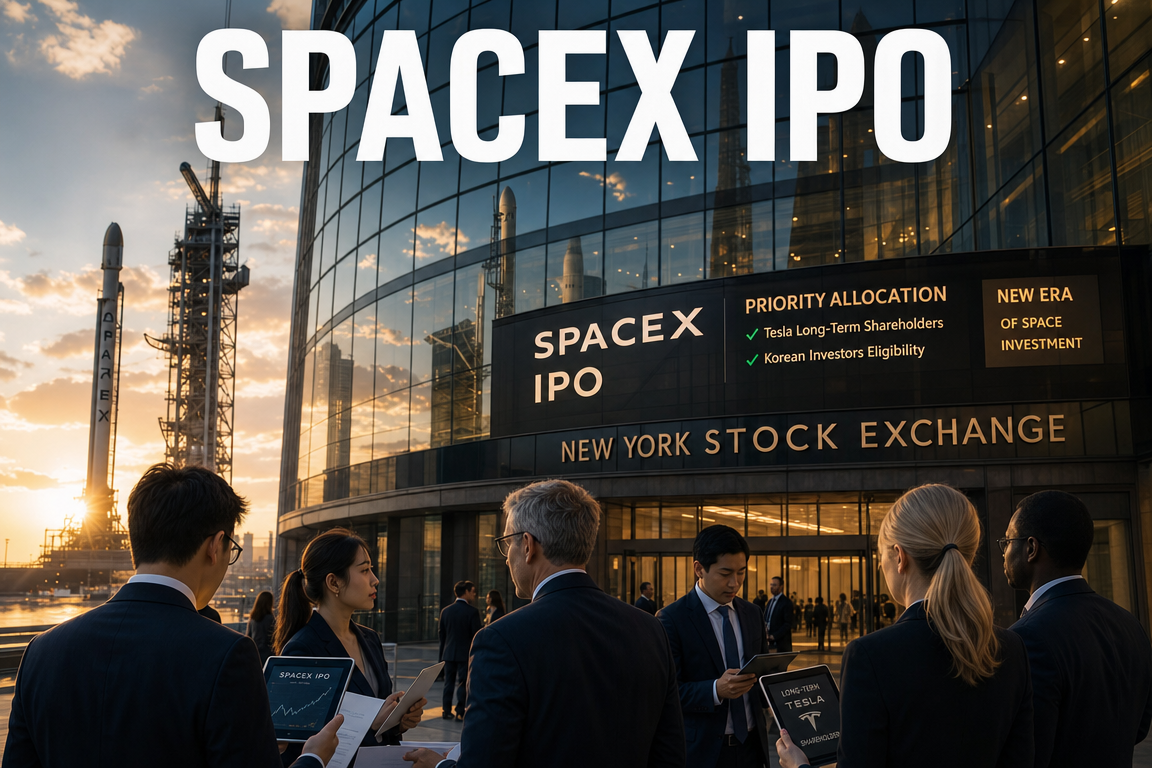
- ETRADE outlined an additional SpaceX IPO allocation process for Tesla shareholders with 10+ years of continuous holding (via Morgan Stanley/ETRADE accounts)
Related items:
- Tesla regained the top position in Korea’s imported vehicle registrations
- Potential “FSD v14 Lite” implications for Hardware 3 vehicles resurfaced
2. Why Tesla Underperformed Despite a Higher Dow
Tesla closed at $418.45, down ~1.24%. Underperformance on an up day can be interpreted as a combination of macro risk and positioning ahead of a SpaceX IPO-related liquidity shift.
2-1. Middle East Risk and Oil Price Rebound
Ongoing U.S.–Iran tensions weighed on risk sentiment. Higher oil prices can revive inflation concerns, typically pressuring growth and technology equities, including Tesla.
2-2. SpaceX IPO-Driven Capital Rotation
As SpaceX approaches a listing, some investors may reduce Tesla exposure to fund SpaceX participation. This represents a potential liquidity reallocation within the Musk-linked asset complex and can create near-term pressure on Tesla shares.
3. Tesla FSD Global Approval Map Disclosed at CVPR
Tesla’s disclosure of a country-level map for pending FSD regulatory approvals signals an effort to scale FSD as a global platform rather than a U.S.-only feature.
3-1. Broadly Active Regions
- United States
- Canada
- Mexico
- Puerto Rico
North America remains the core operational market for FSD.
3-2. Europe: Netherlands RDW as a Key Catalyst
Following approval by the Netherlands’ RDW, expansion dynamics in Europe may accelerate, as one jurisdiction’s stance can influence neighboring regulatory decisions.
3-3. Countries Shown as “Pending”
Examples cited:
- Europe and non-EU: United Kingdom, Norway, Switzerland, Ukraine
- Middle East: Israel, Qatar, Saudi Arabia, Turkey, UAE
- Asia: India, Japan, Malaysia, Taiwan, Thailand
- Africa: Ethiopia
3-4. Korea Not Shown: Not Necessarily Negative
Korea’s absence from the “pending” list may reflect classification differences (e.g., partial functionality already implemented for certain trims/conditions), rather than outright exclusion. A similar interpretation has been applied to China in market commentary.
4. Korea Imported Vehicle Market: Tesla Back to No. 1
Based on Korea Importers & Distributors Association data:
- May imported vehicle new registrations: ~29,860 units (year-over-year increase)
- Tesla: exceeded 10,000 units, ranking No. 1 by brand
BMW and Mercedes-Benz remained strong, but Tesla retained significant presence in Korea’s EV segment.
4-1. EVs Becoming the Center of the Imported Market
On a cumulative basis, EVs account for nearly half of imported vehicle growth, indicating a shift from niche to mainstream adoption. This may be reinforced by easing rates, battery cost stabilization, and charging infrastructure expansion.
4-2. High Sales, Limited FSD Monetization
Vehicle sales volume and high-margin software monetization are distinct. Without broader FSD enablement, Tesla’s software-driven margin expansion in Korea remains constrained. The key variable is regulatory approval rather than unit sales.
5. SpaceX IPO Roadshow: Financial Profile (Disclosed Metrics)
SpaceX disclosed financial figures, shifting valuation discussions from narrative-driven to data-informed.
5-1. 2025 Revenue Mix
- Total revenue: $18.7B
- Starlink internet: $11.4B
- Launch services: $4.1B
- AI computing: $3.2B
Starlink is the primary cash-generating engine, supporting a “space-based connectivity platform” framing in addition to aerospace.
5-2. Net Loss of $4.9B: Interpretation
- Net loss: $4.9B
- Capex and large-scale development spend: ~$20.7B
The reported loss may reflect aggressive reinvestment and market-share capture strategy rather than structural inability to generate revenue.
5-3. AI Computing Revenue of $3.2B: Implication
AI computing revenue supports an additional interpretation of SpaceX as AI infrastructure-adjacent, potentially connecting valuation frameworks to semiconductors, data centers, cloud infrastructure, and AI server ecosystems.
6. E*TRADE Email: Structural Significance
ETRADE communicated a special process for additional SpaceX IPO allocation for Tesla shareholders who have held Tesla shares continuously for 10+ years within Morgan Stanley/ETRADE accounts.
6-1. Why E*TRADE Specifically
Morgan Stanley is reported to be among the key IPO underwriters. Underwriter-controlled allocation can be routed through affiliated retail channels, making E*TRADE a natural early mover.
6-2. Signal of Operationalizing Prior Statements
Elon Musk previously indicated that long-term Tesla shareholders would be considered in a SpaceX IPO. This communication represents a procedural step toward implementation rather than informal commentary.
7. Eligibility for Korean Investors: Practical Constraints
Conclusion: Most Korea-based investors are unlikely to qualify for this specific priority allocation framework.
7-1. Holdings via Korean Brokerages Are Unlikely to Qualify
Long-term Tesla holdings through Korea-based brokerages generally do not meet the requirement of continuous holding within a Morgan Stanley/E*TRADE account.
7-2. Interruptions in Holding or Brokerage Transfers
If shares were sold and repurchased, the “continuous holding” clock likely resets. Transfers from other brokers to E*TRADE may not satisfy continuity requirements if verification is account-history dependent.
7-3. Core Takeaway for Investors
This case highlights the role of underwriting networks, brokerage infrastructure, and verifiable holding-history data in IPO access.
8. S&P Inclusion Constraints: Relevance for SpaceX
S&P stated it will not adjust inclusion standards for mega-cap listings, contrary to some market expectations.
8-1. Key Inclusion Requirements (Illustrative)
- 12-month waiting period post-IPO
- Sustained GAAP profitability
- Minimum 10% public float
Based on disclosed figures, SpaceX may not meet these thresholds in the near term (profitability and float in particular).
8-2. Why It Matters
S&P 500 inclusion can drive automatic passive inflows (ETFs, index funds, pensions). Delays can postpone institutional demand and affect post-IPO price stabilization dynamics.
9. Tesla–SpaceX Merger Speculation: Drivers and Constraints
S&P inclusion friction has intensified community speculation about a Tesla–SpaceX combination. The logic: Tesla is already in the S&P 500, potentially enabling faster access to passive capital versus waiting for SpaceX to qualify independently.
9-1. Arguments Supporting a Combination
- Faster institutional capital access via existing index membership
- Potential “ecosystem integration” valuation premium
- Reinforced cross-domain synergies across AI, robotics, satellite connectivity, energy, and mobility
9-2. Arguments Against a Combination
- Tesla shareholder dilution risk
- Unwanted risk transfer from space programs to Tesla equity holders
- Long payback periods in space initiatives may pressure valuation frameworks
The decisive variable would be the exchange ratio and transaction terms.
10. Hardware 3 and Potential “FSD v14 Lite”
Hardware 4 has become the primary target for the latest FSD development trajectory. Hardware 3 faces constraints around compute and memory bandwidth, complicating unsupervised FSD objectives.
10-1. Hardware 3 Constraint Summary
Modern autonomy stacks require concurrent real-time perception, prediction, planning, and exception handling. Hardware 3 limitations may cap achievable performance.
10-2. Practical Meaning of a “Lite” Version
A “Lite” release would likely represent an optimized compromise within hardware limits rather than a simple degradation, potentially supporting customer retention and residual value stability.
11. Underreported Core Points
11-1. Central Mechanism: Brokerage Data and Verification Power
The critical factor is not the abstract concept of “rewarding long-term shareholders,” but which financial platforms can verify eligibility using account-level holding history.
11-2. SpaceX Losses as Market Capture Spend
The $4.9B loss should be interpreted alongside reinvestment scale and the potential infrastructure scope spanning Starlink, Starship, AI computing, and satellite manufacturing.
11-3. Korea Variable for Tesla: Regulation, Not Volume
Sales leadership is established; the investment-relevant swing factor is FSD regulatory enablement, which would materially change software margin potential.
11-4. SpaceX IPO as a Narrative Reset for Tesla Valuation
If SpaceX receives a high multiple, Tesla may be re-framed by some market participants as part of a broader AI/robotics/energy/connectivity platform ecosystem, affecting comparative valuation narratives.
12. Action Items for Korea-Based Investors
- The E*TRADE priority process is unlikely to apply directly to most Korea-based investors
- Monitor whether other global brokers introduce similar programs
- For Tesla, prioritize FSD regulatory expansion over short-term price moves
- For SpaceX, focus on Starlink growth and AI infrastructure scalability rather than headline losses
- Treat merger narratives as contingent on exchange ratio and dilution terms
13. Conclusion
SpaceX IPO priority allocation for long-term Tesla shareholders is symbolically significant but operationally constrained within U.S. brokerage and underwriting infrastructure. The broader implications span SpaceX listing mechanics, S&P inclusion frictions, and potential ecosystem restructuring narratives.
For Korea-based investors, direct access to the priority allocation is limited. The more material question is how a SpaceX listing could influence capital allocation across U.S. technology equities and reshape valuation frameworks for Musk-related platforms.
< Summary >
- SpaceX IPO priority allocation for 10-year Tesla holders appears centered on Morgan Stanley/E*TRADE account history, limiting eligibility for most Korea-based investors.
- Tesla disclosed an FSD global regulatory “pending” map at CVPR; Korea may be classified separately rather than excluded.
- Tesla led Korea’s imported vehicle registrations, but the key investment variable is FSD regulatory approval, not unit sales.
- SpaceX disclosed $18.7B revenue and a $4.9B net loss; losses are primarily tied to large-scale reinvestment.
- S&P inclusion constraints could delay passive inflows, contributing to renewed Tesla–SpaceX merger speculation.
- A potential “FSD v14 Lite” could be a pragmatic path for Hardware 3 owners.
- The core mechanism is brokerage verification power and ecosystem-level capital market implications.
[Related Links…]
- https://NextGenInsight.net?s=tesla
- https://NextGenInsight.net?s=AI
*Source: [ 오늘의 테슬라 뉴스 ]
– 테슬라 10년 장기주주 SpaceX IPO 우선 배정 — 한국인은 해당되나? E*TRADE 긴급 이메일의 진짜 의미, $423 주주는?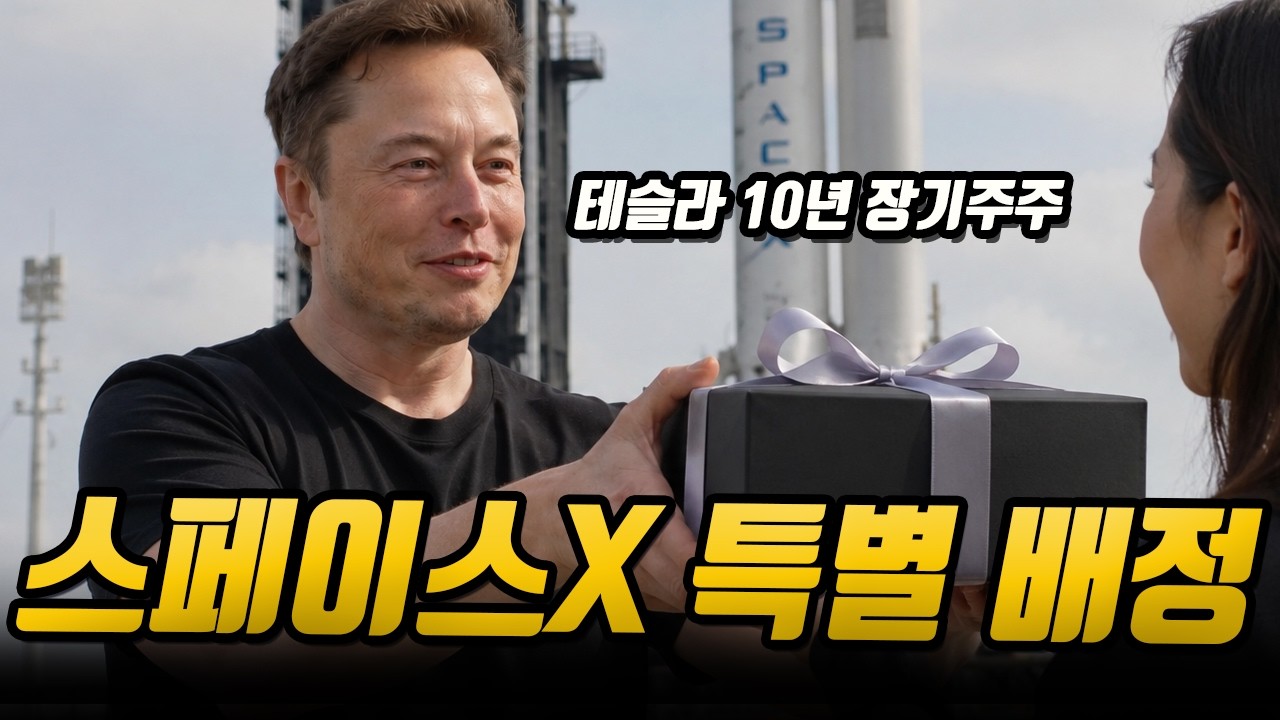
● Nvidia Memory Shock Sparks Korea Selloff
Samsung Electronics, SK Hynix, and the KOSPI Sell-Off: Is the Nvidia “Memory Reduction” Narrative the Real Driver?
The market’s sharp decline was primarily triggered by a single factor: a circulating interpretation that memory usage in Nvidia’s next-generation servers could be reduced by roughly 50%. This weighed on Samsung Electronics, SK Hynix, and broader KOSPI sentiment given the index’s semiconductor concentration. The key analytical point is that “memory per server” must be assessed alongside “total shipment volume.” Below is a condensed, investor-oriented summary of the market reaction, the origin of the narrative, potential implications for Samsung Electronics and SK Hynix, and the broader signals for semiconductors and macro conditions.
What drove today’s market decline
Samsung Electronics and SK Hynix sold off simultaneously, rapidly tightening risk sentiment across the KOSPI. The immediate trigger was an interpretation that Nvidia’s new AI servers may require materially less memory than prior generations.
The market’s reaction followed a simplified chain:
- Lower memory per Nvidia server
- Potential slowdown in HBM demand
- Lower earnings expectations for key memory suppliers
- Weaker confidence in the semiconductor upcycle
Given Korea’s index structure, weakness in Samsung Electronics and SK Hynix tends to translate directly into outsized index-level pressure.
Where the narrative originated
The controversy started with an interpretation posted by a U.S. semiconductor-focused blog, which was quickly amplified in the market. The claim centered on potential architectural changes in Nvidia’s next-generation server design that could reduce memory per system, and it spread locally as an “HBM demand shock” narrative.
SemiAnalysis was referenced in subsequent circulation, but later reactions suggested the message may have been oversimplified relative to the original context. This implies a potential gap between the market’s headline interpretation and how industry participants frame the issue.
Taiwan-based commentary offered a more balanced view: even if memory per server declines, total memory demand could remain stable or increase if Nvidia meaningfully expands total server shipments (e.g., close to 2x). This divergence in framing was central to the day’s volatility.
Key issue 1: Why “memory per server” might decline
Nvidia’s next-generation AI servers are evolving in architecture and system design rather than following a purely incremental path. Improvements in compute efficiency can, in some configurations, reduce the memory required for a given workload. Changes in packaging, compute topology, and interconnect efficiency can also alter memory requirements per system.
Accordingly, the claim that “memory per server may decline” is not inherently implausible. The main risk is that isolating this point can lead the market to extrapolate a broad-based memory slowdown, despite multiple offsetting variables in AI infrastructure demand.
Key issue 2: Does total demand actually decline?
For investors, the priority metric is total demand (shipments x content), not content per unit in isolation. In semiconductors, lower content per device can be offset by higher unit volumes, sustaining or increasing aggregate demand.
Illustratively:
- If HBM per server falls by 50%, but Nvidia ships 2x the number of servers, aggregate HBM demand is broadly unchanged on a simplified basis.
Additional supports may include customer diversification, hyperscaler capacity expansion, and sovereign or national-scale AI infrastructure investment. The current situation is therefore better framed as a potential shift in demand structure rather than confirmed demand destruction.
Implications for Samsung Electronics and SK Hynix
1. Near-term: risk sentiment and expectation resets
Near-term price action can be negative irrespective of near-term fundamentals. SK Hynix is widely perceived as a core HBM supplier, while Samsung Electronics is also priced on improving HBM competitiveness and a higher-value memory recovery. Under these conditions, negative Nvidia-linked interpretations can pressure equities before fundamentals are confirmed.
This dynamic is more consistent with expectation adjustment than with a proven structural change. Semiconductor equities often discount forward earnings, and headline risk can drive outsized volatility.
2. Medium-term: supply position and bargaining power matter more than per-server content
Medium-term outcomes depend more on:
- Stable supply execution to Nvidia
- Speed of next-generation HBM ramps
- Yield performance and advanced packaging competitiveness
- Customer qualification timelines and supply reliability
The decisive factor is not solely the number of memory stacks per server, but which suppliers secure stable, scalable allocation as AI infrastructure expands.
3. Long-term: the AI investment cycle remains a primary driver
This single issue is insufficient to conclude that an AI memory upcycle has ended. Large technology companies’ AI infrastructure investment remains a key driver, with additional expansion across regions pursuing data center and national AI strategies.
Even with periodic product-level configuration changes, the strategic importance of high-performance memory in AI compute remains intact. Evidence is currently insufficient to treat this as a definitive inflection toward sustained demand deterioration.
Why the KOSPI moved sharply: structural concentration and macro sensitivity
Attributing the entire move to Nvidia-related headlines is incomplete. Korea’s equity market is structurally concentrated in semiconductors, and foreign flows are often highly correlated with Samsung Electronics and SK Hynix. As a result, overseas headlines can disproportionately amplify domestic index volatility.
In addition, the market remains sensitive to:
- U.S. rate expectations
- USD moves
- Global growth concerns
- Valuation pressure in the IT complex
In this environment, a single semiconductor headline can trigger a larger-than-fundamentals response, suggesting the decline reflects a fragile risk backdrop as much as the specific narrative.
News-style key takeaways
- The catalyst was an interpretation that memory content in Nvidia’s next-generation servers could decline meaningfully.
- If server shipments expand materially (e.g., close to 2x), total memory demand could remain stable or rise, despite lower content per unit.
- The equity drawdown in Samsung Electronics and SK Hynix appears driven more by sentiment and expectations than by confirmed earnings impact.
- Medium-to-longer-term drivers include HBM supply share, yields, packaging capability, and customer diversification rather than per-server memory content alone.
- The KOSPI sell-off reflects both semiconductor concentration and a macro-sensitive risk environment.
Under-addressed but critical point
Markets frequently confuse “lower content per unit” with “lower total demand.” Corporate outcomes depend on total volumes, ASP, product mix, and the share of high-value products, not a single unit-level metric.
Another key consideration is that competition between Samsung Electronics and SK Hynix is not primarily a “capacity per server” contest. It is driven by execution: generation transitions, packaging yields, qualification schedules, and supply stability, which ultimately determine share and pricing power.
Finally, the episode highlights Korea’s high sensitivity to Nvidia ecosystem headlines; interpreting domestic semiconductor equities increasingly requires integrating both global AI infrastructure demand and macro conditions.
Conclusion (analytical, not definitive)
This headline can drive short-term volatility, but it is premature to treat it as a confirmed long-term negative. Memory-per-server reductions may occur, but the more material variables remain total server shipments, aggregate AI data center capex, and supplier share of HBM allocations.
Key monitoring items:
- Nvidia’s disclosed next-generation server memory configuration
- Updates on HBM order intake and shipment visibility for Samsung Electronics and SK Hynix
- Sustainability of hyperscaler AI capex growth
If these remain constructive, the current episode is more likely to be transient noise than a fundamental break.
< Summary >
An interpretation that Nvidia’s next-generation servers may use less memory drove a sharp decline in Samsung Electronics, SK Hynix, and the KOSPI. However, lower memory per server does not necessarily imply lower total demand; higher shipment volumes can offset content reductions. The move appears more consistent with a sentiment shock than confirmed earnings deterioration. Longer-term, HBM supply share and the trajectory of AI infrastructure investment remain the primary drivers, making it premature to classify the development as a definitive structural negative.
[Related Articles…]
-
Nvidia Supply Chain Reconfiguration: Implications for Korean Semiconductors
https://NextGenInsight.net?s=Nvidia -
Intensifying HBM Competition: Key Battlegrounds for Samsung Electronics and SK Hynix
https://NextGenInsight.net?s=HBM
*Source: [ 내일은 투자왕 – 김단테 ]
– 삼전 닉스 코스피 대폭락의 원인은 엔비디아???