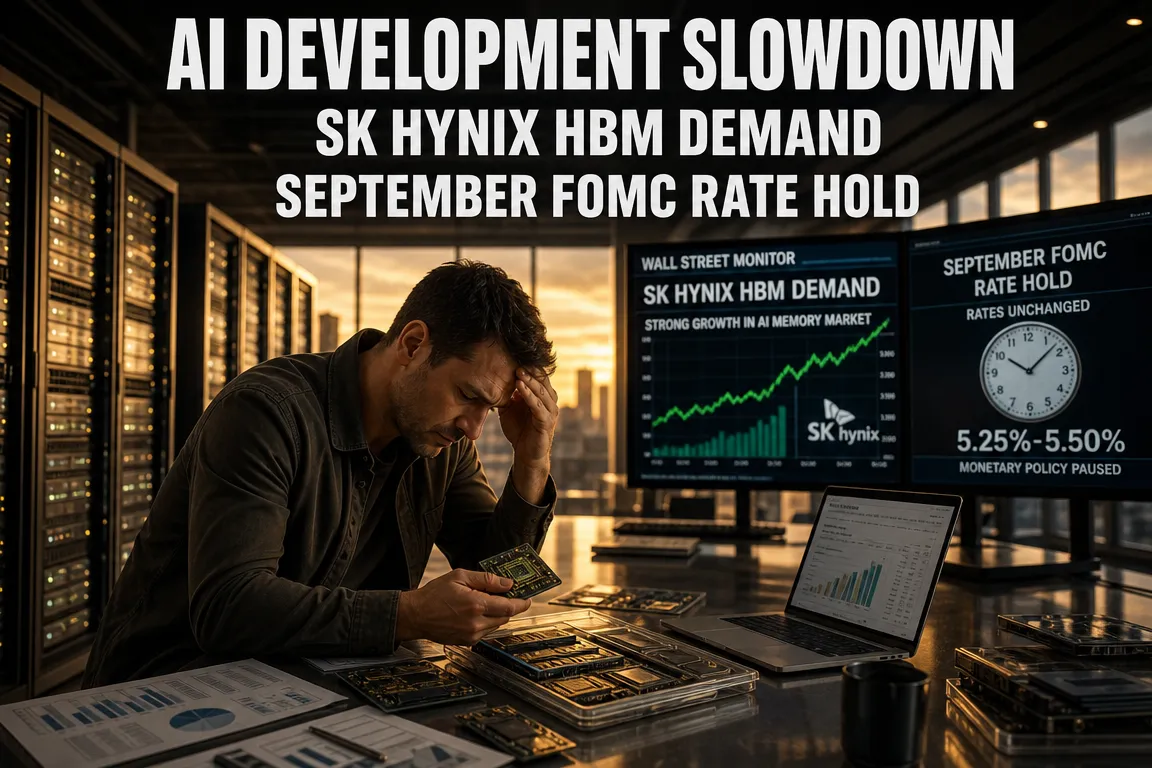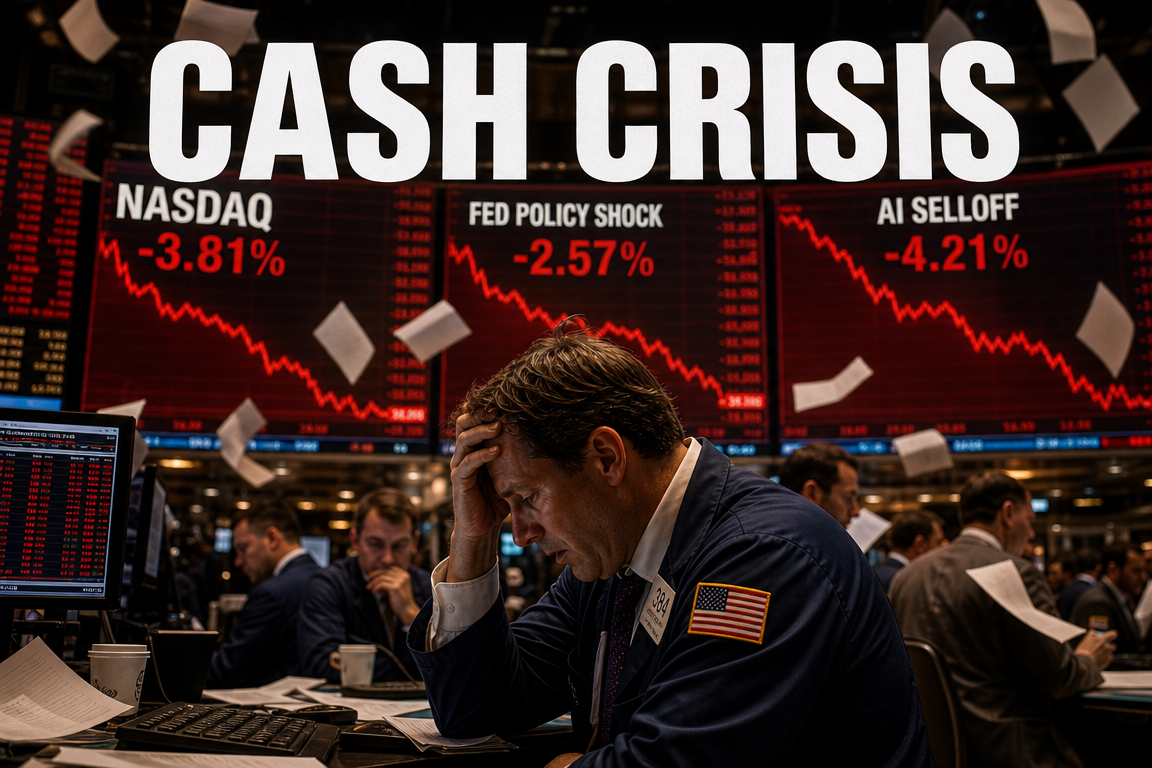
● Nasdaq Crash, Bond Yields Spike, Fed Shock, AI Selloff
Nasdaq Sell-Off: Key Risk Signals Behind the Latest Drawdown
This move is not a routine tech pullback. A materially stronger-than-expected US employment report accelerated repricing toward a higher-for-longer (and potentially tighter) Federal Reserve path, with the initial impact concentrated in the Nasdaq and AI-linked growth equities. Weakness in bellwether names such as Nvidia, Broadcom, and Oracle suggests the decline is not merely a one-day dislocation. The risk backdrop also includes a sharp rise in US Treasury yields, Middle East-driven commodity risk, potential liquidity diversion from large IPOs, and higher volatility across Asian equities.
1. What happened in today’s market
US equities declined broadly. The Dow, S&P 500, and Russell indices were also lower, but the Nasdaq led the downside—consistent with rate-driven sell-offs that disproportionately pressure long-duration growth assets.
AI and technology leaders that had driven recent gains fell more sharply, including Nvidia, Oracle, and Broadcom. In contrast, sectors with more defensive characteristics—healthcare, consumer staples, and other defensives—were comparatively resilient, indicating a near-term rotation away from risk assets.
2. Primary catalyst: the US employment report was too strong
The core driver was the US jobs data. In the current regime, stronger growth can be interpreted negatively for risk assets because it reduces the urgency for rate cuts and may extend restrictive policy.
Nonfarm payrolls rose by 172,000 versus a consensus expectation of 85,000. Prior months were revised higher, placing the recent three-month employment trend among the strongest in roughly two years. Markets interpreted the data as evidence that the economy remains hot, limiting the Fed’s ability to turn dovish and increasing valuation headwinds for equities.
3. Why the Nasdaq was hit harder
The Nasdaq is concentrated in technology and other long-duration growth equities whose valuations are more sensitive to discount-rate changes. As the probability of prolonged high rates (or further tightening) increased, the implied present value of future cash flows declined, pressuring growth multiples and amplifying Nasdaq losses versus more value-tilted indices.
4. Implications of the Treasury yield surge
Following the employment release, US yields rose quickly:
- 2-year Treasury yield: +11 bps
- 10-year Treasury yield: +6 bps
The 2-year yield is closely linked to expectations for Fed policy, so a sharp move higher indicates increased pricing of near-term policy risk (even if not immediate hikes, at minimum fewer or later cuts). The 10-year yield directly tightens financial conditions and weighs on high-multiple sectors such as AI, semiconductors, cloud, and data-center-related equities. In this environment, strong earnings may not translate into near-term share price strength.
5. The Fed scenario the market repriced—and why investors are cautious
Markets began assigning meaningfully higher odds to additional tightening. The probability of a rate hike around October 28 was priced near 52%, with some probability of two hikes also reflected. This matters because the narrative briefly shifted from “when cuts begin” back toward “whether hikes remain,” a reversal that typically increases volatility and risk premia.
6. What to watch inside the employment details
Job gains were attributed to leisure and hospitality, manufacturing, and nonresidential construction. Strength in nonresidential construction is notable given its potential linkage to data-center buildouts, suggesting AI infrastructure investment may be influencing real-economy activity and employment.
Technology-sector hiring appeared comparatively weaker, consistent with lingering effects from prior big-tech layoffs and a labor rebound led by services and traditional industries. This indicates the economy is not solely driven by AI sentiment but remains supported by broader consumption and industrial activity.
7. Why Nvidia, Broadcom, and Oracle weakened
These companies are central to AI infrastructure expansion. When they decline in tandem, two factors are typically at play:
1) Rate sensitivity
High-growth, high-multiple equities are more vulnerable to rising yields and higher discount rates.
2) Positioning and concentration risk
With performance and positioning heavily concentrated in a small set of AI leaders, negative macro surprises can trigger rapid profit-taking. The move can be driven more by valuation and crowded positioning than by a deterioration in fundamentals.
For Broadcom, idiosyncratic factors may have been partially priced, but on days dominated by macro repricing, stocks often trade as a high-beta AI/semiconductor cohort.
8. Additional near-term risk factors cited
8-1. Large IPOs potentially diverting liquidity
The reference point was a potential SpaceX IPO, but the broader issue is structural: large IPOs or major capital-raising events can temporarily reallocate liquidity, prompting investors to fund new exposure by trimming existing holdings—often in recently outperformed growth leaders.
8-2. Hormuz Strait and Iran-related risks
Geopolitical risk is a multi-channel headwind because it can affect oil prices, shipping costs, inflation expectations, consumer sentiment, and corporate cost structures simultaneously. If tensions persist, inflation concerns could re-emerge, complicating the Fed’s policy outlook and pressuring both rates and equities.
8-3. Rising volatility in Asian equities
Sharp moves in Asian markets, including Korea, can reinforce global risk-off behavior. Cross-regional capital flows are interconnected, and in an environment with elevated leverage and short-term trading activity, volatility can be amplified.
9. Next key event: FOMC and Fed communication
Attention is shifting back to the Fed. After a strong employment print, the market’s central question becomes: how will the Fed interpret the data?
FOMC outcomes and the Chair’s tone can set near-term direction. If the Fed frames the strength as transitory, market stress could ease. If the Fed emphasizes labor-market overheating, yields may rise further and technology-led selling could extend.
10. What AI investors must monitor in this drawdown
A constructive point is that the sell-off does not appear driven by structural deterioration in AI demand or a halt in data-center investment. The dominant driver is macro—rates and valuation compression.
This supports a framework in which AI remains a long-term growth theme, while AI equities can still experience significant short-term drawdowns when rates reprice higher. Long-term investors should separate industry fundamentals from near-term multiple adjustments.
11. News-style key takeaways
- The US employment report materially exceeded expectations.
- Markets interpreted the data as increasing the likelihood of additional Fed tightening and/or a higher-for-longer stance.
- US 2-year and 10-year Treasury yields rose sharply.
- Rate-sensitive Nasdaq and AI growth equities led the decline.
- Nvidia, Broadcom, and Oracle were notably weaker.
- Defensive sectors such as healthcare were comparatively resilient.
- Middle East risk, potential IPO-related liquidity diversion, and Asian equity volatility added pressure.
- The next focal point is the FOMC and Fed communication.
12. Under-discussed but important considerations
1) Potential leadership rotation
Weakness in AI/semiconductors alongside relative resilience in defensives may signal a shift in market leadership. This could prove temporary, but it also may represent the start of a multi-week sector rotation.
2) AI investment may strengthen the case for tighter policy
Data-center expansion and AI infrastructure buildouts can contribute to employment and activity, which may inadvertently reinforce arguments for tighter financial conditions. Positive AI fundamentals do not always translate into immediate equity upside if macro policy constraints tighten.
3) Markets are more sensitive to the rate path than to earnings
Even strong companies can see pressure when discount rates rise. Monitoring labor, inflation, Fed communication, and Treasury yields is as important as stock selection.
13. Investor checklist for near-term positioning
Elevated volatility remains likely. A US-led move of this magnitude can transmit to Korea and other markets on the next trading session.
Key monitoring points:
- Whether Fed officials shift to a more hawkish tone after the employment report
- Whether the 2-year Treasury yield continues to rise
- Whether Nvidia and the Philadelphia Semiconductor Index fail to stabilize or rebound
- Whether defensive outperformance is transient or reflects sustained flows
- Whether oil and Middle East developments raise inflation expectations further
If these variables deteriorate simultaneously, the market may face a deeper valuation reset. If Fed messaging is less hawkish than feared and yields stabilize, the move may remain consistent with an overheating unwind rather than a regime change.
14. Conclusion
The Nasdaq sell-off was triggered by an employment surprise but driven by a rates repricing. The largest impact was concentrated in AI and technology equities. A strong economy is not inherently negative; however, in the current framework, strong data is being translated into justification for prolonged tight policy. Unless that framing changes, volatility in the Nasdaq and semiconductor complex may remain elevated.
The appropriate focus is a connected view of US labor data, Fed communication, Treasury yields, and AI infrastructure investment. The current adjustment appears closer to a macro-driven multiple reset in high-growth equities than to a breakdown in the AI theme.
< Summary >
A materially stronger US employment report increased concerns about additional Fed tightening and a higher-for-longer stance. US Treasury yields rose sharply, and rate-sensitive Nasdaq and AI technology equities declined materially. Nvidia, Broadcom, and Oracle weakened, while defensive sectors were comparatively resilient. The primary driver is rates and valuation repricing rather than a collapse in AI fundamentals. Key near-term drivers include the FOMC, Fed communication, Treasury yields, Middle East risk, and liquidity conditions.
[Related Links…]
- Nasdaq volatility and key checkpoints in a technology-led correction: https://NextGenInsight.net?s=Nasdaq
- AI semiconductor outlook and post-Nvidia beneficiaries: https://NextGenInsight.net?s=AI
*Source: [ 내일은 투자왕 – 김단테 ]
– 나스닥 안전벨트 꽉 붙잡으세요!