● Tesla Shockwave, Cybercab, ARK, Jobs, Volatility
On the day ARK said “A Tesla-Spacex merger is not the right move now,” the real signal in the Cybercab manual
The core issue here is not simply whether Tesla and SpaceX will merge.
The more important point is that Tesla, through Cybercab, has revealed in one package Level 4 autonomous driving, legal liability, emergency response protocols, and nationwide scalability.
At the same time, this week’s U.S. employment report, ISM PMI, and consumer confidence index may add volatility to Tesla shares and broader growth-stock sentiment.
Many headlines frame this as “Cathie Wood opposed a merger,” but the more accurate interpretation is that Tesla must first prove the value of robotaxi operations before any larger integration narrative can be supported.
The Cybercab official manual appears to deliver a clear message:
Tesla is moving beyond autonomous driving development and into operational deployment, including real-world service and accident response.
1. This week’s market calendar: U.S. macro data matters more than Tesla headlines
This is a four-day U.S. trading week, which can still produce elevated volatility.
Growth stocks such as Tesla are highly sensitive to rate-cut expectations, making this week’s economic releases directly relevant to share performance.
- Tuesday: JOLTS job openings and labor turnover report
This measures how actively U.S. companies are hiring.
Stronger-than-expected labor data could weaken the case for near-term rate cuts.
Conversely, signs of labor softening could renew expectations for easing.
- Tuesday: CB consumer confidence index
This indicates how households view current conditions and future income prospects.
A sharp deterioration in sentiment could raise recession concerns.
Consumer sentiment is particularly relevant for Tesla, which sells high-ticket discretionary products.
- Wednesday: ISM manufacturing PMI
This shows whether U.S. manufacturing is expanding or contracting.
It can also affect sentiment toward EV, battery, semiconductor, and AI infrastructure names.
- Thursday: June U.S. employment report
This is the key event of the week.
It is one of the most important data releases for the Federal Reserve’s policy outlook.
Exceptionally strong employment could push back rate-cut expectations and weigh on Nasdaq growth stocks and Tesla.
- Friday: U.S. Independence Day market holiday
Because the market closes the day after the jobs report, interpretation and positioning may spill into the following week.
Short-term volatility could therefore increase late in the week.
2. NHTSA closes Tesla investigation: Model 3 and Model Y power steering issue resolved
The U.S. National Highway Traffic Safety Administration has closed its investigation into approximately 376,241 2023 Model 3 and Model Y vehicles over a power steering issue.
The probe began after some drivers reported sudden steering heaviness and warning messages.
The cause was linked to an internal ECU overvoltage issue, and Tesla addressed it through an over-the-air software update in October 2023.
Following the update, related complaints declined significantly, and NHTSA formally closed the case.
The key takeaway is Tesla’s OTA remediation capability.
What would likely require a large-scale recall and service-center intervention for a traditional automaker can often be addressed through software updates at Tesla.
Safety issues remain important, but Tesla’s ability to operate as a software-defined vehicle platform remains a core differentiator.
3. Cathie Wood’s message: not “against a merger,” but “the sequencing matters”
ARK Invest’s Cathie Wood has acknowledged the long-term possibility that Elon Musk’s companies could converge into a larger technology ecosystem.
ARK has long emphasized the convergence of AI, robotics, energy storage, autonomous driving, and space industries.
Wood also noted Musk’s description of his companies as a “fused narrative.”
However, she does not believe merging Tesla with SpaceX or xAI is appropriate at this stage.
The reason is straightforward.
Tesla’s robotaxi transformation has only just begun, and investors want Tesla’s standalone value to be proven first.
In other words, Wood’s view is not that a merger should never happen.
It is more accurate to say that robotaxi and autonomy economics must first be demonstrated before a broader integration case can be made.
4. The Cybercab manual’s key message: Tesla has effectively documented Level 4
The most important point in the newly disclosed Cybercab emergency response manual is Level 4 autonomous driving.
The document indicates that Cybercab is designed to perform the full driving task without human input in autonomous mode.
Tesla’s current Model 3 and Model Y FSD system is officially classified as Level 2.
Under Level 2, the driver must remain attentive and retains primary responsibility in an accident.
Level 4 is different.
Within a defined operational design domain, the vehicle must be capable of operating without human intervention.
Liability and operational responsibility also differ materially from Level 2.
This matters because Tesla is moving beyond claims that its autonomous driving is simply “better.”
Cybercab suggests Tesla is entering a phase in which it accepts direct operational and legal responsibility for autonomous service.
5. Cybercab is designed as a pure robotaxi without a steering wheel or pedals
The Cybercab manual also clarifies the vehicle’s architecture.
Cybercab has no accelerator pedal or brake pedal.
It has no steering wheel.
The interior is centered on two seats and a large screen, reinforcing its design as a fully autonomous robotaxi service vehicle.
Some had speculated that Tesla might add a steering wheel and release it as a conventional vehicle.
However, the manual suggests Cybercab is intended for passenger-only use rather than human driving.
This is consistent with Musk’s earlier remarks that the final manually driven vehicle could be the Roadster.
6. Safety design: 10 airbags, active hood, and automated post-crash response
The manual highlights several safety systems.
The vehicle is described as having at least 10 airbags.
- Front airbags
- Knee airbags
- Seat-mounted side airbags
- Curtain airbags
- Multi-impact protection for a two-seat configuration
Cybercab also includes an active hood.
In the event of a pedestrian collision, the hood can raise automatically to reduce head impact.
This is a notable safety feature under European standards as well.
If an accident occurs or airbags deploy, the vehicle is designed to stop and shift into park automatically.
Doors open, windows lower, and the vehicle can connect automatically with Tesla support.
The system is also designed to enable a 911 call if needed.
In short, Cybercab is being designed so that basic post-incident response can proceed automatically even without a driver.
7. External microphones, speakers, and 24/7 support: compensating for the weaknesses of a driverless car
One of the biggest challenges for autonomous ride-hailing is how to communicate during incidents or unexpected situations.
Cybercab is reportedly equipped with external microphones and speakers for two-way communication with Tesla’s robotaxi support team.
If an emergency responder or bystander speaks to the vehicle, Tesla support can hear it.
Likewise, Tesla support can deliver instructions through the external speaker.
This is a critical feature for driverless operations.
It allows remote support when a passenger is incapacitated, the vehicle is stopped at an incident scene, or police and fire personnel need to control the vehicle.
Tesla support is described as operating 24/7.
The system may also allow remote blocking of other Cybercabs from entering an incident area within roughly 1,000 feet, or about 300 meters, if requested by emergency responders.
This is not just a vehicle feature; it is closer to urban robotaxi operating infrastructure.
8. Emergency vehicle recognition and hand-signal response: Cybercab is learning the rules of the road
Cybercab is reportedly designed to detect emergency vehicle sirens and flashing lights.
When an emergency vehicle is detected, the car can change lanes or pull over.
If autonomous mode is disabled, hazard lights may flash at twice the normal rate to signal status to responders.
Hand-signal recognition is also mentioned.
This is important.
For autonomous driving to work reliably in cities, it is not enough to read traffic lights and lane markings.
The system must also understand police gestures, construction guidance, and temporary traffic control at accident scenes.
Including these capabilities in the manual suggests Tesla is preparing for the complexity of real-world road operations.
9. ODD is the key variable: Cybercab is designed for nationwide use, not just a single city
One of the most important terms in the manual is ODD.
ODD stands for Operational Design Domain, or the operating conditions under which the autonomous system is designed to function.
Many autonomous-driving companies use narrow ODDs.
They operate only in specific cities, zones, weather conditions, or time windows.
Cybercab’s ODD appears much broader.
- Highways
- Urban roads
- Rural roads
- All public roads
- Parking lots
- Charging stations
- Car washes
- Private service facilities such as parking structures
The manual also refers to 24-hour operation and operation in rain, fog, and snow.
In extreme weather, the vehicle is designed to stop at a safe location and notify Tesla support.
This does not mean Cybercab is already operating across the United States.
However, the design intent appears to be nationwide scalability rather than a limited city-by-city deployment model.
10. The main bottleneck may be regulatory approval, not technology
The biggest near-term issue for Cybercab may be commercial operating approvals by city and state.
The manual suggests Tesla has been preparing in detail for accident response, emergency services coordination, remote support, and ODD coverage.
The remaining question is the speed of approval from local governments and regulators.
The original report also cited roughly 84 robotaxis registered in Texas.
The key issue is how quickly that number increases.
If Austin expands first and other cities, states, and eventually European FSD approvals follow, Tesla’s autonomy business could move to a materially different scale.
11. Tesla’s autonomy strategy is built on three parallel pillars
Tesla is not building a single robotaxi product.
Its autonomy strategy is expanding across three pillars.
First pillar: passenger-vehicle FSD data
FSD is already deployed across Model 3, Model Y, and other Tesla vehicles.
The user base is reportedly above 1 million, generating vast amounts of daily driving data.
This data is a key asset for continuing to train Tesla’s autonomous AI.
This is also a major difference from other autonomy companies.
Unlike Waymo’s limited-city, high-definition-map, sensor-heavy model, Tesla is collecting data from large numbers of consumer vehicles in real-world conditions.
Second pillar: Cybercab robotaxi
Cybercab is a Level 4 autonomous vehicle built specifically for robotaxi deployment.
Its steering-wheel-free and pedal-free architecture is fundamentally different from conventional vehicle sales.
Tesla’s aim is not primarily vehicle margin, but recurring transportation-service revenue.
It is a core product in Tesla’s transition from automaker to mobility platform.
Third pillar: Semi autonomous driving
Tesla Semi trucks have reportedly been seen with FSD validation hardware collecting data.
The freight market is as large as, or in some segments larger than, the robotaxi market.
The U.S. freight transportation market is valued in the hundreds of billions of dollars.
If autonomous Semi trucks are commercialized, they could reshape logistics costs, driver shortages, and delivery efficiency.
Ultimately, Tesla’s autonomy strategy is aimed at connecting passenger cars, robotaxis, and freight trucks into a single AI driving platform.
12. From ARK’s perspective, Tesla’s value is still not fully reflected in the numbers
Cathie Wood’s core view is that Tesla’s robotaxi story must be proven first.
Whether Tesla shares are trading around $380 or undergoing short-term consolidation, the market is focused on one question:
Can Tesla convert FSD and robotaxi into real revenue and earnings?
If Cybercab expands beyond limited testing into commercial deployment, with rising utilization and measurable revenue per vehicle, Tesla will be increasingly difficult to value as a pure EV company.
On the other hand, if approvals are delayed and service expansion remains slow, the market may revert to valuing Tesla primarily on vehicle sales and margins.
The more relevant question is not whether to buy or sell Tesla, but:
When, where, and under what regulatory conditions will the robotaxi business demonstrate meaningful utilization?
13. Caution is warranted in merger discussions involving SpaceX, xAI, and Tesla
The original commentary refers to SpaceX and the Nasdaq 100, but this should be treated carefully.
SpaceX is currently a private company.
In the conventional sense, a private company cannot be included in the Nasdaq 100 index.
This suggests the reference may reflect confusion with another listed company, ETF, or event.
At a broader level, however, there is a clear possibility that Musk’s companies will be linked across AI, space communications, robotics, autonomy, and energy infrastructure.
Tesla covers ground mobility and energy networks.
SpaceX and Starlink cover communications infrastructure and space networks.
xAI covers artificial intelligence and data processing.
Optimus targets the robotics labor market.
If these are ultimately integrated, the more important issue than a formal merger is the connection of data and infrastructure across the ecosystem.
14. The most important points not emphasized in other coverage
First, the real significance of the Cybercab manual is operational-liability transition, not just product launch timing.
In Level 2 FSD, the driver remains the center of responsibility.
In Level 4 Cybercab, Tesla becomes the center of operational responsibility.
This is a business-model and liability shift, not just a technical update.
Second, the emergency response manual is a critical document for commercial deployment.
For an autonomous vehicle to operate in real cities, fire, police, and medical responders need to understand how to interact with it.
The existence of such a manual indicates Tesla is preparing the procedural framework required for deployment.
Third, the breadth of the ODD suggests a strategy different from Waymo-style constrained operations.
The target is not a limited urban service area, but a platform spanning highways, cities, rural roads, parking facilities, and charging locations.
Regulatory approval remains essential, but the design philosophy is nationwide in scope.
Fourth, Tesla’s real competitive advantage is not the vehicle itself, but the data flywheel.
FSD data from Model 3 and Model Y improves Cybercab, and Cybercab data may also support Semi autonomy.
If that loop is completed, Tesla begins to look more like an AI mobility operating system than a car company.
Fifth, near-term share performance matters less than approval speed.
Tesla shares near $380 may continue to react to U.S. labor data and rate-cut expectations.
But medium-term value is more likely to be determined by robotaxi approvals, active fleet size, revenue per vehicle, and utilization.
15. Key factors investors should monitor
- U.S. employment report
Stronger labor data could weaken rate-cut expectations and pressure growth stocks.
- Expansion of Tesla robotaxi operating approvals
The pace of expansion beyond Texas into other states and cities is critical.
- Timing of actual Cybercab commercial service
The key metric is not the manual, but paid service launch and repeat usage.
- FSD data and the path to Level 4
Investors should assess how much existing vehicle data contributes to Cybercab performance improvement.
- Expansion of Semi autonomy
Tesla’s long-term case also depends on execution in freight transport.
- Regulatory risk
Even with the technology ready, delayed approvals can slow revenue realization.
< Summary >
ARK’s Cathie Wood acknowledged the long-term convergence potential of Tesla and other Musk companies, but said Tesla’s robotaxi value must be proven first.
The Cybercab manual points to Level 4 autonomy, a steering-wheel-free and pedal-free design, emergency response protocols, and a broad ODD, indicating Tesla is moving into operational deployment.
The main bottleneck appears to be the pace of city-level operating approvals rather than technology readiness.
This week’s U.S. employment report, ISM PMI, and consumer confidence data may increase volatility in Tesla shares and Nasdaq growth stocks.
Over the medium to long term, the key issue is whether passenger FSD, Cybercab robotaxi, and Semi autonomous driving can be linked into a single AI mobility platform.
[Related Articles…]
*Source: [ 오늘의 테슬라 뉴스 ]
– ARK가 테슬라 합병 못 한다고 한 날, 사이버캡 공식 매뉴얼이 공개됐다 — Level 4·전국·비/눈 조건까지, $380 지금 어떻게?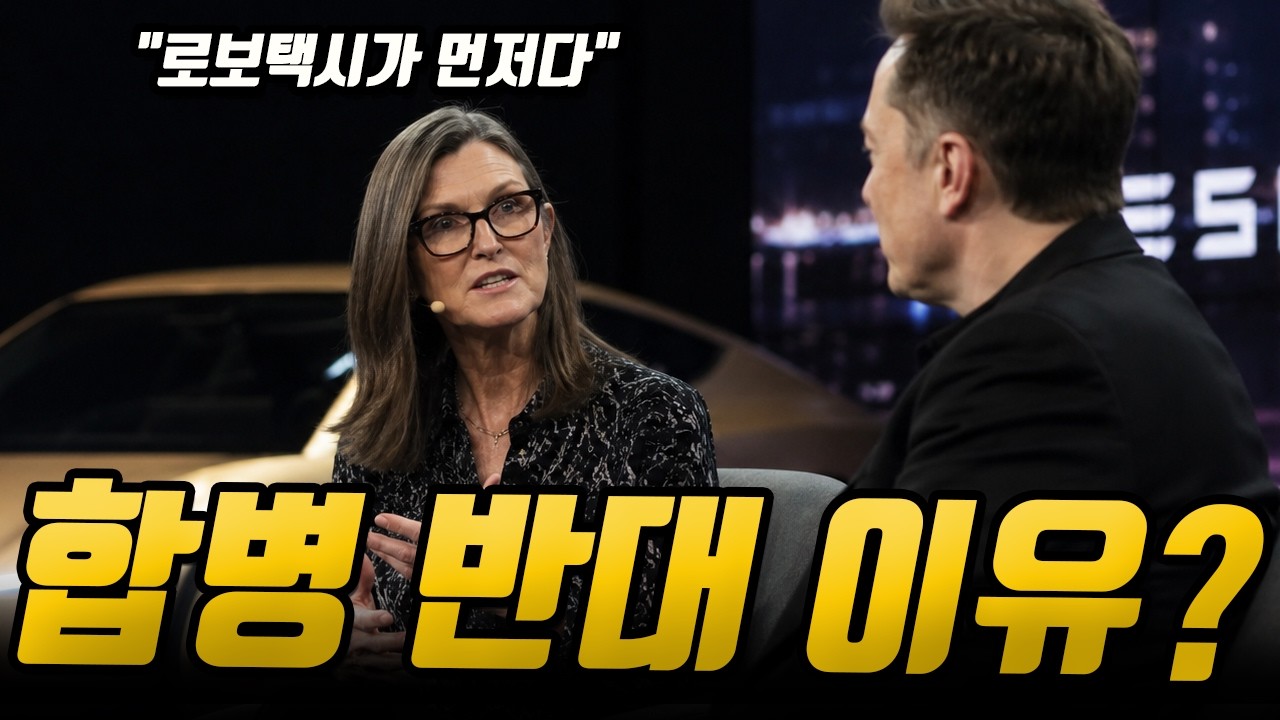
● Semiconductor Shock, Kosdaq Surge, Market Reversal
Kosdaq Sidecar Mention Highlights a Shift in the Korean Market: Why Samsung Electronics and SK Hynix Fell While Overlooked Stocks Rose
The key point in today’s session is not simply that Samsung Electronics and SK Hynix declined.
The more important development is that capital rotation temporarily moved away from semiconductor leaders that had been driving the domestic market and toward Kosdaq, small- and mid-cap stocks, and previously neglected sectors.
The divergence between the Kospi and Kosdaq was particularly pronounced, and market participants even referenced a possible Kosdaq sidecar event, underscoring heightened volatility concerns.
This session can be viewed as a day when funds that had been concentrated in Samsung Electronics and SK Hynix on the back of AI semiconductor expectations began reassessing whether those earnings would remain fully attributable to shareholders.
At the same time, the market also had to absorb headlines involving a large investment project in the Honam region, renewed discussion of semiconductor windfall profits, and the possibility that Apple could use CXMT memory products in China.
As a result, valuation pressure emerged on semiconductor equities, while neglected stocks rebounded as liquidity rotated across the market, signaling a transition from a leader-driven rally to a broader rotation phase.
1. The main market change today: semiconductor leaders fell, while the rest of the market rebounded
Until recently, the domestic market had effectively been defined by Samsung Electronics and SK Hynix.
That concentration reflected expectations for AI servers, HBM demand, data-center investment, and a global semiconductor cycle recovery.
Today, however, the tone changed.
Samsung Electronics and SK Hynix weakened, while attention shifted to Kosdaq names, small- and mid-cap stocks, selected domestic demand plays, secondary battery-related names, biotech, robotics, and AI software shares.
This move is more important than a one-day price swing.
It indicates that the market is moving beyond the view that “semiconductors are strong” and is now asking whether the earnings generated by semiconductor companies will be distributed in a way that benefits shareholders.
The market prices not only sales, but also earnings, cash flow, and ultimately the portion of that cash flow retained by shareholders.
Today’s session reflected increasing concern on that front.
2. First driver of weakness in Samsung Electronics and SK Hynix: a large investment project in the Honam region
The first issue the market reacted to was the possibility that Samsung Electronics and SK Hynix could announce a large-scale investment project in the Honam region.
The original report referred to an investment project worth 2,000 trillion won.
Given the scale, the actual implementation structure, timeline, government support, and private-sector burden would require verification.
However, the market’s immediate reaction was clear.
The concern was that funds generated by Samsung Electronics and SK Hynix may not translate solely into higher shareholder returns or stronger net income, but could instead be allocated toward major capital spending and regional investment.
From a corporate perspective, large investments can be positive over the long term through capacity expansion, supply-chain stability, and regional development.
From a short-term stock perspective, the interpretation is different.
Larger investment raises depreciation burden, can reduce free cash flow, and may limit shareholder-return capacity.
Semiconductors are also highly cyclical.
Investment during strong demand conditions can be constructive, but if supply expands as demand slows, concerns about oversupply can re-emerge.
For that reason, the market does not automatically treat large investment news as positive.
When capital expenditure appears excessive, the market often discounts the burden before it prices in growth benefits.
3. Second driver: discussion of semiconductor windfall profits
The second development that the market interpreted cautiously was the statement by the labor minister that discussion of semiconductor windfall profits could begin in July.
For investors, this is a meaningful signal.
The phrase “windfall profits” does not mean that a specific tax, levy, or redistribution mechanism has already been finalized.
However, once such language appears, the market begins to price in policy risk.
If semiconductor companies generate substantial profits during the AI cycle, those gains may not accrue entirely to the companies and shareholders.
Potential outcomes include higher wages, greater support for suppliers, regional investment, taxes, social contributions, or other burden-sharing measures.
From a broader social perspective, there may be reasons to discuss wider distribution of gains from the semiconductor industry.
From a valuation perspective, however, the market interprets this as a possible decline in margins, higher costs, and greater regulatory uncertainty.
Samsung Electronics and SK Hynix, as large-cap names with significant weight in the domestic market, are especially sensitive to such policy risk.
Foreign investors also factor in policy direction, tax burden, shareholder returns, labor costs, and the possibility of government intervention when assessing Korean semiconductor equities.
Accordingly, this issue is not merely political news but a variable that can directly affect Kospi valuation.
4. Third driver: the possibility of Apple using CXMT memory in China
The third concern was the report that Apple may have lobbied the U.S. government to allow the use of products from Chinese memory company CXMT.
This is a sensitive issue from a global semiconductor supply-chain perspective.
Apple is one of the most powerful buyers in the world.
If it were to include a Chinese memory supplier in its supply chain, the negotiating leverage of Samsung Electronics and SK Hynix could weaken to some extent.
The memory market depends not only on product differentiation but also on pricing power and supply stability.
If CXMT can overcome technology, quality, yield, and U.S. regulatory issues and enter Apple’s supply chain, the global pricing structure in memory could change.
That said, CXMT is still unlikely to replace Samsung Electronics or SK Hynix in high-value segments such as HBM in the near term.
However, if Chinese suppliers gain a stronger presence in commodity DRAM or mobile memory, the upper end of industry margins could come under pressure over time.
The market prices future competitive structure ahead of current earnings.
For that reason, the Apple-CXMT issue is being read as a concern that pricing power in memory could weaken over the medium to long term.
5. Why the Kosdaq sidecar was mentioned: a signal of rising volatility
A sidecar mechanism temporarily restricts program trading when futures move too sharply, helping to absorb market shocks.
In simple terms, it is a brake applied when the market becomes one-sided too quickly.
Whether or not it was actually triggered today, the fact that it was mentioned indicates that participants strongly felt the rise in Kosdaq volatility.
The domestic market had been highly concentrated in large-cap semiconductor names.
When those leaders weaken, capital does not necessarily leave the market entirely; it often rotates rapidly into other sectors.
Because Kosdaq names tend to have thinner liquidity, even modest buying can produce large price moves.
That is also why neglected stocks rallied sharply today.
Funds were not simply converted into cash; they rotated into names that had underperformed for an extended period.
6. One-line summary of today’s session: AI semiconductor leadership is giving way to rotation
Today’s market movement does not mean that semiconductors are entering a downturn.
The broader semiconductor cycle remains supported by AI investment, data-center expansion, and HBM demand growth.
But stock prices are not driven by industry outlook alone.
They also reflect how much of the profit remains with shareholders, how policy affects earnings distribution, and how competition may influence margins.
Samsung Electronics and SK Hynix fell today not because semiconductors are over, but because the market is questioning whether their shares had already discounted too much good news.
By contrast, previously overlooked names rebounded because they carried fewer negative headlines, lower expectations, and more limited valuation pressure.
In this environment, investors need to monitor Kosdaq sector rotation, institutional flows, foreign buying, and changes in trading volume rather than focusing only on large-cap Kospi names.
7. The key point other reports often miss: the issue is not earnings, but who retains them
The most important issue today is not that Samsung Electronics and SK Hynix cannot earn money.
The market is fully aware that both companies can generate substantial profits going forward.
The real question is how much of those profits will ultimately remain with shareholders.
Even if AI semiconductor companies earn strongly, shareholder returns can be diluted if profits are absorbed by capex, regional investment, labor costs, supplier payments, policy redistribution, taxes, or customer price pressure.
Stock prices discount the present value of future cash flows attributable to shareholders.
For that reason, the same earnings news can support a stock when shareholder retention is expected to rise, but pressure it when the gains are viewed as more widely redistributed across stakeholders.
That is the core reason for today’s weakness in semiconductor leaders.
Many headlines treat the Honam investment plan, windfall-profit discussion, and CXMT issue separately.
From an investor’s perspective, they all converge on one question:
How much of the money earned from the AI semiconductor cycle will actually remain with Samsung Electronics and SK Hynix shareholders?
If confidence in that answer weakens, even a strong industry can experience short-term valuation compression.
8. Does this mean Samsung Electronics and SK Hynix are finished?
That would be an overstatement.
Samsung Electronics and SK Hynix remain core players in the global memory semiconductor market.
HBM, server DRAM, and high-performance memory demand are still supported by AI data-center investment.
The issue is that their share prices already reflect substantial expectations.
Stocks with high expectations tend to react sharply to even modest negative news.
Conversely, stocks with low expectations can rebound strongly on relatively small positives.
Today’s session illustrated that contrast clearly.
Investors considering whether to hold or add to Samsung Electronics and SK Hynix should look beyond the broad view that semiconductors are strong.
They should track HBM yields, NVIDIA-related supply expansion, DRAM prices, NAND prices, foreign flows, exchange rates, policy risk, and the pace of Chinese memory entry.
9. Is the rebound in overlooked stocks a real trend or a short-term rotation?
The significance of today’s rebound in neglected stocks is that the market breadth widened.
For much of the recent period, domestic equities were led by a narrow group of semiconductor names while most other sectors lagged.
In such a market, index performance can look strong while many investors still experience weak returns.
Today’s rotation into Kosdaq and small-cap names therefore improved market breadth materially.
That said, caution is still warranted.
Rotation can enter quickly and exit just as fast.
Stocks that rise only because they have lagged for a long time, without any improvement in earnings, can easily reverse.
Accordingly, investors should look for earnings inflection, order growth, sector momentum, institutional support, and sustained trading volume rather than simple underperformance.
In Kosdaq, names with earnings support tend to last longer than pure theme plays.
10. Key variables to watch in the domestic market
First, monitor whether foreign selling in Samsung Electronics and SK Hynix continues.
Short-term profit-taking is normal, but persistent selling could weigh on the broader Kospi.
Second, track whether trading volume on the Kosdaq remains elevated.
If turnover is sustained, rotation may broaden further; if not, the market could revert to a large-cap-led structure.
Third, watch the details of the semiconductor windfall-profit discussion.
The market impact will differ sharply depending on whether this remains a policy discussion or evolves into actual regulatory changes.
Fourth, monitor the U.S. decision on Apple and CXMT.
Whether the U.S. permits or restricts Chinese memory usage will affect global supply-chain risk.
Fifth, follow interest-rate expectations and exchange-rate trends.
Stable rates and a stronger won would support growth stocks and Kosdaq names, while weaker currency and rate uncertainty could shift flows back toward defensive large caps or cash-like assets.
11. From an investor perspective, this is a phase where capital flow matters more than chasing leaders
The most dangerous behavior in the current market is to chase stocks that have already risen sharply based only on headlines.
Semiconductor leaders remain strong businesses over the long term, but in the short term they can face both policy risk and profit-taking pressure.
Conversely, overlooked stocks may appear strong during a rebound, but names without earnings support can reverse quickly.
Investors should therefore focus on company-specific earnings and flow of funds rather than the sector label alone.
For the domestic market to strengthen broadly, gains must extend beyond Samsung Electronics and SK Hynix into semiconductor equipment, materials, and components, as well as AI software, power infrastructure, data centers, biotech, and robotics.
Today’s session was meaningful because it showed that possibility.
However, for the move to persist, the Kosdaq rally must be linked to earnings rather than just themes.
12. Conclusion: the Korean market is beginning to think beyond semiconductors
Today’s market did not signal the end of semiconductors.
Rather, it reflected a more precise assessment of who will capture the gains from the industry’s strength.
A session in which Samsung Electronics and SK Hynix fell while the rest of the market rose is not just volatility; it signals that the market’s question has changed.
The previous question was whether AI semiconductors would grow.
The current question is how much of that growth will remain with shareholders.
Understanding that shift is essential for reading the Kospi and Kosdaq going forward.
In the near term, market direction is likely to depend on the correction in semiconductor leaders, the durability of Kosdaq rotation, and the extent of policy risk.
For investors, the priority is not to react emotionally, but to monitor where capital is leaving and where it is moving next.
< Summary >
Today’s Korean market showed Samsung Electronics and SK Hynix falling while Kosdaq and small- to mid-cap stocks that had been overlooked rebounded sharply.
The main drivers were a large Honam investment project, discussion of semiconductor windfall profits, and the possibility that Apple could use CXMT memory products.
All three issues lead to the same question: how much of the money earned from semiconductors will remain with shareholders?
The semiconductor cycle itself has not ended, but Samsung Electronics and SK Hynix already reflect elevated expectations, making them vulnerable to even modest negative news.
By contrast, overlooked stocks benefited from rotation, though names without earnings support may remain volatile.
Investors should now monitor foreign flows, Kosdaq trading volume, policy risk, the CXMT issue, and interest-rate and exchange-rate trends.
The domestic market appears to be at an important inflection point, moving from semiconductor leadership toward broader rotation.
[Related Articles…]
AI Semiconductor Supercycle and Korea Market Strategy
Kosdaq Rotation and Growth Stock Trends to Watch
*Source: [ 내일은 투자왕 – 김단테 ]
– 코스닥 사이드카?? 180도 바뀐 국장ㄷㄷㄷ