● AI Memory Re-Rating Surge
Why Wall Street Is Reassessing Samsung Electronics, SK Hynix, and Micron Amid 2027 Memory Peak Concerns and Slowing Big Tech Investment
The most important point in today’s market is simple.
It is becoming harder to view memory semiconductors only as a “cyclical sector that rises when the cycle turns up and collapses when it turns down.”
The core takeaway in Wall Street research is whether Samsung Electronics, SK Hynix, and Micron can be revalued not as low-PBR stocks, but as structural growth stocks to be re-rated on PER.
In particular, Micron’s SCA strategic customer agreements, rising HBM prices, DRAM supply shortages, Big Tech CAPEX competition, and the spread of AI agents are all connecting into one major trend.
That said, since share prices have already risen sharply, “good companies” and “good prices” must be viewed separately.
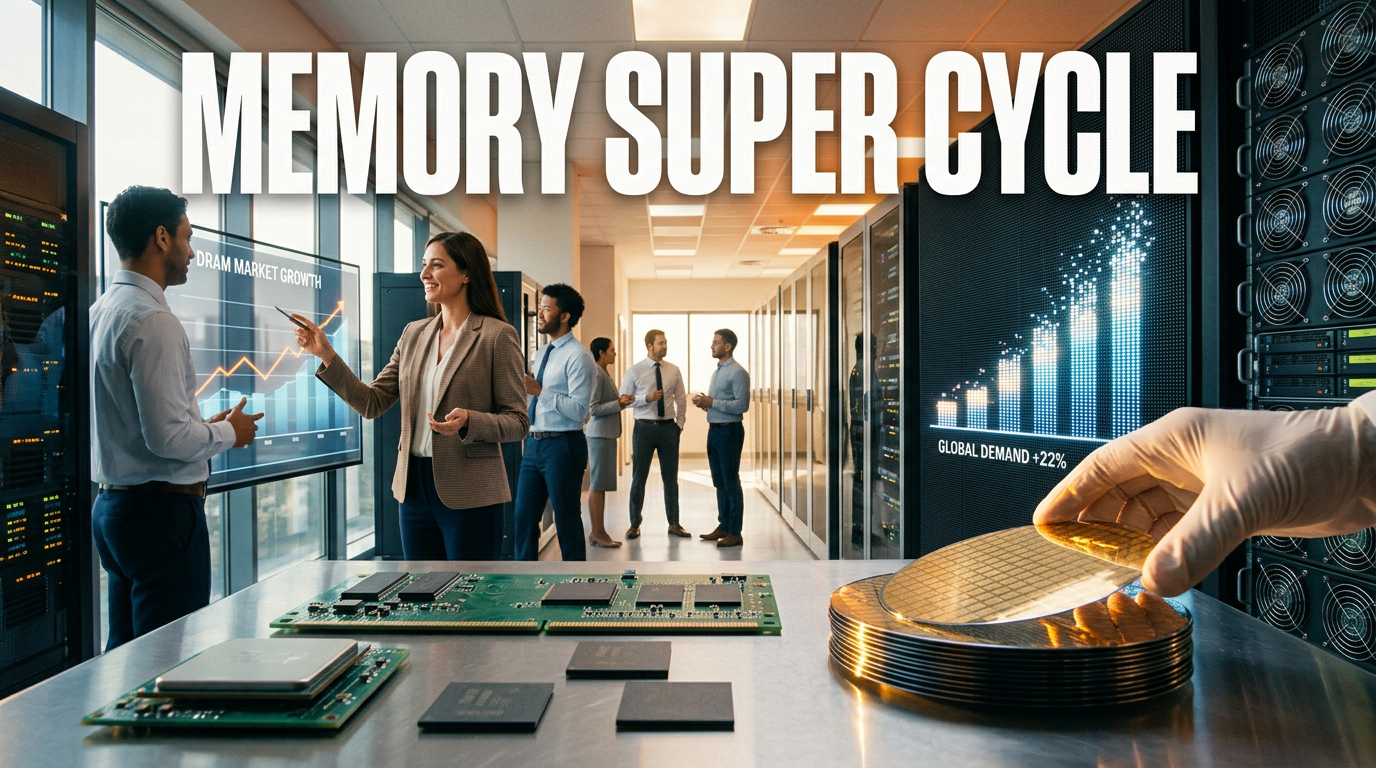
Ultimately, the key variable in this cycle is not whether 2027 marks the peak, but how long Big Tech continues not to slow its AI infrastructure investment.
1. The core of the memory three’s revaluation thesis: look at PER, not PBR
In the past, memory semiconductor companies were seen as classic cyclical stocks.
When the industry was strong, profits surged, but when oversupply hit, prices plunged and companies could even fall into losses.
That is why the market did not grant high multiples to memory companies such as Samsung Electronics, SK Hynix, and Micron.
In simple terms, the discount logic was strong: “Even if they are making good money now, no one knows when the cycle will turn.”
But this logic is being shaken as demand for AI semiconductors grows.
That is because memory is no longer just a component; it is becoming a bottleneck asset in AI infrastructure.
This is exactly what Wall Street is focusing on.
If demand for AI data centers, HBM, high-performance DRAM, and server NAND persists over the long term, earnings volatility for memory companies could become lower than in the past.
In that case, the market is less likely to apply only a PBR-based undervaluation framework.
Instead, it may begin assigning PER multiples based on future earnings.
2. Why the forward PERs for Samsung Electronics, SK Hynix, and Micron look low
The forward PERs for Samsung Electronics, SK Hynix, and Micron mentioned in the original text are roughly 7x, 8x, and 10x, respectively.
Compared with Big Tech firms that receive multiples above 20x, those numbers are clearly low.
The market is asking this question.
“If memory has become this important in AI infrastructure, should it still be valued like a cyclical stock with a low multiple?”
That question is the starting point of the revaluation thesis for the three memory companies.
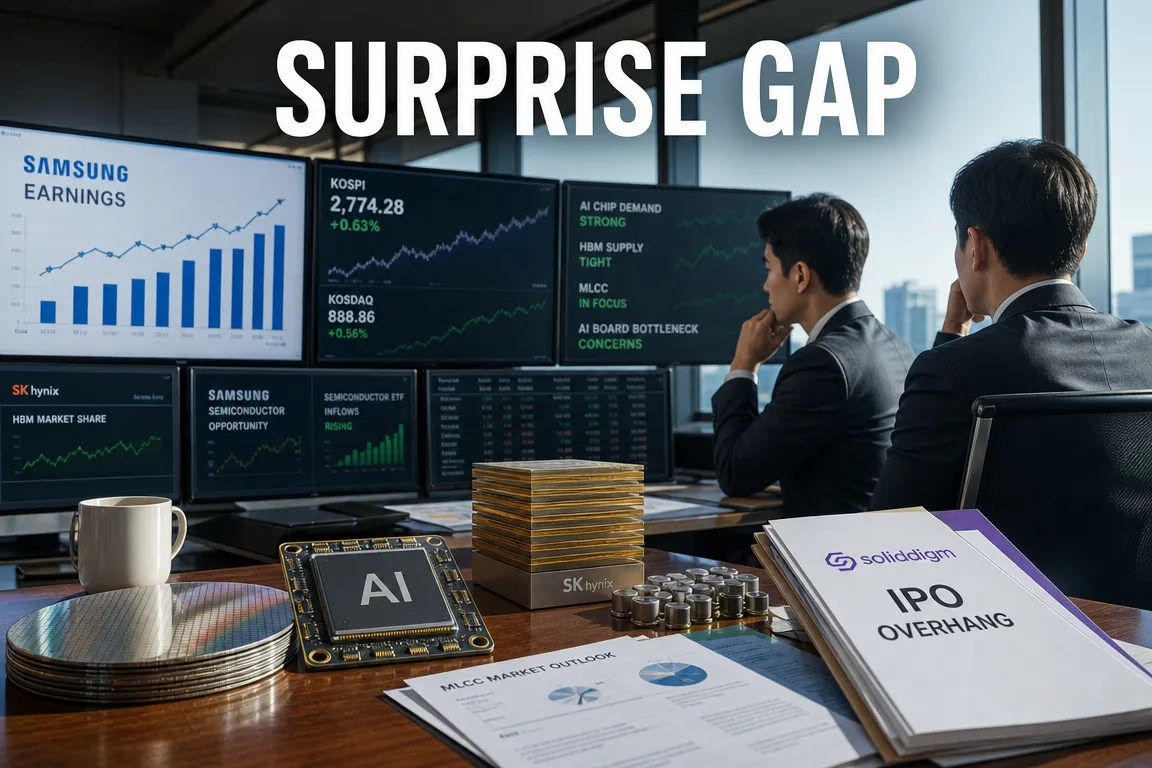
SK Hynix has secured a strong position in the HBM market, while Micron is actively emphasizing long-term contract structures.
Samsung Electronics still has the important variable of whether it can restore competitiveness in HBM, but it is a comprehensive semiconductor company spanning general-purpose DRAM, NAND, foundry, mobile, and server demand.
That said, some of the operating profit forecasts presented in the original text are highly aggressive estimates.
Rather than accepting those figures as fixed facts, investors would be safer using them to gauge how much future earnings the market may already be pricing in.
3. Why Micron’s SCA contract matters: the rules of the memory industry are changing
The most important keyword in this Wall Street report is SCA.
SCA stands for Strategic Customer Agreement.
Previously, LTA, or Long-Term Agreement, was often mentioned.
But SCA can carry a stronger meaning than simple long-term supply.
The core point is that customers agree in advance to take a certain amount of volume over a given period, and depending on the contract terms, deposits or penalty structures may be included.
It is a structure in which customers secure stable supply in advance, whether memory prices rise or fall.
If this structure spreads, earnings volatility for memory companies declines.
The pattern in which profits collapse when spot prices fall, as in the past, can be eased.
That is why Wall Street is bringing out the argument that memory companies can be viewed as structural growth stocks.
4. How SCA lowers earnings volatility
The weakness of the memory industry has always been price volatility.
When demand was strong, suppliers expanded capacity, and over time, prices fell sharply as supply increased.
In that process, earnings swung wildly, and so did stock prices.
But if SCA expands, the situation changes.
First, long-term volume is secured.
Second, customers’ purchasing obligations become stronger.
Third, suppliers can plan production more stably.
Fourth, memory companies gain more bargaining power in price negotiations.
In other words, SCA is not just a contract; it is a mechanism that can change the multiple assigned to memory companies.
The original text says that Micron has secured SCA contracts for some DRAM and NAND products and has obtained significant revenue visibility.
If that is true, investors can interpret it as a sign of improved earnings predictability.
5. Why memory companies are shifting from the weak position to the stronger position
In the past, memory companies had to be very mindful of customers’ preferences.
That was because Apple, server vendors, PC makers, and cloud companies held strong positions in price negotiations.
But the situation has changed as AI data centers have exploded in scale.
AI servers require far more memory than ordinary servers.
In particular, HBM is a core component that, together with GPUs, determines AI training and inference performance.
Having GPUs alone does not complete AI infrastructure.
HBM, high-bandwidth interconnects, power, cooling, networking, and packaging are all required.
If even one of these is insufficient, the pace of AI data center buildout slows.
That is why memory semiconductors are called an AI bottleneck stock.
When demand grows faster than supply, pricing power naturally shifts to the suppliers.
6. Micron margin debate: the numbers must be separated carefully
The original text refers to Micron’s gross margin and operating margin as being at very high levels.
However, investors must be careful with this point.
They need to distinguish whether the figures are GAAP margins for the whole company, margins for a specific product line, adjusted metrics, or forward guidance.
Interpreting the entire memory industry’s margins as being consistently higher than Nvidia’s could be excessive.
Still, the direction is clear.
As HBM and high-value-added DRAM increase as a share of the mix, the average profitability of memory companies can improve.
There is a greater possibility of earning much higher prices and margins than in the past, when the business was centered on general-purpose memory.
So the core point is less “What is Micron’s overall margin?” and more “Is the product mix shifting toward higher-value AI memory?”
7. Why the AI agent era further increases memory demand
AI agents require much more memory than simple chatbots.
The reason is straightforward.
An AI agent does not just answer a user’s request once and stop; it must remember context and carry out multiple steps.
It often needs to refer to documents, code, emails, schedules, customer data, and work history.
That process requires longer context windows, more data caching, and faster inference performance.
In the end, as AI models become smarter, memory demand increases alongside compute demand.
So the spread of AI agents is not just a positive factor for GPUs.
It is a key variable in the global economic outlook, connecting HBM, DRAM, NAND, SSDs, server memory, and networking equipment.
8. The common message across 10 Wall Street reports
The common message from the Wall Street research summarized in the original text is broadly similar.
First, the memory industry is becoming more about structural demand than short-term cycles.
Second, SCA and long-term supply agreements improve earnings visibility.
Third, DRAM prices may still rise further in the short term.
Fourth, the outlook for HBM average selling price increases remains strong.
Fifth, more people are saying that valuation should shift from a PBR-centered framework to a PER-centered one.
Sixth, some aggressive forecasts suggest multiples could expand to around 15x.
In the end, Wall Street is belatedly following the logic that first emerged in the Korean market.
The HBM, AI semiconductor, and memory supercycle narratives that Korean investors identified early are now being seriously adopted by U.S. brokerage firms as well.
9. Expectations for a SK Hynix ADR and the spread of a new narrative
The original text also mentions expectations around a potential SK Hynix ADR listing.
An ADR is a security that allows U.S. investors to trade shares of foreign companies more easily in the U.S. market.
If access to SK Hynix for U.S. investors increases, it could become a positive narrative in terms of global capital inflows.
That said, any ADR-related details must be confirmed for official status.
From an investment perspective, what matters is not the ADR itself, but the fact that global investors are beginning to see SK Hynix as a key company in Nvidia’s value chain.
If HBM competitiveness is maintained, SK Hynix could be revalued not just as a Korean semiconductor stock, but as a leading global AI infrastructure stock.
10. The 2027 peak thesis: how long can the memory supercycle last?
The most common question is this.
“So when does this cycle end?”
Based on the original text, brokerage consensus seems to lean toward the view that industry conditions could remain manageable through 2028.
However, more conservative forecasts see DRAM prices peaking in the second half of 2027.
If you accept that forecast, then 2026 can also be interpreted as a relatively safe zone.
But the important issue here is not predicting a single peak date.
What matters more is whether earnings levels after the peak can avoid returning to past lows.
If SCA contracts expand and HBM’s share increases, then even if prices adjust somewhat, the drop in earnings may be more limited than in the past.
That is the core of the structural growth stock revaluation thesis.
11. Big Tech CAPEX is the real key variable
The biggest variable in the memory supercycle is Big Tech CAPEX.
If hyperscalers like Microsoft, Google, Amazon, and Meta keep increasing AI data center investment, memory demand is likely to remain supported.
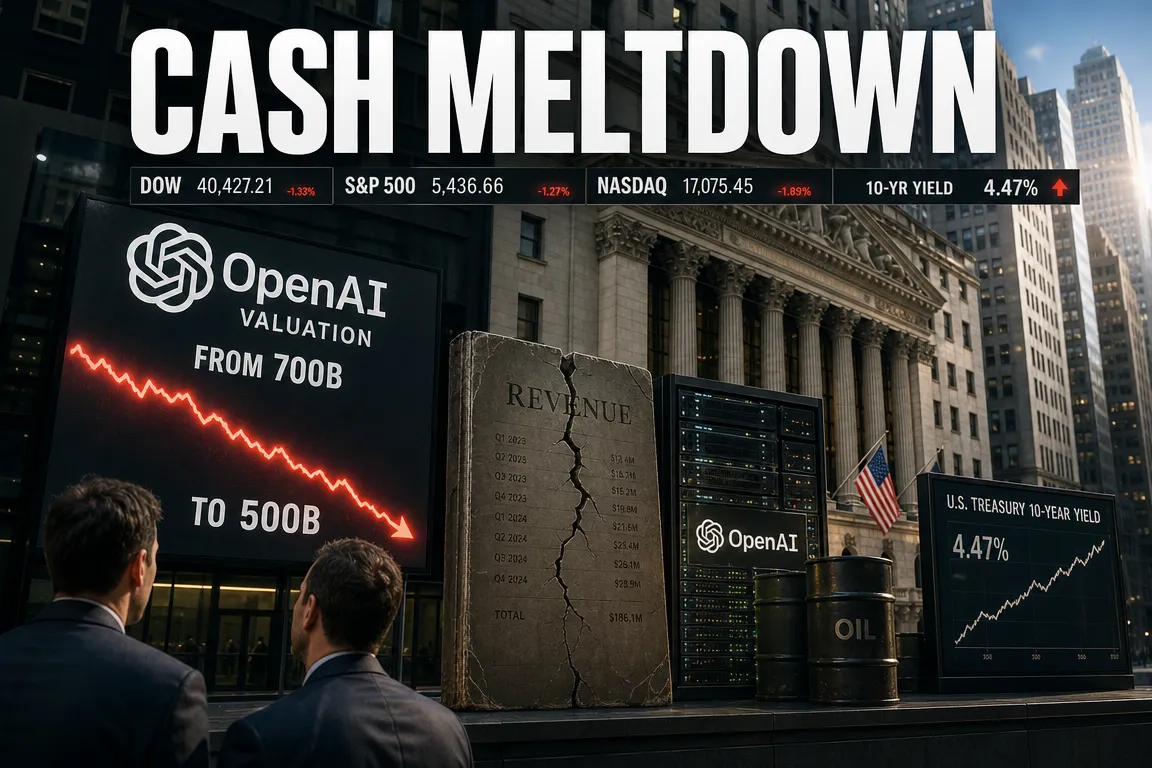
On the other hand, the moment they say they will slow the pace of investment increases, the market may heavily price in concerns about excessive AI investment.
Free cash flow is especially important.
Big Tech earns a lot, but the scale of AI server and data center investment is also enormous.
If free cash flow after CAPEX from operating cash flow weakens, it creates pressure on shareholder returns and valuations.
So going forward, the key thing to watch in Big Tech earnings releases is not just revenue growth.
You need to look at cloud growth, AI monetization speed, CAPEX growth, free cash flow, and depreciation burdens together.
12. Apple’s price increase and the power struggle with memory suppliers
The original text also mentions tensions between Apple and Micron.
Apple is interpreted as having cited rising memory prices as one of the reasons behind product price increases.
But from the memory suppliers’ perspective, this can feel unfair.
From 2022 through 2023, when the memory cycle was extremely weak, customers bought memory at low prices.
Now, as shortages emerge, rising memory prices are being used as a justification for raising consumer prices.
Apple is one of the representative companies that has long attached a high premium to storage and memory options.
So it is difficult to simply blame memory suppliers for passing higher memory prices on to consumers.
This scene shows that the balance of power in the market is changing.
In the past, companies like Apple that made finished products had all the leverage, but now suppliers controlling key components are gaining bargaining power.
13. Is China’s CXMT a threat or only a limited variable?
China’s CXMT, or ChangXin Memory Technologies, is increasing its presence in the general-purpose DRAM market.
There are also continued market rumors that Apple may consider using Chinese-made memory.
But in the short term, it is not easy for CXMT to significantly disrupt the high-value AI memory market of Samsung Electronics, SK Hynix, and Micron.
First, HBM and advanced DRAM have high technological barriers.
Second, customer qualification takes a long time.
Third, domestic demand in China is also large.
Fourth, it is difficult to say its pricing is overwhelmingly cheaper.
Therefore, CXMT should be viewed as a medium- to long-term variable for general-purpose DRAM prices, but not as a force that will immediately break the HBM-centered AI memory supercycle.
14. The AI bubble debate: investment may be excessive, but demand is real
The AI bubble debate will inevitably continue.
That is because AI data center investment is rising very quickly.
But it is hard to say AI demand itself is fake.
Companies are already applying AI to customer support, advertising, coding, document automation, search, security, data analysis, biotech, and manufacturing process optimization.
The key issue is whether AI is actually making money.
Recently, across several industries, AI adoption has been showing productivity gains and cost savings.
Of course, not every AI investment succeeds.
Still, the trend that AI is becoming a strategic asset is strong.
From the perspective of countries and Big Tech, AI is not just a new business opportunity; it is a matter of security, productivity, and platform dominance.
So AI investment is proceeding like an arms race.
It has become a game where no one can easily be the first to stop.
15. The most important point that other news does not explain well
First, the essence of memory revaluation is not rising prices, but changing contract structures.
Everyone sees DRAM prices rising.
But what really matters is that long-term contracts like SCA are reducing earnings volatility for memory companies.
If earnings volatility declines, multiples can rise.
That is the core logic behind the shift from PBR to PER.
Second, Big Tech stock prices and AI bottleneck stock prices do not always move together.
When Big Tech raises CAPEX, in the short term the companies receiving the spending may benefit more than the companies making the spending.
In other words, Nvidia, HBM, memory, power, cooling, and networking equipment firms may benefit first.
Conversely, if Big Tech CAPEX slows, bottleneck stocks may weaken, while easing pressure on Big Tech’s cash flow could actually support its share prices.
Third, the 2027 peak thesis may mean “normalization,” not “the end.”
A slowdown in price growth does not automatically mean the supercycle is over.
Unlike in the past, the HBM mix, long-term contracts, and AI data center demand may raise the floor for earnings.
Fourth, the China memory threat must be separated between commodity and advanced products.
CXMT may increase its share in general-purpose DRAM.
But high-value memory for HBM and AI servers is not easy to replace in the short term.
Fifth, from here on, guidance matters more than earnings.
The market already knows current earnings for memory companies are good.
What will move the stock price next are next quarter’s DRAM contract prices, HBM supply agreements, 2026 CAPEX plans, and Big Tech comments about continuing AI investment.
16. Key indicators to watch from an investment perspective
1) DRAM contract prices
You need to check whether the price increase rate in third- and fourth-quarter contracts meets market expectations.
2) HBM average selling price
It is important to see how much HBM prices actually rise and how long-term contracts with customers are structured.
3) Share of SCA or long-term supply agreements
As the share of long-term contracts rises, earnings stability and the possibility of multiple expansion increase.
4) Big Tech CAPEX guidance
You need to confirm whether Microsoft, Google, Amazon, and Meta continue increasing AI data center investment.
5) Free cash flow
It is important to see whether Big Tech can sustain cash flow while funding AI investment.
6) Speed of CXMT supply expansion in China
It could affect general-purpose DRAM prices, so it should be monitored as a medium- to long-term risk.
7) Samsung Electronics’ HBM competitiveness recovery
For Samsung Electronics, HBM certification, yield, and customer acquisition are the core factors behind revaluation.
17. Conclusion: rather than doubting AI, watch where the money is flowing
The broad trend in the market right now is AI infrastructure investment.
There is debate over whether AI is actually creating economic value, but the investment competition among Big Tech and at the national level is not easy to stop.
In that process, memory semiconductors are becoming not just components, but core bottleneck assets in AI infrastructure.
The revaluation thesis for Samsung Electronics, SK Hynix, and Micron starts from this shift.
That said, volatility can rise in periods where share prices have already increased a lot.
Even small negative news can move stocks sharply.
So what is needed now is not blind optimism, but balanced judgment that looks at industry conditions, contract structures, and Big Tech CAPEX together.
The memory supercycle is still hard to say is over.
But going forward, “prices rising” will matter less than “how much contracts lengthen and how much earnings stabilize.”
< Summary >
The three memory companies are moving beyond the traditional cyclical-stock framework thanks to AI demand and the spread of long-term supply agreements.
Micron’s SCA contracts are an important change that lowers earnings volatility in the memory industry.
Rising DRAM and HBM price expectations support the PER revaluation thesis for Samsung Electronics, SK Hynix, and Micron.
The 2027 peak thesis exists, but long-term contracts and AI data center demand can raise the floor for earnings.
The most important variables going forward are Big Tech CAPEX and free cash flow.
As long as AI investment continues like an arms race, demand for memory and AI bottleneck stocks is unlikely to weaken easily.
However, since share prices have already risen significantly, volatility management and earnings guidance checks are essential.
[Related Articles…]
HBM Supercycle and AI Semiconductor Investment Strategy
Big Tech CAPEX Competition and the Global AI Infrastructure Outlook
*Source: [ 월텍남 – 월스트리트 테크남 ]
– 2027년 피크, 빅테크 투자 멈춘다? 월가 10개 보고서 종합했습니다.