● Volkswagen Bloodbath, Tesla Breakout
Volkswagen’s Rumored 100,000-Job Cut and Tesla’s Cybercab Update Mark a Key Week for the EV Market
The core issue this week is not simply that Volkswagen is under pressure.
Volkswagen’s potential restructuring, the Tesla FSD accident investigation, hints of Cybercab production, Elon Musk’s revival of a 2022 post on autonomous driving partnerships, and Apple’s AI delay controversy are all being linked by investors.
The central question for the market is clear:
Can companies that have failed to build AI and autonomous driving capabilities internally still command a premium in the auto industry and U.S. equity markets?
For Tesla shareholders with the stock trading around $393, the more important factors are not short-term headlines, but robotaxi scalability, Cybercab production speed, and the cost pressure facing legacy automakers.
This report summarizes why Volkswagen’s rumored cuts are being seen as a larger shock than GM’s bankruptcy-era layoffs, and why Musk is revisiting a 2022 autonomous-driving partnership message now.
1. This Week’s Key Calendar: Tesla and Volkswagen Face Off
- Monday, U.S. time: First court hearing related to the Tesla accident in Texas
- Tuesday, July 7, U.S. time: Tesla is expected to make a Gigafactory-related announcement
- Thursday, U.S. time: Volkswagen’s supervisory board is scheduled to discuss large-scale restructuring
This week matters because three events are converging at once.
First, the Tesla FSD-related accident is moving into legal and regulatory scrutiny.
Second, Tesla may provide an update related to Cybercab or production expansion.
Third, Volkswagen is being forced to consider one of the largest restructuring actions in its history.
Viewed separately, these are individual headlines. Viewed together, they reflect a broader shift in the EV market.
One side is pushing ahead with autonomous driving and robotaxis as actual products, while the other is reducing costs through plant closures and workforce cuts.
2. Tesla Accident in Texas: FSD Liability or Driver Error?
According to the source report, a Tesla vehicle struck a house in Katy, Texas.
The incident reportedly killed 76-year-old Martha Avila. The driver was identified as 44-year-old Michael Butler.
The driver was reportedly working as a DoorDash delivery driver and claimed after the crash that the vehicle had been in autonomous mode.
However, a Tesla AI executive reportedly stated that vehicle data showed the accelerator pedal was manually pressed to 100%, and the vehicle reached 117 km/h before the crash.
If confirmed, that evidence would likely shift criminal liability toward the driver rather than Tesla.
The driver has reportedly been arrested and charged with negligent homicide and remains in custody.
However, the matter is unlikely to end there.
3. Why Civil Litigation May Continue
In criminal cases, the key question is who directly caused the accident.
In civil litigation, the issue is different.
Even if the driver fully depressed the pedal, should the vehicle system have warned or intervened? That may become a central issue.
The victim’s family has reportedly filed a wrongful death lawsuit against both the driver and Tesla, with damages potentially exceeding $1 million.
For Tesla, this makes it difficult to rely solely on the argument that FSD itself did not cause the crash.
Regulators and courts may examine whether the autonomous-driving assistance system had adequate safety mechanisms when the driver intervened.
This is a material variable for Tesla’s robotaxi expansion.
As autonomous driving becomes more advanced, the market may increasingly assign system-design responsibility even in cases where the driver is the immediate cause.
4. Volkswagen’s Rumored 100,000-Job Cut: Larger Than GM’s Bankruptcy-Era Layoffs
According to German media reports and the source material, Volkswagen is considering cuts of up to 100,000 jobs.
Given Volkswagen’s total workforce of about 657,400, this would amount to roughly 15% of employees.
The shock comes from the comparison with GM’s 2009 bankruptcy-era layoffs.
At that time, GM reportedly cut around 74,000 jobs. The Volkswagen proposal, if accurate, would be larger.
- Potential Volkswagen job cuts: up to 100,000
- Share of total workforce: roughly 15%
- Potential plant closures: at least 4
- Jobs linked to possible plant closures: more than 45,000
Volkswagen’s first-quarter profit reportedly fell 28% year over year.
The CFO has also indicated that the company’s current cost reductions are insufficient.
This is not just a weak earnings print. It reflects a broader structural problem involving EV transition pressure, China competition, weak European demand, and software investment failures.
5. Why Volkswagen’s Restructuring Will Be Difficult: Labor and Governance Constraints
Volkswagen reportedly agreed in 2024 with labor representatives that there would be no forced layoffs or German plant closures through 2030.
The restructuring now under discussion appears to conflict directly with that commitment.
IG Metall, Germany’s metalworkers’ union, has strongly opposed the plan and said it will use all available tools to block it.
However, union opposition does not eliminate Volkswagen’s profitability problem.
Volkswagen’s supervisory board gives labor representatives half of the seats.
Niedersachsen, the state government, is also a major shareholder and is highly sensitive to regional employment issues.
As a result, Thursday’s meeting is more likely to mark the beginning of negotiations than the final approval of a restructuring package.
Still, the direction is clear.
Volkswagen is under pressure to reduce both production capacity and labor costs.
6. The Meaning of Musk’s Revival of a 2022 Post
As reports on Volkswagen’s restructuring emerged, Elon Musk reportedly responded to a 2022 post with a brief “True.”
The post argued that Musk had previously предложed that other automakers adopt Tesla’s autonomous-driving technology and form partnerships, but many had refused.
It also suggested that if those companies later faced serious trouble or bankruptcy, the post should be remembered.
The timing of Musk’s response is important.
Legacy automakers are now facing weakening EV sales, price competition from Chinese manufacturers, and software transition failures.
Meanwhile, Tesla continues to expand its AI-driven narrative through FSD, robotaxi plans, Cybercab, and Optimus.
Musk’s message is therefore not just mockery.
It reflects the view that the auto industry is shifting from hardware manufacturing toward AI software platforms, and that companies rejecting that shift are now being forced into cost-cutting mode.
7. What Volkswagen Missed: Herbert Diess and the Tesla Benchmark
In October 2021, then-Volkswagen CEO Herbert Diess invited Elon Musk to speak virtually at a leadership event in Alpbach, Austria.
About 200 senior Volkswagen executives were present.
Diess’s message was clear.
Without a new mindset, Volkswagen could not win against Tesla.
He publicly argued that Volkswagen should benchmark Tesla.
In July 2022, Diess was removed from his role.
Officially, the reasons included aggressive management style, conflict with labor, and the failure of Volkswagen’s software unit Cariad.
The key issue was internal culture.
At the time, labor representatives reportedly objected that Diess was praising Tesla too much and undermining employee morale.
In the end, Volkswagen acknowledged the need for Tesla-like speed and a software-first transition, but the organization never fully embraced that shift internally.
8. Volkswagen’s Deal With Rivian: Rebuilding the Foundation Before Autonomous Driving
After Diess, Volkswagen moved to an Oliver Blume leadership structure.
Blume also serves as Porsche CEO, creating a dual-role structure for the broader Volkswagen Group.
Volkswagen then announced a major partnership with U.S. EV startup Rivian.
The arrangement reportedly includes an initial $1 billion investment, with potential expansion to as much as $5.8 billion by 2027.
The companies aim to co-develop vehicle electronics and software platforms.
This involves consolidating dozens of separate in-car computers into a smaller number of central units.
That is important because it forms the foundation for autonomous driving.
But it does not mean Volkswagen is close to a finished FSD-style product.
The company is still rebuilding the underlying architecture needed to support that capability.
Rivian is a respected EV startup, but it has not yet demonstrated an FSD ecosystem at Tesla’s scale or maturity.
Volkswagen’s decision to rely on Rivian for a future software platform is therefore a significant strategic bet.
9. Porsche’s Retreat From the 80% EV Target: The Market Changed, But Preparation Was Insufficient
Porsche had previously targeted electric vehicles for 80% of sales by 2030.
That target has since effectively been scaled back.
Officially, the reason given is that EV demand has not met expectations.
European EV demand slowdown is real.
Delayed interest-rate cuts have increased financing pressure on consumers, and subsidy reductions have weakened demand.
Chinese EV makers are also applying price pressure across Europe and global markets.
However, the issue goes beyond demand.
Consumers are no longer seeking only an electric drivetrain. They want software updates, autonomous features, and a broader charging ecosystem.
On that front, legacy automakers have not matched Tesla’s integrated product experience.
10. Apple’s AI Delay Problem and the Parallel With Volkswagen
The source material also references Apple.
Apple promoted the iPhone 16 as its first AI-integrated iPhone, emphasizing context-aware Siri features and AI functions that work across apps.
However, delays in core features have frustrated consumers and investors.
According to the source, compensation discussions for some consumers and potential investor litigation have also been raised.
The text further mentions claims that the Korean National Pension Service raised concerns over investment losses linked to Apple’s AI delays.
The parallel with Volkswagen is straightforward.
Both companies promised key AI-era capabilities but have faced scrutiny over product readiness and launch timing.
The market is increasingly unwilling to award high valuations for promises of future execution.
Premiums are now going to companies that can actually deliver AI features, change user experience, and convert those capabilities into revenue.
11. Tesla Cybercab: A Shift in Ownership, Not Just Another Car
Tesla’s push for Cybercab is not about releasing another low-cost EV.
Cybercab is intended to change the ownership model itself.
Historically, car ownership has meant the individual bears insurance, charging, maintenance, washing, and depreciation costs.
But if robotaxis become sufficiently available and can arrive within five minutes, many consumers may no longer see a need to own a car.
This would resemble the transition from purchasing DVDs to subscribing to Netflix.
If a vehicle can be accessed on demand without ownership, the market shifts from product sales to service usage.
If that model scales, Tesla’s valuation becomes difficult to explain using traditional automaker metrics.
That is why Tesla continues to trade with high volatility while still retaining a premium in the U.S. equity market.
12. The Key Variable for Cybercab Production: Speed and Cost
Robotaxi success requires a large vehicle fleet.
If wait times are too long, consumers will continue to choose taxis, Uber, or private cars.
Cybercab’s core challenge is therefore not just autonomous software, but production speed.
The source material says Model Y is produced at a rate of one vehicle in less than 50 seconds.
Cybercab would need to match or exceed that speed while reducing costs further.
One reason Tesla’s Cybercab concept is attracting attention is its attempt to eliminate the paint process.
Painting is time-consuming, expensive, and environmentally intensive in automotive manufacturing.
Cybercab is reportedly designed around plastic panels with color integrated during molding rather than applied later as paint.
If realized, this would reduce painting, drying, and related production steps.
That could lower factory investment, shorten production time, and reduce unit costs.
This is not merely a design change.
It signals that Tesla is redesigning manufacturing to support robotaxi economics.
13. What Tesla Shareholders Near $393 Should Watch
For Tesla investors with the stock around $393, the key points are less about short-term direction and more about execution.
At this level, much of the expectation may already be reflected in the share price, making the specificity of any announcement critical.
- Cybercab production schedule: Determine whether Tesla provides a real production timeline rather than only a concept update
- Robotaxi regulatory risk: The Texas accident investigation and the response from NHTSA or NTSB could affect expansion speed
- FSD partnership potential: Which legacy automaker, if any, would be first to adopt Tesla’s autonomous-driving technology
- Volkswagen restructuring severity: Deeper cost pressure among competitors could support Tesla’s relative premium
- AI investment narrative: Whether Optimus, FSD, and robotaxi plans convert into actual revenue remains central to long-term valuation
Near term, a weaker-than-expected update could increase volatility.
Conversely, a more concrete Cybercab production plan or robotaxi expansion framework could reinforce Tesla’s valuation as an AI platform company.
14. The Most Important Point Often Overlooked
The real issue is not simply weakening EV demand.
The more important issue is that legacy automakers are losing control of both cost structure and profit model.
Volkswagen is built around the industrial model of the internal combustion era: large plants, strong labor representation, complex supply chains, and layered decision-making.
That structure was once an advantage, but in an AI- and software-led auto industry, it can become a drag on speed.
Tesla, by contrast, is not just selling cars and moving on.
It is trying to connect FSD subscriptions, robotaxi revenue sharing, the energy ecosystem, and AI data accumulation.
In other words, Tesla and Volkswagen may both be automakers, but they are moving toward very different economic models.
What legacy automakers should fear most is not declining sales alone.
It is a future in which consumers no longer need to own cars.
At that point, new-car sales, dealer networks, service networks, financing products, and insurance linkages could all come under pressure at the same time.
That is also the context for Musk’s revival of the 2022 post.
Companies that rejected autonomous driving may not simply have rejected one technology.
They may have rejected an entire future revenue model.
15. Some Claims in the Source Material Require Verification
The source also mentions items such as Nasdaq 100 inclusion and the end of an IPO quiet period.
However, references involving companies with a private-company structure require confirmation from official market filings and company announcements.
Investors should verify such timing-sensitive information using exchange disclosures, company releases, and primary financial sources.
In an uncertain macro environment, investment decisions should not be based on a single article or video.
Official materials and earnings reports should be reviewed alongside any secondary reporting.
16. Key Questions the Market Will Watch
- Will Volkswagen actually pursue a 100,000-job cut?
- Will Tesla’s Tuesday announcement be directly tied to Cybercab production?
- Will the Texas investigation tighten the regulatory framework around robotaxis?
- Which legacy automaker, if any, will adopt Tesla’s FSD first?
- How will valuations change for companies that cannot build AI internally?
This week may prove less about near-term EV trading and more about the long-term direction of the auto industry.
Volkswagen needs to cut costs, while Tesla needs to prove production.
Apple needs to deliver on its AI promises, and investors are increasingly demanding execution rather than narrative.
< Summary >
Volkswagen is facing structural pressure severe enough to prompt discussion of up to 100,000 job cuts and possible closure of more than four plants.
The scale of the proposal could exceed the layoffs seen during GM’s 2009 bankruptcy, making it a major signal for the EV market.
Tesla faces accident-related legal and regulatory risk, but it is also building expectations around Cybercab and robotaxi expansion.
Musk’s renewed reference to a 2022 autonomous-driving partnership post underscores the gap between Tesla’s software strategy and the challenges facing legacy automakers.
The central issue is not EV demand alone, but the pressure on business models for companies that cannot build AI and autonomous driving internally.
For Tesla shareholders near $393, the key variables are Cybercab production speed, robotaxi regulation, FSD partnership potential, and the scale of competitor restructuring.
[Related Articles…]
- Tesla Robotaxi Expansion and Autonomous Driving Market Outlook
- Global AI Investment Trends and Big Tech Competition
*Source: [ 오늘의 테슬라 뉴스 ]
– GM 파산 때보다 더 큰 감원, 폭스바겐에 ���슨 일이 — 근데 바로 다음날 머스크가 2022년 트윗을 다시 꺼냈다, $393 주주는?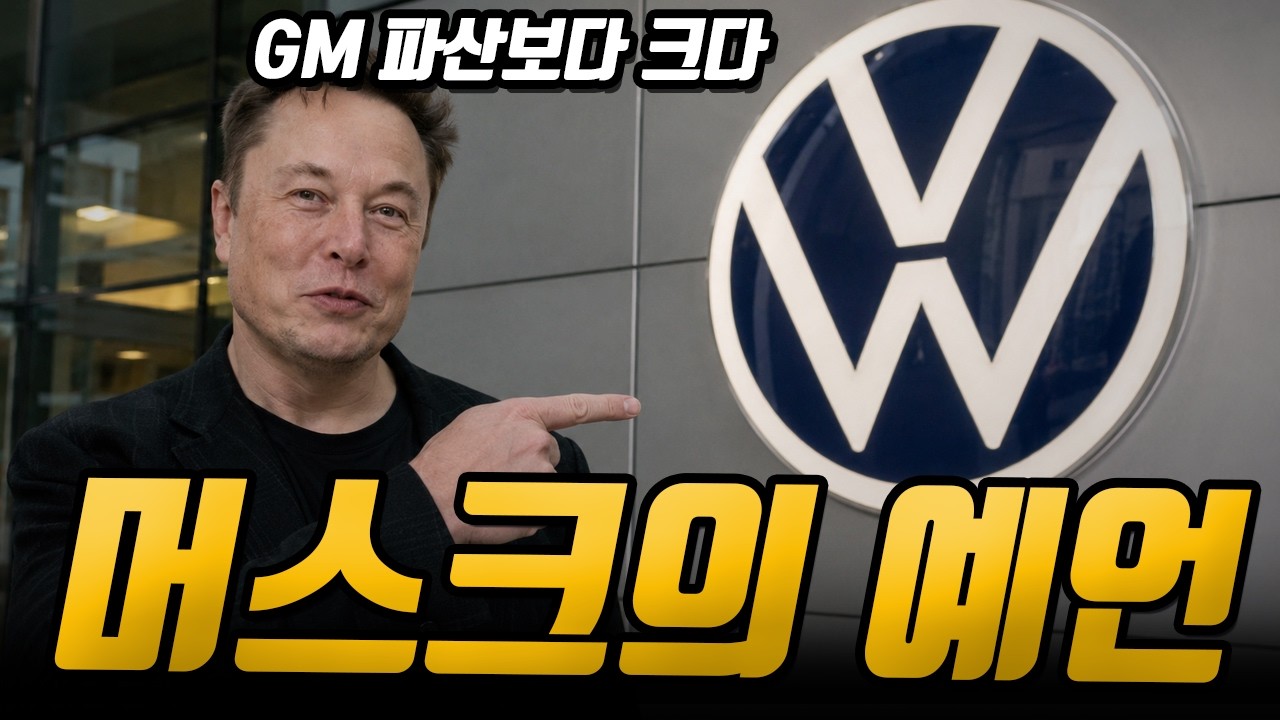
● Gold Crash, Safe-Haven Shock, 2030 Boom
Gold Price Outlook 2026~2030: Why the Safe-Haven Formula Broke and What It Means for Gold Investors
The key issue in the recent decline in gold prices is not simply why gold fell despite being a safe haven.
The more important point is that war, inflation, dollar strength, and rate-hike concerns emerged simultaneously, yet capital did not flow into gold.
Goldman Sachs has projected gold at $4,600 per ounce, while JPMorgan has issued a much higher forecast of above $6,000 per ounce.
The gold market is therefore at a point where investors must determine whether this is a short-term correction or a long-term buying opportunity.
In particular, with long-term forecasts suggesting gold could reach $8,000 to $10,000 per ounce by 2030, gold investment strategy needs to be reassessed.
1. Why gold suddenly declined: profit-taking after a strong rally
The primary driver of the recent decline was profit-taking after an excessive rally.
Based on the trend discussed in the source, gold prices began a strong advance in October 2025.
The correction began after the peak on January 29, 2026.
At that time, gold was cited at approximately $5,595 per troy ounce.
Sharp gains over a short period tend to create market fatigue.
Institutional and retail investors locked in gains, and selling pressure increased.
Gold prices are estimated to have corrected by more than 10% during this move.
ETF outflows and some forced selling intensified the downside pressure.
2. Why the safe-haven formula broke: war did not lift gold
Normally, when war breaks out, investors reduce risk exposure and seek safe-haven assets.
In such cases, the dollar and gold often strengthen together.
However, in the recent U.S.-Iran conflict, the pattern differed.
The dollar strengthened, while gold fell.
This is the most important issue in understanding the current gold market.
Gold rose briefly at the start of the conflict.
However, it quickly reversed lower.
The reason is that this conflict was viewed not only as a geopolitical event but also as an oil shock.
Higher crude oil prices increase inflation concerns.
Rising inflation raises the likelihood that central banks will maintain or return to tighter policy.
Gold does not generate yield.
As interest rates rise, the opportunity cost of holding gold increases.
As a result, the sequence of oil prices lifting inflation and inflation lifting rate-hike expectations mattered more than the war itself.
3. Dollar strength weighed on gold: the significance of the 101.8 DXY level
Another major factor behind the decline was dollar strength.
The dollar index reportedly reached around 101.8.
Gold is priced in U.S. dollars.
When the dollar rises, gold becomes more expensive for non-dollar investors.
That typically softens demand.
In risk-off periods, capital may move into the dollar rather than gold.
This episode suggests that safe-haven demand was concentrated more in the dollar than in gold.
Gold investors therefore need to monitor not only gold itself, but also the dollar index, U.S. Treasury yields, crude oil, and inflation data.
4. Why capital moved to semiconductor leaders instead of gold
An important issue is where capital flowed instead.
Gold and crypto assets do not generate cash flow or earnings.
Equities, by contrast, are supported by corporate performance.
In recent markets, semiconductor companies delivered stronger-than-expected results and attracted global capital.
Names such as Micron helped pull money toward growth and earnings-driven equities rather than gold.
This dynamic is essential for explaining the decline in gold prices.
Despite war and inflation concerns, capital did not move into gold; it moved into semiconductor leaders.
The decline in gold can therefore be viewed partly as a result of stronger alternatives in the market.
5. Goldman Sachs vs. JPMorgan: why forecasts diverged sharply
The most notable feature of the gold outlook is the wide divergence among major investment banks.
Goldman Sachs projected year-end gold at around $4,600 per ounce.
JPMorgan, by contrast, sees gold potentially exceeding $6,000 per ounce by year-end.
The gap between the two forecasts is about $1,400 per ounce.
On a Korean unit basis, this could translate into an approximate difference of KRW 260,000 per don.
6. Goldman Sachs view: gold is a financial asset and is vulnerable to higher rates
Goldman Sachs treats gold primarily as a financial asset.
In this framework, U.S. Treasury yields and policy rates are critical.
Gold pays no dividend and no interest.
When Treasury yields rise, the appeal of gold declines.
For example, if safe U.S. bonds offer attractive returns, the opportunity cost of holding gold increases.
Goldman Sachs therefore views higher-rate expectations and rising bond yields as factors that could cap gold upside.
In short, Goldman Sachs sees further gains in gold as possible, but likely limited in pace.
7. JPMorgan view: gold is a strategic reserve asset and central banks keep buying
JPMorgan does not view gold only as a financial asset.
It places greater emphasis on gold as a strategic reserve asset.
The central theme is the shift away from the dollar.
Countries seeking to diversify away from the U.S.-centric financial system are likely to increase the gold share of reserves.
Central bank buying is different from retail positioning.
It is not driven by short-term yield considerations.
Rather, price corrections may be viewed as opportunities to add to holdings.
That is why JPMorgan sees gold rising above $6,000 per ounce by the end of 2026.
8. Physical gold market sentiment: senior investors are returning to gold
Conditions in the physical gold market are also important.
Historically, gold was viewed mainly as jewelry.
Recently, however, more investors have begun to treat gold as a pure investment asset.
Interest among investors in their 50s, 60s, and 70s has increased notably.
Experiences of returns exceeding bank deposit rates have changed investor perception.
Gold is increasingly being incorporated into portfolio asset allocation.
This is a more important long-term trend than short-term price corrections.
9. Is the current gold market a risk zone or a buying opportunity?
The source suggests gold is down about 25% from recent highs.
Current prices were described as testing the $4,000 per ounce level.
Some analysts expect further downside toward $3,800 if $4,000 breaks.
Short term, volatility remains elevated.
From a long-term perspective, however, the correction may reduce valuation pressure.
For investors with a five-year horizon, the current pullback may support staged accumulation.
A full-position entry is still risky.
Gold remains sensitive to the dollar, U.S. rates, crude oil, and geopolitical risk.
10. 2030 gold outlook: potential for $8,000 to $10,000 per ounce
The long-term outlook presented in the source is constructive.
Although Goldman Sachs and JPMorgan differ on the 2026 year-end view, both leave room for higher gold prices over time.
Over a longer horizon, gold could reach $8,000 to $10,000 per ounce by 2030.
The main drivers are threefold.
First, central banks are likely to continue buying gold.
Second, the de-dollarization trend is structural.
Third, both institutional and retail investors are increasingly viewing gold as a long-term asset.
The 2030 gold outlook is therefore tied less to cyclical growth and more to changes in the global monetary order.
11. The most important point missing from many market discussions
The key issue is not that gold has lost its safe-haven status, but that priorities within safe havens have shifted.
In this risk episode, investors chose the dollar before gold.
Within risk assets, they did not buy indiscriminately; they favored semiconductor leaders with clear earnings visibility.
The market is no longer moving in a simple safe-haven versus risk-asset framework.
Capital is moving more selectively across gold, the dollar, Treasuries, semiconductors, and commodities.
Gold’s failure to rise during war should not be interpreted as the end of its role.
Rather, it may reflect a transition from a short-term safe haven to a long-term strategic asset.
Failing to recognize this distinction may lead to premature selling.
12. Key indicators investors should monitor now
First, monitor the dollar index.
If dollar strength persists, gold’s rebound potential may remain limited.
Second, monitor U.S. Treasury yields.
Higher yields raise the opportunity cost of holding gold.
Third, monitor crude oil.
Higher oil prices can increase inflation concerns and revive rate-hike expectations.
Fourth, monitor central bank gold buying.
If central banks, including China, continue buying gold, the long-term floor may strengthen.
Fifth, monitor the capital absorption capacity of semiconductor leaders.
If global funds continue to favor earnings-driven equities, near-term flows into gold may remain constrained.
13. Gold investment strategy: staged long-term exposure is more appropriate than short-term trading
Gold should be approached more as a long-term allocation than a short-term trade.
If the $4,000 level breaks, further correction is possible.
However, if the outlook for 2030 remains intact, the current pullback may be suitable for staged accumulation.
Physical gold is not ideal for frequent trading because bid-ask spreads are meaningful.
It is better suited to a three- to five-year holding period.
Gold ETFs and related financial products offer better liquidity but may be more sensitive to volatility.
Investors should distinguish between physical gold, gold ETFs, gold savings products, and gold-related equities based on their objectives.
14. Conclusion: the decline in gold may be the beginning of a revaluation rather than the end of the cycle
The recent decline in gold does not necessarily mean the safe-haven model has failed.
In the near term, profit-taking, dollar strength, rate concerns, and oil-driven inflation fears weighed on prices.
Over the longer term, central bank demand, de-dollarization, and broader physical gold adoption may support prices.
Goldman Sachs’ $4,600 forecast and JPMorgan’s $6,000 forecast differ, but both imply upside from current levels.
The key question is not whether gold can rise, but how quickly and how far.
If the $8,000 to $10,000 range by 2030 is plausible, the current correction is a period for strategy reassessment, not panic selling.
< Summary >
The recent decline in gold was driven mainly by profit-taking after a strong rally, dollar strength, inflation concerns, and rate-hike expectations.
Although war broke out, gold fell as oil-driven inflation and higher-rate fears dominated the market response.
Goldman Sachs projects gold at $4,600 per ounce, while JPMorgan sees potential above $6,000 per ounce.
Over the long term, central bank buying and de-dollarization could support a move toward $8,000 to $10,000 per ounce by 2030.
For investors, the current environment favors staged accumulation and long-term asset allocation over short-term trading.
[Related Articles…]
*Source: [ 경제 읽어주는 남자(김광석TV) ]
– 금값 왜 이렇게 떨어졌나? 안전자산 공식이 깨졌습니다 | 경읽남과 토론합시다 | 금남일 대표 [1편]