● AI, Gold, Shock
Bernstein’s $4,533 Gold Forecast and SK Hynix ADR Listing: The Real Focus of the U.S. Market
The key point in today’s market is not simply that semiconductors rallied.
The real story is the combination of the SK Hynix ADR listing, Micron’s surge, record global memory revenue, Bernstein’s $4,533 gold target, mixed PepsiCo results, and the Federal Reserve’s view of AI-related inflation risks.
The central issue many reports miss is this:
Contrary to the prevailing view that AI will improve productivity and reduce inflation, AI infrastructure investment is currently pushing up costs for power, copper, data centers, and cooling systems, creating upward inflation pressure.
This report reviews the U.S. equity trend, interest rate outlook, semiconductor cycle, gold price outlook, and signs of consumer slowdown from a single investment perspective.
1. U.S. Equity Trend: Semiconductors Led the Market Higher Again
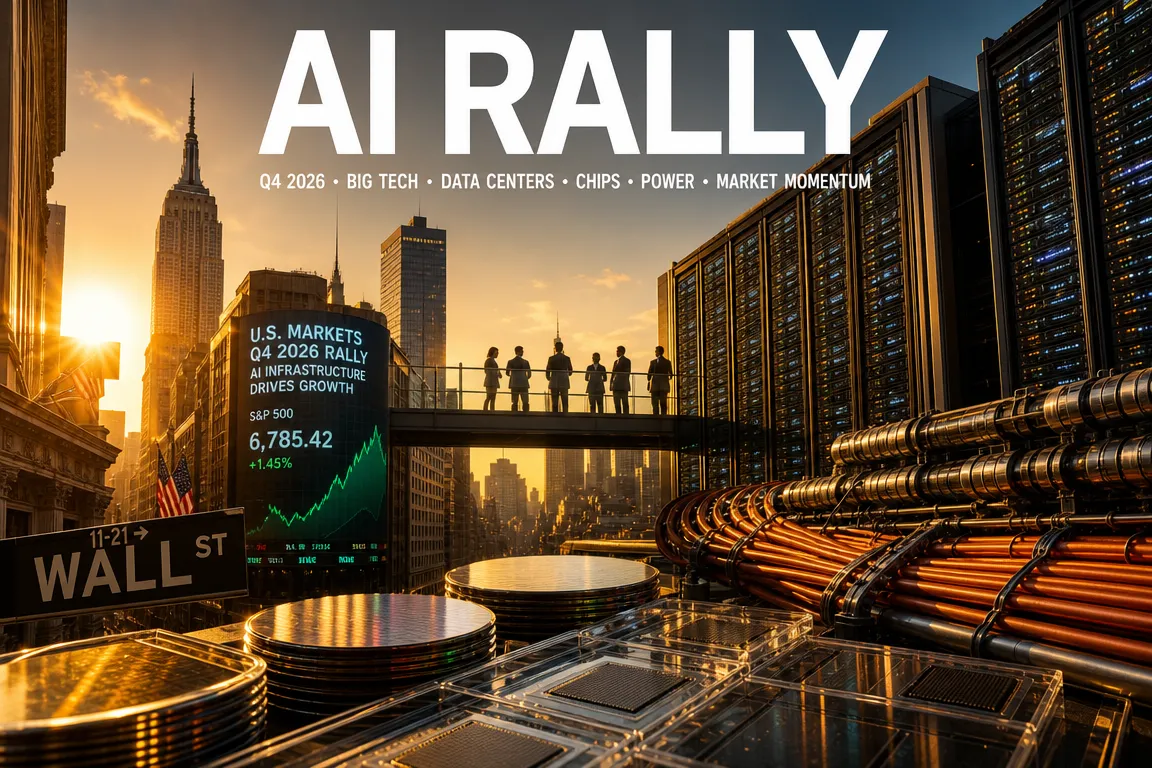
As of early trading on July 9, U.S. equities were higher, with the Nasdaq and S&P 500 both in positive territory.
The Nasdaq was up more than 0.3%, while the S&P 500 also traded higher.
The Russell 2000 showed relative strength, and the Dow initially weakened before recovering into positive territory.
Overall, the market was once again driven by AI semiconductors.
After technology stocks recovered into the close the previous day, semiconductors rebounded strongly again.
- Micron: up 6% to 8% intraday
- AMD: up 5% to 7%
- Intel: up 4%
- Marvell Technology: up 7%
- Broadcom: higher on expectations of expanded Apple cooperation
- Sandisk: stronger on improving NAND outlook
In particular, the 3x leveraged semiconductor ETF moved more than 15% in a single day.
At this level of volatility, it becomes difficult for individual investors to maintain positions psychologically.
At this stage, the issue is not whether semiconductors are the right trade, but whether investors can tolerate the volatility.
2. SK Hynix ADR Listing: Why Smart Money on Wall Street Is Paying Attention
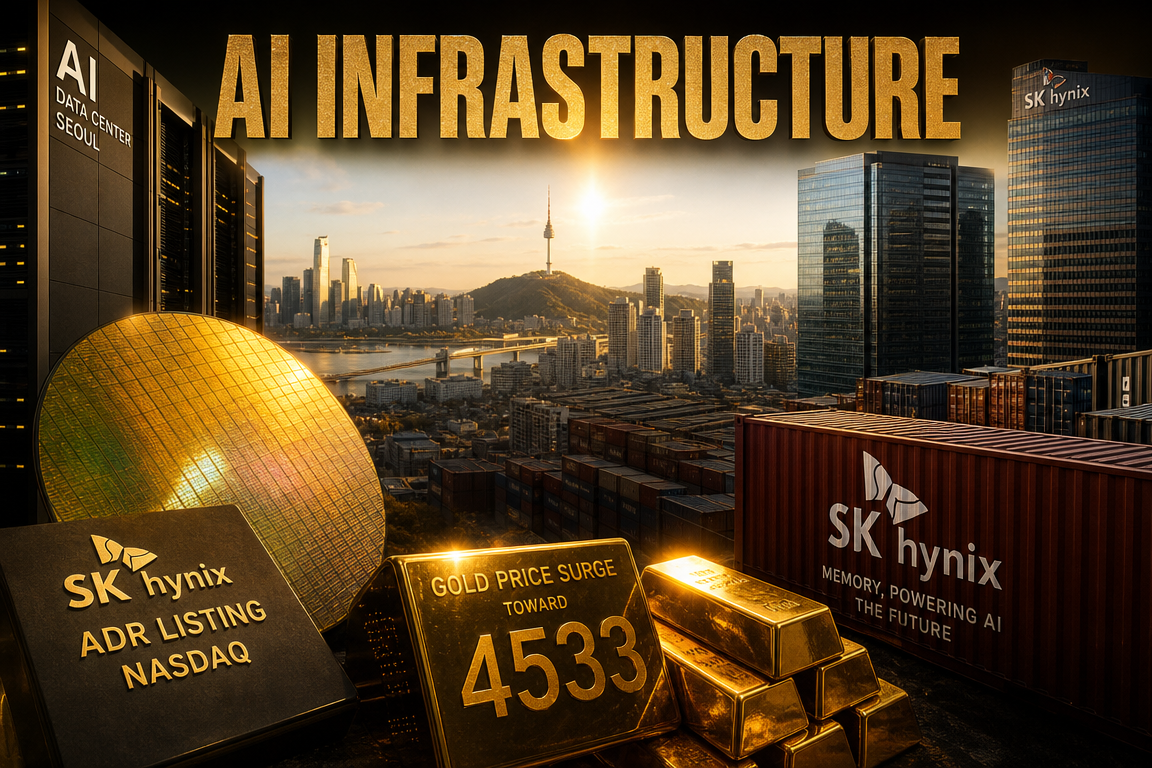
One of the biggest market events is the SK Hynix ADR listing on Nasdaq.
The ticker is reportedly SKHY, giving U.S. investors direct access to SK Hynix.
Wall Street’s interest is clear.
SK Hynix is not just a memory company; it is viewed as a critical supplier in the Nvidia AI server ecosystem and a leading HBM provider.
According to the analysis cited in the original material, SK Hynix’s DRAM gross margin may have exceeded 90% during a strong memory cycle.
That is an exceptionally high margin for manufacturing.
3. Why Wall Street Is Also Supporting Micron
An important point is that while Wall Street recognizes SK Hynix’s technological leadership, some investors still view Micron as the more stable alternative.
There are two main reasons.
- First, Korean market volatility.
Even with the ADR listing, SK Hynix’s primary listing remains in Korea.
As a result, it is not fully insulated from Korea-specific volatility and liquidity conditions. - Second, geopolitical and tariff risk.
If Trump-era tariff policy becomes more aggressive again, Micron may have an advantage due to its U.S.-based manufacturing footprint.
In other words, SK Hynix may lead on technology, but U.S. institutional investors may still view Micron as attractive from a policy-risk perspective.
This is the key point often overlooked in other coverage.
The SK Hynix ADR listing is not just a listing event; it is a valuation re-rating event for a Korean semiconductor company.
As with the TSMC ADR precedent, SK Hynix’s ADR performance could influence the valuation of the domestic listing.
4. Record Global Memory Revenue: Is the Semiconductor Supercycle Real?
Global memory industry revenue for July was cited at approximately $74.6 billion, a record high.
A month-over-month increase of roughly 31% was also a major point of attention.
By segment, DRAM revenue was about $48.0 billion, while NAND flash revenue reached around $25.8 billion, up 40% from the previous month.
Until last year, NAND was burdened by excess inventory.
However, demand for AI data centers is driving a rapid recovery in high-speed storage demand.
This has brought companies such as Sandisk and Kioxia back into focus.
UBS remains highly constructive.
It sees HBM demand potentially rising by nearly 90% year over year and the memory market entering a larger supercycle this year and next.
On that basis alone, one could argue that semiconductors are still inexpensive.
However, Bernstein’s more cautious view should also be considered.
5. Bernstein’s Warning: Rapid Memory Price Increases Could Trigger Demand Destruction
Bernstein warned that if memory chip prices rise too quickly, demand destruction may follow.
In this context, demand destruction refers to consumers delaying purchases of smartphones and PCs due to higher device prices.
For set makers such as Apple, Samsung Electronics, and Lenovo, rising memory prices create cost pressure.
They then face two choices.
They can reduce memory content in devices or raise product prices.
The problem is the consumer.
If smartphones and laptops become too expensive, buyers may respond by saying they will simply keep their devices for another year.
That can lead to inventory buildup at set makers and eventually revive fears of a peak-out in memory orders.
As a result, semiconductor stocks are rising on strong earnings, but they are also entering a period where excessive gains could increase volatility.
It is still too early to say the semiconductor supercycle has ended, but volatility has clearly increased.
6. Bernstein’s Gold Outlook: $4,533 per Ounce by Year-End
Bernstein reportedly projected gold at as much as $4,533 per ounce by the end of this year.
Given current gold price trends, the move cannot be explained solely by geopolitical stress.
In the past, gold often rose on wars, Middle East tensions, or financial crises.
The current gold market is somewhat different.
Gold has remained strong even when geopolitical risks have eased.
This suggests that gold is being revalued not only as a safe-haven asset, but also as a proxy for confidence in the dollar, fiscal deficits, central bank purchases, and real-rate expectations.
If rising U.S. fiscal deficits, expectations of Fed easing, dollar weakness, and increased central bank gold buying continue to align, the case for higher gold prices strengthens further.
From a commodities perspective, gold is becoming less of a crisis-only asset and more of a hedge against currency value erosion.
7. FOMC Minutes: AI May Not Be Disinflationary
The most important point in the latest FOMC minutes is that the Fed appears to view AI investment as an inflationary pressure.
Until now, markets have largely expected AI to raise productivity, reduce corporate costs, and ultimately lower inflation.
The Fed’s perspective is different.
While AI may improve productivity over the long term, large amounts of resources are currently being deployed to build AI infrastructure.
- Data center construction
- Power grid expansion
- Advanced semiconductor procurement
- Cooling system investment
- Higher demand for copper, power equipment, real estate, and construction labor
As hyperscalers continue to expand capital expenditures in the AI race, power prices, copper prices, and equipment costs could all rise.
This creates an ironic situation for technology stocks.
More AI investment can strengthen inflationary pressure, and if inflation remains elevated, rate cuts may be delayed.
Yet technology stocks generally benefit from lower rates.
In effect, the AI spending race among major technology firms could delay the rate-cut environment they need.
8. The Key Point Investors May Be Missing: AI Infrastructure May Matter More Than AI Chips
Many investors are focused on AI chip companies such as Nvidia, AMD, and Broadcom.
These companies remain central.
However, the Fed’s characterization of AI infrastructure demand as inflationary indicates the scale of physical infrastructure investment behind it.
That means investors may need to broaden their focus from AI chips to the broader AI infrastructure ecosystem.
- Power grid companies
- Nuclear-related companies
- Copper and power cable companies
- Data center REITs
- Immersion cooling and thermal system companies
- Network equipment companies
This is the most important takeaway from today’s market.
It is not that the AI semiconductor rally is over.
Rather, capital may increasingly rotate from chips toward power, cooling, raw materials, and infrastructure.
9. PepsiCo Results: A Clearer Signal of U.S. Consumer Weakness
PepsiCo reported mixed results.
Global revenue was resilient, but North American volume was weak.
North American beverage volumes declined, and growth in the food segment was limited.
At first glance, this could be attributed to GLP-1 obesity treatments reducing demand for soda and snacks.
However, PepsiCo pointed more directly to inflation and cost-of-living pressure than to obesity drugs.
This is highly relevant for assessing the U.S. economy.
On the surface, the U.S. economy still appears solid.
Employment has not collapsed, and broad consumption data remain resilient.
However, field-level results from consumer companies such as PepsiCo suggest households may already be reducing spending at the grocery store.
In other words, higher-income consumption may still be supporting aggregate data while middle- and lower-income consumers are under pressure.
That said, PepsiCo remains a defensive name.
It has maintained 54 consecutive years of dividend increases and is cited with a dividend yield of around 4%.
It can serve as a cash-flow anchor in portfolios when high-volatility sectors such as semiconductors weaken.
10. Oil and Iran Risk: The Market Is Not Yet Pricing Full Escalation
Following reports that President Trump attacked Iran for two consecutive days, Brent crude rose toward the $78 level.
WTI also traded in the low $70s, reflecting geopolitical risk.
However, the market does not yet appear to be pricing this as a broader escalation into full-scale war.
The prevailing view is that this is still a Trump-style brinkmanship and negotiation tactic.
With midterm elections ahead, price stability also matters politically.
Accordingly, it remains to be seen whether oil can break decisively above $80 and become a lasting inflation shock.
11. Broadcom and Custom AI Chips: Why This Should Be Viewed Through the M7 Valuation Lens
Broadcom rose on expectations of expanded cooperation with Apple.
Its core strength lies not in general-purpose semiconductors, but in custom AI chips.
Broadcom is dominant in the custom chip market, with Marvell following behind.
Its customer base is concentrated among major technology firms such as Apple, Google, Meta, and Amazon.
Morgan Stanley recently said the valuation premium of the M7 mega-cap technology stocks is now at one of its lower levels over the past decade.
That does not mean they are cheap in absolute terms, but their premium versus the rest of the S&P 500 has narrowed relative to history.
From that perspective, Broadcom is likely to remain a key beneficiary of both AI semiconductors and Big Tech capital spending.
12. The Most Important Point Missing From Other Coverage
The most important issue in today’s market is that the old assumption that AI reduces inflation may no longer hold.
AI can improve productivity over the long term.
In the near term, however, it is driving explosive demand for data centers, power infrastructure, semiconductors, copper, cooling systems, and construction labor.
That is not disinflationary; it is inflationary.
Accordingly, future rate expectations should not be based on employment and consumption alone.
Investors must also assess how AI infrastructure spending affects raw material prices and power costs.
This shift may also reshape portfolio strategy.
The market may expand from one centered on Nvidia to one that also emphasizes power grids, nuclear, copper, cooling, and data center infrastructure.
< Summary >
U.S. equities were supported by semiconductor strength, with the Nasdaq and S&P 500 trading higher.
The SK Hynix ADR listing may serve as a global re-rating event for a Korean semiconductor company.
Micron is viewed by Wall Street as a more stable alternative due to U.S. supply chain and tariff-related advantages.
Global memory revenue reached a record high, reinforcing expectations for a semiconductor supercycle.
Bernstein warned that rapid memory price increases could lead to demand destruction in smartphones and PCs.
Bernstein also projected gold could reach $4,533 by year-end, with gold increasingly viewed as a hedge against dollar and fiscal risk.
PepsiCo’s mixed results pointed to weakening North American consumer demand and inflation pressure on households.
The most important theme is that AI may be an inflationary force in the near term through higher power, copper, and data center costs.
[Related Articles…]
- AI Semiconductor Supercycle and Memory Market Outlook
- Gold Price Outlook and Global Safe-Haven Investment Strategy
*Source: [ Maeil Business Newspaper ]
– 번스타인, 올해말 금 가격 $4533 전망ㅣ펩시코, 북미 판매량 감소에 실적 혼조세ㅣ홍키자의 매일뉴욕