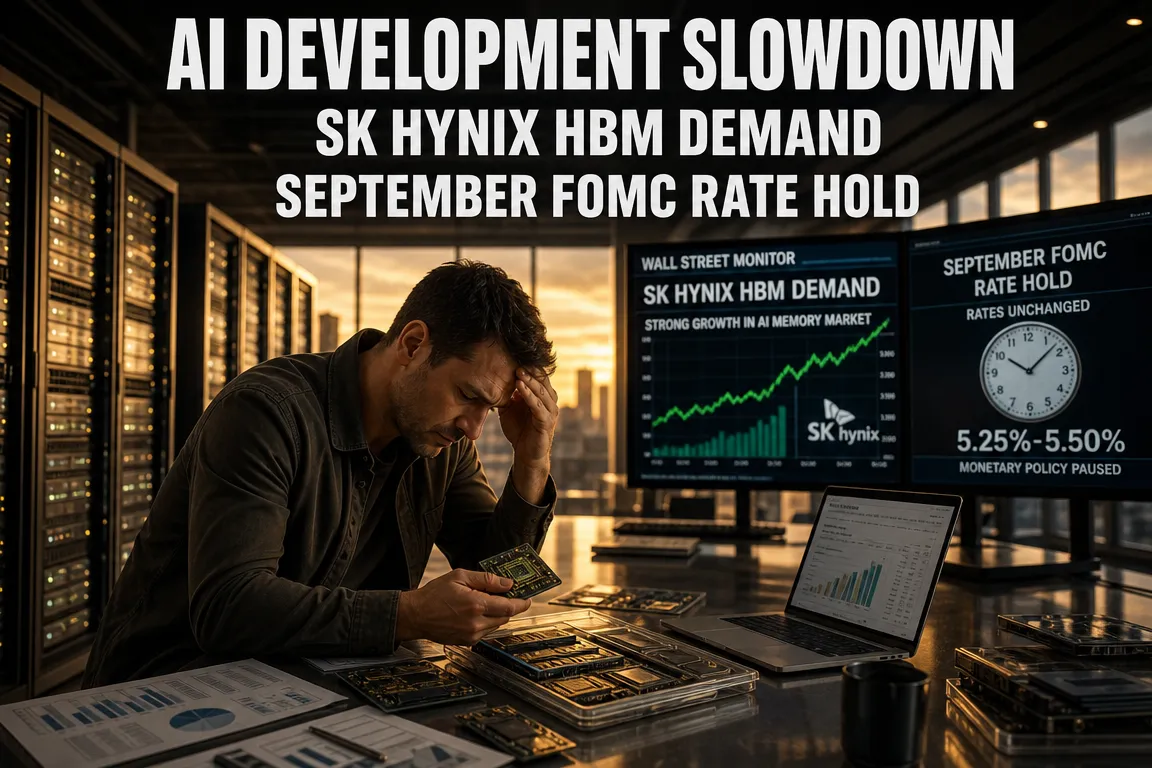
● Tesla Stung by California EV Rebate Shock, FSD Gains, Policy Risk Spikes
California EV Rebate Puts Tesla in a Policy Squeeze: Regulatory Risk and FSD Value Matter More Than the Stock Price
The core issue is not simply that California is offering a $3,500 EV discount.
The key point is that Tesla, which produces the largest number of EVs in California, appears to be placed at a disadvantage under the structure of the bill.
This issue is also intersecting with Middle East geopolitical risk, rising crude prices, weakness in semiconductor stocks, Tesla’s share-price correction, and improvements in FSD response time.
There are three main points to consider.
First, why California’s EV incentive bill appears unfavorable to Tesla.
Second, how the policy could affect Tesla’s Fremont factory and long-term production strategy.
Third, why the latest FSD update should be viewed as a key driver of Tesla’s valuation rather than a simple feature upgrade.
1. Market backdrop: Tesla’s decline reflects macro risk more than EV-specific weakness
Tesla closed at $394.76, down 3.19% from the previous day.
The decline appears to reflect broader risk-off sentiment in global markets rather than a company-specific negative catalyst.
The main driver was heightened geopolitical risk in the Middle East involving the U.S. and Iran.
Reports indicated further U.S. strikes on Iran, while Iran again raised the possibility of restricting traffic through the Strait of Hormuz.
The Strait of Hormuz is one of the most important routes in global oil transportation.
Any disruption there would immediately affect crude prices.
According to the source, the number of vessels passing through the strait was down roughly 60% from a week earlier.
Daily traffic reportedly fell to around 14 vessels on Sunday, versus 37 on the same day a week earlier.
Given that the area saw more than 100 vessels per day before the conflict, concerns over global supply chains have increased materially.
Higher oil prices tend to pressure growth equities.
That is because rising energy costs can lift inflation expectations and weaken the case for near-term rate cuts.
As a result, growth stocks with high future earnings expectations, such as EV, semiconductor, and AI-related names, can face sharper volatility.
2. Semiconductor weakness and Nasdaq correction: indirect pressure on Tesla
The source noted a sharp decline in SK Hynix, which then spread to the broader semiconductor sector.
Micron and Western Digital were also reported to have weakened.
When semiconductor stocks come under pressure, sentiment across the Nasdaq tends to deteriorate.
Recently, AI semiconductors, data centers, memory demand, and power infrastructure have been moving as closely linked themes.
Accordingly, a large selloff in a leading semiconductor name can translate into a broader valuation reset for growth stocks.
Tesla, while an EV manufacturer, is also valued as an AI, robotics, and autonomous-driving company, making it difficult to avoid the impact of Nasdaq weakness.
Jefferies raised its Tesla price target from $375 to $400 but maintained a neutral rating.
That suggests the firm sees Tesla’s long-term growth potential but remains concerned about valuation.
In other words, the market is not rejecting Tesla’s outlook outright, but is currently more sensitive to geopolitical risk, interest rates, and a correction in technology stocks.
3. Important clarification: SpaceX price references should be treated as private-market data
The source stated that SpaceX hit an all-time low after listing.
However, SpaceX is not a publicly listed company in the conventional sense.
Any reported price or decline should therefore be interpreted as private-market trading, a secondary-market valuation, or a platform-specific reference, not a public exchange price.
This is an important distinction for investors.
Private-company pricing is driven by limited liquidity, low transaction volume, and information asymmetry, and should not be interpreted like public equity prices.
Still, the broader point raised in the source is valid.
Even if Starlink and Starship expectations remain strong, valuations can correct if they become excessive relative to revenues.
The same logic applies to Tesla stock.
A strong company and a strong stock are not always the same thing.
Even with strong technology, if a stock already discounts too much future growth, the market can react sharply to small negative developments.
4. California SB 168: $3,500 instant EV rebate
The main policy issue is California’s EV rebate bill.
Governor Gavin Newsom signed SB 168.
The bill establishes a “My First EV” program that provides an instant discount for first-time EV buyers.
The key feature is that the benefit is applied at the point of sale rather than through a later tax refund.
For new vehicles, buyers can receive a $3,500 discount if the vehicle price is below $50,000.
For used EVs, the discount is $1,750 if the vehicle price is below $25,000.
Eligibility is not tied to income, as long as the buyer is purchasing an EV for the first time in California.
The source estimated the program budget at about $270 million.
Funding is expected to come from state resources and automobile companies.
On the surface, this is a pro-EV policy designed to expand adoption.
It can also be seen as California’s attempt to support demand at a time when the federal EV tax credit is being reduced or phased out.
5. The key exception: California-headquartered EV companies face no price cap
The bill includes a crucial exception.
As of January 1, 2026, EV companies headquartered in California will receive the rebate without a price cap across all models.
This is why Tesla appears to be in an awkward position.
Tesla manufactures a large volume of vehicles at its Fremont facility in California.
However, it moved its corporate headquarters to Austin, Texas, in 2021.
Tesla’s engineering headquarters remain in Palo Alto, but its legal headquarters are no longer in California.
By contrast, Rivian and Lucid are headquartered in California.
Yet those companies do not produce vehicles in California at Tesla’s scale.
As a result, Tesla is excluded from the uncapped benefit despite being the largest EV producer in California, while competitors with California headquarters may qualify for more favorable treatment.
This is the most important point in the policy.
The bill appears to reward corporate headquarters location rather than actual in-state production and employment.
6. Tesla is not fully excluded: models below $50,000 may still qualify
Tesla vehicles are not entirely excluded from the rebate.
Models priced below $50,000 may still qualify under the general rules.
For example, the source listed the Model 3 Rear-Wheel Drive at $36,990, which would fall to $33,490 after the $3,500 discount.
The Model Y Premium All-Wheel Drive was listed at $49,990.
That places it just below the $50,000 cap, making it eligible for the rebate.
However, even a slight increase in price would remove eligibility.
The Model Y L with six seats was listed at $60,990, above the cap.
The Model 3 Performance was listed at $54,990 and would also be excluded.
In effect, lower-priced Model 3 variants and some Model Y trims may benefit, while higher-end trims would not.
This could also influence Tesla’s pricing strategy.
Keeping vehicles just below the $50,000 threshold may become increasingly important.
7. The larger impact may emerge in the used EV market
The more important market effect may come from used EVs rather than new ones.
Used EVs priced below $25,000 qualify for a $1,750 rebate.
Under that threshold, the effective purchase price of a used Model 3 could fall below $20,000 in some cases.
For first-time EV buyers, a used Tesla Model 3 below $20,000 would be highly attractive.
If combined with expectations for FSD or future software improvements, used Tesla vehicles could become even more compelling.
The source also noted that FSD version 14 Lite is now operating on older hardware.
If older vehicles can still deliver a meaningful autonomous-driving experience, Tesla’s residual values could benefit.
Although EV incentives are generally intended to boost new-car sales, this policy may also stimulate demand for used Tesla vehicles.
8. Political interpretation: is the Newsom-Musk conflict reflected in the policy?
The bill does not explicitly name Tesla.
Its wording is based on whether the company is headquartered in California.
But because Tesla is placed in a disadvantageous position, the market is likely to interpret the measure politically.
The conflict between Governor Gavin Newsom and Elon Musk is not new.
Past disagreements have involved California policy, Tesla’s headquarters relocation, factory operations during the pandemic, and broader political differences.
The source said a similar rebate proposal in November 2024 had already triggered controversy over Tesla’s exclusion.
At that time, Elon Musk reportedly responded on X that the policy made no sense.
Representative Ro Khanna of Fremont also criticized the exclusion of Tesla on political grounds as a poor decision.
SB 168 can be seen as part of the same broader dispute.
If an industrial policy meant to support green transportation ends up disadvantaging the company that produces and employs the most in the state, the policy’s design will be questioned.
9. Tesla Fremont’s future: not immediate relocation, but rising policy risk
The bill is also relevant to Tesla’s long-term strategy for Fremont.
Tesla has already moved its headquarters to Texas.
The Texas Gigafactory has become a core hub combining production, batteries, Cybertruck, AI infrastructure, and headquarters functions.
By contrast, Fremont remains an important legacy site, but one that carries the burden of California’s higher costs, regulation, and political friction.
The source also said Model S and Model X lines at Fremont are being removed and replaced by an Optimus robot production line.
If accurate, this suggests Fremont may gradually shift from a traditional vehicle manufacturing site to an AI robotics and engineering hub.
This does not mean Tesla will leave Fremont soon.
Fremont remains close to Silicon Valley talent and has deep manufacturing experience and supply-chain infrastructure.
However, if California continues to send unfavorable policy signals, future investment and capacity expansion may shift further toward Texas or other states.
For shareholders, this should be viewed not as a political headline, but as a policy risk that could affect manufacturing costs, production strategy, and long-term valuation.
10. FSD example: the dog incident shows the real issue
The source also highlighted a Tesla FSD driving video.
According to a Reddit post, a 2026 Model 3 Premium All-Wheel Drive was operating on FSD 14.2.2.5.
While driving on a one-lane road, a dog suddenly entered the roadway.
The vehicle attempted evasive action and deceleration, but did not fully avoid the animal.
The dog survived and was taken to a hospital.
According to the analysis, the dog became partially visible at around 14.8 seconds and fully visible at around 15 seconds.
Braking reportedly began at around 15.25 seconds.
That implies a response time of roughly 0.25 to 0.5 seconds.
The vehicle was traveling at approximately 51 to 53 mph.
Because oncoming traffic was present, the car did not cross the center line to make a larger evasive maneuver and instead chose maximum braking and small steering adjustments.
The significance of this case is that it illustrates the gap between theoretical autonomy debates and real-world driving.
In practice, AI systems do not have time for philosophical calculations about whom to sacrifice.
Most incidents must be resolved within less than one second through perception, decision-making, and control.
The real issue is not ethics in the abstract, but response time, sensor recognition, path prediction, and braking control.
11. FSD 14.3.5 update: why a 20% faster response matters
The source also cited Tesla’s FSD 14.3.5 release notes.
The main change is a redesigned AI compiler that improved response speed by about 20%.
The update also reportedly reintroduced reinforcement learning on difficult cases involving small animals.
This should not be viewed only as an improvement in avoiding dogs.
Better recognition and faster response to small animals also matter for bicycles, children, pedestrians, debris, and construction hazards that can appear suddenly on the road.
Human drivers face physical limits even with training.
By contrast, software-based autonomy can improve the response of an entire fleet through a single update.
That is the key strategic advantage of Tesla’s approach.
The improvement is not limited to one better driver; it applies across a large number of vehicles at once.
If FSD reaches a materially safer level, Tesla may be revalued not just as an automaker, but as an AI infrastructure company that reduces accident risk.
12. What investors should focus on: policy and software matter more than daily stock moves
A 3% daily decline in Tesla stock matters to short-term traders.
Long-term investors should focus on more important questions.
Is Tesla being treated unfavorably in a key market like California?
How will EV incentives affect Tesla’s pricing power and consumer demand?
Can FSD improvement translate into safety gains and a viable revenue model?
How will the role of Fremont versus Texas Gigafactory affect long-term production costs?
Tesla’s investment case now extends beyond EV unit sales.
It is a multi-layered growth story tied to EVs, energy storage, AI autonomy, Optimus robotics, and software monetization.
For that reason, policy risk and technological progress both matter to the valuation.
The California EV rebate may support some Tesla models in the short term, but it also highlights the company’s exposure to political risk.
At the same time, FSD progress reinforces the possibility that Tesla could remain a major player not only in autos, but in AI-enabled mobility.
13. The key point often missed by other coverage
First, this bill is closer to a headquarters-linked industrial policy than a pure green policy.
Although it is framed as an EV adoption measure, the exemption is based on corporate headquarters rather than production location.
That effectively sends a message that companies with California headquarters may receive greater benefits.
Second, Tesla is not fully disadvantaged.
Model 3 and some Model Y variants may still qualify under the $50,000 cap.
Tesla could even use pricing discipline to increase demand in its lower-priced lineup.
Third, the used EV market may benefit more than expected.
A $1,750 discount on used EVs below $25,000 could materially improve accessibility for used Model 3 buyers.
That may affect not only new-car sales, but also Tesla’s residual values and funnel of future customers.
Fourth, FSD response improvements are not merely a product update; they are linked to insurance, robotaxi development, regulatory approval, and safety statistics.
Lower accident rates could reduce insurance costs.
Lower insurance costs could improve total cost of ownership.
Lower ownership costs could support higher EV adoption.
In that sense, FSD improvement affects vehicle sales, software revenue, insurance, and robotaxi valuation simultaneously.
Fifth, California’s policy signal may influence where Tesla allocates future investment.
Companies typically invest more in regions that welcome them.
If California continues to treat Tesla unfavorably, more future manufacturing capacity may move to Texas or other pro-business states.
14. Investment watch points
Investors should monitor the following variables rather than focusing only on the share price:
First, the implementation details of SB 168.
Second, whether Tesla adjusts model pricing around the $50,000 threshold.
Third, how effectively Rivian and Lucid use the uncapped benefit.
Fourth, how quickly used Model 3 and Model Y prices adjust after the rebate.
Fifth, whether FSD 14.3.5 improves accident avoidance performance and user data.
Sixth, whether Fremont’s role shifts from vehicle production toward Optimus robotics or AI manufacturing.
Seventh, how Middle East risk and crude oil prices affect U.S. rates and growth-stock valuations.
These variables are likely to shape Tesla’s near-term volatility and longer-term direction.
< Summary >
California is advancing SB 168, which offers first-time EV buyers an instant discount of $3,500 on new vehicles and $1,750 on used vehicles.
However, California-headquartered EV companies receive an uncapped exemption, leaving Tesla, after moving its headquarters to Texas, at a relative disadvantage.
Tesla Model 3 and some Model Y variants may still qualify under the $50,000 cap, but higher-priced trims are likely excluded.
The central issue is not simply green subsidies, but the broader political and industrial-policy friction between California and Tesla.
The used EV rebate could support demand for used Model 3s and improve Tesla’s residual values.
In the FSD example, response time of roughly 0.25 to 0.5 seconds became the key point, underscoring why software progress may matter more than daily stock moves.
For investors, the more important variables are EV policy, FSD performance, Fremont’s strategic role, and global supply-chain risk.
[Related Articles…]
Tesla Valuation and FSD Autonomy: Key Investment Drivers
EV Incentive Shifts and Their Impact on the Global Auto Market
*Source: [ 오늘의 테슬라 뉴스 ]
– 캘리포니아가 전기차 3,500달러 깎아준다는데, 테슬라만 제외? 주주는?
● Market Shock, Semis Slump, Rebound Watch
Kospi Weakens, But the Downturn Is Not Over: Reversal Factors to Watch Amid Sharp Declines in Samsung Electronics and SK Hynix
Today’s market is not a simple case of “semiconductors sold off.”
U.S. equity declines, Hormuz Strait geopolitical risks, rising oil prices, inflation concerns, and a sharp drop in the Philadelphia Semiconductor Index have combined to weaken the Kospi outlook.
At the same time, there are reasons not to view Samsung Electronics and SK Hynix in an entirely bearish light.
In particular, Micron’s relatively better performance, the widening gap between SK Hynix ADR and the domestic listed shares, and the divergence between domestic brokerages and foreign research firms on earnings forecasts are the key variables for today’s market.
In short, this is less a “semiconductor downcycle” than a “volatility regime in which fear and earnings expectations are colliding.”
1. The Negative Signal: U.S. Markets Fell First
The first point to examine is the previous session’s U.S. market performance.
The Nasdaq fell by about 1.5%, and the Philadelphia Semiconductor Index dropped by more than 4%.
A decline of this magnitude in the semiconductor index suggests not just a technical correction, but a rapid deterioration in investor sentiment.
Korean equities are highly sensitive to U.S. semiconductor shares.
Given the large index weight of Samsung Electronics and SK Hynix, a sharp drop in the U.S. semiconductor index is likely to pressure the domestic market from the opening.
The direct trigger for the decline was geopolitical risk related to the Hormuz Strait.
Concerns that the United States could continue airstrikes against Iran, along with the possibility of a blockade of the Hormuz Strait, renewed volatility in international oil prices.
The Hormuz Strait is a critical route for global crude oil transportation.
Rising tensions there increase upward pressure on oil prices, which in turn raises inflation concerns.
Markets responded through the chain of “higher oil prices → inflation concerns → weaker rate-cut expectations → pressure on growth and semiconductor stocks.”
2. Domestic Opening Also Faced Pressure: Weakness in Samsung Electronics and SK Hynix on NXT
The negative U.S. market tone is being quickly reflected in the Korean market.
Based on NXT indications, SK Hynix was down about 5%, while Samsung Electronics fell about 4%.
NXT is a useful reference for quickly gauging pre-market and post-market sentiment.
It does not fully predict the regular session, but it is meaningful for assessing early-session investor fear.
SK Hynix’s renewed weakness following a large decline the previous day is a clear burden for investors.
Samsung Electronics is also unlikely to avoid the broader semiconductor sector correction in the short term.
What matters here is not simply the fact that prices are falling, but why they are falling.
Whether the move reflects earnings deterioration, macro fear, or a supply-demand shock will determine the appropriate response strategy.
3. Positive Signal 1: Micron Fell Less Than Expected
The first encouraging factor is Micron.
Micron is the global memory semiconductor company most often compared with SK Hynix.
When evaluating the memory cycle in HBM, DRAM, and NAND, Micron’s share price is an important benchmark for SK Hynix sentiment.
Unlike SK Hynix’s sharp decline in the domestic market, Micron fell by about 4% in the U.S. session.
That is still a meaningful decline, but it is relatively smaller than SK Hynix’s drop.
This suggests that the market may not be concluding that the memory industry fundamentals have broken down.
Rather, it may indicate that domestic supply-demand pressure and report-driven sentiment were more influential in Korea.
In other words, global investors did not fully mirror the scale of the selloff seen in the Korean market.
4. Positive Signal 2: The Gap Between SK Hynix ADR and the Domestic Shares Has Widened
The second point concerns overseas trading indicators for SK Hynix.
The original text noted that SKHY fell about 9% on the previous day.
By contrast, the domestic listed shares fell about 15%.
This difference is important.
If the ADR or related overseas benchmark fell 9% while the domestic shares declined 15%, it indicates that selling pressure in the Korean market was more aggressive.
As a result, the premium or valuation gap between the ADR and the domestic shares appears to have widened.
There are two possible interpretations.
First, the domestic market may have overreacted.
Second, overseas investors may still be more constructive on SK Hynix’s earnings and AI memory demand.
A valuation gap does not guarantee an immediate rebound.
However, it does suggest a divergence between global and domestic sentiment that should be monitored.
5. Positive Signal 3: Divergence in Earnings Forecasts Between Domestic and Foreign Research
The most important issue is earnings outlook.
According to the original text, a domestic brokerage report that triggered SK Hynix’s decline estimated second-quarter operating profit at around 4.5 trillion won.
By contrast, SemiAnalysis, identified as a foreign research firm, reportedly projected second-quarter operating profit of around 5.5 trillion won excluding NAND.
The original figures appeared as 45 trillion won and 55 trillion won, but in market context, the more plausible interpretation is 4.5 trillion won versus 5.5 trillion won.
The key issue is the direction of the estimates rather than the absolute numbers.
The domestic brokerage took a more cautious view, while the foreign research firm offered a materially more positive estimate.
A gap of about 1 trillion won in operating profit can be significant for the market.
SK Hynix earnings are closely tied to HBM demand, AI server investment, DRAM pricing, and customer order trends.
The more optimistic foreign view likely reflects stronger confidence in AI infrastructure spending.
6. The Main Theme Today Is Volatility, Not Earnings Alone
Today’s market is better characterized as a volatility-driven session rather than a normal valuation exercise.
U.S. equities weakened, oil-price concerns increased, and the semiconductor index fell sharply.
At the same time, conflicting earnings views from domestic and foreign research firms have made investor judgment more complex.
In such conditions, a steep opening decline can be followed by an intraday rebound, while a brief recovery can also reverse later.
Because Samsung Electronics and SK Hynix carry a large weight in the Kospi, their moves can substantially affect the index.
Investors should focus not only on the magnitude of the decline, but also on foreign flows, institutional selling pressure, intraday support levels, trading value in large-cap semiconductor names, and exchange-rate movement.
7. Why Samsung Electronics and SK Hynix Should Be Viewed Separately
Although both are major semiconductor stocks, the market views Samsung Electronics and SK Hynix differently.
For Samsung Electronics, the key issues are the memory recovery, foundry competitiveness, and improvement in HBM share.
Samsung Electronics is also closely linked to overall Kospi sentiment and is heavily influenced by foreign investor positioning.
For SK Hynix, the key factor is its strong position in the HBM market.
Its valuation has been supported by expectations for AI servers and the Nvidia supply chain.
As a result, SK Hynix tends to react more sensitively when earnings expectations shift even slightly.
In simple terms, Samsung Electronics is more of a representative Korean market blue chip, while SK Hynix is more of an AI memory growth stock.
Therefore, investors may interpret the same semiconductor correction differently across the two names.
8. The Real Key Point Often Missed: This Is an Expectation Clash, Not an Industry Breakdown
The most important point is not whether the semiconductor cycle has collapsed.
The real issue is that market expectations had risen too far, and a cautious report triggered a sharp shift in sentiment.
SK Hynix had already risen significantly as a key beneficiary of AI semiconductors.
For such stocks, even a result that is merely “less strong than expected” can lead to a sharp pullback.
Conversely, if earnings estimates are revised upward again or the foreign research view gains traction, the stock could rebound quickly.
In other words, the market is now more sensitive to expectations than to absolute earnings levels.
Many reports summarize the situation only as “semiconductor slump,” “Kospi weakness,” or “U.S. market decline.”
In reality, domestic reports, foreign forecasts, ADR valuation gaps, Micron’s share price, and Hormuz-related risk are all interacting simultaneously.
Viewed in that context, this correction looks more like a repricing phase than a structural collapse.
9. Five Indicators Investors Should Watch Today
First, monitor whether SK Hynix can hold its intraday low.
If the stock keeps making lower lows, selling pressure is continuing. If it holds support, a short-term rebound may follow.
Second, watch for a return of foreign net buying in Samsung Electronics.
Samsung Electronics is a key driver of the Kospi.
If foreign investors begin to accumulate the stock again, index downside pressure may ease.
Third, track the KRW/USD exchange rate.
When geopolitical risk increases, a sharp rise in the won-dollar rate weighs on foreign flows.
Stabilization in the exchange rate would help the domestic market.
Fourth, observe the pace of oil-price increases.
It is important to see whether the Hormuz risk translates into a genuine oil-price spike.
If oil stabilizes, inflation concerns may also ease.
Fifth, follow Micron and U.S. semiconductor futures.
Korean semiconductor stocks remain highly correlated with U.S. peers.
If Micron avoids further sharp declines, fear around SK Hynix may moderate.
10. A Practical View of Today’s Session
Today’s market is genuinely difficult to forecast.
The opening tone is clearly negative.
However, part of the bad news may already be reflected in prices.
In particular, if SK Hynix sold off excessively the previous day, a technical rebound driven by bargain hunting cannot be ruled out.
On the other hand, if the Hormuz issue escalates further and oil prices rise again, the market may once more focus on inflation and rates.
That would pressure not only semiconductors but also growth stocks more broadly.
The key today is risk management rather than directional prediction.
Instead of trying to call the bottom, it is more practical to respond based on intraday flows and news developments.
11. Kospi Outlook: Short-Term Pressure, But Structural Support Remains
The Kospi should be assessed separately over the short and medium term.
In the short term, U.S. equity declines, the semiconductor selloff, oil-price volatility, and exchange-rate pressure are all negative factors.
As a result, intraday volatility is likely to remain high.
However, over the medium term, the broader trends of AI semiconductor demand, HBM growth, and memory-price recovery remain intact.
SK Hynix’s earnings outlook remains relatively constructive in foreign research coverage.
Samsung Electronics may also be re-rated in the second half depending on HBM competitiveness.
Accordingly, this should be viewed not as the end of the cycle, but as a phase of adjustment to expectations that had moved too far ahead of fundamentals.
12. Conclusion: Fear Is High, But the Data Still Support Both Sides
Today’s market is clearly challenging.
U.S. equities were weak, the Philadelphia Semiconductor Index fell sharply, and geopolitical risks increased.
Samsung Electronics and SK Hynix are likely to open weaker.
At the same time, Micron held up relatively better, the valuation gap between SK Hynix’s overseas benchmark and domestic shares widened, and foreign earnings estimates remain constructive.
In other words, the market still has enough supporting evidence that it cannot be viewed as fully bearish.
Today’s session is not the end of the semiconductor cycle, but a period in which macro fear and AI semiconductor earnings expectations are colliding.
Investors should distinguish between news flow that materially affects earnings and news flow that primarily drives short-term sentiment.
< Summary >
Declines in the Nasdaq and the Philadelphia Semiconductor Index are weighing on the Kospi and semiconductor large caps.
Hormuz Strait risk is amplifying volatility through higher oil prices and renewed inflation concerns.
Samsung Electronics and SK Hynix are likely to remain weak in the short term, but Micron’s relative resilience is a positive signal.
The widening gap between SK Hynix ADR and the domestic shares suggests that the Korean market may have overreacted.
The divergence between domestic brokerages and foreign research firms on SK Hynix earnings is the most important point to watch today.
This selloff appears to reflect a clash between elevated expectations and macro fear rather than a collapse in the semiconductor industry.
For today, the focus should be on foreign flows, exchange rates, oil prices, Micron’s trend, and whether intraday lows hold.
[Related Articles…]
- AI Semiconductor Cycle and SK Hynix Earnings Outlook: Key Takeaways
- How Rising Oil Prices Affect Inflation and Global Equities
*Source: [ 내일은 투자왕 – 김단테 ]
– 코스피 힘들지만 희망도 있다? #삼성전자 #코스피 #하이닉스